
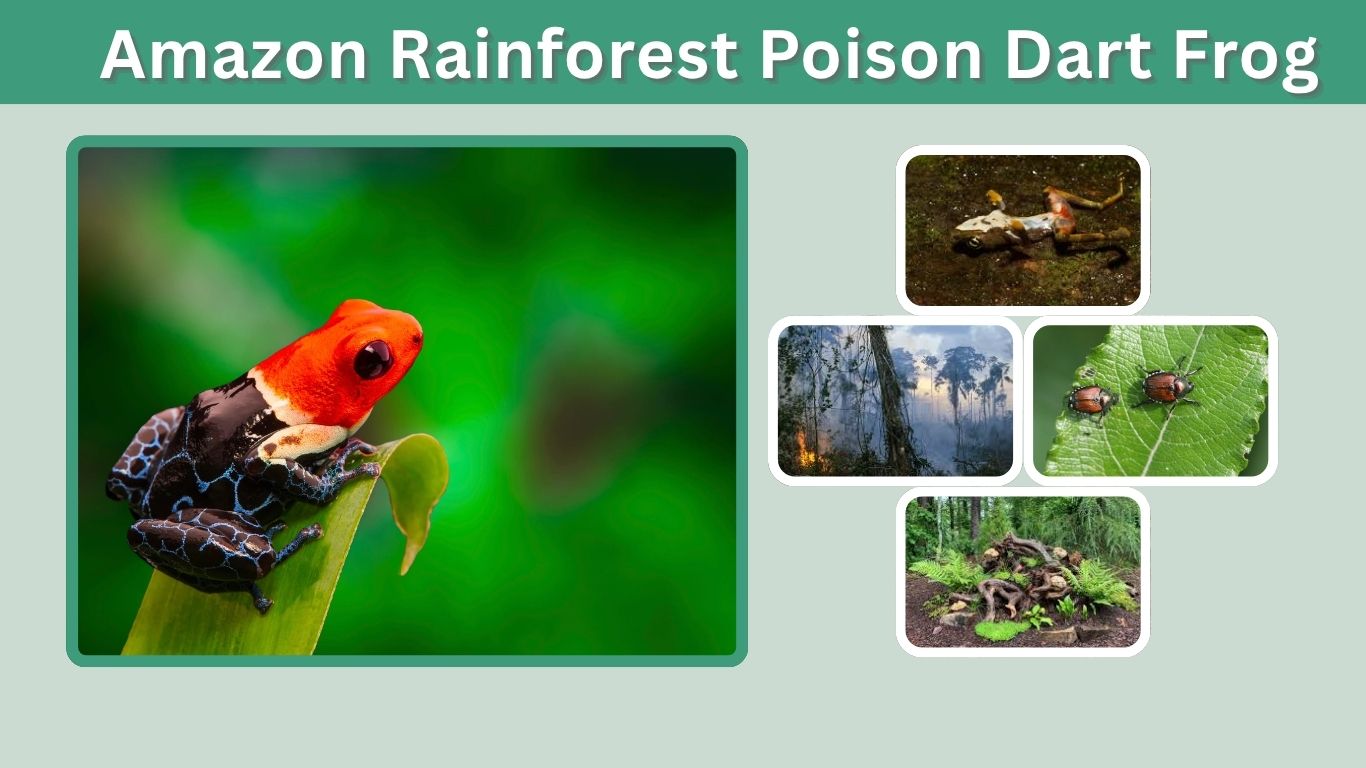
The Amazon rainforest poison dart frog is one of the most colorful and fascinating rainforest animals. These small amphibians are known for bright warning colors, toxic skin secretions, and amazing survival skills. They live in warm, wet forest habitats where food, moisture, and hiding places are easy to find. Their role in the rainforest shows how even tiny animals help keep ecosystems balanced.
What Is an Amazon Rainforest Poison Dart Frog?
Poison dart frogs are small, brightly colored amphibians that belong to the family Dendrobatidae. Many species live in tropical rainforests across Central and South America, including parts of the Amazon region. They are called “poison dart frogs” because some Indigenous groups historically used toxins from certain species on blow darts for hunting.
Not every poison dart frog lives in the Amazon, and not every species is equally toxic. Some are extremely poisonous in the wild, while others have weaker toxins. Their colors can be yellow, blue, green, orange, red, black, or patterned. These colors are not just for beauty. They warn predators that the frog may be dangerous to eat.
Are Poison Dart Frogs Really Poisonous?
Yes, wild poison dart frogs can be poisonous. Their skin can contain toxic chemicals called alkaloids. These toxins help protect them from predators such as snakes, birds, and larger animals.
However, poison dart frogs do not inject venom like snakes or spiders. They are poisonous, not venomous. This means they are harmful if their toxins are touched, swallowed, or enter the body through cuts or sensitive areas.
Captive-bred poison dart frogs are usually much less toxic because they do not eat the same wild insects that help create their poison.
Where Do Poison Dart Frogs Live in the Rainforest?
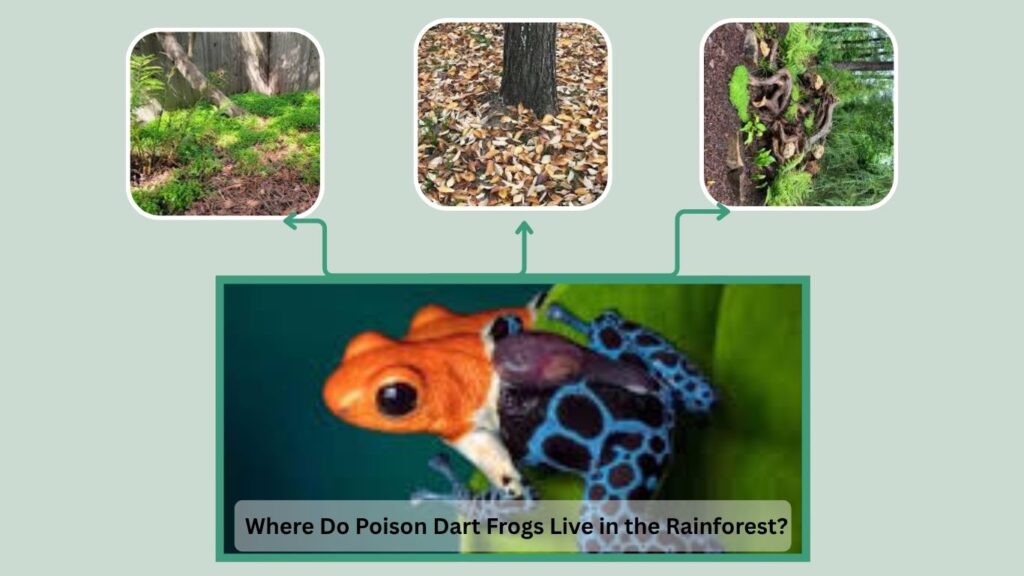
Poison dart frogs live in warm, humid rainforest environments. In the Amazon and other tropical forests, they are often found near the forest floor, in leaf litter, around roots, under logs, beside streams, and sometimes in low plants.
They need moisture to survive because amphibians have delicate skin that can dry out quickly. The rainforest gives them shade, humidity, insects, water sources, and shelter.
Rainforest Layers They Use
Many poison dart frogs spend most of their time in the forest floor and understory layers. These areas provide damp leaves, small insects, and safe places to hide. Some species climb plants and use small water pools in bromeliads or tree holes for breeding.
| Rainforest area | How poison dart frogs use it |
| Forest floor | Hunting insects, hiding in leaf litter, staying moist |
| Understory | Climbing plants, calling for mates, finding shelter |
| Stream edges | Moist habitat and nearby breeding areas |
| Bromeliads/tree holes | Tiny water pools for tadpoles in some species |
Why They Live in Rainforests
Rainforests are ideal for poison dart frogs because they provide the exact conditions these frogs need. The environment stays warm, wet, and full of tiny prey throughout much of the year.
Poison dart frogs live in rainforests because they need:
- High humidity to keep their skin moist
- Warm temperatures for daily activity
- Leaf litter for shelter and hunting
- Small insects and arthropods for food
- Safe breeding places for eggs and tadpoles
- Dense plants to hide from predators
Without the rainforest, many poison dart frog species would struggle to survive.
Amazon Rainforest Poison Dart Frog Adaptations
Poison dart frogs have several adaptations that help them survive in the tropical rainforest. These adaptations include their bright colors, toxic skin, small size, sticky toes, and unique parenting behaviors.
An adaptation is a trait that helps an animal live successfully in its environment. For poison dart frogs, many of their best-known traits are connected to rainforest survival.
Bright Warning Colors
The bright colors of poison dart frogs are one of their most famous adaptations. In nature, bright colors often send a warning message. This is called aposematic coloration.
A predator may learn that a brightly colored frog tastes bad or is dangerous. After one bad experience, the predator may avoid similar frogs in the future. This helps the frog survive without needing to run fast or fight.
Some poison dart frogs are blue, yellow, orange, green, or red. Others have spots, stripes, or mixed patterns that make them stand out against the dark rainforest floor.
Toxic Skin
Their toxic skin is another important adaptation. In the wild, poison dart frogs get many of their toxins from the insects and tiny arthropods they eat. They store these chemicals in skin glands.
This defense protects them from many predators. However, toxicity varies by species. Some species are extremely dangerous, while others are only mildly toxic.
The most toxic species are not usually the common pet species. Still, wild poison dart frogs should never be touched or handled.
Small Size and Quick Movement
Most poison dart frogs are small, but their size helps them move through leaf litter, roots, moss, and low vegetation. Their small bodies allow them to hide in narrow spaces where larger predators cannot easily reach them.
Their quick movements also help them escape danger. Many species are active during the day, which makes their bright colors especially useful as a warning signal.
Sticky Toe Pads
Poison dart frogs have toe pads that help them climb wet leaves, stems, and other rainforest surfaces. This is useful in a habitat where nearly everything can be damp or slippery.
Their climbing ability helps them:
- Move through low plants
- Reach safe resting spots
- Find calling sites
- Search for food
- Access breeding places
- Escape some ground predators
These small physical features make a big difference in a wet forest environment.
What Do Poison Dart Frogs Eat in the Amazon Rainforest?
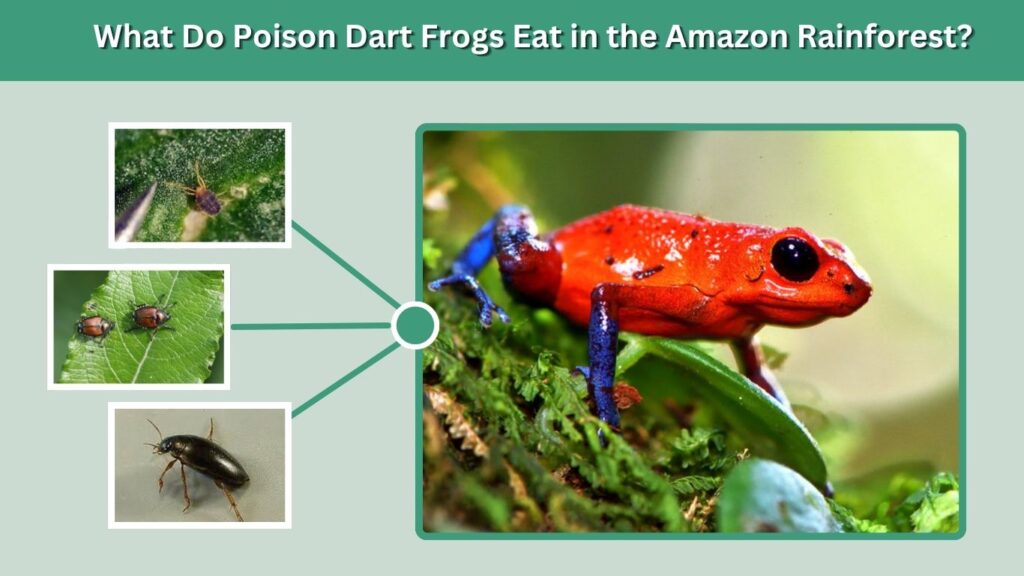
Poison dart frogs are carnivores. They eat tiny animals found in rainforest leaf litter and soil. Their diet usually includes ants, termites, mites, beetles, small flies, and other tiny invertebrates.
Their food is important because it is connected to their poison. Scientists believe many poison dart frogs collect toxins from certain prey and store them in their skin.
Common Wild Foods
In the rainforest, poison dart frogs may eat:
- Ants
- Termites
- Mites
- Beetles
- Small flies
- Springtails
- Tiny spiders
- Other small arthropods
They use their sticky tongues to catch prey quickly. Because they are small, they need small food. They may hunt across the forest floor, under leaves, and around damp plant material.
Why Diet Affects Their Poison
Wild poison dart frogs become toxic because of chemical compounds in their natural food. In captivity, they are usually fed fruit flies, pinhead crickets, and other safe feeder insects. These foods do not contain the same alkaloids found in wild prey.
That is why captive-bred poison dart frogs usually lose much of their toxicity. A frog born and raised in captivity is generally far less poisonous than a wild frog of the same type.
How Do Poison Dart Frogs Survive in the Rainforest?
Poison dart frogs survive through a mix of defense, camouflage, warning colors, careful breeding, and smart habitat use. They are small animals in a forest full of predators, so every survival trait matters.
Defense Against Predators
Their main defense is poison. Predators that try to eat toxic frogs may experience a bad taste, sickness, or worse. Over time, many predators learn to avoid brightly colored frogs.
Some predators may still eat poison dart frogs, especially if they have resistance to the toxins. Eggs and tadpoles are also more vulnerable than adult frogs.
Reproduction and Parental Care
Poison dart frogs are known for interesting parenting behavior. Many frogs lay eggs and leave them, but poison dart frogs often protect or transport their young.
Depending on the species, a parent may carry tadpoles on its back to small pools of water. Some species place tadpoles in bromeliads, tree holes, or other tiny water-filled spaces. This reduces the chance that larger aquatic predators will eat them.
Staying Moist
Moisture is essential for poison dart frogs. Their skin helps them breathe and absorb water, but it also makes them sensitive to drying out. The rainforest provides humid air, shaded ground, wet leaves, and frequent rainfall.
This is one reason poison dart frogs are strongly tied to tropical rainforest habitats.
Blue Poison Dart Frogs in the Rainforest
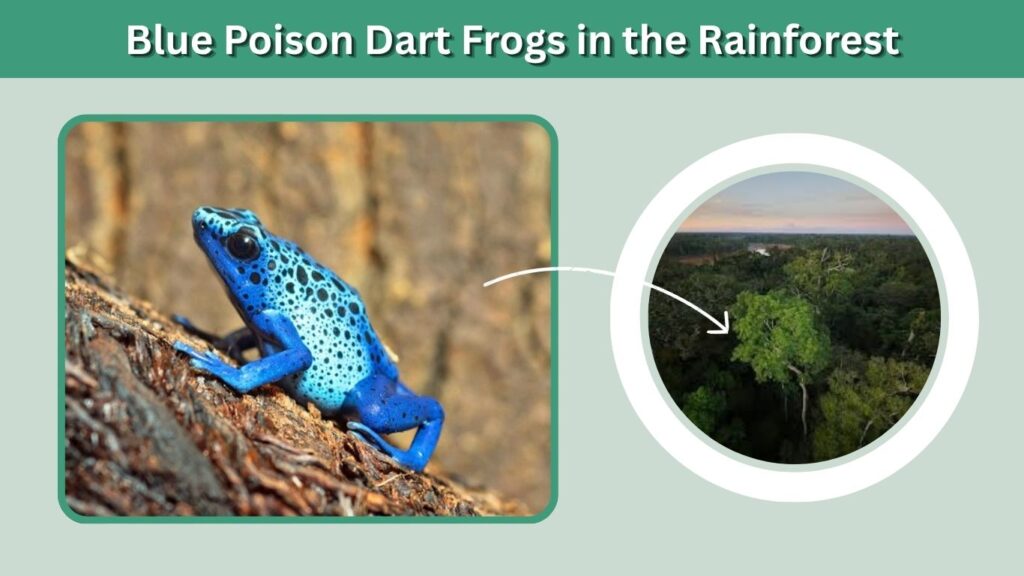
Many people search for blue rainforest poison dart frogs because they are among the most striking amphibians in the world. The blue poison dart frog is known for its bright blue body and dark spots. It is often linked with rainforest habitats, although its exact natural range is more limited than the entire Amazon rainforest.
Are Blue Poison Dart Frogs in the Amazon?
Some blue or blue-patterned poison dart frogs are found in tropical South American forests, but not every blue dart frog lives throughout the Amazon. The well-known blue poison dart frog is associated with rainforest regions of Suriname and nearby areas.
This matters because “Amazon rainforest poison dart frog” is a broad phrase. Many species live in Amazonian or nearby tropical rainforest habitats, but each species has its own natural range.
Why Are They Blue?
The blue color helps warn predators. Just like yellow, orange, or red species, blue poison dart frogs use bright coloration as a visual defense. Predators that recognize warning colors may avoid them.
Their unusual appearance also makes them popular in zoos and captive breeding programs.
What Eats Poison Dart Frogs in the Rainforest?
Poison dart frogs have fewer predators than many small frogs because of their toxins. Still, they are not completely safe. Some animals may eat less toxic species, target eggs and tadpoles, or tolerate certain toxins.
Possible predators include some snakes, birds, spiders, and larger amphibians. Tadpoles may be eaten by aquatic insects or other small water predators if they are placed in unsafe pools.
Why Predators Avoid Them
Predators often avoid poison dart frogs because of their warning colors and toxic skin. A frog that is easy to see might seem like an easy meal, but its color tells predators that eating it could be a mistake.
This is why poison dart frogs do not always need to hide as much as dull-colored frogs. Their bold colors are part of their defense system.
Are Amazon Rainforest Poison Dart Frogs Endangered?
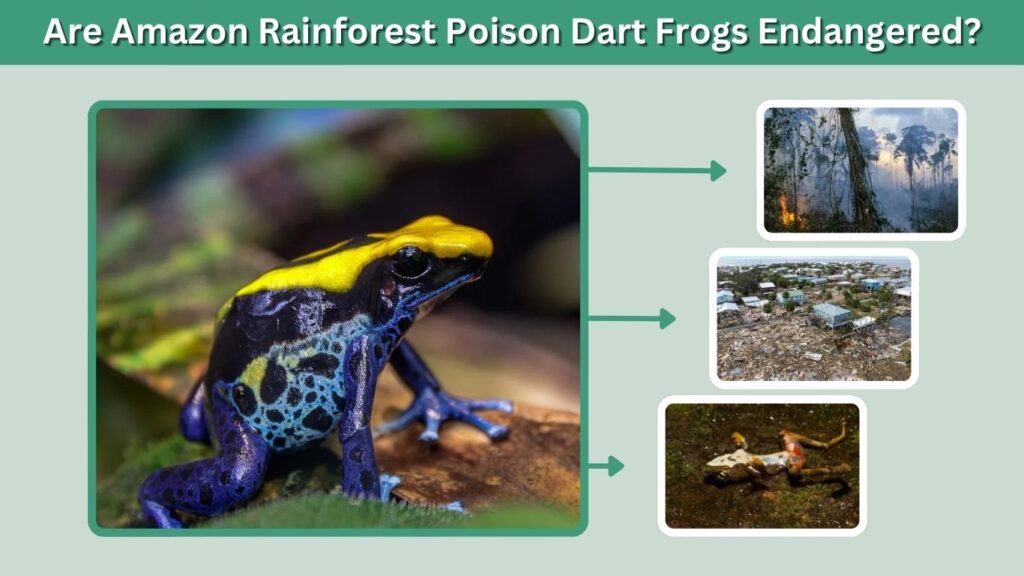
Some poison dart frog species are threatened, while others are more stable. Their conservation status depends on the species and location. Habitat loss is one of the biggest dangers. When rainforests are cut down for farming, roads, mining, logging, or development, frogs lose the damp forest homes they need.
Disease, pollution, climate change, and illegal wildlife trade can also threaten poison dart frogs.
Main Threats
Poison dart frogs may face threats such as:
- Rainforest destruction
- Habitat fragmentation
- Climate change
- Water pollution
- Disease
- Illegal collection for the pet trade
- Loss of breeding sites
Because many species live in small ranges, even limited habitat damage can have serious effects.
Why Conservation Matters
Protecting poison dart frogs also protects the rainforest. These frogs are part of the food web. They eat small insects and serve as prey for some specialized predators. They also help scientists understand toxins, behavior, evolution, and environmental health.
A healthy frog population can be a sign of a healthy ecosystem. Since amphibians are sensitive to environmental changes, declines in frog populations can warn us that something is wrong in the habitat.
Interesting Rainforest Poison Dart Frog Facts
Poison dart frogs are small, but they are full of surprises. Their colors, toxins, parenting habits, and rainforest lifestyle make them one of the most interesting amphibian groups in the world.
Here are some quick facts:
- Poison dart frogs are usually active during the day.
- Their bright colors warn predators to stay away.
- Wild frogs get toxins from their diet.
- Captive-bred frogs are usually much less toxic.
- Some parents carry tadpoles on their backs.
- They live mostly in humid tropical forests.
- They eat tiny insects and arthropods.
- They are poisonous, not venomous.
- Many species are small enough to fit on a human fingertip.
- Habitat loss is a major threat to some species.
These facts make poison dart frogs useful for education, conservation, and scientific research.
FAQs
Do poison dart frogs live in the Amazon rainforest?
Yes, some poison dart frog species live in Amazon rainforest regions, although not every species is found throughout the Amazon. Poison dart frogs are mainly native to tropical forests in Central and South America, with each species having its own specific range.
What do poison dart frogs eat in the rainforest?
Poison dart frogs eat tiny insects and arthropods such as ants, termites, mites, beetles, small flies, and springtails. Their wild diet is important because some prey contain chemical compounds that help the frogs develop toxic skin secretions.
How do poison dart frogs adapt to the rainforest?
Poison dart frogs adapt through bright warning colors, toxic skin, sticky toe pads, small body size, and unique parenting behavior. These traits help them avoid predators, move through wet vegetation, stay hidden, and protect their eggs or tadpoles.
What rainforest layer do poison dart frogs live in?
Most poison dart frogs live mainly on the forest floor and in the understory. They use leaf litter, roots, logs, low plants, and damp areas for shelter, hunting, calling, and breeding. Some species climb plants to reach small water pools.
Why do poison dart frogs live in rainforests?
Poison dart frogs live in rainforests because they need warmth, moisture, shade, insects, and safe breeding sites. The humid rainforest environment helps keep their skin moist and supports the tiny prey they eat every day.
