
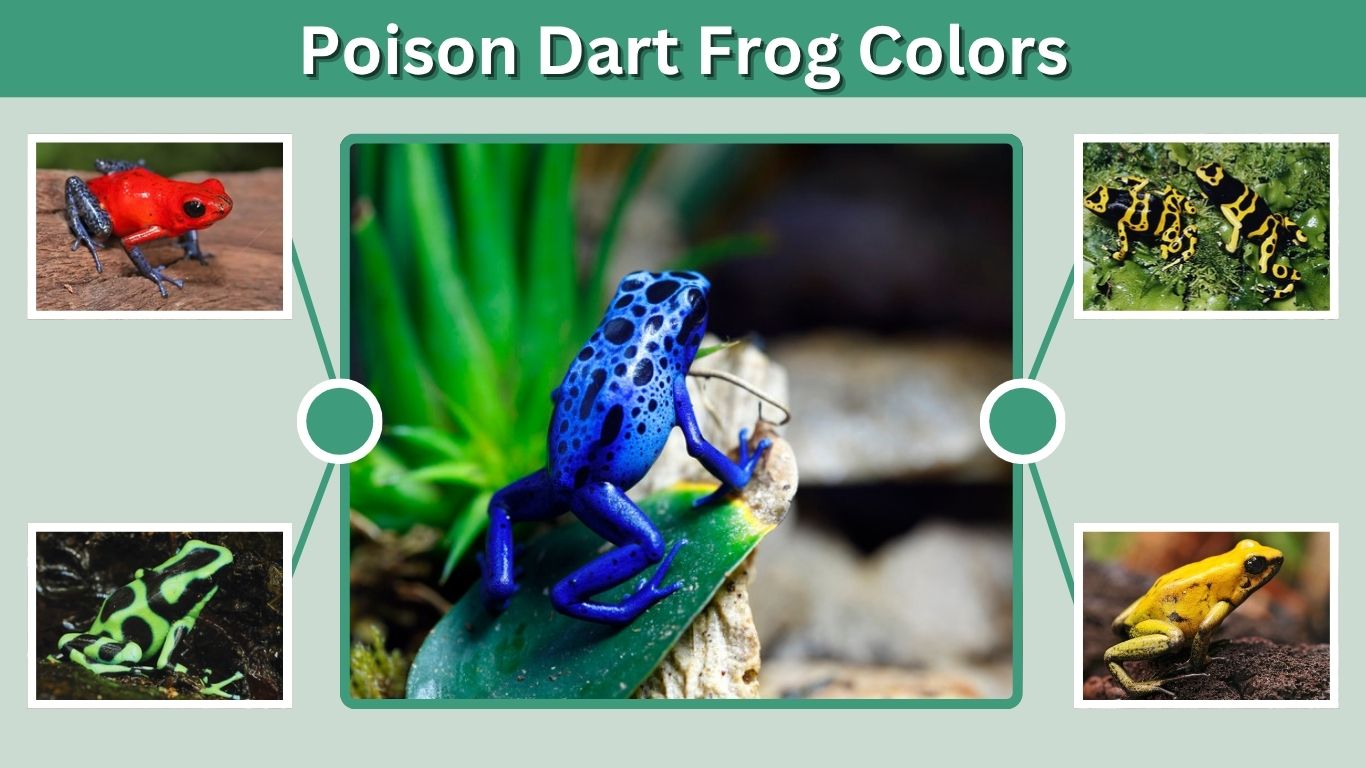
Poison dart frogs are famous for their bright and beautiful colors. Some are blue, yellow, red, orange, green, black, or even patterned with several colors at once. These colors are not only attractive; they also help the frogs survive. In nature, poison dart frog colors often warn predators that the frog may be toxic or unpleasant to eat.
What Colors Are Poison Dart Frogs?
Poison dart frogs come in many colors, depending on the species, habitat, and local population. Some have one main body color, while others have stripes, spots, bands, or mixed patterns. Their colors can be bold and bright, making them some of the most recognizable frogs in the world.
Common poison dart frog colors include:
- Blue
- Yellow
- Orange
- Red
- Green
- Black
- Gold
- White
- Brown
- Mixed or patterned colors
Not every poison dart frog is brightly colored. Some species are more muted, with brown, black, or green tones. However, many of the best-known species are colorful because their bright skin works as a warning signal.
Poison dart frogs are often described as jewel-like animals because their colors look almost unreal. A single species may also have different color forms, sometimes called morphs. This means frogs from one area may look different from frogs of the same species in another area.
Why Are Poison Dart Frogs So Colorful?
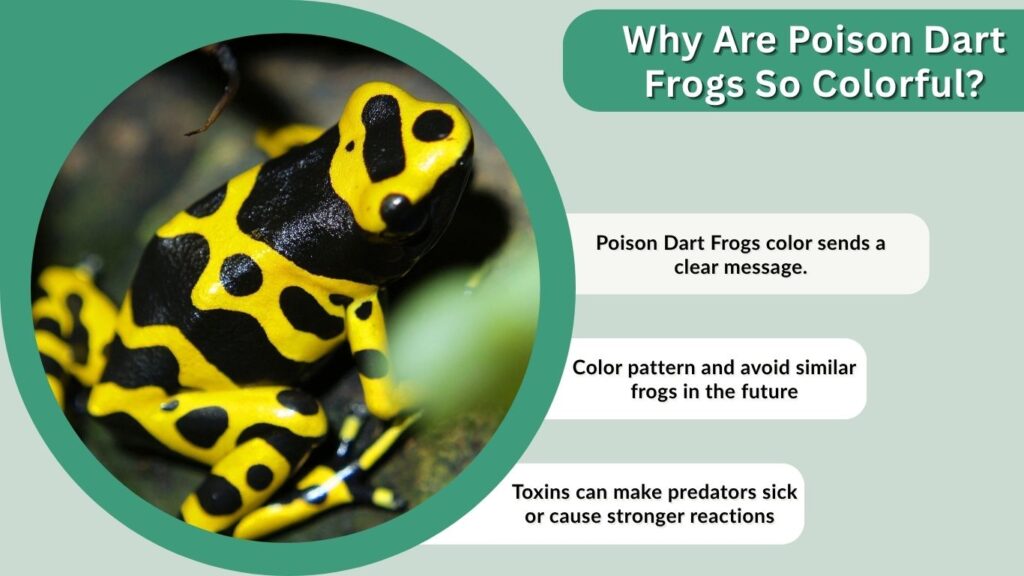
Poison dart frogs are colorful mainly because their colors help protect them. In many animals, bright colors make them easier for predators to see. For poison dart frogs, being noticeable can actually be useful.
Their colors act as a warning. Bright skin tells predators that the frog may be poisonous, toxic, or unpleasant to eat. This type of warning is called aposematic coloration. Predators may learn to avoid animals with strong colors if eating them causes a bad experience.
Color as a Warning Sign
In the rainforest, many predators hunt by sight. A brightly colored frog is easy to notice, but that can be an advantage when the color sends a clear message. Instead of hiding, poison dart frogs advertise danger.
A predator that has tried to eat a toxic frog may remember the color pattern and avoid similar frogs in the future. This gives colorful poison dart frogs a better chance of survival.
Bright Colors and Toxic Skin
Many poison dart frogs have toxins in their skin. These toxins can make predators sick or cause stronger reactions depending on the species. The bright color and the toxin work together.
The color warns the predator before it attacks. The toxin protects the frog if the warning is ignored. This combination is one reason poison dart frogs are such interesting examples of animal adaptation.
Poison Dart Frog Color Meanings
Poison dart frog colors do not have meanings in the human sense, but they do have biological functions. Their colors are connected to survival, communication, and adaptation.
| Color or Pattern | Possible Function | Example |
| Bright yellow or gold | Strong warning signal | Golden poison frog |
| Blue with black spots | Warning coloration and recognition | Blue poison dart frog |
| Red body with blue legs | Predator warning and species identity | Strawberry poison dart frog |
| Green and black pattern | Camouflage mixed with warning | Green and black poison dart frog |
| Orange or red | High visibility warning | Many dart frog species |
| Stripes or bands | Pattern recognition and warning | Yellow-banded poison dart frog |
The exact meaning of color depends on the species and environment. In many cases, color helps predators recognize that the frog should be avoided. In other cases, patterns may also help frogs recognize members of their own species.
Different Colors of Poison Dart Frogs
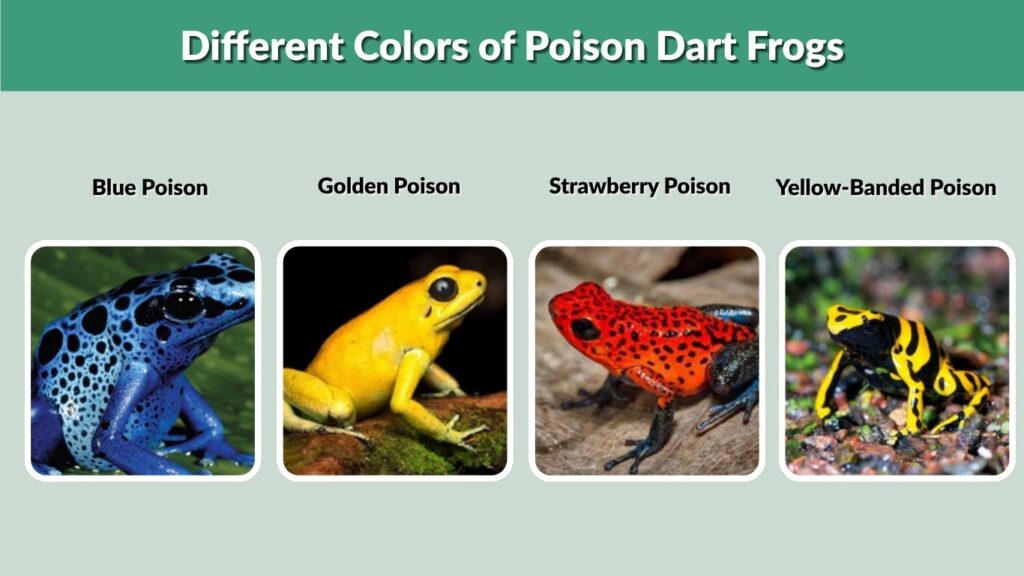
There are many different colors of poison dart frogs. Some species have a single dominant color, while others display several colors at once. These color differences make them popular in wildlife photography, education, and classroom activities.
Blue Poison Dart Frog Colors
The blue poison dart frog is one of the most famous examples. It usually has a bright blue body with dark blue or black spots. The color is bold and easy to recognize.
Its blue skin warns predators that it may be toxic. The dark markings also create a unique pattern that may help individual frogs look slightly different from one another.
Blue poison dart frogs are often used in educational materials because their color is so striking. When people search for poison dart frog colors, blue frogs are usually one of the first examples they expect to see.
Golden Poison Dart Frog Colors
The golden poison dart frog is usually yellow, gold, orange, or pale greenish-yellow. Its color is simple but powerful. Instead of having many markings, it often has a bright solid appearance.
This frog is known as one of the most toxic poison dart frogs. Its golden color works as a strong warning signal. Predators that recognize this color may avoid it quickly.
The golden poison dart frog shows how a single bright color can be just as effective as a complex pattern.
Strawberry Poison Dart Frog Colors
The strawberry poison dart frog is famous for its red body and blue or dark legs, although its color can vary. Some populations may look orange, brown, white, green, or patterned.
This species is a good example of color variation. In different locations, strawberry poison dart frogs may have different color forms. These variations can help scientists study evolution, local adaptation, and predator behavior.
Its bright red color helps warn predators, while its unique pattern makes it one of the most recognizable poison dart frogs.
Green and Black Poison Dart Frog Colors
The green and black poison dart frog usually has a bright green or yellow-green body with dark black markings. This color pattern may help it stand out while also blending with rainforest vegetation in certain conditions.
The contrast between green and black makes the frog visible enough to warn predators. At the same time, the green color connects visually with leaves, moss, and wet forest surfaces.
Yellow-Banded Poison Dart Frog Colors
The yellow-banded poison dart frog has dark skin with bold yellow bands or stripes. This pattern creates strong contrast and makes the frog easy to recognize.
Stripes and bands can be useful because predators may remember the pattern. Once a predator learns that this type of frog is not safe to eat, the frog’s warning pattern becomes even more effective.
Poison Dart Frog Color Variations
Poison dart frog color variations are one reason these animals are so interesting. Even frogs from the same species may not all look exactly the same. Some species have different color morphs based on geography.
Color variation may happen because of:
- Local predator behavior
- Habitat differences
- Genetic variation
- Mate choice
- Isolation between populations
- Evolution over time
For example, one population of frogs may become brighter if predators in that area learn to avoid bold colors. Another population may develop a different pattern if it lives in a slightly different environment.
These variations are especially important for scientists who study evolution. Poison dart frogs show how color can change across populations while still serving an important survival purpose.
Can Poison Dart Frogs Change Color?
Poison dart frogs do not usually change color like chameleons. Their adult colors are mostly fixed. A frog may look slightly different depending on light, moisture, age, or health, but it does not rapidly change from one bright color to another.
Young frogs may also look different from adults. As they grow, their colors and patterns may become stronger or more defined. Tadpoles are usually not as colorful as adult frogs because they live in water and have different survival needs.
So, while poison dart frogs can have many colors as a group, one individual frog does not normally change color dramatically during daily life.
How Do Poison Dart Frogs Get Their Color?
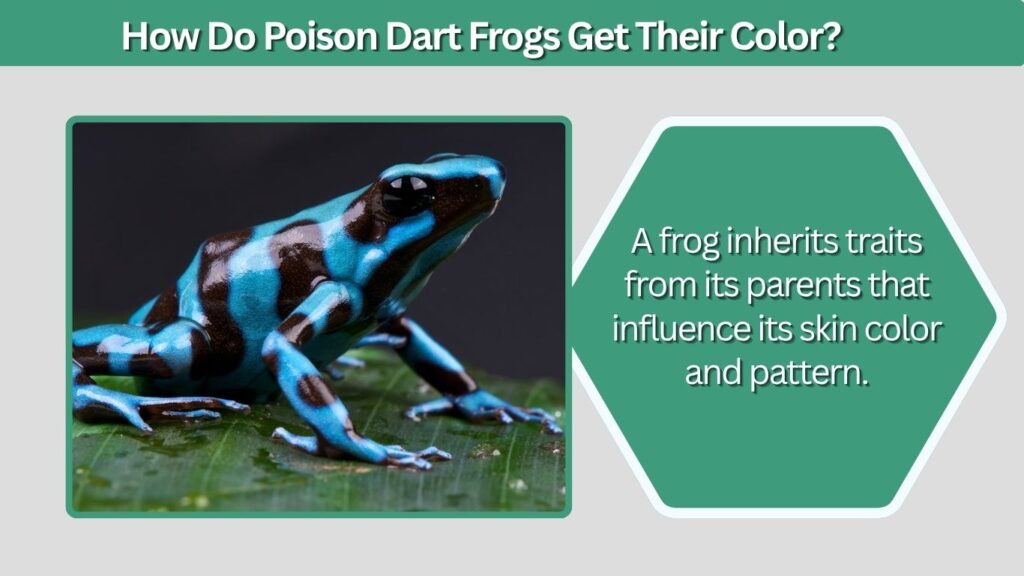
Poison dart frog colors come from pigments and structural features in their skin. Pigments can create colors such as yellow, orange, red, and black. Structural coloration can also affect how light reflects from the skin, helping produce bright or unusual tones.
Their color is controlled mostly by genetics. A frog inherits traits from its parents that influence its skin color and pattern. Environmental factors may affect how healthy or vibrant the frog looks, but the basic color pattern is usually genetic.
This is different from their poison. Many poison dart frogs get their toxins from their diet in the wild. Their colors are inherited, while their toxicity can depend heavily on the foods they eat.
Are Brightly Colored Poison Dart Frogs Always Poisonous?
Bright colors are usually a warning, but not every brightly colored frog is equally poisonous. Some poison dart frogs are extremely toxic, while others are only mildly toxic. Toxicity depends on the species and, in many cases, the frog’s diet.
Wild poison dart frogs often eat ants, mites, and other small arthropods that contain chemical compounds. These compounds help create the frog’s skin toxins. Captive poison dart frogs often become less toxic because they do not eat the same wild diet.
This means color is a warning sign, but it does not tell the full story. A bright frog may be toxic, but the level of danger can vary.
Poison Dart Frog Colors and Patterns
Poison dart frogs are not only colorful; they also have many patterns. Some are spotted, striped, banded, blotched, or marbled. These patterns help make each species visually distinct.
Common poison dart frog patterns include:
- Black spots on blue skin
- Yellow bands on black skin
- Green patches on black skin
- Red bodies with blue legs
- Orange bodies with dark markings
- Mixed blotches or irregular markings
Patterns can make warning coloration more memorable. A predator may not only remember a color, but also a specific pattern. This helps the frog’s warning signal become more effective.
Patterns may also help frogs recognize their own kind. In a rainforest full of small animals, visual signals can be useful for identifying mates and rivals.
Poison Dart Frog Coloring Pages and Activities
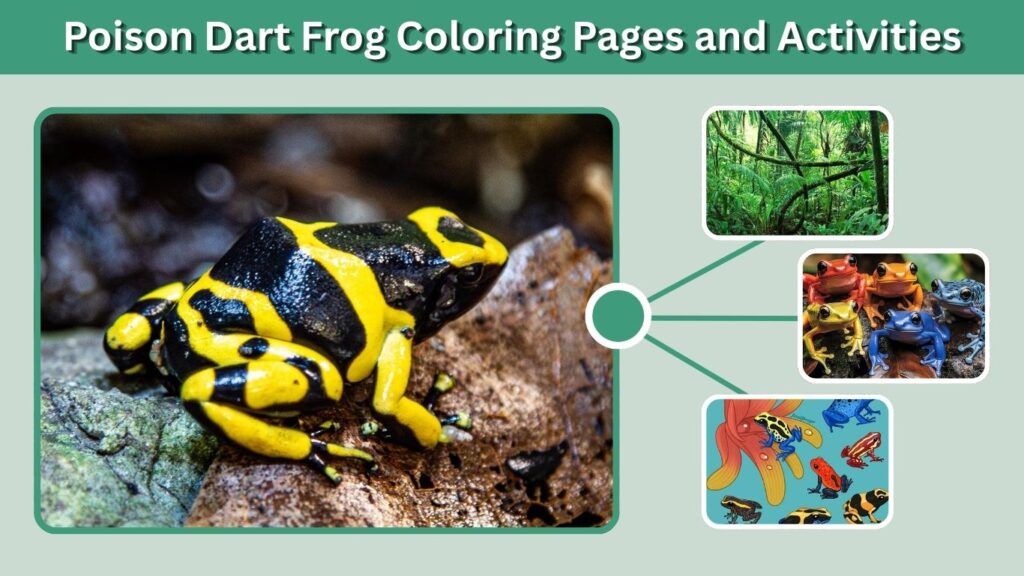
Many people search for poison dart frog coloring pages because these frogs are perfect for art and science activities. Their bright colors make them fun for children, students, and nature learners.
A poison dart frog coloring page can be used to teach:
- Animal adaptations
- Rainforest habitats
- Warning coloration
- Amphibians
- Predator-prey relationships
- Biodiversity
For a realistic coloring page, students can use colors found in real poison dart frogs, such as blue and black, yellow and black, red and blue, green and black, or orange and black.
For a creative activity, students can design their own poison dart frog and explain how its colors might help it survive. This connects art with science and helps children understand why animal colors matter.
Most Common Poison Dart Frog Colors
There is no single “most common” color for all poison dart frogs because the group includes many species. However, some of the most familiar colors are yellow, blue, red, green, orange, and black.
Black is often found as a pattern color. It appears as spots, bands, stripes, or markings on brighter backgrounds. Yellow and orange are common warning colors because they are easy to see. Blue is less common in many animals, which makes blue poison dart frogs especially eye-catching.
Some poison dart frogs also have colors that look metallic or neon under certain lighting. This makes them popular in nature documentaries and educational images.
Why Poison Dart Frog Colors Matter
Poison dart frog colors matter because they are tied to survival. Their colors help predators recognize danger, help scientists study evolution, and help people understand how animals adapt to their environment.
These frogs are also important symbols of rainforest biodiversity. Their colors remind us that tropical forests contain many unique species with specialized traits. When rainforests are damaged, animals like poison dart frogs can lose the habitats and food sources they depend on.
Protecting poison dart frogs means protecting the wet forests, leaf litter, plants, insects, and water sources that support their colorful lives.
FAQs
What color is a poison dart frog?
A poison dart frog can be blue, yellow, red, orange, green, black, gold, or a mix of several colors. The exact color depends on the species. Some have spots, stripes, or bands, while others have one strong main color.
Why are poison dart frogs brightly colored?
Poison dart frogs are brightly colored to warn predators that they may be toxic or unpleasant to eat. This warning coloration helps predators recognize and avoid them, giving the frogs a better chance of survival in the rainforest.
How many colors do poison dart frogs come in?
Poison dart frogs come in many colors, including blue, yellow, orange, red, green, black, gold, white, and brown. Some species also have multiple color morphs, meaning the same species can look different in different locations.
Can poison dart frogs change colors?
Poison dart frogs do not usually change colors like chameleons. Their adult colors are mostly fixed by genetics. However, young frogs may develop stronger colors as they grow, and lighting or moisture can slightly affect how bright they appear.
What is warning coloration in poison dart frogs?
Warning coloration is a bright color pattern that tells predators an animal may be dangerous, toxic, or unpleasant to eat. In poison dart frogs, colors like yellow, blue, red, and orange often act as warning signals.
