
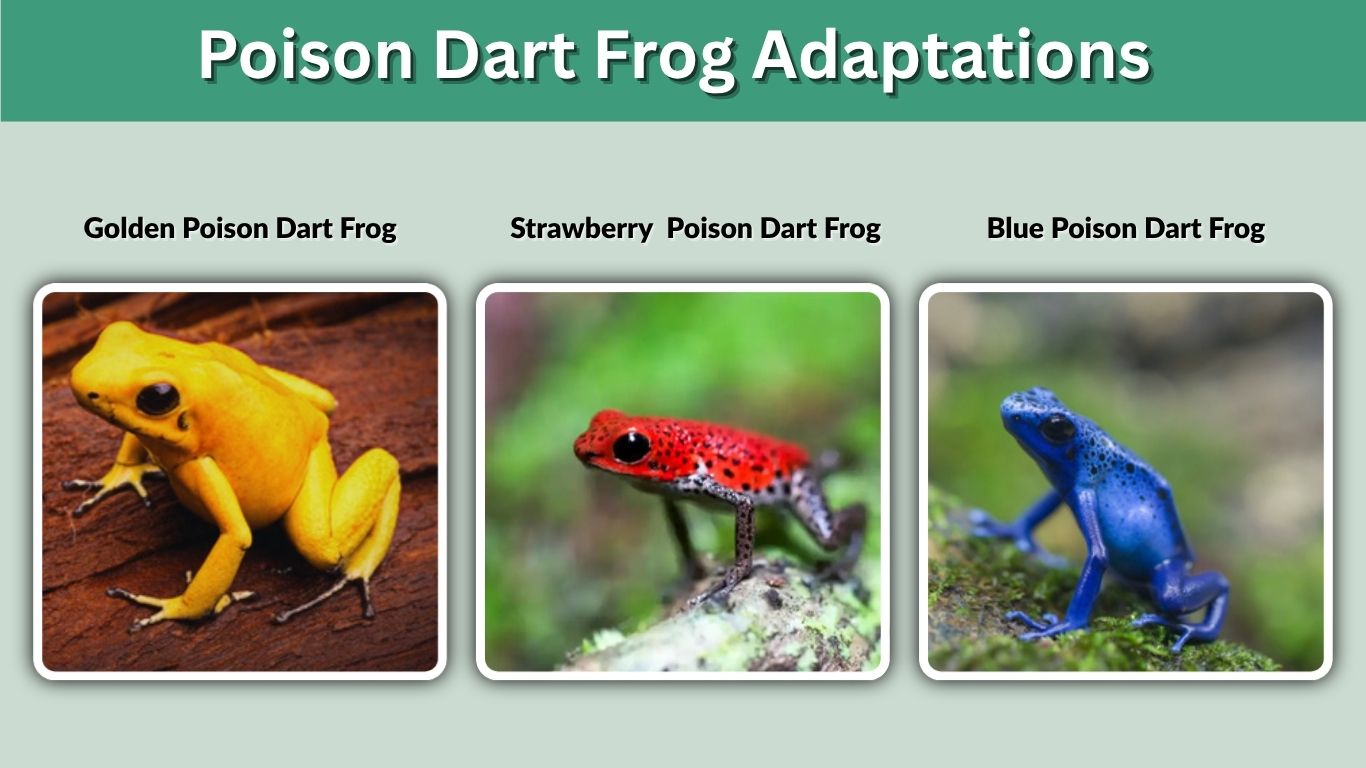
Poison dart frogs are small, colorful amphibians with some of the most fascinating survival traits in the rainforest. Their adaptations help them avoid predators, find food, protect their eggs, and survive in warm, wet habitats. From bright warning colors to toxic skin and careful parenting, poison dart frogs show how even tiny animals can develop powerful strategies for life in a competitive tropical ecosystem.
What Are Poison Dart Frog Adaptations?
Poison dart frog adaptations are special traits that help these frogs survive in their natural environment. These adaptations may be physical, behavioral, or physiological. Together, they allow poison dart frogs to live in tropical rainforests where predators, moisture, competition, and limited breeding spaces all shape how animals survive.
Poison dart frogs are found mainly in Central and South American rainforests. Many species live on the forest floor, while others climb plants and trees. Their small size may make them look vulnerable, but their adaptations make them difficult prey.
Some of the most important poison dart frog adaptations include:
- Bright warning colors
- Toxic skin secretions
- Small, agile bodies
- Sticky toe pads
- Daytime activity
- Careful parental behavior
- Specialized diets
- Moisture-dependent skin
These traits work together. A poison dart frog’s color warns predators, its toxins make it dangerous to eat, and its behavior helps it move safely through the rainforest.
Physical Adaptations of Poison Dart Frogs
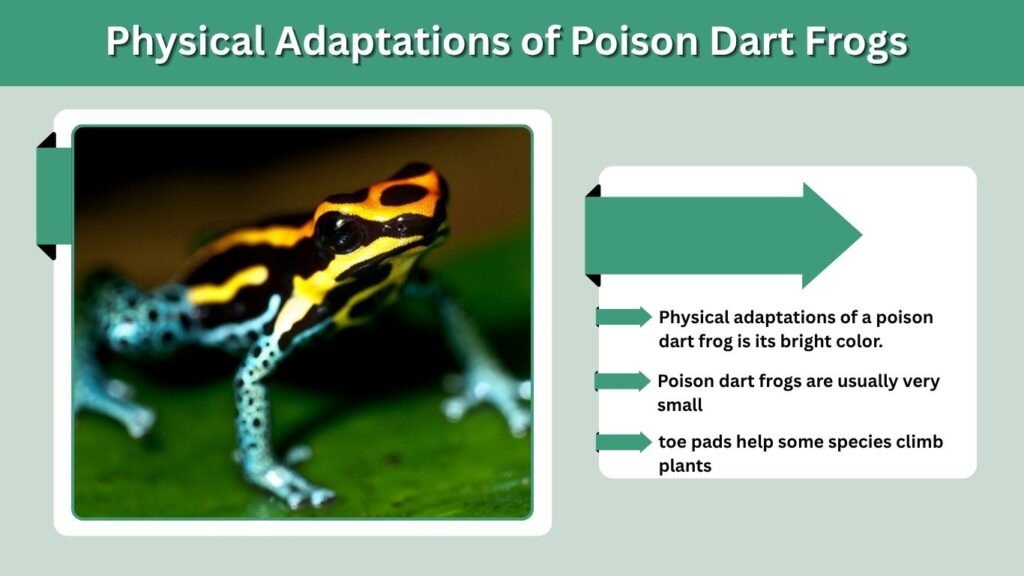
Physical adaptations are body features that help an animal survive. Poison dart frogs have several structural traits that make them well suited to rainforest life.
Bright Warning Colors
One of the most famous physical adaptations of a poison dart frog is its bright color. Many species have vivid shades of blue, yellow, orange, red, green, or black. These colors are not just for beauty. They act as a warning to predators.
This type of warning coloration is called aposematism. It tells predators, “Do not eat me.” Animals that try to eat a toxic frog may become sick or experience a bad reaction. Over time, predators learn to avoid frogs with bright colors and bold patterns.
This adaptation is especially useful because many poison dart frogs are active during the day. Instead of hiding all the time, they can move around more openly because their colors advertise danger.
Small Body Size
Poison dart frogs are usually very small, but that size is helpful in the rainforest. Their compact bodies allow them to move through leaf litter, hide under plants, climb among roots, and escape into small spaces.
A small body also helps them find tiny prey such as ants, mites, termites, and other small invertebrates. Since much of their food is found close to the forest floor, their size is well matched to their diet.
Sticky Toe Pads
Many poison dart frogs have toe pads that help them grip wet leaves, branches, and plant surfaces. Rainforests are humid and slippery, so strong grip is important. These toe pads help some species climb plants and reach safe places for resting or breeding.
This adaptation is especially helpful for species that place tadpoles in water-filled plants, such as bromeliads. Climbing ability gives them access to small pools above the forest floor where tadpoles may be safer from predators.
Moist, Permeable Skin
Like other amphibians, poison dart frogs have moist skin that can absorb water and exchange gases. This helps them survive in humid rainforest environments. However, it also means they must avoid drying out.
Their skin is one reason they depend so heavily on wet habitats. The rainforest provides the moisture they need, while leaf litter and shaded plants help protect them from direct sunlight.
Physiological Adaptations of Poison Dart Frogs
Physiological adaptations are internal body functions that help an animal survive. For poison dart frogs, the most important physiological adaptation is their ability to use toxins as a defense.
Toxic Skin Secretions
Poison dart frogs are known for their poisonous skin. Many species store chemical toxins in their skin glands. When a predator tries to bite or eat the frog, these toxins can cause irritation, sickness, paralysis, or even death depending on the species and toxin strength.
Not all poison dart frogs are equally toxic. Some are only mildly poisonous, while others are extremely dangerous. The golden poison frog is one of the most toxic species, while many captive poison dart frogs lose much of their toxicity over time.
Diet-Based Poison
One of the most interesting poison dart frog adaptations is that their toxins come largely from their diet. In the wild, these frogs eat small arthropods such as ants and mites that contain chemical compounds called alkaloids. The frogs store or modify these compounds in their skin.
This means poison dart frogs raised in captivity often become far less toxic because they do not eat the same wild prey. Their poison is not simply produced from nothing; it is connected to their rainforest food web.
Resistance to Their Own Toxins
Poison dart frogs also need protection from their own chemical defenses. Their bodies can handle toxins that would harm many other animals. This helps them safely store toxic compounds in their skin without poisoning themselves.
This internal resistance is a key survival trait. Without it, the frog’s chemical defense would be dangerous to the frog itself.
Behavioral Adaptations of Poison Dart Frogs
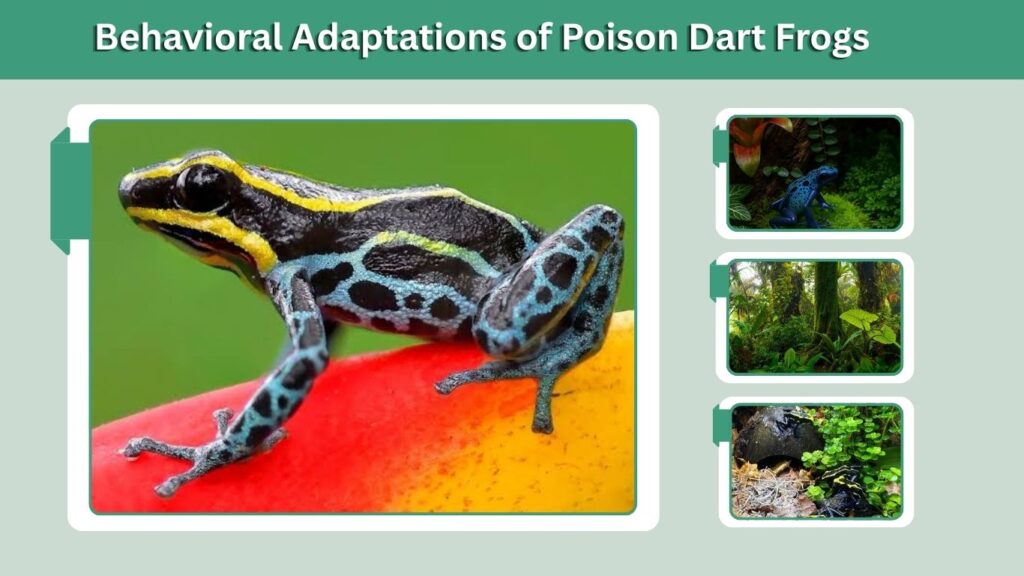
Behavioral adaptations are actions that help an animal survive and reproduce. Poison dart frogs use several behaviors that improve their chances of survival in the rainforest.
Daytime Activity
Many frogs are active at night, but many poison dart frogs are active during the day. Their bright warning colors and toxic skin make daytime movement safer. Since predators can clearly see their colors, the frogs do not always need to rely on darkness for protection.
Being active during the day also helps them search for food, defend territories, and find mates.
Territorial Behavior
Some poison dart frogs defend small territories. Males may call from their territory to attract females and warn other males to stay away. If another frog enters the area, conflicts can happen.
Territorial behavior helps frogs protect valuable resources such as food, shelter, and breeding sites. In a dense rainforest, even a small patch of leaf litter or a good calling spot can be important.
Calling to Attract Mates
Male poison dart frogs often use calls to attract females. These calls help frogs find each other in thick rainforest vegetation. Since many species are small and live in cluttered habitats, sound is an important communication tool.
Calls can also help females choose strong mates. A male that successfully defends a territory and calls regularly may be more attractive to a female.
Parental Care
Parental care is one of the most important behavioral adaptations of poison dart frogs. Unlike many frogs that lay eggs and leave, many poison dart frogs protect their eggs and tadpoles.
In some species, a parent guards the eggs until they hatch. After hatching, the tadpoles may climb onto the adult’s back. The parent then carries them to small pools of water, sometimes in bromeliads, tree holes, or other plant spaces.
This behavior helps tadpoles avoid crowded ponds where predators are more common. Some species even feed tadpoles unfertilized eggs, giving them a direct food source in tiny water pools.
Poison Dart Frog Adaptations in the Tropical Rainforest
The tropical rainforest is warm, wet, crowded, and full of predators. Poison dart frogs are adapted to this environment in several ways.
Their moist skin works well in humid conditions. Their bright colors stand out in green vegetation and shaded leaf litter. Their small bodies help them move through dense forest material. Their toxins protect them from predators that might otherwise eat such tiny animals.
The rainforest also provides the food that helps make them toxic. Ants, mites, and other small arthropods are important parts of their diet. Without this prey, poison dart frogs would not have the same chemical defenses.
Here is a simple breakdown of how their adaptations help them survive:
| Adaptation | Type | How It Helps |
| Bright colors | Physical | Warns predators that the frog may be toxic |
| Toxic skin | Physiological | Defends against predators |
| Sticky toe pads | Physical | Helps the frog climb wet plants |
| Daytime activity | Behavioral | Allows feeding and mating while using warning colors |
| Parental care | Behavioral | Improves egg and tadpole survival |
| Specialized diet | Physiological | Provides chemicals used for toxins |
| Small size | Physical | Helps movement through leaf litter and small spaces |
Blue Poison Dart Frog Adaptations
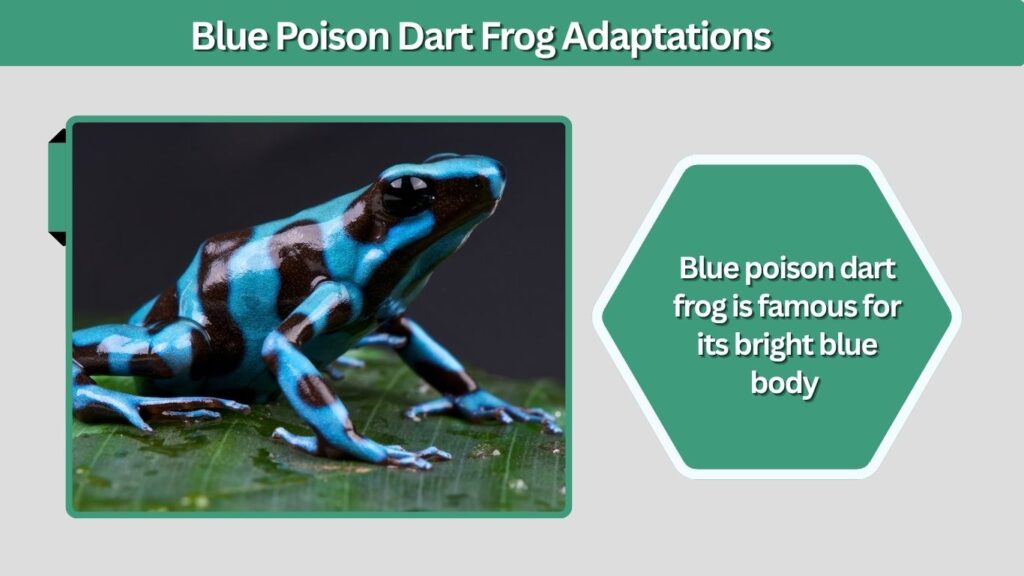
The blue poison dart frog is famous for its bright blue body and dark spots. Its color is one of its most important adaptations because it warns predators that it is not safe to eat.
Blue poison dart frogs also use their small size and strong legs to move across the forest floor. Their skin toxins help protect them, while their colors make the warning easy to recognize.
Like other poison dart frogs, they depend on humid environments. Moist surroundings help protect their skin and allow them to stay active in rainforest habitats.
Golden Poison Dart Frog Adaptations
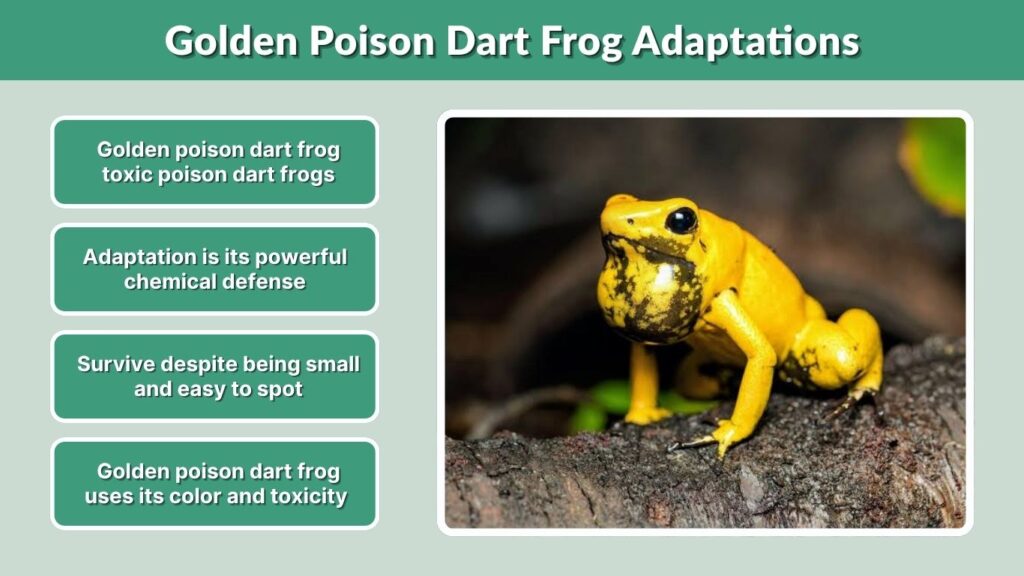
The golden poison dart frog is one of the most toxic poison dart frogs. Its bright yellow or golden color is a strong warning signal. Predators that recognize this color are more likely to avoid it.
Its most important adaptation is its powerful chemical defense. This allows the frog to survive despite being small and easy to spot. Instead of blending into the background, the golden poison dart frog uses its color and toxicity as protection.
This is a good example of how poison dart frogs often survive through warning rather than camouflage.
Strawberry Poison Dart Frog Adaptations
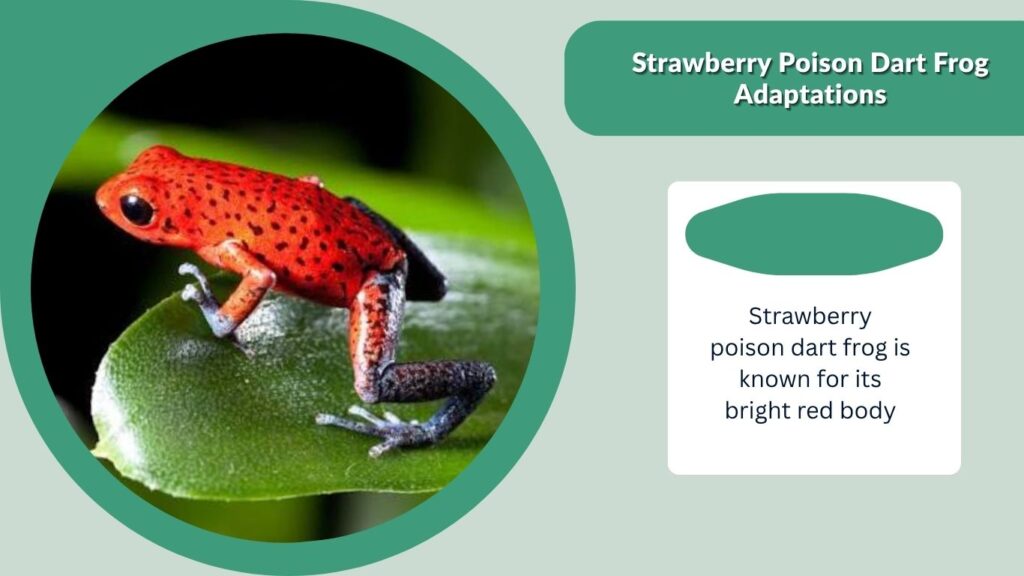
The strawberry poison dart frog is known for its bright red body and blue or dark-colored legs, although colors can vary. Like other species, its bright appearance warns predators.
One of its most interesting adaptations is parental care. In some strawberry poison dart frogs, the female carries tadpoles to small pools in plants and feeds them unfertilized eggs. This behavior gives the tadpoles food and reduces the danger of being eaten in larger water bodies.
This adaptation is especially useful in rainforest habitats where safe breeding spaces can be limited.
How Do Poison Dart Frogs Adapt to Their Environment?
Poison dart frogs adapt to their environment by combining defense, movement, feeding, and reproduction strategies. Their adaptations are not separate tricks; they work as a survival system.
They adapt to the rainforest by:
- Using bright colors to warn predators
- Storing toxins from their diet in their skin
- Staying active during the day
- Moving through leaf litter and wet plants
- Laying eggs in protected places
- Carrying tadpoles to safer water sources
- Depending on humid conditions to protect their skin
These adaptations help poison dart frogs survive in a habitat where many animals compete for food and space.
Why Are Poison Dart Frogs So Colorful?
Poison dart frogs are colorful because their colors help protect them. In many animals, bright colors are dangerous because they make the animal easier to see. For poison dart frogs, being easy to see can be helpful.
Their colors warn predators before an attack happens. A predator that has learned to avoid brightly colored toxic frogs is less likely to bite one. This protects both the frog and the predator, because the predator avoids a harmful meal and the frog avoids injury.
This is different from camouflage. Camouflaged animals survive by hiding. Poison dart frogs often survive by standing out.
Adaptations for Survival
Poison dart frogs are successful because they use several survival adaptations at once. A single adaptation would not be enough. Bright colors are more useful because the frogs are toxic. Toxic skin is more effective because predators can see and remember the warning colors. Parental care is more useful because tadpoles are placed in safer locations.
Their survival depends on balance. They need the right food to maintain toxins, the right habitat to keep their skin moist, and the right breeding sites to raise young. This makes them highly adapted but also vulnerable when rainforest habitats are damaged.
FAQs
What are the main adaptations of a poison dart frog?
The main adaptations of a poison dart frog include bright warning colors, toxic skin, sticky toe pads, small body size, daytime activity, and parental care. These traits help the frog avoid predators, move through the rainforest, find food, and protect its eggs and tadpoles.
How are poison dart frogs adapted to the rainforest?
Poison dart frogs are adapted to the rainforest through moist skin, strong climbing ability, warning coloration, and diet-based toxins. The rainforest provides humidity, shelter, small prey, and breeding spaces such as leaf litter, tree holes, and water-filled plants.
What are the behavioral adaptations of a poison dart frog?
Behavioral adaptations include daytime activity, territorial calling, mate attraction, egg guarding, and tadpole transport. Some species carry tadpoles on their backs to small pools of water, helping young frogs avoid predators and crowded ponds.
What are the physical adaptations of a poison dart frog?
Physical adaptations include bright skin colors, small size, sticky toe pads, strong legs, and moist skin. These features help poison dart frogs warn predators, climb wet plants, move through leaf litter, and survive in humid rainforest environments.
Why do poison dart frogs have poison?
Poison dart frogs use poison as a defense against predators. In the wild, many species get toxic compounds from prey such as ants and mites. These compounds are stored in the skin, making the frog unpleasant or dangerous for predators to eat.
