
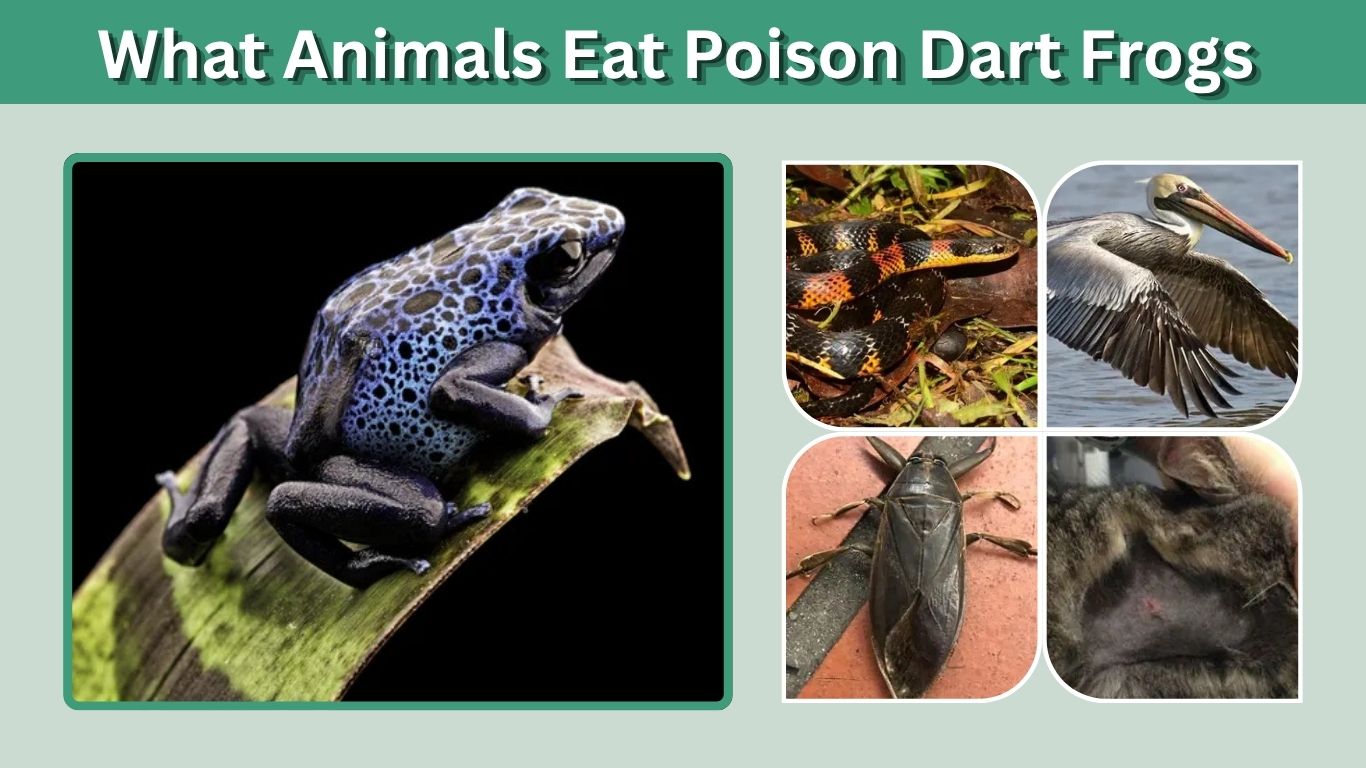
Poison dart frogs are famous for their bright colors and toxic skin, so many people assume nothing can eat them. In reality, very few predators are able or willing to attack these tiny amphibians. Some snakes, insects, spiders, birds, and larger frogs may try, but only a few animals have adaptations that help them survive the frog’s powerful chemical defenses.
Quick Answer: What Animals Eat Poison Dart Frogs?
A few animals can eat poison dart frogs, but they are not common prey for most rainforest predators. The best-known predator is the fire-bellied snake, which has resistance to some poison frog toxins. Other possible predators include large spiders, giant water bugs, certain birds, and larger amphibians, especially when the frogs are young or less toxic.
Common or possible poison dart frog predators include:
- Fire-bellied snakes
- Some larger snakes
- Giant water bugs
- Large spiders
- Certain birds
- Larger frogs
- Small mammals that may attack young or weak frogs
Adult poison dart frogs are usually avoided because their skin can contain toxic alkaloids. Their bright colors act like warning signs that tell predators, “Do not eat me.” This defense is called aposematism.
Why Most Animals Avoid Poison Dart Frogs
Poison dart frogs do not need claws, sharp teeth, or speed to survive. Their main defense is chemical. Many species store toxins in their skin, and those toxins can make predators sick, paralyzed, or even dead depending on the frog species and the predator.
Bright Colors Warn Predators
Poison dart frogs are often red, yellow, orange, blue, green, or black. These colors are not just for beauty. In the rainforest, bright colors can work as a warning. Predators learn that animals with bold warning colors may taste bad or be dangerous.
This is why many poison dart frogs move around during the day instead of hiding all the time. Their colors help protect them by making predators think twice before attacking.
Their Poison Comes From Their Diet
Poison dart frogs do not usually create their toxins from nothing. Wild poison dart frogs get many of their toxic compounds from the tiny animals they eat, such as ants, mites, termites, and other small arthropods. The frogs store these chemicals in their skin.
This is also why poison dart frogs raised in captivity are often much less toxic or not toxic at all. Without the same wild diet, they do not build up the same level of skin poison.
Main Predators of Poison Dart Frogs
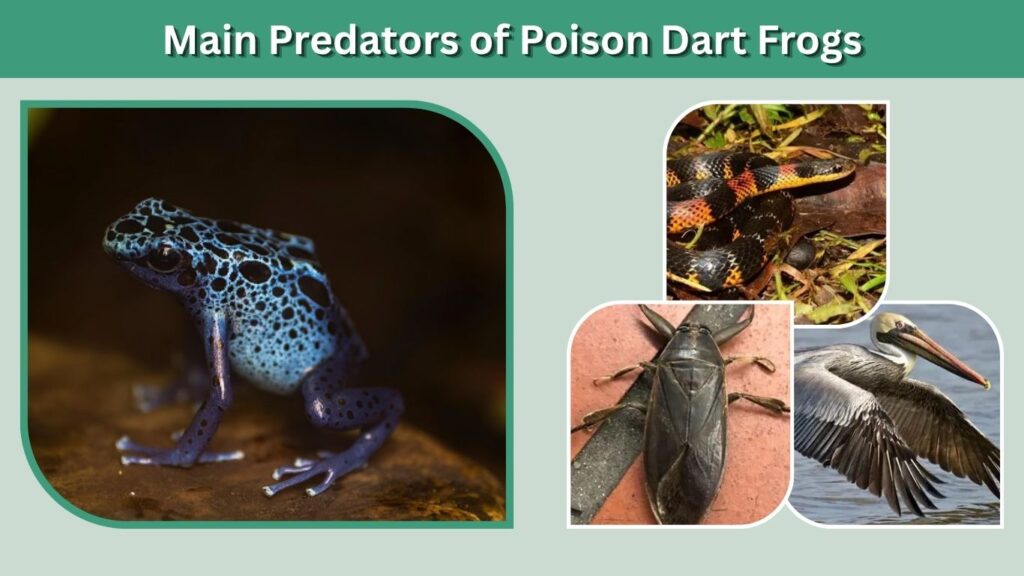
Although poison dart frogs are dangerous to many animals, they still have natural enemies. The level of risk depends on the frog species, the predator, the frog’s age, and how toxic the frog is.
| Predator | Can It Eat Poison Dart Frogs? | Why It Matters |
| Fire-bellied snake | Yes | Known for resistance to poison frog toxins |
| Larger snakes | Sometimes | May prey on less toxic frogs or young frogs |
| Giant water bugs | Sometimes | Can attack small frogs near water |
| Large spiders | Sometimes | May catch small or juvenile frogs |
| Birds | Rarely | Most avoid bright toxic frogs, but some may try |
| Larger frogs | Sometimes | May eat tadpoles, froglets, or small adults |
| Small mammals | Rarely | More likely to avoid adult toxic frogs |
Fire-Bellied Snakes
The fire-bellied snake is one of the most important answers to the question, “What animal eats a poison dart frog?” This snake has developed resistance to toxins that would harm many other predators. It can eat some poison frogs without dying.
That does not mean poison dart frogs are easy prey. Even resistant predators may still be affected by toxins, and not every snake can safely eat them. The fire-bellied snake is special because it has adaptations that help it handle the frog’s poison better than most animals.
Giant Water Bugs
Giant water bugs are powerful aquatic insects that can attack small frogs. They use piercing mouthparts to inject digestive fluids into prey. If a poison dart frog or young frog gets too close to water, it may become vulnerable.
This type of predation is more likely with smaller frogs, juveniles, or frogs near streams, puddles, or wet leaf litter. Poison does not make a frog impossible to catch; it only makes the meal risky.
Spiders and Other Invertebrate Predators
Large rainforest spiders may prey on small amphibians, including young frogs. A spider does not always need to swallow a frog whole immediately. It can bite, immobilize, and consume prey slowly.
Young poison dart frogs may be more vulnerable than adults because they are smaller and may not yet have built up the same toxin levels. Tadpoles and froglets face many more dangers than fully grown adults.
Birds and Small Mammals
Most birds and mammals avoid adult poison dart frogs because of their warning colors and toxins. However, mistakes can happen. A young predator may attack a frog before learning that it is dangerous. Some animals may also target less toxic species or individuals.
In many cases, a predator may bite a poison dart frog and then drop it because of the bad taste or toxic reaction. This still harms the frog, but it teaches the predator to avoid similar frogs in the future.
Are Any Animals Immune to Poison Dart Frogs?
Some animals are resistant, but “immune” can be misleading. The fire-bellied snake is often described as resistant to poison dart frog toxins. This means the toxins do not affect it as severely as they affect many other animals.
Resistance is not always complete immunity. A predator may survive eating a poison frog but still experience some effects. Also, poison dart frogs are not all equally toxic. Some species are extremely dangerous, while others are only mildly toxic.
Why Resistance Evolves
Predators can evolve resistance when they regularly encounter toxic prey. Over many generations, individuals that survive toxic meals may pass on traits that help them tolerate the poison.
This creates an evolutionary relationship between predator and prey. As frogs become better defended, some predators may become better at handling those defenses. Still, poison dart frogs remain risky meals for most animals.
What Animals Do Poison Dart Frogs Eat?
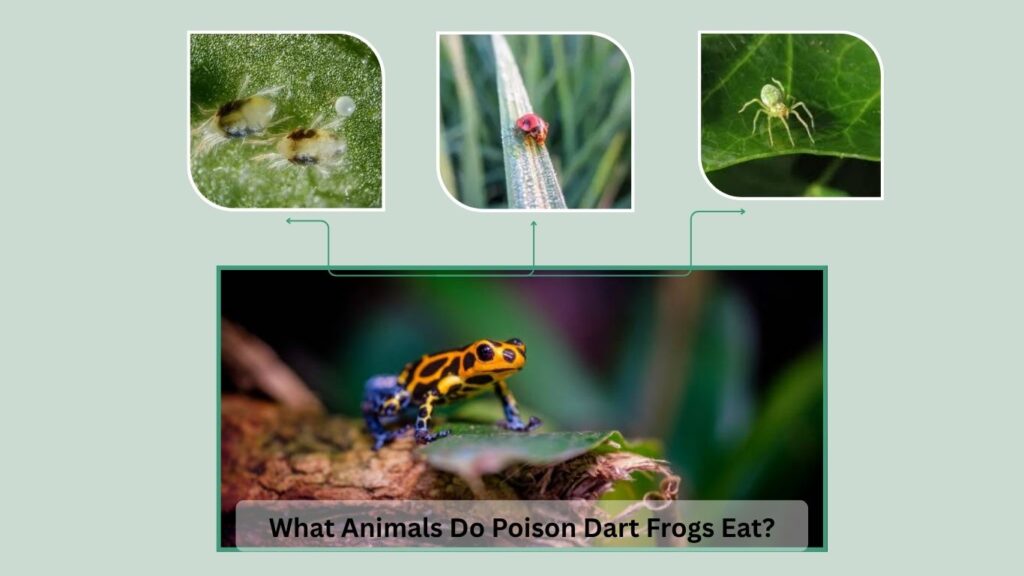
Poison dart frogs are predators too. They are small, but they hunt tiny rainforest animals every day. Their diet is one reason they become toxic in the wild.
Poison dart frogs commonly eat:
- Ants
- Termites
- Mites
- Beetles
- Fruit flies
- Springtails
- Tiny insects
- Small arthropods
Many poison dart frogs use their sticky tongues to catch prey quickly. Their small size allows them to hunt in leaf litter, moss, roots, and humid rainforest floors where tiny insects are abundant.
How Diet Connects to Poison
The frog’s diet is one of the most interesting parts of its biology. Many poison dart frogs collect toxic alkaloids from the insects and mites they eat. Instead of being harmed by those chemicals, the frogs store them in their skin.
This turns a tiny frog into a dangerous meal. A predator that eats the frog may suffer because the frog has already collected toxins from smaller prey. In this way, poison dart frogs are connected to many levels of the rainforest food chain.
Poison Dart Frogs in the Rainforest Food Web
Poison dart frogs live in tropical rainforests in Central and South America. They are part of a complex food web that includes insects, spiders, snakes, birds, mammals, plants, fungi, and decomposers.
Their Role as Predators
Poison dart frogs help control tiny insect populations. By eating ants, termites, mites, and other small invertebrates, they influence the balance of life in the leaf litter. They may be small, but they are active hunters.
Their Role as Prey
Even toxic animals can become prey. Poison dart frog eggs, tadpoles, and young froglets are especially vulnerable. They may be eaten by insects, spiders, fish, larger frogs, and other small rainforest predators.
Adult poison dart frogs have stronger defenses, but they are not completely safe. A predator with resistance, experience, or opportunity may still attack.
Are Poison Dart Frogs the Most Poisonous Animals?
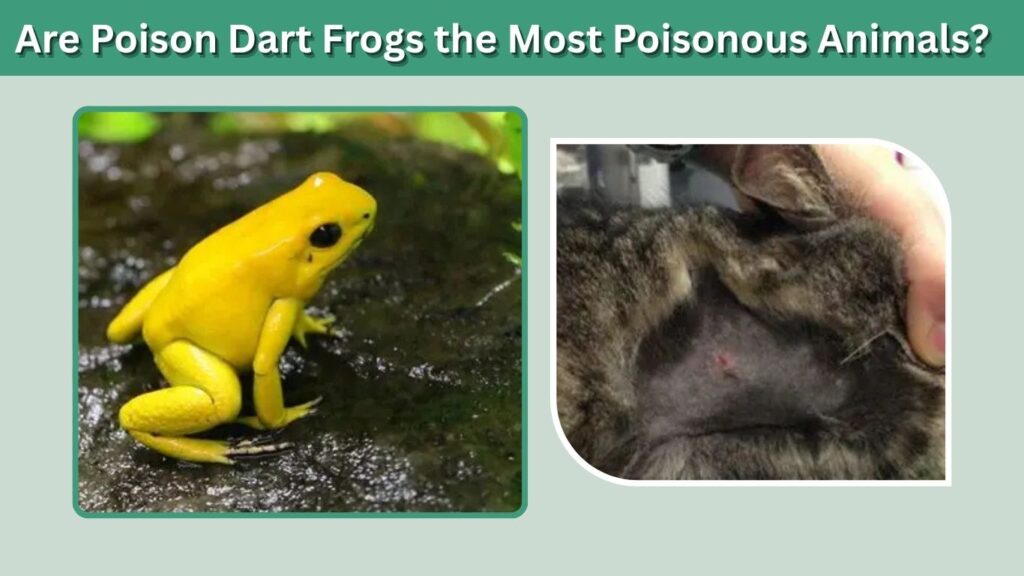
Some poison dart frogs are among the most poisonous animals on Earth. The golden poison frog is often considered one of the most toxic animals known. Its skin contains powerful toxins that can be deadly to many animals.
However, not every poison dart frog is equally poisonous. There are many species in the poison frog family, and toxicity varies widely. Some are extremely toxic, while others are much less dangerous.
It is also important to understand the difference between poisonous and venomous. Poison dart frogs are poisonous because their toxins are harmful when touched, eaten, or absorbed. They are not venomous because they do not inject venom with fangs or stingers.
Can Humans Safely Touch Poison Dart Frogs?
It is not safe to touch wild poison dart frogs. Their skin toxins can be dangerous, especially if the toxins enter cuts, eyes, or the mouth. Even if a species is not the most toxic, handling can also stress or injure the frog.
Captive-bred poison dart frogs are often much less toxic because they do not eat the same wild insects. Still, they should only be handled by experienced keepers when necessary. Amphibians have delicate skin that can absorb oils, chemicals, and salts from human hands.
How Poison Dart Frogs Protect Themselves
Poison dart frogs use several survival strategies, not just poison. Their defenses work together to reduce the chance of being eaten.
Their main adaptations include:
- Bright warning colors
- Toxic skin secretions
- Small size for hiding in leaf litter
- Quick movement across the forest floor
- Parental care in some species
- Daytime activity that uses warning colors effectively
These adaptations help explain why poison dart frogs have fewer predators than many other small rainforest animals.
FAQs
What animal eats poison dart frogs?
The fire-bellied snake is the best-known predator of poison dart frogs. It has resistance to some poison frog toxins, allowing it to eat frogs that many other predators avoid. Some spiders, giant water bugs, birds, and larger frogs may also prey on young or less toxic poison dart frogs.
Are any animals immune to poison dart frogs?
Some animals are resistant rather than fully immune. The fire-bellied snake is commonly known for its ability to tolerate poison dart frog toxins. However, resistance can vary depending on the predator, frog species, and toxin level.
Do birds eat poison dart frogs?
Most birds avoid adult poison dart frogs because of their bright warning colors and toxic skin. However, inexperienced birds or certain opportunistic predators may attack young, weak, or less toxic frogs. Many predators learn to avoid them after a bad experience.
What do poison dart frogs eat?
Poison dart frogs eat small insects and arthropods, including ants, termites, mites, beetles, springtails, and fruit flies. Their wild diet helps them collect toxic chemicals, which they store in their skin as a defense against predators.
Are poison dart frogs dangerous to humans?
Wild poison dart frogs can be dangerous because their skin may contain powerful toxins. The golden poison frog is especially toxic. Captive-bred poison dart frogs are usually much less toxic, but they should still be handled carefully because amphibians have sensitive skin.
