
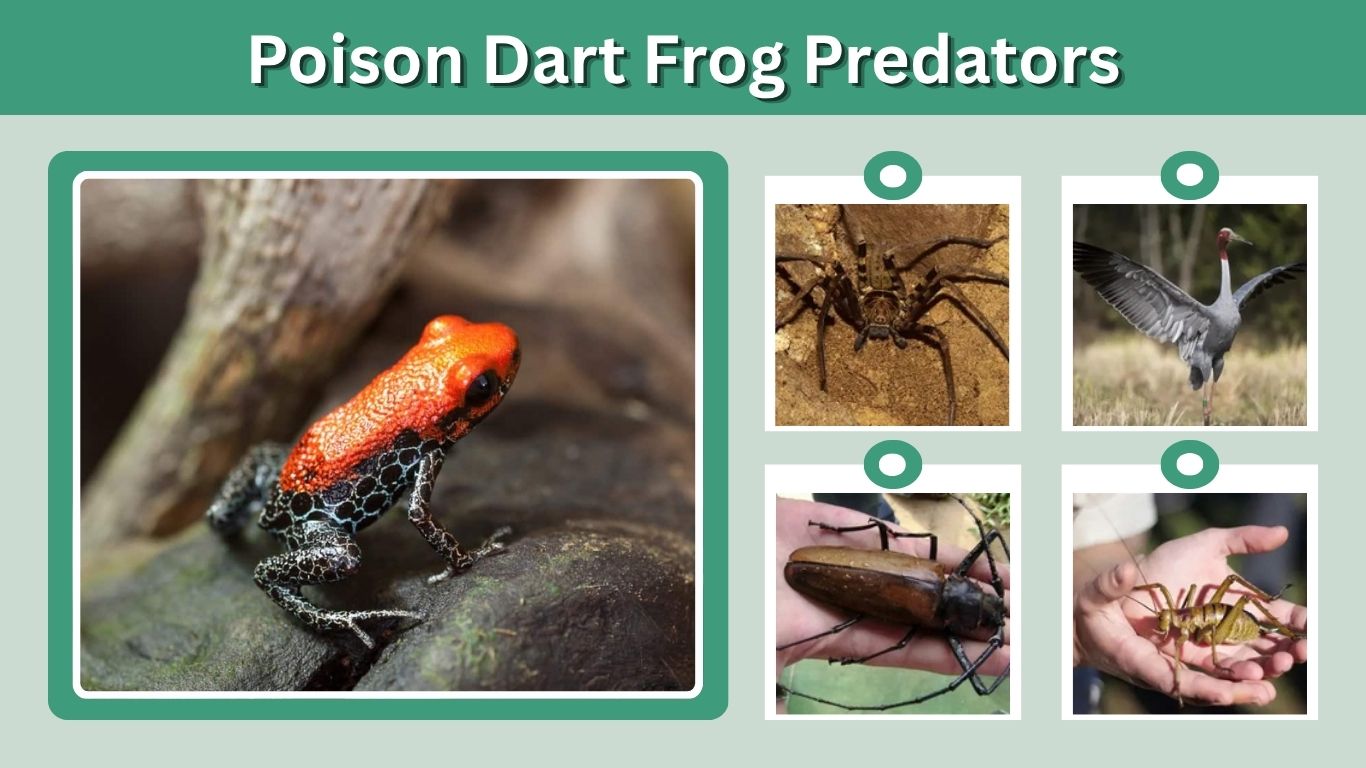
Poison dart frogs are famous for their bright colors, tiny bodies, and powerful skin toxins. Because of this, many people wonder whether they have any natural enemies at all. While most predators avoid them, poison dart frogs are not completely safe. A few snakes, insects, spiders, birds, and larger amphibians may prey on them, especially when they are young or less toxic.
Do Poison Dart Frogs Have Predators?
Yes, poison dart frogs do have predators, but they have fewer natural enemies than many other small rainforest animals. Their toxic skin makes them dangerous to eat, and their bright colors warn predators to stay away.
The most famous poison dart frog predator is the fire-bellied snake. This snake is known for having resistance to some poison dart frog toxins, which allows it to eat frogs that many other animals would avoid.
However, poison dart frog predators can vary depending on the species, location, age, and toxicity of the frog. Tadpoles and young froglets are usually more vulnerable than fully grown adults.
Why They Are Hard to Eat
Poison dart frogs are protected by chemical defenses. Many species store toxic compounds in their skin. These toxins can make predators sick, numb, paralyzed, or even dead in extreme cases.
Their bright colors are also part of their defense. Red, yellow, blue, orange, green, and black patterns act as warning signs. Predators often learn that brightly colored frogs are not worth the risk.
Main Poison Dart Frog Predators
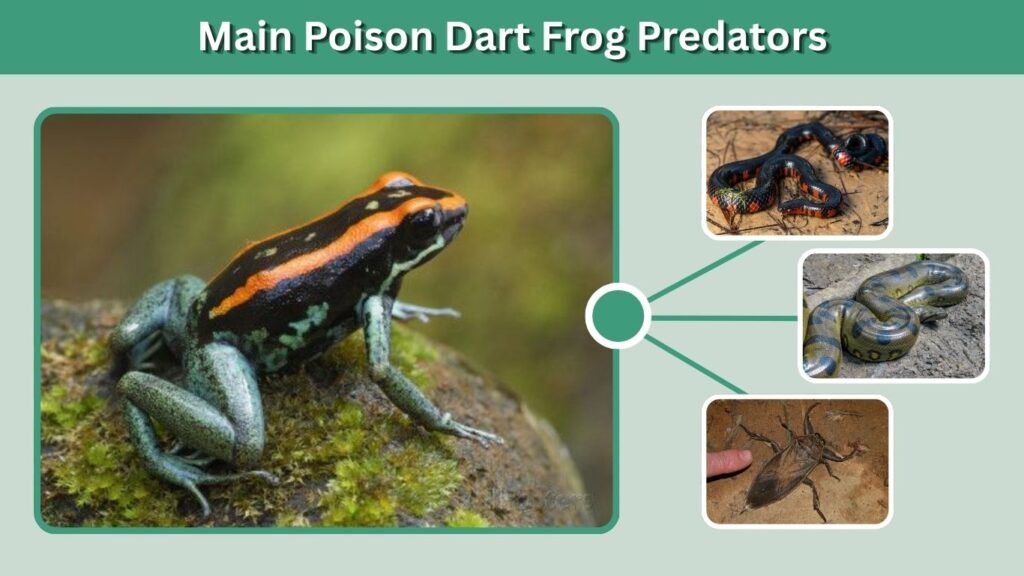
Poison dart frogs are not common prey, but several animals may eat them under certain conditions. Some predators are resistant to their toxins, while others may attack young frogs before they become strongly toxic.
| Predator | Risk to Poison Dart Frogs | Notes |
| Fire-bellied snake | High | Known for resistance to poison frog toxins |
| Larger snakes | Medium | May eat less toxic frogs or young frogs |
| Giant water bugs | Medium | Can attack small frogs near water |
| Large spiders | Medium | May catch froglets or small adults |
| Birds | Low to medium | Most avoid toxic frogs, but some may try |
| Larger frogs | Medium | May eat tadpoles or young frogs |
| Small mammals | Low | Usually avoid adults because of toxins |
Fire-Bellied Snake
The fire-bellied snake is the best-known predator of poison dart frogs. Unlike many animals, it can tolerate toxins that would harm or kill other predators. This makes it one of the few natural predators that can successfully eat some poison dart frogs.
This does not mean every poison dart frog is easy for the snake to eat. Toxicity differs among frog species. Some poison dart frogs are mildly toxic, while others are extremely dangerous. Even resistant predators may face some risk.
Larger Snakes
Other rainforest snakes may also prey on poison dart frogs, especially if the frog is young, small, or less toxic. Snakes are opportunistic predators, which means they often eat whatever prey they can catch.
However, most snakes are not specially adapted to handle poison dart frog toxins. If a snake attacks a highly toxic species, the result may be dangerous for the snake. This is why poison dart frogs are not a regular food source for most snakes.
Giant Water Bugs
Giant water bugs are strong aquatic insects that can attack small frogs. They live in or near water and use sharp mouthparts to pierce prey. If a young poison dart frog gets too close to water, it may become vulnerable.
These insects are more likely to prey on tadpoles, froglets, or small adults. Adult poison dart frogs that stay on land and away from water are usually less exposed to giant water bugs.
Predators of Young Poison Dart Frogs
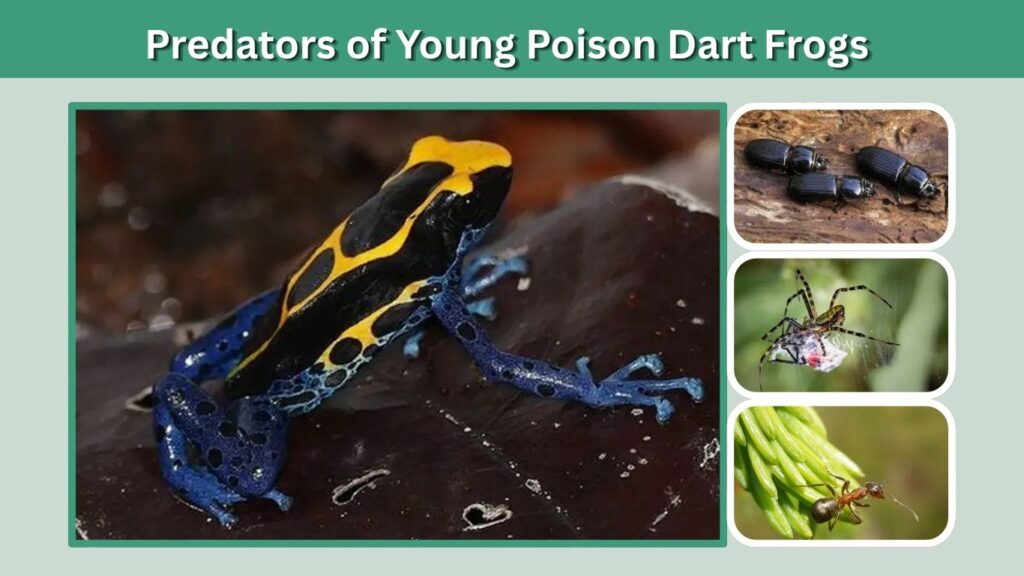
Young poison dart frogs face more danger than adults. Eggs, tadpoles, and froglets do not always have the same level of protection as mature frogs. They are also smaller and easier to catch.
Common predators of young poison dart frogs include:
- Aquatic insects
- Larger tadpoles
- Small fish
- Spiders
- Ants
- Larger frogs
- Small snakes
- Birds
Young frogs may not have built up strong toxins yet. Since many poison dart frogs get their toxins from their wild diet, froglets may become more toxic over time as they eat ants, mites, termites, and other tiny arthropods.
Tadpole Predators
Poison dart frog tadpoles may be eaten by insects, fish, and other aquatic animals. Some poison dart frogs avoid this danger by laying eggs in hidden places or carrying tadpoles to small pools of water.
In some species, parents place tadpoles in tiny water-filled spaces, such as bromeliad plants. This helps reduce the number of predators that can reach them.
Froglet Predators
Froglets are small, newly developed frogs. They are more mobile than tadpoles but still vulnerable. Large spiders, insects, snakes, and birds may attack them.
Because froglets are tiny, predators may catch them before noticing their warning colors. Some predators may also learn through experience that these frogs are toxic and avoid them in the future.
Are Poison Dart Frogs Predators or Prey?
Poison dart frogs are both predators and prey. They are predators because they hunt small insects and other tiny animals. They are prey because some animals can still eat them.
Poison Dart Frogs as Predators
Poison dart frogs mainly eat small invertebrates. Their diet includes ants, termites, mites, beetles, fruit flies, springtails, and other tiny rainforest animals.
They use their sticky tongues to catch prey quickly. Because they are small, they hunt close to the forest floor, in leaf litter, moss, roots, and damp vegetation.
Poison Dart Frogs as Prey
Although they are toxic, poison dart frogs still fit into the rainforest food web as prey. Their eggs, tadpoles, and young frogs are especially important food sources for some predators.
Adult poison dart frogs are less commonly eaten because their toxins and warning colors make them risky meals.
How Do Poison Dart Frogs Protect Themselves From Predators?
Poison dart frogs have several adaptations that help them survive in the rainforest. Their defenses are so effective that many predators avoid them completely.
Important poison dart frog defenses include:
- Toxic skin secretions
- Bright warning colors
- Small size for hiding
- Fast movement
- Camouflage in some species
- Parental care
- Careful egg-laying locations
Toxic Skin
The most famous defense of poison dart frogs is their toxic skin. Many species store alkaloid toxins in their skin glands. These toxins can affect a predator’s nerves, muscles, or heart.
The golden poison frog is one of the most toxic frogs in the world. Its skin contains powerful toxins that can be deadly to many animals. However, not all poison dart frogs are equally toxic.
Warning Colors
Bright colors help poison dart frogs avoid being eaten. Predators often learn that bold colors mean danger. This type of warning coloration is called aposematism.
A predator that bites a toxic frog may spit it out and avoid similar frogs later. This helps protect other frogs with the same warning colors.
Parental Care
Some poison dart frogs show impressive parental care. Adults may guard eggs, carry tadpoles on their backs, or place tadpoles in safer water sources. This behavior helps young frogs survive during their most vulnerable stages.
Blue Poison Dart Frog Predators
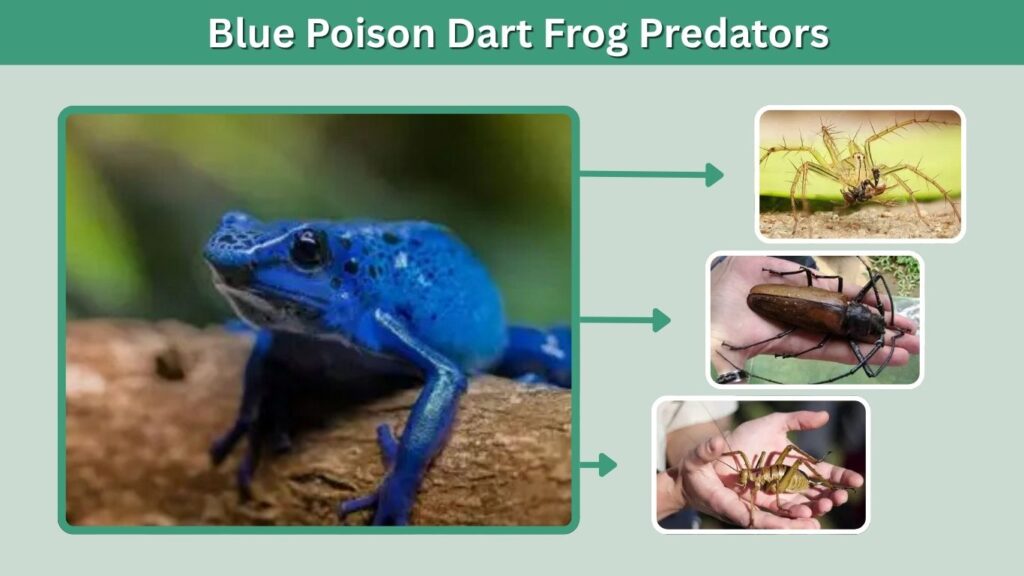
Blue poison dart frogs have bright blue bodies with dark spots. Their bold color warns predators that they may be toxic. Because of this, most predators avoid them.
Possible blue poison dart frog predators include snakes, spiders, birds, and large insects. However, adult blue poison dart frogs are not easy prey because their color and toxins work together as strong defenses.
Young blue poison dart frogs are more vulnerable than adults. Tadpoles and froglets may be eaten by insects, larger frogs, or other small predators.
Golden Poison Dart Frog Predators
The golden poison dart frog is one of the most toxic animals on Earth. Because of its powerful toxins, it has very few predators. Most animals avoid it because eating one could be fatal.
The fire-bellied snake is often mentioned as one of the few predators with resistance to poison dart frog toxins. Even so, the golden poison dart frog is not easy prey.
Its bright yellow or orange color is a strong warning signal. Predators that recognize this warning usually stay away.
Strawberry Poison Dart Frog Predators
The strawberry poison dart frog is small, colorful, and found in parts of Central America. It has bright warning colors and toxic skin that help protect it from many predators.
Possible strawberry poison dart frog predators include snakes, spiders, birds, and insects. However, most attacks are more likely to happen when the frog is young or when the predator is inexperienced.
Strawberry poison dart frogs are also known for parental care. Females may feed their tadpoles with unfertilized eggs, helping them grow in small pools of water.
Green and Black Poison Dart Frog Predators
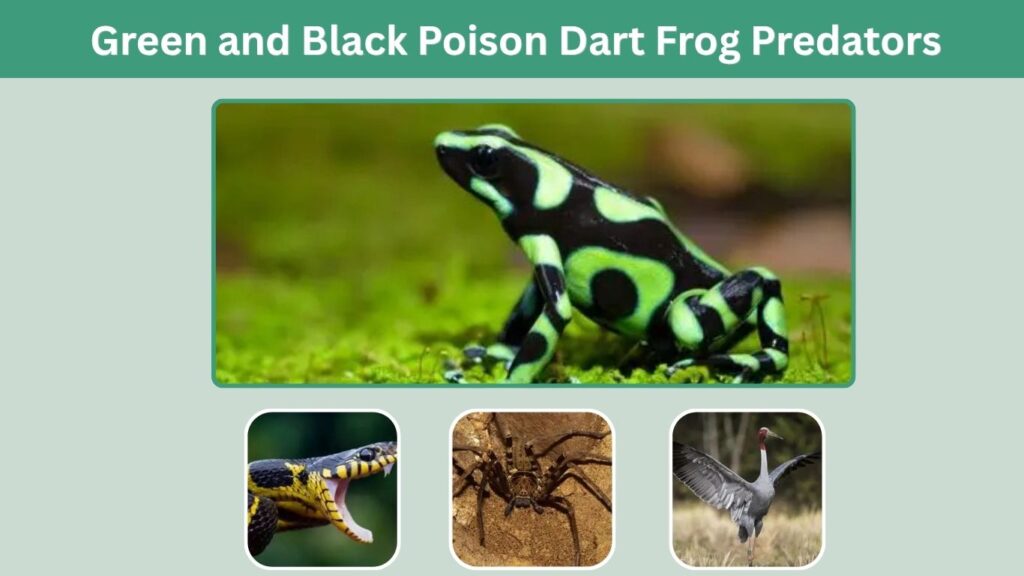
Green and black poison dart frogs use bright green and dark markings to warn predators. Like other poison dart frogs, they are toxic in the wild because of the small arthropods they eat.
Their predators may include resistant snakes, large spiders, birds, and insects. However, adult green and black poison dart frogs are often avoided because of their warning colors and toxic skin.
In captivity, these frogs are usually less toxic because they do not eat the same wild insects that provide their natural toxins.
Poison Dart Frog Predators and Prey in the Food Chain
Poison dart frogs play two important roles in the rainforest food chain. They eat tiny animals, and they may be eaten by larger predators.
As predators, they help control small insect populations. As prey, they provide food for a limited number of animals that can tolerate or avoid their toxins.
What Poison Dart Frogs Eat
Poison dart frogs eat:
- Ants
- Termites
- Mites
- Beetles
- Fruit flies
- Springtails
- Tiny insects
- Small arthropods
Their diet is directly connected to their toxicity. Many wild poison dart frogs get toxic chemicals from the insects and mites they eat. They store those chemicals in their skin for protection.
What Eats Poison Dart Frogs
Animals that may eat poison dart frogs include:
- Fire-bellied snakes
- Other snakes
- Giant water bugs
- Large spiders
- Birds
- Larger frogs
- Small mammals
Even though these predators exist, poison dart frogs are still avoided by most rainforest animals.
Why Some Poison Dart Frogs Have Fewer Predators
Not all poison dart frogs are equally protected. Some species are highly toxic, while others are only mildly toxic. The more toxic a frog is, the fewer predators it usually has.
Color also matters. Brightly colored frogs are easier for predators to recognize and avoid. This may sound risky because bright frogs are easier to see, but their colors actually help them survive by advertising danger.
Habitat also affects predator risk. Frogs that live in dense leaf litter, wet forest floors, or hidden plant spaces may avoid many predators simply by staying out of sight.
FAQs
What are poison dart frog predators?
Poison dart frog predators include fire-bellied snakes, larger snakes, giant water bugs, large spiders, some birds, larger frogs, and small mammals. However, adult poison dart frogs have few predators because their toxic skin and bright warning colors make them dangerous to eat.
Do poison dart frogs have any predators?
Yes, poison dart frogs do have predators, but not many. Their main known predator is the fire-bellied snake, which has resistance to some poison dart frog toxins. Young frogs, tadpoles, and less toxic species are more vulnerable to other predators.
What is the main predator of a poison dart frog?
The fire-bellied snake is commonly known as the main predator of poison dart frogs. It can tolerate toxins that many other animals cannot. This resistance allows it to eat some poison dart frogs safely.
Are poison dart frogs predators or prey?
Poison dart frogs are both predators and prey. They are predators because they eat ants, termites, mites, beetles, fruit flies, and other tiny animals. They are prey because snakes, insects, spiders, birds, and larger frogs may eat them.
How do poison dart frogs protect themselves from predators?
Poison dart frogs protect themselves with toxic skin, bright warning colors, quick movement, hiding behavior, and parental care. Their bright colors warn predators that they are poisonous, while their skin toxins make them dangerous or unpleasant to eat.
