
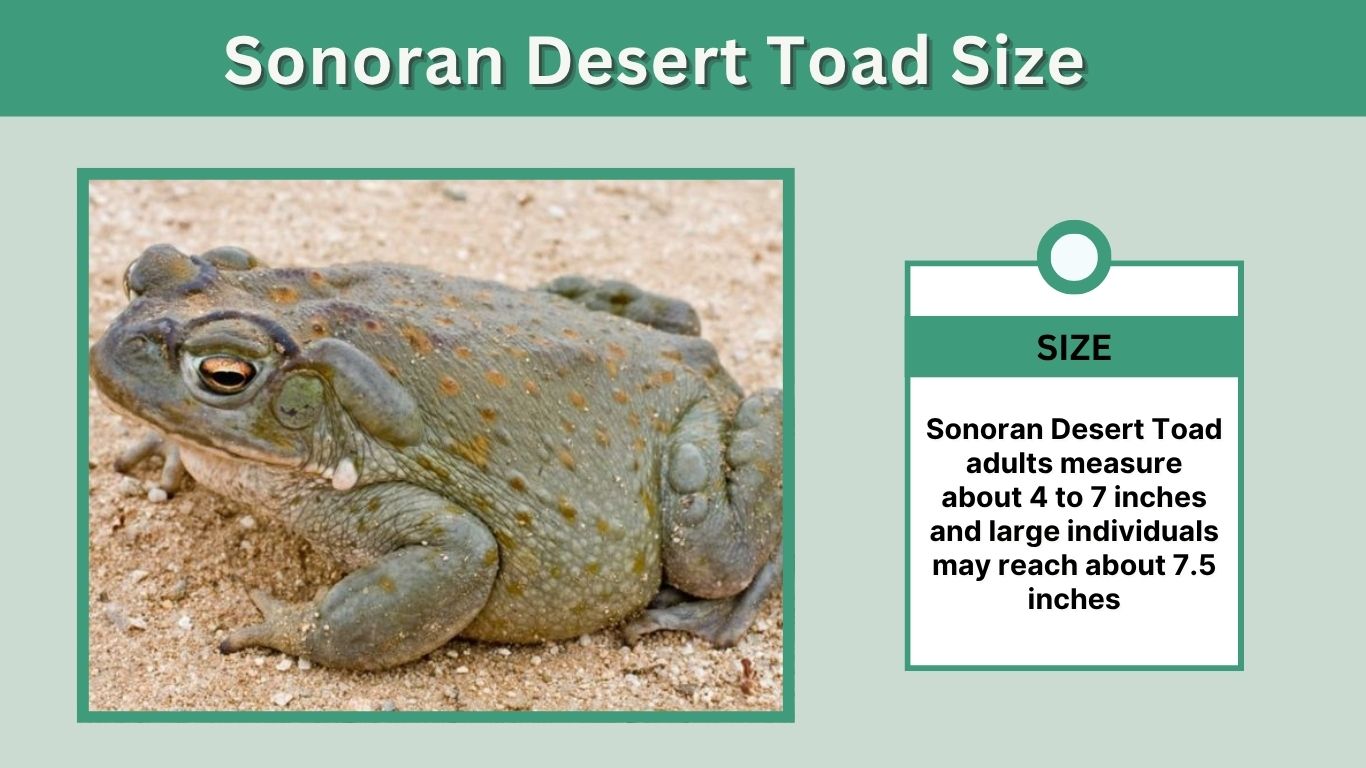
The Sonoran Desert toad is one of the largest native toads in North America. Its wide body, thick legs, and large poison glands make it easy to recognize, especially after summer rains. Many people are surprised by its size when it appears in yards, roads, or near pools. Understanding its size helps with identification, safety, and pet protection.
What Is the Average Sonoran Desert Toad Size?
The Sonoran Desert toad, also called the Colorado River toad, is a large, heavy-bodied amphibian. Most adults measure about 4 to 7 inches long from snout to vent. Some large individuals may reach about 7.5 inches, making them much bigger than many common backyard toads.
This measurement does not include the legs when stretched out. The body length is the main size measurement used for toads and frogs. Because the Sonoran Desert toad is thick and broad, it can look even larger than its measured length.
Why It Looks So Big
The Sonoran Desert toad looks large because it has:
- A broad, rounded body
- Thick back legs
- Wide head
- Large glands behind the eyes
- Smooth, leathery skin
- Heavy build compared with smaller toads
Its size is especially noticeable at night when it appears suddenly after monsoon rain. A large adult sitting on a patio or road can look almost hand-sized.
Sonoran Desert Toad Size Chart
Sonoran Desert toads grow from tiny tadpoles into large adults. Their size changes quickly during early life, especially when water and food are available.
| Life Stage | Approximate Size | Notes |
|---|---|---|
| Eggs | Tiny jelly-like clusters | Laid in water after rain |
| Tadpoles | Small and dark | Develop in temporary or permanent water |
| Newly changed toads | Less than 1 inch | Leave water after metamorphosis |
| Juveniles | 1–3 inches | Grow as they feed on insects |
| Average adults | 4–7 inches | Large, broad-bodied toads |
| Very large adults | Up to about 7.5 inches | Among the largest native North American toads |
Size can vary depending on age, food supply, climate, health, and habitat. Older adults are usually larger than young toads.
Male vs Female Sonoran Desert Toad Size
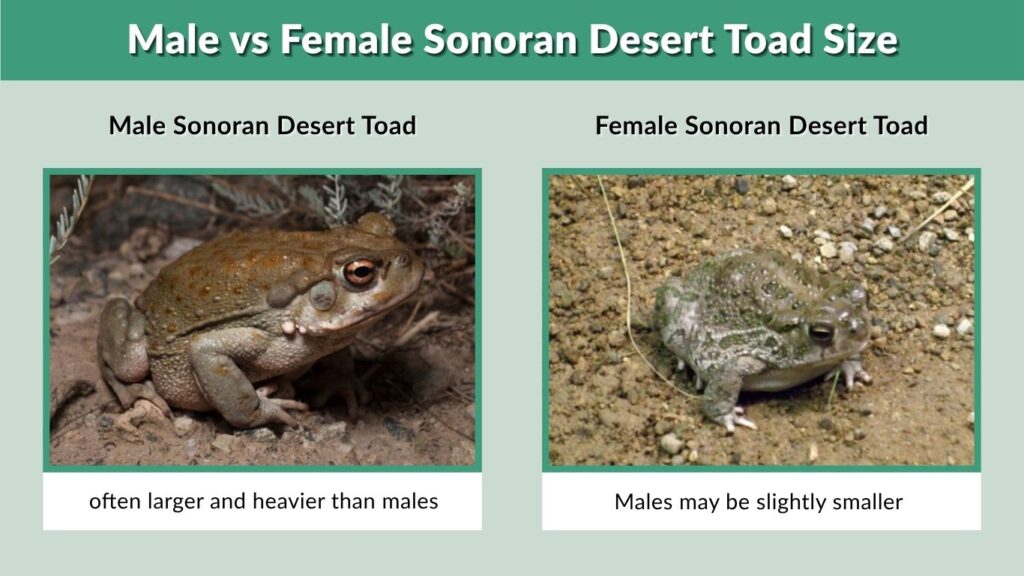
Female Sonoran Desert toads are often larger and heavier than males. This is common in many frog and toad species because females need body space to produce eggs. During breeding season, females may look especially rounded.
Males may be slightly smaller but are usually more active callers during the rainy season. They gather near water and call to attract females. Their calls are often heard after strong summer storms.
How to Tell Size Differences
It can be difficult to identify sex by size alone, but general signs include:
- Females may look larger and broader.
- Males may call during breeding season.
- Females may appear heavier when carrying eggs.
- Males may gather around breeding pools.
- Size alone is not always reliable.
For casual identification, it is better to focus on overall appearance, location, and behavior rather than trying to determine sex.
How Big Are Baby Sonoran Desert Toads?
Baby Sonoran Desert toads are very small compared with adults. After metamorphosis, young toads may be less than an inch long. They leave the water and begin life on land, feeding on tiny insects and other small invertebrates.
Because they are small and vulnerable, many young toads do not survive to adulthood. Birds, snakes, larger frogs, mammals, and drying conditions can all reduce their numbers.
Growth From Tadpole to Adult
Sonoran Desert toads grow in stages. Eggs hatch into tadpoles, tadpoles develop legs, and young toads eventually leave the water. Their growth depends strongly on rainfall and available water.
In desert habitats, water may disappear quickly. This means tadpoles often need to develop fast enough to survive before temporary pools dry up.
Sonoran Desert Toad Compared With Other Toads
The Sonoran Desert toad is much larger than many common toads. Smaller garden toads may be only 2 to 4 inches long. In comparison, a large Sonoran Desert toad can be nearly twice that size.
Its size also makes it easier to notice than small desert amphibians such as red-spotted toads or spadefoot toads. These smaller species may appear after rain, but they do not usually have the same thick, bulky body.
Size Comparison
Compared with other amphibians:
- Larger than many common garden toads
- Much larger than red-spotted toads
- Broader and heavier than many spadefoots
- Not as long-legged as many frogs
- One of the largest toads in North America
The Sonoran Desert toad is not just long; it is also thick and heavy. This gives it a powerful, almost squat appearance.
Where Its Size Helps It Survive
The Sonoran Desert toad’s large size may help it survive in several ways. A bigger body can store more water and energy than a smaller body. This is useful in desert environments where conditions may be harsh and food may not always be available.
Its size may also help discourage some predators. However, its most important defense is not size alone. The toad has large parotoid glands behind the eyes that produce toxic secretions.
Size and Defense
A large Sonoran Desert toad has strong survival advantages:
- It can eat a wide range of insects.
- It may be harder for small predators to swallow.
- Its large glands produce defensive toxins.
- Its body can handle dry conditions better than tiny amphibians.
- It can move over land after rain to find breeding sites.
Even with these advantages, it still depends on water for breeding and moisture for survival.
Does a Bigger Sonoran Desert Toad Mean More Danger?
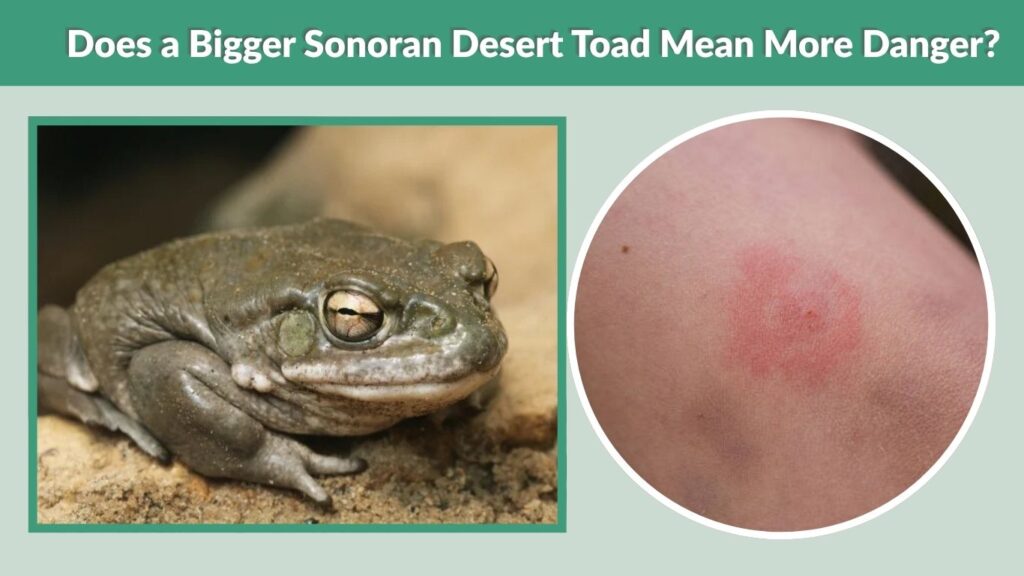
A larger Sonoran Desert toad may carry more toxin in its glands, but all adults should be treated with caution. The danger is not from touching it briefly from a distance, but from toxin exposure through the mouth, eyes, or broken skin.
Pets, especially dogs, are at higher risk because they may lick, bite, or pick up a toad. This can expose them to toxins quickly. A dog that mouths a Sonoran Desert toad may drool, foam, vomit, stagger, collapse, or have serious symptoms.
Safety Tips Around Large Toads
If you see a Sonoran Desert toad:
- Do not pick it up with bare hands.
- Keep dogs and cats away.
- Do not let children handle it.
- Do not lick or disturb it.
- Wear gloves if relocation is necessary.
- Wash hands after any possible contact.
- Call a veterinarian immediately if a pet mouths one.
During summer monsoon nights, check yards before letting pets outside.
Sonoran Desert Toad Size in Arizona and Mexico
Sonoran Desert toads are found in parts of the southwestern United States and northwestern Mexico. They are strongly associated with the Sonoran Desert region, including Arizona and Sonora. They may appear around washes, ponds, irrigation areas, yards, roads, and temporary pools after rain.
In suitable habitat, adults can reach their full large size if food and shelter are available. They spend much of the dry season hidden underground or in burrows, then emerge when rain brings moisture and breeding opportunities.
Why They Appear After Rain
These toads often remain hidden during dry periods. Rain triggers activity because it creates breeding pools and brings insects out. Their large size makes them easy to spot when they cross roads, sit under lights, or gather near water.
How to Identify a Sonoran Desert Toad by Size
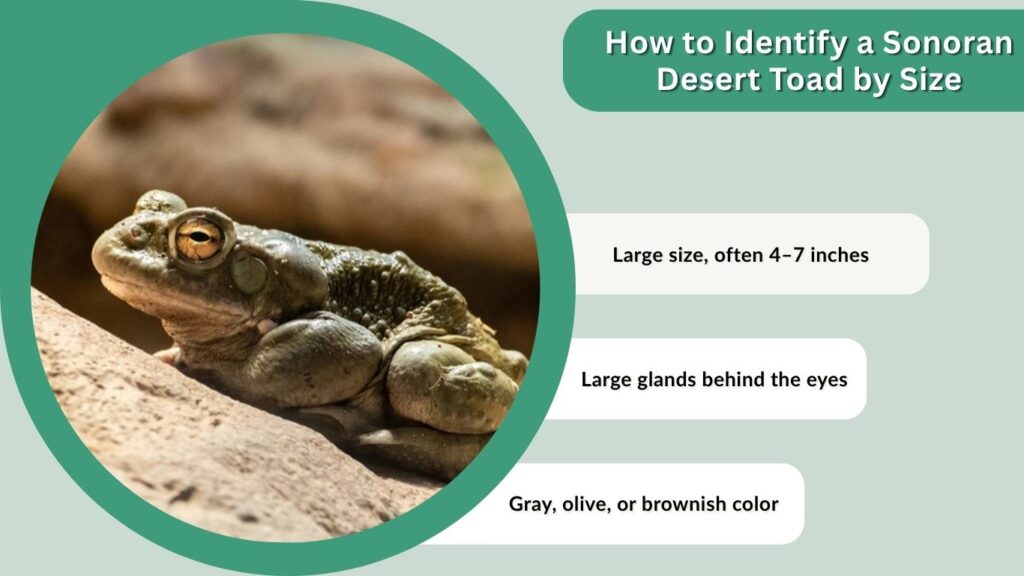
Size is a useful clue, but it should not be the only identification feature. A large toad in the Sonoran Desert region may be a Sonoran Desert toad, but look at body shape, glands, color, and location too.
A Sonoran Desert toad usually has olive-green, grayish, or brownish skin with a pale underside. It has large, raised glands behind the eyes and additional glands near the back legs. Its skin is smoother than many warty toads.
Identification Clues
Look for:
- Large size, often 4–7 inches
- Thick, heavy body
- Smooth, leathery skin
- Large glands behind the eyes
- Gray, olive, or brownish color
- Appearance after summer rain
- Location in the Sonoran Desert region
If you are unsure, avoid handling it and observe from a safe distance.
FAQs
How big can a Sonoran Desert toad get?
A Sonoran Desert toad can grow to about 7 inches long, and some large individuals may reach around 7.5 inches. This makes it one of the largest native toads in North America. Its thick body and wide head often make it look even bigger than the measurement suggests.
Are female Sonoran Desert toads bigger than males?
Female Sonoran Desert toads are often larger and heavier than males, especially during breeding season when they may carry eggs. Males are usually more noticeable because they call near water after rain. However, size alone is not always enough to identify the sex accurately.
How big are baby Sonoran Desert toads?
Baby Sonoran Desert toads are tiny after leaving the water, often less than an inch long. They grow from tadpoles into small land-dwelling toads after metamorphosis. As they feed on insects and survive seasonal changes, they gradually develop into large, broad-bodied adults.
Is a large Sonoran Desert toad dangerous?
A large Sonoran Desert toad can be dangerous if its toxin gets into the mouth, eyes, or broken skin. The biggest risk is to dogs that lick or bite the toad. People should not handle, lick, or disturb these toads, and pets should be kept away from them.
Why do Sonoran Desert toads look so large?
They look large because they have a broad body, thick legs, wide head, and large poison glands behind the eyes. Their heavy build makes them appear much bigger than smaller desert toads. Seeing one suddenly at night after rain can also make its size feel more dramatic.
