
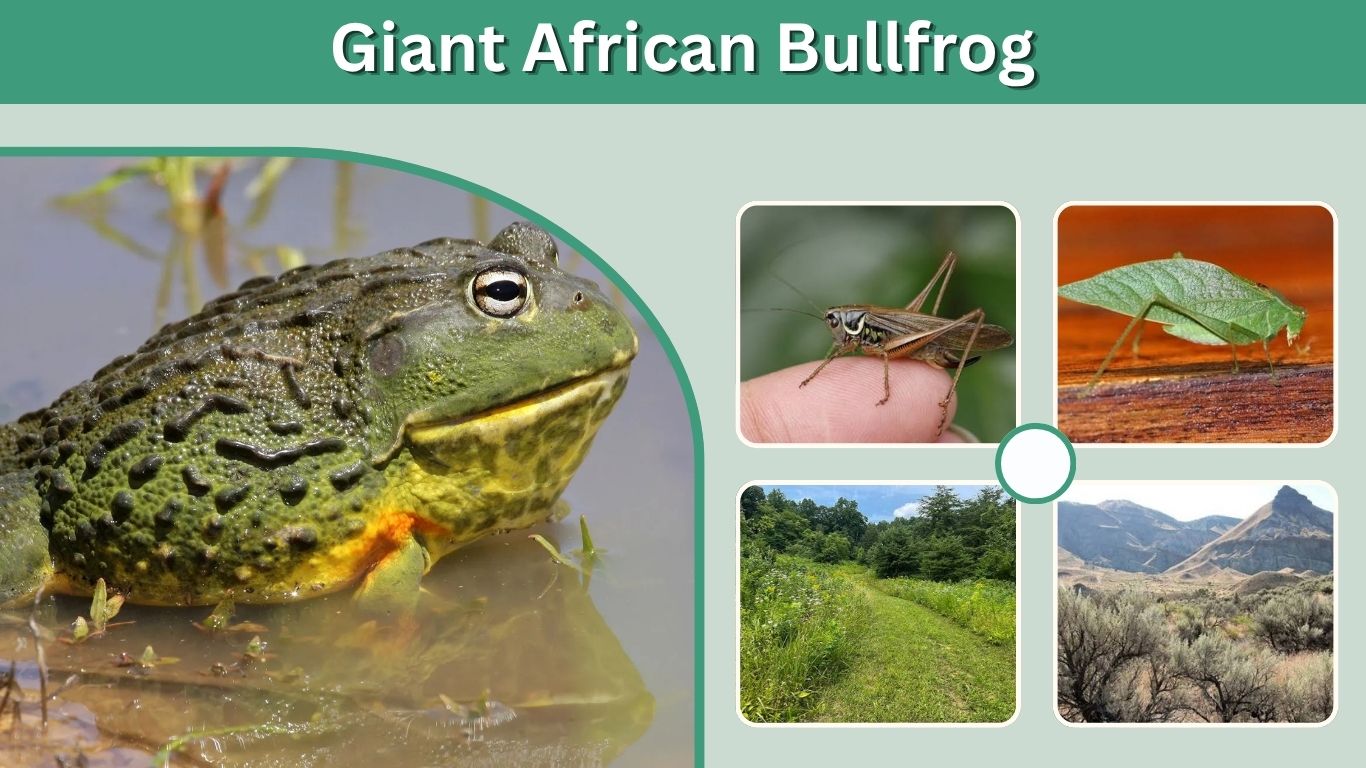
The giant African bullfrog is one of the largest and most powerful frogs in Africa. Scientifically known as Pyxicephalus adspersus, it is also called the African bullfrog, South African bullfrog, or pixie frog. Large males develop massive bodies, broad heads, powerful jaws, and an impressive appetite. These frogs eat insects, other amphibians, reptiles, and even small vertebrates. They are also famous for surviving long dry periods underground. This guide covers their size, habitat, diet, bite, lifespan, behavior, reproduction, and basic pet care.
What Is a Giant African Bullfrog?
The giant African bullfrog, Pyxicephalus adspersus, belongs to the family Pyxicephalidae. It occurs primarily in grasslands and savanna environments across parts of southern and eastern Africa. It is the largest amphibian found in southern Africa and is among the world’s largest frogs.
Giant African Bullfrog Identification
Adult African bullfrogs have broad heads, extremely robust bodies, short powerful limbs, and heavily textured skin. Adults are usually olive-green or brownish-green, helping them blend into vegetation and muddy ground.
Important identification features include:
- Large, round body
- Broad, flattened head
- Olive-green to brown coloration
- Raised skin ridges along the back
- Large mouth
- Powerful hind legs
- Pale to yellowish belly
- Tooth-like projections in the lower jaw
- Males substantially larger than females
Young frogs can be brighter green than adults and may display more noticeable markings.
Why Is It Called a Pixie Frog?
African bullfrogs are sometimes called pixie or pyxie frogs, but the name does not describe their size.
Instead, it comes from their scientific genus, Pyxicephalus. Despite the cute-sounding nickname, adult males are enormous compared with most commonly encountered pet frogs.
Giant African Bullfrog Size
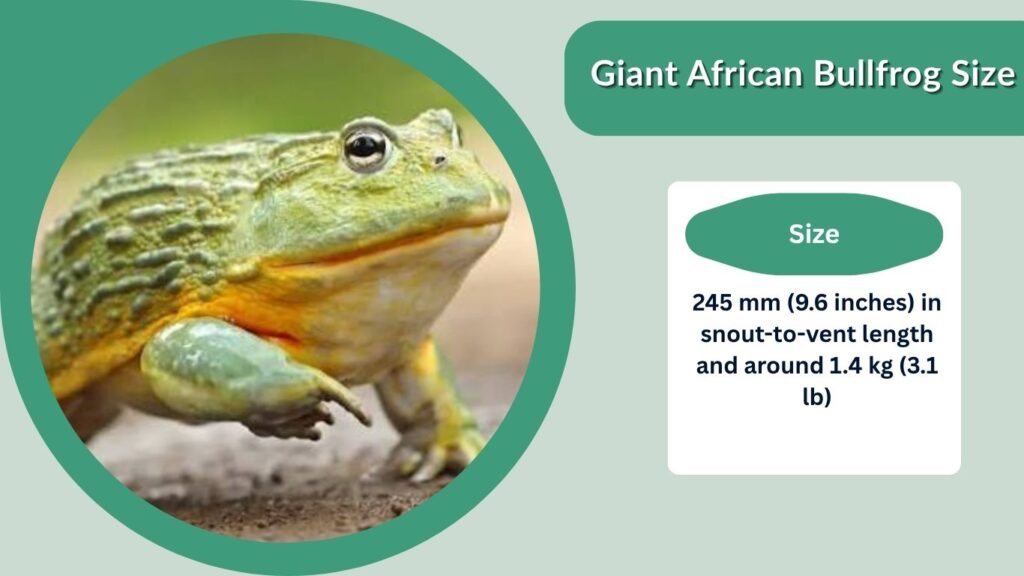
Size is perhaps the most remarkable feature of this species. Unlike many frogs, where females are larger, giant African bullfrogs display strong reverse sexual size dimorphism: males are much larger than females.
How Big Is a Giant African Bullfrog?
AmphibiaWeb reports males in Gauteng reaching approximately 245 mm (9.6 inches) in snout-to-vent length and around 1.4 kg (3.1 lb). Other records and captive individuals can vary considerably.
Their broad body makes an adult male appear even larger than its length suggests.
Male vs Female Giant African Bullfrog
Male African bullfrogs are considerably heavier than females. Research summarized in a conservation study gives approximate adult male masses of 400–1,000 grams compared with around 90–300 grams for females, although individuals vary.
Males also develop broader heads and more imposing bodies, characteristics useful during territorial conflicts and breeding.
Where Do Giant African Bullfrogs Live?
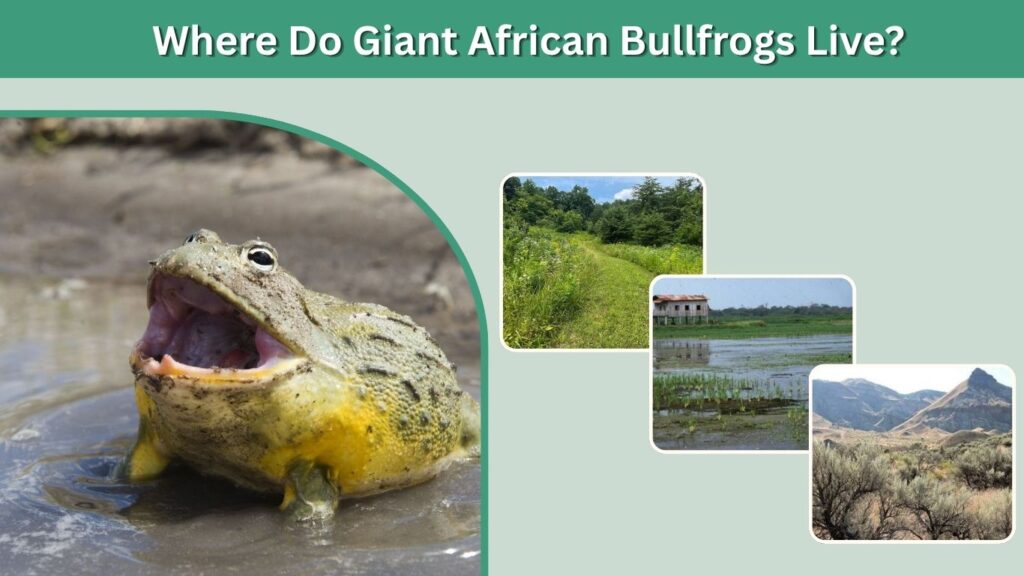
Despite their association with water, giant African bullfrogs spend significant periods on land. They inhabit open grasslands and savannas where temporary pools form after heavy seasonal rains.
Giant African Bullfrog Habitat
Typical habitats include:
- Grasslands
- Open savannas
- Seasonal wetlands
- Temporary rain pools
- Flooded grasslands
- Shrublands
- Pastures
- Areas with soil suitable for burrowing
Temporary pools are particularly important during breeding periods. Frogs emerge after favorable rainfall and gather around shallow water where reproduction takes place.
Surviving the Dry Season
One of their most impressive adaptations is aestivation.
During prolonged dry conditions, African bullfrogs bury themselves underground and can form a cocoon from layers of shed skin. This cocoon helps reduce water loss until wetter conditions return. Studies of cocooned Pyxicephalus have examined how this adaptation limits dehydration during dormancy.
What Do Giant African Bullfrogs Eat?
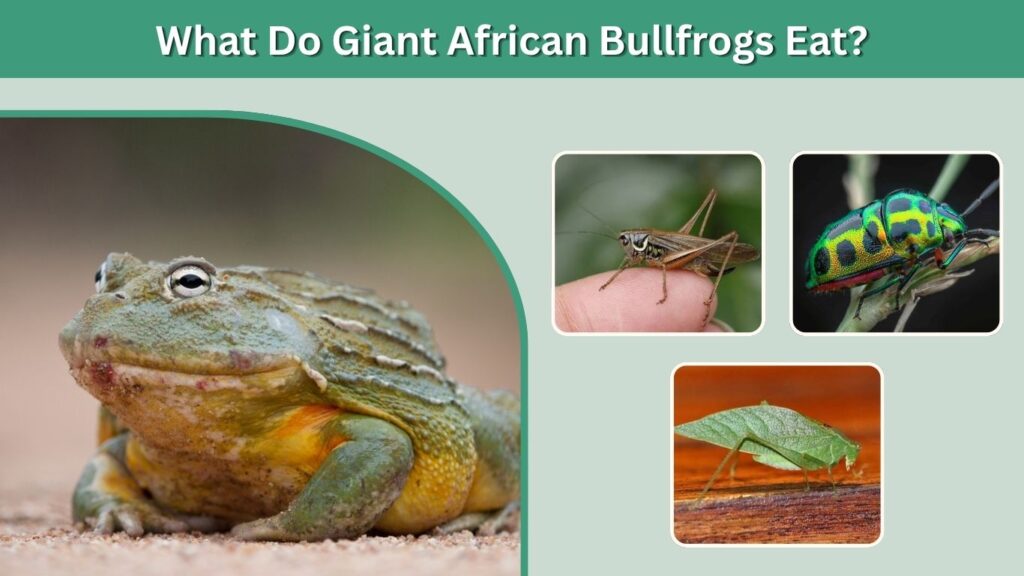
Giant African bullfrogs are aggressive carnivorous predators. Rather than specializing in one type of prey, they consume a wide variety of animals they are capable of overpowering and swallowing.
Giant African Bullfrog Diet
Their diet can include:
- Crickets
- Beetles
- Grasshoppers
- Other insects
- Worms
- Other frogs
- Tadpoles
- Small reptiles
- Small mammals
- Small birds
- Fish
- Other invertebrates
Research on recently metamorphosed giant African bullfrogs found insects to represent an especially diverse part of the diet, alongside aquatic invertebrates and small frogs.
Do Giant African Bullfrogs Eat Mice?
Large adults are capable of consuming small mammals that they can overpower and swallow. Small rodents are therefore possible prey, particularly for exceptionally large frogs.
However, sensational online videos showing African bullfrogs consuming extremely large animals should not automatically be treated as typical natural behavior.
Are Giant African Bullfrogs Cannibals?
Yes. Cannibalism occurs in this species.
Young frogs may consume smaller individuals, while tadpoles can also feed on one another. Even adult males guarding tadpoles have been documented consuming some of the offspring they defend.
Giant African Bullfrog Bite and Teeth
The giant African bullfrog is capable of defending itself aggressively. Its broad head, powerful jaw muscles, and tooth-like structures allow it to grasp struggling prey and deliver a painful defensive bite.
Do Giant African Bullfrogs Have Teeth?
They have prominent tooth-like projections, often described as canine-like structures or odontodes, associated with the lower jaw rather than mammal-like teeth.
These structures help the frog grip prey once it has closed its powerful mouth. Their aggressive disposition and canine-like jaw projections have also been documented in research on the species.
Are Giant African Bullfrogs Dangerous?
They are not predators of humans, but a defensive African bullfrog should be treated with respect.
A large frog can bite if threatened, restrained, or handled improperly. Because of its jaw size and tooth-like projections, the bite can cause an injury. Frequent handling is therefore unnecessary, especially for pet individuals.
Giant African Bullfrog Reproduction
Breeding is closely connected with seasonal rainfall. When temporary pools form, males gather at breeding areas and compete for access to females.
Male Parental Care
One of the most extraordinary behaviors of this frog is that males actively guard developing offspring.
Territorial males remain near tadpoles and defend them from predators. Research has found that this paternal protection can improve tadpole survival.
Digging Channels for Tadpoles
If a temporary breeding pool begins becoming unsuitable, a male may dig a channel connecting the tadpoles with another body of water.
Scientific observations describe channels that can guide tadpoles toward cooler or more permanent water, an unusual example of parental care among amphibians.
Giant African Bullfrog Lifespan
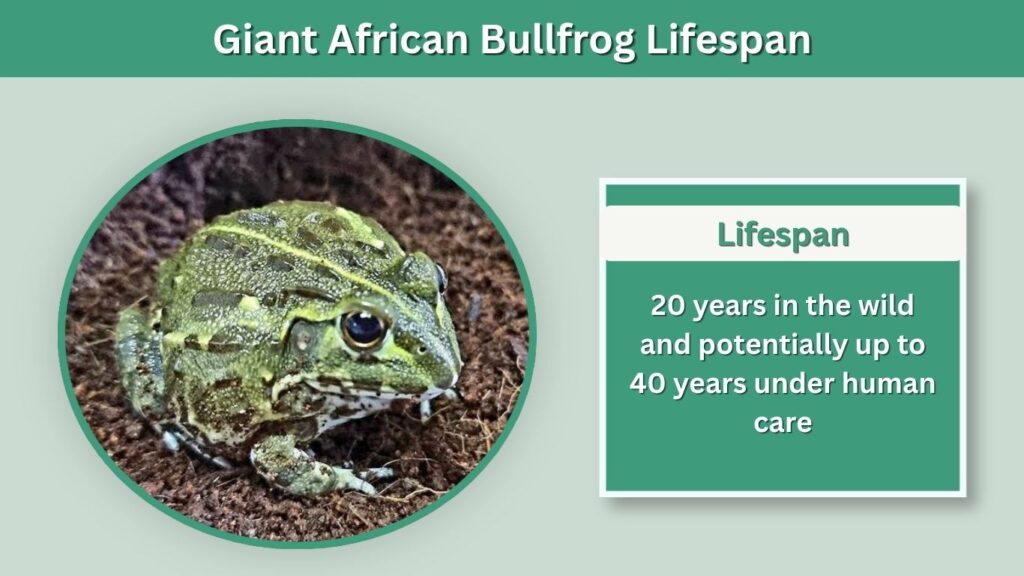
African bullfrogs can be remarkably long-lived, especially when maintained under good conditions in captivity.
Zoo information reports lifespans around 20 years in the wild and potentially up to 40 years under human care. Individual longevity naturally varies with health, environment, nutrition, and other factors.
That long potential lifespan means keeping one as a pet is a substantial commitment rather than a short-term hobby.
Giant African Bullfrog as a Pet
Giant African bullfrogs are kept by amphibian enthusiasts, but their large size, appetite, long lifespan, and defensive bite mean they require responsible care.
Basic Giant African Bullfrog Care
A suitable setup should provide:
- Spacious, secure enclosure
- Moist substrate suitable for burrowing
- Access to clean, appropriately treated water
- Appropriate warmth
- Adequate humidity
- Hiding opportunities
- Varied carnivorous diet
- Regular cleaning
- Minimal unnecessary handling
Amphibian skin is sensitive, making water quality and enclosure cleanliness especially important.
Feeding Pet African Bullfrogs
Pet African bullfrogs should receive an appropriately varied diet rather than relying on one food item. Their natural feeding ecology is extremely diverse, and captive individuals are also prone to eating readily when food is presented.
Overfeeding should be avoided simply because the frog appears willing to continue eating.
Anyone considering purchasing a giant African bullfrog should also check local exotic-animal rules and choose captive-bred animals from responsible sources rather than removing frogs from the wild.
Interesting Giant African Bullfrog Facts
- Its scientific name is Pyxicephalus adspersus.
- Males grow much larger than females.
- Adults are powerful carnivorous predators.
- They can eat other frogs and small vertebrates.
- Cannibalism can occur.
- They spend dry periods buried underground.
- They can form protective cocoons during aestivation.
- Males defend tadpoles.
- Males may dig channels to help tadpoles reach better water.
- Captive individuals can potentially live for decades.
FAQs
How big can a giant African bullfrog get?
Large males can reach roughly 24.5 cm in snout-to-vent length and around 1.4 kg in documented populations, although individual size varies.
What do giant African bullfrogs eat?
They eat insects, worms, other frogs, reptiles, small mammals, birds, fish, and other animals they can overpower and swallow.
Can a giant African bullfrog bite?
Yes. Large African bullfrogs have powerful jaws and tooth-like lower-jaw projections, so defensive bites can be painful.
How long do giant African bullfrogs live?
They can be exceptionally long-lived. One zoo source reports around 20 years in the wild and potentially up to 40 years under human care.
Are male or female African bullfrogs bigger?
Males are significantly larger than females, an unusual pattern among frogs. Adult males can be several times heavier than females.
