
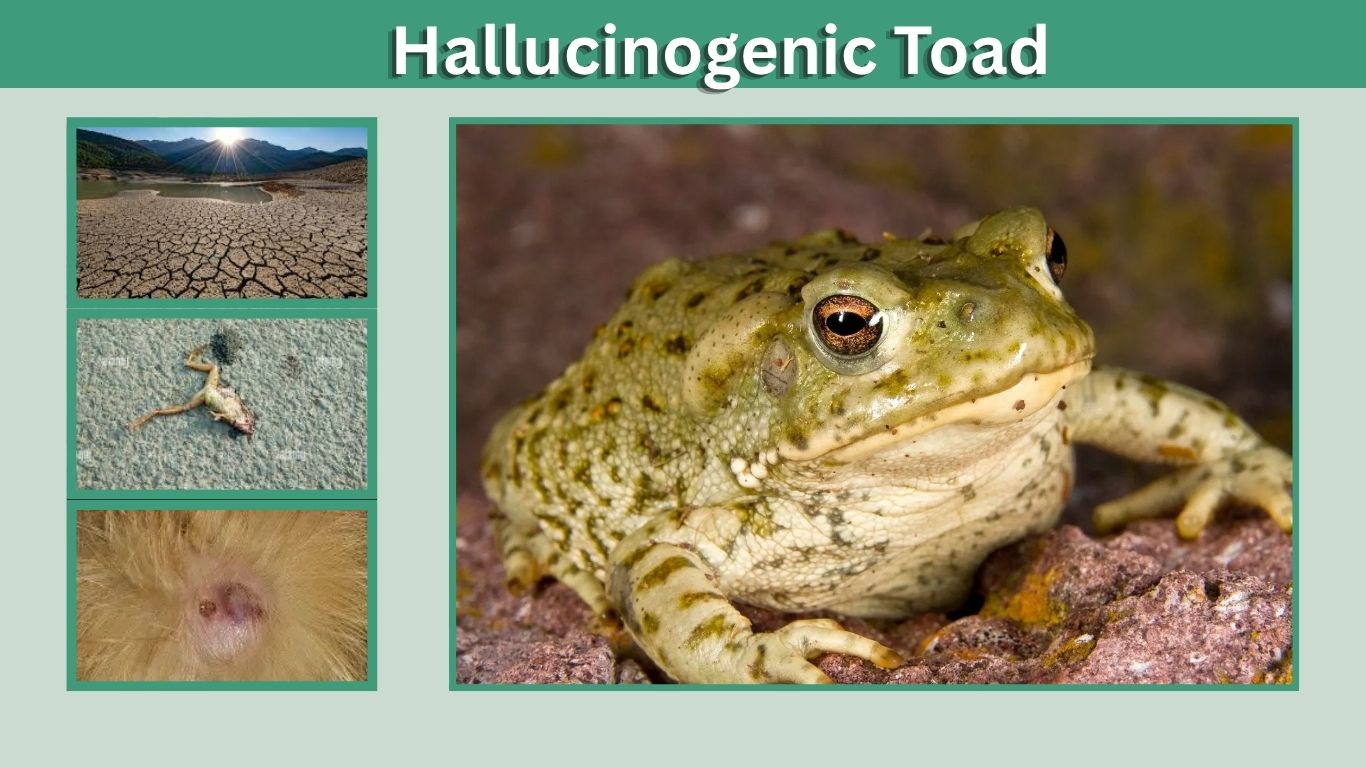
The term hallucinogenic toad usually refers to the Sonoran Desert toad, also called the Colorado River toad. This large desert amphibian is known for producing powerful skin secretions that contain psychoactive compounds. Because of this, it has gained attention in popular culture, science, and illegal wildlife trade. However, this toad is not a safe recreational object. Its toxins can be dangerous to people, deadly to pets, and harmful to wild populations when the animals are collected or disturbed.
What Is the Hallucinogenic Toad?
The hallucinogenic toad is most commonly the Sonoran Desert toad, scientifically known as Incilius alvarius. It lives in parts of the southwestern United States and northwestern Mexico, especially the Sonoran Desert region. It is one of the largest native toads in North America and often appears after summer monsoon rains.
This toad is famous because its skin glands produce a chemical called 5-MeO-DMT, along with other toxic compounds. 5-MeO-DMT is a powerful psychedelic substance that acts on serotonin receptors in the brain. Scientific reviews describe it as a serotonergic compound, but human clinical research is still limited compared with better-studied psychedelics.
Why It Is Called Hallucinogenic
The toad is called hallucinogenic because some people seek its secretions for psychoactive effects. These effects are linked mainly to 5-MeO-DMT. However, the word “hallucinogenic” can be misleading because the toad’s secretion is not simply a drug; it is a defensive toxin mixture made to protect the animal from predators.
The secretion can also contain compounds that affect the heart and nervous system. This is why licking or handling the toad carelessly can be dangerous.
What Does the Sonoran Desert Toad Look Like?
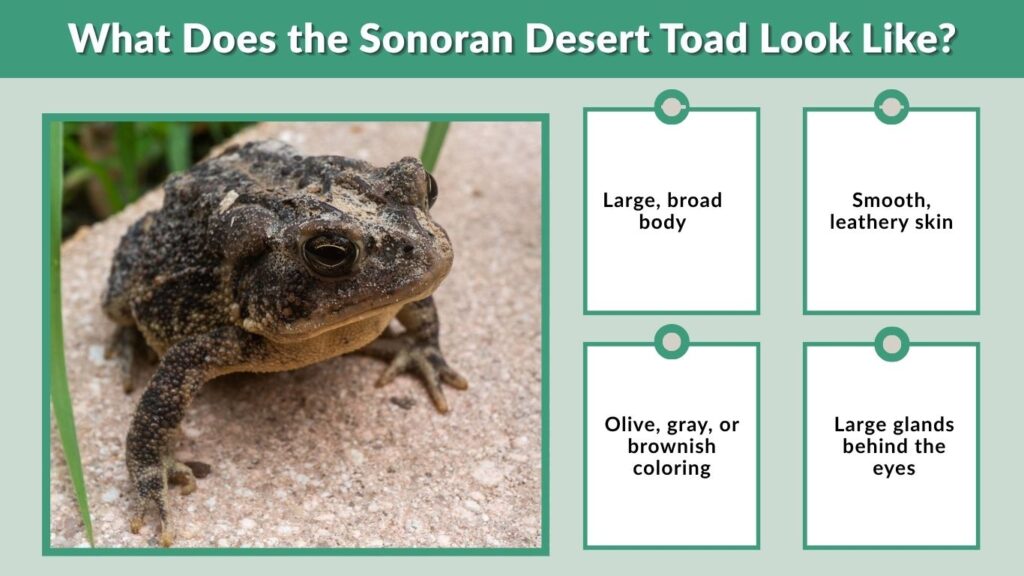
The Sonoran Desert toad is large, heavy-bodied, and smooth-skinned compared with many smaller warty toads. Adults are often olive green, grayish, or brownish with a pale underside. They have large poison glands behind the eyes, called parotoid glands, which produce defensive secretions.
The toad may reach around 7 inches in body length, making it much larger than many common garden toads. Its size alone makes it easy to notice when it appears on roads, patios, yards, or near water after rainfall.
Key Identification Features
A Sonoran Desert toad often has:
- Large, broad body
- Smooth, leathery skin
- Olive, gray, or brownish coloring
- Large glands behind the eyes
- Pale underside
- Thick legs
- Activity after summer rain
- Presence near washes, ponds, yards, or irrigation areas
People should avoid picking it up, even for identification. A photo from a safe distance is better.
Where Do Hallucinogenic Toads Live?
Sonoran Desert toads live in desert and semi-desert habitats, especially around the Sonoran Desert. They are found in parts of Arizona, California, New Mexico, and northwestern Mexico. They may live near washes, temporary pools, rivers, irrigation ditches, yards, and other places where water appears seasonally.
During dry weather, they spend much of their time hidden underground or in sheltered places. After monsoon rains, they emerge to feed, call, mate, and lay eggs.
Why They Appear After Rain
Rain is essential for desert amphibians. It creates temporary pools and moist conditions that allow toads to move safely. Insects also become more active after rain, giving the toads food.
This is why the Sonoran Desert toad is often seen on warm wet nights. The sudden appearance of large toads after storms is a normal part of desert ecology.
Are Hallucinogenic Toads Dangerous?
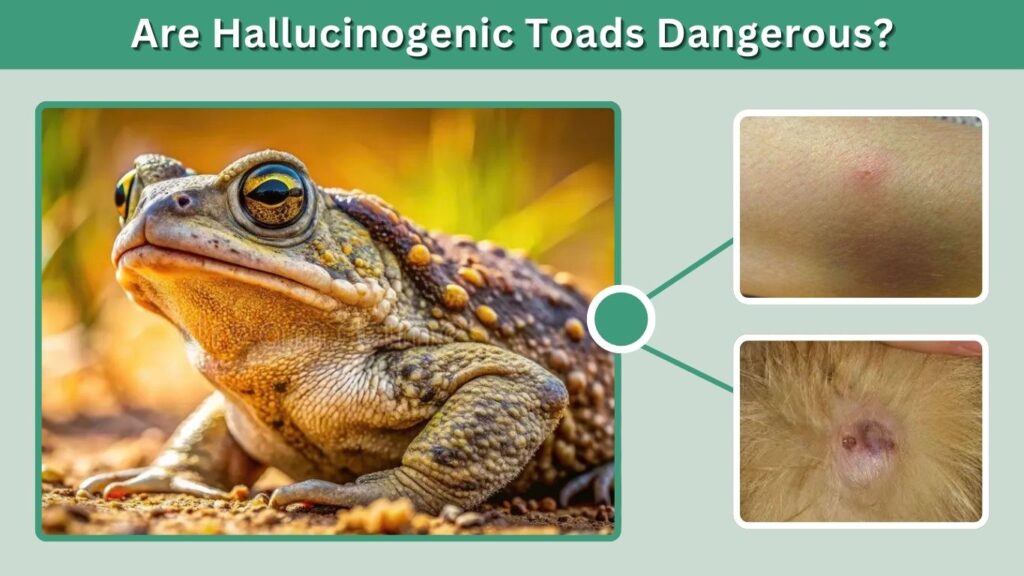
Yes, they can be dangerous if handled, licked, bitten, or ingested. The National Park Service famously warned people not to lick Sonoran Desert toads, noting that their secretions are powerful and can even kill an adult dog.
The toad does not need to attack to be dangerous. Its defense is chemical. If a predator grabs it, the glands can release toxins that irritate the mouth, eyes, and body. Dogs are at special risk because they may bite or mouth the toad out of curiosity.
Risks to Humans
Human exposure may cause irritation, nausea, confusion, anxiety, high blood pressure, changes in heart rhythm, panic, or other serious symptoms. Effects can vary depending on exposure, health condition, other substances, and individual sensitivity.
People with heart problems, mental health vulnerabilities, or those taking medications may face increased risk from psychoactive or toxic exposure. This is one reason unsupervised use of toad secretions is unsafe.
Risks to Dogs and Cats
Pets are often more likely than people to mouth a toad. A dog that licks or bites a Sonoran Desert toad may develop drooling, foaming, vomiting, weakness, confusion, seizures, or collapse. This can become a veterinary emergency.
If a pet mouths a toad, rinse the mouth from the side with water so the pet does not swallow more toxin, then contact a veterinarian immediately.
Why Licking the Toad Is Dangerous
The idea of licking a hallucinogenic toad is both unsafe and inaccurate. Experts warn that licking does not reliably produce the effects people expect, and it can expose a person to dangerous toxins. Reporting on expert warnings notes that licking the Colorado River toad is a “no-go” because the secretion also contains cardiac glycosides, which can affect heart function and may cause dangerous arrhythmias.
The toad’s secretion is not a clean or controlled substance. It is a biological toxin mixture. Dose, purity, contamination, and individual response are unpredictable. This makes recreational contact risky.
Important Safety Point
Do not lick, smoke, extract, collect, or handle secretions from wild toads. This is unsafe for humans, harmful to the animals, and may be illegal depending on location.
Legal Issues Around Hallucinogenic Toads
The legal status of the Sonoran Desert toad and its secretions can vary by location, but collecting, possessing, selling, or using toad secretions may violate wildlife and controlled-substance laws. In Arizona, wildlife rules are especially important because wild animals may not be collected freely without proper authorization.
Some legal summaries note that harvesting, possessing, or selling Sonoran Desert toads in Arizona without a permit is illegal, especially because of conservation concerns and illegal use of secretions. Laws can change and vary by state or country, so anyone dealing with wildlife should check current official regulations before taking any action.
Why Legal Protection Matters
The toad is not just a source of a chemical. It is a wild animal with an ecological role. Removing toads from breeding areas can harm local populations. Illegal collection can also spread disease, stress animals, and disrupt reproduction.
Conservation Concerns
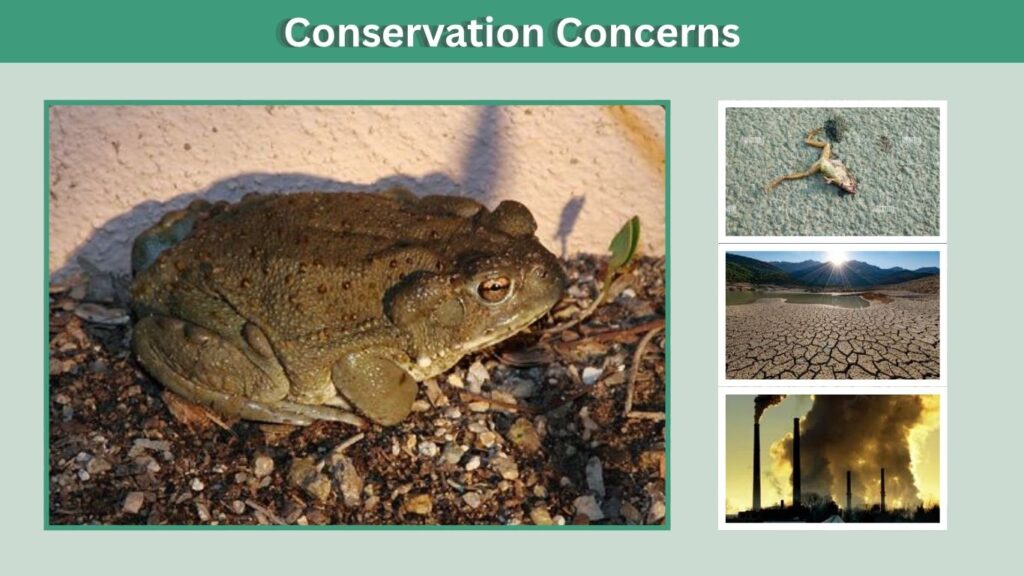
The popularity of “toad medicine” has created conservation concerns. A 2023 review describes the Sonoran Desert toad as the only vertebrate known to produce 5-MeO-DMT and discusses the ecological and cultural pressures surrounding the species.
Interest in toad secretions can lead to poaching. Wild toads may be collected, stressed, transported, or repeatedly handled. This harms individual animals and may reduce local populations. Toads also face other pressures, including habitat loss, roads, pollution, drought, changing rainfall patterns, and disease.
Main Threats
The Sonoran Desert toad may be affected by:
- Illegal collection
- Habitat loss
- Road mortality
- Drought
- Pollution
- Disease
- Pet attacks
- Disturbance during breeding season
- Climate-related changes in rainfall
Conservation-minded people should observe these toads without touching or collecting them.
Synthetic 5-MeO-DMT and Research
Scientists are studying synthetic 5-MeO-DMT for possible medical uses, but that is very different from using wild toad secretions. Recent clinical research continues to explore safety, tolerability, dosing, and therapeutic potential under controlled conditions. A 2025 study on sublingual microdoses described ongoing clinical interest, but this type of research is conducted with screening, monitoring, and structured protocols.
This does not mean wild toad secretions are safe or approved for self-treatment. Clinical research and recreational use are not the same. Medical studies involve controlled compounds, ethical approval, monitoring, and emergency planning.
Why Synthetic Alternatives Matter
Synthetic production may reduce pressure on wild toads. If research continues, lab-made compounds are more ethical and consistent than collecting secretions from animals. They avoid harming the toad and allow better control over purity and dose in scientific settings.
Myths About Hallucinogenic Toads
Many myths surround the Sonoran Desert toad. Some come from viral videos, social media, and exaggerated stories. These myths can put both people and wildlife at risk.
Common Myths
One myth is that licking the toad is a safe way to experience hallucinations. It is not. Licking can expose a person to dangerous toxins and may not produce the expected effect.
Another myth is that the toad exists mainly for human use. In reality, its secretion is a defense against predators. The animal plays a role in desert ecosystems by eating insects and serving as part of the food web.
A third myth is that collecting one toad does not matter. Local populations can be affected when many people collect animals from the same breeding areas.
What To Do If You Find One
If you see a Sonoran Desert toad, enjoy the sight from a distance. Do not pick it up, tease it, lick it, or move it unless there is a clear safety reason. If it is in a road and you can help safely, use gloves or a tool and move it only a short distance in the direction it was traveling.
Keep pets away, especially at night during monsoon season. Check yards before letting dogs outside after rain.
Safe Observation Tips
- Watch from a distance.
- Keep children and pets away.
- Do not touch the glands.
- Do not collect the toad.
- Do not attempt to use its secretions.
- Drive slowly on wet desert roads.
- Report illegal collection if appropriate.
- Wash hands if accidental contact occurs.
Ecological Role of the Sonoran Desert Toad
The Sonoran Desert toad is part of the desert food web. It feeds on insects and other small animals, helping control insect populations. It also provides food for predators that can tolerate or avoid its toxins.
Its breeding activity is linked to summer rain, making it an important part of the monsoon rhythm. When these toads emerge, they signal that the desert has entered one of its most active biological periods.
FAQs
What is the hallucinogenic toad?
The hallucinogenic toad usually refers to the Sonoran Desert toad, also called the Colorado River toad. It produces skin secretions containing 5-MeO-DMT and other toxic compounds. It is a real desert amphibian, not a safe recreational object, and should not be handled or collected.
Is licking a hallucinogenic toad safe?
No, licking a hallucinogenic toad is unsafe. The Sonoran Desert toad’s secretions can contain powerful toxins that may affect the heart, nervous system, and pets. Experts and park officials warn people not to lick these toads. Observe them from a distance instead.
Are hallucinogenic toads poisonous to dogs?
Yes, Sonoran Desert toads can be very dangerous to dogs. If a dog licks or bites one, it may drool, foam, vomit, stagger, seize, or collapse. Rinse the mouth from the side and contact a veterinarian immediately. Keep dogs away from toads after rain.
Is it legal to collect Sonoran Desert toads?
Laws vary by location, but collecting, possessing, selling, or harvesting secretions from Sonoran Desert toads may be illegal without permits. In some areas, wildlife regulations protect the species. Always check current official rules and avoid removing wild toads from their habitat.
Why are people concerned about toad conservation?
Conservationists are concerned because demand for toad secretions can lead to poaching and stress on wild populations. The toads also face habitat loss, roads, drought, pollution, and disease. Synthetic research alternatives may reduce pressure on wild animals while protecting the species.
