
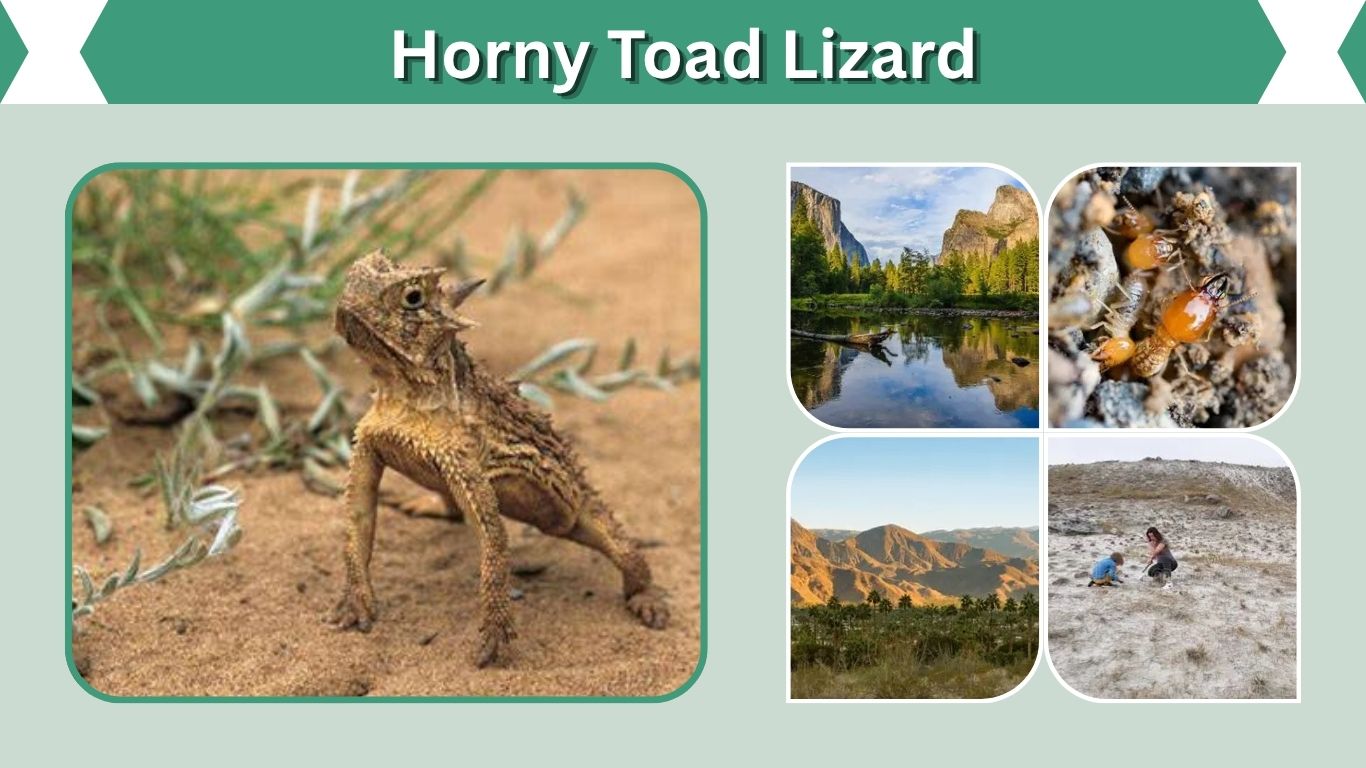
The horny toad lizard is one of the most unusual reptiles in North America. Despite its common name, it is not a toad at all. It is a horned lizard, a flat-bodied reptile known for its spiky head, squat shape, camouflage colors, and strange defense behavior. Many people search for “horny toad lizard” because they remember seeing one in Texas, Arizona, New Mexico, California, or other dry parts of the western United States. These reptiles are famous for eating ants, blending into sandy ground, and in some species, squirting blood from their eyes when threatened.
Is a Horny Toad a Lizard?
Yes, a horny toad is a lizard. The name “horny toad” is a nickname for horned lizards in the genus Phrynosoma. The nickname comes from their short, rounded bodies and bumpy appearance, which can make them look a little like toads. However, they are reptiles, not amphibians.
Toads have moist skin, lay eggs in water, and belong to the amphibian group. Horny toad lizards have dry scales, live mostly on land, and are true lizards. Their “horns” are actually pointed scales or bony projections around the head.
| Feature | Horny Toad Lizard | Real Toad |
|---|---|---|
| Animal group | Reptile | Amphibian |
| Skin | Dry, scaly | Moist, warty |
| Body temperature | Cold-blooded | Cold-blooded |
| Eggs | Usually laid on land or in soil | Usually laid in water |
| Common habitat | Dry, sandy, open land | Damp areas near water |
| Scientific group | Lizard | Frog/toad |
The name can be confusing, but “horned lizard” is the more accurate term. Still, many people continue to use “horny toad,” especially in Texas and the Southwest.
What Does a Horny Toad Lizard Look Like?
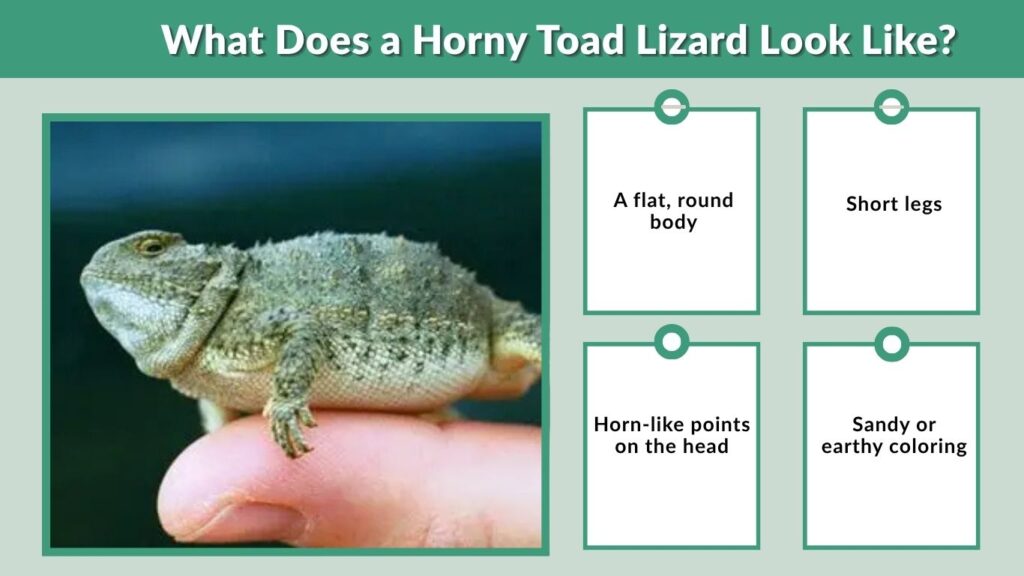
A horny toad lizard has a wide, flattened body, short legs, a short tail, and a crown of sharp-looking horns around its head. Its body is usually tan, gray, reddish-brown, or sandy-colored, depending on the species and habitat. This coloring helps it disappear against soil, rocks, dry grass, and desert sand.
Most horned lizards look tough, but they are usually slow-moving and rely more on camouflage than speed. When they feel threatened, they often freeze instead of running. Their flat shape helps them press against the ground, making them harder for predators to spot.
Common Identification Features
A horny toad lizard usually has:
- A flat, round body
- Short legs
- A short tail
- Horn-like points on the head
- Rough, spiny scales
- Sandy or earthy coloring
- A wide head and blunt snout
These features make horned lizards easy to recognize once you know what to look for.
Types of Horny Toad Lizards
There are several species of horned lizards in North America. Different species live in different regions, and some are more common than others.
Common examples include the Texas horned lizard, desert horned lizard, short-horned lizard, regal horned lizard, and coast horned lizard. The Texas horned lizard is one of the most famous because it is strongly associated with Texas culture and is the official state reptile of Texas. Texas Parks and Wildlife lists the Texas horned lizard as a threatened species in the state.
| Common Name | General Range | Notes |
|---|---|---|
| Texas horned lizard | Texas and nearby states | Famous “horny toad” species |
| Desert horned lizard | Southwestern deserts | Common in dry desert areas |
| Short-horned lizard | Western North America | Known for live birth in some populations |
| Regal horned lizard | Arizona and surrounding areas | Strong ant-eating specialist |
| Coast horned lizard | California and Baja region | Affected by habitat loss in many areas |
Because there are different species, not every horny toad lizard looks or behaves exactly the same. However, most share a similar body shape, ant-heavy diet, and strong camouflage.
Where Do Horny Toad Lizards Live?
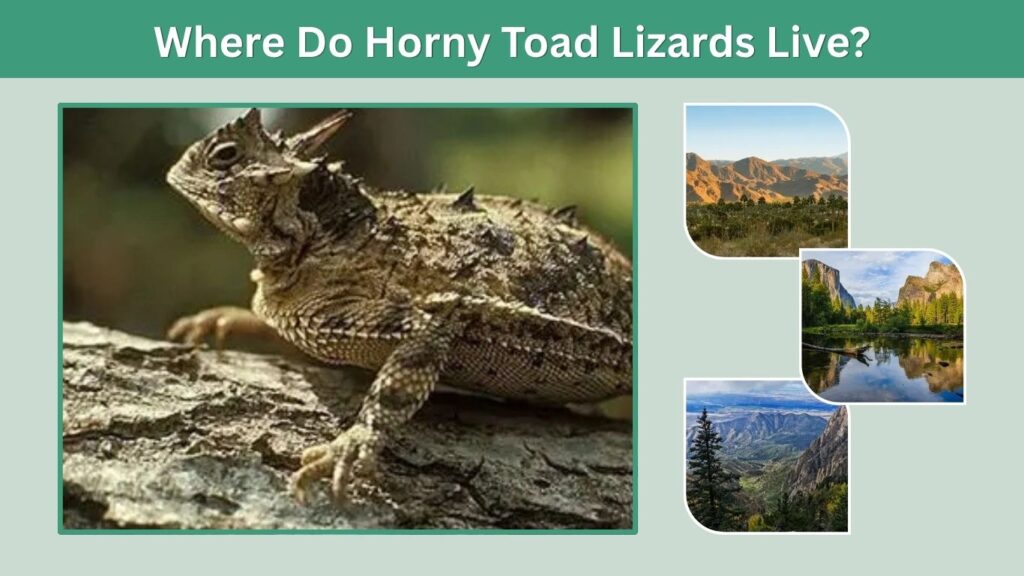
Horny toad lizards usually live in dry, open habitats. They are common in deserts, grasslands, scrublands, sandy plains, open woodlands, and rocky areas. Many species prefer places with loose soil where they can dig, hide, or bury themselves.
They are found across parts of North America, especially the western and southwestern United States and northern Mexico. States often associated with horned lizards include Texas, Arizona, New Mexico, California, Colorado, Utah, Nevada, Oklahoma, and Kansas, depending on the species.
Horned lizards need habitat that provides three important things: open ground for basking, loose soil for hiding, and plenty of insects for food. They also need native ant populations, especially harvester ants, because ants are a major part of the diet for many species.
Common Habitat Features
Horny toad lizards are often found in areas with:
- Sandy or loose soil
- Dry grassland
- Desert scrub
- Sparse vegetation
- Open sunny spaces
- Native ant colonies
- Rocks, logs, or low plants for cover
They usually avoid heavily developed areas, dense lawns, and places where pesticides have reduced insect populations.
What Do Horny Toad Lizards Eat?
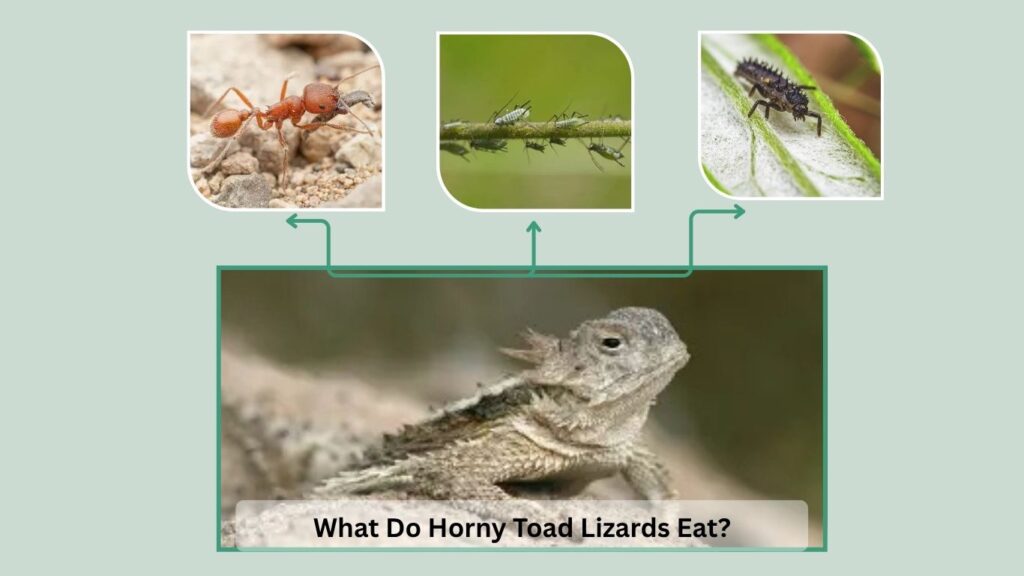
Horny toad lizards are best known for eating ants. Many species rely heavily on harvester ants, although they may also eat beetles, grasshoppers, spiders, termites, and other small insects. The Arizona-Sonora Desert Museum notes that some horned lizards have very specialized diets, and the regal horned lizard may get up to 90 percent of its diet from harvester ants.
This diet makes horned lizards different from many common pet lizards. A bearded dragon, for example, can eat a varied diet in captivity, but many horned lizards need specific ants and other wild insects to stay healthy.
Why Ants Matter So Much
Ants are small and not very energy-rich compared with larger insects. That means a horny toad lizard may need to eat many ants to get enough nutrition. It often waits near ant trails and quickly picks off ants with its tongue.
This is one reason horned lizards can decline when native ant populations disappear. Pesticides, habitat loss, and invasive ants can reduce the food supply that horned lizards depend on.
How Does a Horny Toad Lizard Shoot Blood?
One of the most famous horny toad lizard facts is that some species can squirt blood from the corners of their eyes. This sounds like a myth, but it is real. National Geographic explains that short-horned lizards can squirt blood from ducts near the eyes, and the blood may travel up to about three feet.
This behavior is a defense strategy. When threatened by predators such as coyotes, foxes, dogs, or cats, the lizard can increase pressure in blood vessels around the head. The blood then squirts from the eye area. The surprise may scare off a predator, and chemicals in the blood can taste bad to canids such as dogs, wolves, and coyotes.
Not every horned lizard uses this defense in the same way, and they do not usually do it for no reason. They are more likely to rely first on camouflage, freezing, puffing up, or using their horns and spines to look difficult to swallow.
Is a Horny Toad Lizard Poisonous?
A horny toad lizard is not poisonous to people in the way that a venomous snake or toxic amphibian might be dangerous. It does not inject venom, and it is not known for poisoning humans. However, it should not be handled, harmed, or kept as a toy.
The blood-squirting defense can taste unpleasant to certain predators, especially canids. That does not mean the lizard is a dangerous poisonous animal for people. The bigger concern is the lizard’s safety and legal protection, especially in states where certain species are threatened or protected.
If you find one in the wild, it is best to observe it from a distance and leave it alone.
Can You Keep a Horny Toad Lizard as a Pet?
In most cases, a horny toad lizard is not a good pet. Many people search for “horny toad lizard for sale” or “horny toad lizard pet,” but these reptiles are difficult to keep alive in captivity. Their specialized diet, stress sensitivity, and legal status make them poor choices for casual reptile keepers.
In Texas, the Texas horned lizard is protected as a threatened species. Texas Parks and Wildlife states that it is listed as threatened in Texas. Other conservation sources also warn that protected horned lizards should not be caught, handled, sold, or kept without proper permits.
Why Horny Toad Lizards Do Poorly in Captivity
Horned lizards often struggle in captivity because they need:
- Large numbers of suitable ants
- Correct heat and UVB lighting
- Low-stress surroundings
- Proper dry habitat conditions
- Space to move and hide
- A diet that matches their wild needs
Many die when people remove them from the wild. Even when someone means well, taking a horned lizard home can hurt local populations and may break state wildlife laws.
A better way to help horny toad lizards is to protect their habitat, avoid unnecessary pesticide use, keep native plants, and support conservation programs.
Horny Toad Lizard vs Bearded Dragon
Some people compare a horny toad lizard with a bearded dragon because both are lizards with spiky features. However, they are very different animals.
| Feature | Horny Toad Lizard | Bearded Dragon |
|---|---|---|
| Pet suitability | Usually poor and often protected | Common captive-bred pet |
| Diet | Often ant-heavy | Insects, greens, vegetables |
| Temperament | Stress-prone wild animal | Often calm when captive-bred |
| Legal status | Some species protected | Common in pet trade |
| Body shape | Flat and round | Longer and more upright |
| Best choice for pet owners | No | Yes, if properly cared for |
If someone wants a reptile pet, a captive-bred bearded dragon is usually a better and more responsible choice than trying to buy or catch a horny toad lizard.
Why Are Horny Toad Lizards Disappearing?
Horny toad lizards have declined in many areas where they were once common. The reasons vary by region, but several problems appear again and again: habitat loss, pesticide use, loss of native ants, invasive fire ants, road mortality, and collection from the wild.
The Texas horned lizard is a good example. Once common across much of Texas, it is now much harder to find in many places. Conservation projects, including reintroduction efforts, are working to restore populations. The San Antonio Zoo describes long-term work focused on restoring horned lizard populations and promoting native biodiversity across Texas.
Main Threats
Horny toad lizards may decline because of:
- Urban development
- Agricultural land changes
- Pesticide use
- Loss of harvester ants
- Invasive fire ants
- Outdoor cats and dogs
- Road traffic
- Illegal collection
- Habitat fragmentation
Protecting these lizards often means protecting the entire dryland ecosystem around them.
How to Help Horny Toad Lizards
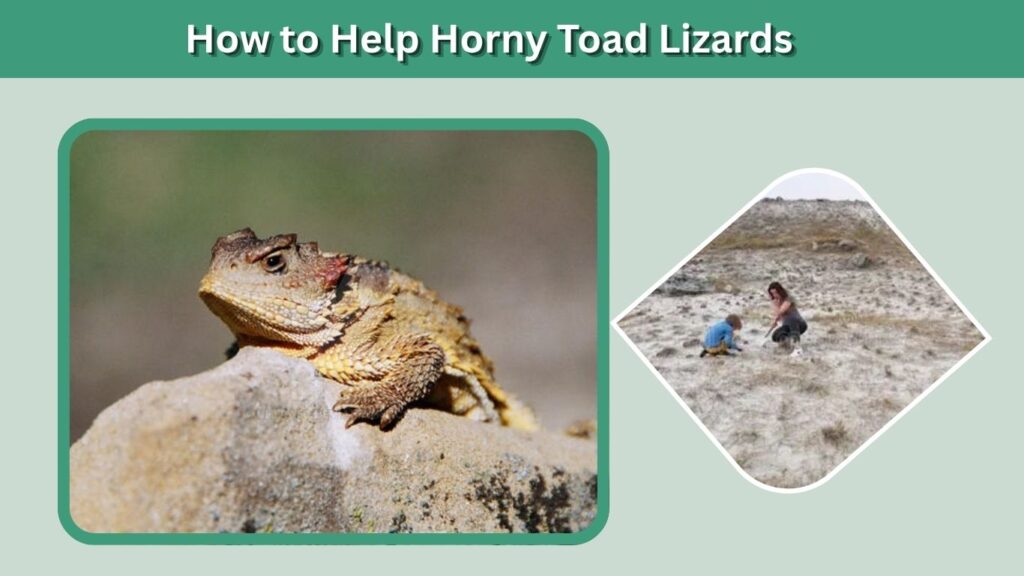
Homeowners and landowners in horned lizard range can take simple steps to make landscapes safer for native wildlife. The goal is not to capture or feed the lizards, but to protect the habitat they need.
Helpful steps include:
- Avoid broad pesticide use, especially ant poison
- Keep native plants and grasses where possible
- Leave some open sandy ground
- Protect native ant colonies
- Keep cats indoors or supervised
- Do not collect wild horned lizards
- Report sightings to local wildlife agencies if requested
- Support conservation and reintroduction projects
If you see a horny toad lizard, take a photo from a respectful distance instead of picking it up. In protected areas or states where the species is threatened, handling or collecting may be illegal.
FAQs
Is a horny toad a frog or a lizard?
A horny toad is a lizard, not a frog or toad. The name “horny toad” is a nickname for horned lizards because they have round, squat bodies that can look toad-like.
What do horny toad lizards eat?
Horny toad lizards mainly eat ants, especially harvester ants in many species. They may also eat beetles, grasshoppers, spiders, termites, and other small insects.
Where do horny toad lizards live?
Horny toad lizards live mostly in dry parts of North America, including deserts, grasslands, scrublands, sandy plains, and open rocky areas. They are often associated with Texas, Arizona, New Mexico, California, and nearby regions.
Can a horny toad lizard shoot blood from its eyes?
Yes, some horned lizards can squirt blood from the eye area as a defense. This behavior may startle predators and can taste bad to animals such as dogs, coyotes, and wolves.
Is a horny toad lizard poisonous?
A horny toad lizard is not considered poisonous or venomous to humans. However, it should not be handled or kept as a pet, especially in places where it is protected by law.
Can I buy a horny toad lizard?
It is usually not recommended, and in some places it may be illegal to catch, sell, or keep certain horned lizards without permits. Many horned lizards also do poorly in captivity because of their specialized diet.
Why are horny toad lizards rare now?
They have declined in many areas because of habitat loss, pesticides, invasive ants, reduced native ant populations, road deaths, and collection from the wild.
Are Texas horny toad lizards threatened?
Yes. The Texas horned lizard is listed as a threatened species in Texas. This is one reason people should not collect or handle them in the wild.
