
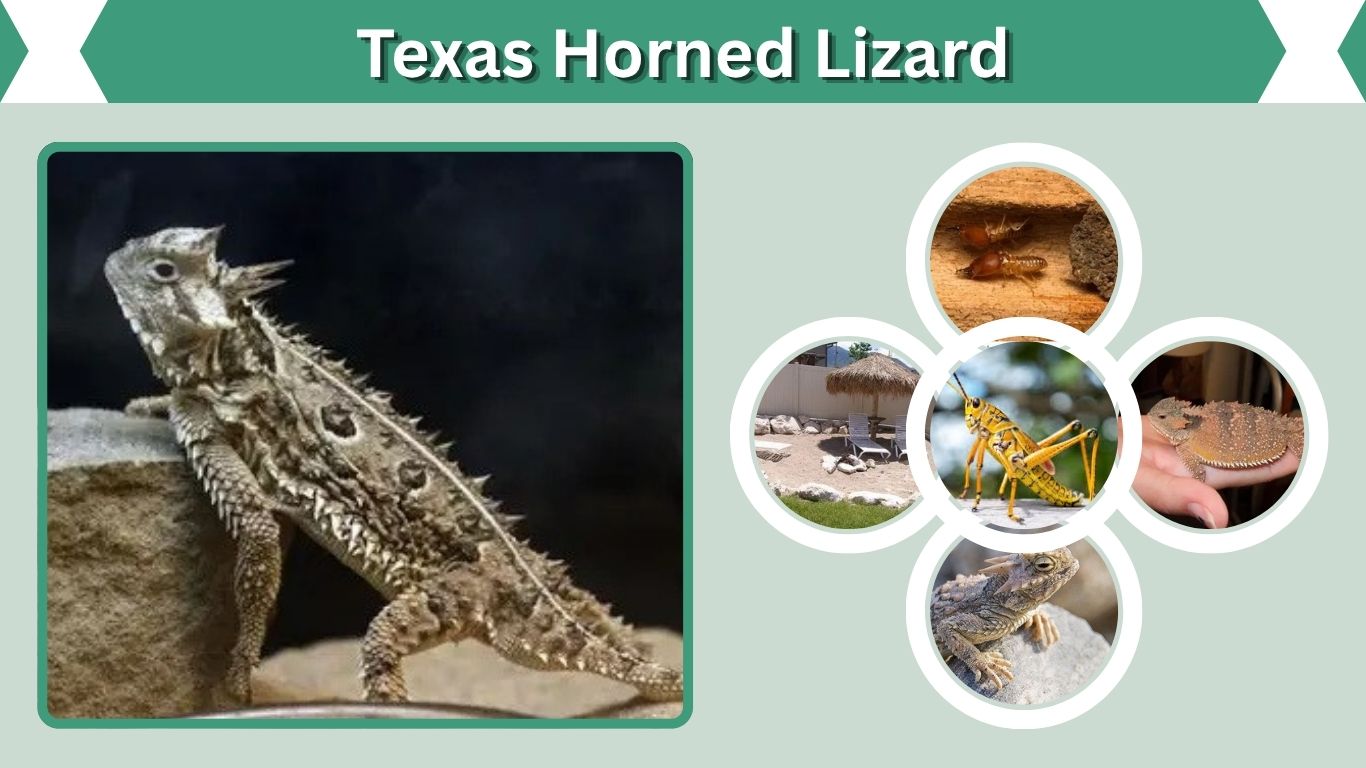
The Texas horned lizard is a small, spiny reptile known for its flat body, crown-like horns, and famous blood-shooting defense. Many people call it a horned toad, but it is not a toad at all. It is a true lizard with desert adaptations, strong camouflage, and a diet based mostly on ants. Once common across Texas, this state-threatened reptile has declined because of habitat loss, pesticides, invasive fire ants, and reduced harvester ant populations.
Texas Horned Lizard Quick Facts
The Texas horned lizard is one of the most iconic reptiles in the American Southwest. Its scientific name is Phrynosoma cornutum, and it belongs to a group of spiny, flat-bodied lizards often called horned lizards. Its name comes from the sharp-looking horns on its head and its wide, toad-like body shape.
| Feature | Texas Horned Lizard Details |
|---|---|
| Common name | Texas horned lizard |
| Nicknames | Horned toad, horny toad, horned frog |
| Scientific name | Phrynosoma cornutum |
| Animal type | Reptile |
| Main food | Harvester ants and other small insects |
| Habitat | Dry grasslands, open scrub, sandy soil, desert edges |
| Defense | Camouflage, puffing body, spines, blood-squirting defense |
| Texas status | Listed as threatened in Texas |
| Legal concern | Cannot be collected, harmed, or kept from the wild in Texas |
What Is a Texas Horned Lizard?
The Texas horned lizard is a reptile with a wide, flattened body, short tail, and rows of pointed scales along its sides. It is often mistaken for a small dinosaur-like creature because of its rough skin and horned head. However, it is a harmless native lizard that plays an important role in controlling ants and other insects.
Texas Horned Lizard Scientific Name
The scientific name of the Texas horned lizard is Phrynosoma cornutum. The genus name Phrynosoma is often translated as “toad-bodied,” which matches its rounded, squat shape. The species name cornutum refers to its horns. The U.S. Fish and Wildlife Service identifies the Texas horned lizard under this scientific name and places it in the reptile category.
Why Is It Called a Horned Toad?
Many Texans call this animal a horned toad or horny toad because its body looks round and flat like a toad. But this nickname is not scientifically correct. Toads are amphibians, while the Texas horned lizard is a reptile. It has scales, lays eggs on land, and depends on external heat to regulate its body temperature.
Texas Horned Lizard Appearance
The Texas horned lizard has several features that make it easy to identify. It has two large horns at the back of the head, smaller spines around the body, and dark lines that radiate downward from the eyes. Texas Parks and Wildlife notes that this eye-stripe pattern helps separate it from other horned lizard species.
Key identification features include:
- Wide, flat body
- Short tail
- Crown-like horns on the head
- Spiny scales along the sides
- Dark stripes from the eyes
- Tan, gray, reddish, or brown body color
- Camouflage that matches dry soil or sand
Where Do Texas Horned Lizards Live?
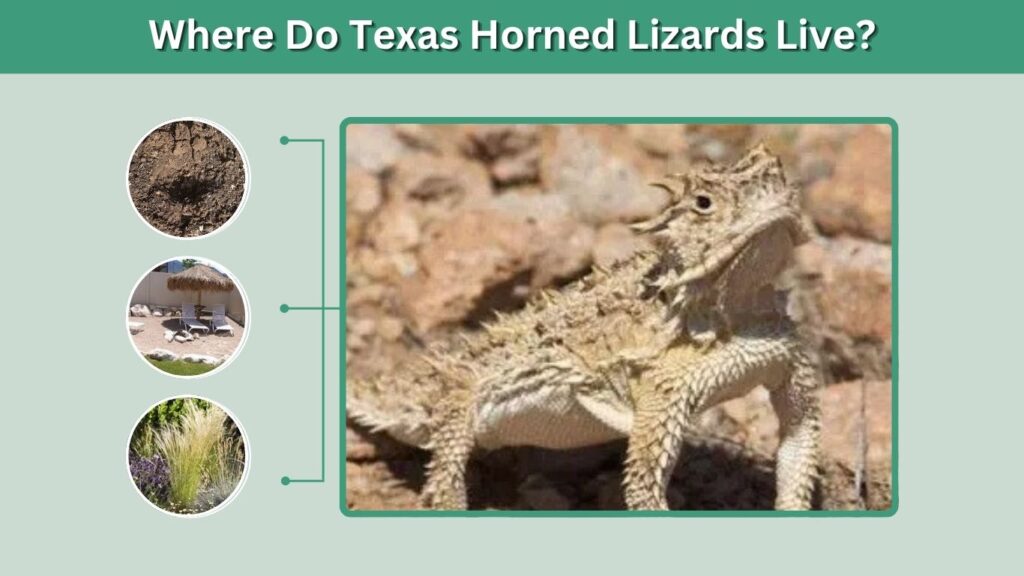
Texas horned lizards live in dry, open areas where they can bask in sunlight, hide in loose soil, and find ants. Their range includes much of Texas and parts of Oklahoma, Kansas, New Mexico, and northern Mexico. The U.S. Fish and Wildlife Service describes their range as extending from the south-central United States into northern Mexico.
Texas Horned Lizard Habitat
The best habitat for a Texas horned lizard includes open ground, native grasses, sandy or loose soil, and a healthy supply of native insects. They do not usually thrive in heavily developed areas, thick lawns, or places where pesticides have reduced insect populations.
Good habitat usually has:
- Sandy or loose soil for burrowing
- Open sunny patches for basking
- Native grasses and shrubs
- Harvester ant colonies
- Low vegetation for movement
- Natural cover from rocks, cactus, or brush
| Habitat Need | Why It Matters |
|---|---|
| Loose soil | Helps with digging, hiding, and egg laying |
| Native ants | Main food source |
| Open sunny areas | Needed for warming the body |
| Low vegetation | Allows movement and hunting |
| Native plants | Supports insect diversity |
| Limited pesticides | Protects ants and other prey |
Texas Horned Lizard Range
Historically, Texas horned lizards were common in many parts of Texas. Today, they are still found in parts of the state, especially in South Texas and West Texas, but they have disappeared from many areas where people once saw them often. The Texas State Historical Association notes that populations are expected to remain more stable in South and far West Texas unless major land-use changes occur.
What Do Texas Horned Lizards Eat?
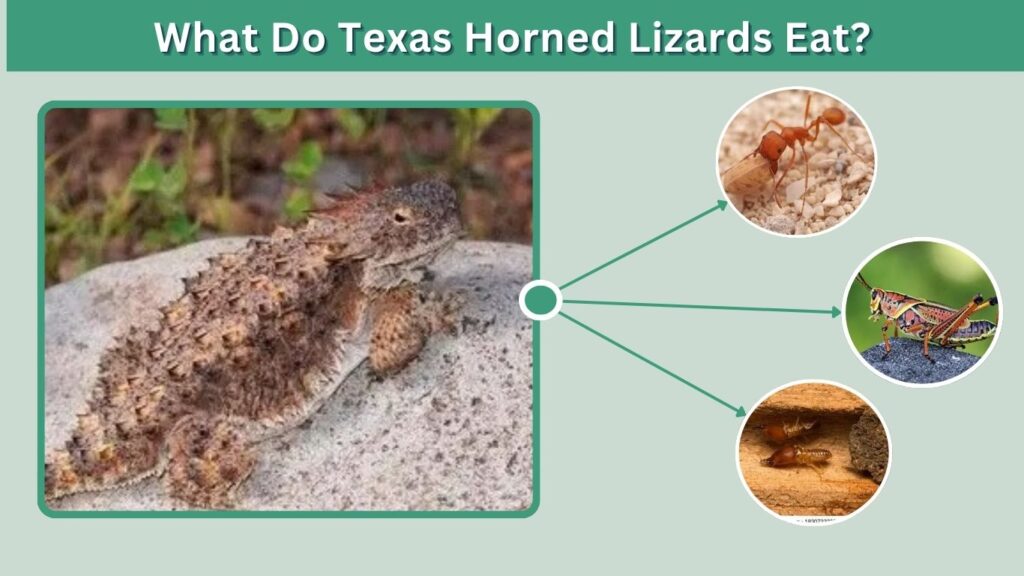
The Texas horned lizard diet is one of the most important parts of its survival. These lizards feed heavily on harvester ants, although they may also eat beetles, small grasshoppers, termites, and other tiny insects. Because they depend so much on native ants, anything that reduces ant colonies can hurt horned lizard populations.
Texas Horned Lizard Food
A Texas horned lizard may sit quietly near an ant trail and pick off ants one by one. It uses quick tongue movements to catch prey. Unlike active hunters that chase insects over long distances, horned lizards often rely on patience and camouflage.
Common foods include:
- Harvester ants
- Small beetles
- Termites
- Grasshoppers
- Small spiders
- Other soft-bodied insects
Why Harvester Ants Matter
Harvester ants are especially important because they make up a large part of the Texas horned lizard’s natural diet. When harvester ants decline, horned lizards may struggle to find enough food. Fire ants, pesticide use, and habitat changes can reduce native ant populations, which affects the lizard’s ability to survive.
Texas Horned Lizard Defense Mechanisms
The Texas horned lizard is famous for its unusual defense behavior. It does not rely on speed alone. Instead, it uses camouflage, body posture, sharp-looking spines, and in extreme situations, blood-squirting from the eyes.
Camouflage
The first defense is camouflage. A Texas horned lizard can remain very still and blend into sandy soil, dry grass, gravel, or reddish dirt. Its body color often matches the ground where it lives. This makes it difficult for predators to notice.
Spines and Body Puffing
If a predator gets too close, the lizard may puff up its body to look larger and harder to swallow. The spines along its sides and head also make it less appealing to predators such as snakes, birds, coyotes, foxes, and domestic cats.
Texas Horned Lizard Shooting Blood
The most famous defense is the ability to shoot blood from the corners of its eyes. This usually happens when the lizard is threatened by certain predators, especially canids such as foxes, coyotes, or dogs. The blood may confuse the predator and has an unpleasant taste to some attackers. This defense is real, but it is usually a last-resort response rather than something the lizard does casually.
| Defense Method | How It Helps |
|---|---|
| Camouflage | Helps the lizard avoid being seen |
| Staying still | Makes predators overlook it |
| Body puffing | Makes it harder to swallow |
| Horns and spines | Discourages predators from biting |
| Blood-squirting | Startles or repels some predators |
| Burrowing | Helps avoid heat and danger |
Are Texas Horned Lizards Dangerous?
Texas horned lizards are not dangerous to people. They are not poisonous, not venomous, and not aggressive. Their spines may look sharp, but they are mainly defensive. If left alone, they usually stay still or try to escape.
However, people should not pick them up. In Texas, the species is listed as threatened, and Texas Parks and Wildlife says it is protected. That means it should not be collected, harmed, sold, or kept as a pet from the wild.
Can You Keep a Texas Horned Lizard as a Pet?
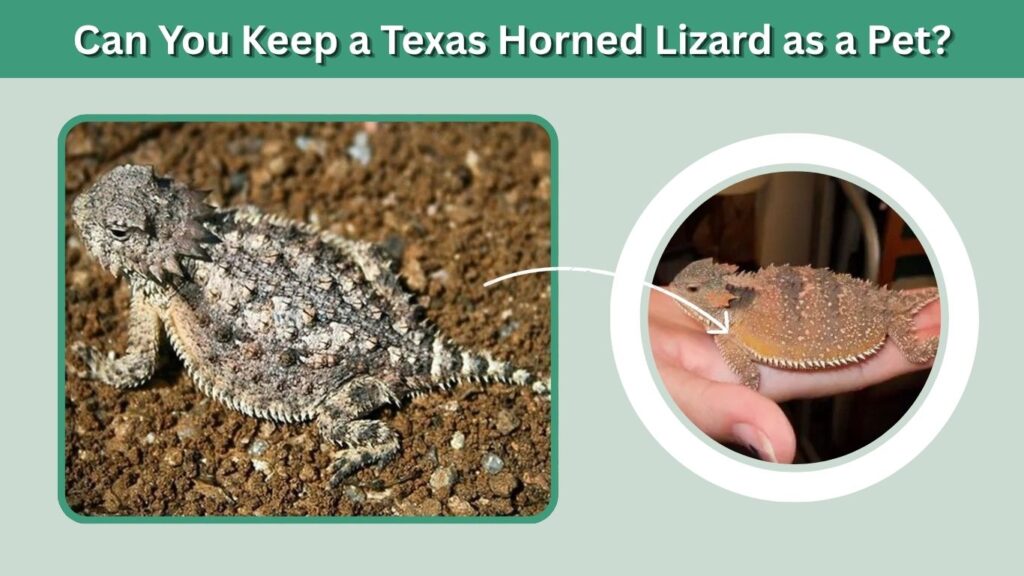
Many people search for “Texas horned lizard for sale,” “Texas horned lizard pet,” or “Texas horned lizard care,” but keeping one is not a good idea. In Texas, wild Texas horned lizards are protected, and collecting them is illegal. They also have specialized needs that make them difficult to keep healthy in captivity.
They need the right heat, soil, space, and diet. Their strong dependence on native ants makes captive care especially difficult. Removing them from the wild also harms already declining local populations.
Why Is the Texas Horned Lizard Endangered or Threatened?
The Texas horned lizard is not federally listed as endangered by the U.S. Fish and Wildlife Service, but it is listed as threatened in Texas. This distinction matters. Searchers often ask, “Is the Texas horned lizard endangered?” or “Why is the Texas horned lizard endangered?” In Texas, the better wording is that it is state-threatened.
Main Reasons for Decline
Several problems have caused Texas horned lizard numbers to fall in many areas:
- Habitat loss from development
- Conversion of native grassland
- Road mortality
- Pesticide use
- Decline of harvester ants
- Spread of invasive fire ants
- Collection for the pet trade in the past
- Predation by domestic cats and dogs
- Fragmented habitat
Fire Ants and Pesticides
Fire ants are a major concern because they can disrupt native insect communities. They may also attack small reptiles or compete with native ants. Pesticides create another problem by killing ants and other insects that horned lizards need for food. When people treat large areas with insecticides, the lizard may lose its prey base even if the habitat still looks suitable.
Texas Horned Lizard Life Cycle
Texas horned lizards reproduce by laying eggs. Females usually dig nests in loose soil, where the eggs can develop safely. Hatchlings are tiny versions of adults and must find food quickly after emerging.
Eggs and Reproduction
Female horned lizards lay eggs in the ground during the warmer months. Loose sandy or loamy soil is important because it allows the female to dig a nest. After hatching, young lizards face many dangers, including birds, snakes, mammals, fire ants, and lack of food.
Lifespan and Growth
In the wild, survival can be difficult, especially for young lizards. They must avoid predators, find enough ants, and survive extreme heat, drought, and habitat disturbance. Healthy habitat gives them the best chance to reach adulthood.
Texas Spiny Lizard vs Horned Toad
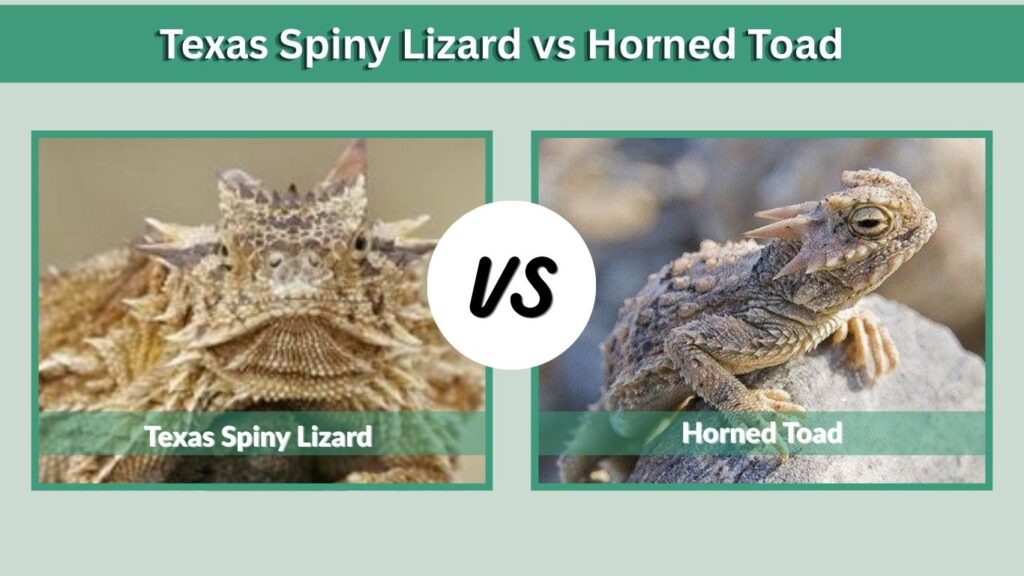
Some people confuse the Texas horned lizard with the Texas spiny lizard. Both are reptiles found in Texas, and both have rough-looking scales, but they are very different in shape and behavior.
| Feature | Texas Horned Lizard | Texas Spiny Lizard |
|---|---|---|
| Body shape | Flat, wide, round | Longer and slimmer |
| Head | Horned, crown-like | Pointed but not horned like a horned lizard |
| Tail | Short | Long |
| Common nickname | Horned toad | Spiny lizard |
| Main defense | Camouflage, spines, blood-squirting | Climbing, running, hiding |
| Habitat | Open dry ground | Trees, fences, rocks, wooded areas |
| Diet | Mostly ants and small insects | Insects and arthropods |
Texas Horned Lizard Conservation
Conservation efforts focus on protecting habitat, restoring native plants, reducing pesticide use, supporting harvester ants, and educating the public. Some conservation programs also work on breeding and reintroduction. Recent reports have highlighted reintroduction work involving zoo-bred Texas horned lizards, including hatchlings raised for future release into suitable Texas habitats.
How People Can Help
People can support Texas horned lizards by protecting native habitat and avoiding actions that harm insect populations. Landowners can help by maintaining native grasses, reducing broad pesticide use, and preserving open sandy areas.
Helpful actions include:
- Plant native grasses and wildflowers
- Avoid unnecessary insecticides
- Protect harvester ant colonies
- Keep cats indoors
- Do not collect wild horned lizards
- Report sightings to conservation programs where available
- Support habitat restoration projects
FAQs
Are Texas horned lizards poisonous?
No, Texas horned lizards are not poisonous. They do not produce venom, and they are not dangerous to humans. Their main defenses are camouflage, spines, puffing up, and sometimes squirting blood from the eyes.
Do Texas horned lizards really shoot blood from their eyes?
Yes, they can shoot blood from the corners of their eyes as a defense mechanism. This behavior is usually used when they are extremely threatened, especially by predators such as coyotes, foxes, or dogs.
What does a Texas horned lizard eat?
A Texas horned lizard eats mostly harvester ants. It may also eat beetles, termites, grasshoppers, spiders, and other small insects. Harvester ants are especially important for its survival.
Can you buy a Texas horned lizard?
You should not buy or collect a wild Texas horned lizard. In Texas, the species is protected as threatened, and taking one from the wild is illegal. It is also difficult to care for because of its specialized diet and habitat needs.
Why is the Texas horned lizard important?
The Texas horned lizard is important because it is part of native grassland and desert ecosystems. It helps control insects, serves as prey for native predators, and is a cultural symbol of Texas wildlife. Its decline also warns us about habitat loss, pesticide use, and reduced native insect diversity.
