
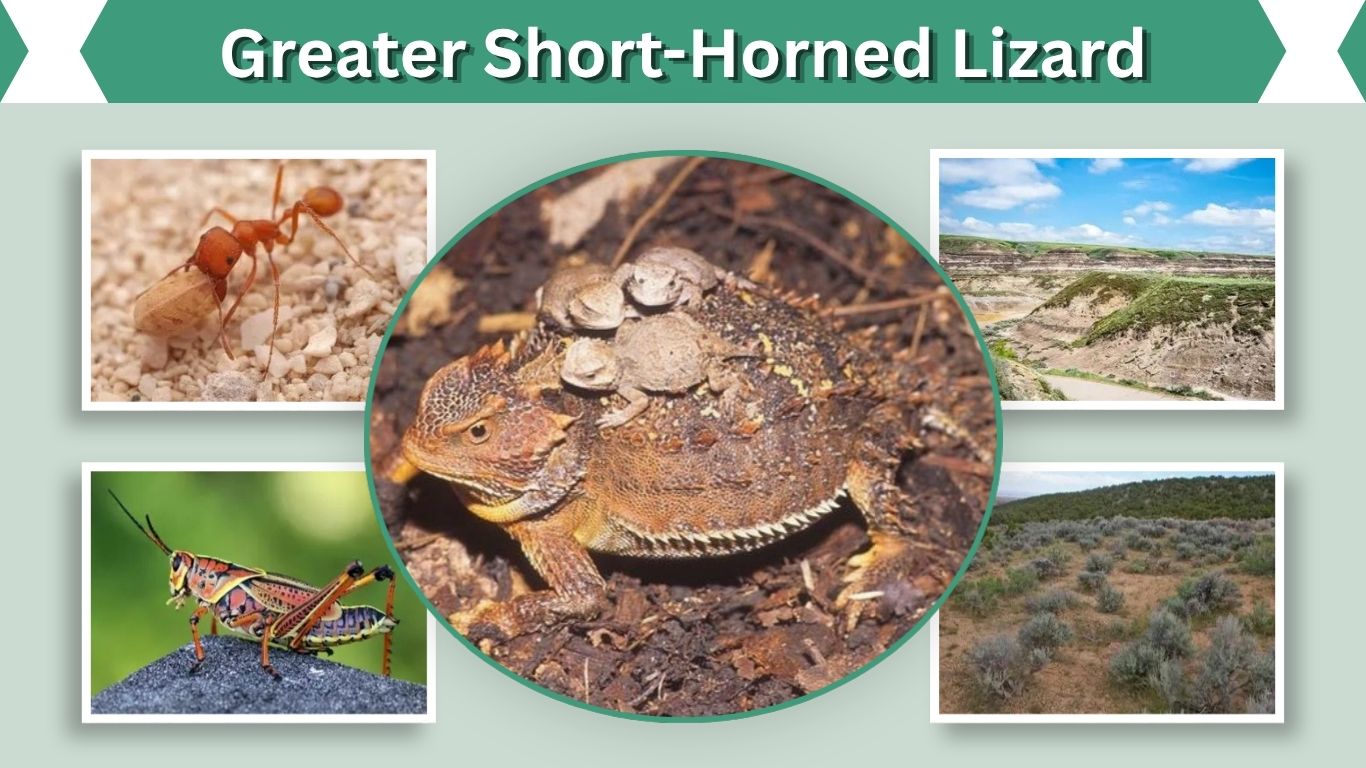
The greater short-horned lizard is a small, spiky reptile known for its flat body, short head horns, and strong camouflage. Also called Phrynosoma hernandesi, this lizard lives across parts of western North America, from dry grasslands to mountain habitats. Many people search for its diet, habitat, pet care, predators, and endangered status because it looks unusual and is often confused with “horned toads.” However, it is a true lizard, not a toad.
What Is a Greater Short-Horned Lizard?
The greater short-horned lizard is a horned lizard species in the family Phrynosomatidae. Its scientific name is Phrynosoma hernandesi. It is also sometimes called the mountain short-horned lizard or Hernández’s short-horned lizard. This species is native to western North America and is one of the most widespread horned lizards on the continent.
Quick Identification
You can identify a greater short-horned lizard by looking for these features:
- A short, rounded, flattened body
- Small horn-like scales around the back of the head
- A wide, toad-like shape
- Rough, spiny-looking body scales
- Soil-colored camouflage, often gray, tan, brown, or reddish
- A short tail compared with many other lizards
- Dark blotches or markings along the back
Despite the nickname “horned toad,” this animal is not a toad. It is a reptile with dry scales, claws, and lizard-like behavior.
Greater Short-Horned Lizard Size
Adult greater short-horned lizards are usually small, but their flat body makes them look stockier than many other lizards. They can reach about 2 to 5 inches in snout-to-vent length, depending on age, sex, and region. Females are often larger than males, especially during the breeding season.
Greater Short-Horned Lizard Habitat
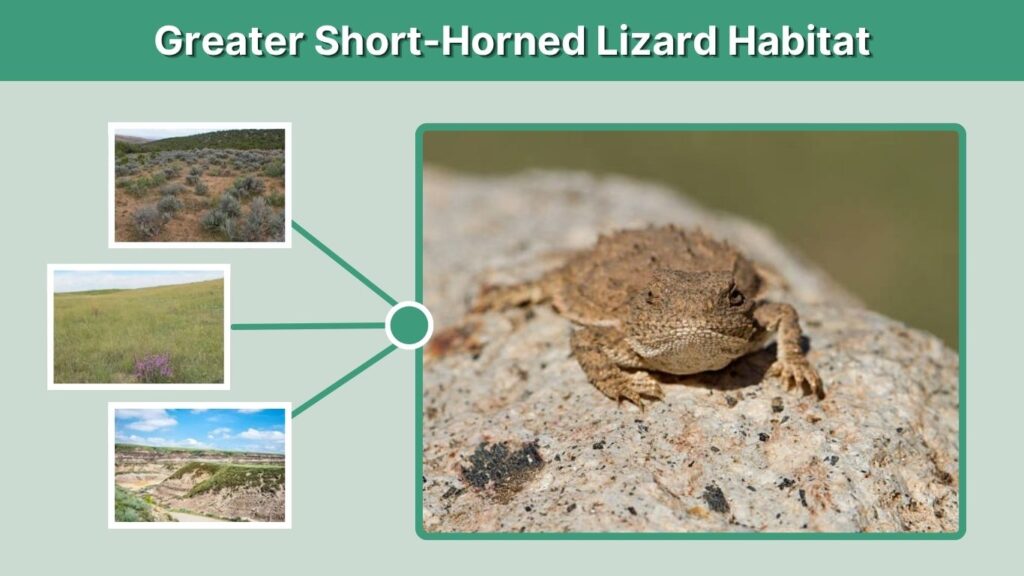
Greater short-horned lizards live in open habitats where they can bask, hide, and find insects. Their habitat can include semiarid plains, grasslands, sagebrush areas, badlands, shrublands, rocky slopes, and open woodlands. They often prefer places with loose soil because they can burrow into the ground for shelter.
Common Habitat Types
| Habitat Type | Why It Matters |
|---|---|
| Shortgrass prairie | Provides open ground, insects, and basking areas |
| Sagebrush shrubland | Offers cover and dry soil conditions |
| Badlands and coulees | Useful for camouflage and burrowing |
| Rocky or sandy slopes | Helps with hiding and temperature control |
| Open woodland edges | Provides insects and scattered shelter |
These lizards are well adapted to dry and open environments. They do not usually live in thick forests, wet areas, or heavily developed places.
Greater Short-Horned Lizard Range
The greater short-horned lizard has a broad range across western North America. It occurs in parts of the United States, Canada, and Mexico. In the U.S., it may be found in states such as Montana, Colorado, Utah, Arizona, New Mexico, Nevada, Wyoming, North Dakota, and South Dakota. In Canada, it is known from Alberta and Saskatchewan.
Searches like “greater short horned lizard Alberta,” “greater short horned lizard Montana,” “greater short horned lizard Utah,” and “greater short horned lizard Arizona” are common because the species has local populations in different regions.
Greater Short-Horned Lizard Diet
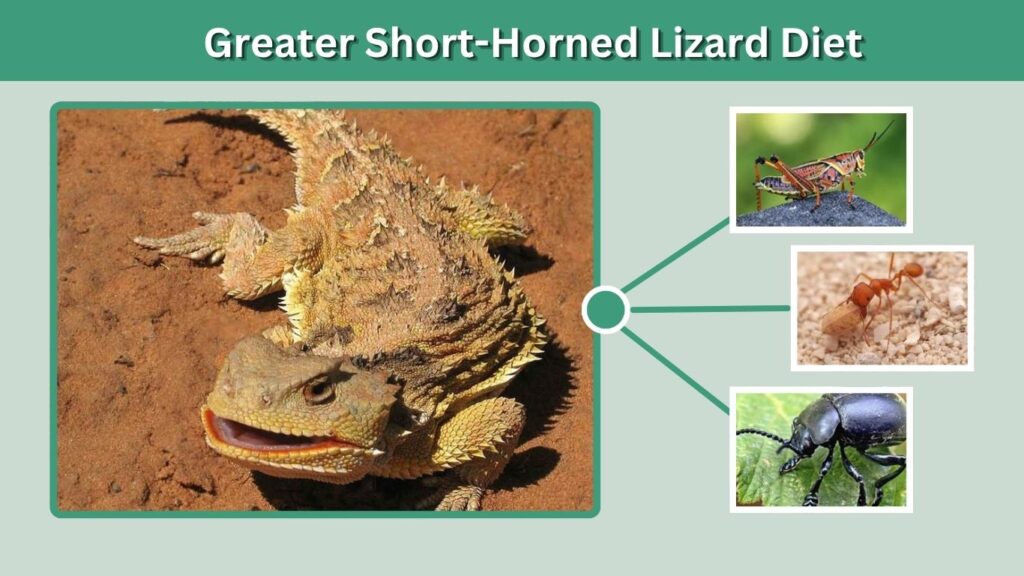
The greater short-horned lizard is mainly insectivorous, meaning it eats insects and other small invertebrates. Ants are an important part of its diet, but it may also eat beetles, crickets, spiders, snails, and other small prey.
What Do Greater Short-Horned Lizards Eat?
Their diet may include:
- Ants
- Beetles
- Crickets
- Grasshoppers
- Spiders
- Small insects
- Snails and other tiny invertebrates
Many horned lizards are famous for eating ants, and the greater short-horned lizard is no exception. However, it does not eat only ants. A varied insect diet helps it survive in different habitats.
How They Hunt
Greater short-horned lizards usually use a sit-and-wait hunting strategy. Instead of chasing prey for long distances, they often stay still and wait for insects to move nearby. Their camouflage helps them remain hidden from both prey and predators.
Because they are cold-blooded reptiles, they are more active when temperatures are suitable. They may bask in the sun to warm up before feeding.
Behavior and Adaptations
Greater short-horned lizards are quiet, secretive reptiles. Their best defense is camouflage. Their body color often matches the soil, rocks, or dry vegetation around them, making them difficult to see.
Defense Against Predators
This lizard has several defense methods:
- Staying still to blend into the ground
- Flattening the body to reduce shadows
- Running short distances when threatened
- Using spiny scales to look harder to swallow
- Burrowing into loose soil
- Sometimes squirting blood from the eyes as a defense
The blood-squirting behavior is one of the most famous horned lizard defenses. It is usually used against certain predators, especially canids such as foxes, coyotes, and dogs. It is rare for them to do this toward humans.
Cold Tolerance
One reason the greater short-horned lizard is unusual is that it can live in cooler regions and higher elevations than many other horned lizards. Its range includes semiarid plains and mountain habitats. NatureServe notes that its habitats can range from semiarid plains to high mountains.
This cold tolerance helps explain why people search for terms like “greater short horned lizard cold tolerance” and “greater short horned lizard Canada.”
Reproduction and Baby Greater Short-Horned Lizards
Greater short-horned lizards are viviparous, which means females give birth to live young instead of laying eggs. This is different from many other lizard species.
Mating and Birth
Mating usually occurs in spring. Females give birth later in the summer, often from July to September. A female may produce several young at once. Reported litter sizes can vary widely, from only a few babies to several dozen.
Baby Greater Short-Horned Lizard
Baby greater short-horned lizards look like tiny versions of the adults, but their horns and body features are less developed. They are independent soon after birth and must find food and avoid predators on their own.
Young lizards are especially vulnerable because they are small and easy prey for birds, snakes, mammals, and larger reptiles.
Greater Short-Horned Lizard Predators
The greater short-horned lizard has many natural predators. Its camouflage protects it from some attacks, but it is still hunted by animals that rely on sight, smell, or quick movement.
Common Predators
| Predator Group | Examples |
|---|---|
| Birds | Hawks, shrikes, crows, roadrunners |
| Mammals | Foxes, coyotes, skunks, dogs |
| Reptiles | Snakes and larger lizards |
| Domestic animals | Cats and dogs in developed areas |
Predation is natural, but human-caused habitat loss can make survival harder. When open grasslands and shrublands are changed by development, agriculture, roads, or invasive plants, lizards may have fewer safe places to hide and feed.
Is the Greater Short-Horned Lizard Endangered?
The answer depends on location. Globally, the greater short-horned lizard is not considered endangered by the IUCN; it has been ranked as Least Concern with a stable population trend in older assessments cited by Canada’s recovery strategy. However, in Canada, the species is listed as Endangered under the federal Species at Risk Act. It is also listed as endangered in Alberta.
Why Is It Endangered in Some Areas?
The greater short-horned lizard is more at risk in the northern part of its range because populations can be isolated and habitat is limited. In Canada, threats include habitat loss, habitat degradation, road mortality, climate stress, and disturbance.
In Montana, official wildlife sources mention anecdotal evidence of declines and threats such as habitat loss, land-use changes, collection as pets, and invasive non-native plants.
Conservation Status by Area
| Area | Status Notes |
|---|---|
| Global | Often considered Least Concern |
| Canada | Listed as Endangered under SARA |
| Alberta | Listed as Endangered |
| Montana | Considered vulnerable/uncommon in some reports |
| United States overall | Status varies by state |
This is why a search like “why is the greater short-horned lizard endangered” needs a careful answer. It may not be endangered everywhere, but it is protected or at risk in some regions.
Can You Keep a Greater Short-Horned Lizard as a Pet?
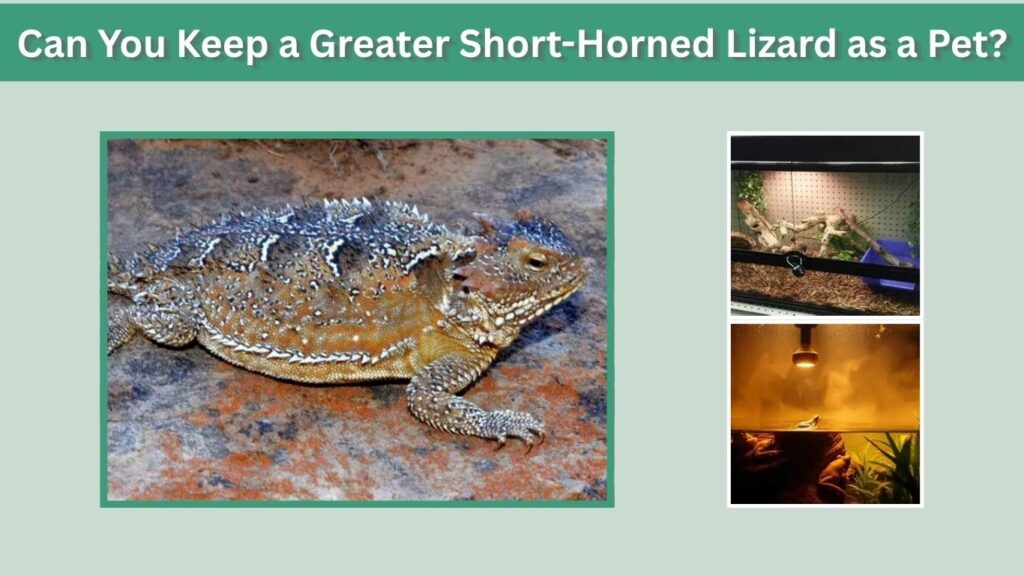
Many people search for “greater short horned lizard pet,” “greater short horned lizard care,” or “greater short horned lizard for sale.” However, this species is not a good pet for most people.
Greater short-horned lizards have specialized needs. They require proper temperature gradients, UVB lighting, loose natural substrate, hiding areas, and a steady supply of suitable insects. They may also be protected by law in some areas. In Canada and parts of their range, harming, capturing, selling, or keeping them may be illegal without permits.
Why They Are Difficult to Care For
Greater short-horned lizards are difficult pets because:
- They need a specialized ant-heavy diet
- Wild-caught individuals often become stressed
- They require precise heat and UVB conditions
- They may refuse food in captivity
- They are protected in some regions
- Removing them from the wild can harm local populations
For these reasons, it is better to observe them in the wild from a distance and never collect them.
Greater Short-Horned Lizard Sightings
Because this lizard is well camouflaged, sightings can be rare even where populations exist. Montana wildlife officials note that greater short-horned lizards can be challenging to find during structured surveys, and public observations are valuable for understanding distribution.
What to Do If You See One
If you find a greater short-horned lizard:
- Do not pick it up
- Do not move it from its habitat
- Take photos from a respectful distance
- Record the location if reporting to wildlife officials
- Keep pets away from it
- Never collect it for a pet
Sightings are especially useful in places where scientists are tracking range and population changes.
Greater Short-Horned Lizard Facts
Here are some quick facts that make this species interesting:
| Fact | Detail |
|---|---|
| Scientific name | Phrynosoma hernandesi |
| Common nickname | Horned toad or horny toad |
| Animal type | Reptile |
| Main food | Ants and other insects |
| Reproduction | Gives birth to live young |
| Defense | Camouflage, spines, and sometimes blood-squirting |
| Habitat | Grasslands, shrublands, badlands, and open woodlands |
| Range | Western North America |
| Pet suitability | Poor choice and often legally restricted |
FAQs
Are greater short-horned lizards dangerous?
No, greater short-horned lizards are not dangerous to humans. They are small, shy reptiles that rely on camouflage and defensive behavior. They may puff up, flatten their body, or try to escape when threatened.
Do greater short-horned lizards shoot blood?
Yes, they can sometimes squirt blood from the area around their eyes as a defense. This behavior is mostly used against predators such as coyotes, foxes, and dogs, and it is rare toward humans.
What do greater short-horned lizards eat?
They mainly eat ants, beetles, crickets, spiders, and other small invertebrates. Ants are an important food source, but their diet can vary depending on the habitat and season.
Where do greater short-horned lizards live?
They live in western North America, including parts of the United States, Canada, and Mexico. Their habitats include grasslands, sagebrush areas, badlands, rocky slopes, open woodlands, and semiarid plains.
Can greater short-horned lizards be kept as pets?
They are not recommended as pets. They have specialized care needs, can be stressed in captivity, and may be protected by law in some areas. It is better to leave them in the wild and observe them without disturbing them.
