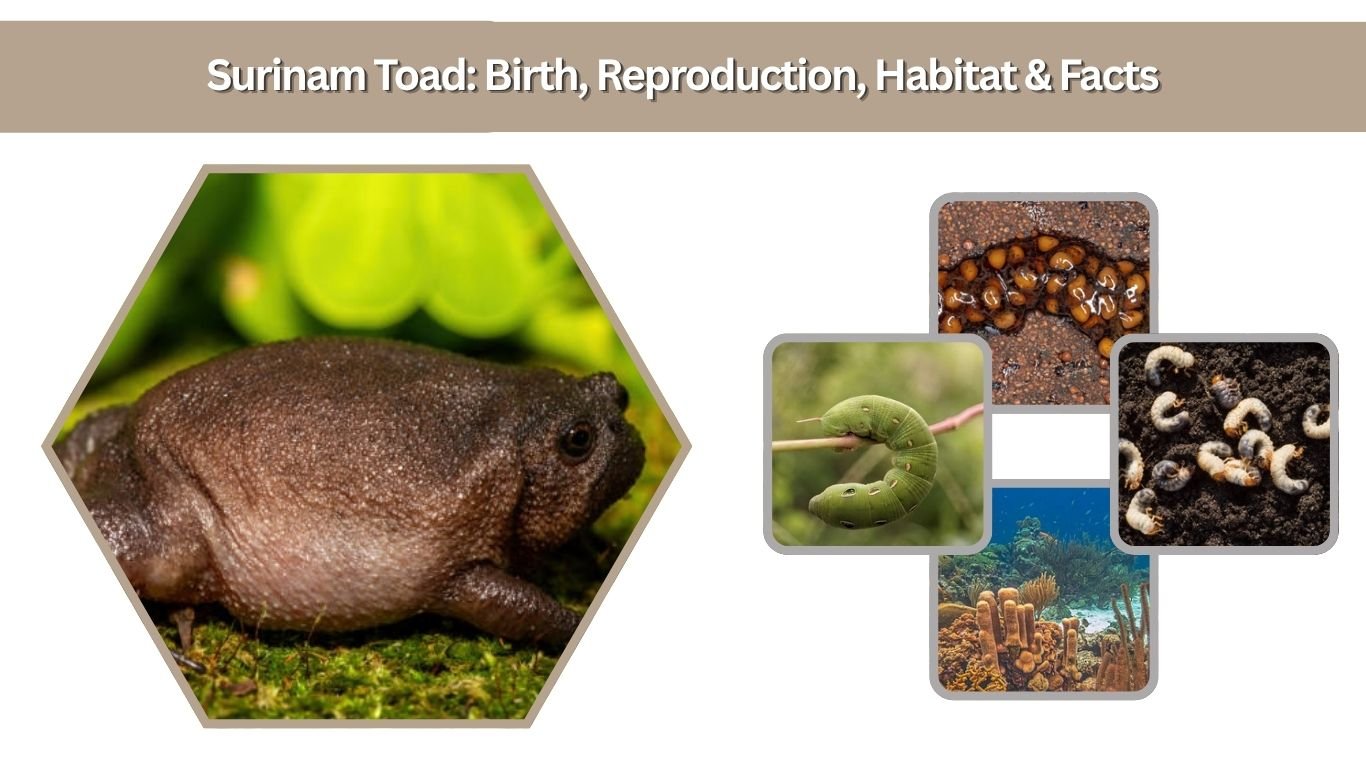
The Surinam toad (Pipa pipa) is one of the most unusual amphibians in the world. Known for its flat, leaf-like body and unique reproductive process, it has gained attention for the way it carries and gives birth to its young. Unlike most frogs and toads, the Surinam toad develops its offspring inside the skin on its back. This rare adaptation has made it a fascinating subject for both scientists and curious readers.
Surinam Toad: Quick Facts
| Feature | Details |
| Scientific Name | Pipa pipa |
| Type | Aquatic toad |
| Size | 4–8 inches |
| Lifespan | 8–15 years |
| Habitat | Freshwater |
| Diet | Carnivorous |
| Unique Trait | Babies develop in back |
What Is a Surinam Toad?

Key Characteristics:
- Flat, wide body that blends into surroundings
- Fully aquatic lifestyle
- No tongue or teeth
- Uses suction feeding to catch prey
The Surinam toad spends its entire life in water and rarely comes onto land. Its body shape helps it camouflage against muddy bottoms, making it difficult for predators to spot. Instead of using a tongue like many frogs, it relies on suction to pull food into its mouth.
Surinam Toad Birth (How It Gives Birth)
The Birth Process
The Surinam toad has one of the most unique reproductive methods in the animal kingdom. Instead of laying eggs in water like other frogs, the female carries them on her back.
During mating, the male places fertilized eggs onto the female’s back. Over time, her skin grows around each egg, forming small pockets. Inside these pockets, the eggs develop safely until they are ready to emerge.
When the development is complete, fully formed baby toads emerge from the back. This process is very different from typical frog reproduction, as the young skip the free-swimming tadpole stage.
What Makes It Unique
This method of birth is rare among amphibians. It provides protection for the developing young and increases their chances of survival. However, it also contributes to the unusual and sometimes disturbing appearance that Surinam toads are known for.
Surinam Toad Reproduction

Mating Process
Reproduction begins in water, where the male and female engage in a unique mating behavior. The male fertilizes the eggs externally, and then helps press them onto the female’s back.
This process ensures that the eggs remain attached and properly positioned for development. Once embedded, the female’s skin begins to change, forming protective layers around each egg.
Reproduction Facts:
- Fertilization happens externally
- Eggs are placed directly onto the female’s back
- Skin grows around eggs forming pockets
This reproductive strategy is highly specialized and differs significantly from most other amphibians.
Surinam Toad Eggs and Development

Egg Stage
After the eggs are embedded into the female’s back, they begin developing within individual pockets. These pockets act as protective chambers, shielding the embryos from environmental threats.
Development Process
Inside the skin, the embryos grow and develop over time. Unlike most frogs, they do not hatch into free-swimming tadpoles. Instead, they continue developing until they are fully formed miniature toads.
This means they bypass the typical tadpole stage entirely, emerging directly as small versions of adult toads.
Development Stages:
- Eggs embed into the back
- Embryos develop inside skin pockets
- Skip external tadpole stage
- Emerge as fully formed toads
This unique life cycle is one of the defining features of the Surinam toad.
Surinam Toad Back Holes Explained
What Are the Holes?
The holes seen on a Surinam toad’s back are actually openings to the pockets where the young develop. Each hole represents a space where an individual embryo has grown.
These openings become visible as the young mature and prepare to emerge. While they may appear unusual, they are a natural part of the toad’s reproductive system.
Key Points:
- Each hole contains one developing toad
- The skin forms protective chambers
- Openings appear before birth
After the young emerge, the skin gradually heals and returns to normal.
Surinam Toad Habitat
Natural Habitat
Surinam toads are found in tropical regions of South America. They live in freshwater environments such as ponds, swamps, and slow-moving streams. These areas typically have muddy bottoms and low visibility.
Habitat Conditions
They prefer calm, warm water where they can remain hidden. Their flat bodies allow them to lie still on the bottom, blending in with leaves and debris. This camouflage helps them avoid predators and catch prey more effectively.
Their environment plays an important role in their survival, as they rely on still water and soft substrates to thrive.
Surinam Toad Diet (What Do They Eat?)

Feeding Behavior
Surinam toads are carnivorous and feed mainly on small aquatic animals. They do not use a tongue to catch food. Instead, they rely on a suction feeding method, quickly opening their mouths to pull prey in along with water.
They are opportunistic feeders, meaning they will eat almost anything they can catch. Movement in the water plays a key role in how they detect food, as they respond to vibrations rather than sight alone.
Main Food Sources:
- Small fish
- Insects and larvae
- Worms
- Aquatic invertebrates
Their feeding style is simple but effective, allowing them to survive in environments with limited visibility.
Surinam Toad Size and Lifespan
Surinam toads are relatively large compared to many other aquatic amphibians. Adults typically grow between 4 and 8 inches in length. Their flat body shape can make them appear even larger when resting on the bottom of the water.
Females are usually larger than males, especially during reproductive stages when they carry eggs on their backs.
Lifespan
In suitable conditions, Surinam toads can live for many years. Their lifespan generally ranges from 8 to 15 years, depending on environmental factors.
Lifespan Factors:
- Water quality and cleanliness
- Availability of food
- Stable environmental conditions
Proper care and a suitable habitat can significantly increase their lifespan.
Are Surinam Toads Poisonous?
Key Answer
Surinam toads are not poisonous and do not pose any direct threat to humans. They do not produce venom and are not aggressive animals.
Their primary defense mechanism is camouflage. By blending into their surroundings, they avoid predators rather than confronting them. This makes them harmless despite their unusual appearance.
Do Surinam Toads Die After Giving Birth?
Final Answer
Surinam toads do not die after giving birth. Unlike some species that reproduce only once, they can reproduce multiple times throughout their lives.
After the young emerge from the back, the skin gradually heals and returns to its normal state. The female is able to continue living and may reproduce again under the right conditions.
Why Do People Find Surinam Toads Disturbing?
Common Reasons
Many people find Surinam toads unsettling because of their unique appearance, especially during reproduction. The holes in the back, where the young develop, can trigger discomfort in individuals with trypophobia, a fear of clustered holes or patterns.
Their unusual birth process also contributes to this reaction. Because it is so different from typical animal reproduction, it can appear shocking or unfamiliar to those seeing it for the first time.
Despite this, the process is completely natural and plays an important role in their survival.
Surinam Toad as a Pet
Pros and Cons
Pros:
- Unique and fascinating species
- Does not require land habitat
- Interesting feeding behavior
Cons:
- Requires specific water conditions
- Not suitable for frequent handling
- Limited availability
Surinam toads are not common pets and are better suited for experienced keepers. Their care requirements and specialized needs make them less beginner-friendly.
Surinam Toad for Sale (Buying Guide)
Where to Buy
Surinam toads are typically available through exotic pet breeders or specialized sellers. They are not commonly found in regular pet stores.
Buying Considerations
Before purchasing, it is important to check local regulations, as ownership may be restricted in some areas. Buyers should also ensure that the toad is healthy and not taken from the wild.
Providing the correct setup before bringing one home is essential for its survival and well-being.
Surinam Toad Facts
Interesting Facts:
- Completely aquatic and rarely leaves water
- Does not have a tongue
- Uses suction to feed
- One of the few animals that gives birth through skin
These facts highlight why the Surinam toad is considered one of the most unique amphibians in the world.
Surinam Toad Life Cycle
The life cycle of the Surinam toad is very different from that of most frogs. Instead of developing outside the body, the young grow inside the skin of the mother’s back.
Life Cycle Stages:
- Eggs placed on back
- Development inside skin pockets
- Emergence as miniature toads
- Growth into adults
This direct development process eliminates the need for a free-swimming tadpole stage.
FAQ
How do Surinam toads give birth?
Surinam toads give birth through their backs. Eggs are placed onto the female’s back, where they become embedded in the skin and develop inside pockets. Once fully formed, the young toads emerge from these openings as miniature versions of adults.
Do Surinam toads die after giving birth?
No, Surinam toads do not die after giving birth. The female survives and can reproduce again in the future. After the young emerge, the skin on her back gradually heals and returns to its normal condition.
Why does the Surinam toad have holes in its back?
The holes in the back are openings to small pockets where the eggs develop. Each pocket holds one developing toad. These structures are part of the toad’s reproductive process and allow the young to grow safely until they are ready to emerge.
Are Surinam toads dangerous?
Surinam toads are not dangerous to humans. They do not produce venom and are not aggressive. Their defense relies on camouflage rather than attack, making them harmless despite their unusual appearance.
What do Surinam toads eat?
They eat small aquatic animals such as insects, larvae, worms, and fish. They use a suction feeding method to pull prey into their mouths. Their diet is entirely carnivorous and depends on what is available in their environment.
