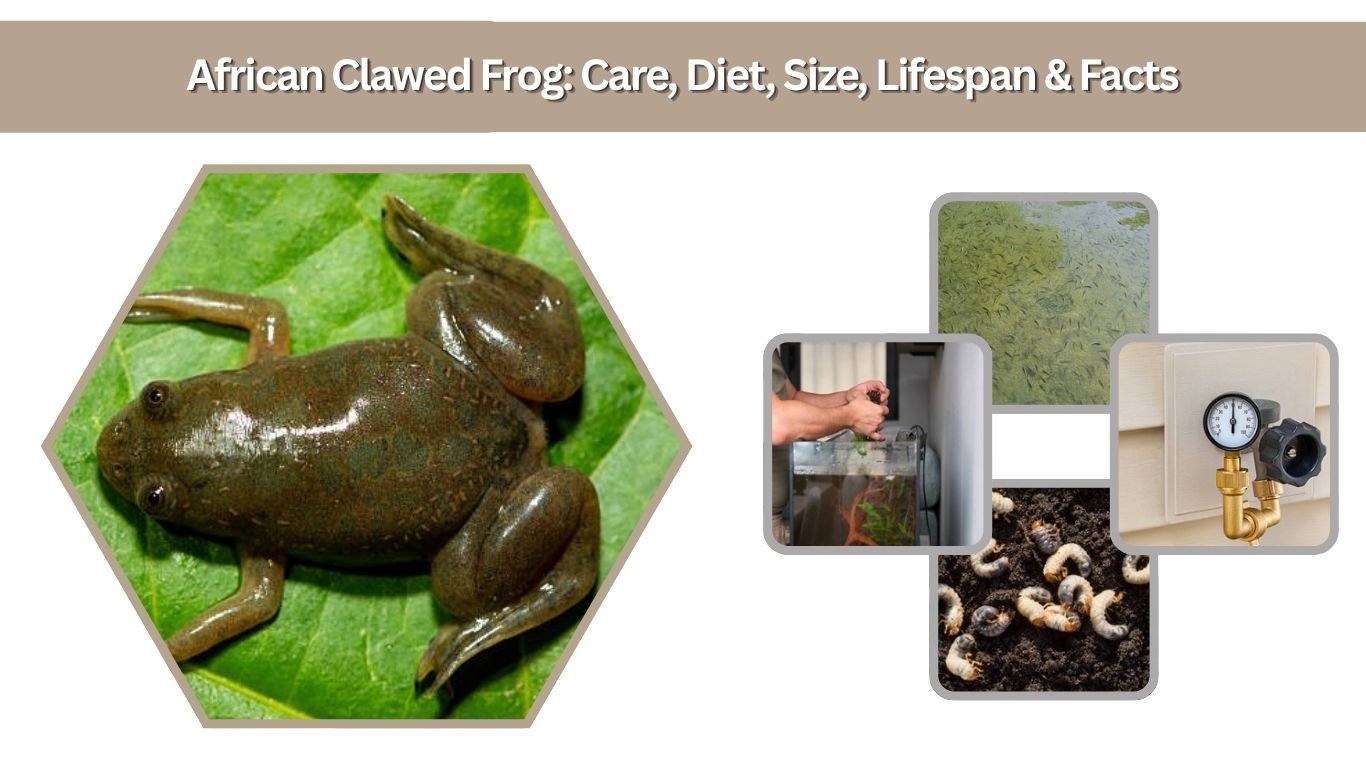
The African clawed frog (Xenopus laevis) is a fully aquatic amphibian known for its unique appearance and interesting behavior. It is widely kept as a pet and also used in scientific research. People are often curious about its size, lifespan, diet, and care requirements. Understanding these aspects is essential whether you are planning to keep one or simply want to learn more about this fascinating species.
African Clawed Frog: Quick Facts
| Feature | Details |
| Scientific Name | Xenopus laevis |
| Type | Aquatic frog |
| Lifespan | 10–15 years |
| Size | 4–5 inches |
| Diet | Carnivorous |
| Habitat | Freshwater |
| Behavior | Active and opportunistic feeder |
What Is an African Clawed Frog?

Key Characteristics:
- Fully aquatic and rarely leaves water
- Flat body with strong hind legs
- Webbed feet with sharp claws
- No tongue, uses front limbs to eat
The African clawed frog is different from many other frogs because it does not rely on a tongue to catch food. Instead, it uses its front limbs to push food into its mouth. Its strong hind legs help it swim quickly, making it an efficient predator in water.
African Clawed Frog Size and Growth

Growth Overview
African clawed frogs grow relatively quickly, especially during their early stages. When they are young, they increase in size rapidly, provided they have proper nutrition and a healthy environment.
Size Details:
- Juveniles start very small and grow fast
- Adults typically reach 4–5 inches
- Females are larger than males
Their final size depends on factors such as diet, tank conditions, and overall care. A well-maintained environment allows them to reach their full growth potential.
African Clawed Frog Lifespan

Lifespan in Captivity
African clawed frogs can live for a long time when properly cared for. In captivity, their average lifespan ranges between 10 and 15 years. Some individuals may live even longer with excellent care.
Key Factors:
- Consistent water quality
- Proper feeding
- Low stress environment
- Regular tank maintenance
Poor care conditions can significantly shorten their lifespan, especially if water quality is not maintained.
African Clawed Frog Diet (What Do They Eat?)

Main Food Sources:
- Worms and insect larvae
- Small fish
- Commercial frog pellets
- Frozen or live food
African clawed frogs are carnivorous and require a protein-rich diet. They are not picky eaters and will consume almost anything they can fit into their mouths.
Feeding Behavior
These frogs are known for their aggressive feeding style. They use their front limbs to grab and push food into their mouths rather than catching it with a tongue. Because they rely on movement and vibration, they may sometimes attempt to eat objects that resemble prey.
Overfeeding should be avoided, as it can lead to health issues such as bloating. Feeding them a balanced diet in controlled portions is essential.
African Clawed Frog Care Guide
Tank Setup
A proper tank setup is essential for keeping African clawed frogs healthy. Since they are fully aquatic, they need a well-maintained water environment.
The tank should have enough space for swimming and should include a secure lid, as these frogs are known to escape. Water should be kept clean with proper filtration, and regular water changes are necessary to prevent the buildup of harmful substances.
Basic Care Tips
Maintaining stable conditions is key to their health. Sudden changes in water temperature or quality can stress the frog. Decorations should be smooth and safe, as sharp objects can cause injury.
Lighting is not a major requirement, but a consistent day-night cycle helps maintain natural behavior.
African Clawed Frog Tank Size and Setup
Ideal Tank Requirements:
- Minimum 10–20 gallons per frog
- Secure lid to prevent escape
- Gentle filtration system
A larger tank is always better, especially if you plan to keep more than one frog. Clean water and enough space are the most important factors in maintaining their health.
African Clawed Frog Tank Mates
Compatibility Overview
African clawed frogs are not ideal for community tanks. They are opportunistic feeders and may eat smaller tank mates.
They may also compete with other animals for food, which can lead to stress or injury. Because of this, many keepers prefer to house them alone.
Tank Mate Considerations:
- Avoid small fish (they may be eaten)
- Avoid slow-moving species
- Best kept alone for safety
Keeping them in a species-only tank is usually the safest and easiest option.
African Clawed Frog Habitat
Natural Habitat
African clawed frogs are native to sub-Saharan Africa, where they live in freshwater environments such as ponds, lakes, and slow-moving streams. These areas typically have warm temperatures and calm water, which suit their swimming behavior.
In the wild, they often stay near the bottom, hiding in mud or vegetation. This helps them avoid predators and makes it easier to ambush prey.
Habitat Conditions
In captivity, their habitat should closely mimic natural conditions. Clean, still water with minimal disturbance is ideal. They prefer a stable environment where temperature and water quality remain consistent.
Providing hiding spots, such as smooth rocks or aquatic plants, can help reduce stress and encourage natural behavior.
African Clawed Frog as a Pet
Pros and Cons
Pros:
- Easy to feed and maintain
- Does not require complex lighting
- Active and interesting behavior
Cons:
- Cannot be handled frequently
- May eat tank mates
- Requires regular tank cleaning
African clawed frogs are suitable for beginners, but they still require proper care. Understanding their behavior and needs is important before keeping one as a pet.
Albino African Clawed Frog
Appearance and Popularity
Albino African clawed frogs are a popular variation known for their pale coloration. They usually have a white or light pink body with red or pink eyes, making them easy to recognize.
Key Features:
- Light-colored skin
- Visible internal features due to transparency
- Same size and care requirements as regular frogs
Despite their different appearance, albino frogs behave the same as standard African clawed frogs and require identical care.
African Clawed Frog Behavior
Common Behavior
African clawed frogs are active and curious animals. They spend much of their time swimming and exploring their environment. They are also sensitive to vibrations, which helps them detect food in the water.
They often rest at the bottom of the tank but will quickly move when they sense movement. Their feeding behavior is especially noticeable, as they actively grab and push food into their mouths using their front limbs.
Behavioral Traits:
- Active swimmers
- Respond to movement and vibration
- Opportunistic feeders
Their behavior can seem unpredictable at times, especially during feeding, but this is part of their natural hunting instinct.
African Clawed Frog Diseases and Health Issues
Common Health Problems
Like any aquatic animal, African clawed frogs can develop health issues if their environment is not properly maintained. Poor water quality is one of the most common causes of illness.
Common Problems:
- Bloating or swelling
- Fungal infections
- Skin irritation
- Loss of appetite
Most health problems can be prevented by maintaining clean water, proper feeding, and a stable environment. Early signs of illness should not be ignored, as treatment is easier when problems are detected early.
Is African Clawed Frog Invasive?
Key Points:
- Considered invasive in some regions
- Can harm native species
- May be restricted or illegal in certain areas
African clawed frogs have been introduced to environments outside their native range, where they can disrupt local ecosystems. Because of this, some areas have regulations regarding their ownership.
African Clawed Frog for Sale (Buying Guide)
Where to Buy
African clawed frogs are available from pet stores, online sellers, and local breeders. Availability may vary depending on location and regulations.
Buying Considerations
When purchasing a frog, it is important to choose a healthy individual. Look for active movement, clear skin, and no visible signs of disease.
You should also check local laws before buying, as ownership may be restricted in some regions due to their invasive nature.
African Clawed Frog Price
Cost Overview
The price of an African clawed frog can vary depending on several factors. In general, they are affordable compared to many other exotic pets.
Factors Affecting Price:
- Age and size
- Color variation (albino frogs may cost more)
- Seller location
Additional costs include the tank, filtration system, and ongoing care, which should be considered before purchasing.
How Big Do African Clawed Frogs Get?
Final Answer
African clawed frogs typically grow to about 4–5 inches in length. Females are usually larger than males. Their size depends on proper care, including diet, water quality, and living space. A healthy frog in a well-maintained environment will reach its full size.
What Do African Clawed Frogs Eat?
Summary
African clawed frogs are carnivorous and require a protein-rich diet. They eat a variety of foods, including worms, insect larvae, small fish, and commercial pellets.
They rely on movement to detect food and use their front limbs to push it into their mouths. A balanced feeding routine is essential for their health and growth.
FAQ
What is an African clawed frog?
The African clawed frog is a fully aquatic amphibian native to Africa. It is known for its flat body, webbed feet, and unique feeding behavior. It is commonly kept as a pet and used in scientific research due to its adaptability and ease of care.
How long do African clawed frogs live?
African clawed frogs typically live between 10 and 15 years in captivity. With proper care, including clean water, a balanced diet, and a stable environment, they may live even longer. Poor conditions can reduce their lifespan significantly.
What do African clawed frogs eat?
They are carnivorous and eat foods like worms, insect larvae, small fish, and commercial pellets. They rely on movement to detect prey and use their front limbs to push food into their mouths. A protein-rich diet is essential for their health.
How big do African clawed frogs get?
Adult African clawed frogs usually grow to about 4–5 inches in length. Females are generally larger than males. Their size depends on proper care, including diet, tank conditions, and overall health.
Are African clawed frogs good pets?
Yes, they can be good pets for beginners because they are easy to feed and maintain. However, they require clean water, cannot be handled often, and may eat smaller tank mates. Understanding their needs is important before keeping one.
