
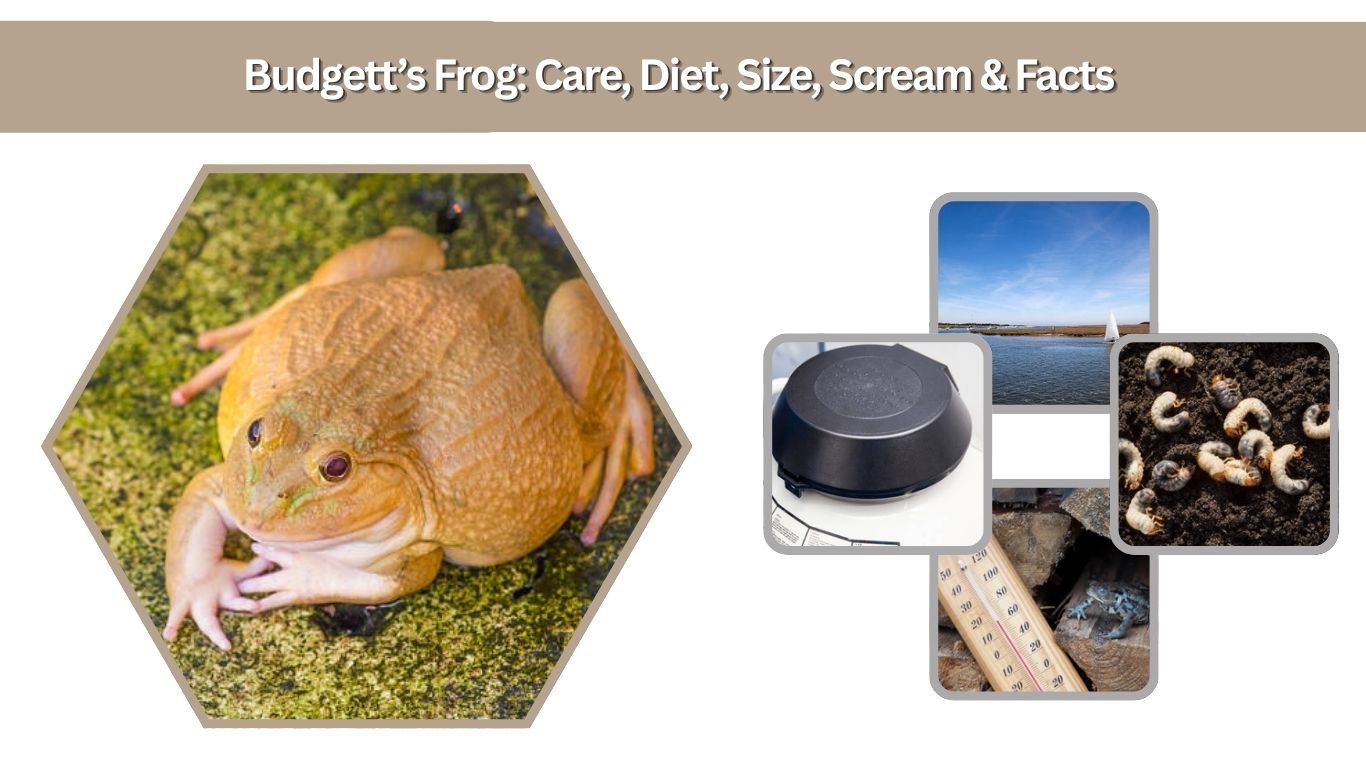
Budgett’s frog (Lepidobatrachus laevis) is a unique amphibian known for its round body, wide mouth, and unusual behavior. Often called the “screaming frog,” it has gained popularity due to its defensive sound and aggressive feeding style. Native to South America, this frog is fully aquatic and has specific care and habitat needs.
Budgett’s Frog: Quick Facts
| Feature | Details |
| Scientific Name | Lepidobatrachus laevis |
| Size | 4–5 inches |
| Lifespan | 5–10 years |
| Habitat | Freshwater |
| Diet | Carnivorous |
| Behavior | Aggressive feeder |
| Unique Trait | Screaming sound |
What Is a Budgett’s Frog?

Budgett’s frog is a fully aquatic species that spends most of its life in shallow water. It is easily recognized by its flattened body and unusually large mouth compared to its size.
Key Characteristics:
- Round, flat body shape
- Very large mouth
- Strong jaw structure
- Adapted to aquatic life
Unlike many frogs, it does not jump often and prefers to stay in water, waiting for prey to come close.
Why Do Budgett’s Frogs Scream?
Budgett’s frogs are famous for the loud sound they make, often described as a scream. This behavior is not random but serves a specific purpose.
Explanation
The sound is mainly a defensive response. When the frog feels threatened or stressed, it produces this noise to scare off predators or warn others. It is not a sign of pain but a natural reaction to danger.
Key Reasons:
- Defensive behavior when threatened
- Reaction to stress or handling
- Warning signal to potential predators
This unique sound is one of the main reasons the frog has become popular online.
Budgett’s Frog Behavior
Budgett’s frogs have a strong and sometimes aggressive personality, especially when it comes to feeding.
Behavior Overview
They are ambush predators, meaning they wait for prey to come close before striking quickly. Their movements are fast when feeding, but otherwise, they tend to remain still in water.
Behavior Traits:
- Aggressive toward moving objects
- Quick feeding response
- Sensitive to vibrations in water
Because of this behavior, they may attempt to bite anything that moves nearby, including objects that are not food.
Budgett’s Frog Size and Appearance
Budgett’s frogs are medium-sized but appear larger due to their body shape and wide mouth.
Size Details
Adult frogs usually grow to about 4–5 inches in length. Their growth depends on diet and environmental conditions. Females may grow slightly larger than males.
Appearance Features
They have a flat, rounded body that helps them blend into muddy environments. Their coloration often includes shades of green, brown, or gray, which provides natural camouflage.
Their large mouth is one of their most noticeable features, allowing them to consume relatively large prey.
Budgett’s Frog Habitat
Budgett’s frogs are native to South America, where they live in warm, freshwater environments.
Natural Habitat
They are commonly found in shallow ponds, temporary pools, and slow-moving water bodies. These areas often dry up seasonally, which has influenced their behavior and adaptations.
Habitat Conditions
They prefer shallow water where they can rest on the bottom. Their flat bodies allow them to stay partially buried in mud, making it easier to hide and ambush prey.
Stable water conditions are important for their survival, especially in captivity where environmental changes can affect their health.
Budgett’s Frog Diet (What Do They Eat?)

Budgett’s frogs are carnivorous and have a strong feeding instinct. Their diet consists of various small animals found in aquatic environments.
Main Food Sources:
- Insects and larvae
- Worms
- Small fish
- Other small aquatic animals
Feeding Behavior
They rely on movement to detect prey and use their powerful jaws to capture it quickly. Instead of chasing food, they wait for it to come within reach and strike suddenly.
Because of their aggressive feeding style, they may attempt to eat anything that moves, even if it is not suitable food. Proper feeding control is important to avoid health issues.
Budgett’s Frog Care Guide

Caring for a Budgett’s frog requires understanding its aquatic nature and behavior.
Tank Setup
A proper setup includes shallow water and enough space for the frog to move comfortably. Since they spend most of their time in water, maintaining clean conditions is essential.
Care Essentials:
- Clean, dechlorinated water
- Stable temperature
- Safe and simple tank design
The tank should not be too deep, as these frogs prefer shallow environments where they can easily reach the surface.
Budgett’s Frog Tank Size and Setup

Providing the right enclosure is important for the frog’s health and comfort.
Ideal Tank Requirements:
- Minimum 10–20 gallon tank
- Shallow water level
- Secure lid to prevent escape
A simple setup works best. Too many decorations can interfere with movement and feeding. Smooth surfaces should be used to prevent injury.
Budgett’s Frog Bite (Are They Dangerous?)
Budgett’s frogs are known for their strong feeding response, which can sometimes lead to biting behavior. While they are not aggressive toward humans in the wild, they may bite if they feel threatened or mistake something for food.
Bite Behavior
Their bite is not venomous, but it can be surprising due to their strong jaws. This usually happens during feeding or when the frog is handled incorrectly.
They rely heavily on movement to identify prey, so anything moving near them may trigger a quick reaction. Because of this, they should not be handled frequently.
Key Points:
- Can bite if threatened or confused
- Strong jaws for their size
- Not venomous or toxic
With proper care and minimal handling, bite incidents can easily be avoided.
Are Budgett’s Frogs Poisonous?
Budgett’s frogs are not poisonous and do not produce venom. Despite their bold behavior and unusual appearance, they are harmless in terms of toxicity.
Safety Overview
They rely on their physical traits, such as camouflage and strong jaws, rather than chemical defenses. This makes them safe to keep, provided they are handled carefully.
Their defensive behavior may seem aggressive, but it is simply a natural reaction to perceived threats.
Budgett’s Frog Lifespan
Budgett’s frogs can live for several years when kept in proper conditions. Their lifespan depends largely on the quality of care they receive.
Lifespan Details
In captivity, they typically live between 5 and 10 years. A stable environment, proper feeding, and clean water can help them reach the upper end of this range.
Lifespan Factors:
- Water quality and cleanliness
- Balanced diet
- Low stress environment
Poor conditions, especially dirty water, can significantly shorten their lifespan.
Are Budgett’s Frogs Good Pets?
Budgett’s frogs can be kept as pets, but they are not suitable for everyone. Their behavior and care requirements make them better suited for people who understand amphibian care.
Suitability Overview
They are easy to feed and do not require complex setups, but their aggressive feeding behavior and sensitivity to handling can be challenging for beginners.
Pros and Cons
Pros:
- Unique and interesting appearance
- Simple feeding requirements
- Active and engaging behavior
Cons:
- May bite if handled
- Not suitable for frequent interaction
- Requires clean and stable water
Understanding these factors is important before deciding to keep one as a pet.
Interesting Facts About Budgett’s Frog
Budgett’s frogs are known for several unusual traits that make them stand out among amphibians.
Fun Facts:
- Often called the “screaming frog”
- Has an unusually wide mouth
- Uses ambush hunting instead of chasing prey
- Spends most of its life in water
These characteristics contribute to their popularity and make them one of the more recognizable exotic frogs.
Final Thoughts
Budgett’s frog is a fascinating amphibian with a unique combination of behavior, appearance, and sound. From its defensive “scream” to its aggressive feeding style, it stands out as one of the more unusual frog species.
While it can be kept as a pet, it requires proper care and understanding of its behavior. With the right environment and minimal handling, it can thrive and display its natural traits safely.
FAQ
Why does Budgett’s frog scream?
Budgett’s frogs produce a screaming sound as a defensive response. When they feel threatened or stressed, they use this sound to scare away predators. It is a natural behavior and not a sign of pain, but rather a warning mechanism.
Are Budgett’s frogs dangerous?
They are not dangerous in terms of venom or toxicity. However, they can bite if they feel threatened or mistake movement for food. Their bite is not harmful but can be surprising, so handling should be limited.
What do Budgett’s frogs eat?
Budgett’s frogs are carnivorous and eat insects, worms, small fish, and other small animals. They rely on movement to detect prey and use their strong jaws to capture food quickly in an ambush style.
How big do Budgett’s frogs get?
Adult Budgett’s frogs typically grow to about 4–5 inches in length. Their flat, wide body and large mouth can make them appear larger than they actually are.
Are Budgett’s frogs good pets?
They can be good pets for people who understand amphibian care. They are easy to feed but require clean water and should not be handled often. Their behavior makes them more suitable for observation rather than interaction.
