
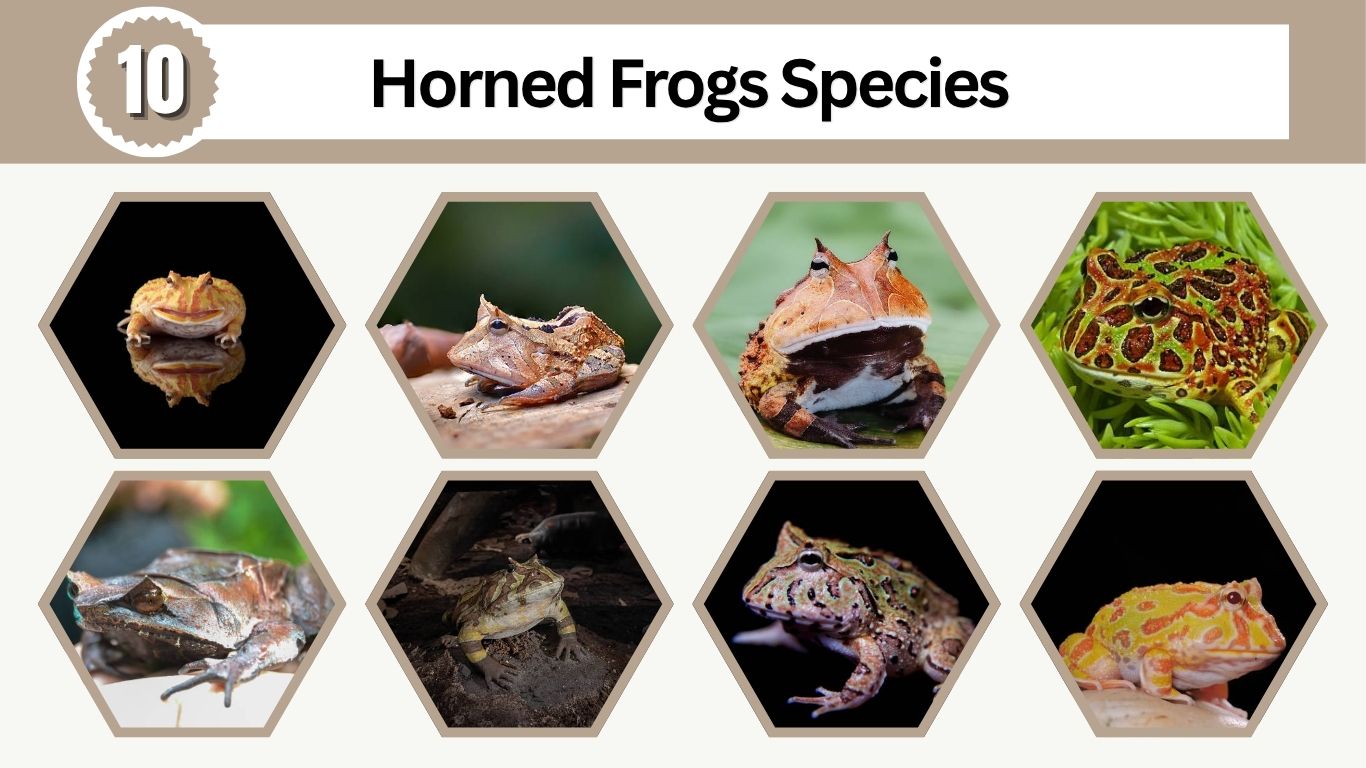
Horned frogs are fascinating amphibians known for their round bodies, wide mouths, and distinctive horn-like features above their eyes. Commonly called “Pacman frogs,” they are popular for their unique appearance and ambush hunting style. These frogs are mostly found in South America and thrive in warm, humid environments. In this guide, you will explore 10 different types of horned frogs, each with key identification traits, habitat details, behavior, and lifecycle information to help you better understand these remarkable creatures.
1. Argentine Horned Frog

The Argentine horned frog is one of the most well-known species of horned frogs, often referred to as a “Pacman frog” due to its round body and large mouth. It is popular in the pet trade and is recognized for its bold appearance and strong appetite.
Identification
- Round, wide body with a large mouth
- Green coloration with dark brown or black markings
- Horn-like projections above the eyes
- Short limbs and smooth, slightly bumpy skin
Habitat and Distribution
This species is native to South America, particularly Argentina, Uruguay, and Brazil. It is commonly found in grasslands, forests, and wetlands where moisture is present, as it relies on damp environments to survive.
Behavior and Diet
The Argentine horned frog is an ambush predator that spends most of its time partially buried in soil or leaf litter. It feeds on insects, small mammals, and even other frogs. It is known for its aggressive feeding behavior and strong bite.
Lifecycle
The lifecycle begins with eggs laid in water, which hatch into tadpoles. The tadpoles grow and undergo metamorphosis, developing into adult frogs. As they mature, they transition from aquatic to mostly land-based living, continuing the cycle.
2. Cranwell’s Horned Frog

Cranwell’s horned frog is another popular species often kept as a pet. It is closely related to the Argentine horned frog and shares many similar features, including its round body and large mouth. This frog is known for its calm nature and adaptability in captivity.
Identification
- Round, compact body with a wide mouth
- Color varies from green to brown, sometimes albino forms exist
- Small horn-like ridges above the eyes
- Short legs and smooth skin
Habitat and Distribution
Cranwell’s horned frog is native to South America, especially in regions of Argentina, Bolivia, and Paraguay. It typically lives in dry forests, grasslands, and seasonal wetlands where it can burrow and stay hidden.
Behavior and Diet
This frog is a sit-and-wait predator that stays still for long periods, waiting for prey to come close. It feeds on insects, worms, and small animals. It is generally less active but will strike quickly when hunting.
Lifecycle
The female lays eggs in shallow water, where they hatch into tadpoles. The tadpoles grow rapidly and transform into froglets through metamorphosis. As adults, they become mostly terrestrial and continue their life cycle in moist environments.
3. Surinam Horned Frog

The Surinam horned frog is a striking species known for its large size and impressive camouflage. Like other horned frogs, it has a wide mouth and a body shape that helps it blend into its surroundings. It is a powerful predator and spends much of its time hidden.
Identification
- Large, broad body with a wide mouth
- Brown or tan coloration with dark patterns for camouflage
- Prominent horn-like projections above the eyes
- Rough, textured skin
Habitat and Distribution
This species is native to South America, particularly in countries like Suriname, Brazil, and Guyana. It is commonly found in tropical rainforests, wetlands, and areas with dense vegetation and high humidity.
Behavior and Diet
The Surinam horned frog is an ambush predator that remains still and waits for prey. It feeds on insects, small reptiles, and other amphibians. Its camouflage helps it stay hidden from both prey and predators.
Lifecycle
The lifecycle begins when eggs are laid in water. These hatch into tadpoles, which grow and develop into froglets through metamorphosis. As adults, they live mostly on land, continuing the cycle in moist habitats.
4. Amazon Horned Frog

The Amazon horned frog is a large and powerful species found in the dense rainforests of the Amazon Basin. It is known for its excellent camouflage and aggressive feeding behavior. Like other horned frogs, it has a wide mouth and a stocky body, making it a highly effective ambush predator.
Identification
- Large, round body with a very wide mouth
- Green, brown, or mixed coloration with irregular patterns
- Distinct horn-like projections above the eyes
- Thick, slightly rough skin
Habitat and Distribution
This species is found in the Amazon rainforest across countries such as Brazil, Peru, and Colombia. It prefers humid environments like forest floors, near streams, and areas with dense leaf litter where it can stay hidden.
Behavior and Diet
The Amazon horned frog is a sit-and-wait predator that buries itself partially in the ground. It feeds on insects, small mammals, reptiles, and even other frogs. It is known for its aggressive feeding response and strong bite.
Lifecycle
The female lays eggs in water, which hatch into tadpoles. These tadpoles grow quickly and undergo metamorphosis into froglets. As they mature, they move to land and live mostly terrestrial lives while continuing their reproductive cycle.
5. Colombian Horned Frog

The Colombian horned frog is a lesser-known but fascinating species of horned frog found in parts of South America. Like other members of its group, it has a rounded body and a large mouth, making it an efficient ambush predator in its natural habitat.
Identification
- Round, compact body with a wide mouth
- Brown, green, or mixed earthy coloration
- Small horn-like projections above the eyes
- Smooth to slightly textured skin
Habitat and Distribution
This species is native to Colombia and nearby regions. It is commonly found in tropical forests, wetlands, and areas with high humidity, where it can remain hidden among leaf litter and moist soil.
Behavior and Diet
The Colombian horned frog is a sit-and-wait predator that spends much of its time buried in the ground. It feeds on insects, worms, and small vertebrates. It relies on camouflage and quick strikes to catch prey.
Lifecycle
The lifecycle begins with eggs laid in water. After hatching, the tadpoles grow and develop through metamorphosis into froglets. As they mature, they become mostly land-dwelling adults and continue the reproductive cycle in moist environments.
6. Ecuadorian Horned Frog

The Ecuadorian horned frog is a rare and less commonly known species found in specific regions of South America. It shares many physical traits with other horned frogs, including its round body and wide mouth, but is adapted to its local environment.
Identification
- Round, bulky body with a large mouth
- Earthy colors such as brown, green, or tan
- Small horn-like projections above the eyes
- Slightly rough skin texture
Habitat and Distribution
This species is primarily found in Ecuador and nearby areas. It lives in tropical forests and moist environments, often near water sources where it can stay hidden in leaf litter and damp soil.
Behavior and Diet
The Ecuadorian horned frog is an ambush predator that remains still for long periods. It feeds on insects, worms, and small animals. Like other horned frogs, it uses camouflage and a quick strike to catch prey.
Lifecycle
The female lays eggs in shallow water, where they hatch into tadpoles. The tadpoles grow and undergo metamorphosis into froglets. As adults, they become mostly terrestrial and continue their life cycle in humid environments.
7. Ornate Horned Frog

The ornate horned frog is one of the most colorful and visually striking horned frog species. It is often confused with the Argentine horned frog due to their similar appearance. This species is popular among amphibian enthusiasts because of its bright patterns and bold behavior.
Identification
- Round body with a very large mouth
- Bright green with bold red, yellow, and black markings
- Prominent horn-like ridges above the eyes
- Smooth but slightly bumpy skin
Habitat and Distribution
The ornate horned frog is native to South America, especially in Argentina, Uruguay, and southern Brazil. It lives in grasslands, forests, and wetlands, preferring areas with moist soil and plenty of cover.
Behavior and Diet
This frog is an ambush predator that spends most of its time buried in the ground or leaf litter. It feeds on insects, small reptiles, and even other frogs. It is known for its aggressive feeding response and strong bite.
Lifecycle
The lifecycle begins with eggs laid in water, which hatch into tadpoles. The tadpoles grow quickly and undergo metamorphosis into froglets. As adults, they live mostly on land and continue the breeding cycle in moist environments.
8. Brazilian Horned Frog

The Brazilian horned frog is a robust and well-camouflaged species found in parts of South America. It shares many similarities with other horned frogs but is adapted to its local environment. This frog is known for its strong feeding response and ability to remain hidden.
Identification
- Round, heavy body with a very wide mouth
- Green, brown, or mixed coloration with natural patterns
- Noticeable horn-like ridges above the eyes
- Slightly rough and textured skin
Habitat and Distribution
The Brazilian horned frog is found mainly in Brazil, particularly in forested and wetland areas. It prefers humid environments with plenty of leaf litter, where it can stay hidden and maintain moisture.
Behavior and Diet
This frog is a sit-and-wait predator that buries itself partially in the ground. It feeds on insects, small vertebrates, and other frogs. It relies on camouflage and quick reflexes to capture prey.
Lifecycle
The female lays eggs in water, where they hatch into tadpoles. The tadpoles develop and undergo metamorphosis into froglets. As they mature, they become mostly terrestrial and continue their lifecycle in moist habitats.
9. Peruvian Horned Frog

The Peruvian horned frog is a lesser-known species found in parts of South America. Like other horned frogs, it has a large mouth and a rounded body that helps it function as an effective ambush predator. It is well adapted to blending into its natural surroundings.
Identification
- Round, compact body with a wide mouth
- Brown, tan, or green coloration for camouflage
- Small horn-like projections above the eyes
- Slightly rough skin texture
Habitat and Distribution
This species is found mainly in Peru and nearby regions. It inhabits tropical forests and moist environments, often near water sources and areas with dense leaf litter.
Behavior and Diet
The Peruvian horned frog is a sit-and-wait predator that spends most of its time hidden. It feeds on insects, worms, and small vertebrates. Its camouflage allows it to surprise prey effectively.
Lifecycle
The female lays eggs in water, where they hatch into tadpoles. The tadpoles grow and undergo metamorphosis into froglets. As adults, they become mostly land-dwelling and continue their lifecycle in humid environments.
10. Fantasy Horned Frog

The fantasy horned frog is not a naturally occurring species but a selectively bred variety created in captivity. It is popular in the pet trade due to its unique colors and patterns. Despite its name, it shares the same basic traits and behavior as other horned frogs.
Identification
- Round body with a very large mouth
- Wide variety of colors and patterns due to selective breeding
- Small to moderate horn-like ridges above the eyes
- Smooth to slightly textured skin
Habitat and Distribution
Fantasy horned frogs are bred in captivity and do not have a natural wild habitat. However, their care requirements are similar to other South American horned frogs, needing warm, humid environments with moist substrate.
Behavior and Diet
These frogs are ambush predators and behave similarly to wild horned frogs. They remain still for long periods and strike quickly at prey. Their diet includes insects, worms, and small animals, depending on size.
Lifecycle
The lifecycle follows the same pattern as other horned frogs. Eggs are laid in water, hatch into tadpoles, and then undergo metamorphosis into froglets. In captivity, breeding is controlled, and the frogs are raised under managed conditions.
FAQs
What are horned frogs?
Horned frogs are a group of amphibians known for their round bodies, large mouths, and horn-like projections above their eyes. They are often called “Pacman frogs” due to their shape and feeding behavior. Most species are found in South America.
Why are they called horned frogs?
They are called horned frogs because of the small, pointed projections above their eyes that resemble horns. These “horns” are actually extensions of skin that help break up their outline and improve camouflage.
What do horned frogs eat?
Horned frogs are carnivorous and eat a wide range of prey. Their diet includes insects, worms, small reptiles, and even other frogs. They are ambush predators and rely on quick strikes to catch food.
Are horned frogs good pets?
Horned frogs are popular pets because they are easy to care for and do not require large enclosures. However, they are not very active and can be aggressive feeders, so they are better suited for observation rather than handling.
How long do horned frogs live?
Horned frogs can live for several years, especially in captivity where conditions are controlled. With proper care, some species can live between 5 to 10 years or even longer depending on their environment and diet.
