
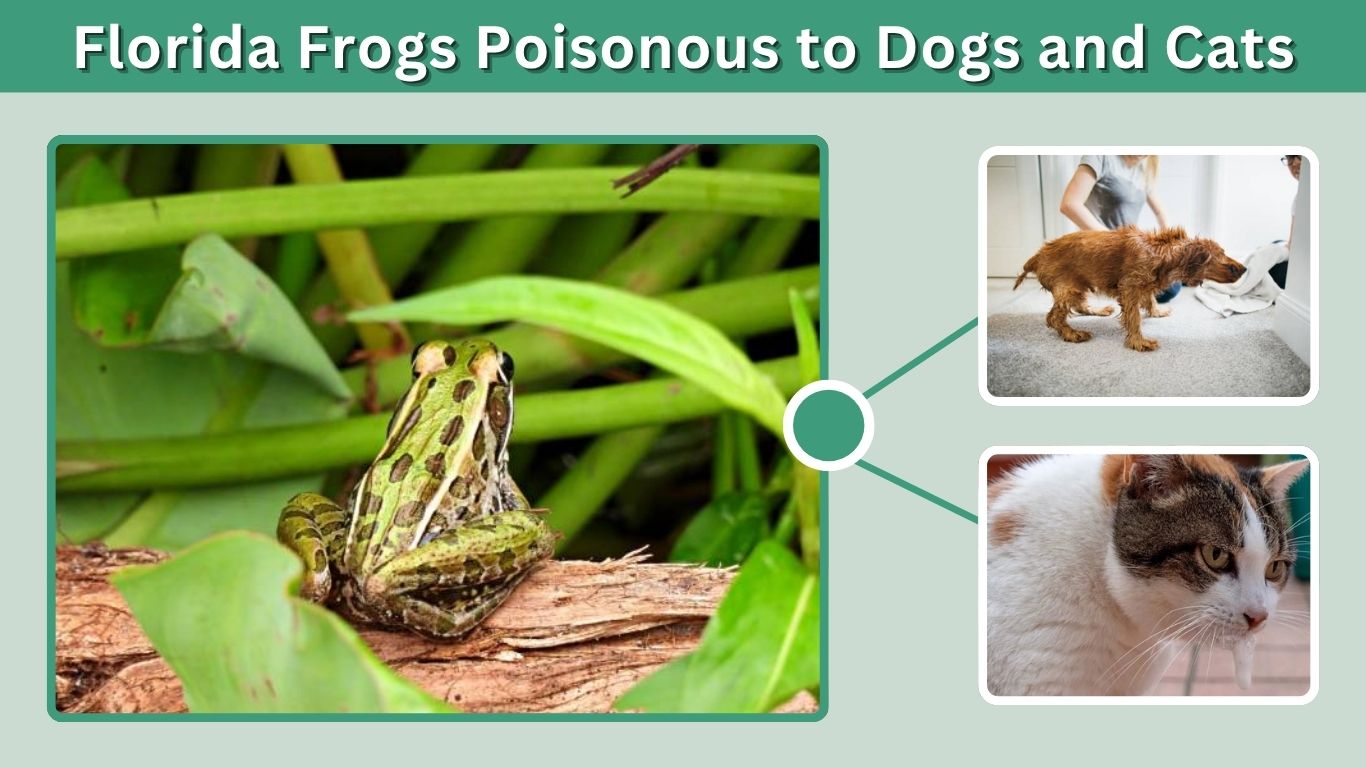
Florida is home to many frogs and toads, and most of them are harmless, beneficial animals that eat insects. However, pet owners often search for “Florida frogs poisonous to dogs,” “Florida frogs poisonous to cats,” and “are there poisonous frogs in Florida” because some amphibians can be risky when pets bite, lick, or swallow them. The biggest concern is not usually native frogs, but toxic toads, especially the invasive cane toad.
Are There Poisonous Frogs in Florida?
Yes, Florida has amphibians that can be harmful to pets, but the word “poisonous frogs” can be confusing. Many people use “frog” to describe both frogs and toads. In pet poisoning cases, Florida’s most dangerous amphibian is usually the cane toad, also called the bufo toad, giant toad, or marine toad.
Most native Florida frogs are not a serious threat to dogs or cats. Some frogs and treefrogs produce skin secretions that may taste bad or irritate a pet’s mouth, but they are usually not deadly. Cane toads are different because their toxin can cause severe symptoms and may be fatal if exposure is serious.
Florida Frogs vs Toads: Why the Difference Matters

Many searches for “Florida frogs poisonous to dogs pictures” or “pictures of Florida frogs poisonous” are really about identifying toxic toads. Frogs and toads are both amphibians, but toads usually have dry, bumpy skin and large poison glands behind the eyes. Frogs often have smoother skin and are more likely to be found near water or vegetation.
Quick Difference Between Frogs and Toads
| Amphibian | Common Florida Example | Risk to Dogs and Cats | Key Concern |
|---|---|---|---|
| Cane toad | Invasive cane/bufo toad | High | Toxic glands can poison pets |
| Cuban treefrog | Invasive treefrog | Low to moderate | Irritating skin secretions |
| Green treefrog | Native treefrog | Low | Usually not dangerous |
| Native frogs | Various species | Low | Mostly harmless if not eaten |
| Native toads | Southern toad, oak toad | Lower than cane toad | May irritate mouth but usually less dangerous |
Cane Toads: The Main Poisonous Amphibian in Florida
The cane toad is the species Florida pet owners should know best. It is a large, invasive toad found mostly in central and South Florida, though isolated sightings can happen elsewhere. It has dry, warty skin and large poison glands behind the eyes.
When a dog or cat bites a cane toad, the toad can release a thick toxin into the pet’s mouth. This toxin can affect the mouth, heart, nervous system, and blood vessels. Dogs are at higher risk because they are more likely to chase, mouth, or bite toads. Cats can also be poisoned, though they may be more cautious.
How to Identify a Cane Toad
A cane toad may have:
- Large body, often much bigger than many native toads
- Dry, warty, brown, gray, or tan skin
- Large triangular poison glands behind the eyes
- No obvious raised ridges or crests on top of the head
- A broad, heavy body
- Ground-dwelling behavior, especially at night
Cane toads are often seen after rain, near outdoor lights, around pet bowls, ponds, patios, and landscaped yards.
South Florida Frogs Poisonous to Pets
Searches for “South Florida frogs poisonous” are especially common because cane toads are most established in warm parts of the state. South Florida’s climate allows cane toads to survive well, and they are often found around neighborhoods, golf courses, canals, yards, and parks.
Pet owners in South Florida should be extra careful at dusk, nighttime, and after rain. These are common times for toads to move around. Dogs that are let outside unsupervised may find a toad before the owner notices.
Where Pets May Find Cane Toads
Cane toads may appear around:
- Pet food bowls left outside
- Standing water
- Garden ponds
- Swimming pool edges
- Patio lights
- Dense landscaping
- Irrigation areas
- Garages and porches
- Open lawns after rain
Removing attractants can reduce the chance of a dangerous encounter.
Florida Frogs Poisonous to Dogs
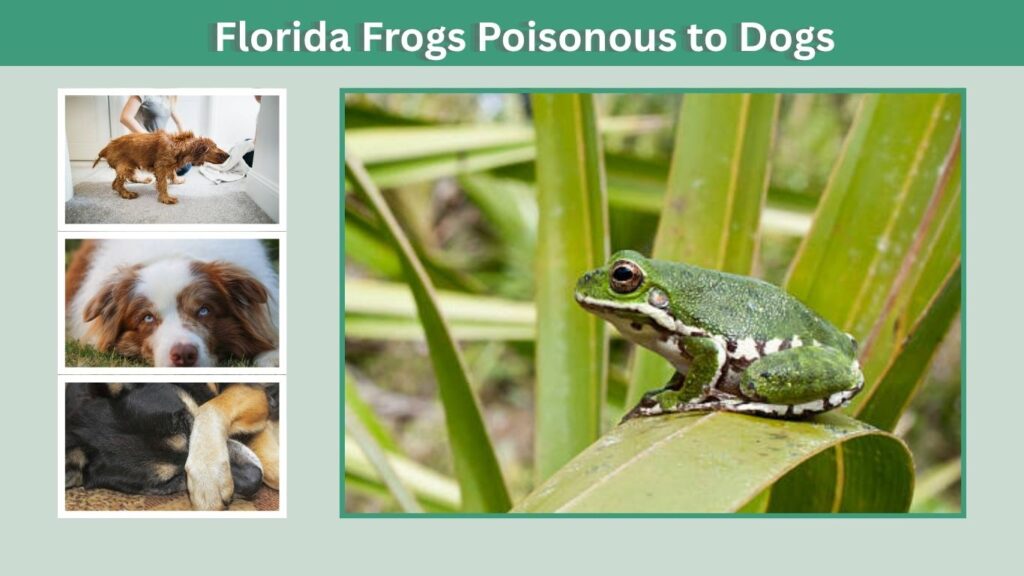
Dogs are the most common pets involved in cane toad poisoning because they often chase moving animals. A curious dog may lick, bite, or pick up a toad. Poisoning can happen quickly because the toxin contacts the gums and mouth tissues.
Poisonous Frogs in Florida to Dogs Symptoms
If a dog mouths a cane toad, symptoms may begin very fast. Watch for:
- Excessive drooling or foaming
- Pawing at the mouth
- Bright red or irritated gums
- Vomiting or retching
- Weakness or wobbliness
- Panting or breathing trouble
- Confusion or agitation
- Tremors
- Seizures
- Abnormal heart rhythm
- Collapse
This should be treated as an emergency. Even if symptoms seem mild at first, cane toad exposure can worsen quickly.
What to Do If a Dog Bites a Cane Toad
Move your dog away from the toad immediately. Use a damp cloth to wipe the gums, tongue, and inside of the mouth. Rinse the cloth repeatedly and continue wiping outward so toxin is removed rather than pushed down the throat. Do not force large amounts of water into the mouth, because the dog could inhale it.
Call a veterinarian or emergency animal hospital right away. If possible, take a picture of the toad from a safe distance for identification, but do not delay care.
Florida Frogs Poisonous to Cats
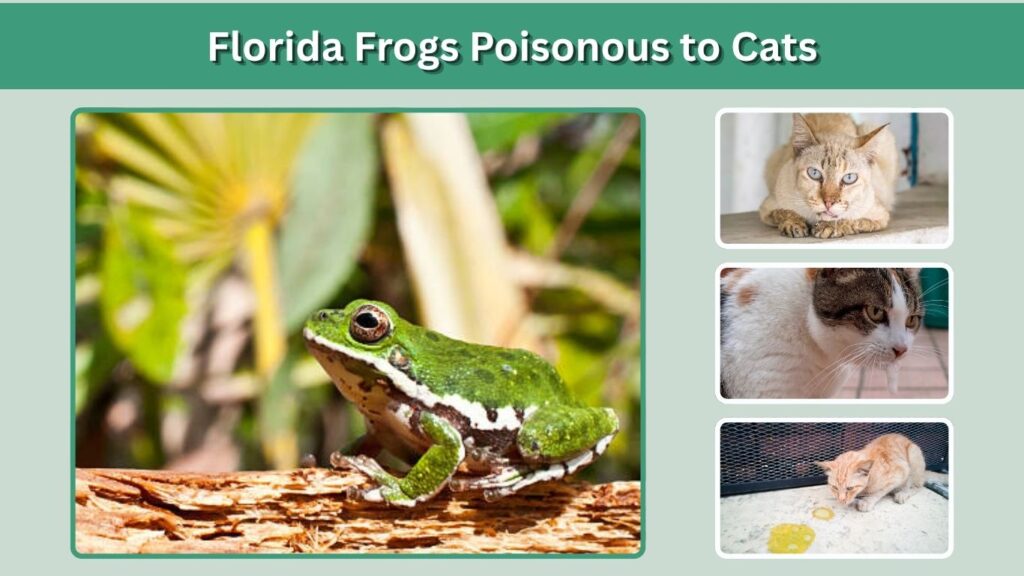
Cats can also be affected by toxic toads, although they are often more selective than dogs. A cat may paw at, bite, or lick a toad. Because cats are smaller, even limited exposure can be concerning.
Signs in Cats
Possible symptoms in cats include:
- Drooling
- Foaming at the mouth
- Vomiting
- Shaking the head
- Pawing at the mouth
- Weakness
- Trouble walking
- Tremors or seizures
- Hiding or unusual behavior
If a cat has contact with a suspected cane toad, contact a veterinarian immediately. Cats may hide when sick, so any sudden behavior change after outdoor exposure should be taken seriously.
Are Florida Tree Frogs Poisonous?
Many people ask, “Are Florida tree frogs poisonous?” Most Florida treefrogs are not dangerous in the same way cane toads are. However, some treefrogs produce skin secretions that can irritate the mouth, eyes, or skin.
The Cuban treefrog is a common invasive species in Florida. Its skin secretions can cause discomfort if a dog or cat bites it. It may also irritate human eyes or sensitive skin. However, Cuban treefrogs are not generally considered lethal to pets.
Are Florida Tree Frogs Poisonous to Dogs?
Florida treefrogs may cause mild mouth irritation, drooling, or discomfort if a dog bites one. The bigger concern is identifying whether the animal was actually a frog or a cane toad. If the animal was large, warty, and had big glands behind the eyes, treat the situation as a potential cane toad emergency.
Are Florida Tree Frogs Poisonous to Cats?
Cats may experience drooling or irritation after biting a treefrog, especially a Cuban treefrog. Severe poisoning is less likely than with cane toads, but pet owners should still monitor the cat and call a veterinarian if symptoms develop.
Are Florida Green Tree Frogs Poisonous?
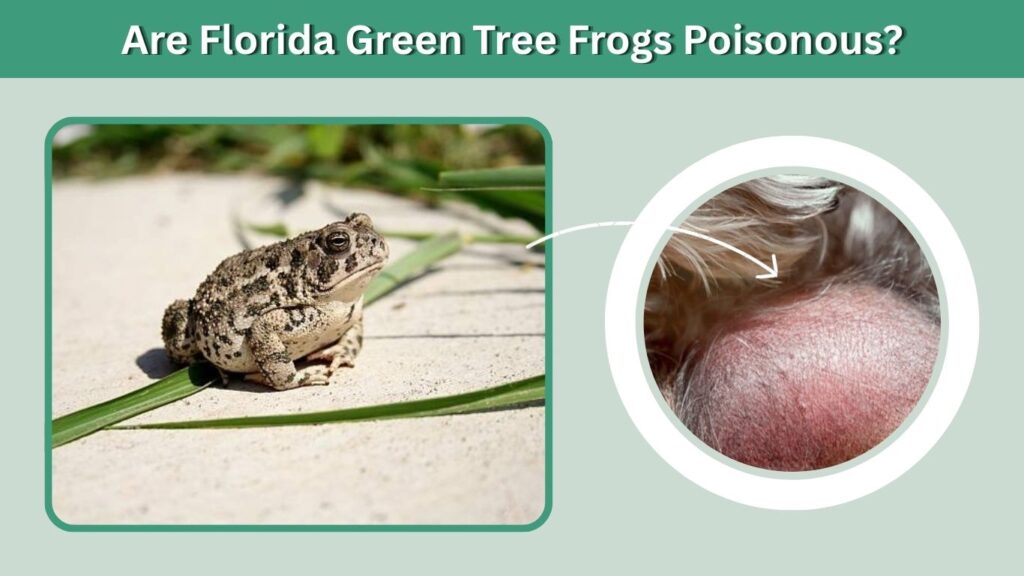
The Florida green treefrog, also known as the American green treefrog, is a native species and is generally not considered dangerous to pets. It may produce mild skin secretions, but it is not the major poisoning threat that cane toads are.
A dog or cat that mouths a green treefrog may drool briefly because of the taste or irritation. However, serious symptoms such as seizures, collapse, or heart problems are not expected from a normal green treefrog encounter. If severe symptoms happen, the pet may have contacted a different amphibian, such as a cane toad.
Are White Frogs in Florida Poisonous?
White or pale frogs in Florida are often Cuban treefrogs. Cuban treefrogs can change color and may appear white, gray, tan, brown, or green. They also have large toe pads and can climb walls, windows, and houses.
Cuban treefrogs are invasive and can be a nuisance, but their secretions are usually irritating rather than deadly to pets. Still, pets should not be allowed to bite or eat them. If a pet reacts strongly, contact a veterinarian.
Non Poisonous Frogs in Florida
Many Florida frogs are considered low-risk to pets. Native frogs and treefrogs are generally beneficial because they eat insects and help support the ecosystem.
Examples of lower-risk Florida frogs include:
- Green treefrogs
- Squirrel treefrogs
- Cricket frogs
- Leopard frogs
- Pig frogs
- Narrow-mouthed toads
- Chorus frogs
Even non poisonous frogs in Florida should not be treated as pet toys. A pet can still experience stomach upset, mouth irritation, or choking if it tries to eat one.
Pictures of Florida Frogs Poisonous: What to Look For
Because identification matters, many pet owners search for pictures of Florida frogs poisonous to dogs and cats. When looking at photos, focus on the cane toad’s major features.
Cane Toad Picture Clues
Look for:
- Very large size
- Big triangular glands behind the eyes
- Dry, rough, warty skin
- Heavy body
- Lack of obvious head crests
- Brown, tan, gray, or reddish-brown color
Do not rely on color alone. Cane toads can vary in shade, and native toads can look similar. Size, glands, and head shape are more useful clues.
How to Keep Dogs and Cats Safe

Preventing contact is the best way to protect pets. This is especially important in South Florida and other areas where cane toads are established.
Prevention Tips
Use these steps to reduce risk:
- Supervise dogs outdoors at night
- Keep cats indoors or closely monitored
- Remove outdoor pet food and water bowls
- Clean up spilled birdseed or pet food
- Reduce standing water
- Keep grass trimmed
- Use lighting carefully because insects attract toads
- Check the yard after rain
- Teach dogs a “leave it” command
- Block access to ponds or damp hiding areas
If cane toads are common in your area, inspect your yard before letting pets outside at night.
What Not to Do After Toad Exposure
A fast response matters, but some actions can make things worse.
Avoid these mistakes:
- Do not wait to see if severe symptoms develop
- Do not let the pet swallow rinse water
- Do not spray water forcefully down the throat
- Do not try home remedies instead of calling a vet
- Do not handle the toad with bare hands
- Do not assume a small exposure is safe
- Do not let the pet continue licking the ground or toad
Veterinary care is especially urgent if your pet is drooling heavily, shaking, vomiting, stumbling, or acting abnormal.
FAQs
Are any Florida frogs poisonous?
Most Florida frogs are not seriously poisonous to pets, but some amphibians can cause irritation. The main dangerous species is the cane toad, which is technically a toad, not a frog. Its toxin can severely poison dogs and cats that bite or mouth it.
Does Florida have poisonous frogs?
Florida has toxic amphibians, but the biggest pet danger is the invasive cane toad. Some treefrogs, such as Cuban treefrogs, can produce irritating skin secretions. Native frogs are usually low-risk, but pets should not be allowed to bite or eat any wild amphibian.
Are Florida green tree frogs poisonous?
Florida green treefrogs are generally not considered dangerous to dogs or cats. They may cause mild mouth irritation if mouthed, but they are not the major poisoning threat. Severe symptoms after an amphibian encounter may suggest cane toad exposure.
Are Florida tree frogs poisonous to dogs and cats?
Most Florida treefrogs are not deadly to dogs or cats. Cuban treefrogs can cause discomfort or irritation if bitten, while native green treefrogs are usually low-risk. Cane toads are much more dangerous and require immediate veterinary attention after exposure.
What are symptoms of poisonous frogs in Florida to dogs?
Symptoms of cane toad poisoning in dogs can include heavy drooling, foaming, red gums, vomiting, weakness, stumbling, tremors, seizures, abnormal heart rhythm, and collapse. Rinse or wipe the mouth carefully and contact an emergency veterinarian immediately.
