
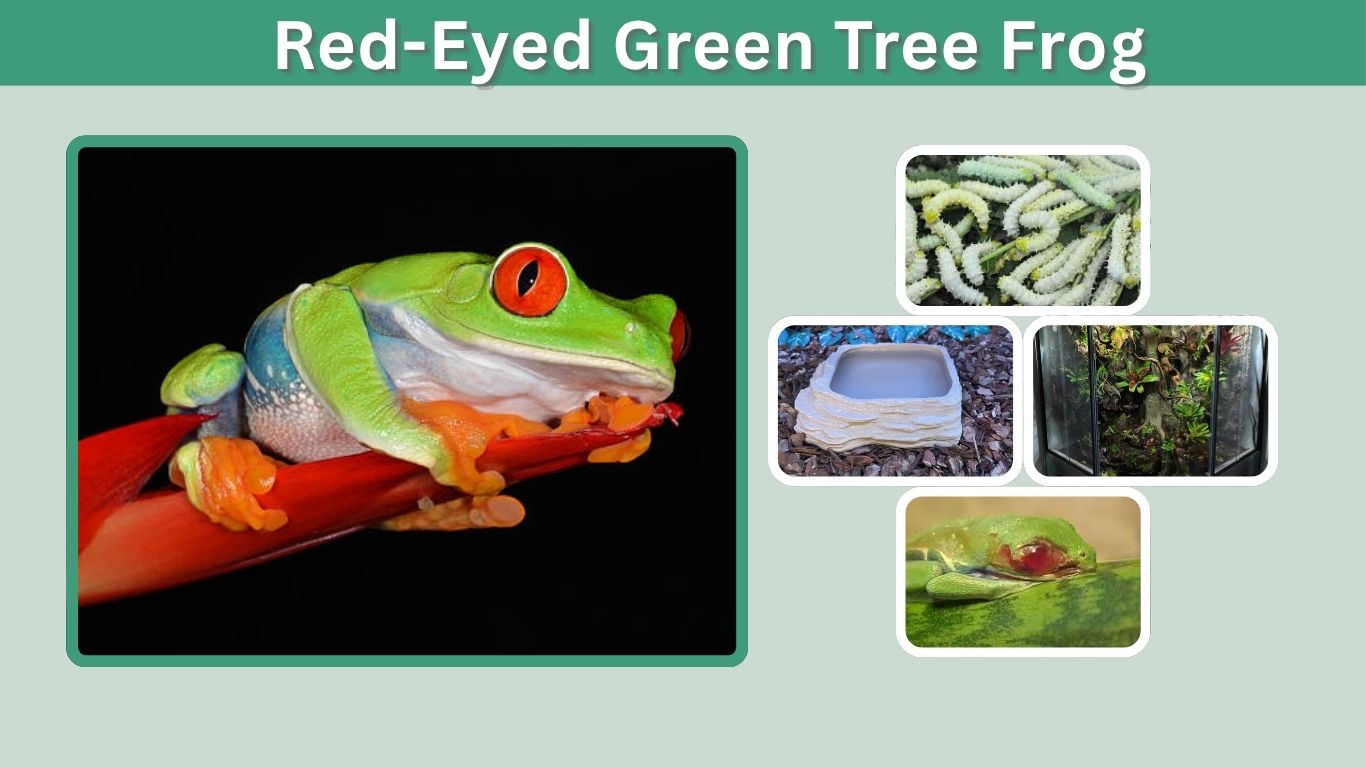
Red-eyed green tree frogs are beautiful tropical amphibians known for their bright red eyes, green bodies, orange feet, and blue-yellow sides. They are popular display pets, but they need careful habitat control to stay healthy. A proper red-eyed green tree frog care routine includes the right terrarium setup, humidity, temperature, diet, lighting, and low-stress handling.
What Is a Red-Eyed Green Tree Frog?
A red-eyed green tree frog is commonly known as the red-eyed tree frog. Its scientific name is Agalychnis callidryas. These frogs come from humid tropical forests in Central America and parts of northern South America. They are arboreal, meaning they spend much of their adult life climbing trees, leaves, and branches.
Red-Eyed Green Tree Frog Facts
These frogs are mostly nocturnal. During the day, they usually sleep on leaves with their bright colors tucked away. At night, they become active and search for insects. Their large red eyes and colorful body may help startle predators when the frog suddenly wakes or jumps away.
| Feature | Details |
|---|---|
| Common name | Red-eyed green tree frog / red-eyed tree frog |
| Scientific name | Agalychnis callidryas |
| Adult size | About 1.5 to 3 inches |
| Lifespan | Around 5 years, sometimes longer with good care |
| Diet | Live insects |
| Activity | Nocturnal |
| Habitat type | Tropical, humid, arboreal terrarium |
| Handling level | Best as a display pet |
Are Red-Eyed Green Tree Frogs Good Pets?
Red-eyed green tree frogs can be good pets for keepers who enjoy watching animals rather than handling them. They are delicate amphibians with sensitive skin, so they are not ideal for frequent handling. They are best kept in a well-planted terrarium where they can climb, hide, and behave naturally.
Red-Eyed Green Tree Frog Habitat
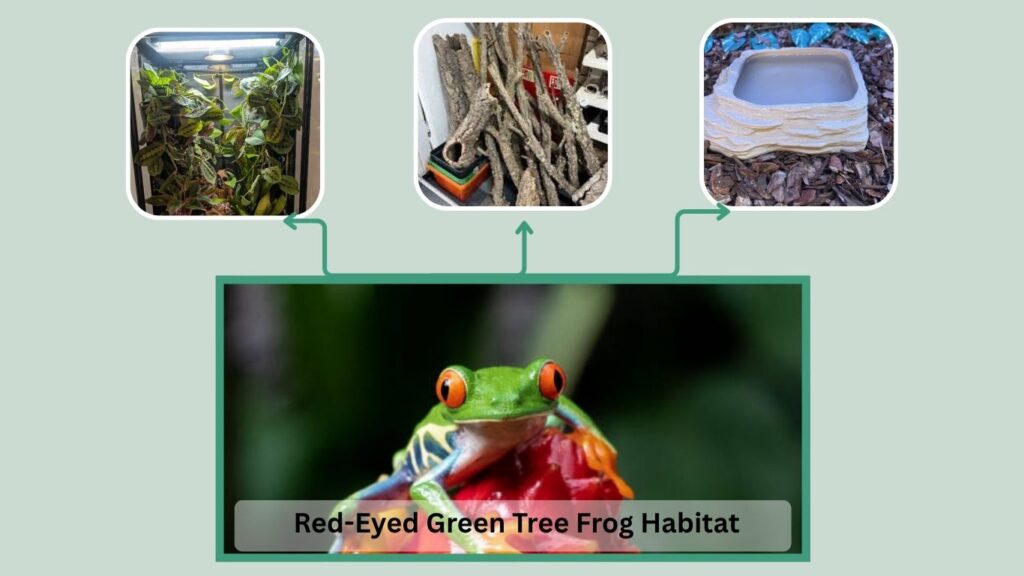
A red-eyed green tree frog habitat should copy a warm, humid rainforest environment. These frogs need vertical space, climbing surfaces, live or artificial plants, clean water, and stable humidity. A dry or poorly ventilated enclosure can quickly cause health problems.
Where Do Red-Eyed Green Tree Frogs Live?
In the wild, red-eyed green tree frogs live in tropical forests near ponds, streams, wetlands, and seasonal pools. Females lay eggs on leaves above water, and the tadpoles drop into the water after hatching. Adults spend much of their time in trees and dense vegetation.
A proper captive habitat should include:
- Tall terrarium space for climbing
- Broad leaves for resting and hiding
- Branches, vines, and cork bark
- Clean shallow water dish
- High humidity with airflow
- Safe substrate that holds moisture
- Day and night temperature difference
- Low-stress hiding areas
Can They Live With Green Tree Frogs?
Red-eyed tree frogs should not usually be kept with other frog species, including green tree frogs. Different species may have different temperature, humidity, diet, disease, and behavior needs. Mixed-species enclosures can also create stress, competition, or injury.
Even if two species seem peaceful, they may expose each other to pathogens. For most keepers, a species-only enclosure is safer and easier to manage.
Red-Eyed Green Tree Frog Enclosure Setup
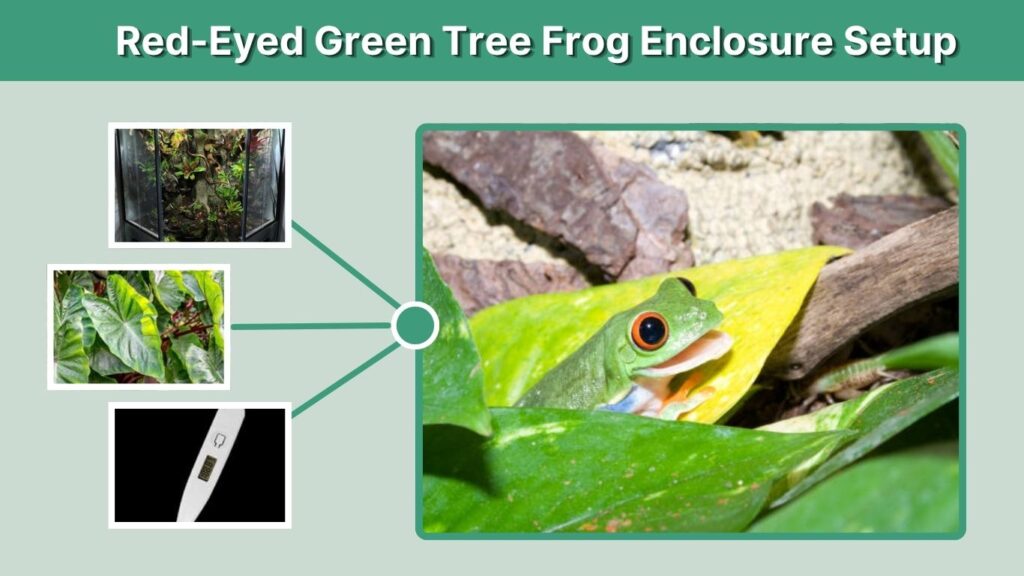
A good red-eyed green tree frog enclosure should be taller than it is wide. These frogs are climbers, so vertical space matters more than floor space. A single adult can live in a modest vertical terrarium, but a larger, planted setup is better for natural behavior.
Terrarium Size and Design
For one or two adult red-eyed tree frogs, many keepers use a vertical terrarium of at least 18 x 18 x 24 inches. Larger groups need more space. The enclosure should have secure doors, good ventilation, and enough height for climbing.
Useful enclosure items include:
- Vertical glass terrarium
- Branches and vines
- Broad-leaf plants
- Cork bark or background panels
- Moisture-holding substrate
- Shallow water dish
- Digital thermometer
- Hygrometer
- Misting system or hand mister
Avoid sharp decorations, rough rocks, or anything treated with chemicals. Amphibians absorb moisture through their skin, so unsafe materials can harm them.
Best Plants for the Enclosure
Plants help create hiding spaces, climbing surfaces, and humidity. Live plants can make the habitat more natural, while artificial plants are easier to clean. Many keepers use a mix of both.
Common terrarium plant choices include pothos, bromeliads, philodendron, ficus, and prayer plants. Any live plant should be pesticide-free and safe for amphibian enclosures.
Temperature, Humidity, and Lighting
Temperature and humidity are two of the most important parts of red-eyed green tree frog care. These frogs come from warm, humid environments, but the enclosure should not be wet, stagnant, or overheated.
Ideal Temperature Range
Red-eyed tree frogs usually do well with daytime temperatures around the mid-70s to low-80s Fahrenheit. A slight nighttime drop is natural and often beneficial. Avoid extreme heat, because overheating can be dangerous.
The enclosure should have a gentle temperature gradient so the frog can choose warmer or cooler areas. Use a digital thermometer to monitor conditions rather than guessing.
Humidity Needs
Humidity should stay fairly high, but the terrarium still needs airflow. Constantly soaked conditions can encourage mold, bacteria, and skin problems. The goal is humid air with surfaces that can dry somewhat between misting.
Good humidity care includes:
- Misting once or twice daily as needed
- Using dechlorinated or amphibian-safe water
- Providing a clean water dish
- Keeping substrate moist but not swampy
- Allowing ventilation
- Monitoring humidity with a hygrometer
- Removing moldy leaves or waste quickly
Do They Need UVB?
Red-eyed tree frogs are nocturnal, so they do not bask like many reptiles. However, low-level UVB may still be helpful in a planted terrarium and can support natural day-night cycles. If UVB is used, it should be gentle and properly placed so the frog can avoid it if desired.
A regular day-night light cycle is important. Bright lights should not stay on at night because these frogs are active after dark.
Red-Eyed Green Tree Frog Diet
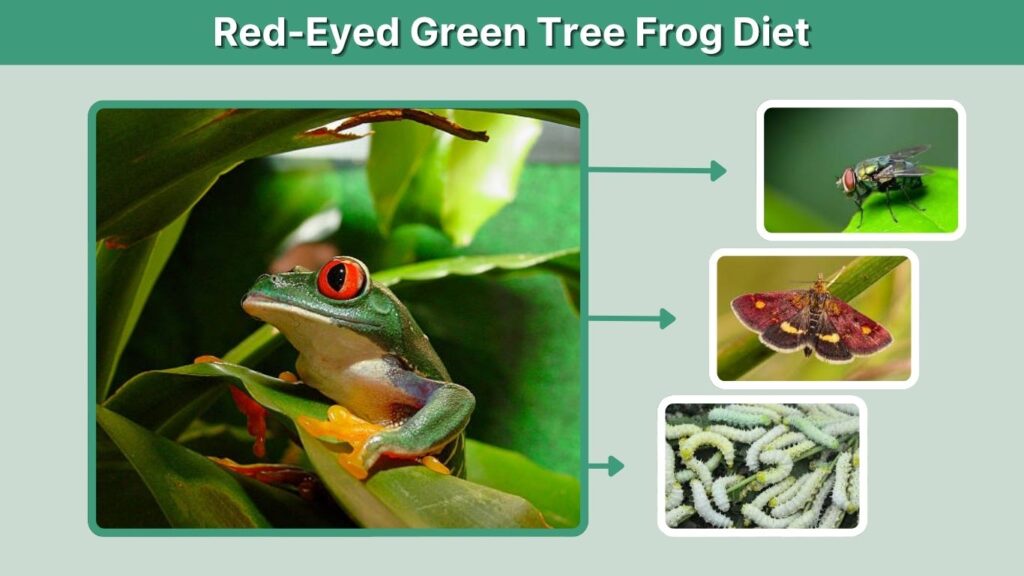
Red-eyed green tree frogs eat live insects. They are carnivorous amphibians and do not eat fruit, vegetables, or plant matter as adults. Their feeding response is triggered by movement, so live prey is usually required.
What Do Red-Eyed Green Tree Frogs Eat?
In captivity, red-eyed tree frogs are commonly fed small insects. The prey should be smaller than the width of the frog’s head to prevent choking or digestive problems.
Good food options include:
- Small crickets
- Fruit flies for young frogs
- Small dubia roaches
- House flies
- Small moths
- Silkworms
- Small hornworms
- Occasional waxworms as treats
Crickets are often used as a staple, but variety is better. Feeder insects should be gut-loaded before feeding. This means the insects are fed nutritious foods before being offered to the frog.
Supplements and Feeding Schedule
Calcium and vitamin supplements help prevent nutritional problems. Feeder insects can be lightly dusted with calcium and occasional multivitamin powder. The exact schedule depends on the frog’s age, diet, and enclosure lighting.
Young frogs usually eat more often than adults. Adults are often fed every two to three days. Uneaten insects should be removed because crickets may bother or bite resting frogs.
Handling and Behavior
Red-eyed green tree frogs are best treated as display animals. They are fascinating to watch, especially at night, but they should not be handled often. Their skin is sensitive and can absorb oils, soap, lotion, and chemicals from human hands.
How to Handle Them Safely
Handling should be limited to necessary situations, such as health checks, enclosure cleaning, or moving the frog. If handling is needed, hands should be clean, rinsed thoroughly, and slightly damp with dechlorinated water. Powder-free gloves can also be used.
Never squeeze or restrain the frog tightly. These frogs are delicate and may jump suddenly when frightened.
Why Is My Red-Eyed Tree Frog Dark Green?
A red-eyed tree frog may turn dark green because of stress, temperature, lighting, humidity, sleeping position, or normal color change. Some frogs appear darker during the day or when resting. Occasional color change is usually normal.
However, very dark color combined with other symptoms can signal a problem. Watch for signs such as weakness, weight loss, skin sores, refusal to eat, or unusual sitting posture.
Red-Eyed Green Tree Frog Health
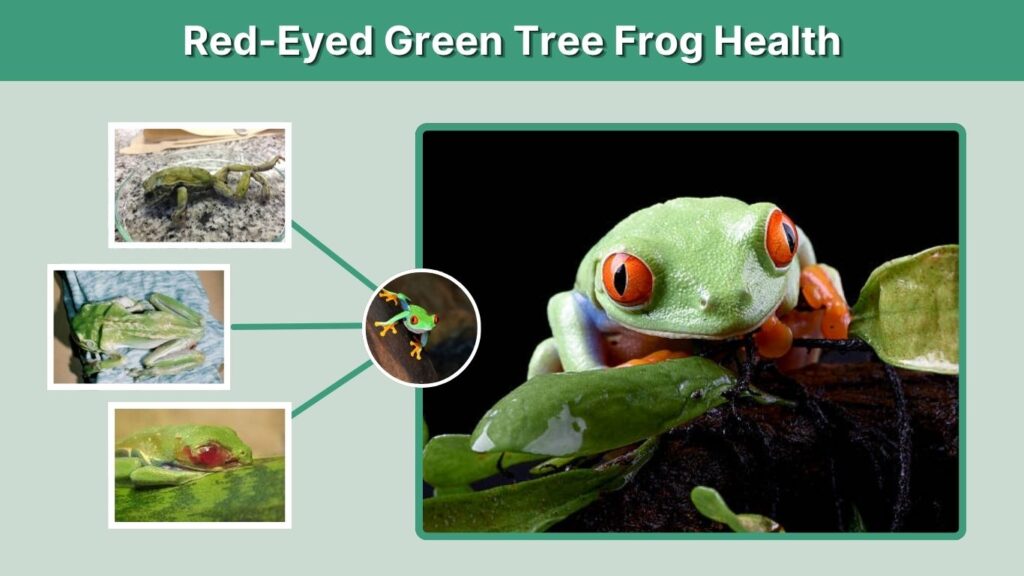
Healthy red-eyed tree frogs are alert at night, have clear eyes, smooth skin, and a good body shape. They should climb well and respond to movement. Because frogs often hide illness, keepers should pay close attention to small changes.
Common Health Problems
Poor care is a major cause of health issues in captive frogs. Incorrect humidity, dirty water, poor diet, and stress can weaken the frog over time.
Common problems include:
- Dehydration
- Skin infections
- Bacterial illness
- Parasites
- Poor shedding
- Weight loss
- Eye problems
- Stress from handling or overcrowding
A frog that sits on the ground for long periods, refuses food repeatedly, or looks thin may need veterinary care. Amphibian illnesses can progress quickly, so early action is important.
How to Keep Them Healthy
Good care is mostly about stability. Avoid sudden changes in temperature, humidity, diet, or enclosure layout. Clean the water dish often and spot-clean waste quickly. Replace old substrate when needed and keep the enclosure free from mold buildup.
Quarantine new frogs before adding them to an existing group. This helps reduce the risk of spreading disease or parasites.
Buying a Red-Eyed Green Tree Frog
Many people search for a red-eyed green tree frog for sale because these frogs are popular in the pet trade. Before buying one, it is important to prepare the full enclosure first. The habitat should be ready and stable before the frog arrives.
What to Look For Before Buying
Choose a healthy-looking frog from a responsible breeder or reputable seller. Captive-bred frogs are usually a better choice than wild-caught frogs because they are more likely to adapt well to captivity and may carry fewer parasites.
Before buying, look for:
- Clear eyes
- Smooth skin
- Active nighttime behavior
- Good body weight
- No visible wounds
- No unusual swelling
- Clean enclosure conditions
- Seller knowledge about care
Avoid buying a frog that looks thin, weak, injured, or inactive in an unusual way. Also avoid sellers who cannot explain the frog’s origin, diet, or care needs.
Red-Eyed Green Tree Frog Cost
The cost of the frog is only one part of ownership. The terrarium, lighting, plants, misting supplies, supplements, feeders, and veterinary care can cost much more than the frog itself. A proper setup should be planned before purchase.
FAQs
Are red-eyed green tree frogs poisonous?
Red-eyed green tree frogs are not considered highly poisonous to humans. Their bright colors are mainly used to startle predators, not to warn of strong toxins. However, they should still be handled carefully because amphibians have sensitive skin.
How long do red-eyed green tree frogs live?
Red-eyed green tree frogs often live around 5 years in captivity, although some may live longer with excellent care. Their lifespan depends on stable humidity, proper temperatures, clean water, a varied insect diet, and low stress.
What do red-eyed green tree frogs eat?
Red-eyed green tree frogs eat live insects such as crickets, flies, small roaches, moths, and other soft-bodied insects. Young frogs may eat fruit flies and pinhead crickets. Adults should receive varied, properly sized prey.
Can red-eyed tree frogs live with green tree frogs?
It is usually best not to keep red-eyed tree frogs with green tree frogs or other species. Different frogs may have different care needs and can spread illness or stress each other. A species-only enclosure is safer.
Why is my red-eyed tree frog dark green?
A red-eyed tree frog may become dark green because of normal color change, sleep, stress, temperature, humidity, or lighting. If the dark color comes with appetite loss, weakness, weight loss, or unusual behavior, review the habitat and contact a vet.
