Red-eyed tree frogs are colorful rainforest amphibians known for their bright red eyes, green bodies, and sticky toe pads. Like many frogs, they are carnivores that depend on small moving prey. Their diet mainly includes insects and other tiny invertebrates. Understanding what red-eyed tree frogs eat is important for learning how they survive in the rainforest and how they should be fed in captivity.
What Do Red-Eyed Tree Frogs Eat?
Red-eyed tree frogs eat small insects and other invertebrates. They are not plant eaters, fruit eaters, or seed eaters. Their diet is based on live prey that moves, which triggers their hunting response.
Main Foods in Their Diet
In the wild, red-eyed tree frogs eat whatever small prey they can catch. They are opportunistic hunters, meaning they do not rely on only one type of insect. If the prey is small enough to swallow and easy enough to catch, the frog may eat it.
Common foods include:
- Crickets
- Moths
- Flies
- Small grasshoppers
- Beetles
- Small roaches
- Soft-bodied insects
- Tiny spiders
- Other small invertebrates
Their diet changes depending on the season, location, and what insects are active at night. Since they live in tropical rainforest areas, they usually have access to many different insects.
Are Red-Eyed Tree Frogs Carnivores?
Yes, red-eyed tree frogs are carnivores. More specifically, they are insectivores because insects make up most of their diet. Adult red-eyed tree frogs do not graze on leaves or eat fruit as a normal part of their diet.
Their bodies are designed for hunting. They have large eyes for spotting movement in low light, quick reflexes for striking prey, and a sticky tongue that helps them grab insects.
Red-Eyed Tree Frog Eating Habits
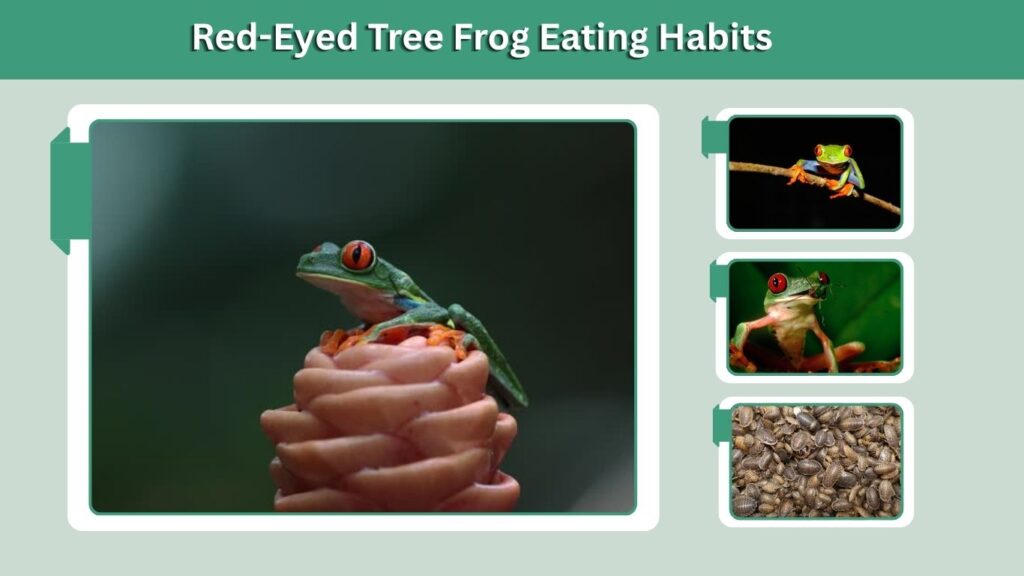
Red-eyed tree frogs have feeding habits that match their rainforest lifestyle. They are mostly nocturnal, which means they are active at night and rest during the day. Most of their hunting happens after dark.
When Do Red-Eyed Tree Frogs Eat?
Red-eyed tree frogs usually eat at night. During the day, they often sleep on the undersides of leaves with their legs tucked in and their bright colors hidden. At night, they become more active and search for prey among leaves, branches, and plants.
This nighttime feeding behavior helps them in several ways. It allows them to avoid many daytime predators, stay cooler and more hydrated, and hunt insects that are also active after dark.
How Do Red-Eyed Tree Frogs Eat Their Food?
Red-eyed tree frogs catch food by waiting for prey to come close, then striking quickly. They use their eyes to detect movement and their sticky tongue to grab insects. Once they catch prey, they swallow it whole.
Frogs do not chew food like humans do. If the insect is too large, it may be difficult or unsafe for the frog to swallow. This is why prey size matters, especially in captivity.
Red-Eyed Tree Frog Diet Overview
| Food Type | Do They Eat It? | Notes |
|---|---|---|
| Crickets | Yes | Common food in captivity and the wild |
| Flies | Yes | Good prey for smaller frogs |
| Moths | Yes | Common nighttime prey |
| Mealworms | Sometimes | Should be limited because of harder bodies |
| Dubia roaches | Yes | Suitable if properly sized |
| Fruit | No | Adults do not normally eat fruit |
| Plants | No | They are not plant eaters |
| Small spiders | Sometimes | May be eaten in the wild |
| Large insects | Not ideal | Can injure or choke the frog |
What Do Red-Eyed Tree Frogs Eat in the Rainforest?
In the rainforest, red-eyed tree frogs eat insects that live among leaves, branches, vines, and wet vegetation. Their natural habitat gives them plenty of hunting opportunities, especially at night.
Wild Rainforest Prey
The rainforest is full of small animals, and red-eyed tree frogs are adapted to catch prey in this environment. They may feed on flying insects, crawling insects, and other tiny invertebrates found near plants and water.
In the rainforest, they may eat:
- Small moths resting on leaves
- Flies moving around wet plants
- Crickets and grasshoppers
- Small beetles
- Tiny roaches
- Soft larvae
- Small spiders or other arthropods
They do not chase prey over long distances. Instead, they usually rely on quick strikes when food comes within range.
Why Night Hunting Works Well
Many rainforest insects are active at night. Since red-eyed tree frogs are nocturnal, they hunt when food is available and when humidity is higher. Moist nighttime air also helps protect their sensitive skin from drying out.
Their large eyes are useful for seeing in dim conditions. Their sticky toe pads let them climb across smooth leaves and branches while searching for food.
What Do Red-Eyed Tree Frogs Eat in Captivity?
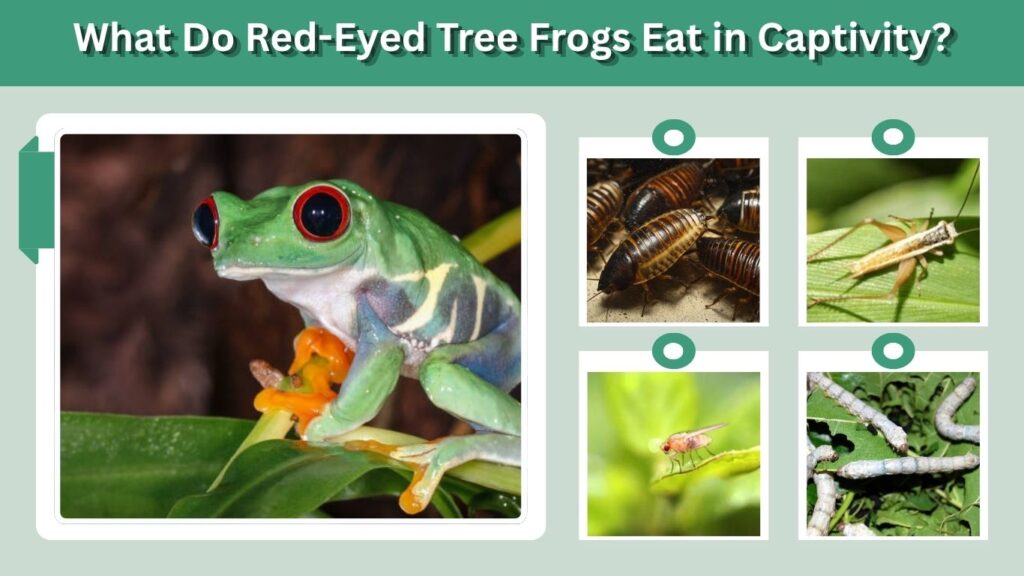
In captivity, red-eyed tree frogs should be fed a varied diet of live, properly sized insects. They usually will not eat dead or still food because movement helps trigger their feeding response.
Best Captive Foods
Captive red-eyed tree frogs are often fed insects that are easy to buy, raise, and dust with supplements. Crickets are one of the most common staple foods, but variety is better for long-term health.
Good captive foods include:
- Small crickets
- Fruit flies for very young frogs
- Small dubia roaches
- House flies
- Waxworms as occasional treats
- Small silkworms
- Small hornworms
- Soft-bodied feeder insects
The insects should be no wider than the space between the frog’s eyes. Oversized prey can cause stress, injury, or digestive problems.
Do Red-Eyed Tree Frogs Eat Fruit Flies?
Yes, young red-eyed tree frogs can eat fruit flies. Fruit flies are especially useful for froglets and small juveniles because they are tiny and easy to catch. Adult red-eyed tree frogs usually need larger prey, such as appropriately sized crickets or small roaches.
Fruit flies should not be the only food forever. As the frog grows, its diet should include larger and more varied feeder insects.
Do Red-Eyed Tree Frogs Eat Mealworms?
Red-eyed tree frogs may eat mealworms, but mealworms should not be a main food. Mealworms have a tougher outer shell compared with softer insects, and they can be harder to digest. They are also not as ideal nutritionally as a varied insect diet.
If mealworms are used, they should be small and offered only occasionally. Softer insects like crickets, flies, roaches, silkworms, and hornworms are usually better choices.
Can Red-Eyed Tree Frogs Eat Dubia Roaches?
Yes, red-eyed tree frogs can eat dubia roaches if the roaches are small enough. Dubia roaches can be a useful feeder insect because they are nutritious and easy to gut-load. However, large roaches are not suitable for small frogs.
As with all feeder insects, dubia roaches should be fed healthy foods before being offered to the frog. This process is called gut-loading and helps improve the frog’s nutrition.
How Much and How Often Do Red-Eyed Tree Frogs Eat?
How often red-eyed tree frogs eat depends on age, size, health, temperature, and activity level. Young frogs grow quickly and usually need food more often than adults.
Feeding Baby and Juvenile Frogs
Baby red-eyed tree frogs and froglets need small food. Their prey should be tiny enough for them to swallow safely. Fruit flies, pinhead crickets, and very small soft-bodied insects are common choices.
Young frogs may eat more frequently because they are growing. Many keepers feed juveniles daily or almost daily, using small portions. The goal is steady growth without overfeeding.
Feeding Adult Red-Eyed Tree Frogs
Adult red-eyed tree frogs usually do not need to eat every day. Many adults are fed every two to three days, depending on their body condition and appetite. They should look healthy and rounded but not bloated or overweight.
A general feeding routine may include several small insects per feeding. However, the exact amount depends on the frog’s size and the size of the insects. Uneaten insects should not be left in the enclosure for long because they may stress or bite the frog.
What Do Baby Red-Eyed Tree Frogs Eat?
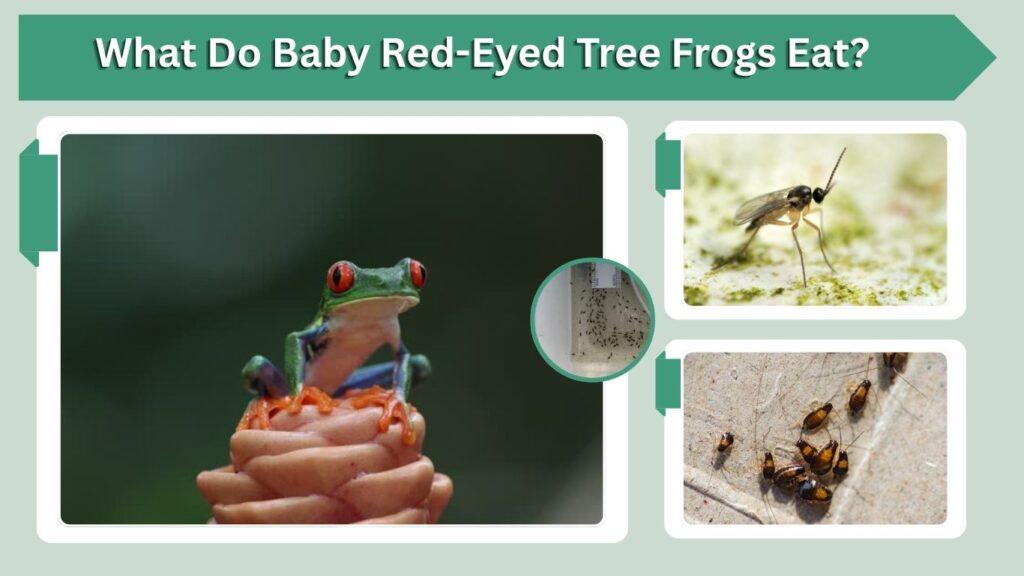
Baby red-eyed tree frogs eat very small live insects. Once they complete metamorphosis and become froglets, they begin hunting tiny prey.
Foods for Froglets
Froglets are much smaller than adults, so they need tiny food. Large insects can be dangerous for them. Their food must be easy to catch and swallow.
Good foods for baby red-eyed tree frogs include:
- Flightless fruit flies
- Pinhead crickets
- Tiny house flies
- Very small roach nymphs
- Small soft-bodied insects
Baby frogs should be watched carefully to make sure they are eating. If the prey is too large or too fast, the frog may ignore it or become stressed.
What Do Red-Eyed Tree Frog Tadpoles Eat?
Red-eyed tree frog tadpoles do not eat the same diet as adult frogs. Tadpoles live in water and feed on tiny organic matter, algae, biofilm, and other soft material found in their aquatic environment.
As they develop legs and become froglets, their diet changes. After metamorphosis, they become insect-eating hunters like adult frogs.
What Animals Eat Red-Eyed Tree Frogs?
Red-eyed tree frogs are predators of insects, but they are also prey for many larger rainforest animals. Their bright colors and startle display help protect them, but they are not completely safe from predators.
Common Predators
Animals that eat red-eyed tree frogs may include:
- Snakes
- Birds
- Bats
- Larger frogs
- Small mammals
- Spiders
- Fish that eat tadpoles
- Aquatic insects that attack eggs or tadpoles
Eggs and tadpoles are especially vulnerable. Since eggs are often laid on leaves above water, they may be eaten by insects, snakes, or other animals. Once tadpoles drop into the water, they may be eaten by fish, aquatic insects, or other pond predators.
What Eats Red-Eyed Tree Frogs in the Rainforest?
In the rainforest, snakes are among the most important predators of red-eyed tree frogs. Birds and bats may also catch adults. Tadpoles face different predators because they live in water rather than trees.
The frog’s survival depends on camouflage, nighttime activity, quick jumping, and its famous startle display. When threatened, it may suddenly open its red eyes and flash its bright blue, yellow, and orange colors before jumping away.
Foods Red-Eyed Tree Frogs Should Not Eat
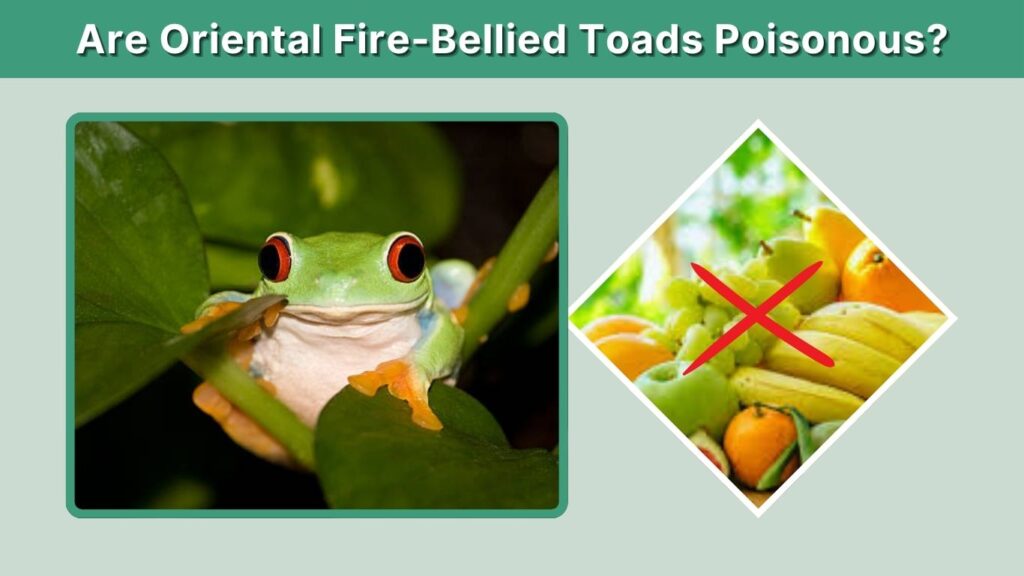
Not every insect or small food item is safe for red-eyed tree frogs. Some foods are too large, too hard, too fatty, or potentially toxic.
Unsafe or Poor Food Choices
Red-eyed tree frogs should not be fed random insects from outdoors unless they are known to be safe and pesticide-free. Wild-caught insects may carry chemicals, parasites, or diseases.
Avoid feeding:
- Insects exposed to pesticides
- Fireflies or lightning bugs
- Large hard-shelled beetles
- Oversized crickets or roaches
- Stinging insects such as bees or wasps
- Ants that may bite or spray chemicals
- Human food
- Fruit
- Bread, meat, or processed foods
Pet frogs need a controlled diet. Even though wild frogs eat wild insects, captive frogs are safer when fed clean feeder insects from trusted sources.
Do Red-Eyed Tree Frogs Eat Plants or Fruit?
No, adult red-eyed tree frogs do not normally eat plants or fruit. They are insectivores. If someone asks what plants red-eyed tree frogs like to eat, the answer is that plants are part of their habitat, not their diet.
Plants are still important in their enclosure because they provide climbing surfaces, hiding spots, and humidity support. But the frog’s food should come from live insects.
Why Is My Red-Eyed Tree Frog Not Eating?
A red-eyed tree frog not eating can be a sign of stress, poor conditions, or illness. Sometimes a frog may skip a feeding, but repeated refusal to eat should be taken seriously.
Common Reasons for Not Eating
A red-eyed tree frog may stop eating because of:
- Stress from a new enclosure
- Temperatures that are too low
- Low humidity
- Too much handling
- Bright lights at night
- Prey that is too large
- Poor enclosure setup
- Illness or parasites
- Shedding
- Lack of hiding places
Because red-eyed tree frogs are nocturnal, they may not eat if food is offered at the wrong time. Feeding in the evening or after lights go down usually works better.
What to Do If It Will Not Eat
First, check the enclosure conditions. Temperature, humidity, lighting, and hiding places all affect appetite. Make sure the frog has a comfortable, secure habitat and that prey is the right size.
Try offering a different feeder insect, such as small crickets instead of mealworms. Remove uneaten insects after feeding. If the frog continues refusing food, loses weight, becomes weak, or shows unusual behavior, a veterinarian experienced with amphibians should be contacted.
Feeding Tips for Healthy Red-Eyed Tree Frogs
A healthy feeding routine supports growth, energy, and long-term survival. Red-eyed tree frogs need more than just random insects dropped into a tank.
Build a Better Diet
Captive frogs do best with variety. A diet based on only one feeder insect may lead to nutritional imbalance over time. Feeder insects should also be gut-loaded before feeding.
Useful feeding tips include:
- Offer live insects at night
- Use prey smaller than the frog’s head width
- Gut-load feeder insects before feeding
- Dust insects with calcium and vitamins as needed
- Remove uneaten insects
- Provide clean water and proper humidity
- Avoid overfeeding fatty treats
- Watch the frog’s body condition
A frog that is too thin may need more food or better conditions. A frog that becomes overweight may need fewer feedings or smaller portions.
FAQs
What do red-eyed tree frogs eat?
Red-eyed tree frogs eat small live insects and other invertebrates. Their diet includes crickets, flies, moths, small grasshoppers, beetles, tiny roaches, and soft-bodied insects. In captivity, they should be fed properly sized feeder insects.
Do red-eyed tree frogs eat fruit?
No, adult red-eyed tree frogs do not eat fruit as part of their normal diet. They are carnivores and mainly eat live insects. Plants and fruit may be part of their environment, but they are not suitable main foods.
How often do red-eyed tree frogs eat?
Young red-eyed tree frogs may eat daily or almost daily because they are growing. Adults are usually fed every two to three days. Feeding frequency depends on age, size, health, temperature, and body condition.
What eats red-eyed tree frogs?
Red-eyed tree frogs are eaten by snakes, birds, bats, larger frogs, small mammals, and some spiders. Their eggs and tadpoles may also be eaten by fish, aquatic insects, and other pond predators in the rainforest.
Why won’t my red-eyed tree frog eat?
A red-eyed tree frog may stop eating because of stress, low temperature, low humidity, oversized prey, too much handling, illness, or a poor enclosure setup. If it refuses food for several days or loses weight, check its habitat and contact an amphibian veterinarian.
