
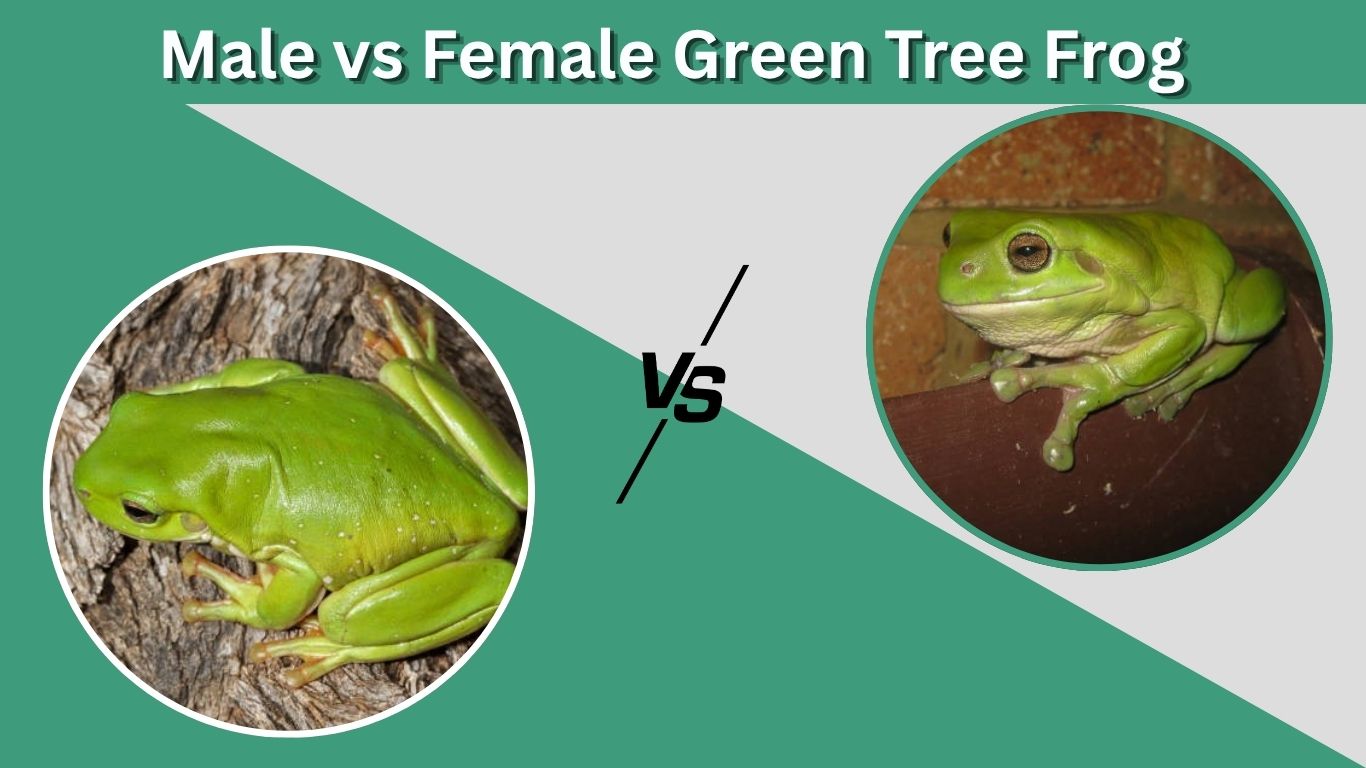
Telling a male vs female green tree frog apart can be tricky, especially when they are young. The clearest clues usually come from sound, throat appearance, size, and breeding behavior. Male green tree frogs are more likely to call and show a visible vocal sac, while females are often larger and quieter. This guide explains the main differences in simple terms.
Male vs Female Green Tree Frog: Quick Comparison
Green tree frogs do not always show obvious male and female differences at first glance. Unlike some animals, they do not have bright color differences between sexes. Instead, owners usually compare body size, throat skin, calling behavior, and breeding signs.
| Feature | Male Green Tree Frog | Female Green Tree Frog |
| Size | Usually smaller | Usually larger |
| Calling | Calls more often | Usually quieter |
| Vocal sac | More visible, especially after calling | Usually absent or less obvious |
| Throat area | May look darker, loose, or baggy | Usually smoother and lighter |
| Breeding role | Calls to attract females | Chooses male and lays eggs |
| Behavior | More vocal during breeding season | Less vocal, often calmer |
| Easy to identify? | Easier if calling | Harder unless mature |
Why It Is Hard to Tell Male and Female Green Tree Frogs Apart
Sexing green tree frogs is not always easy. Young frogs are especially difficult because they may not have developed adult traits yet. Even adult frogs can be confusing if they are not calling or if their throat features are subtle.
The term “green tree frog” can also refer to different species, including the American green tree frog and the Australian green tree frog. Both can show similar male and female differences, but exact size and behavior may vary by species.
Because of this, it is best to look at several clues together instead of relying on one sign.
Do Male Green Tree Frogs Croak?
Yes, male green tree frogs are the main callers. They croak, call, or make repeated sounds to attract females, especially during breeding conditions. Calling may happen more often at night, after misting, during warm weather, or when humidity rises.
In captivity, a male green tree frog may call if the enclosure conditions feel similar to breeding season. This can include higher humidity, warmer temperatures, or the presence of another frog nearby.
Male calls can range from short sounds to repeated loud calls depending on the species. American green tree frogs are known for their noticeable calls, and Australian green tree frogs can also be vocal.
Do Female Green Tree Frogs Croak?
Female green tree frogs can make noise, but they usually do not call the same way males do. A female may produce sounds when stressed, handled, disturbed, or responding to another frog, but she typically does not make regular mating calls.
So, if your green tree frog calls often at night, it is more likely to be male. If your frog is mostly quiet, it may be female, but silence alone does not prove it. Some males may call less often, especially if they are young, stressed, unhealthy, or kept in conditions that do not trigger calling.
Green Tree Frog Male vs Female Vocal Sac
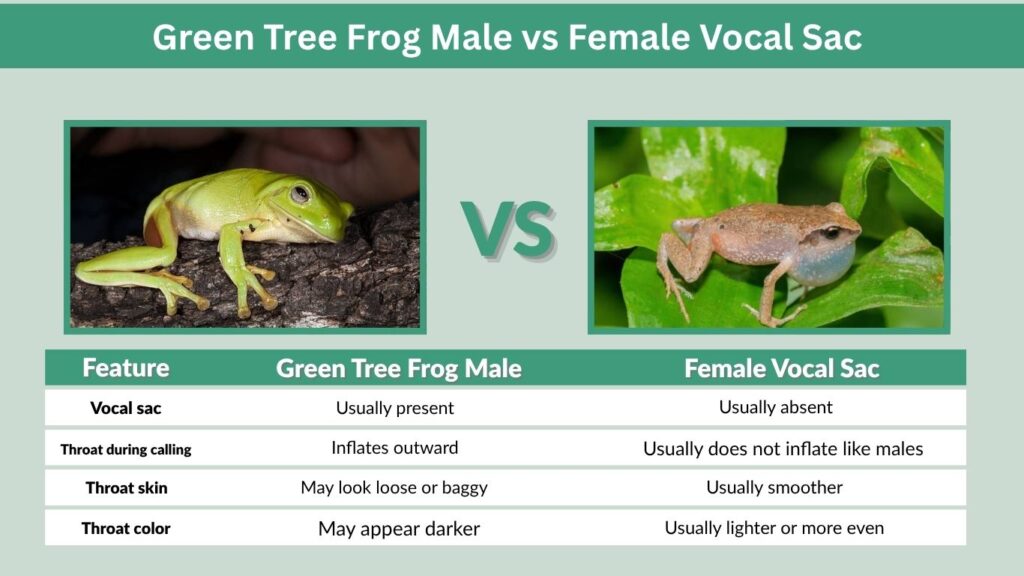
The vocal sac is one of the most useful signs when identifying a male green tree frog. A vocal sac is a thin, stretchy area of skin around the throat that helps amplify sound when the frog calls.
In males, the throat area may look loose, wrinkled, stretched, or darker, especially after repeated calling. When the male calls, the throat may inflate like a small balloon.
Females usually do not have the same obvious vocal sac. Their throat area often looks smoother and less stretched.
| Vocal Feature | Male Green Tree Frog | Female Green Tree Frog |
| Vocal sac | Usually present | Usually absent |
| Throat during calling | Inflates outward | Usually does not inflate like males |
| Throat skin | May look loose or baggy | Usually smoother |
| Throat color | May appear darker | Usually lighter or more even |
| Calling purpose | Attracting mate | Usually not mate-calling |
| Best time to check | After calling or at night | When comparing with a known male |
Female Green Tree Frog Size
Female green tree frogs are often larger than males, especially when fully mature. This size difference is common in many frog species because females need more body capacity for producing eggs.
A female green tree frog may look rounder or heavier than a male, especially during breeding condition. However, size alone is not always reliable. A well-fed male may look large, and a young female may still be small.
For the best guess, compare size with other signs such as calling, vocal sac appearance, and behavior.
American Green Tree Frog Male vs Female
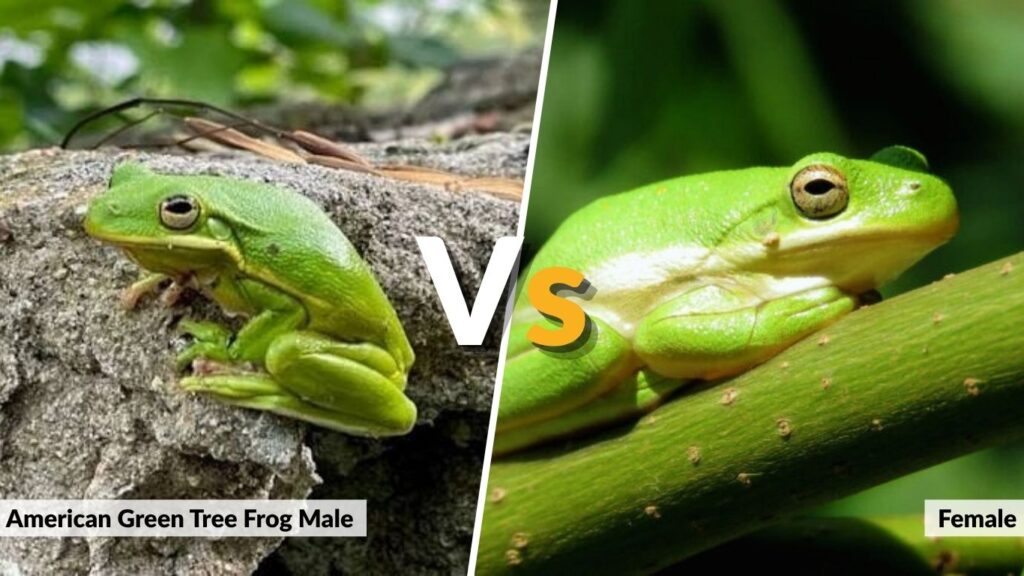
American green tree frogs are small, bright green frogs commonly kept as pets. Males are usually more vocal, especially during breeding season or when environmental conditions are favorable.
Male American green tree frogs may call at night and may show a darker or looser throat area. Females are generally quieter and may be larger when mature.
If you have an American green tree frog and want to know whether it is male or female, listen for calling first. A frequent nighttime caller is likely male. A larger, quiet frog with no visible vocal sac may be female, though it is not always guaranteed.
Australian Green Tree Frog Male vs Female
Australian green tree frogs, also called White’s tree frogs, are larger and popular as pets. Male Australian green tree frogs are usually smaller and more likely to call. Females are often larger and heavier-bodied.
Males may develop a visible throat pouch or darker throat area from calling. Females are often quieter and may look broader as they mature.
Because Australian green tree frogs can vary in size based on diet, age, and health, size should not be the only way to identify sex. A vocal sac and calling behavior are usually better clues.
Male vs Female Green Tree Frog Behavior
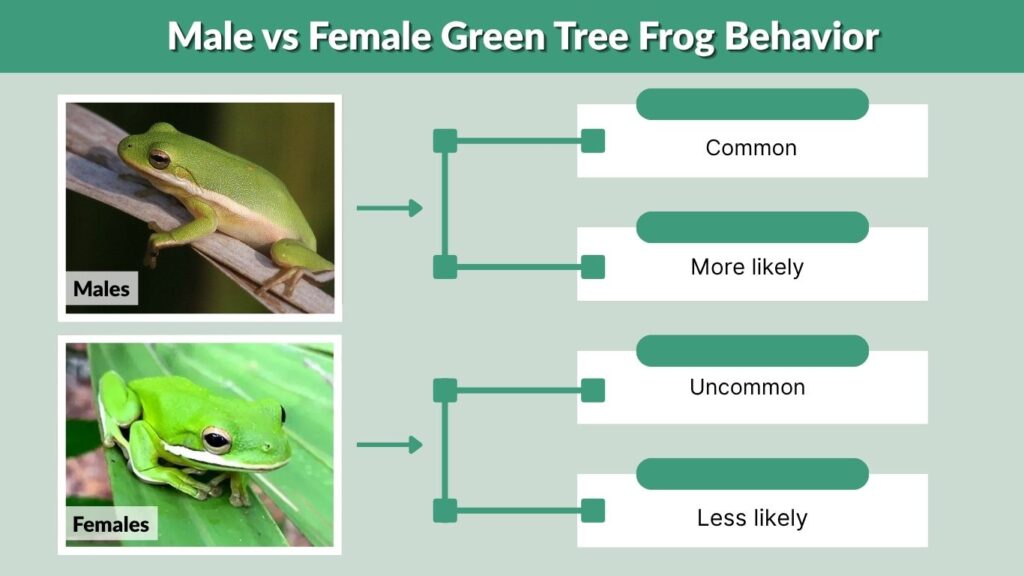
Behavior can help, but it is not perfect. Males are more likely to call, respond to other frogs, and show breeding behavior. Females are usually quieter and may be less active in calling displays.
During breeding behavior, males may climb onto females in a position called amplexus. This is part of frog reproduction. If you see one frog gripping another from behind, the frog on top is usually male.
| Behavior | Male Green Tree Frog | Female Green Tree Frog |
| Night calling | Common | Uncommon |
| Responds to calls | More likely | Less likely |
| Amplexus position | Usually on top | Usually underneath |
| Breeding role | Attracts mate | Produces eggs |
| Noise level | Often louder | Usually quieter |
| Identification value | Strong clue | Helpful when paired with size |
How to Tell Male and Female Green Tree Frogs Apart
To tell whether your green tree frog is male or female, look for a combination of clues. No single sign is perfect, but several signs together can give a strong answer.
Start by listening. A frog that calls regularly is probably male. Next, look at the throat. If the throat inflates during calling or looks loose and darker afterward, that also suggests male.
Then check size. A mature frog that is larger, rounder, and quiet may be female. Finally, consider age. Very young frogs may be impossible to sex accurately until they mature.
Can You Tell the Sex of a Baby Green Tree Frog?
It is very difficult to tell the sex of a baby green tree frog. Young frogs usually have not developed clear male or female traits yet. They may not call, show vocal sacs, or show reliable size differences.
Most owners need to wait until the frog matures. Once the frog begins calling or shows adult body size, sexing becomes easier.
Should You Get a Male or Female Green Tree Frog?
Choosing a male or female green tree frog depends on what you want as a pet. If you enjoy natural frog sounds, a male may be interesting. However, males can be noisy at night, which may bother some owners.
If you want a quieter frog, a female may be a better choice. Still, it is not always easy to guarantee sex when buying a young frog.
For most pet owners, health matters more than sex. Choose a captive-bred frog that is active, alert, well-fed, and free from visible injuries or illness.
FAQs
How do you tell if a green tree frog is male or female?
The easiest way is to look for calling behavior and a vocal sac. Male green tree frogs usually call more often and may have a loose or darker throat area. Females are usually quieter, larger, and less likely to show a visible vocal sac.
Do female green tree frogs croak?
Female green tree frogs can make sounds, but they usually do not croak repeatedly to attract mates like males do. If a frog calls often at night, it is more likely male. A quiet frog may be female, but silence alone is not proof.
Are male green tree frogs smaller than females?
In many cases, yes. Female green tree frogs are often larger than males when fully mature. However, size can vary based on age, diet, health, and species, so size should be used with other clues like calling and throat appearance.
What does a male green tree frog vocal sac look like?
A male green tree frog’s vocal sac is a stretchy throat area that inflates when he calls. When not calling, the throat may look loose, wrinkled, baggy, or slightly darker than the rest of the body.
Are American green tree frog males and females different?
Yes, but the differences can be subtle. Male American green tree frogs usually call more and may show a visible vocal sac. Females are generally quieter and often larger as adults. Young frogs can be difficult to sex accurately.
