
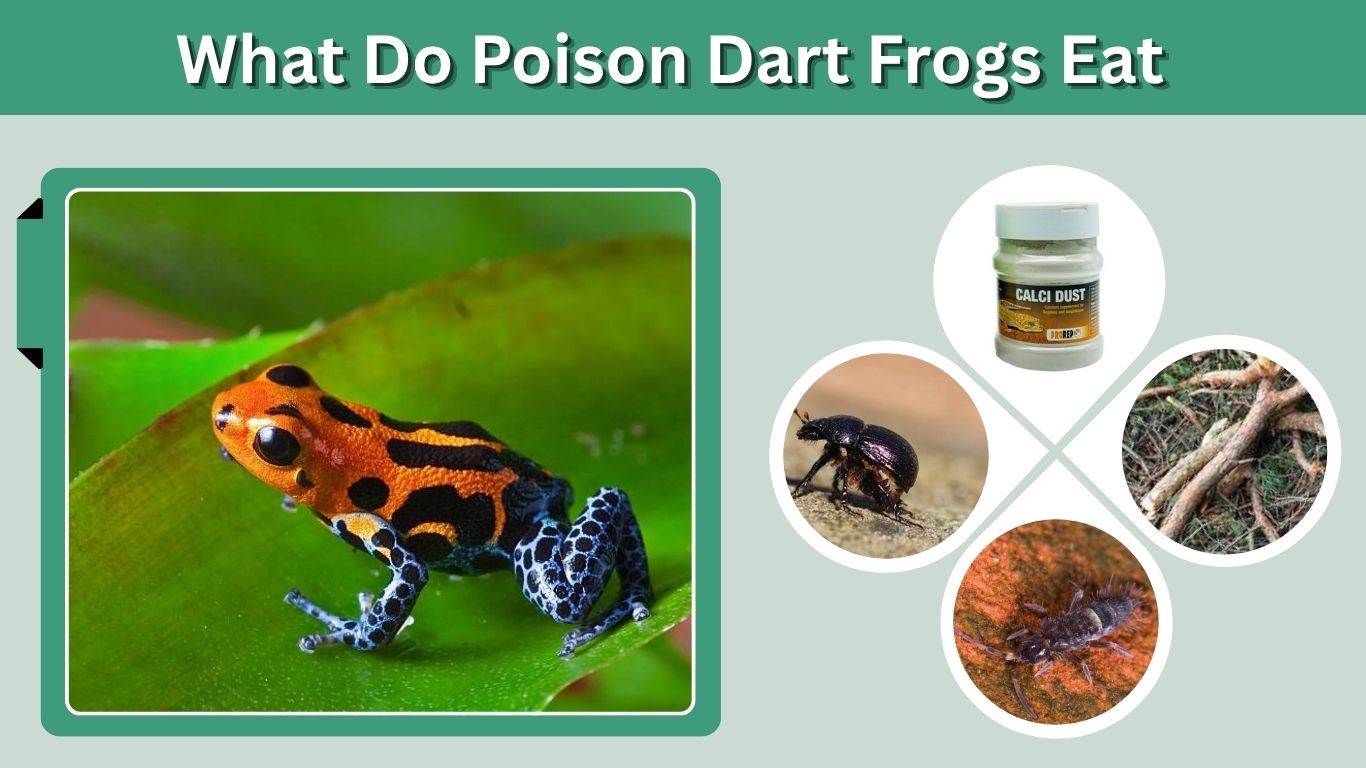
Poison dart frogs eat tiny insects and other small invertebrates. In the wild, their diet may include ants, mites, termites, beetles, flies, and springtails. In captivity, pet poison dart frogs usually eat flightless fruit flies, pinhead crickets, springtails, and other small live feeders. Their diet is especially interesting because wild prey helps explain why many poison dart frogs are poisonous.
What Do Poison Dart Frogs Eat?
Poison dart frogs are insectivores, which means they mainly eat insects and other small arthropods. They do not eat fruit, leaves, seeds, or plants. Their diet is made of small moving prey that they can catch with their sticky tongues.
In the rainforest, poison dart frogs hunt on the forest floor, in leaf litter, near moss, around roots, and sometimes on low plants. Because they are small frogs, they usually target very small prey.
Common Foods Poison Dart Frogs Eat
Poison dart frogs may eat:
- Ants
- Mites
- Termites
- Small beetles
- Tiny flies
- Springtails
- Small spiders
- Small larvae
- Tiny crickets
- Other small invertebrates
The exact diet depends on the frog species, age, size, habitat, and what prey is available nearby.
Poison Dart Frog Diet at a Glance
Poison dart frogs have different diets in the wild and in captivity. Wild frogs eat a wider range of tiny rainforest prey, while pet dart frogs eat cultured feeder insects that are safer and easier to provide.
| Diet Type | What They Eat | Why It Matters |
| Wild diet | Ants, mites, termites, beetles, flies, small arthropods | Provides natural nutrition and alkaloids linked to toxicity |
| Captive diet | Fruit flies, pinhead crickets, springtails, isopods | Safe, manageable food for pet dart frogs |
| Tadpole diet | Algae, detritus, small organic matter, eggs in some species | Depends strongly on species and breeding behavior |
| Toxicity diet | Alkaloid-rich ants and mites | Helps wild frogs store toxins in their skin |
| Pet diet | Live, tiny feeder insects with supplements | Supports health without making frogs poisonous |
What Do Poison Dart Frogs Eat in the Wild?
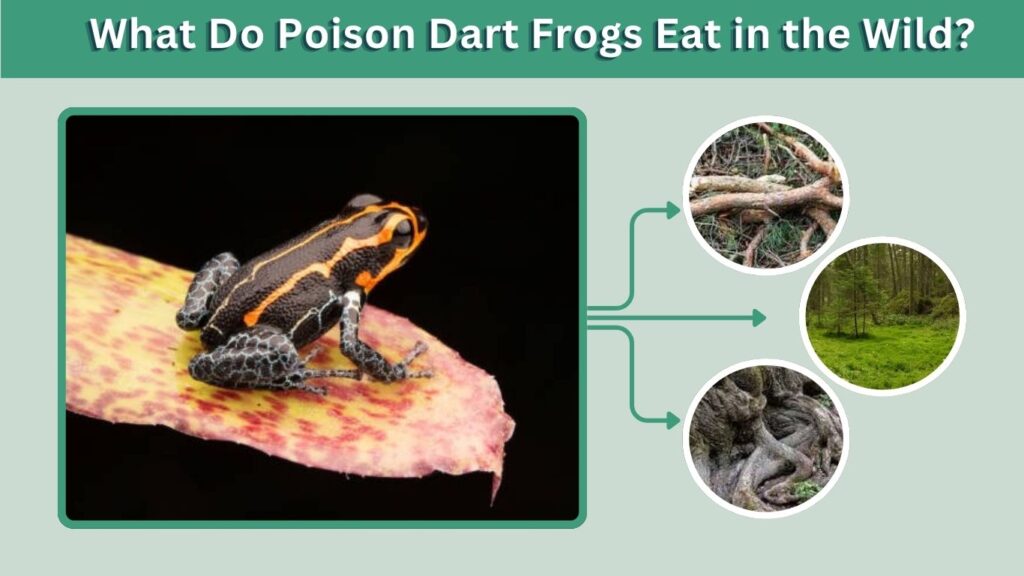
In the wild, poison dart frogs eat small insects and arthropods found in tropical forests. They are active hunters, often searching through damp leaf litter and vegetation for tiny prey. Their food is small because most dart frogs are small, lightweight amphibians.
Wild poison dart frogs commonly eat ants, mites, termites, small beetles, flies, and other tiny invertebrates. Ants and mites are especially important because they are linked to the chemical compounds that make many wild dart frogs toxic.
What Do Poison Dart Frogs Eat in the Rainforest?
In rainforest habitats, poison dart frogs find food in moist, shaded places. They may hunt:
- Under wet leaves
- Around fallen branches
- Near tree roots
- On mossy ground
- Around small pools of water
- On low plants and vines
Rainforests provide the humidity these frogs need and support huge populations of tiny insects. This makes the rainforest a perfect hunting ground for small frogs.
What Do Poison Dart Frogs Eat That Makes Them Poisonous?
Poison dart frogs become poisonous because of chemicals called alkaloids that come from their wild prey. They do not simply create all of their poison from nothing. Instead, many species collect toxic compounds from the ants, mites, and other arthropods they eat. These compounds are stored in skin glands and used as a defense.
This is why diet and toxicity are closely connected. A wild frog that eats alkaloid-rich prey can become toxic. A captive-bred frog eating fruit flies and crickets usually does not become poisonous.
What Insects Make Poison Dart Frogs Poisonous?
The most important prey linked to poison dart frog toxins include:
- Certain ants
- Certain mites
- Small beetles
- Other alkaloid-containing arthropods
Not every insect makes a frog poisonous. The frog needs access to specific prey that contain the right chemical compounds. This is also why different species and populations can have different toxin levels.
What Ants Do Poison Dart Frogs Eat?
Many poison dart frogs eat small ants in the wild. Ants are often part of their natural diet because they are abundant in tropical forests and easy for small frogs to capture.
Researchers have connected poison frog chemical defenses with diets rich in ants and mites. These prey can contain alkaloids, which are the compounds frogs store in their skin. However, not all ants are equally important, and the exact ant species can vary by region.
Do Poison Dart Frogs Only Eat Ants?
No. Poison dart frogs do not only eat ants. Ants may be important, but their diet can also include termites, mites, beetles, flies, springtails, spiders, and other tiny arthropods. A varied wild diet helps frogs get both nutrition and defensive chemicals.
What Do Poison Dart Frogs Eat in Captivity?
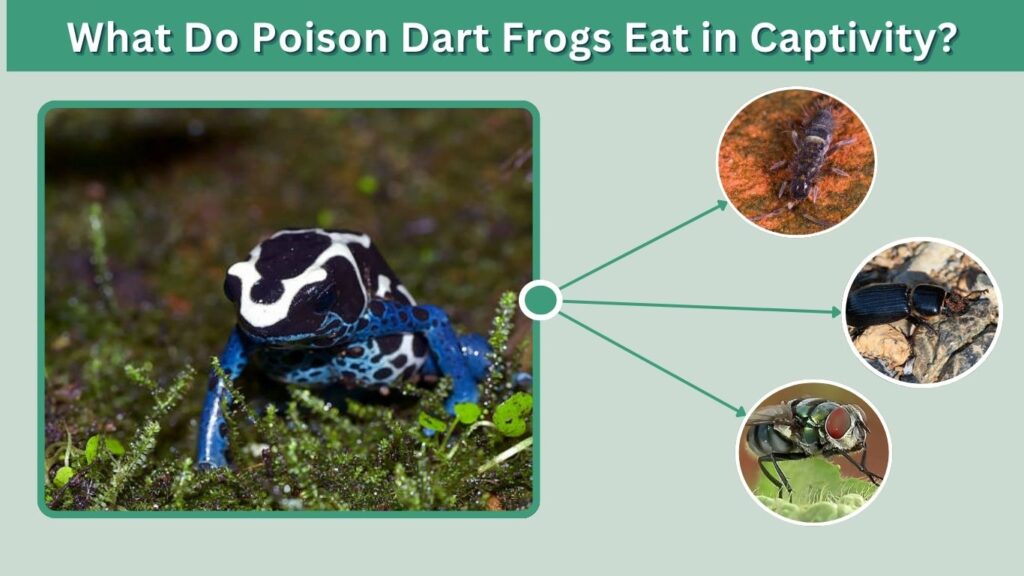
Captive poison dart frogs eat small live feeder insects. The most common staple food is flightless fruit flies. These are popular because they are small, easy to culture, and accepted by many dart frog species.
Pet dart frogs may also eat springtails, isopods, pinhead crickets, bean beetles, and other tiny feeders, depending on the frog’s size and species.
Common Foods for Pet Poison Dart Frogs
Pet poison dart frogs may be fed:
- Flightless fruit flies
- Pinhead crickets
- Springtails
- Isopods
- Bean beetles
- Small larvae
- Tiny roaches for larger species
Food should be appropriately sized. A prey item that is too large can stress the frog or be difficult to swallow. Most dart frogs do best with tiny, soft-bodied feeders.
Are Captive Poison Dart Frogs Poisonous?
Captive-bred poison dart frogs are generally not poisonous. This is because they are not eating the same alkaloid-rich ants, mites, and rainforest arthropods that wild frogs eat. Their usual captive diet, such as fruit flies and crickets, does not provide the same toxin compounds.
This does not mean pet dart frogs should be handled often. Their skin is delicate and can absorb oils, soap, lotion, or chemicals from human hands. Even non-poisonous captive frogs are still sensitive amphibians.
What Do Blue Poison Dart Frogs Eat?
Blue poison dart frogs eat small insects and invertebrates. In the wild, they may eat ants, termites, mites, beetles, flies, and other tiny prey. In captivity, they usually eat fruit flies, springtails, and other small feeder insects.
Blue poison dart frogs are popular because of their bright color and bold pattern. Their diet is similar to many other dart frogs, but feeder size should match the frog’s size.
What Do Golden Poison Dart Frogs Eat?
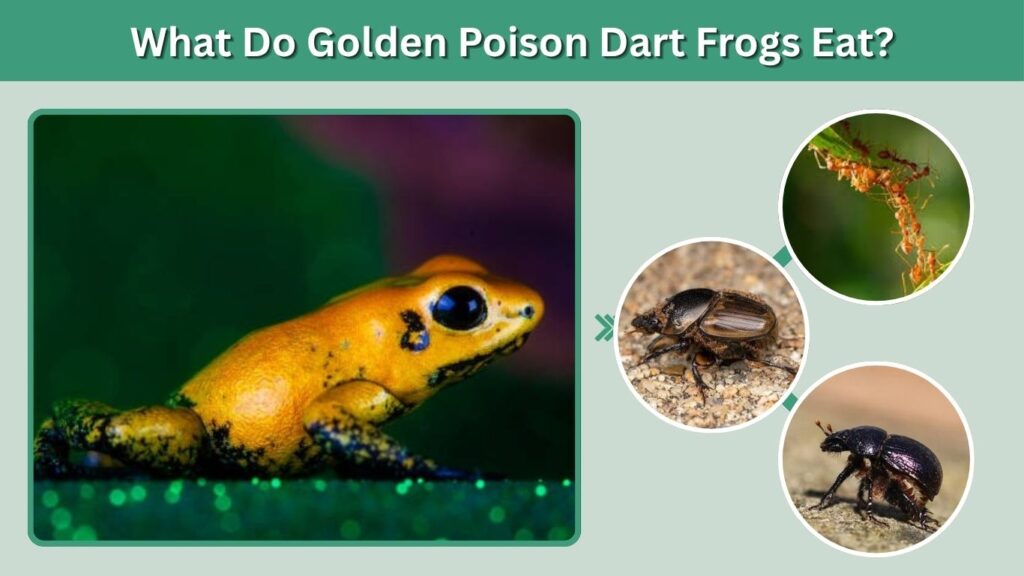
Golden poison dart frogs eat small arthropods in the wild, including ants, mites, termites, beetles, and other tiny insects. Their wild diet is closely linked to their powerful toxins.
The golden poison dart frog is famous for being one of the most toxic frogs in the world. Its toxicity comes from compounds stored in the skin, and those compounds are connected to the prey it eats in its natural habitat.
Why Is the Golden Poison Dart Frog So Toxic?
The golden poison dart frog’s toxicity is linked to strong alkaloid compounds, especially batrachotoxin. In the wild, the frog gains chemical defenses from its diet. This makes the species extremely dangerous in its natural environment.
Captive-bred individuals do not have the same toxin profile when they are raised on non-toxic feeder insects.
What Do Strawberry Poison Dart Frogs Eat?
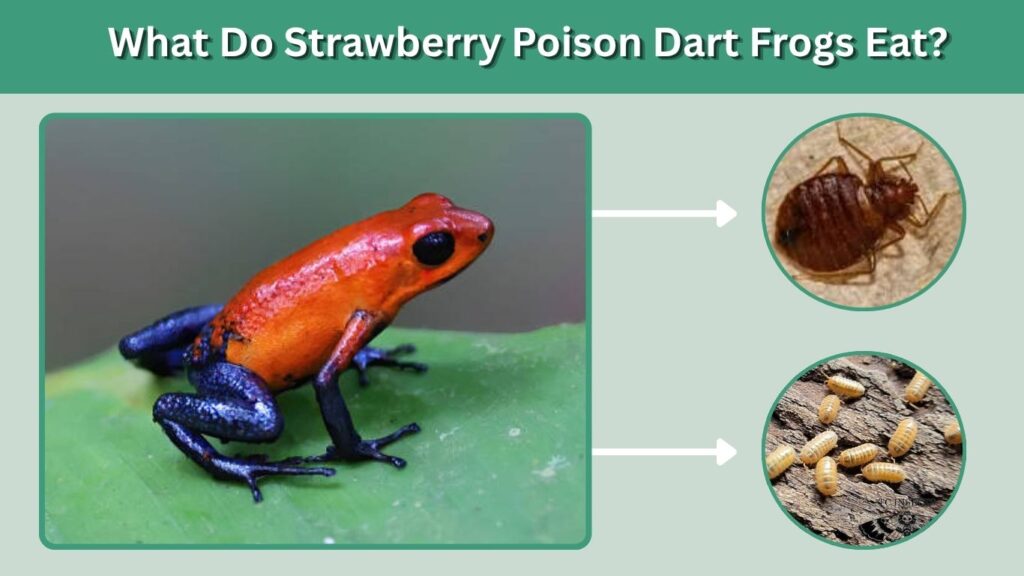
Strawberry poison dart frogs eat tiny insects and arthropods. Their wild diet may include ants, mites, small beetles, termites, and flies. In captivity, they are usually fed fruit flies, springtails, and other tiny live feeders.
This species is also known for unusual parental care. In some cases, females feed tadpoles unfertilized eggs. That means the tadpole diet can be very different from the adult diet.
What Do Green and Black Poison Dart Frogs Eat?
Green and black poison dart frogs eat small insects and other tiny invertebrates. Like other dart frogs, they may eat ants, mites, termites, beetles, and flies in the wild. In captivity, they commonly eat fruit flies, springtails, and other small feeder insects.
Their bright green and black color warns predators that they may be toxic in the wild. However, captive-bred frogs usually do not have the same toxicity because of their captive diet.
What Do Dyeing Poison Dart Frogs Eat?
Dyeing poison dart frogs eat small arthropods. Their natural diet may include ants, mites, termites, beetles, and flies. In captivity, they are commonly fed flightless fruit flies and other small live foods.
Dyeing poison dart frogs can be larger than some other dart frog species, so they may accept slightly larger prey as adults. Still, feeder insects should always be small enough for the frog to swallow safely.
What Do Poison Dart Frog Tadpoles Eat?
Poison dart frog tadpoles do not always eat the same foods as adult frogs. Their diet depends on the species and where the tadpoles develop. Some tadpoles feed on algae, biofilm, tiny organic particles, or small aquatic matter. Others receive special care from their parents.
In some species, female frogs lay unfertilized eggs for tadpoles to eat. This is especially well known in strawberry poison dart frogs and some related species.
Tadpole Diet Examples
Poison dart frog tadpoles may eat:
- Algae
- Biofilm
- Detritus
- Tiny aquatic organisms
- Unfertilized eggs from the mother
- Special tadpole foods in captivity
Because tadpole needs vary by species, anyone breeding dart frogs should research the exact species before attempting to raise them.
Do Poison Dart Frogs Eat Plants?
No, poison dart frogs do not eat plants. They are insectivores, not herbivores. They may live among plants, climb plants, or lay eggs near plants, but they do not feed on leaves, fruit, flowers, or seeds.
Plants are still important to poison dart frogs because they provide shelter, moisture, hunting areas, and breeding sites. In a pet vivarium, live plants also help maintain humidity and create hiding places.
Do Poison Dart Frogs Eat Animals?
Yes, poison dart frogs eat animals, but they eat very small ones. Their prey includes tiny insects, mites, spiders, termites, beetles, and other invertebrates. They do not eat large animals because their bodies and mouths are small.
Larger frog species may eat bigger insects than smaller species, but poison dart frogs still need prey that is appropriately sized.
How Often Do Pet Poison Dart Frogs Eat?
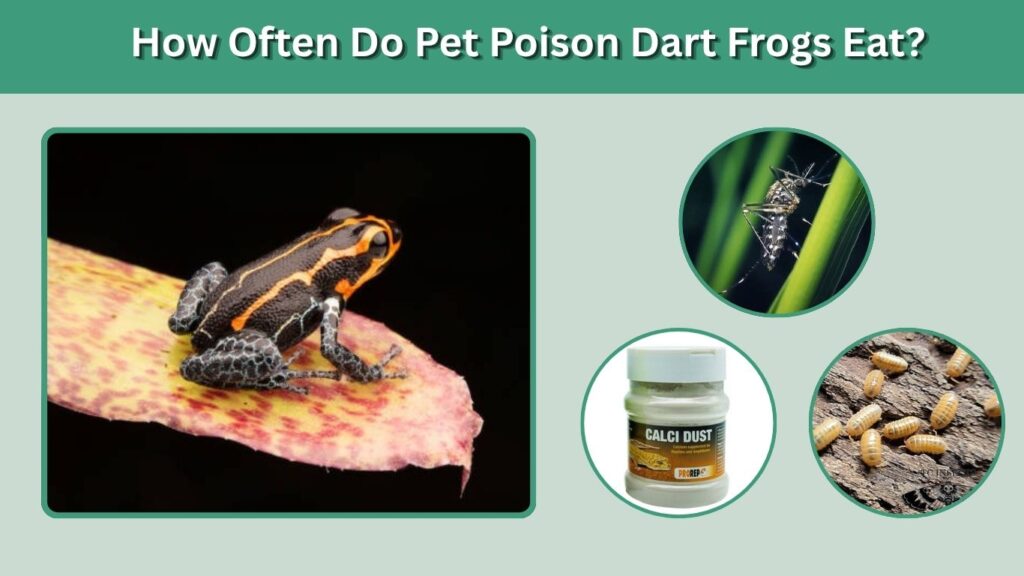
Feeding frequency depends on age, species, and body condition. Many keepers feed small amounts several times per week, while young growing frogs may need food more often. The goal is to provide enough nutrition without leaving excess insects roaming the enclosure.
A frog that is too thin may need more frequent feeding. A frog that becomes overweight may need fewer feedings. Body condition is important because dart frogs should look healthy and active, not weak or bloated.
Pet Feeding Tips
For captive poison dart frogs:
- Offer small live feeders.
- Dust food with calcium and vitamins.
- Avoid oversized insects.
- Remove uneaten prey if needed.
- Feed young frogs more often than adults.
- Provide a varied diet when possible.
- Use captive-cultured insects instead of wild-caught bugs.
Wild-caught insects may carry pesticides, parasites, or harmful chemicals, so they are not recommended for pet frogs.
Why Supplements Matter in Captivity
Wild poison dart frogs get nutrients from a wide variety of prey. Captive frogs usually eat a narrower diet, so supplements are important. Calcium and vitamin powders help prevent nutritional problems.
Fruit flies and other feeders should be dusted regularly with amphibian-safe supplements. Feeder insects can also be gut-loaded, meaning they are fed nutritious food before being offered to the frog.
Good nutrition supports bone strength, growth, reproduction, color, energy, and immune health.
Foods Poison Dart Frogs Should Not Eat
Not every small insect is safe. Some foods are too large, too hard, too fatty, or potentially contaminated.
Avoid feeding:
- Wild-caught insects from pesticide areas
- Large crickets
- Mealworms as a staple
- Hard-shelled oversized beetles
- Fireflies
- Insects exposed to chemicals
- Human food
- Fruit or vegetables
- Dead insects that do not trigger feeding behavior
Poison dart frogs are visual hunters that usually respond to movement. Most need live prey to feed normally.
FAQs
What do poison dart frogs eat?
Poison dart frogs eat tiny insects and invertebrates. In the wild, they eat ants, mites, termites, beetles, flies, springtails, and other small arthropods. In captivity, they usually eat flightless fruit flies, springtails, pinhead crickets, and other small live feeders.
What do poison dart frogs eat that makes them poisonous?
Poison dart frogs become poisonous by eating alkaloid-rich prey in the wild, especially certain ants and mites. These chemical compounds are stored in the frog’s skin glands. Captive frogs usually do not become poisonous because their feeder insects lack those toxins.
What do poison dart frogs eat in captivity?
Captive poison dart frogs commonly eat flightless fruit flies, springtails, pinhead crickets, isopods, and bean beetles. Their food should be small, live, and dusted with calcium and vitamin supplements. Wild-caught insects should be avoided because they may contain pesticides or parasites.
Do poison dart frogs eat plants?
No, poison dart frogs do not eat plants. They are insectivores and eat small animal prey such as insects, mites, and other tiny invertebrates. Plants are still important in their habitat because they provide shelter, moisture, and breeding sites.
What do poison dart frog tadpoles eat?
Poison dart frog tadpoles may eat algae, biofilm, detritus, tiny aquatic organisms, or special tadpole food in captivity. In some species, the mother lays unfertilized eggs for the tadpoles to eat. Tadpole diet depends on the exact species.
