
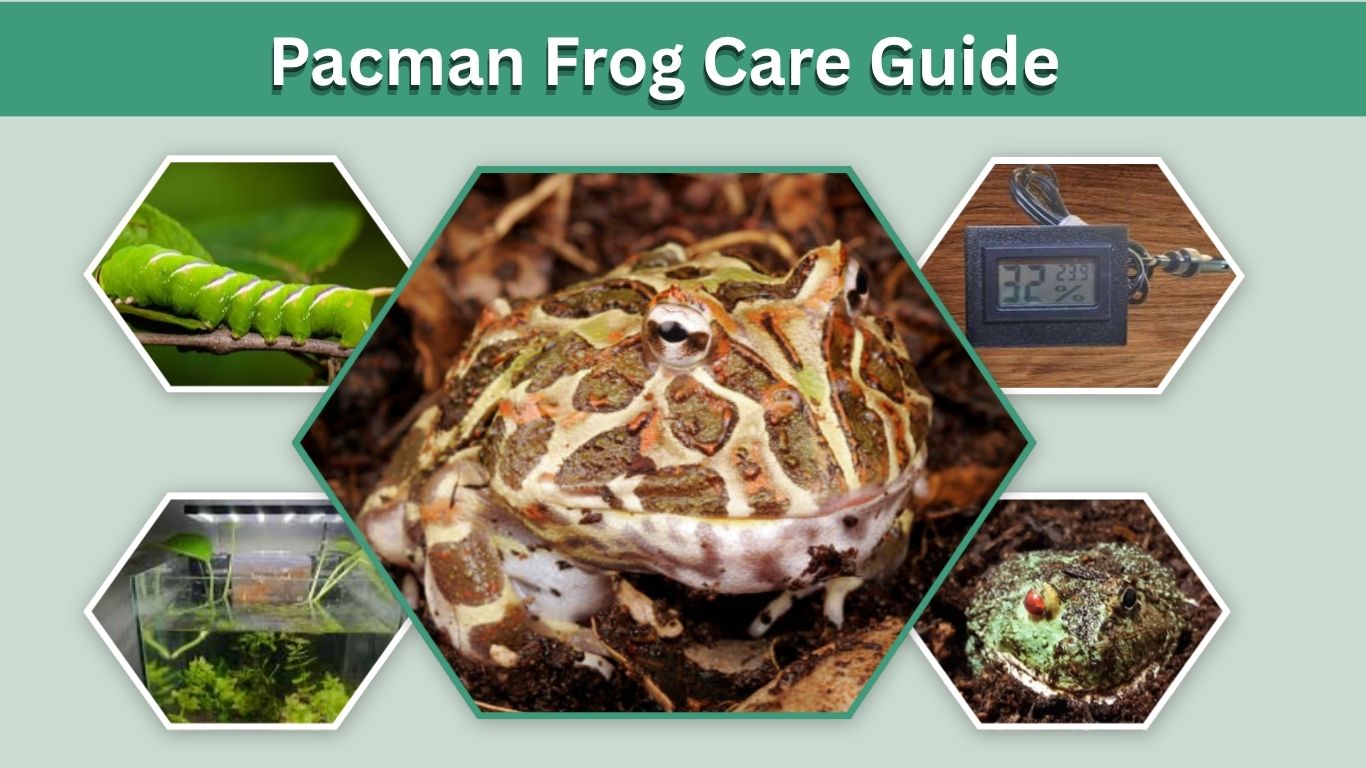
Pacman frog care is fairly simple compared with many exotic pets, but these frogs still need the right enclosure, humidity, temperature, diet, and handling routine. Known for their round bodies, huge mouths, and sit-and-wait hunting style, Pacman frogs are popular beginner amphibians. This guide explains how to care for a Pacman frog properly, from tank setup to feeding and common health mistakes.
What Is a Pacman Frog?
Pacman frogs are terrestrial horned frogs from South America. They get their common name from their round body shape and large mouth, which resembles the classic Pac-Man character. In the pet trade, “Pacman frog” usually refers to frogs in the Ceratophrys group, including ornate, fantasy, green, albino, strawberry, and other color morphs.
These frogs are not active climbers or swimmers. Instead, they spend much of their time buried in moist substrate, waiting for prey to pass close enough to strike. This makes them fascinating display pets, but not ideal pets for frequent handling.
Are Pacman Frogs Easy to Care For?
Pacman frogs are often considered easy to care for because they do not need a large enclosure, complex lighting, or daily social interaction. However, “easy” does not mean maintenance-free. Their skin is sensitive, and poor humidity, dirty substrate, unsafe food, or incorrect temperatures can cause health problems.
They are best for owners who want a low-handling pet and are willing to monitor enclosure conditions regularly.
Pacman Frog Care Requirements
A proper Pacman frog care setup should focus on warmth, moisture, safety, and cleanliness. These frogs do not need a complicated habitat, but every part of the enclosure should support their natural burrowing behavior.
| Care Requirement | Recommended Setup |
| Tank size | 10 gallons for juveniles; 20 gallons for most adults |
| Temperature | Around 75–85°F during the day |
| Night temperature | Slight drop is acceptable, usually around 70–75°F |
| Humidity | Around 60–80% |
| Substrate | Moist coconut fiber or amphibian-safe soil mix |
| Water | Shallow dish with dechlorinated water |
| Handling | Minimal; only when necessary |
| Diet | Gut-loaded insects, earthworms, roaches, and occasional larger prey for adults |
Pacman Frog Tank Setup
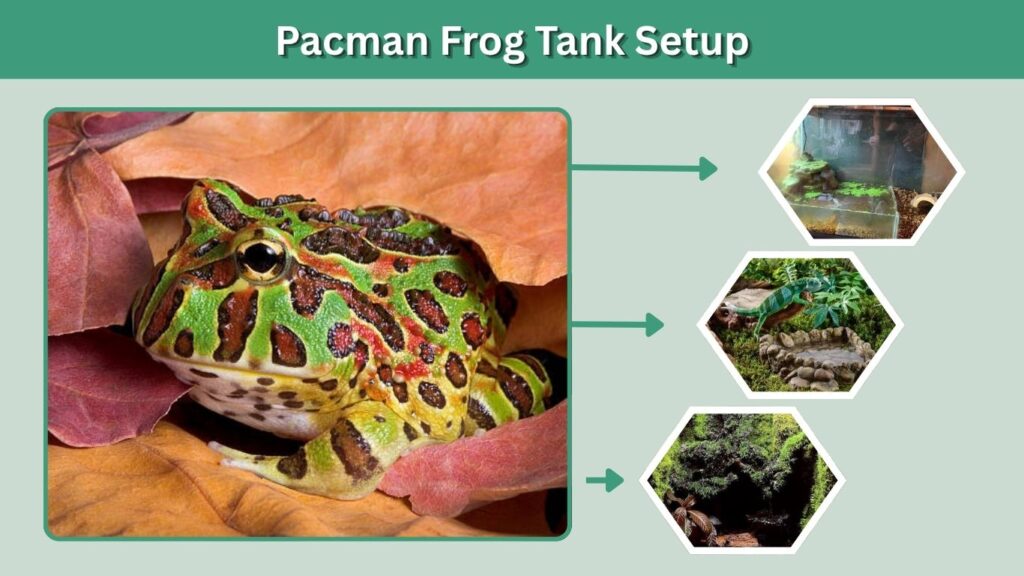
Pacman frogs do not need a tall enclosure because they are ground-dwelling. Floor space, safe substrate, and stable humidity are more important than height. A secure lid is still helpful because it keeps humidity stable and prevents feeder insects from escaping.
Choosing the Right Enclosure
A baby Pacman frog can start in a smaller enclosure, but an adult usually does well in a 20-gallon tank. Too much open space can make a young frog feel exposed, so a simple setup with hiding spots is better than a large empty tank.
A good enclosure should include:
- Moist substrate deep enough for burrowing
- A shallow water dish
- One or two hides
- Fake or live plants for cover
- A thermometer and hygrometer
- A secure lid for humidity control
Avoid housing Pacman frogs together. They are ambush predators with strong feeding responses and may try to eat cage mates, including other frogs.
Best Substrate for Pacman Frogs
Substrate is one of the most important parts of Pacman frog care. These frogs like to dig and sit partially buried. Coconut fiber is a popular option because it holds moisture well and is usually safe when kept clean.
The substrate should be damp, not soaked. If water pools at the bottom or the substrate smells sour, it is too wet or dirty. Replace soiled areas quickly and do a full substrate change regularly.
Avoid gravel, cedar, pine, sand, and small loose materials that could cause injury or impaction if swallowed.
Pacman Frog Temperature and Humidity
Temperature and humidity are the two care areas beginners should monitor most closely. Pacman frogs need a warm, humid environment, but extremes can be harmful.
Temperature Range
A daytime range around 75–85°F works well for most Pacman frogs. A slight nighttime drop is usually fine, as long as the enclosure does not become too cold. If temperatures stay too low, the frog may become sluggish, stop eating, or bury itself deeply.
Use a digital thermometer to check both the warm and cool sides of the enclosure. A gentle temperature gradient allows the frog to move to a more comfortable area when needed.
Humidity Range
Humidity should usually stay around 60–80%. If humidity is too low, the frog may dry out, shed poorly, or become stressed. If it is constantly too high, the enclosure may develop mold, bacteria, and poor air quality.
To manage humidity:
- Mist the enclosure lightly as needed.
- Keep substrate moist but not waterlogged.
- Use dechlorinated water only.
- Add ventilation to prevent stagnant air.
- Check humidity with a hygrometer instead of guessing.
Heating and Lighting for Pacman Frogs
Pacman frogs do not require intense lighting. In many homes, normal room light and a consistent day-night cycle are enough. They are more active in low light and may become stressed by bright, direct light.
Safe Heating Options
If the room is too cool, use a safe heat source controlled by a thermostat. A heat mat can be placed on the side of the tank rather than underneath, so the frog can burrow without getting trapped against heat. Ceramic heat emitters may also be used carefully, but they can dry the enclosure if not monitored.
Never place a heat source where the frog can burn itself. Always measure the actual temperature inside the enclosure, not just the room temperature.
Do Pacman Frogs Need UVB?
Pacman frogs can survive without strong UVB when they receive proper nutrition and supplementation, but some keepers provide low-level UVB as part of a natural light cycle. If using UVB, choose a gentle amphibian-safe bulb and provide shaded areas so the frog can avoid light when it wants.
Pacman Frog Food and Feeding
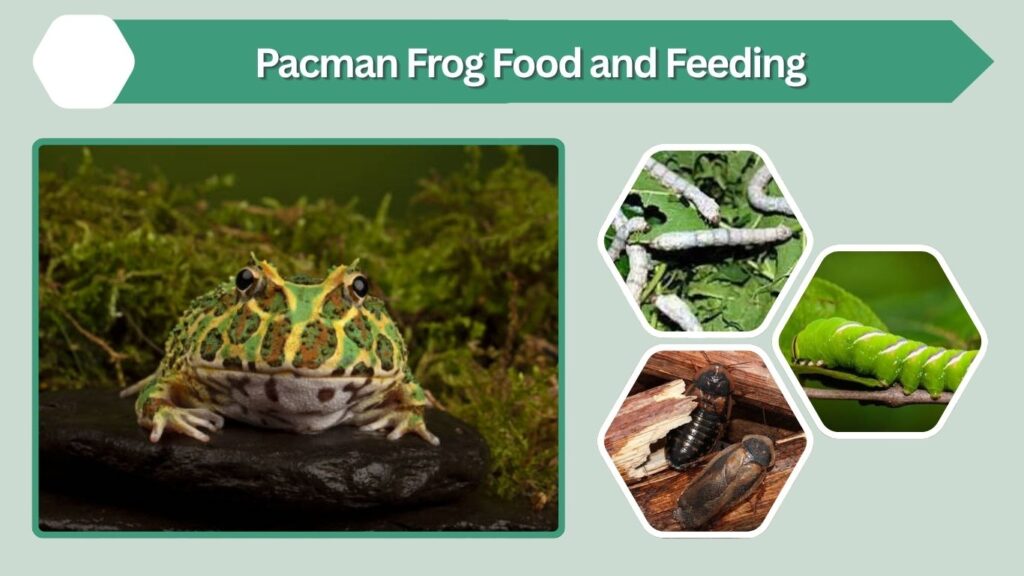
Pacman frogs are known for their appetite. They are ambush predators and often strike quickly when prey moves nearby. A varied diet is healthier than feeding the same insect every time.
Best Foods for Pacman Frogs
Good food options include:
- Crickets
- Dubia roaches
- Earthworms or nightcrawlers
- Hornworms
- Silkworms
- Occasional waxworms as treats
- Properly sized feeder mice only for larger adults, and only occasionally
Prey should be no wider than the space between the frog’s eyes when possible. Oversized prey can cause choking, regurgitation, or digestive problems.
Feeding Schedule
Baby Pacman frogs usually eat more often than adults because they are growing quickly. Juveniles may eat every day or every other day, while adults often eat every few days depending on body condition and meal size.
Do not overfeed. A Pacman frog should look rounded, but not excessively bloated. If the frog becomes very fat, reduce feeding frequency and avoid fatty treats.
Supplements
Use calcium and vitamin supplements designed for reptiles and amphibians. Dust feeder insects with calcium regularly and use a multivitamin as directed. Gut-loading insects before feeding also improves nutrition.
Baby Pacman Frog Care
Baby Pacman frog care is similar to adult care, but smaller frogs dry out faster and need smaller prey. Their enclosure should be simple, secure, and easy to monitor.
Tips for Baby Pacman Frogs
For young frogs:
- Keep prey small and soft-bodied.
- Maintain stable humidity.
- Avoid deep water dishes.
- Use a smaller enclosure at first.
- Watch feeding closely.
- Avoid unnecessary handling.
A baby Pacman frog that refuses food for a short time may simply be adjusting, but ongoing refusal, weight loss, or lethargy can signal a husbandry or health issue.
Albino, Ornate, Green, and Strawberry Pacman Frog Care
Most Pacman frog morphs and types have similar basic care needs. Albino Pacman frog care, ornate Pacman frog care, green Pacman frog care, strawberry Pacman frog care, and fantasy Pacman frog care all focus on the same main requirements: warmth, humidity, safe substrate, clean water, and proper feeding.
Do Different Types Need Different Care?
In most cases, different types do not need dramatically different care. The main difference is that albino morphs may be more sensitive to bright light because of their reduced pigmentation. For albino Pacman frogs, use softer lighting, provide plenty of cover, and avoid harsh direct light.
Ornate Pacman frogs may grow large and have a strong feeding response, so prey size and enclosure space should be managed carefully. Regardless of morph, always focus on the frog’s body condition, appetite, and behavior.
Pacman Frog Handling
Pacman frogs are not pets you should handle often. Their skin absorbs moisture and chemicals easily, and handling can cause stress. They may also bite if they mistake fingers for food.
Safe Handling Rules
When handling is necessary:
- Wash your hands before and after.
- Use wet, powder-free gloves if possible.
- Keep handling short.
- Support the frog gently.
- Never squeeze the body.
- Keep the frog low to the ground in case it jumps.
Avoid handling after applying lotion, soap residue, perfume, sanitizer, or cleaning products. These substances can irritate amphibian skin.
Cleaning a Pacman Frog Enclosure
Cleanliness is essential because Pacman frogs sit in moist substrate where waste can build up quickly. A dirty enclosure can lead to bacterial growth, skin irritation, odor, and illness.
Spot-clean waste whenever you see it. Replace dirty substrate immediately and clean the water dish often. A full substrate change is usually needed every few weeks, depending on enclosure size, humidity, and how quickly the tank becomes soiled.
Use reptile- and amphibian-safe cleaners, and rinse everything thoroughly before placing it back in the enclosure.
Common Pacman Frog Health Problems
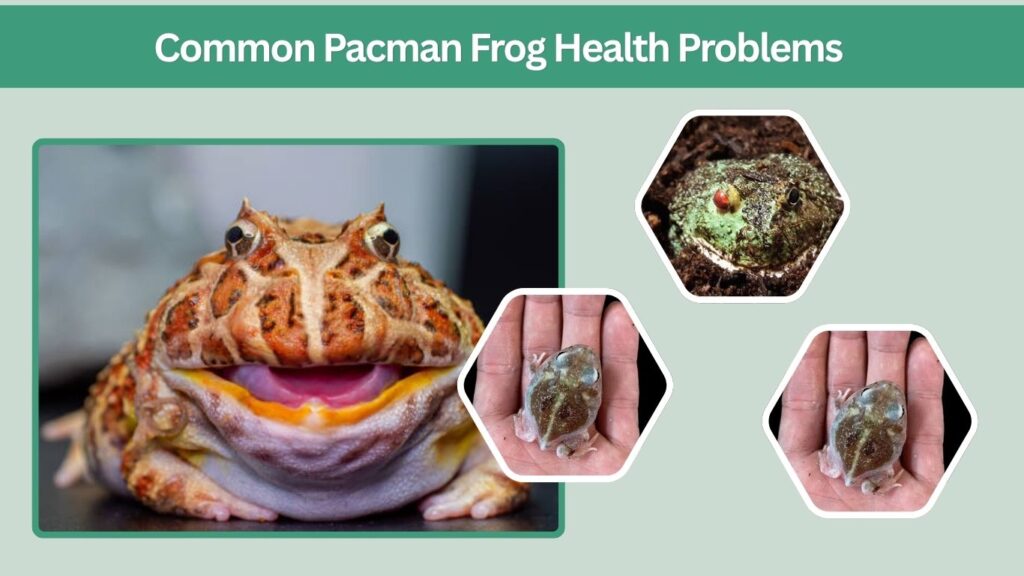
Pacman frogs can hide illness until a problem becomes serious. Good care prevents many issues, but owners should still watch for changes in appetite, posture, skin, and activity.
Warning Signs to Watch For
Contact an exotic pet veterinarian if you notice:
- Refusing food for an extended period
- Sudden weight loss
- Swollen body or limbs
- Redness on the belly or legs
- Cloudy eyes
- Wheezing or open-mouth breathing
- Unusual mucus
- Lethargy
- Skin sores or discoloration
Some problems come from poor temperature, low humidity, dirty substrate, or nutritional imbalance. Fixing the enclosure is important, but a sick frog may still need veterinary care.
Pacman Frog Not Eating
A Pacman frog may stop eating for several reasons. Sometimes it is normal, especially after a move, during shedding, or after a large meal. However, long-term refusal should not be ignored.
Common Reasons a Pacman Frog Refuses Food
A Pacman frog may not eat because of:
- Temperature is too low
- Humidity is incorrect
- Prey is too large
- The frog is stressed from handling
- The enclosure is too exposed
- The frog is preparing to shed
- The frog is ill or has parasites
Check the basics first: temperature, humidity, substrate moisture, and prey size. If everything is correct and the frog still refuses food, speak with an exotic vet.
Pacman Frog Care Tips for Beginners
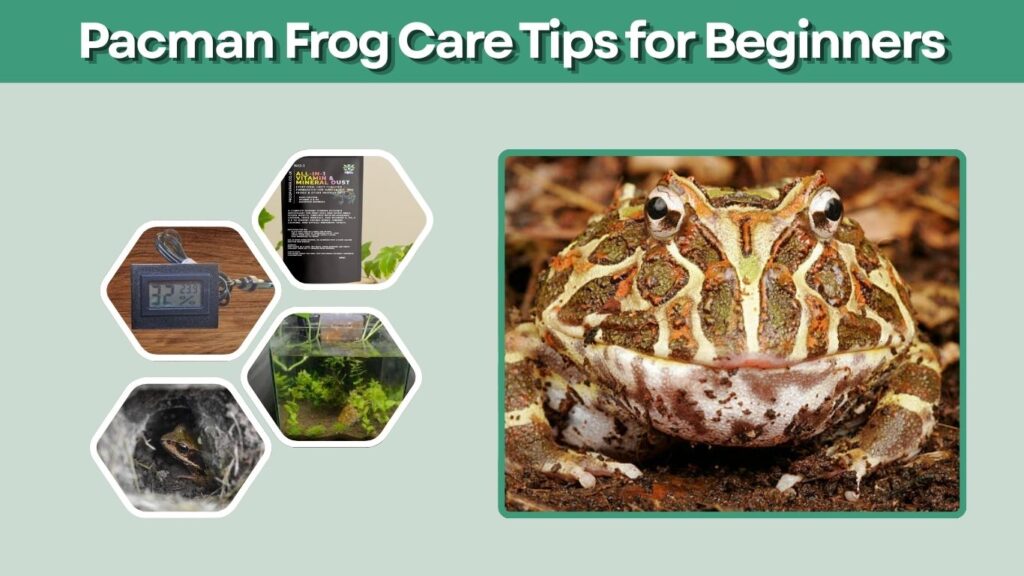
Pacman frogs are good beginner amphibians for people who prefer a display pet over a pet they can hold. The key is consistency. Most problems happen when the enclosure becomes too dry, too cold, too dirty, or when the frog is overfed.
Beginner Care Checklist
Before bringing one home, prepare:
- A properly sized tank
- Moist burrowing substrate
- Shallow dechlorinated water dish
- Thermometer and hygrometer
- Safe heat source if needed
- Hides and plant cover
- Calcium and vitamin supplements
- Appropriate feeder insects
- Contact information for an exotic pet vet
Do not buy the frog first and set up the enclosure later. A stable habitat should be ready before the frog arrives.
FAQs
Are Pacman frogs easy to take care of?
Yes, Pacman frogs are fairly easy to care for compared with many exotic pets, but they still need proper temperature, humidity, substrate, food, and cleaning. They are best for owners who want a low-handling display pet rather than a social pet.
How often should I feed a Pacman frog?
Baby Pacman frogs usually eat more often, often daily or every other day. Adults usually eat every few days, depending on meal size and body condition. Avoid overfeeding because Pacman frogs can become overweight if given too much food too often.
What humidity does a Pacman frog need?
Pacman frogs usually do best with humidity around 60–80%. The substrate should stay moist but not soaked. Low humidity can dry the frog out, while constantly wet conditions can encourage mold, bacteria, and skin problems.
Can I hold my Pacman frog?
You should only hold a Pacman frog when necessary. Their skin is sensitive, and frequent handling can stress them. If you must handle one, use clean wet hands or wet powder-free gloves, keep the session short, and avoid chemicals or soap residue.
Do Pacman frogs need a big tank?
Pacman frogs do not need a huge tank because they are not very active. A juvenile can start in a smaller enclosure, while most adults do well in about a 20-gallon tank. Floor space, moist substrate, and stable conditions matter more than height.
