
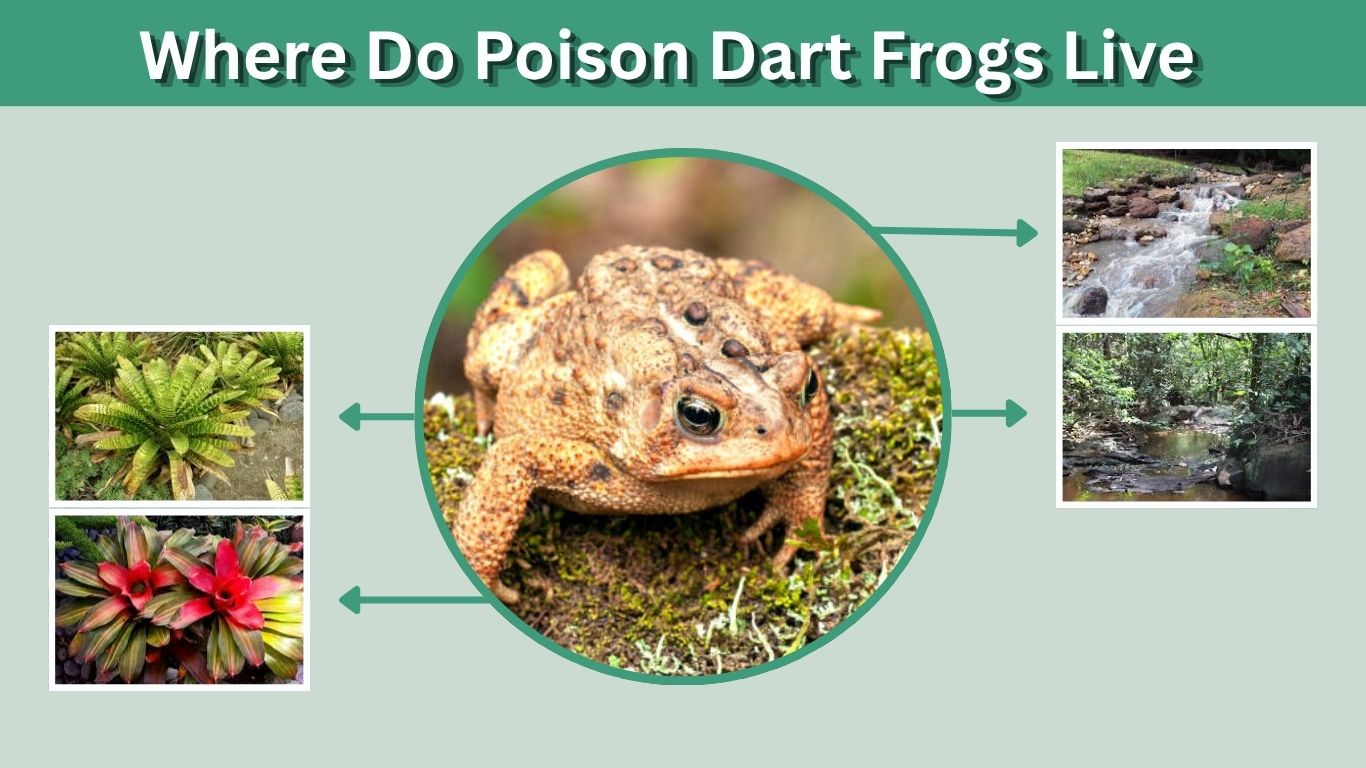
Poison dart frogs live in warm, wet tropical habitats across Central and South America. These small, colorful amphibians are most often found in rainforests, where humidity, shade, leaf litter, and tiny insects help them survive. Different species live in different countries and microhabitats, from the forest floor to low plants, stream edges, and small water-filled spaces in the rainforest understory.
Where Do Poison Dart Frogs Live?
Poison dart frogs live mainly in tropical forests of Central and South America. Their range includes rainforest regions in countries such as Brazil, Colombia, Peru, Ecuador, Panama, Costa Rica, Nicaragua, Suriname, Guyana, and nearby areas, depending on the species.
They do not naturally live all over the world. They are strongly connected to humid forest ecosystems because their skin needs moisture, their eggs need damp conditions, and their diet depends on small rainforest insects.
Main Geographic Range
Poison dart frogs are native to the Neotropics, especially humid forest habitats in Central and South America. Some species live in lowland rainforests, while others may live in moist foothill forests or specialized habitats near streams.
Their exact location depends on the species. For example, some species are widespread, while others live only in small regions. This is why one poison dart frog may live in Central America, while another may be found only in a limited part of Colombia or Suriname.
Do Poison Dart Frogs Live in the Amazon Rainforest?
Yes, some poison dart frogs live in the Amazon rainforest and nearby Amazon Basin habitats. The Amazon provides the warm, wet conditions these frogs need. It also has abundant insects, leaf litter, plants, and sheltered breeding places.
However, not every poison dart frog lives in the Amazon. “Poison dart frog” refers to many species, and each species has its own natural range. Some live in Central America, some in the Amazon Basin, some in the Chocó rainforest, and others in smaller regional habitats.
What Habitat Do Poison Dart Frogs Live In?
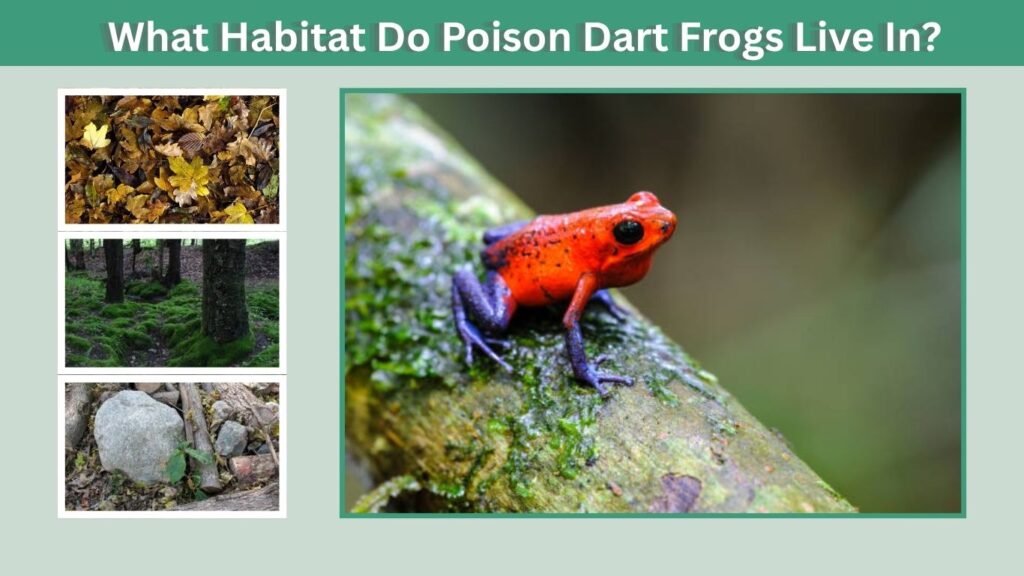
Poison dart frogs live in humid habitats with plenty of shade and moisture. They are most common in tropical rainforests, but some species also live in wet forests, cloud forests, and other damp tropical environments.
They need a habitat that supports both adult frogs and young tadpoles. Adults hunt on land, while tadpoles need water or very moist areas to develop.
Common Habitat Features
Poison dart frog habitats usually include:
- Warm temperatures throughout the year
- High humidity
- Dense plants and shade
- Wet leaf litter
- Moss, roots, logs, and rocks
- Small insects and arthropods
- Shallow pools, bromeliads, or stream edges
- Safe hiding places from predators
These features make rainforests ideal for poison dart frogs. Their small bodies can dry out quickly, so they depend on damp surroundings.
Do Poison Dart Frogs Live in Water?
Poison dart frogs are amphibians, but most adult poison dart frogs do not live in water full time. They are mostly land-dwelling frogs that stay in moist places. They may visit wet areas, shallow pools, stream edges, or water-filled plants, but they are not aquatic frogs.
Tadpoles need water to grow, but adults usually live on the forest floor or in low vegetation. In captivity, deep water can be dangerous for small dart frogs if they cannot climb out easily.
What Biome Do Poison Dart Frogs Live In?
Poison dart frogs live mainly in the tropical rainforest biome. This biome is warm, humid, and rich in plant and animal life. It supports huge numbers of insects, which are important food sources for poison dart frogs.
Some species may also live in tropical moist forests or cloud forests, depending on elevation and local conditions. Still, the keyword “rainforest” describes the main habitat most people associate with poison dart frogs.
Climate They Need
Poison dart frogs need a warm and humid climate. They do not survive well in cold or dry environments. Their skin is thin and absorbent, which makes moisture especially important.
The climate they need usually includes:
- Warm year-round temperatures
- High humidity
- Frequent rainfall
- Shaded forest cover
- Damp soil and leaf litter
- Stable moisture for eggs and tadpoles
This is why they are not native to deserts, temperate forests, or cold mountain regions.
Why Rainforests Are Ideal
Rainforests offer everything poison dart frogs need in one place. The forest floor stays damp, the understory provides shelter, and insects are available for food. Rainforest plants also create small water pockets that some species use for tadpoles.
Because poison dart frogs are small, they rely on these microhabitats. A single fallen log, bromeliad, or patch of leaf litter can provide food, shelter, and breeding opportunities.
What Layer of the Rainforest Do Poison Dart Frogs Live In?
Most poison dart frogs live mainly in the forest floor and understory layers of the rainforest. They are usually not canopy animals, although some species climb plants and use low vegetation.
The forest floor is especially important because it contains leaf litter, insects, moisture, and hiding places. The understory is useful for calling, climbing, and breeding.
| Rainforest layer | Do poison dart frogs use it? | Why it matters |
| Forest floor | Yes, commonly | Leaf litter, insects, moisture, hiding places |
| Understory | Yes, often | Low plants, calling sites, bromeliads, shelter |
| Canopy | Rarely for most species | Some may climb, but most are not canopy specialists |
| Emergent layer | No, generally | Too high, exposed, and unsuitable for most dart frogs |
Forest Floor Habitat
The forest floor is one of the most important places for poison dart frogs. It has wet leaves, fallen branches, roots, moss, and tiny prey. Many frogs move through this layer while hunting ants, termites, beetles, mites, and other small invertebrates.
The forest floor also gives them cover from predators. Even brightly colored frogs need places to hide and rest.
Understory Habitat
The understory includes low plants, vines, shrubs, and young trees. Some poison dart frogs climb into this layer to call for mates or place tadpoles in small water pools. Bromeliads and tree holes can collect rainwater, creating tiny nurseries for developing tadpoles.
This layer is still humid and shaded, which makes it safer than exposed upper levels of the rainforest.
Where Do Blue Poison Dart Frogs Live?
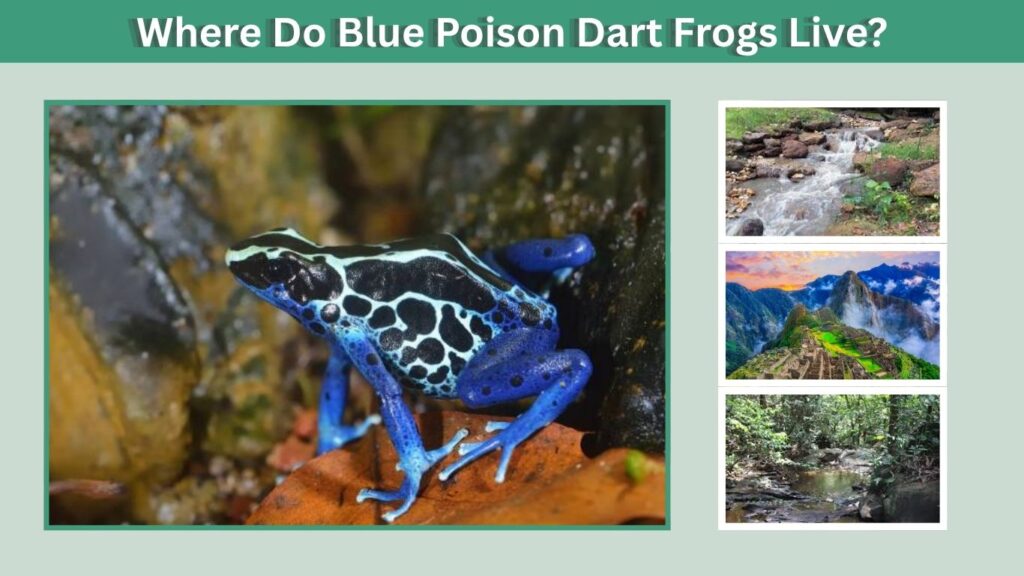
Blue poison dart frogs live in tropical forest habitats in northern South America. The well-known blue poison dart frog is associated mainly with Suriname and nearby regions. It is usually found in humid forests, especially near streams and mossy, damp areas.
Blue poison dart frogs do not live everywhere in the Amazon. Their natural range is more limited, so it is better to describe them by their specific region rather than saying they live throughout South America.
Blue Poison Dart Frog Habitat
Blue poison dart frogs prefer moist, warm forest environments. They need damp ground, shaded plants, and access to tiny prey. Like other dart frogs, they are usually active during the day.
Their habitat may include:
- Rainforest floor
- Mossy rocks
- Stream edges
- Leaf litter
- Low vegetation
- Humid forest gaps
Their bright blue color warns predators that they may be toxic in the wild.
Where Do Golden Poison Dart Frogs Live?
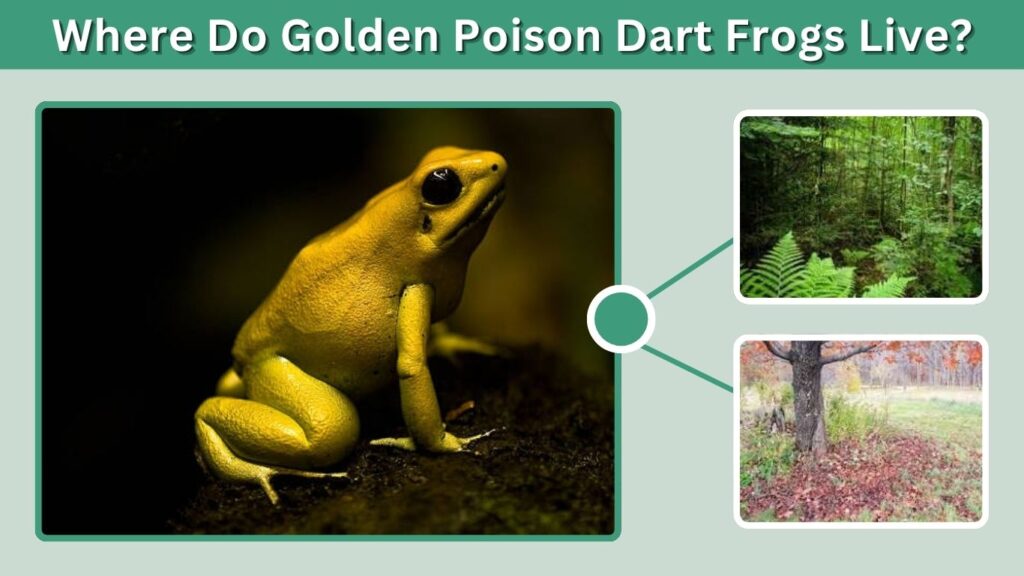
Golden poison dart frogs live in the rainforests of Colombia. More specifically, the golden poison frog is known from a limited range in the Pacific coastal rainforest region of Colombia. This species is famous because it is one of the most toxic animals known.
Golden poison frogs are not found across the entire Amazon rainforest. They are associated with humid Colombian rainforest habitats, especially areas with heavy rainfall and warm temperatures.
Golden Poison Dart Frog Habitat
Golden poison dart frogs need very wet rainforest conditions. They live in warm, humid forest areas with plenty of prey and shelter. Their limited natural range makes them vulnerable to habitat loss.
The golden poison frog is endangered partly because of habitat destruction within its small range. Protecting its forest habitat is essential for its survival.
Where Do Strawberry Poison Dart Frogs Live?
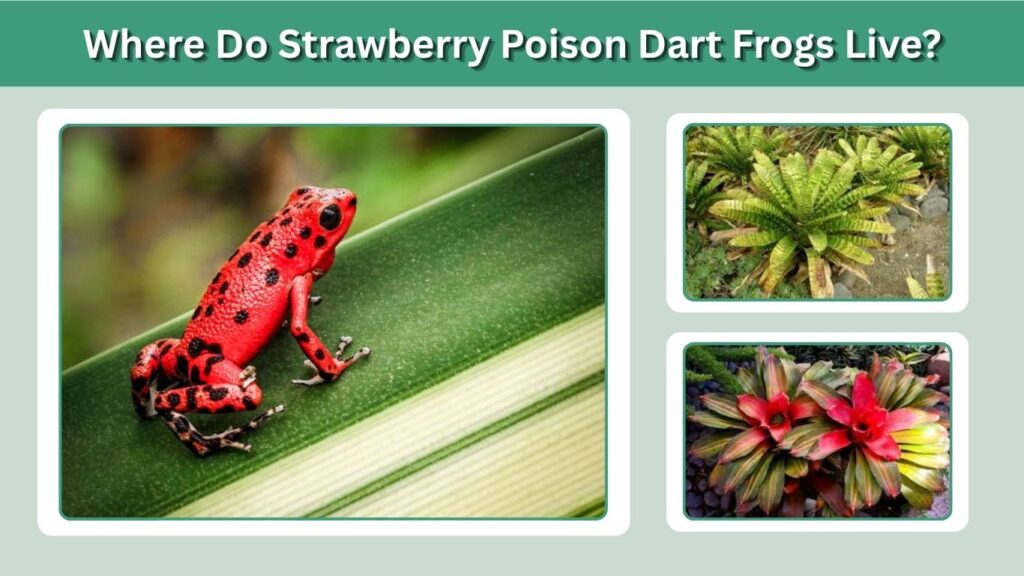
Strawberry poison dart frogs live in Central American rainforest habitats. They are commonly associated with countries such as Costa Rica, Nicaragua, and Panama. These frogs are famous for their red bodies and blue or dark legs, although colors can vary widely.
They live in humid forests where they can find insects, leaf litter, plants, and tiny water sources for tadpoles.
Strawberry Poison Dart Frog Habitat
Strawberry poison dart frogs often use the forest floor and low plants. Some show complex parental care, with adults transporting tadpoles to small water-filled spaces.
Their habitat usually includes:
- Tropical rainforest
- Damp leaf litter
- Low vegetation
- Bromeliads
- Shaded forest areas
- Tiny pools for tadpoles
Because they are small, they depend on many tiny shelter spots that larger animals may ignore.
How Long Do Poison Dart Frogs Live?
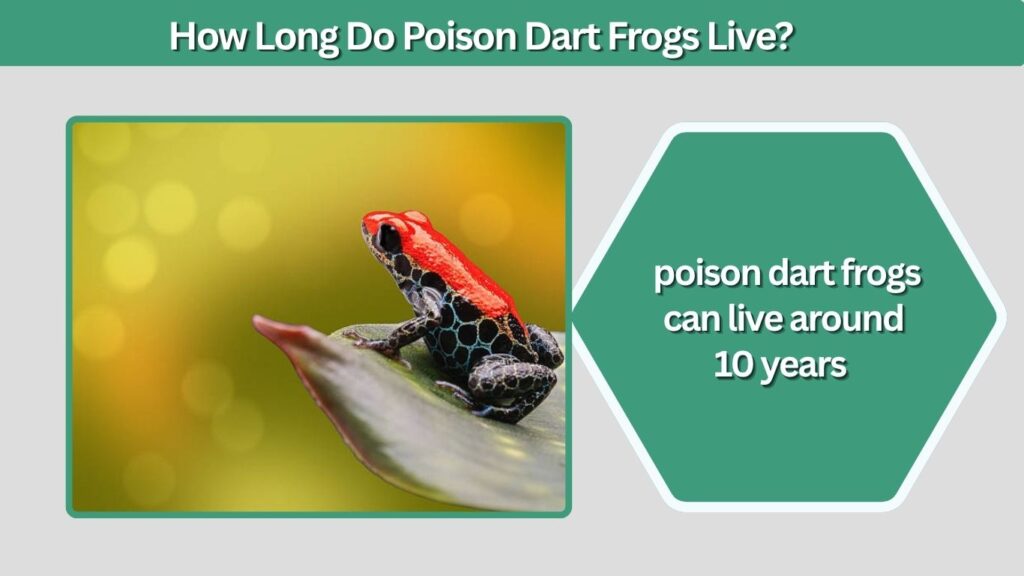
Poison dart frog lifespan depends on species, environment, predators, disease, and care conditions. In the wild, many may live several years, but exact lifespans vary. In captivity, some poison dart frogs can live much longer when given proper care.
Many captive poison dart frogs can live around 10 years or more, and some may live longer under excellent conditions. Wild frogs may face more risks, including predators, drought, habitat loss, disease, and competition.
How Long Do They Live in the Wild?
In the wild, poison dart frogs face many natural dangers. Eggs and tadpoles are especially vulnerable. Adult frogs may live for several years, but survival depends on habitat quality and local threats.
A healthy rainforest gives them better chances by providing moisture, food, and breeding spaces.
How Long Do They Live in Captivity?
In captivity, poison dart frogs may live longer because they are protected from predators and harsh weather. However, they need careful habitat setup. Poor humidity, wrong temperatures, dirty water, or lack of proper food can shorten their lives.
A good captive setup usually includes live plants, high humidity, clean water, hiding places, and small live foods.
Do Poison Dart Frogs Live Alone or in Groups?
Poison dart frogs may live alone, in pairs, or near others, depending on the species and breeding behavior. Some are territorial, especially males. Others may tolerate groups better if there is enough space and food.
In the wild, they do not usually live in large social groups like herd animals. They may gather in good habitat areas, but each frog often uses its own space.
Can Poison Dart Frogs Live Together?
Some poison dart frogs can live together in captivity, but it depends on species, sex ratio, enclosure size, and temperament. Keeping the same species together is usually safer than mixing different species.
Mixed-species enclosures can lead to stress, aggression, disease spread, or unwanted hybrid breeding. For most keepers, a single-species vivarium is the best choice.
How Many Poison Dart Frogs Can Live Together?
There is no single number for all poison dart frogs. Some species do well in pairs, while others may live in small groups. The enclosure must be large enough to provide feeding areas, hiding spots, and visual barriers.
Signs of problems include chasing, fighting, hiding, weight loss, and one frog keeping others away from food.
Do Poison Dart Frogs Live in the USA?
Poison dart frogs do not naturally live in the wild in the United States. They are native to tropical regions of Central and South America. You may see them in zoos, aquariums, or private captive collections, but they are not native U.S. wildlife.
They also do not naturally live in Florida. Florida has warm and humid areas, but poison dart frogs are not native there.
Do Poison Dart Frogs Live in Costa Rica?
Yes, some poison dart frogs live in Costa Rica. Central America has several dart frog species, including colorful rainforest species that live in humid lowland and tropical forest habitats.
Costa Rica’s rainforests provide warm temperatures, high humidity, and rich insect life, which make them suitable for certain poison dart frogs.
Why Habitat Protection Matters
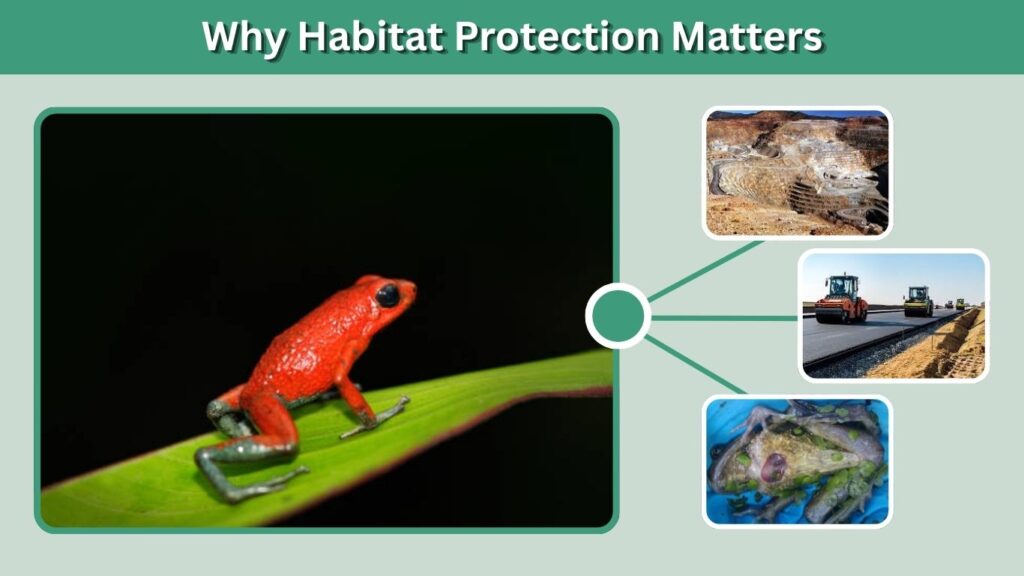
Poison dart frogs depend on specific rainforest conditions. When forests are cut, burned, polluted, or fragmented, these frogs lose the places they need to survive. Small species with limited ranges are especially at risk.
Habitat loss can affect frogs by reducing food, drying out breeding areas, and separating populations. Pollution and disease can also harm amphibians because their skin is highly sensitive.
Threats to Their Habitat
Major threats include:
- Deforestation
- Farming expansion
- Logging
- Mining
- Road building
- Pollution
- Climate change
- Illegal wildlife collection
- Amphibian disease
Protecting rainforest habitats helps poison dart frogs and many other animals that share the same ecosystem.
FAQs
Where do poison dart frogs live?
Poison dart frogs live mainly in wet tropical forests of Central and South America. They are commonly found in rainforests, especially around leaf litter, low plants, stream edges, roots, and damp forest floors where humidity and small insects are abundant.
What biome does a poison dart frog live in?
Poison dart frogs live mostly in the tropical rainforest biome. This biome provides warm temperatures, high humidity, frequent rainfall, dense plants, and plenty of tiny insects. Some species may also live in other humid tropical forest habitats.
What rainforest layer do poison dart frogs live in?
Most poison dart frogs live on the forest floor and in the understory. They use leaf litter, logs, moss, roots, low plants, and water-filled plants for shelter, hunting, calling, and breeding. Most are not true canopy animals.
Where do blue poison dart frogs live?
Blue poison dart frogs live in humid tropical forests of northern South America, especially Suriname and nearby regions. They are usually found in damp forest areas, often near streams, mossy rocks, leaf litter, and low vegetation.
How long do poison dart frogs live?
Poison dart frogs can live several years in the wild, and many live around 10 years or more in captivity with proper care. Lifespan depends on species, habitat quality, diet, disease, predators, and care conditions.
