
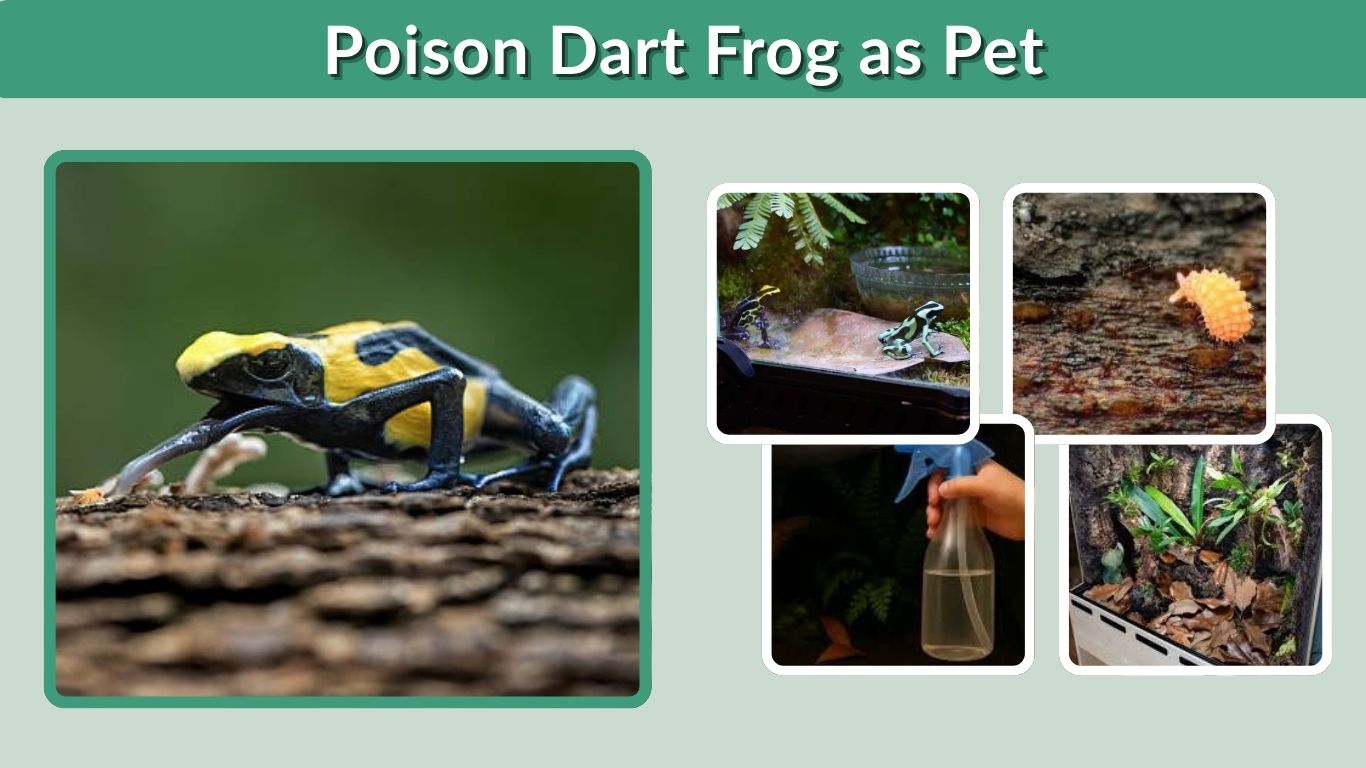
Poison dart frogs are bright, colorful, and fascinating amphibians that many exotic pet lovers enjoy keeping in planted terrariums. Although their name sounds dangerous, captive-bred poison dart frogs are usually not poisonous because they do not eat the same wild insects that create their toxins. Still, they are delicate animals that need proper humidity, temperature, diet, and a carefully maintained habitat.
Can You Keep a Poison Dart Frog as a Pet?
Poison dart frogs can be kept as pets in many places, but they are not ordinary pets. They are best suited for people who enjoy watching animals rather than handling them. These frogs are small, active during the day, and beautiful to observe inside a natural-looking terrarium.
Captive-Bred Poison Dart Frogs Are Usually Safe
In the wild, poison dart frogs get their toxins from their natural diet, which includes certain ants, mites, and other small insects. Captive-bred poison dart frogs eat different foods, such as fruit flies and springtails. Because of this, they usually do not develop the same dangerous toxins as wild frogs.
However, this does not mean they should be handled often. Their skin is very sensitive and can absorb oils, soap, lotion, salt, and chemicals from human hands. Even clean hands can stress them. Poison dart frogs are best kept as display pets.
Are Poison Dart Frogs Good for Beginners?
Poison dart frogs can be suitable for careful beginners, but they are not the easiest pet. They need stable humidity, a clean terrarium, live food, and regular monitoring. Someone who wants a low-maintenance pet may find them challenging.
They are a better choice for owners who are willing to learn about amphibian care, maintain a planted enclosure, and feed tiny live insects regularly.
What Does a Pet Poison Dart Frog Look Like?
Poison dart frogs are known for their bold colors and small bodies. Depending on the species, they may be blue, yellow, orange, green, red, black, or patterned with spots and stripes.
Bright Colors and Small Size
Most poison dart frogs are small, usually around 1 to 2.5 inches long. Their bright colors make them stand out, but in nature, these colors warn predators that the frog may be toxic. In captivity, the colors still remain even though captive-bred frogs are usually non-toxic.
Blue Poison Dart Frog as a Pet
The blue poison dart frog is one of the most popular types. It has a bright blue body with dark spots, making it one of the most attractive frogs for terrarium keepers. Blue poison dart frogs are active, beautiful, and interesting to watch, but they still need the same careful setup as other dart frogs.
Poison Dart Frog Pet Care
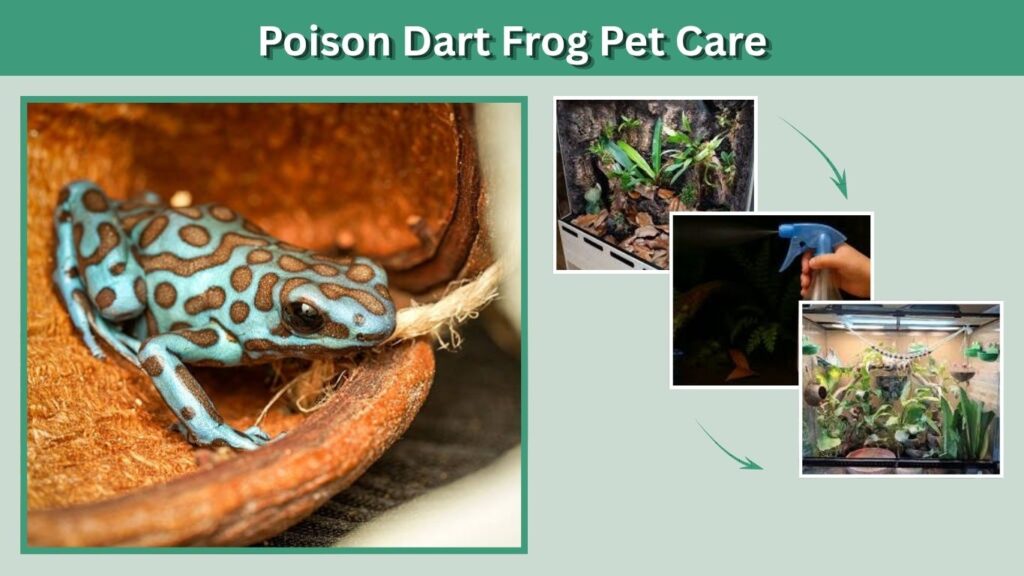
Good poison dart frog care starts with the right enclosure. These frogs need a warm, humid, natural environment that copies their tropical habitat.
Terrarium Setup
A glass terrarium is usually the best choice because it helps hold humidity and allows clear viewing. Many owners use a bioactive terrarium, which includes live plants, leaf litter, moss, springtails, and isopods. This type of setup looks natural and helps keep the enclosure cleaner.
A proper terrarium should include:
- Live tropical plants
- Moist substrate
- Leaf litter
- Hiding places
- A secure lid
- Good ventilation
- A shallow water area
- Thermometer and hygrometer
- Misting bottle or misting system
Humidity Requirements
Poison dart frogs need high humidity because they come from moist tropical environments. If the enclosure becomes too dry, the frogs can become stressed or dehydrated. Owners should check humidity daily and mist the terrarium as needed.
High humidity does not mean the enclosure should be dirty or soaked all the time. The habitat should be moist, fresh, and well-ventilated.
Temperature Needs
Most poison dart frogs do well in stable warm room temperatures. Extreme heat can be dangerous, and sudden temperature changes can stress them. A thermometer should be used to make sure the enclosure stays within a safe range for the species being kept.
Poison Dart Frog Pet Diet
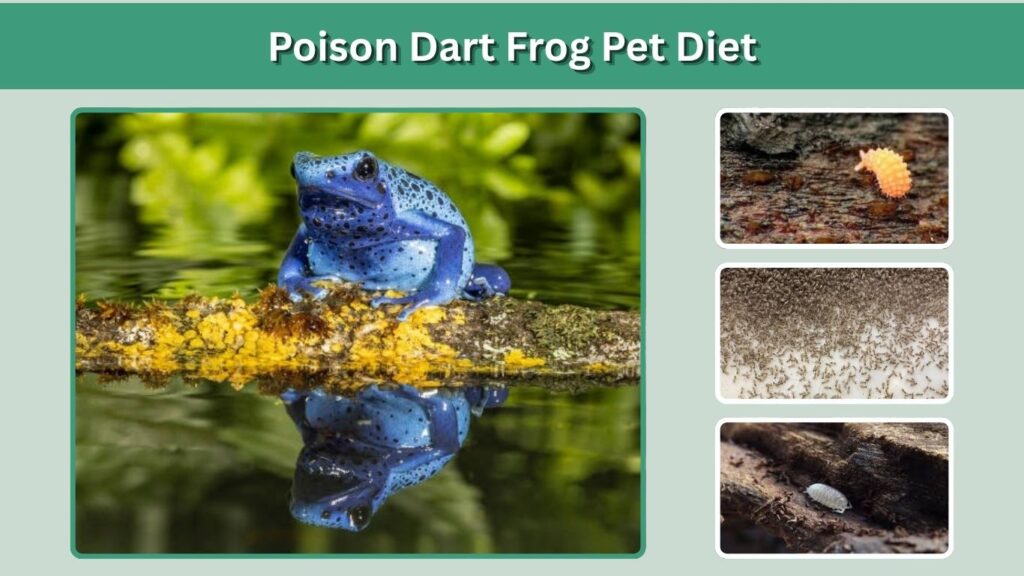
A poison dart frog’s diet is very different from the diet of larger reptiles or amphibians. These frogs are tiny, so they need very small live foods.
What Do Poison Dart Frogs Eat?
Pet poison dart frogs usually eat flightless fruit flies, springtails, tiny crickets, and other small feeder insects. Fruit flies are one of the most common foods because they are small, easy to culture, and suitable for many dart frog species.
Common foods include:
- Flightless fruit flies
- Springtails
- Pinhead crickets
- Tiny isopods
- Small soft-bodied insects
Feeding Schedule
Most poison dart frogs eat several times per week, and young frogs may need feeding more often. The exact schedule depends on the species, age, size, and health of the frog. Uneaten food should not be allowed to build up in the enclosure.
Vitamins and Supplements
Captive poison dart frogs need vitamin and mineral supplements. Feeder insects are often dusted with calcium and vitamin powder before feeding. Without proper supplements, frogs may develop weak bones, poor growth, or other health problems.
Poison Dart Frog Habitat Requirements
The habitat is one of the most important parts of keeping poison dart frogs healthy. A poor setup can quickly cause stress, illness, or death.
| Care Area | Requirement |
|---|---|
| Enclosure | Glass terrarium or vivarium |
| Humidity | High and stable |
| Temperature | Warm but not overheated |
| Food | Tiny live insects |
| Handling | Very limited |
| Lighting | Suitable light for plants and day cycle |
| Substrate | Moist, natural, and safe |
| Best setup | Planted or bioactive terrarium |
| Pet type | Display pet |
| Difficulty | Beginner to intermediate |
Live Plants
Live plants help create a natural habitat and support humidity. They also provide hiding places and climbing surfaces. Common terrarium plants include pothos, bromeliads, ferns, and small tropical plants.
Leaf Litter and Hiding Spots
Leaf litter is useful because it gives frogs places to hide and hunt. Poison dart frogs may feel stressed in an empty enclosure. A well-designed terrarium should have plenty of cover so the frogs feel secure.
Water and Misting
Poison dart frogs absorb moisture through their skin, so clean water and regular misting are important. The water area should be shallow because these frogs are not strong swimmers like aquatic frogs. Deep water can be dangerous for some species.
Poison Dart Frog Pet Cost
The cost of keeping a poison dart frog includes more than the price of the frog itself. The full setup can be more expensive than many beginners expect.
Initial Cost
The first cost includes the frog, terrarium, plants, substrate, lighting, thermometer, hygrometer, misting tools, and feeder insect cultures. Rare species or special color forms may cost more than common captive-bred frogs.
Ongoing Cost
Ongoing costs include food cultures, supplements, replacement plants, substrate, cleaning supplies, and possible veterinary care. Owners should also keep backup feeder cultures because fruit fly cultures can sometimes crash.
Regular expenses may include:
- Fruit fly cultures
- Vitamin supplements
- Calcium powder
- Substrate replacement
- Plant care
- Misting supplies
- Veterinary care if needed
Poison Dart Frog Pet Lifespan
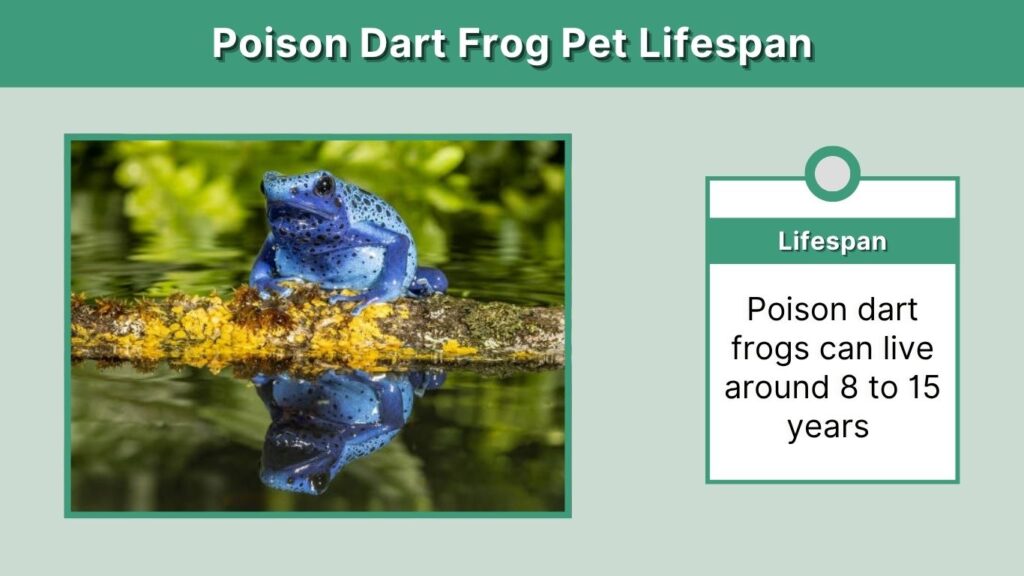
Poison dart frogs may be small, but they can live for many years with proper care. This makes them a long-term responsibility.
How Long Do Poison Dart Frogs Live?
Many poison dart frogs can live around 8 to 15 years in captivity, and some may live even longer with excellent care. Their lifespan depends on species, genetics, diet, temperature, humidity, and cleanliness.
How to Help Them Live Longer
The best way to support a long lifespan is to provide stable care. This means proper food, clean conditions, safe humidity, correct temperatures, and low stress. Buying healthy captive-bred frogs from a responsible breeder also helps.
Can You Handle a Poison Dart Frog?
Poison dart frogs should not be handled unless absolutely necessary. They are delicate animals with sensitive skin.
Why Handling Is Not Recommended
Their skin can absorb harmful substances from your hands. Even small amounts of soap, lotion, perfume, cleaning chemicals, or salt can harm them. Handling can also stress the frog and increase the risk of injury.
Best Way to Enjoy Them
The best way to enjoy poison dart frogs is by watching them in a well-planted terrarium. They are active during the day, so owners can often see them climbing, hunting, calling, or exploring.
Poison Dart Frog Pet for Sale
When looking for a poison dart frog pet for sale, it is important to choose a healthy captive-bred frog from a responsible source.
Choose Captive-Bred Frogs
Captive-bred frogs are usually healthier and safer than wild-caught frogs. Wild-caught frogs may carry parasites, suffer from stress, and contribute to harmful wildlife trade. A reputable breeder should be able to tell you the species, age, care needs, and feeding habits.
Signs of a Healthy Frog
A healthy poison dart frog should be alert, active, and well-shaped. It should have clear eyes, smooth skin, and a good feeding response. Avoid frogs that look thin, weak, bloated, injured, or unusually inactive.
Poison Dart Frog Pet UK and Australia
Before buying a poison dart frog, always check local laws. Rules can vary depending on country, state, or region.
Keeping Poison Dart Frogs in the UK
Poison dart frogs are kept by many exotic pet owners in the UK. However, buyers should still check current rules, animal welfare requirements, and seller reputation before purchasing. Responsible ownership is important for both the frog and the owner.
Keeping Poison Dart Frogs in Australia
Australia has strict rules about exotic animals and biosecurity. Anyone in Australia should check official regulations before trying to buy or keep a poison dart frog. Never rely only on online listings or informal advice.
Poison Dart Frog Pet Names
Poison dart frogs are colorful, so their names can be inspired by color, nature, jewels, weather, or tropical places.
Name Ideas
Some good poison dart frog pet names include:
- Azure
- Indigo
- Jewel
- Mango
- Rio
- Kiwi
- Echo
- Nova
- Spot
- Pebble
- Flash
- Rain
- Sky
- Tango
- Emerald
Is a Poison Dart Frog the Right Pet for You?
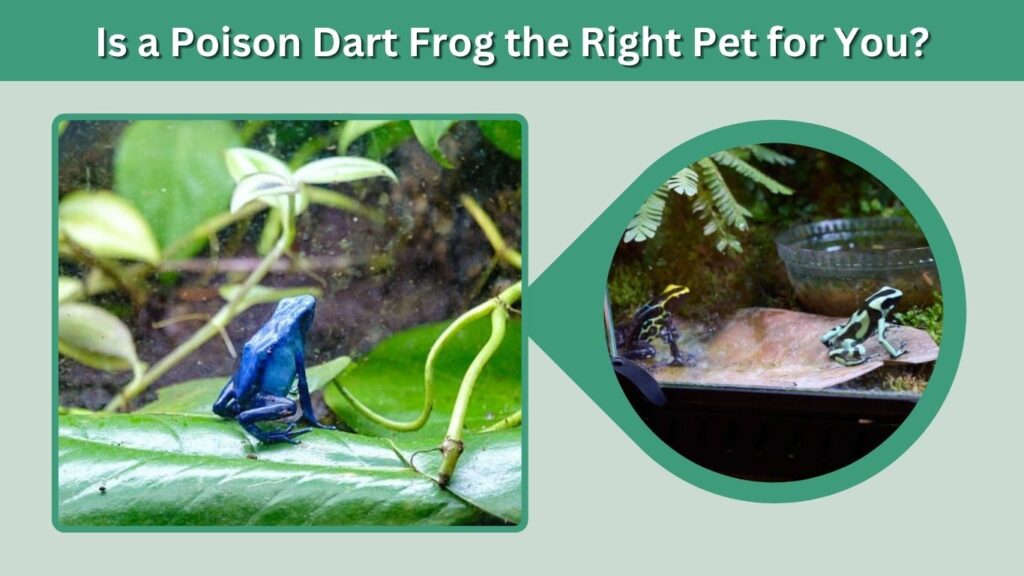
A poison dart frog may be right for you if you enjoy creating natural terrariums and watching small animals behave in a beautiful habitat. They are quiet, colorful, and active during the day.
However, they are not right for everyone. They require live food, careful humidity control, limited handling, and long-term care. If you want a pet you can hold often, a poison dart frog is not the best choice.
FAQs
Are poison dart frogs poisonous as pets?
Captive-bred poison dart frogs are usually not poisonous because they do not eat the same wild insects that create toxins. However, they should still be handled as little as possible because their skin is delicate and sensitive.
What do poison dart frogs eat as pets?
Pet poison dart frogs eat tiny live insects such as flightless fruit flies, springtails, pinhead crickets, and small isopods. Their food should be dusted with proper vitamin and calcium supplements.
How much does a poison dart frog cost?
The frog itself may cost less than the full habitat setup. A terrarium, live plants, substrate, lighting, feeder insects, supplements, and misting tools can make the total cost higher than expected.
How long do poison dart frogs live?
Many poison dart frogs live around 8 to 15 years in captivity with proper care. Their lifespan depends on species, diet, humidity, temperature, cleanliness, and overall habitat quality.
Can you touch a poison dart frog?
It is best not to touch a poison dart frog unless necessary. Their skin can absorb oils, salt, soap, lotion, and chemicals from human hands. They are best kept as display pets.
