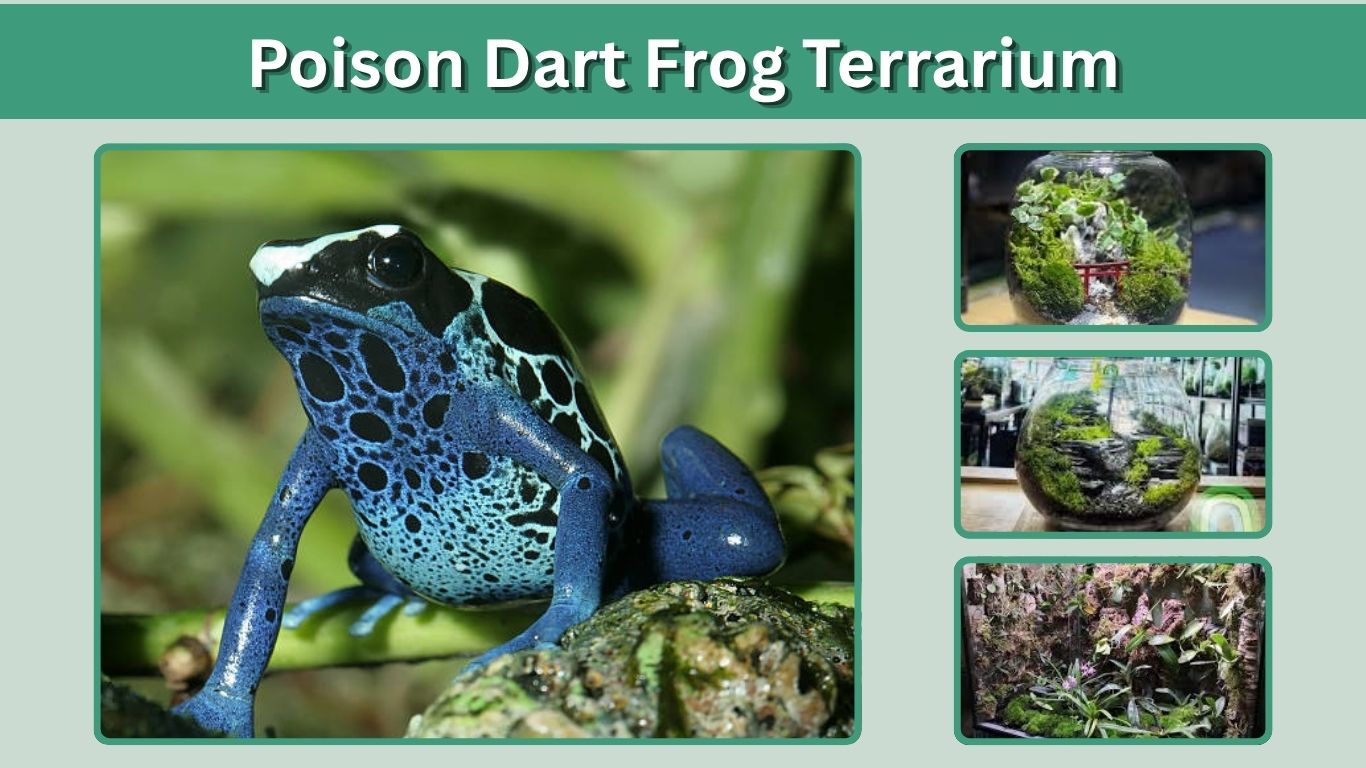
A poison dart frog terrarium should look and feel like a small tropical rainforest. These colorful frogs need high humidity, safe plants, leaf litter, hiding places, and a stable environment to stay healthy. A good terrarium is not just decoration; it supports the frog’s comfort, feeding, and natural behavior. With the right setup, a dart frog terrarium can become a beautiful living display.
What Is a Poison Dart Frog Terrarium?
A poison dart frog terrarium is a glass enclosure designed to copy the warm, humid habitat these frogs need. It usually includes live plants, moist substrate, drainage, leaf litter, and small cleanup insects such as springtails and isopods.
More Than a Simple Tank
A dart frog terrarium is different from a basic pet tank. These frogs are sensitive to dry air, poor ventilation, dirty conditions, and unsafe materials. Their enclosure must support humidity while also staying fresh and clean.
A proper terrarium gives poison dart frogs:
- Moist hiding places
- Safe climbing surfaces
- Stable humidity
- Tiny hunting areas
- Natural plant cover
- A secure space to explore
Best for Display, Not Handling
Poison dart frogs are best kept as display pets. Their terrarium should allow you to watch them without disturbing them. They have delicate skin and should not be handled unless absolutely necessary.
Poison Dart Frog Terrarium Size
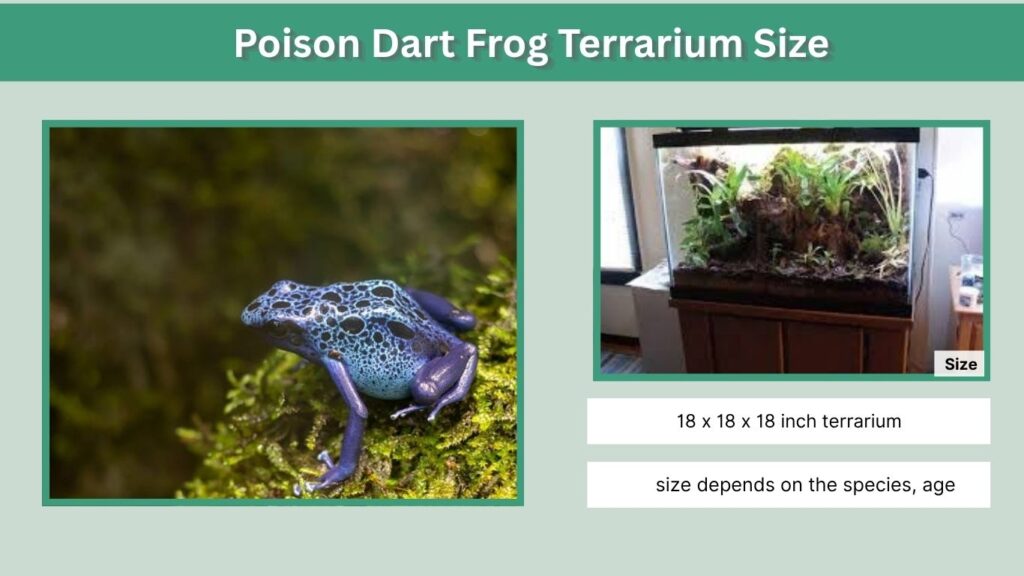
Choosing the right terrarium size is one of the most important steps. A larger enclosure usually gives better humidity control, more planting space, and more room for natural behavior.
Minimum Terrarium Size
For a small pair of many commonly kept poison dart frogs, an 18 x 18 x 18 inch terrarium is often used as a starting size. However, the best size depends on the species, age, activity level, and number of frogs.
Some species are bold and active, while others need more cover and space. Before buying frogs, research the exact species you want to keep.
Bigger Is Usually Better
A larger terrarium makes it easier to create temperature and humidity gradients. It also allows more plants, leaf litter, cork bark, and hiding spots. More space can reduce stress, especially if you keep more than one frog.
Good terrarium size planning should consider:
- Number of frogs
- Adult size of the species
- Territorial behavior
- Plant growth
- Feeding space
- Ventilation
- Hiding areas
Poison Dart Frog Terrarium Setup
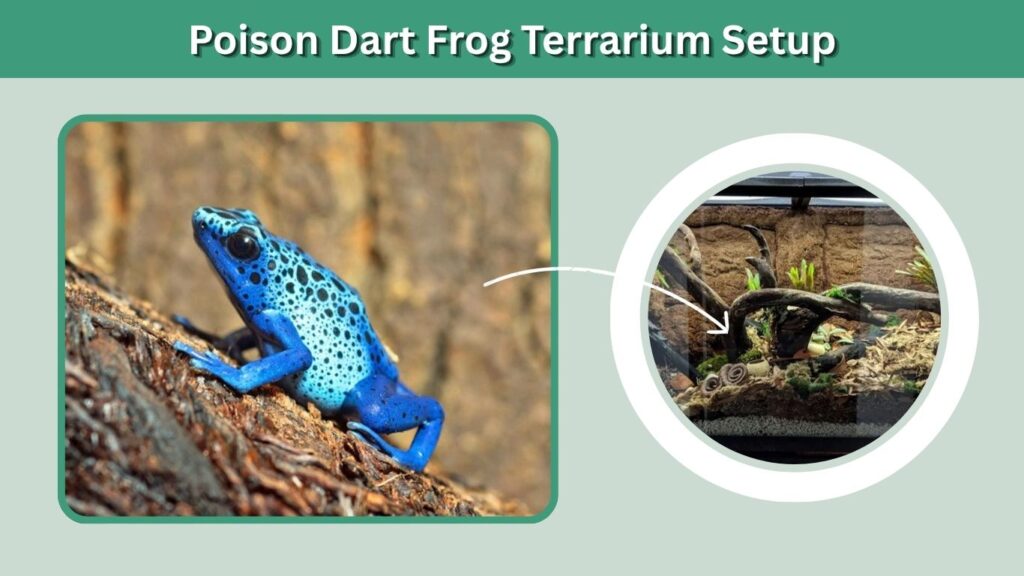
A successful poison dart frog terrarium setup starts from the bottom and works upward. The layers help control moisture, support plants, and keep the enclosure healthy.
Basic Terrarium Layers
The bottom layer is usually a drainage layer. This catches extra water from misting and prevents the substrate from becoming soaked. Above that, a mesh barrier keeps soil from falling into the drainage area. Then comes the substrate, leaf litter, plants, and decorations.
| Terrarium Part | Purpose |
|---|---|
| Glass enclosure | Holds humidity and keeps frogs secure |
| Drainage layer | Prevents soggy substrate |
| Barrier mesh | Separates soil from drainage |
| Substrate | Supports plants and moisture |
| Leaf litter | Provides hiding places and microfauna habitat |
| Live plants | Adds cover and holds humidity |
| Cork bark/wood | Creates climbing and hiding areas |
| Lighting | Supports plant growth and day-night cycle |
| Hygrometer | Measures humidity |
| Thermometer | Measures temperature |
Step-by-Step Setup
Start with a clean glass terrarium. Add a drainage layer using clay balls or another vivarium-safe material. Place a mesh barrier above it, then add a frog-safe substrate mix. After that, add cork bark, wood, stones, plants, and leaf litter.
A simple setup order:
- Clean and inspect the terrarium.
- Add the drainage layer.
- Place the mesh barrier.
- Add moist substrate.
- Add cork bark and hardscape.
- Plant safe tropical plants.
- Add leaf litter.
- Add springtails and isopods.
- Install lighting and monitoring tools.
- Let the terrarium settle before adding frogs.
Poison Dart Frog Terrarium Plants
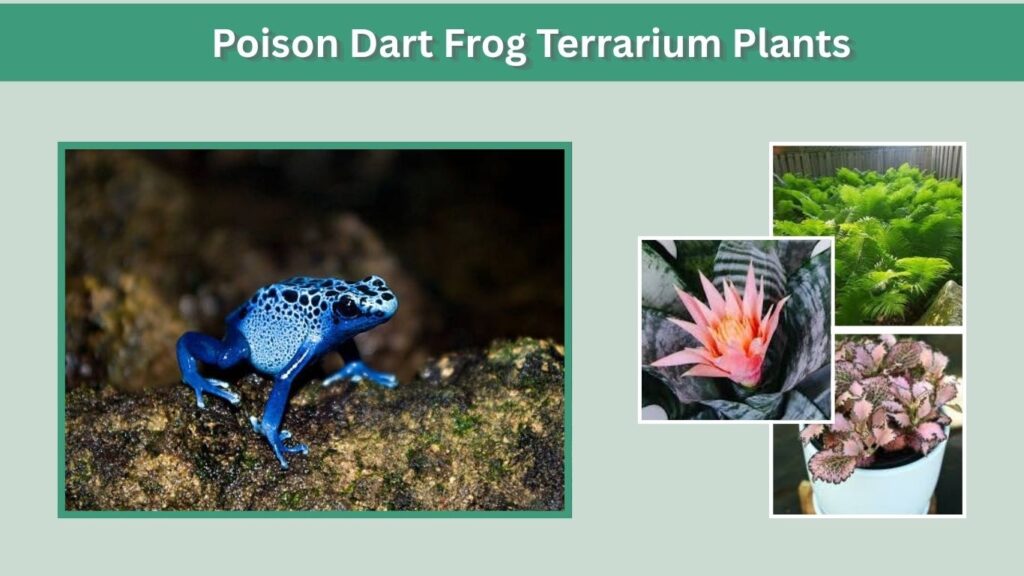
Live plants are one of the best parts of a dart frog terrarium. They make the enclosure look natural and help maintain humidity. They also give frogs places to hide, climb, and rest.
Best Plants for a Dart Frog Terrarium
The best plants are small tropical plants that enjoy warmth and moisture. They should be pesticide-free and safe for amphibians. Many keepers rinse plants carefully and quarantine them before adding them to the enclosure.
Popular plant choices include:
- Pothos
- Bromeliads
- Ferns
- Fittonia
- Peperomia
- Creeping fig
- Small philodendrons
- Mosses
- Begonias
- Tropical vines
Why Bromeliads Are Popular
Bromeliads are especially popular in poison dart frog terrariums because they hold water between their leaves and create natural hiding spots. Some dart frog species use bromeliads for resting, calling, and breeding behavior.
Plant Placement Tips
Place taller plants toward the back and smaller plants near the front. This creates depth and keeps the frogs visible. Use plants to create cover, but avoid making the terrarium so crowded that feeding and cleaning become difficult.
Poison Dart Frog Terrarium Build
Building a dart frog terrarium is about balancing beauty and function. A terrarium can look amazing, but it must still be safe and practical for the frogs.
Create a Natural Layout
Think of the terrarium as a small forest floor. Use different heights, textures, and hiding spots. Cork bark, branches, leaf litter, and plants can make the enclosure feel more natural.
Good design features include:
- Open feeding areas
- Dense plant cover
- Shaded hiding places
- Climbing surfaces
- Moist leaf litter zones
- Easy access for maintenance
Add a Background
A background can make the terrarium look more complete. Many keepers use cork panels, foam backgrounds, or planted backgrounds. A textured background also gives climbing plants a place to grow.
Make sure any background material is safe, sealed properly, and fully cured before frogs are added.
Poison Dart Frog Terrarium Ideas
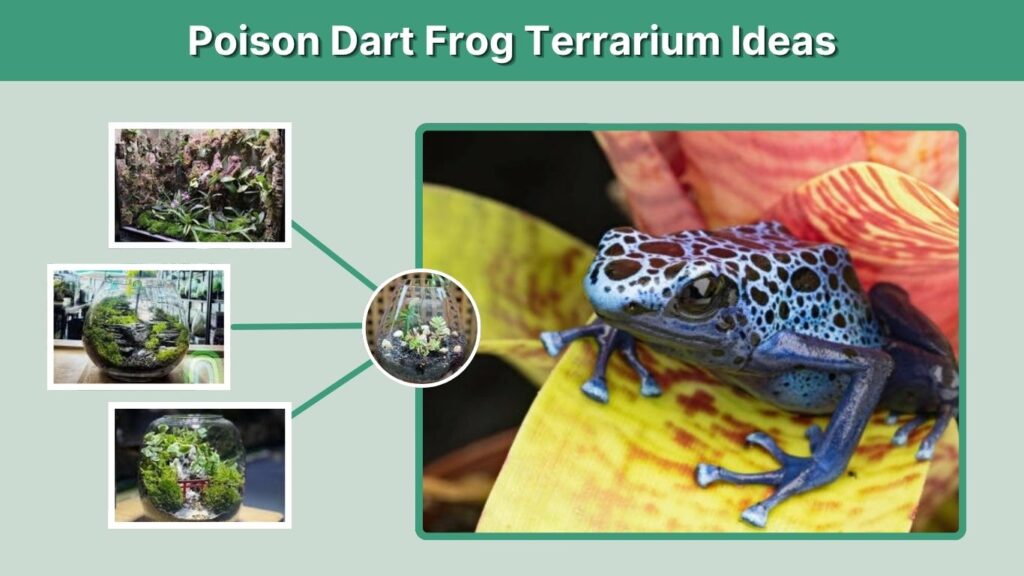
There are many ways to design a poison dart frog terrarium. The best ideas are attractive, natural, and easy to maintain.
Rainforest Floor Terrarium
This is one of the most common designs. It includes thick leaf litter, low plants, cork bark, and moist substrate. It works well for many terrestrial dart frogs that spend much of their time near the ground.
Vertical Jungle Terrarium
A vertical jungle design uses climbing plants, cork bark panels, branches, and bromeliads. This style is great for frogs that enjoy climbing and using higher spaces.
Mossy Green Terrarium
A mossy terrarium can look beautiful, but moss can be tricky to maintain. It needs moisture, good light, and the right airflow. Use moss carefully and do not rely on it as the only ground cover.
Natural Display Terrarium
A natural display terrarium focuses on balance. It has enough open space to see the frogs, enough plants to make them feel secure, and enough leaf litter to support natural behavior.
Poison Dart Frog Terrarium With Waterfall
A waterfall can make a poison dart frog terrarium look beautiful, but it is not always necessary. In fact, it can create problems if it is not designed carefully.
Are Waterfalls Good for Dart Frogs?
A small waterfall can help humidity and add movement to the enclosure. However, dart frogs do not need deep water. They are not strong swimmers, and deep water areas can be dangerous.
Waterfall Safety Tips
If you add a waterfall, keep the water shallow and easy to escape from. Make sure there are no strong currents, deep pools, sharp rocks, or pump openings where frogs could get trapped.
Important waterfall rules:
- Keep water areas shallow.
- Cover pump intakes safely.
- Use only frog-safe materials.
- Avoid strong water flow.
- Clean the water area regularly.
- Make sure frogs can climb out easily.
Poison Dart Frog Habitat Requirements
The best poison dart frog habitat is warm, humid, planted, and secure. It should stay stable from day to day.
Humidity and Temperature
Poison dart frogs need high humidity. Many commonly kept species do well with humidity around 80% or higher, but exact needs vary by species. The enclosure should be moist without becoming dirty, stagnant, or soaked.
Temperature should stay in a safe range for the species. Dart frogs can be sensitive to overheating, so strong heat lamps are usually not needed unless the room is too cool.
Lighting and Ventilation
Lighting should support plant growth and create a natural day-night cycle. LED plant lights are commonly used because they provide brightness without too much heat.
Ventilation is also important. A sealed terrarium may hold humidity, but poor airflow can lead to mold, bad smells, and unhealthy air. The goal is moist but fresh air.
Poison Dart Frog Terrarium Kits
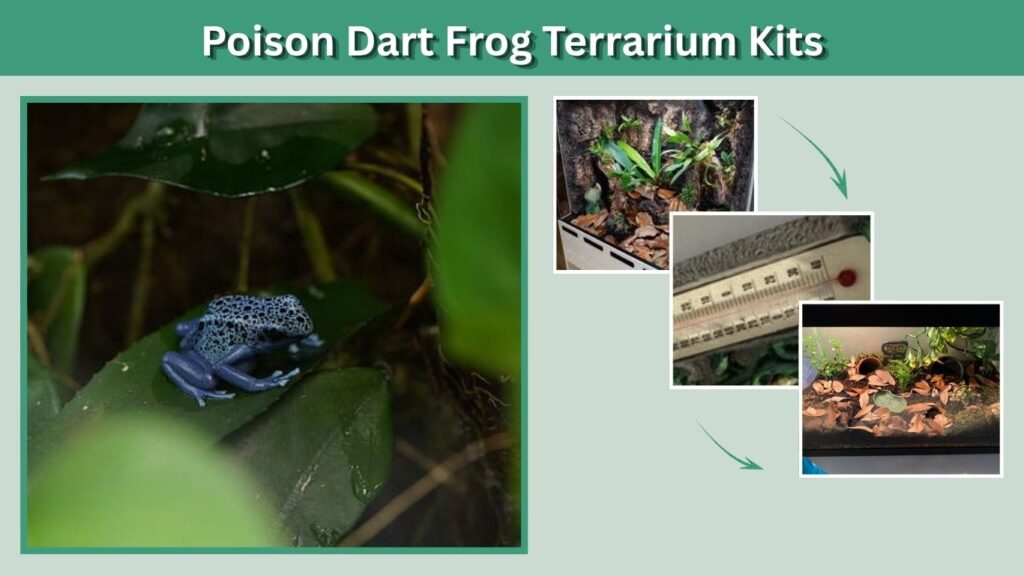
Poison dart frog terrarium kits can be useful for beginners, but not every kit includes everything needed. Some kits are made for general reptiles, not amphibians.
What a Good Kit Should Include
A good terrarium kit should include a suitable glass enclosure, drainage materials, safe substrate, lighting, and basic monitoring tools. Some kits may also include plants, leaf litter, and decorations.
Before buying, check whether the kit includes:
- Proper terrarium size
- Drainage layer materials
- Frog-safe substrate
- Secure lid
- Lighting
- Thermometer
- Hygrometer
- Leaf litter
- Plant-safe setup materials
What Kits May Not Include
Many kits do not include live plants, springtails, isopods, feeder insects, supplements, or misting systems. You may need to buy these separately. Always compare the kit contents with the needs of the frog species you plan to keep.
Poison Dart Frog Terrarium for Sale
When looking for a poison dart frog terrarium for sale, choose quality over price. A cheap enclosure may not hold humidity well, may have poor ventilation, or may be difficult to clean.
Buying a New Terrarium
A new terrarium is usually safer because it has no unknown chemical residue, parasites, or damage. Look for a strong glass enclosure with secure doors, ventilation, and enough space for plants and frogs.
Buying a Used Terrarium
A used terrarium can save money, but it must be cleaned carefully. Avoid tanks that previously held sick animals or were cleaned with harsh chemicals. Check for cracks, broken locks, rusted mesh, and poor sealing.
Common Terrarium Mistakes to Avoid
Many poison dart frog problems start with the enclosure. A beautiful terrarium is not enough if the conditions are unsafe.
Mistakes That Can Harm Frogs
Avoid dry substrate, deep water, poor airflow, unsafe plants, strong heat lamps, and overcrowding. Do not add frogs before the terrarium is stable. Do not use wild-collected wood, leaves, or soil unless you are sure they are safe and chemical-free.
FAQs
What size terrarium does a poison dart frog need?
The right size depends on the species and number of frogs. Many keepers use an 18 x 18 x 18 inch terrarium or larger for a small pair. Bigger enclosures are often better because they allow more plants, hides, and stable humidity.
What plants are best for a poison dart frog terrarium?
Good plants include pothos, bromeliads, ferns, fittonia, peperomia, creeping fig, mosses, and small tropical vines. Choose pesticide-free plants that like humidity and provide good cover for the frogs.
Can a poison dart frog terrarium have a waterfall?
Yes, but it must be shallow and safe. Dart frogs do not need deep water and may drown if they cannot escape. Any waterfall should have gentle flow, covered pump areas, and easy exits.
Are poison dart frog terrarium kits worth buying?
Terrarium kits can be useful for beginners, but check what is included. Some kits may not include live plants, feeder insects, springtails, isopods, supplements, or misting tools. Make sure the kit is designed for humid amphibian habitats.
How do you keep a poison dart frog terrarium humid?
Use a glass enclosure, moist substrate, live plants, leaf litter, and regular misting. A hygrometer helps track humidity. The tank should be humid but still have enough ventilation to prevent stale air and mold problems.
