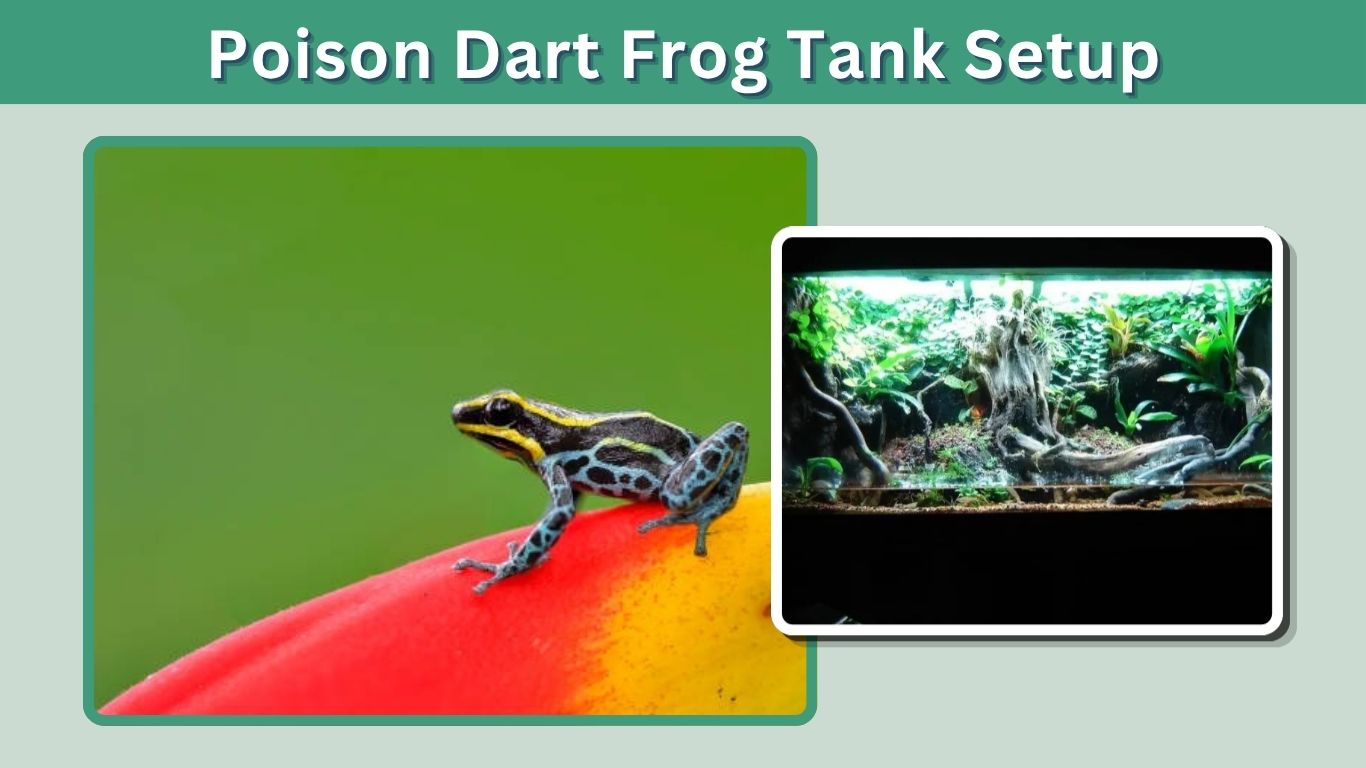
A poison dart frog tank setup should copy a warm, humid rainforest floor. These frogs are small, colorful, and active during the day, but they are also sensitive to dry air, dirty conditions, overheating, and poor enclosure design. A proper setup includes a glass terrarium, drainage layer, safe substrate, live plants, leaf litter, hides, lighting, humidity control, and tiny feeder insects.
Step 1: Choose the Right Tank
The first step is choosing a safe enclosure. Poison dart frogs do best in a glass terrarium or vivarium because glass helps hold humidity and allows you to watch the frogs easily.
Pick a Glass Terrarium
A front-opening glass terrarium is often easier to maintain than a top-opening tank. It gives better access for feeding, misting, trimming plants, and cleaning. A secure lid is important because dart frogs are small and can escape through tiny gaps.
For a small group or pair, many keepers use a tank around 18 x 18 x 18 inches or larger, depending on the species. Bigger is usually better because it gives more room for plants, hides, and stable humidity.
Avoid Overcrowding
Do not add too many frogs to a small tank. Overcrowding can cause stress, fighting, food competition, and health problems. Some poison dart frog species are more territorial than others, so research the exact species before deciding how many to keep.
Step 2: Clean the Tank Before Setup
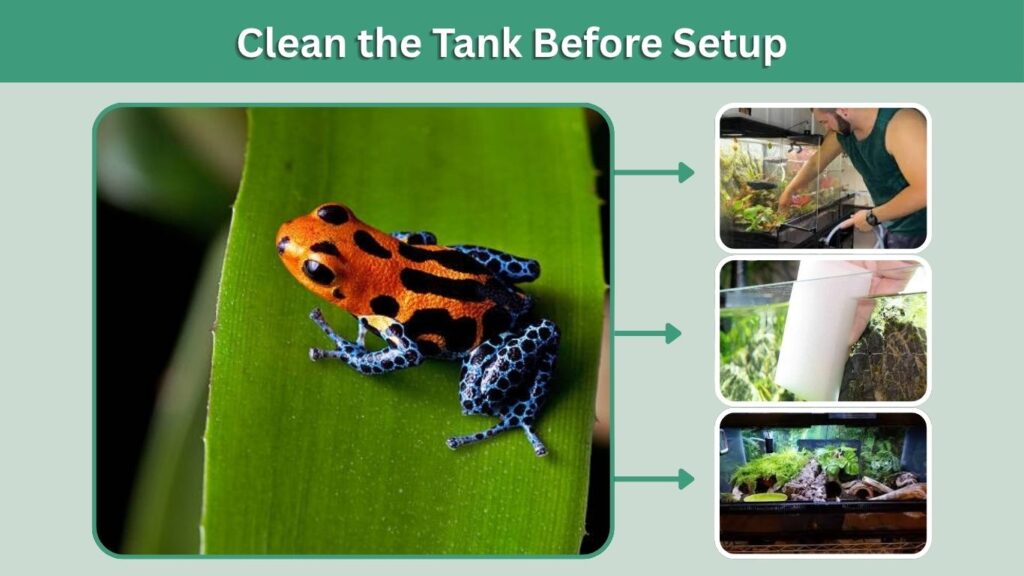
Before adding anything to the tank, clean it properly. This removes dust, factory residue, and possible contaminants.
Use Safe Cleaning Methods
Rinse the tank with clean water and wipe the glass with a clean cloth. Avoid strong household cleaners, scented sprays, bleach residue, or soap that may remain on the glass. Amphibians have sensitive skin, and chemical residue can harm them.
Check for Sharp Edges
Before building the setup, inspect the tank for sharp glass edges, broken mesh, loose doors, or gaps. A safe enclosure should close properly and have enough ventilation without allowing the frogs or feeder insects to escape.
Step 3: Add a Drainage Layer
A drainage layer is one of the most important parts of a poison dart frog tank setup. These frogs need high humidity, but the substrate should not become swampy or rotten.
Why Drainage Matters
When you mist the tank, extra water moves down through the substrate. A drainage layer keeps that water below the soil, preventing the roots and substrate from staying too wet. This helps reduce bad smells, mold problems, and unhealthy conditions.
Best Drainage Materials
Common drainage materials include lightweight clay balls, aquarium-safe gravel, or other vivarium drainage media. Add a layer at the bottom of the tank. The depth depends on the size of the enclosure, but it should be enough to hold extra water below the substrate.
Step 4: Add a Barrier Layer
After the drainage layer, add a barrier between the drainage material and the substrate. This keeps soil from falling down into the drainage layer.
Use Mesh or Screen
A plastic mesh screen or safe landscape fabric can work as a barrier. Cut it to fit the tank floor and place it over the drainage layer. The barrier should let water pass through while holding the substrate above it.
Keep It Flat
Make sure the barrier sits flat and covers the drainage layer well. If there are large gaps, substrate may fall through and reduce the effectiveness of the drainage system.
Step 5: Add Safe Substrate
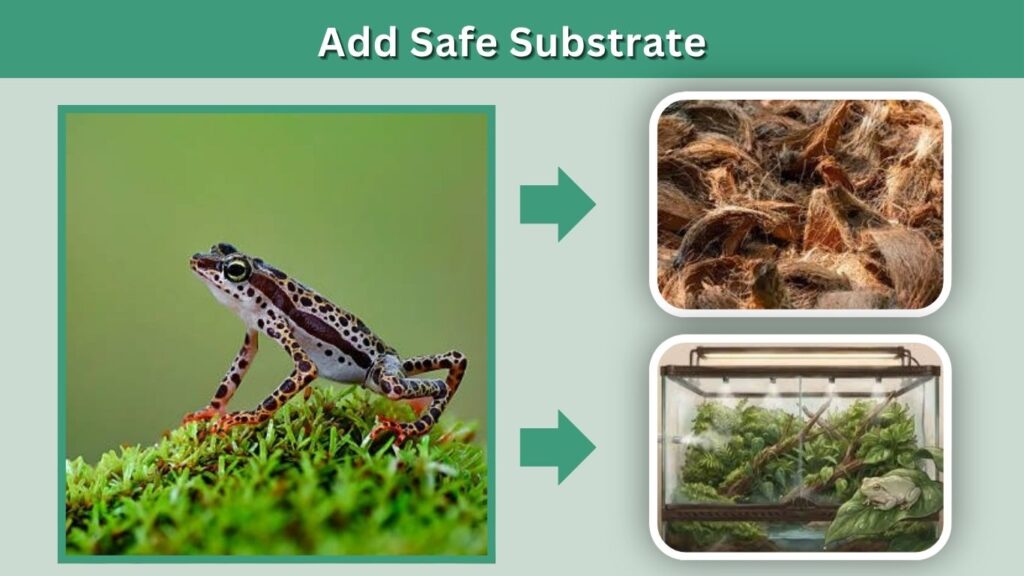
The substrate is the “floor” of the frog tank. It should hold moisture, support plants, and remain safe for frogs.
Choose a Frog-Safe Mix
Many dart frog keepers use a tropical vivarium substrate or bioactive substrate mix. It may include materials such as coconut fiber, orchid bark, sphagnum moss, charcoal, and leaf compost. The goal is to create a moist but breathable layer.
Avoid cedar, pine, strong-smelling wood, sharp gravel, sand, or chemically treated soil. These materials can be unsafe for amphibians.
Create Natural Slopes
You can make the tank look more natural by creating small slopes and raised areas. This gives the frogs different places to explore and helps water move away from certain spots.
Step 6: Add Hardscape
Hardscape means the solid decorations inside the tank, such as cork bark, branches, stones, seed pods, and wood pieces. These items create climbing areas and hiding places.
Use Cork Bark and Safe Wood
Cork bark is popular because it resists mold better than many woods and gives frogs places to hide. Pieces of driftwood or safe reptile wood can also make the tank more natural.
Create Hiding Places
Poison dart frogs feel safer when they have many places to hide. Add cork tubes, bark pieces, coconut hides, plant cover, and small caves. A tank with no hiding spots can make frogs stressed, even if everything else is correct.
Step 7: Add Live Plants
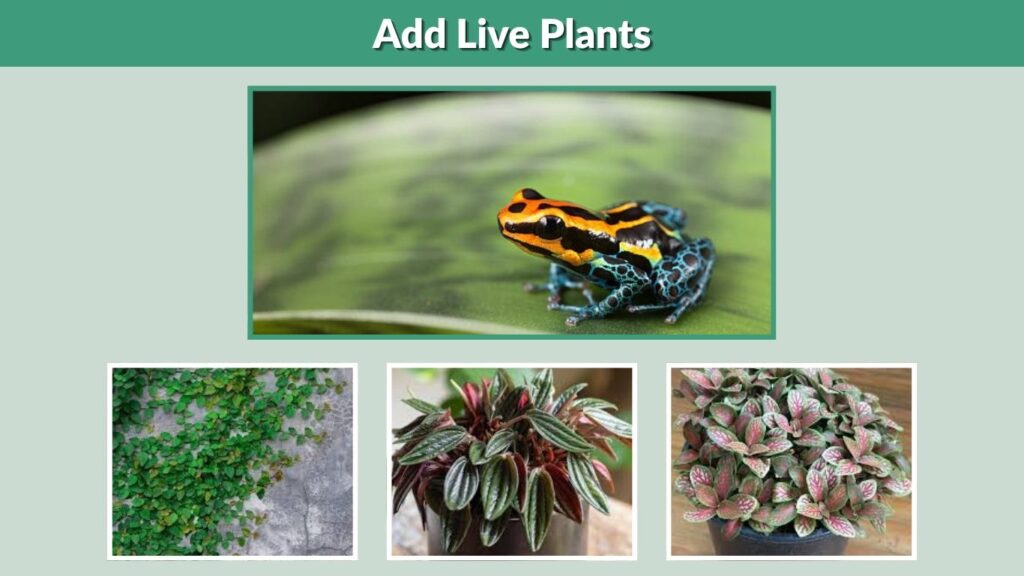
Live plants are very useful in a poison dart frog tank. They help hold humidity, improve the look of the enclosure, and provide natural cover.
Best Plants for Dart Frog Tanks
Choose small tropical plants that enjoy humidity. Good options may include pothos, bromeliads, ferns, creeping fig, peperomia, fittonia, and small philodendrons. Always make sure plants are pesticide-free before adding them.
Plant Before Adding Frogs
It is best to plant the tank before introducing frogs. This gives plants time to root and adjust. A planted tank also gives the frogs immediate shelter once they are added later.
Step 8: Add Leaf Litter
Leaf litter is very important for poison dart frogs. In nature, many dart frogs live among fallen leaves on the forest floor.
Why Leaf Litter Helps
Leaf litter gives frogs hiding spots, keeps the substrate moist, and supports microfauna like springtails and isopods. It also makes the tank look more natural.
Use Safe Dried Leaves
Use reptile-safe or vivarium-safe dried leaves, such as magnolia, oak, or sea grape leaves. Avoid leaves collected from areas that may have pesticides, road pollution, or chemicals.
Step 9: Add Springtails and Isopods
A bioactive poison dart frog tank often includes springtails and isopods. These tiny creatures help clean up waste, leftover food, mold, and decaying plant matter.
Why Microfauna Are Useful
Springtails are especially helpful because they eat mold and break down organic material. Isopods also help clean the tank, though some species may be better suited than others depending on humidity and frog size.
Add Them Before the Frogs
It is a good idea to add springtails and isopods before adding the frogs. This gives them time to settle into the tank and begin reproducing. A stronger cleanup crew makes the enclosure more stable.
Step 10: Set Up Lighting
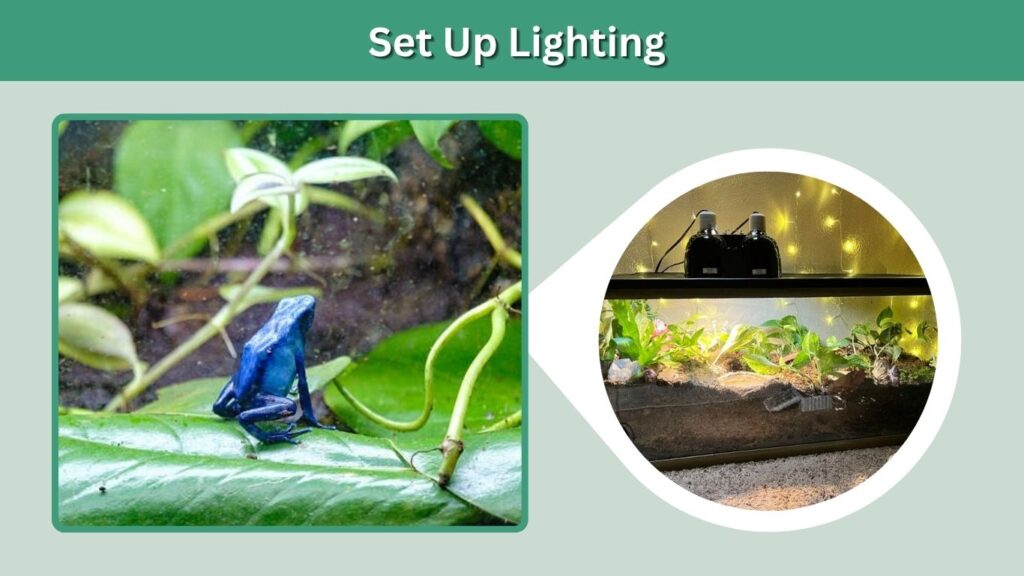
Poison dart frogs do not need intense lighting, but the plants need enough light to grow. A good day-night cycle also helps create a natural routine.
Use Plant-Friendly Lighting
LED plant lights are commonly used for planted vivariums. The light should be bright enough for plants but not so strong that it overheats the tank. Keep the light on a timer for a consistent cycle, usually around 10 to 12 hours per day.
Avoid Overheating
Dart frogs can overheat easily. Do not place strong heat lamps directly over the tank unless the species and room temperature require it. Always measure the temperature inside the tank rather than guessing.
Step 11: Control Temperature and Humidity
Temperature and humidity are two of the most important parts of poison dart frog care. A beautiful tank is not useful if the climate inside is wrong.
| Setup Area | Recommended Goal |
|---|---|
| Tank type | Glass terrarium or vivarium |
| Humidity | High, often around 80–100% |
| Temperature | Moderate tropical range, species-dependent |
| Substrate | Moist, safe, breathable |
| Plants | Live tropical plants |
| Drainage | Required to prevent soggy substrate |
| Lighting | Plant-friendly, low heat |
| Water | Clean, dechlorinated, shallow only |
| Cleanup crew | Springtails and isopods |
| Handling | Avoid unless necessary |
Use a Thermometer and Hygrometer
Place a thermometer and hygrometer inside the enclosure. These tools help you monitor the conditions daily. Do not rely only on how the tank looks or feels.
Mist the Tank
Mist the tank with dechlorinated water to maintain humidity. Some owners use a hand mister, while others install an automatic misting system. The tank should be humid but not stagnant. Good ventilation is still important.
Step 12: Add a Shallow Water Area
Poison dart frogs need moisture, but they are not strong swimmers like aquatic frogs. Deep water can be dangerous.
Keep Water Shallow
Use a shallow water dish or small water area if needed. The frogs should be able to get in and out easily. Always use clean, dechlorinated water.
Do Not Create a Deep Pond
A deep pond is not necessary for most dart frog tanks and can create safety issues. Moist substrate, misting, leaf litter, and humidity are usually more important than a large water feature.
Step 13: Let the Tank Cycle
Do not add frogs immediately after building the tank. A new bioactive setup needs time to settle.
Why Cycling Matters
Cycling gives plants time to root, microfauna time to spread, and humidity levels time to stabilize. It also allows you to spot problems such as mold outbreaks, drainage issues, overheating, or poor ventilation before frogs are inside.
How Long to Wait
Many keepers let the tank run for several weeks before adding frogs. During this time, mist the tank, run the lights, check temperatures, and watch how the plants respond.
Step 14: Prepare Food Before Buying Frogs
Poison dart frogs eat tiny live insects. You should have food ready before bringing frogs home.
Start Fruit Fly Cultures
Flightless fruit flies are one of the most common foods for poison dart frogs. It is wise to keep more than one culture so you have backup food if one culture fails.
Use Supplements
Feeder insects should be dusted with proper calcium and vitamin supplements. This helps prevent nutritional problems and supports long-term health.
Step 15: Add the Frogs Carefully
Once the tank is stable and food is ready, you can add the frogs. This should be done gently and with minimal stress.
Avoid Handling
Do not pick up poison dart frogs with bare hands. Their skin is delicate and can absorb harmful substances. Use a clean container or transfer cup if you need to move them.
Watch Their Behavior
After adding the frogs, watch them closely for the first few days. Healthy frogs should explore, hide, and eventually begin feeding. Some may be shy at first, especially in a new environment.
Step 16: Maintain the Tank
A poison dart frog tank is not a one-time setup. It needs regular care to stay healthy.
Daily Care
Check the temperature, humidity, frog behavior, and food availability. Mist as needed and remove obvious waste or uneaten feeder insects if they build up.
Weekly Care
Trim plants, clean the glass, check the drainage level, inspect equipment, and make sure the cleanup crew is active. A bioactive tank reduces cleaning, but it does not eliminate maintenance.
Common Tank Setup Mistakes
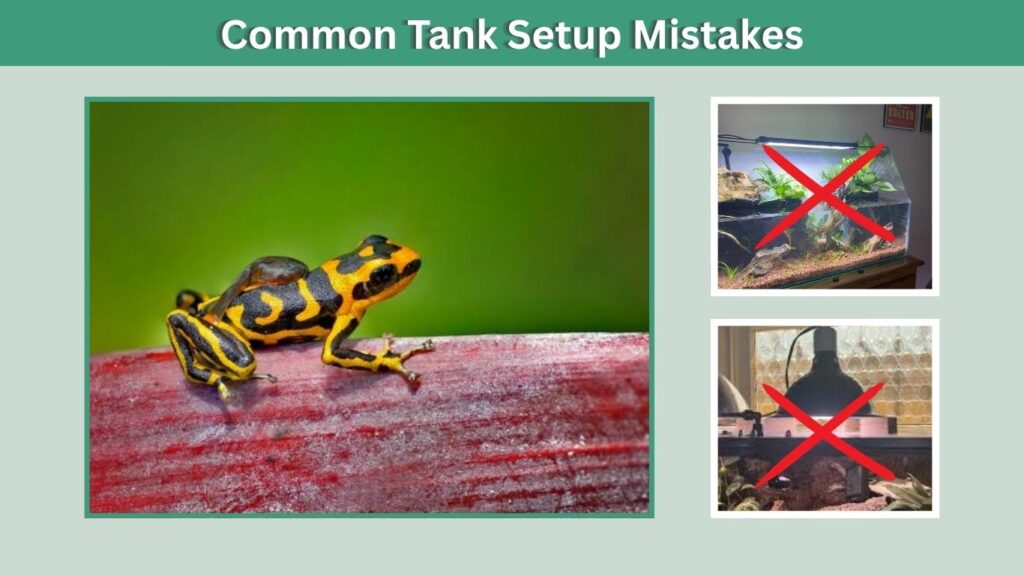
Many beginner problems come from poor planning. Avoiding common mistakes can save money and protect your frogs.
Mistakes to Avoid
Do not use a dry enclosure, deep water, unsafe soil, strong heat lamps, wild-caught insects, or chemical-treated plants. Do not add frogs before the tank is stable. Do not overcrowd the enclosure or mix random species without research.
FAQs
What size tank does a poison dart frog need?
Tank size depends on the species and number of frogs. A small pair may do well in a medium glass terrarium, but larger groups need more space. Bigger tanks are often easier to plant and keep stable.
Do poison dart frogs need a bioactive tank?
They do not absolutely require one, but a bioactive tank is highly recommended. Live plants, leaf litter, springtails, and isopods create a more natural environment and help manage waste and mold.
Do poison dart frogs need heat lamps?
Many poison dart frogs do not need strong heat lamps if the room temperature is suitable. They can overheat easily, so always use a thermometer and research the needs of the exact species.
How humid should a poison dart frog tank be?
Most commonly kept poison dart frogs need high humidity, often around 80–100%. However, the tank should also have good ventilation so the air stays fresh and not stagnant.
When can I add frogs to a new tank?
It is best to let the tank run for several weeks before adding frogs. This allows plants, humidity, temperature, and the cleanup crew to stabilize before the animals are introduced.
