
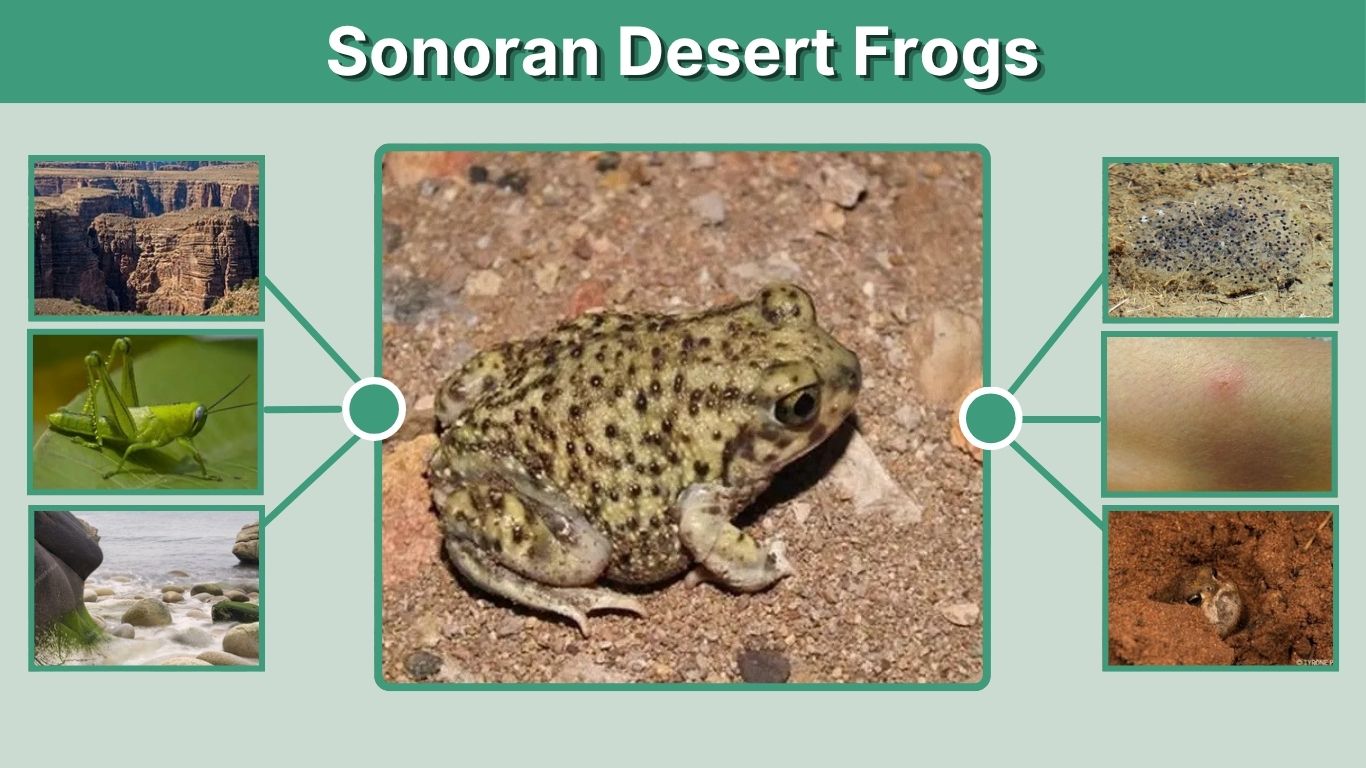
The Sonoran Desert may look too hot and dry for frogs, but several amphibians survive there by following the rhythm of rain. These frogs and toads spend much of the year hidden underground, then appear after summer storms to feed, call, and breed. From the famous Sonoran Desert toad to small tree frogs and leopard frogs, these animals show how life adapts to one of North America’s most remarkable desert regions.
What Are Sonoran Desert Frogs?
Sonoran Desert frogs are amphibians that live in or around the Sonoran Desert, which stretches across parts of Arizona, California, Sonora, Baja California, and nearby areas. Although many people casually call them frogs, some of the best-known species are actually toads.
Frogs and toads both belong to the amphibian group, but they often look and behave differently. Frogs usually have smoother skin and are more closely tied to water. Toads often have drier, bumpier skin and can tolerate drier conditions better. In the Sonoran Desert, both types depend on seasonal water, temporary pools, streams, desert washes, and summer monsoon rains.
Saguaro National Park notes that amphibians live part of their life in water and part on land, and young amphibians usually begin life in water before changing through metamorphosis into air-breathing adults.
How Frogs Survive in the Sonoran Desert
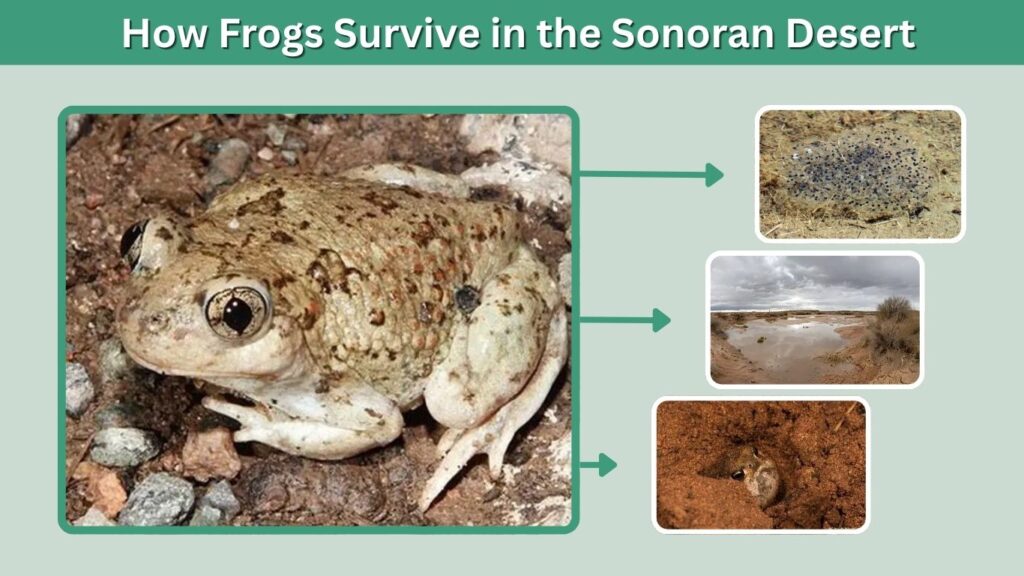
The biggest challenge for desert frogs is water. Amphibians have sensitive skin that can dry out quickly, so they must avoid the hottest and driest conditions. Many Sonoran Desert frogs solve this problem by staying hidden during most of the year.
Some bury themselves underground. Others shelter in rock cracks, damp soil, burrows, or streamside vegetation. When monsoon rains arrive, they emerge quickly. What looked like a quiet desert can suddenly become noisy with frog and toad calls.
Survival Strategies
Sonoran Desert frogs survive by using several clever strategies:
- Staying underground during dry periods
- Becoming active mainly at night
- Breeding quickly after rain
- Using temporary pools before they dry
- Laying many eggs at once
- Feeding heavily during wet periods
- Hiding in cool, moist shelters
- Using camouflage to avoid predators
These adaptations allow amphibians to live in a place where open water may disappear for much of the year.
Common Frogs and Toads of the Sonoran Desert
The Sonoran Desert has several amphibians, including toads, tree frogs, and leopard frogs. Some are common after rain, while others are tied to streams, canyons, or protected habitats.
| Species | Type | Key Feature |
|---|---|---|
| Sonoran Desert toad | Toad | Very large, toxic skin secretions |
| Red-spotted toad | Toad | Small to medium, red-orange spots |
| Couch’s spadefoot | Spadefoot toad | Appears after heavy rain |
| Desert spadefoot | Spadefoot toad | Strong digging ability |
| Canyon tree frog | Tree frog | Camouflaged on rocks |
| Lowland leopard frog | Frog | Lives near pools and streams |
| Chiricahua leopard frog | Frog | Threatened species with conservation concern |
Not every species is found everywhere in the desert. Some need rocky canyons, some need temporary rain pools, and others need more permanent water.
Sonoran Desert Toad
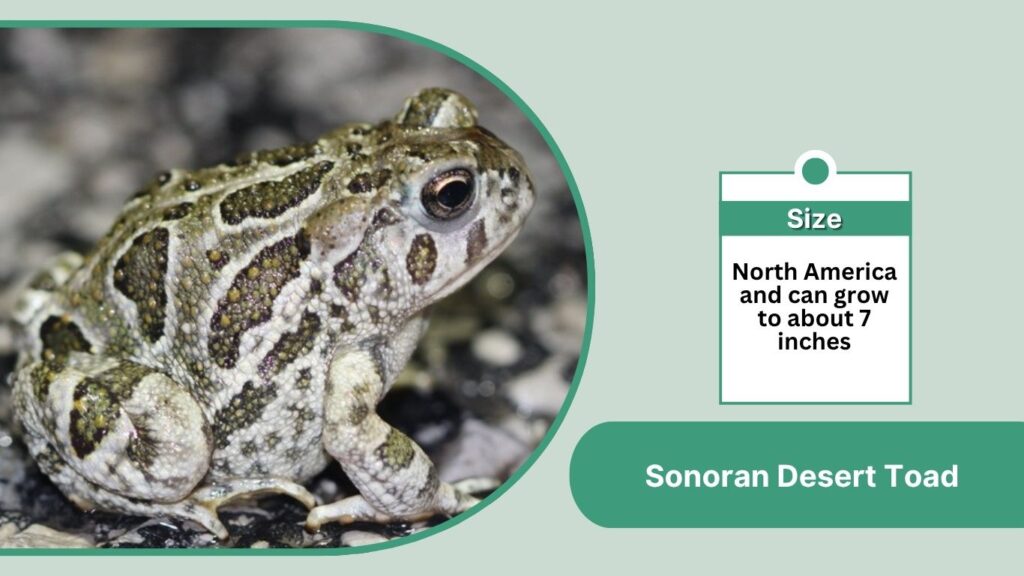
The Sonoran Desert toad, also known as the Colorado River toad, is the most famous amphibian of the region. It is one of the largest toads native to North America and can grow to about 7 inches or more. The Arizona-Sonora Desert Museum describes adults as green to greenish-gray above with a creamy white underside.
This toad becomes especially active during the summer monsoon season. It may appear in yards, roads, washes, and near water sources after rain. Because of its size and chemical defenses, it is easy to recognize.
Why It Is Famous
The Sonoran Desert toad is famous for its powerful skin secretions. Large glands behind the eyes release toxins that help protect it from predators. These secretions can be dangerous if ingested by pets, especially dogs.
People should never lick, handle, or disturb these toads. The National Park Service has warned visitors not to lick Sonoran Desert toads because their secretions are powerful and can be dangerous.
Are Sonoran Desert Frogs Poisonous?
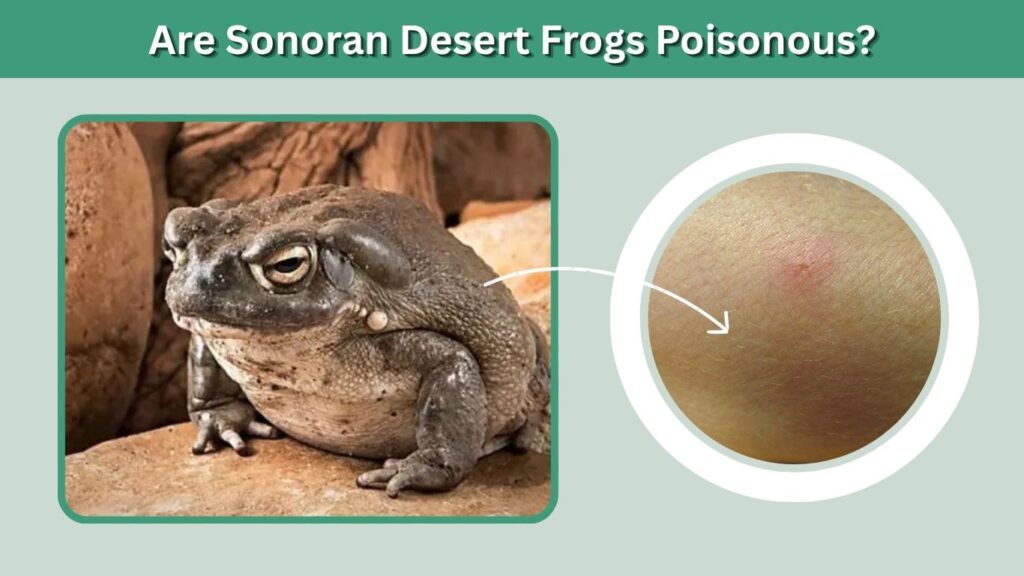
Some Sonoran Desert amphibians produce defensive toxins. The Sonoran Desert toad is the most important example. Its toxin is not dangerous simply because the toad is nearby, but it can be harmful if it gets into the mouth, eyes, or broken skin.
Dogs are at particular risk because they may bite, lick, or pick up a toad. If a dog mouths a Sonoran Desert toad, it may foam at the mouth, drool, vomit, stagger, or show serious poisoning symptoms. This can become an emergency.
What to Do Around Toxic Toads
If you see a large Sonoran Desert toad:
- Do not touch it with bare hands.
- Keep dogs and cats away.
- Do not allow children to handle it.
- Do not lick or disturb it.
- Move pets indoors during monsoon nights.
- Use gloves or a tool only if relocation is necessary.
- Contact a wildlife expert if unsure.
If a pet mouths a toad, rinse the pet’s mouth carefully from the side so water does not go down the throat, then contact a veterinarian immediately.
Red-Spotted Toad
The red-spotted toad is another desert amphibian often seen after rains. It is smaller than the Sonoran Desert toad and is known for reddish or orange spots on its body. It often lives near rocky washes, canyons, and desert pools.
This toad may breed in temporary pools created by rain. Because desert pools can dry quickly, the eggs and tadpoles must develop fast. This rapid life cycle is common among desert amphibians.
Identification Clues
A red-spotted toad may have:
- Small to medium body size
- Pale gray, tan, or brown skin
- Red or orange spots
- Warty texture
- Activity after rainfall
- Preference for rocky areas and washes
It is generally less famous than the Sonoran Desert toad, but it is an important part of desert food webs.
Spadefoot Toads
Spadefoot toads are some of the most fascinating amphibians in the desert. They get their name from a hard, spade-like structure on the hind feet that helps them dig into soil. This digging ability allows them to hide underground during dry months.
Couch’s spadefoot and desert spadefoot are examples of amphibians that may appear after strong rains. Their breeding can happen very quickly in temporary pools. In some cases, tadpoles must grow fast before the water disappears.
Why They Appear After Rain
Spadefoots may stay hidden underground for long periods. When heavy rain soaks the soil, they emerge to call, mate, lay eggs, and feed. Their calls can be surprisingly loud on wet desert nights.
This sudden appearance is one reason people may think frogs “come out of nowhere” after monsoon storms.
Canyon Tree Frog
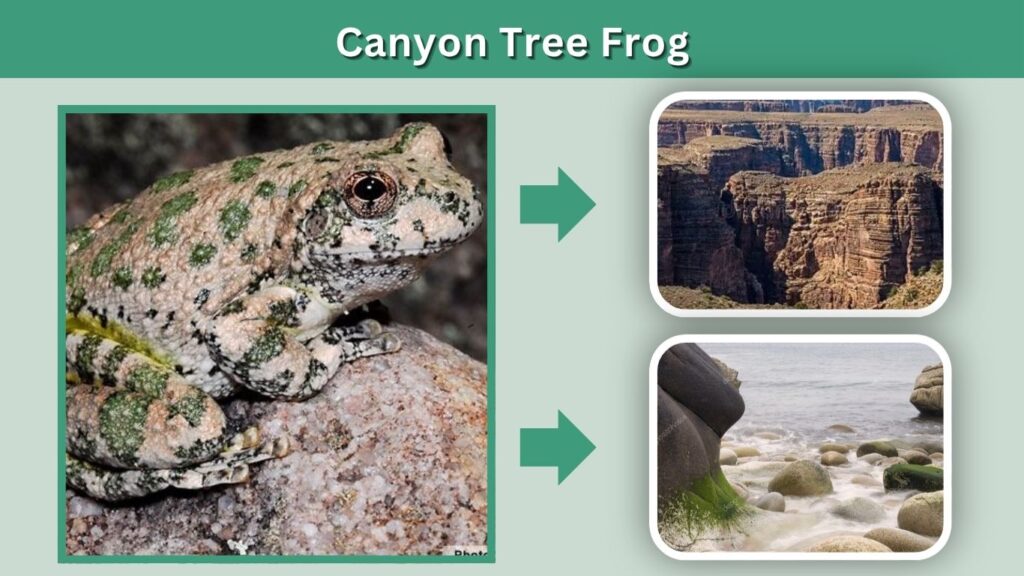
The canyon tree frog is usually found around rocky canyons, streams, and water-worn rocks. It is excellent at camouflage and can match the color of stones, ranging from light gray to brown. Saguaro National Park’s stream and riparian species guide describes the canyon tree frog as a species that clings to rocks with adhesive toe pads and lives in rocky canyons with water flow.
Unlike large toads that may wander after rain, canyon tree frogs are more closely linked to rocky water habitats. They can be difficult to see until they move or call.
How It Survives
The canyon tree frog avoids drying out by staying near moist canyon environments. Its camouflage protects it from birds, snakes, and other predators. Its toe pads allow it to grip rocks and move around wet canyon surfaces.
Leopard Frogs of the Sonoran Desert
Leopard frogs are true frogs with spotted bodies and strong jumping legs. In the Sonoran Desert region, lowland leopard frogs may live in streams, pools, and wetland habitats. The NPS stream guide notes that lowland leopard frogs live in permanent and temporary desert streams and pools.
The Chiricahua leopard frog is another important species in the broader region. It has faced serious conservation challenges. The Arizona-Sonora Desert Museum notes that the Chiricahua leopard frog was listed as Threatened under the Endangered Species Act in 2002.
Why Leopard Frogs Matter
Leopard frogs are important because they depend on healthy water habitats. When streams dry, wetlands disappear, invasive species increase, or water quality declines, leopard frogs can suffer. Their presence can tell scientists something about the health of desert riparian ecosystems.
Monsoon Season and Frog Breeding
The summer monsoon is one of the most important events for Sonoran Desert frogs. Heavy rains create puddles, temporary pools, flowing washes, and damp soil. These conditions allow frogs and toads to come out, breed, and feed.
The breeding window can be short. If pools dry too quickly, tadpoles may not survive. If enough rain falls, thousands of eggs can hatch and develop into young frogs or toads.
What You May Hear at Night
After rain, desert nights may fill with calls. Male frogs and toads call to attract females. Each species has its own sound, from trills and chirps to low calls. The noise can be surprisingly loud near washes, ponds, or temporary rain pools.
These calls are a sign that amphibians are taking advantage of the brief wet season.
What Do Sonoran Desert Frogs Eat?
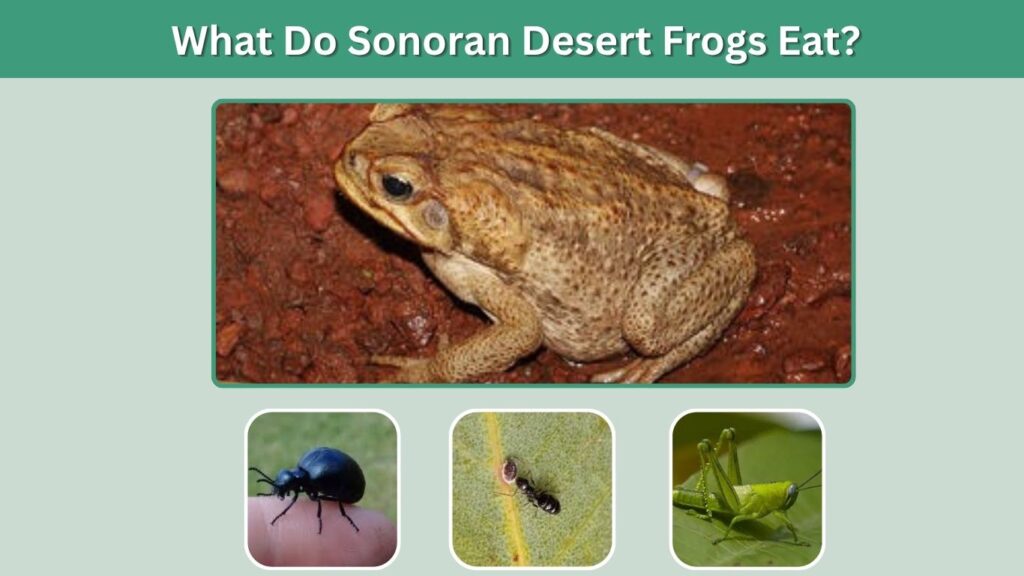
Most Sonoran Desert frogs and toads eat insects and other small invertebrates. Larger toads may eat bigger prey when available. Their diet helps control insect populations during the wet season.
Common foods include:
- Beetles
- Ants
- Crickets
- Grasshoppers
- Moths
- Flies
- Spiders
- Small worms
- Other small arthropods
Tadpoles usually feed on algae, plant matter, and tiny organic particles in water. Their diet changes as they develop into adults.
Predators of Sonoran Desert Frogs
Even toxic toads have predators. Some animals avoid them, but others have ways to handle amphibian prey. Desert frogs and toads may be eaten by snakes, birds, mammals, larger frogs, and aquatic predators when they are tadpoles.
Eggs and tadpoles are especially vulnerable. Temporary pools may contain insects, birds, or other animals that feed on young amphibians. This is why many desert frogs lay large numbers of eggs.
Threats to Sonoran Desert Frogs
Sonoran Desert frogs face several challenges. Some are natural, such as drought and predators. Others are caused by humans, such as habitat loss, road traffic, pollution, invasive species, and water changes.
Because many amphibians rely on water, changes to streams, wetlands, and seasonal pools can affect them strongly. Introduced species, such as bullfrogs and nonnative fish, may also threaten native frogs by eating eggs, tadpoles, or adults.
Major Threats
Important threats include:
- Long droughts
- Loss of wetland habitat
- Road deaths during monsoon movement
- Pollution and pesticides
- Invasive bullfrogs
- Nonnative fish
- Illegal collection
- Disease
- Climate stress
Protecting desert frogs means protecting both dry-land shelters and water habitats.
How to Observe Sonoran Desert Frogs Safely
Seeing frogs and toads after monsoon rain can be exciting, but they should be observed with care. Amphibian skin is sensitive, and some species have toxic secretions. It is best to watch from a distance and avoid handling.
Safe Viewing Tips
To observe safely:
- Use a flashlight from a respectful distance.
- Do not pick up frogs or toads.
- Keep pets away.
- Avoid touching egg masses or tadpoles.
- Do not move animals across long distances.
- Drive slowly on wet nights.
- Never collect wild frogs or toads.
- Leave temporary pools undisturbed.
If a frog or toad is on a road, move it only if safe to do so, and use gloves or a container rather than bare hands.
Sonoran Desert Frogs and the Ecosystem
Frogs and toads are small but important parts of the Sonoran Desert ecosystem. They eat insects, provide food for predators, and connect water habitats with dry desert landscapes. Their seasonal activity shows how strongly desert life depends on rain.
They also remind us that deserts are not empty. Even in hot, dry places, life may be waiting underground for the right moment to emerge.
FAQs
Are there frogs in the Sonoran Desert?
Yes, the Sonoran Desert has frogs and toads. Many remain hidden during dry periods and become active after monsoon rains. Species include the Sonoran Desert toad, red-spotted toad, spadefoot toads, canyon tree frog, lowland leopard frog, and other amphibians tied to streams or seasonal pools.
What is the most famous Sonoran Desert frog?
The most famous species is the Sonoran Desert toad, also called the Colorado River toad. It is one of North America’s largest native toads and is known for its toxic skin secretions. It often appears during summer monsoon season and should not be handled.
Are Sonoran Desert frogs poisonous to dogs?
Some are dangerous to dogs, especially the Sonoran Desert toad. If a dog licks or bites this toad, toxins may cause drooling, foaming, weakness, seizures, or worse. Keep pets away from large toads and contact a veterinarian immediately if exposure occurs.
Why do frogs come out after rain in the desert?
Rain creates temporary pools and moist conditions that frogs and toads need for breeding and movement. Many desert amphibians stay underground during dry weather. After heavy rain, they emerge quickly to call, mate, lay eggs, and feed before the desert dries again.
Should you touch Sonoran Desert frogs?
It is best not to touch them. Amphibians have sensitive skin, and some toads produce toxic secretions. Handling can stress or harm the animal and may also expose people or pets to toxins. Observe from a distance and keep dogs and children away.
