
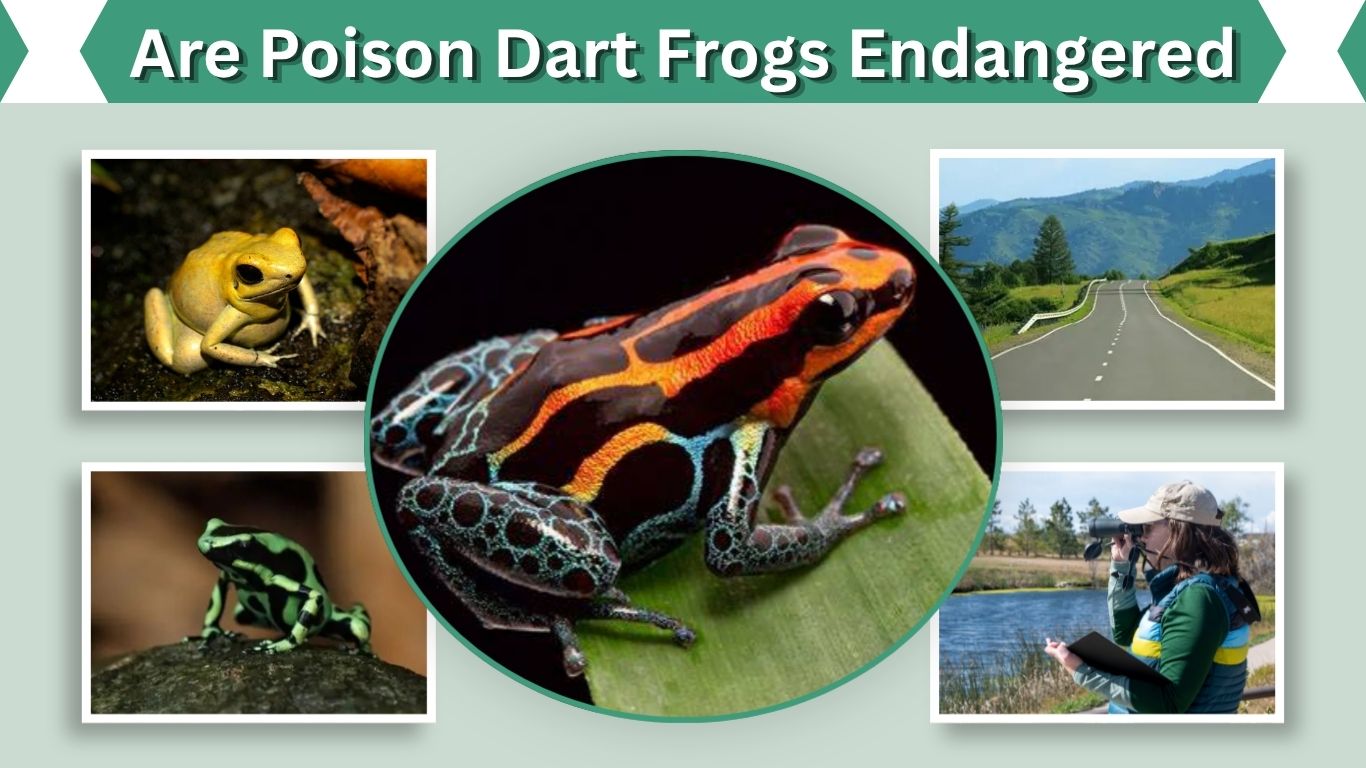
Poison dart frogs are some of the most colorful amphibians in the rainforest, but their bright skin does not protect them from every danger. Many people ask whether poison dart frogs are endangered, and the answer depends on the species. Some poison dart frogs are endangered or threatened, while others are still listed as stable or least concern.
Are Poison Dart Frogs Endangered?
Not all poison dart frogs are endangered. Some species are endangered, some are vulnerable, and others are listed as least concern. This means there is no single endangered status for all poison dart frogs.
Poison dart frogs belong to the family Dendrobatidae, a group of small frogs found mainly in Central and South America. Their conservation status varies widely because different species live in different places and face different levels of threat.
Some poison dart frogs live in small forest areas where habitat loss can quickly harm the population. Others have wider ranges and larger populations, so they are not currently considered endangered.
Quick Answer
Poison dart frogs as a group are not all endangered, but several species are at risk. The golden poison frog is endangered, while the strawberry poison dart frog is commonly listed as least concern. The blue poison dart frog is usually treated as a form of the dyeing poison frog, which is listed as least concern.
Poison Dart Frog Endangered Status by Species
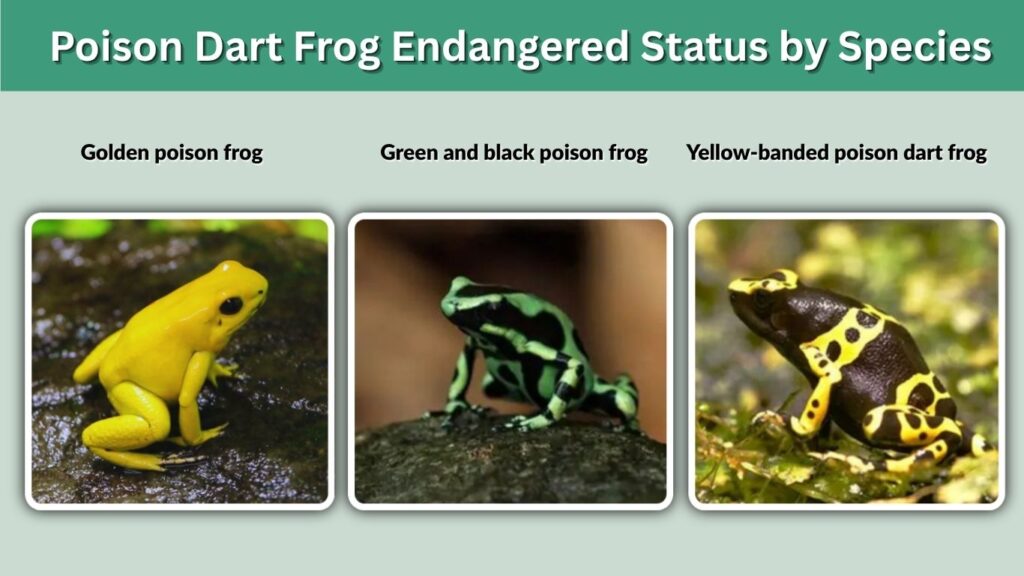
The phrase “poison dart frog endangered” can be confusing because there are many different species. A person searching this topic may mean the golden poison frog, blue poison dart frog, strawberry poison dart frog, or another species.
| Poison Dart Frog | Scientific Name | Common Status |
| Golden poison frog | Phyllobates terribilis | Endangered |
| Strawberry poison frog | Oophaga pumilio | Least Concern |
| Blue poison dart frog | Dendrobates tinctorius “azureus” | Usually treated under Least Concern D. tinctorius |
| Green and black poison frog | Dendrobates auratus | Least Concern |
| Yellow-banded poison dart frog | Dendrobates leucomelas | Least Concern |
Status can change when new surveys, habitat studies, or population data become available. For the most accurate status, conservation groups use sources such as the IUCN Red List.
Why Are Poison Dart Frogs Endangered?
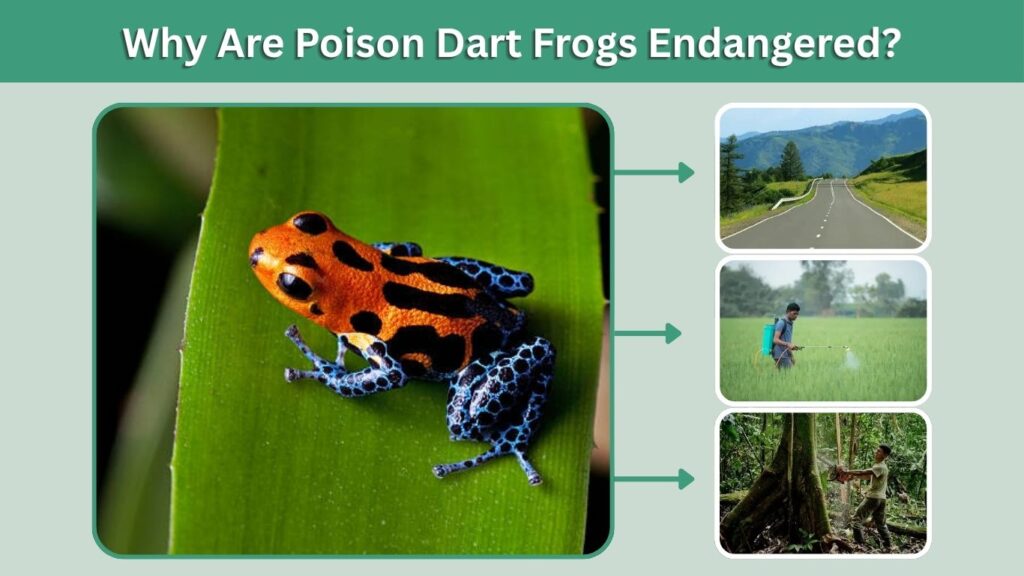
Some poison dart frogs are endangered because their rainforest habitats are being damaged or destroyed. These frogs often depend on humid forests, leaf litter, clean water, and stable microhabitats. When forests disappear, poison dart frogs lose the exact conditions they need to survive.
Major reasons poison dart frogs become endangered include:
- Habitat loss
- Deforestation
- Farming and cattle ranching
- Logging
- Mining
- Pollution
- Climate change
- Illegal collection for the pet trade
- Disease, including chytrid fungus
These threats can affect adult frogs, eggs, tadpoles, and the tiny insects they eat.
Habitat Loss
Habitat loss is one of the biggest threats to endangered poison dart frogs. Many species live in tropical rainforests that are cleared for agriculture, roads, logging, mining, or human development.
Poison dart frogs are small, but they can be very habitat-specific. Some species need certain forest floors, wet leaves, small pools, or plants that hold water. When those habitats are destroyed, the frogs may not be able to move somewhere else.
Deforestation
Deforestation removes shade, moisture, and shelter. Poison dart frogs have delicate skin that needs a moist environment. When trees are cut down, the forest floor can become hotter and drier.
This can harm frogs directly and also reduce their food supply. Poison dart frogs eat small insects, mites, ants, termites, and other tiny arthropods. If the forest ecosystem changes, their prey may decline too.
Pollution
Pollution can damage poison dart frog habitats. Chemicals from farms, mining, roads, and human settlements may enter soil and water. Amphibians are especially sensitive because their skin can absorb substances from the environment.
Pollution can affect eggs and tadpoles as well as adults. Even small changes in water quality can be dangerous for developing frogs.
How Climate Change Affects Poison Dart Frogs
Climate change can be a serious threat to poison dart frogs because they depend on stable rainforest conditions. Many species need high humidity, regular rainfall, and narrow temperature ranges.
Climate change may cause:
- Hotter forest floors
- Drier leaf litter
- Changed rainfall patterns
- Fewer safe breeding sites
- More stressful conditions for tadpoles
- Shifts in insect populations
- Greater disease pressure
Poison dart frogs may struggle to adapt if climate conditions change faster than they can move or evolve. Species with tiny ranges are especially vulnerable because they have fewer places to go.
Small Ranges Increase Risk
A species with a small range can become endangered more easily than a species found across a large area. If a frog only lives in one forest region, one major threat can affect a large part of its population.
This is one reason the golden poison frog is at risk. It is found only in a limited area of Colombia, so habitat protection is extremely important for its survival.
Are Golden Poison Dart Frogs Endangered?
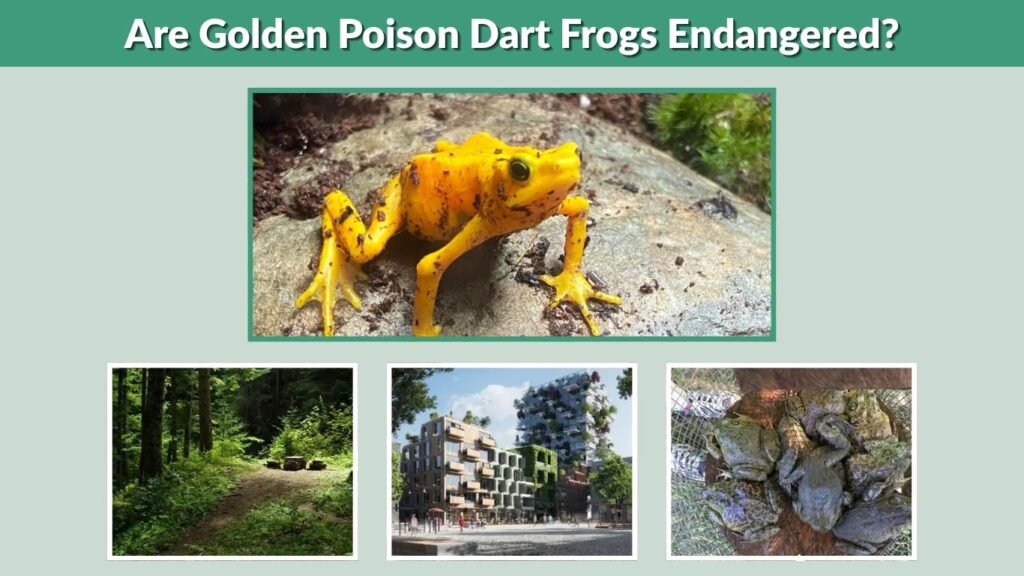
Yes, golden poison frogs are endangered. The golden poison frog, also called the golden poison dart frog, is one of the most famous poison dart frogs because of its powerful skin toxin.
This species lives in a small area of rainforest in Colombia. Its limited range makes it vulnerable to habitat destruction. If the forest where it lives is damaged, the species has few other places to survive.
Why Golden Poison Frogs Are Endangered
Golden poison frogs are endangered mainly because of habitat loss and their small natural range. They depend on humid rainforest habitat, and they are not found widely across South America.
Threats to golden poison frogs include:
- Forest clearing
- Habitat fragmentation
- Mining pressure
- Human development
- Possible illegal collection
- Climate-related habitat changes
Because the species is so geographically limited, protecting its remaining habitat is one of the most important conservation steps.
Are Blue Poison Dart Frogs Endangered?
Blue poison dart frogs are not usually listed as endangered. The blue poison dart frog is commonly treated as a color form or morph of the dyeing poison frog, Dendrobates tinctorius. That species is generally listed as least concern.
However, this does not mean blue poison dart frogs face no risks. Local populations can still be harmed by habitat loss, illegal collection, or environmental change.
Why People Think Blue Poison Dart Frogs Are Endangered
Many people assume blue poison dart frogs are endangered because they look rare and live in specific rainforest habitats. They are also popular in zoos and the pet trade, which can make them seem like a threatened animal.
The key point is that “rare-looking” does not always mean officially endangered. Conservation status is based on population size, range, decline rate, and threats.
Are Strawberry Poison Dart Frogs Endangered?
The strawberry poison dart frog is usually listed as least concern. It is found in parts of Central America, including areas from Nicaragua through Costa Rica and Panama.
Even though it is not generally considered endangered, it can still be affected by habitat loss and local environmental pressure. Some local populations may be more vulnerable than others.
Why Strawberry Poison Dart Frogs Still Need Protection
A species listed as least concern can still need conservation attention. If forests are destroyed or polluted, local populations can decline. The strawberry poison dart frog also has many color forms, and some populations may be limited to small areas.
Protecting rainforest habitat helps keep these frogs common and prevents future declines.
Are All Poison Dart Frogs Endangered?
No, all poison dart frogs are not endangered. Some are endangered, some are threatened, and others are least concerned.
This is why an article about “are poison dart frogs endangered” should explain the difference between the group and individual species. Saying “poison dart frogs are endangered” is too broad. A more accurate answer is: some poison dart frogs are endangered, but not all.
Examples of Different Statuses
Poison dart frog status varies by species:
- Golden poison frog: endangered
- Strawberry poison frog: least concern
- Green and black poison frog: least concern
- Yellow-banded poison dart frog: least concern
- Blue poison dart frog: usually treated under least concern Dendrobates tinctorius
Some lesser-known poison dart frogs may have more serious conservation problems, especially if they live in small, threatened habitats.
How the Pet Trade Affects Poison Dart Frogs
The pet trade can affect poison dart frogs when animals are collected from the wild illegally or unsustainably. Many poison dart frogs are colorful, small, and popular among amphibian keepers.
Captive breeding can reduce pressure on wild populations when done responsibly. However, illegal collection can be harmful, especially for rare species with small ranges.
Responsible Captive Breeding
Captive-bred poison dart frogs are common in the legal pet trade. These frogs are usually much safer for wild populations than wild-caught frogs. Captive-bred frogs also tend to be less toxic because they do not eat the same wild insects that provide natural toxins.
People who keep poison dart frogs should choose legal, captive-bred animals from responsible breeders. This helps reduce demand for wild-caught frogs.
Disease and Poison Dart Frog Declines
Disease is another threat to many amphibians, including some poison dart frogs. Chytridiomycosis, often called chytrid fungus disease, has harmed amphibian populations around the world.
This disease affects amphibian skin. Since frogs use their skin for water balance and other important functions, skin disease can be deadly.
Why Amphibians Are Vulnerable
Amphibians are sensitive to environmental change because they often depend on both land and water. Their eggs, tadpoles, and adult stages can all face different risks.
For poison dart frogs, disease can become more dangerous when combined with habitat loss, pollution, climate change, or stress from environmental changes.
How Can Poison Dart Frogs Be Protected?
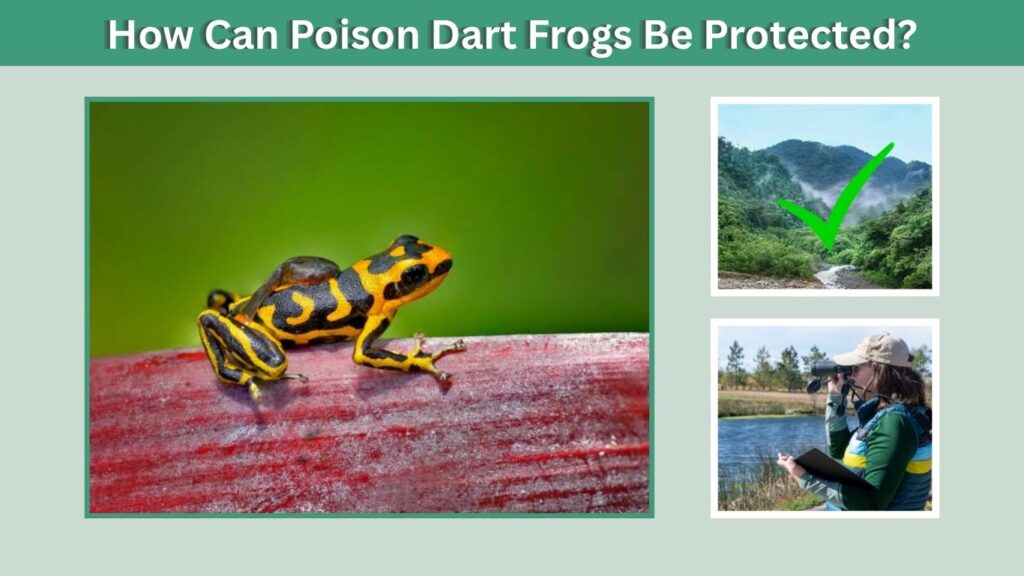
Poison dart frogs can be protected by saving their rainforest habitats and reducing pressure from human activity. Conservation efforts are most effective when they protect both the frogs and the ecosystems they depend on.
Important protection methods include:
- Protecting rainforest reserves
- Preventing illegal wildlife trade
- Supporting captive breeding programs
- Reducing deforestation
- Controlling pollution
- Monitoring wild populations
- Studying disease threats
- Supporting local conservation groups
Habitat protection is especially important because poison dart frogs need specific moisture, temperature, and breeding conditions.
Why Rainforest Conservation Matters
Protecting rainforest habitat helps more than poison dart frogs. It also protects insects, plants, birds, reptiles, mammals, fungi, and many other species that share the same ecosystem.
Poison dart frogs are often signs of a healthy environment. When frog populations decline, it may mean the ecosystem is under stress.
Poison Dart Frog Endangered Facts
Here are simple facts that answer common search questions:
- Not all poison dart frogs are endangered.
- Some poison dart frog species are endangered because of habitat loss.
- The golden poison frog is endangered.
- The strawberry poison dart frog is usually listed as least concern.
- The blue poison dart frog is not usually considered endangered.
- Deforestation is one of the biggest threats.
- Climate change can make rainforest habitats hotter and drier.
- Illegal collection can harm rare species.
- Disease is a serious risk for many amphibians.
- Protecting rainforest habitat is the best way to protect poison dart frogs.
FAQs
Are poison dart frogs endangered?
Some poison dart frogs are endangered, but not all of them. The golden poison frog is endangered, while species such as the strawberry poison frog and green and black poison frog are commonly listed as least concern. Status depends on the exact species.
Why are poison dart frogs endangered?
Poison dart frogs become endangered mainly because of habitat loss, deforestation, pollution, climate change, disease, and illegal collection. Species with small ranges are especially vulnerable because one damaged forest area can affect much of their population.
Is the golden poison dart frog endangered?
Yes, the golden poison frog is endangered. It lives in a limited rainforest area in Colombia, and habitat loss is a major threat. Its small range makes conservation especially important for the species.
Is the blue poison dart frog endangered?
The blue poison dart frog is not usually listed as endangered. It is generally treated as a form of the dyeing poison frog, which is listed as least concern. However, local populations can still face habitat and collection pressures.
Is the strawberry poison dart frog endangered?
The strawberry poison dart frog is usually listed as least concern. It is not generally considered endangered, but habitat loss and local environmental changes can still affect some populations. Protecting rainforest habitat helps keep the species stable.
