
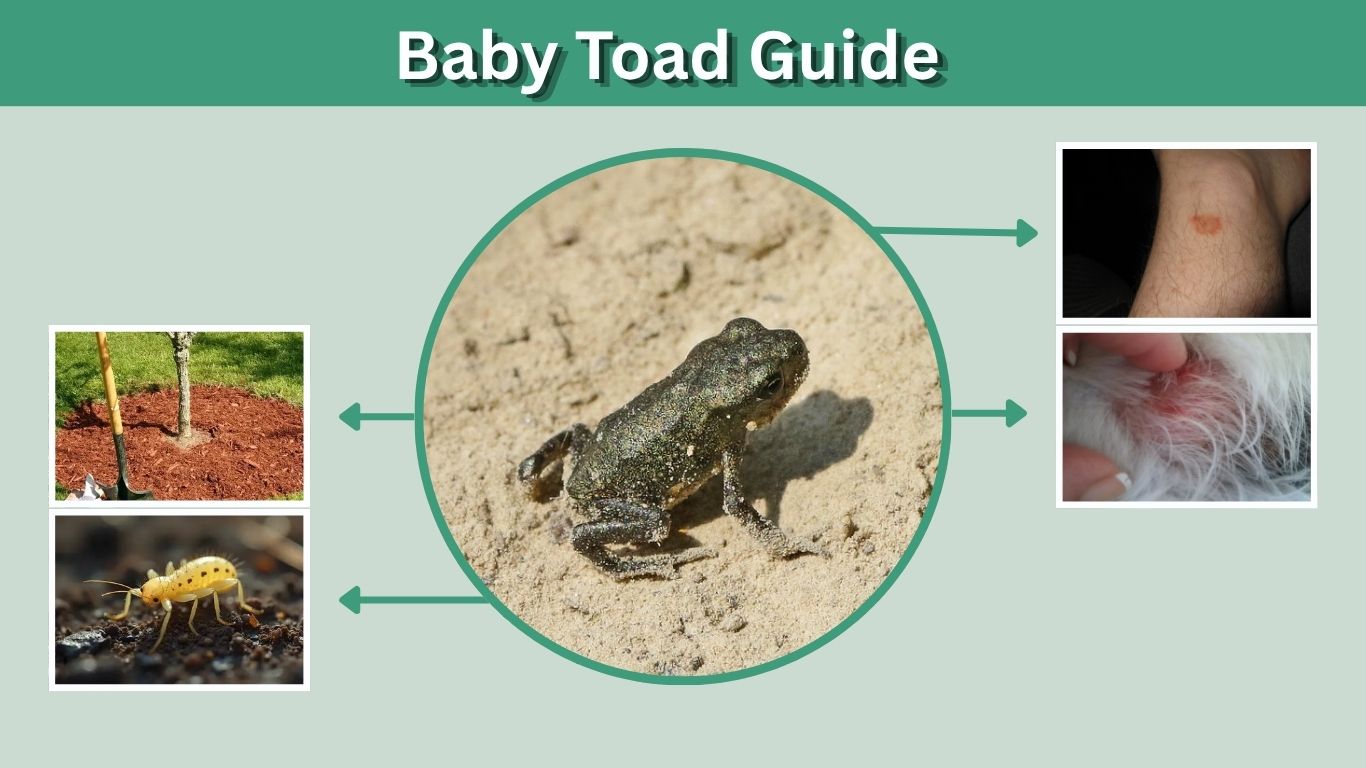
A baby toad may look like a tiny hopping pebble, but it has already gone through one of nature’s most dramatic changes. Most toads begin life as eggs, hatch into tadpoles, and later become small land-dwelling toadlets. This guide explains what baby toads are called, what they eat, how they grow, and when they may be dangerous to pets.
What Is a Baby Toad Called?
A young toad is usually called a toadlet after it leaves the tadpole stage. Many people use the phrase “baby toad” for any young toad, but the exact name depends on its life stage.
Before it becomes a toadlet, a baby toad is usually a tadpole. Tadpoles live in water, breathe through gills, and swim with tails. Once they grow legs, absorb the tail, and begin living on land, they become tiny toadlets.
Toad Eggs, Tadpoles, and Toadlets
Toads usually lay eggs in shallow water. Unlike many frogs, which lay eggs in clumps or masses, many toads lay eggs in long jelly-like strings. These eggs hatch into tadpoles, which feed and grow in water until they are ready to transform.
A toadlet is the stage most people mean when they say “baby toad.” It looks like a miniature adult toad but may be very small, soft-bodied, and vulnerable. At this stage, it begins eating tiny live insects instead of the algae and organic matter many tadpoles consume.
Are Baby Toads Tadpoles?
Yes, baby toads are tadpoles during the early part of life. However, once they complete metamorphosis, they are no longer tadpoles. They become toadlets.
This is why both answers can be correct. A baby toad in water may be a tadpole, while a baby toad hopping through grass, soil, or leaf litter is usually a toadlet.
Baby Toad Life Cycle Explained
Baby toads go through several stages before becoming adults. The timing depends on species, water temperature, food supply, and local conditions.
Here is a simple view of the baby toad life cycle:
| Stage | Where It Lives | What It Looks Like | Main Need |
|---|---|---|---|
| Egg | Water | Small jelly-covered egg | Clean, safe water |
| Tadpole | Water | Tiny body with tail | Aquatic food and shelter |
| Metamorph | Water edge | Legs, shrinking tail | Safe transition area |
| Toadlet | Land | Tiny adult-like toad | Small live insects |
| Adult | Mostly land | Full-grown toad | Food, moisture, breeding pond |
How Do Toads Have Babies?
Most toads reproduce in water. During breeding season, male toads call to attract females. After mating, the female lays eggs, and the male fertilizes them externally. The eggs stay in water until they hatch.
After hatching, tadpoles swim, feed, and grow. Over time, they develop back legs, then front legs. Their tails shrink, lungs develop, and their bodies prepare for life on land. Once this change is complete, they leave the water as tiny toadlets.
How Long Does It Take?
The timeline varies, but many common toads transform from egg to toadlet within several weeks to a couple of months. Warm water can speed up development, while cooler water may slow it down.
Not every egg becomes a toadlet. Eggs and tadpoles are eaten by fish, birds, insects, and other pond animals. That is one reason toads often lay large numbers of eggs.
What Do Baby Toads Eat?
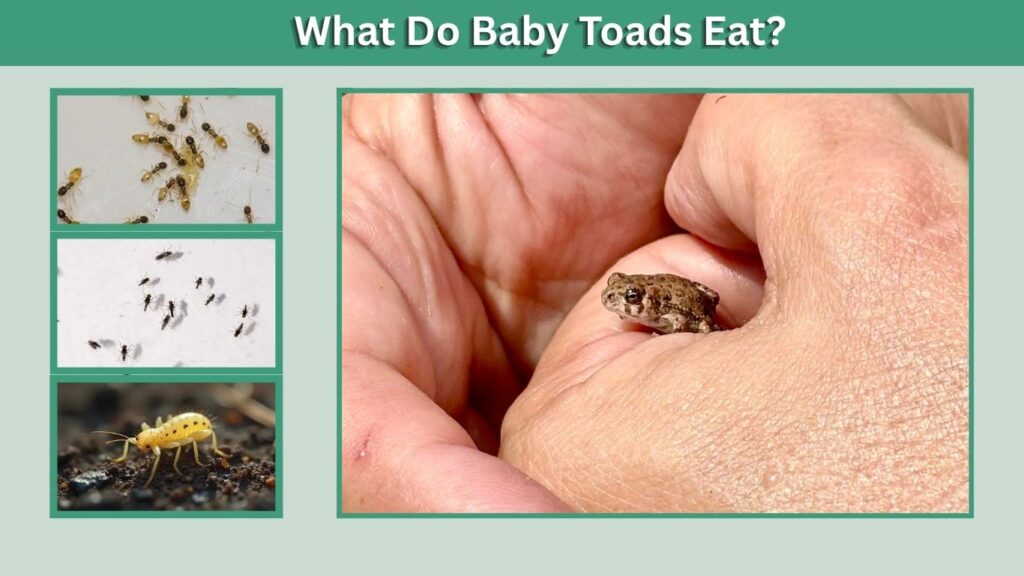
Baby toads eat different foods depending on whether they are tadpoles or toadlets. Tadpoles usually feed in water, while toadlets hunt tiny moving prey on land.
What Tadpoles Eat
Toad tadpoles commonly eat soft plant material, algae, biofilm, and tiny organic particles in the water. Their diet changes as they grow and as food becomes available in the pond.
They do not hunt like adult toads at first. Instead, they graze and nibble on small food sources in their aquatic environment.
What Toadlets Eat
Once a baby toad becomes a toadlet, it needs live prey. Toadlets are small, so their food must be small enough to swallow.
Common foods for baby toads include:
- Tiny ants
- Small flies
- Pinhead crickets
- Springtails
- Aphids
- Small beetles
- Fruit flies
- Tiny worms
- Small spiders
- Soft-bodied insect larvae
A baby toad usually reacts to movement. If the prey does not move, the toad may ignore it. This is why live food is important for young toads in nature and in responsible captive care.
What Not to Feed Baby Toads
Baby toads should not be given random human food. They are insect-eating amphibians, not animals that can safely eat bread, rice, processed food, fruit, or meat scraps.
Avoid feeding baby toads:
- Bread or crackers
- Cooked rice or pasta
- Processed human snacks
- Large insects they cannot swallow
- Wild insects exposed to pesticides
- Dead insects that do not move
- Pet food made for cats or dogs
Large prey can injure or stress a small toad. Pesticide-exposed insects can also be dangerous because amphibians absorb substances through their skin.
Baby American Toads and Other Common Species
Many searches focus on specific baby toads, especially American toads, cane toads, Woodhouse’s toads, and “horny toads.” These names can cause confusion because not all of them refer to the same type of animal.
Baby American Toad
A baby American toad is often seen as a tiny brown, gray, or reddish toadlet. It may have small bumps, short legs, and a rounded body. These toadlets usually stay near moist areas, leaf litter, gardens, pond edges, and shaded ground.
American toads eat small invertebrates after they become toadlets. As adults, they help control insects and are often useful around gardens.
Baby Cane Toad
Baby cane toads are important to identify in places where cane toads are invasive or toxic to pets. Cane toads can be poisonous at different life stages, and their toxins can harm dogs and cats if the animal bites, mouths, or eats them.
A baby cane toad may look similar to some native toads, so location matters. In areas such as Florida, Australia, and other regions where cane toads occur, people should be cautious and avoid handling unknown toads.
Woodhouse’s Toad Baby
A baby Woodhouse’s toad is another small toadlet that may be found near temporary water, grasslands, yards, or open habitats depending on the region. Like other young toads, it starts as a tadpole and later moves onto land.
Baby Horny Toad
The phrase “baby horny toad” usually refers to a horned lizard, not a true toad. Horned lizards are reptiles, while toads are amphibians. They look completely different once you know what to check: lizards have scales, claws, and a reptile body, while toads have softer amphibian skin and no claws.
Are Baby Toads Poisonous?
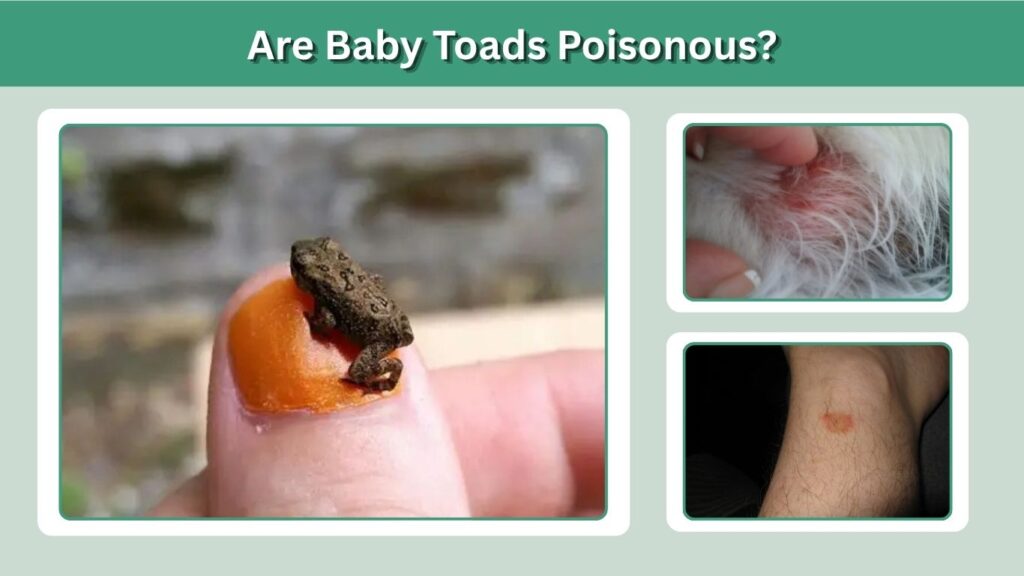
Many baby toads can produce mild toxins or irritating secretions through their skin, especially as they grow. This does not mean every baby toad is deadly to touch, but it does mean people should handle them carefully or avoid handling them at all.
Are Baby Toads Poisonous to Humans?
Most baby toads are not dangerous to humans when simply observed. The bigger concern is skin irritation or accidentally getting toxins near the eyes, mouth, or open cuts.
If someone touches a toad, they should wash their hands with soap and water afterward. Children should be taught not to kiss, squeeze, or put toads near their face.
Are Baby Toads Poisonous to Dogs and Cats?
Baby toads can be more dangerous to pets than to people. Dogs and cats may bite, lick, or swallow them. Some toads produce toxins that can cause drooling, pawing at the mouth, vomiting, shaking, or more serious symptoms.
Cane toads are especially risky for pets. If a dog or cat mouths a suspected cane toad or shows symptoms after contact with any toad, contact a veterinarian immediately.
Safe Handling Tips
The safest choice is to leave baby toads alone. If one must be moved from danger, use clean, wet hands or a soft container and move it only a short distance to a shaded, damp, safe place.
Good safety habits include:
- Do not pick up baby toads unless necessary.
- Keep pets away from unknown toads.
- Wash hands after contact.
- Never use soap, lotion, or sanitizer before touching amphibians.
- Do not move wild toads far from where they were found.
- Avoid taking baby toads from the wild as pets.
Baby Toad Habitat and Care Basics
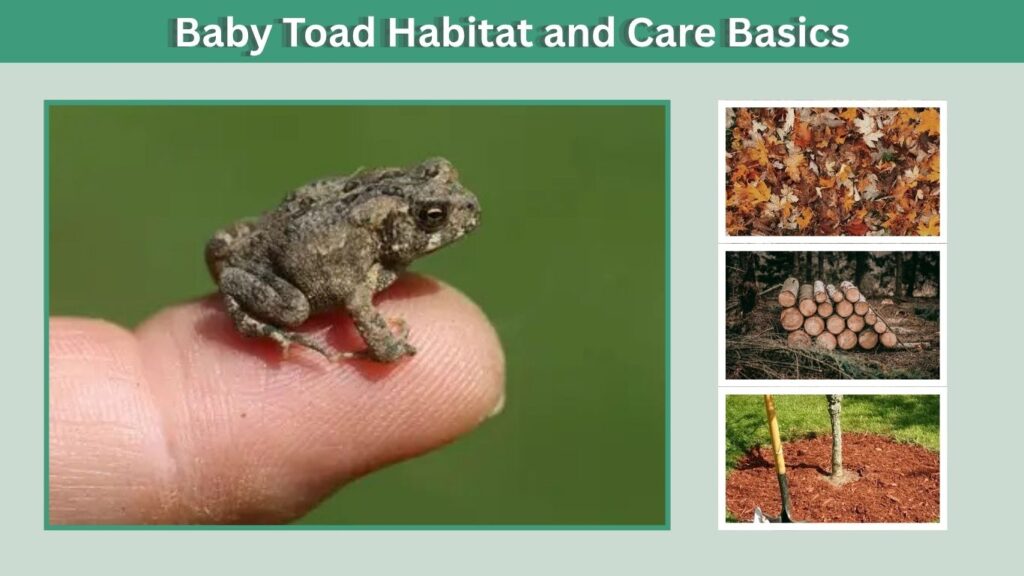
Baby toads need moisture, shelter, and tiny live food. In the wild, they often hide in damp soil, leaf litter, grass, logs, garden edges, and shaded areas near breeding ponds.
Where Baby Toads Live
Toadlets leave the water after metamorphosis, but they still need damp surroundings. Their skin can dry out, especially in hot sun or dry soil. That is why baby toads are often most active during cool, wet weather or at night.
They may hide under:
- Leaves
- Logs
- Rocks
- Mulch
- Low plants
- Garden debris
- Damp soil pockets
A yard with leaf litter, native plants, pesticide-free insects, and shallow water nearby can support young toads naturally.
Should You Keep a Baby Toad as a Pet?
It is usually better not to keep a wild baby toad as a pet. Baby toads are delicate, and many do poorly in captivity without proper temperature, humidity, food size, and species-specific care.
There may also be local rules about collecting wild amphibians. Some species are protected, and moving them can spread disease or harm local populations.
If a baby toad is in danger, move it gently to a nearby safe place instead of taking it home.
Baby Toad or Baby Frog: How to Tell the Difference
Baby toads and baby frogs can look similar, especially just after metamorphosis. However, there are a few clues that may help.
Skin Texture
Young toads often have drier, bumpier-looking skin than frogs. Frogs usually look smoother and wetter. This is not perfect for every species, but it is a helpful first clue.
Body Shape
Toads usually have a rounder, stockier body. Frogs often look slimmer and more athletic. Baby toads may look like tiny versions of adult toads, with short legs and a squat body.
Movement
Toads often make short hops or crawl-walk. Frogs usually make longer jumps. A very tiny baby toad may hop only a short distance before stopping and hiding.
Habitat
Frogs are often found very close to water, while toadlets may spread into gardens, yards, woods, and grassy areas after leaving the pond. Still, young toads need moisture and shade to survive.
FAQs
What is a baby toad called?
A baby toad is called a tadpole when it first hatches and lives in water. After metamorphosis, when it grows legs, loses its tail, and starts living on land, it is called a toadlet. Many people casually call both stages baby toads, but toadlet is the more accurate name for the tiny land stage.
What do baby toads eat?
Baby toads eat different foods at different stages. Tadpoles usually graze on algae, soft plant matter, and tiny organic particles in water. Toadlets eat tiny live prey such as ants, fruit flies, springtails, aphids, pinhead crickets, small beetles, and insect larvae. They need food small enough to swallow safely.
Are baby toads poisonous?
Many baby toads can have irritating skin secretions, and some species become more toxic as they grow. Most are not dangerous to simply observe, but they should not be handled unnecessarily. Always wash your hands after touching a toad, and keep pets away from unknown toads, especially in areas with cane toads.
Are baby toads tadpoles?
Yes, baby toads begin life as tadpoles after hatching from eggs. Tadpoles live in water and breathe with gills. Later, they grow legs, develop lungs, absorb the tail, and move onto land. At that point, they are no longer tadpoles. They are young toads called toadlets.
Can I keep a baby toad I found?
It is usually best not to keep a wild baby toad. Young toads need very specific moisture, food, temperature, and habitat conditions. Taking them from the wild can also harm local populations or break local wildlife rules. If the toad is in danger, gently move it nearby to a shaded, damp, safe spot.
