
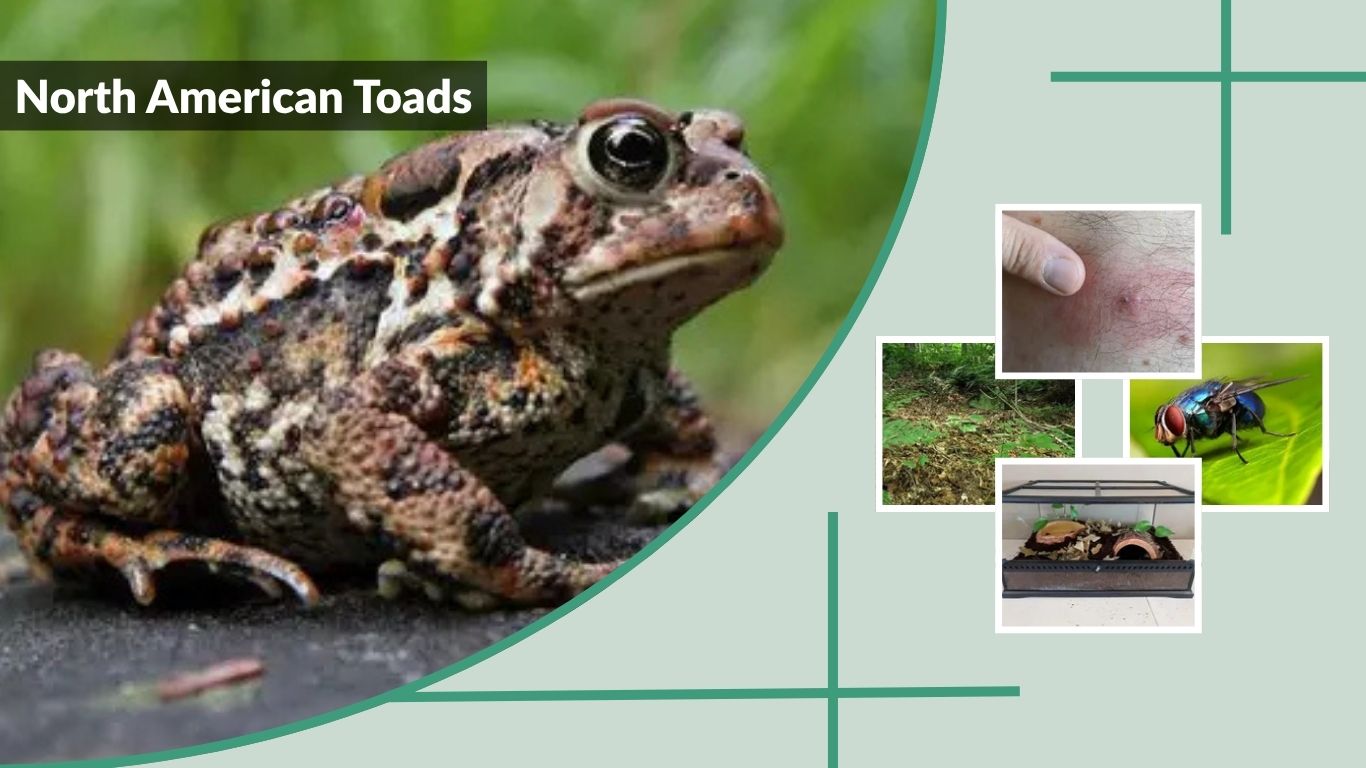
North American toads are familiar amphibians found in gardens, forests, wetlands, deserts, and grasslands across the continent. They are often confused with frogs, but toads usually have drier, bumpier skin and spend more time on land. These animals play an important role in nature by eating insects and becoming food for larger wildlife. They are also known for their loud breeding calls, seasonal activity, and mild skin toxins.
What Is a North American Toad?
North American toads are amphibians that belong to several groups, especially the true toads in the family Bufonidae. The term “North American toad” does not refer to one single species. Instead, it can describe many toads living in the United States, Canada, and Mexico.
Most North American toads have short legs, wide bodies, warty skin, and large poison glands behind the eyes. These glands help protect them from predators. Toads are cold-blooded, so their activity depends strongly on temperature, moisture, and season.
They are often seen after rain, near porch lights, in gardens, or around damp soil. During dry or cold weather, many toads hide underground, under logs, or in leaf litter. This helps them avoid dehydration and extreme temperatures.
Common North American Toad Species
North America has many toad species, and each has its own range, color pattern, call, and habitat preference. Some are widespread and easy to recognize, while others live in limited desert, prairie, or coastal regions.
| Toad Species | Common Range | Key Feature |
| American Toad | Eastern North America | Brown body with warty skin and dark spots |
| Fowler’s Toad | Eastern and central United States | Usually has several warts inside each dark spot |
| Woodhouse’s Toad | Central and western regions | Pale stripe down the back |
| Great Plains Toad | Central plains and prairies | Bold blotches and loud call |
| Western Toad | Western North America | Light stripe along the back |
| Green Toad | Southwestern United States and Mexico | Greenish patches on a pale body |
| Red-spotted Toad | Southwestern deserts and rocky areas | Small body with red-orange warts |
| Oak Toad | Southeastern United States | Very small size with a pale back stripe |
The American toad is one of the best-known species in the eastern United States and Canada. Fowler’s toad is also common and can look similar. Western areas have species such as the western toad, Woodhouse’s toad, Great Plains toad, and red-spotted toad.
North American Toad Identification
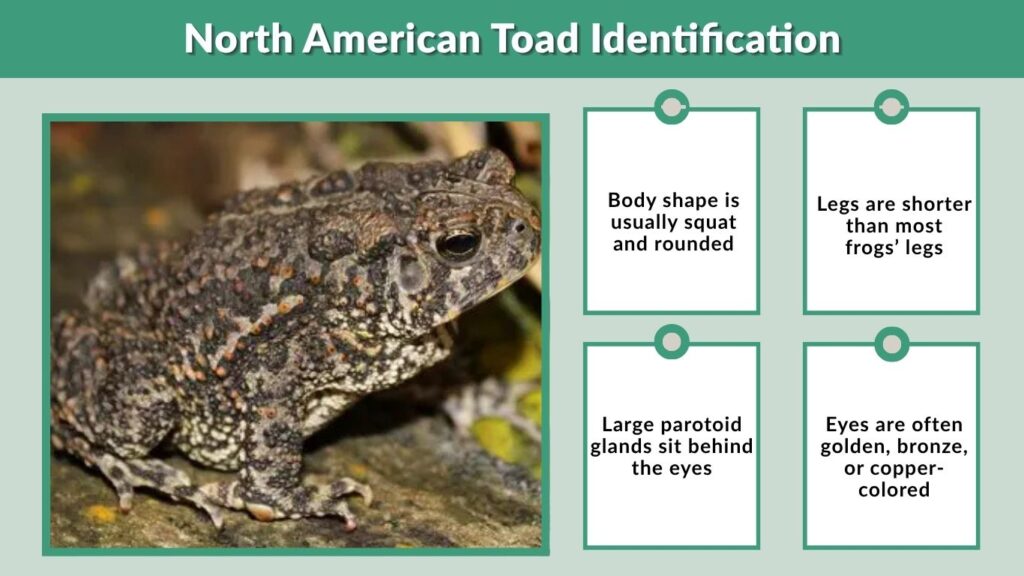
Identifying a toad is easier when you look at several features together. Color alone is not always reliable because many toads can appear brown, gray, tan, olive, or reddish depending on age, habitat, and moisture.
Important identification features include:
- Body shape is usually squat and rounded
- Skin is dry-looking, rough, and covered with wart-like bumps
- Legs are shorter than most frogs’ legs
- Large parotoid glands sit behind the eyes
- Eyes are often golden, bronze, or copper-colored
- Many species have dark blotches, spots, or a pale back stripe
- Toads usually hop or walk instead of making long frog-like leaps
- Breeding calls differ by species and can help with identification
American toads often have one or two warts inside each dark spot. Fowler’s toads may have three or more warts in each dark spot. However, field identification can be tricky, especially where their ranges overlap.
North American Toad Habitat
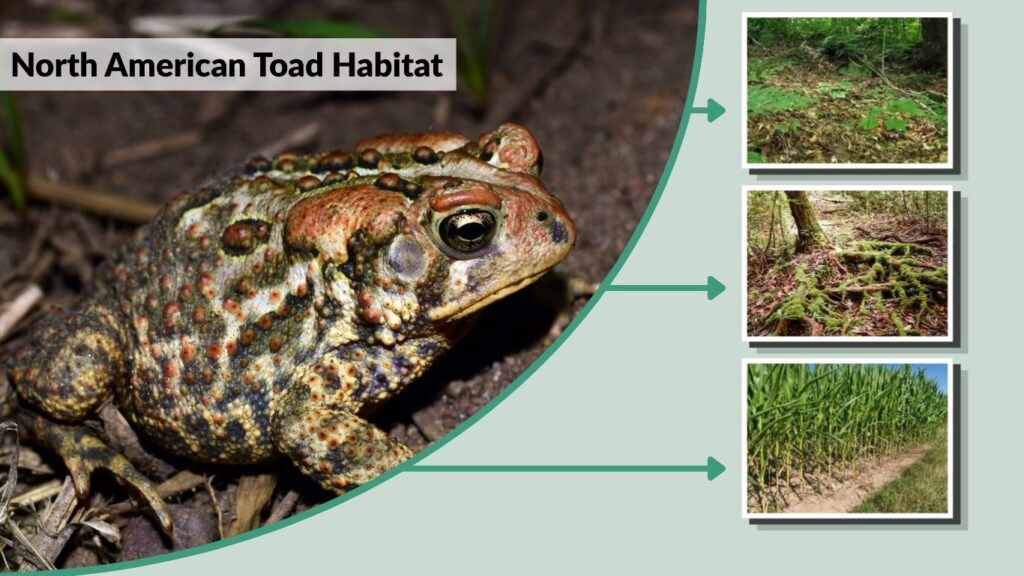
North American toads live in many habitats because they are adaptable. They need moisture for survival, but many species spend most of their adult life away from water. They return to ponds, ditches, temporary pools, or wetland edges mainly for breeding.
Common habitats include:
- Forest floors
- Backyard gardens
- Meadows and grasslands
- Farmland edges
- Wetlands and marshes
- Sandy coastal areas
- Prairies
- Desert washes
- Rocky canyons
- Suburban yards
Toads need hiding places during the day. They often shelter under logs, boards, stones, leaves, mulch, and loose soil. In gardens, they may hide under plant pots, patios, or dense vegetation.
Desert species are especially good at waiting for rain. They may stay hidden underground for long periods and become active quickly after storms. This helps them breed and feed during short wet periods.
What Do North American Toads Eat?
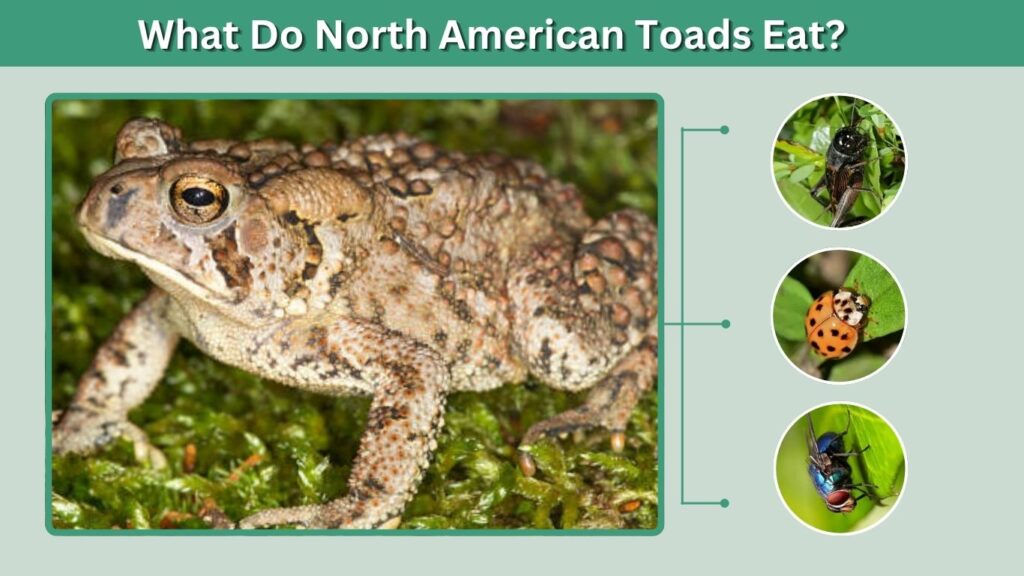
North American toads are mostly carnivorous as adults. They eat small moving animals, especially insects and other invertebrates. Their diet changes by size, habitat, and prey availability. A large adult toad can eat bigger prey than a young toadlet.
Common foods include:
- Ants
- Beetles
- Crickets
- Flies
- Moths
- Caterpillars
- Grasshoppers
- Spiders
- Slugs
- Snails
- Earthworms
- Sowbugs
- Small larvae
- Other soft-bodied invertebrates
Toads are sit-and-wait hunters. They often stay still until prey comes close, then strike with a fast sticky tongue. They usually swallow prey whole, so food must be small enough to fit in their mouth.
In gardens, toads are helpful because they eat many insects that damage plants. They may feed near porch lights at night, where moths, beetles, and flying insects gather.
North American Toad Tadpoles
Toad tadpoles live in water and eat differently from adult toads. While adults hunt insects, tadpoles usually graze on algae, soft plant material, biofilm, and tiny organic particles. They scrape surfaces and feed in shallow water.
Many North American toads breed in temporary pools, ponds, flooded fields, and roadside ditches. Temporary water can be useful because it may have fewer fish predators. However, tadpoles must grow quickly before the water dries.
After hatching, tadpoles develop back legs, front legs, and lungs. Their tail gradually shrinks as they transform into tiny toadlets. Once they leave the water, they begin eating very small live prey such as tiny insects, springtails, and small soft-bodied invertebrates.
North American Toad Calls
Toad calls are one of the best ways to recognize species during breeding season. Male toads call to attract females, usually near water. Calls vary from long musical trills to short bleats, chirps, or harsh nasal sounds.
American toads often make a long, high musical trill. Fowler’s toads have a shorter, more nasal call. Great Plains toads produce a loud call that can be heard during rainy nights on the plains. Green toads and red-spotted toads also call after warm rains in drier regions.
Calling season depends on location and climate. In northern areas, many toads call in spring. In warmer or desert regions, calling may happen after heavy rain. A backyard full of toad calls usually means breeding activity is happening nearby.
North American Toad Lifespan
North American toads can live several years in the wild, but many do not survive past the early life stages. Eggs and tadpoles are eaten by aquatic insects, birds, fish, turtles, and other predators. Small toadlets are also vulnerable after they leave the water.
Adult toads often live longer because their skin toxins, camouflage, and hiding behavior protect them. Some species may live 5 to 10 years in the wild under good conditions. In captivity, with proper care, some toads can live longer.
Their lifespan depends on food supply, climate, predators, disease, habitat quality, and road danger. Toads living near roads, lawns treated with chemicals, or polluted water face higher risks.
Are North American Toads Poisonous?
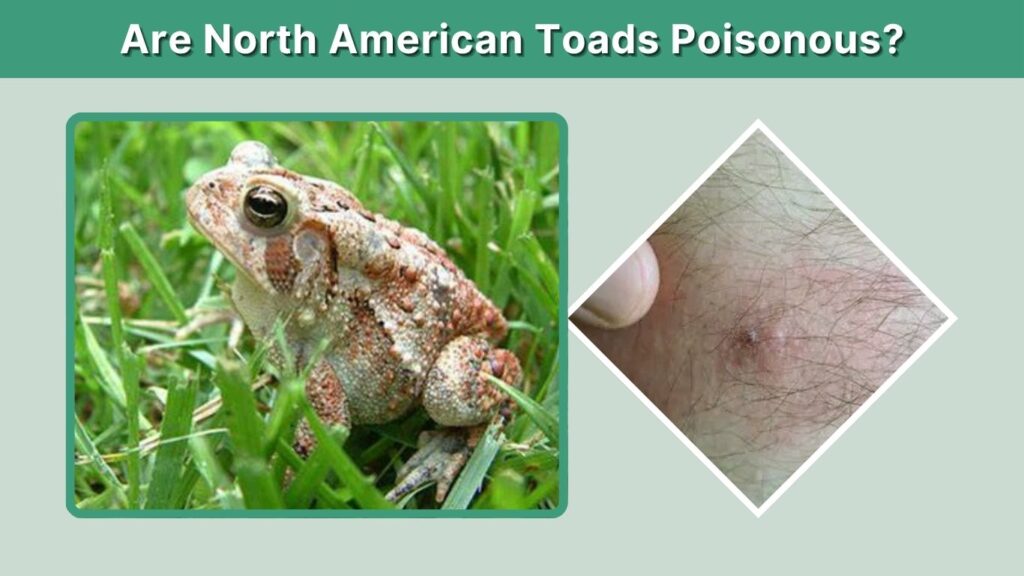
North American toads are mildly poisonous because they produce defensive toxins from glands in their skin, especially the parotoid glands behind the eyes. This toxin helps discourage predators. It is not used for hunting prey.
For humans, most native North American toads are not dangerous when handled gently and briefly. However, their skin secretions can irritate eyes, mouth, or broken skin. You should always wash your hands after touching a toad.
Toads do not give people warts. The bumps on their skin are natural glands and skin structures, not contagious growths. The old belief that touching a toad causes warts is a myth.
Are North American Toads Dangerous to Dogs?
North American toads can be risky for dogs if the dog bites, licks, or chews them. The toxin may cause drooling, pawing at the mouth, vomiting, irritation, or distress. Most native toads cause mild to moderate reactions, but any exposure should be taken seriously.
If a dog mouths a toad, rinse the dog’s mouth gently with water, wiping outward so the water does not run down the throat. Contact a veterinarian for advice, especially if symptoms continue or the dog seems weak, confused, or very uncomfortable.
The cane toad is much more dangerous than most native North American toads, especially in areas where it has become established. Correct identification matters if a pet has contact with a large toxic toad.
North American Toad vs Cane Toad
North American native toads are often confused with cane toads in places where cane toads are present. Cane toads are larger, more toxic, and invasive in some regions. Native toads are generally smaller and important parts of local ecosystems.
Cane toads can grow very large and have strong toxins that are dangerous to pets. They also have large poison glands and a more heavy-bodied appearance. Native toads, such as American toads, Fowler’s toads, and southern toads, are usually less dangerous but still should not be mouthed by pets.
If you live in a cane toad area, learn the local identification features. Avoid killing native toads by mistake because they help control insects and support natural food webs.
Male and Female North American Toads
Male and female toads can look similar, but there are some differences during breeding season. Males are often smaller than females and may have darker throats. They also call, while females usually do not.
Male toads may develop dark pads on their thumbs during breeding season. These pads help them hold onto females during amplexus, the mating position where the male clasps the female. Females are often larger and rounder, especially when carrying eggs.
A “pregnant” toad is not pregnant in the mammal sense. Female toads carry eggs, then release them in water while the male fertilizes them externally. Eggs are often laid in long strings or jelly-like strands, depending on the species.
North American Toad Care
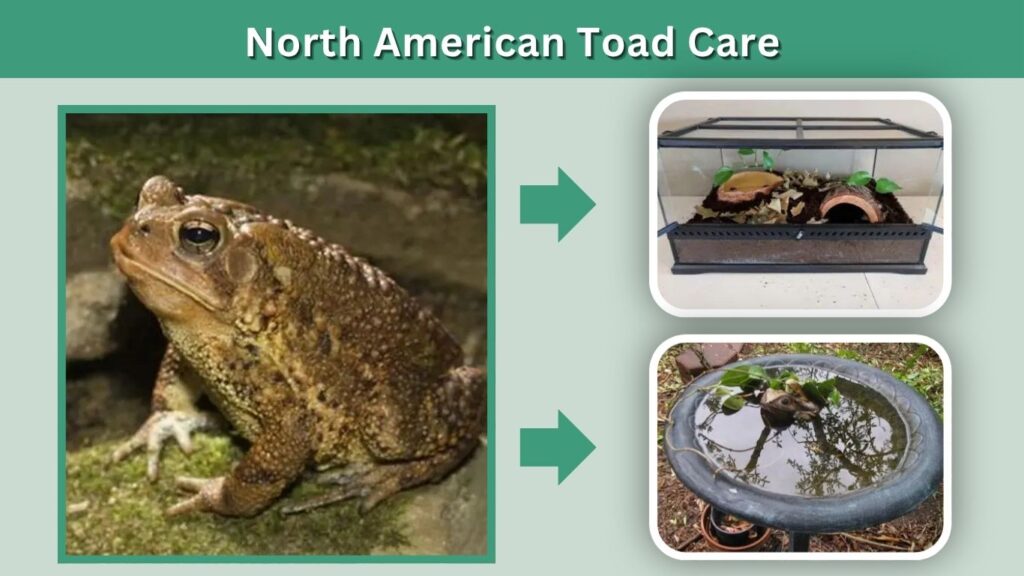
Some people keep native toads as pets, but local laws should be checked first. In some places, collecting wild amphibians is restricted or not allowed. Wild toads also may struggle with stress after capture.
Basic care needs include:
- A secure enclosure with ventilation
- Moist soil or amphibian-safe substrate
- Hiding places such as bark, cork, or leaf litter
- A shallow clean water dish
- Live feeder insects
- Proper temperature for the species
- Minimal handling
- No chemicals, soaps, or sharp decorations
Toads absorb moisture and chemicals through their skin, so cleanliness matters. Tap water may need treatment to remove chlorine or chloramine. Hands should be clean and free from lotion, sanitizer, soap, or chemicals before any necessary handling.
How to Pick Up a North American Toad Safely
The best way to interact with a toad is to avoid unnecessary handling. Toads are delicate, and their skin can absorb harmful substances from human hands. Handling can also stress them.
If you must move a toad, gently scoop it with clean, wet hands or use a small container. Never squeeze the body. Keep the toad low to the ground so it cannot fall far if it jumps. After moving it, wash your hands well.
If you find a toad in a risky place, such as a road, pool area, or garage, move it to a nearby safe, shaded, moist area. Do not relocate it far away. Toads are adapted to local conditions and may not survive if moved to an unfamiliar habitat.
Best Place to Release a North American Toad
A toad should be released close to where it was found, unless that exact place is dangerous. Choose a shaded, moist area with cover. Good release spots include leaf litter, garden edges, shrubs, wooded areas, or near a natural hiding place.
Avoid releasing toads into deep water. Adult toads can swim, but they are not fully aquatic like many frogs. A shallow damp area near cover is better than open water.
Do not move a toad to another neighborhood, park, or distant pond. Moving amphibians can spread disease and may place the animal in unsuitable habitat. Local release is usually the safest choice.
North American Toads in Gardens
Toads are excellent garden visitors. They eat many small pests and require little from humans except a safe habitat. A garden that supports toads usually has moisture, shelter, insects, and chemical-free soil.
To make a garden toad-friendly, provide natural cover such as leaves, mulch, logs, stones, and dense plants. A shallow water dish can help during dry weather, but it should be cleaned regularly. Avoid pesticides, herbicides, and slug poisons because these can harm toads directly or poison their prey.
A simple “toad house” can be made from an overturned clay pot with an opening. Place it in a shady, damp part of the garden. Toads may use it as a daytime shelter.
FAQs
What is the most common North American toad?
The American toad is one of the most common and familiar toads in eastern North America. Fowler’s toad, Woodhouse’s toad, western toad, and Great Plains toad are also common in different regions. The most common species depends on location and habitat.
Are North American toads poisonous to humans?
North American toads have mild defensive toxins in their skin glands. They are not dangerous to touch briefly, but their secretions can irritate eyes, mouth, or broken skin. Wash your hands after handling and avoid touching your face.
What do North American toads eat?
Adult North American toads eat insects and small invertebrates such as ants, beetles, crickets, flies, moths, worms, slugs, snails, spiders, and larvae. Tadpoles eat algae, biofilm, and soft plant material before changing into insect-eating toadlets.
Do North American toads give you warts?
No, North American toads do not give people warts. The bumps on a toad’s skin are not contagious. Human warts are caused by viruses, not by touching toads. Still, it is smart to wash your hands after handling any amphibian.
How long do North American toads live?
Many wild toads die young, but adults can live several years. Some North American toads may live around 5 to 10 years in good natural conditions. Captive individuals may live longer when kept with proper food, moisture, shelter, and clean water.
