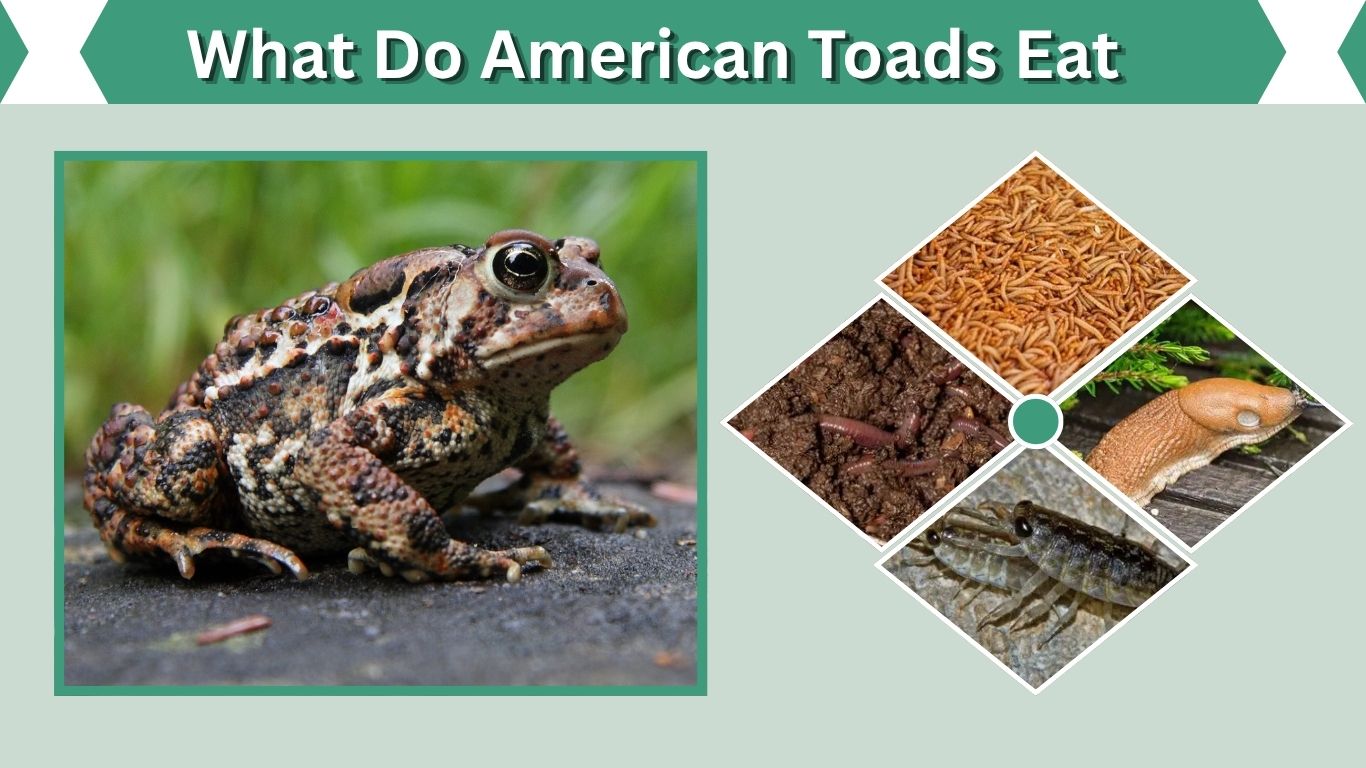
American toads are insect-eating amphibians that feed on many small moving animals. In the wild, they help control garden pests by eating beetles, ants, worms, slugs, flies, and other invertebrates. Their diet changes with age, size, season, and habitat. In captivity, they need safe live prey, proper feeding frequency, and careful food selection to stay healthy.
American Toad Diet Overview
American toads are carnivores as adults, but they are not picky hunters. They usually wait quietly until prey moves close, then snap it up with a fast, sticky tongue. Most of their food comes from the ground, leaf litter, garden beds, forests, lawns, and moist areas where insects and soft-bodied invertebrates are active.
| Life Stage | Main Food | Feeding Style |
| Tadpoles | Algae, plant matter, biofilm, soft organic material | Grazing in water |
| Baby toads | Tiny insects, springtails, fruit flies, pinhead crickets | Active small-prey hunting |
| Juvenile toads | Small crickets, ants, tiny beetles, worms, flies | Ground-level hunting |
| Adult toads | Beetles, slugs, worms, ants, moths, spiders, crickets | Sit-and-wait ambush hunting |
Adult American toads eat animal prey, while tadpoles mainly graze on algae and soft plant-based material. This difference is important because the diet changes after metamorphosis. Once the tadpole becomes a small toadlet, it begins hunting tiny live prey.
What Do American Toads Eat in the Wild?
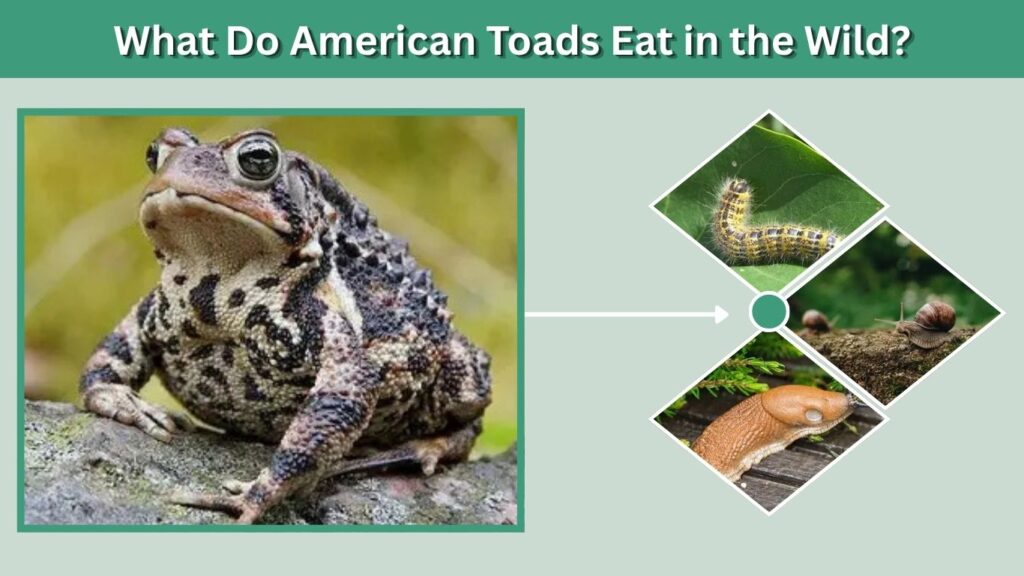
Wild American toads eat many insects and small invertebrates found in their habitat. They are especially active at night or after rain, when insects, worms, and slugs are easier to find. Their diet depends on what is available nearby rather than one specific food source.
Common wild foods include:
- Beetles and beetle larvae
- Ants
- Crickets
- Flies and small flying insects
- Moths
- Caterpillars
- Slugs
- Snails
- Earthworms
- Spiders
- Small grasshoppers
- Sowbugs and other ground invertebrates
American toads are helpful in gardens because they eat many insects that damage plants. Beetles, larvae, slugs, and caterpillars are common garden prey. They do not chew food like mammals. Instead, they swallow prey whole, so the prey must be small enough to fit safely in the toad’s mouth.
They prefer prey that moves. A still or dead insect usually does not attract the same feeding response. Movement tells the toad that the prey is alive and worth striking.
Do American Toads Eat Slugs, Worms, and Ants?
American toads can eat slugs, worms, and ants, but each food type has different value and risks. In the wild, they may eat whatever small prey they can catch. In captivity, some of these foods should be used carefully because wild-caught prey can carry pesticides, parasites, or toxins.
Slugs
American toads do eat slugs, especially in damp gardens and wooded areas. Slugs are soft-bodied and easy to swallow, making them natural prey. However, wild slugs may carry parasites or pesticide residue. For a pet toad, it is safer to use clean feeder insects instead of collecting slugs outdoors.
Worms
American toads eat small worms and earthworms. Worms are soft, moist, and easy to digest when properly sized. Large nightcrawlers should be cut into smaller pieces for small toads. A worm that is too long can be difficult for the toad to handle.
Ants
American toads may eat ants in the wild. However, ants should not be a main food in captivity. Some ants bite, sting, or release irritating chemicals. Small numbers may be eaten naturally, but pet toads do better with safer feeders such as crickets, small roaches, mealworms, waxworms, and earthworms.
What Do Baby American Toads Eat?
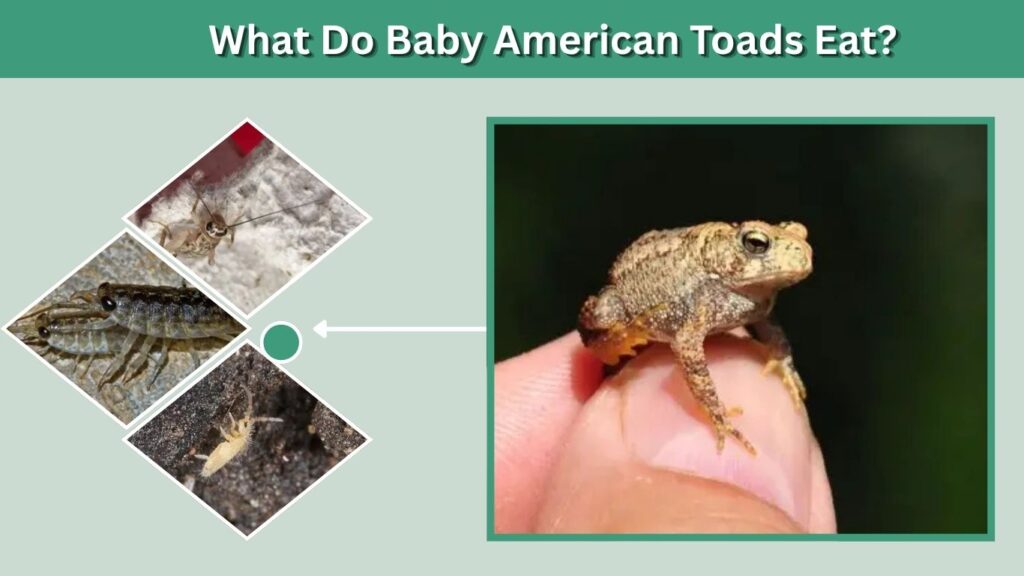
Baby American toads, also called toadlets, eat very tiny live prey. After leaving the water, they are too small for regular crickets or large insects. Their food must be tiny, soft, and moving. Many feeding problems happen when owners offer prey that is too large.
Good foods for baby American toads include:
- Flightless fruit flies
- Pinhead crickets
- Springtails
- Tiny isopods
- Small aphids from pesticide-free plants
- Very small soft-bodied insects
- Tiny chopped earthworm pieces
Baby toads need food more often than adults because they are growing quickly. They may eat daily or almost daily when healthy and warm enough. Their prey should be no wider than the space between the toad’s eyes. This simple rule helps prevent choking and digestive stress.
Hydration is also important. Baby toads can dry out quickly, so they need moist substrate, shallow clean water, and a humid hiding place. A dry or stressed baby toad may stop eating even when food is available.
What Do American Toad Tadpoles Eat?
American toad tadpoles eat a very different diet from adult toads. Tadpoles usually graze on algae, soft plant matter, biofilm, and tiny organic particles in the water. They scrape surfaces and feed throughout the day as they grow.
In a natural pond, tadpoles may eat:
- Algae
- Soft aquatic plants
- Decaying plant material
- Biofilm on rocks and plants
- Tiny organic particles
- Microorganisms mixed with plant matter
In captivity, tadpoles can be offered safe plant-based foods in small amounts. Soft boiled greens, algae-based fish food, or tadpole food may be used carefully. The water must stay clean because leftover food can rot quickly. Poor water quality can harm tadpoles faster than underfeeding.
As tadpoles grow legs and begin changing into toadlets, their diet shifts. They stop feeding for a short period during metamorphosis, then begin eating tiny live insects after absorbing the tail and moving onto land.
What Do American Toads Eat in Captivity?
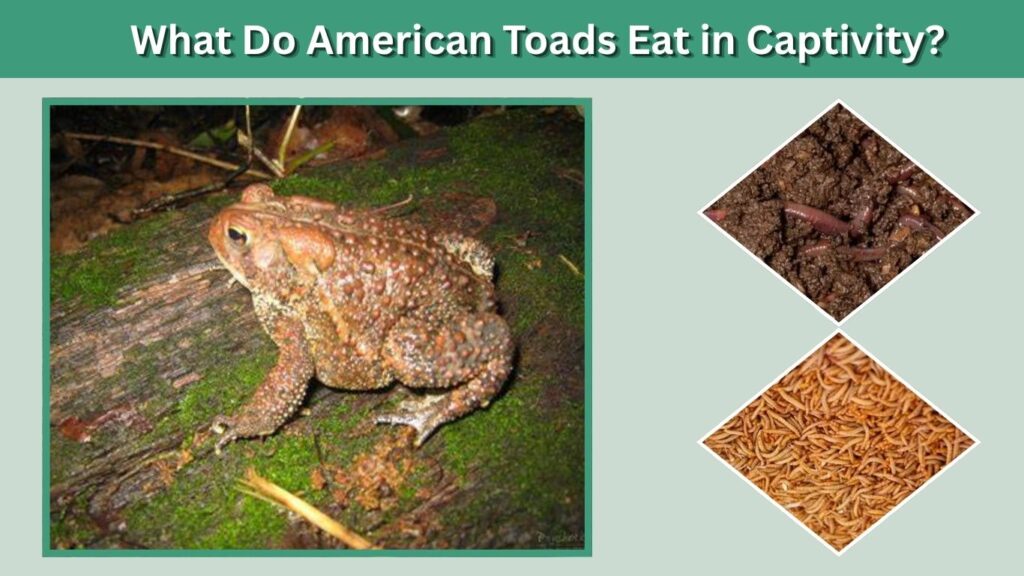
Captive American toads need a varied diet of live feeder insects. The goal is to copy their natural diet while avoiding unsafe wild prey. A healthy captive diet should include different feeder types, proper prey size, calcium dusting, and vitamin support.
Safe captive foods include:
- Crickets
- Small dubia roaches
- Earthworms
- Mealworms
- Waxworms
- Black soldier fly larvae
- Small hornworms
- Small silkworms
- Occasional soft feeder insects
Crickets are common and easy to find, but they should not be the only food forever. Variety helps provide better nutrition. Earthworms are often a good staple because they are soft and digestible. Dubia roaches can also be useful if they are small enough.
Mealworms can be offered, but not as the only food. Their harder outer shell can be more difficult to digest, especially for small toads. Waxworms are accepted by many toads, but they are fatty and should be treats rather than daily food.
Feeder insects should be gut-loaded before feeding. This means the insects are fed nutritious foods before being offered to the toad. Calcium powder and reptile/amphibian vitamins can also help prevent nutritional problems.
How Often Do American Toads Eat?
Feeding frequency depends on the toad’s age, size, temperature, and health. Young toads eat more often than adults. Adults may not need food every day, especially if they are inactive or kept in cooler conditions.
Baby and Juvenile Toads
Baby American toads usually need small meals daily or every other day. They are growing fast and need frequent food. Offer tiny prey and watch whether they are actually eating. Remove uneaten insects so they do not stress or bite the toad.
Adult Toads
Adult American toads usually eat every two to three days in captivity. Some may eat more during warm active periods and less during cooler seasons. A healthy adult does not need constant feeding. Overfeeding can lead to obesity, especially if the diet includes too many fatty foods.
Seasonal Changes
American toads may eat less during cooler weather, winter slowdown, or breeding season changes. In the wild, they are not active feeders all year. A temporary drop in appetite can be normal, but long-term refusal to eat may signal stress, poor temperature, dehydration, illness, or wrong prey size.
How Much Should an American Toad Eat?
An American toad should eat enough to stay rounded but not swollen or overweight. The exact amount depends on body size. A small toad may eat only a few tiny insects, while a large adult may eat several crickets or a few worms in one meal.
A simple feeding guide:
- Baby toads: several tiny prey items per feeding
- Small juveniles: 3–6 small insects per feeding
- Medium toads: 4–8 medium insects per feeding
- Large adults: 5–10 suitable prey items, depending on size
Body condition matters more than exact numbers. A healthy toad should look sturdy, not bony. The backbone and hip bones should not be sharply visible. At the same time, the body should not look overly bloated from constant feeding.
Can American Toads Eat Crickets and Mealworms?
American toads can eat crickets and mealworms, but they should be used correctly. Crickets are a common feeder, while mealworms are better as part of a varied diet.
Crickets
Crickets are one of the best-known foods for captive American toads. They move actively, which triggers the toad’s hunting response. Choose crickets that are small enough to swallow safely. Large crickets can bite or stress the toad if left in the enclosure.
Mealworms
American toads can eat mealworms, but mealworms should not be the only feeder. They have a tougher outer shell than worms or soft larvae. Small toads may struggle with large mealworms. Use appropriately sized mealworms and offer them along with softer foods.
Waxworms
Waxworms are usually accepted by American toads, but they are high in fat. They can be useful for encouraging a picky toad to eat, but they should not become the main diet. Too many waxworms can cause unhealthy weight gain.
Can American Toads Eat Fruit, Fish, or Mice?
American toads should not be fed fruit. Adult toads are carnivorous and respond to moving animal prey. Fruit does not match their natural adult diet and will not provide the nutrition they need.
Fish are also not a normal or recommended food for American toads. A toad may try to eat very small moving animals, but fish can introduce health risks and are not necessary for a proper diet.
Mice are not suitable food for American toads. Even large toads are not built to eat mice as a regular diet. Pinky mice are too rich, unnatural, and risky for most toads. Stick with insects, worms, and safe invertebrate feeders.
Do American Toads Eat Each Other?
American toads can sometimes eat smaller toads if there is a large size difference and the smaller animal moves like prey. This is more likely in cramped conditions, during feeding, or when a large toad is housed with much smaller toads.
To reduce risk:
- Do not keep large and tiny toads together
- Feed toads separately if needed
- Provide enough hiding places
- Avoid overcrowding
- Offer correctly sized prey so hunger does not increase competition
In the wild, cannibalism is not their main feeding habit, but opportunistic feeding can happen. A toad does not understand “same species” the way humans do. If something is small, moving, and fits in its mouth, it may be treated as food.
Why Is My American Toad Not Eating?
An American toad may stop eating for many reasons. A short break from food is not always dangerous, but repeated refusal needs attention. Most feeding problems are caused by stress, wrong conditions, or unsuitable prey.
Common reasons include:
- Prey is too large
- The enclosure is too dry
- Temperature is too low
- The toad feels exposed or stressed
- The toad is newly captured or newly moved
- It is preparing for seasonal slowdown
- It is sick or dehydrated
- Feeder insects are not moving enough
- The toad is being handled too often
A thin toad that refuses food should be watched closely. Make sure it has a shallow water dish, moist hiding areas, and quiet surroundings. Try smaller live prey such as pinhead crickets, fruit flies, or small earthworm pieces. If the toad keeps losing weight, a veterinarian with amphibian experience is the safest option.
What Eats American Toads?
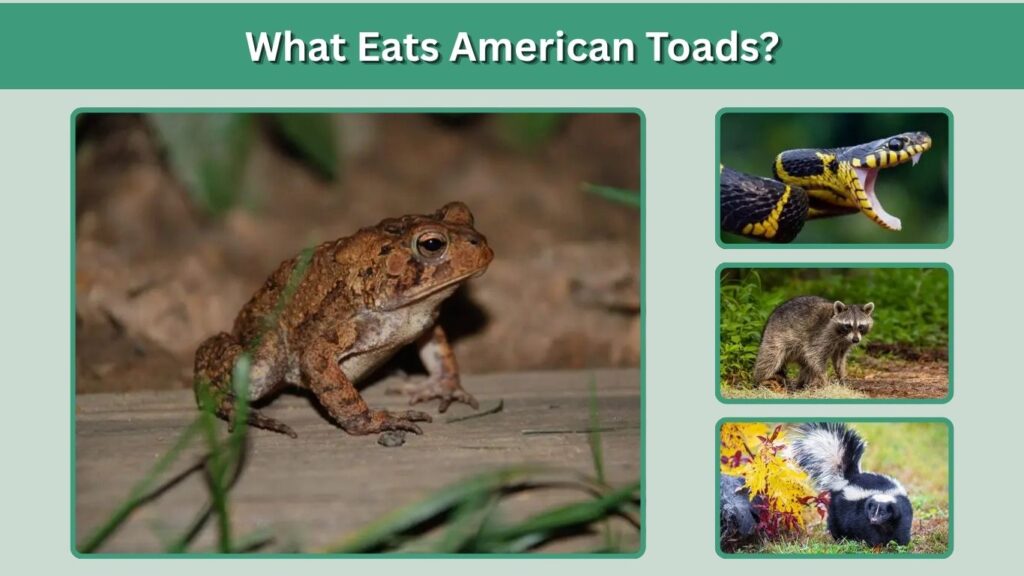
American toads are predators of insects, but they are also prey for larger animals. Their skin glands produce toxins that discourage many predators, but some animals still eat them or learn to avoid the toxic parts.
Predators may include:
- Snakes
- Raccoons
- Skunks
- Herons
- Crows
- Hawks
- Larger frogs
- Some turtles
- Domestic cats and dogs
Toads often defend themselves by puffing up, lowering the head, releasing toxins from skin glands, or urinating when grabbed. Their warty skin and brown coloration also help them blend into soil, leaves, and bark.
Safe Feeding Tips for American Toads
Feeding an American toad is not just about giving insects. Food quality, prey size, enclosure conditions, and safety all matter. A toad may survive on poor feeding for a while, but long-term health depends on variety and proper care.
Helpful feeding rules:
- Offer live prey that moves naturally
- Keep prey smaller than the toad’s mouth
- Use variety instead of one feeder only
- Avoid insects collected from pesticide-treated areas
- Remove uneaten crickets after feeding
- Dust feeders with calcium when needed
- Provide clean shallow water at all times
- Keep the enclosure moist but not waterlogged
- Do not feed fruit, bread, processed food, or meat scraps
Wild-caught insects can seem natural, but they may be unsafe if collected near lawns, farms, roads, or sprayed gardens. Captive-bred feeder insects are usually safer. If using outdoor prey, only collect from chemical-free areas and avoid brightly colored, hairy, stinging, or unknown insects.
FAQs
What do American toads like to eat most?
American toads usually like live moving prey such as crickets, worms, beetles, slugs, and small insects. In captivity, many accept crickets, earthworms, small roaches, mealworms, and waxworms. Movement is important because it triggers their feeding response.
What do baby American toads eat?
Baby American toads eat tiny live prey, including fruit flies, springtails, pinhead crickets, tiny isopods, and very small soft insects. Their food must be much smaller than adult feeders. Prey that is too large can scare, injure, or choke a baby toad.
Do American toads eat slugs and snails?
Yes, American toads can eat slugs and small snails in the wild. These soft-bodied animals are common in damp places where toads hunt. For pet toads, wild slugs and snails should be avoided unless they come from a safe, pesticide-free area.
How long can an American toad go without eating?
A healthy adult American toad may go several days or longer without eating, especially in cool conditions. However, baby toads need food more often. If a toad becomes thin, weak, or refuses food repeatedly, check its habitat and consider expert help.
Can American toads eat mealworms and waxworms?
Yes, American toads can eat mealworms and waxworms, but they should not be the only foods. Mealworms are harder than soft worms, and waxworms are fatty. They are best used as part of a varied diet with crickets, earthworms, and other safe feeders.
