
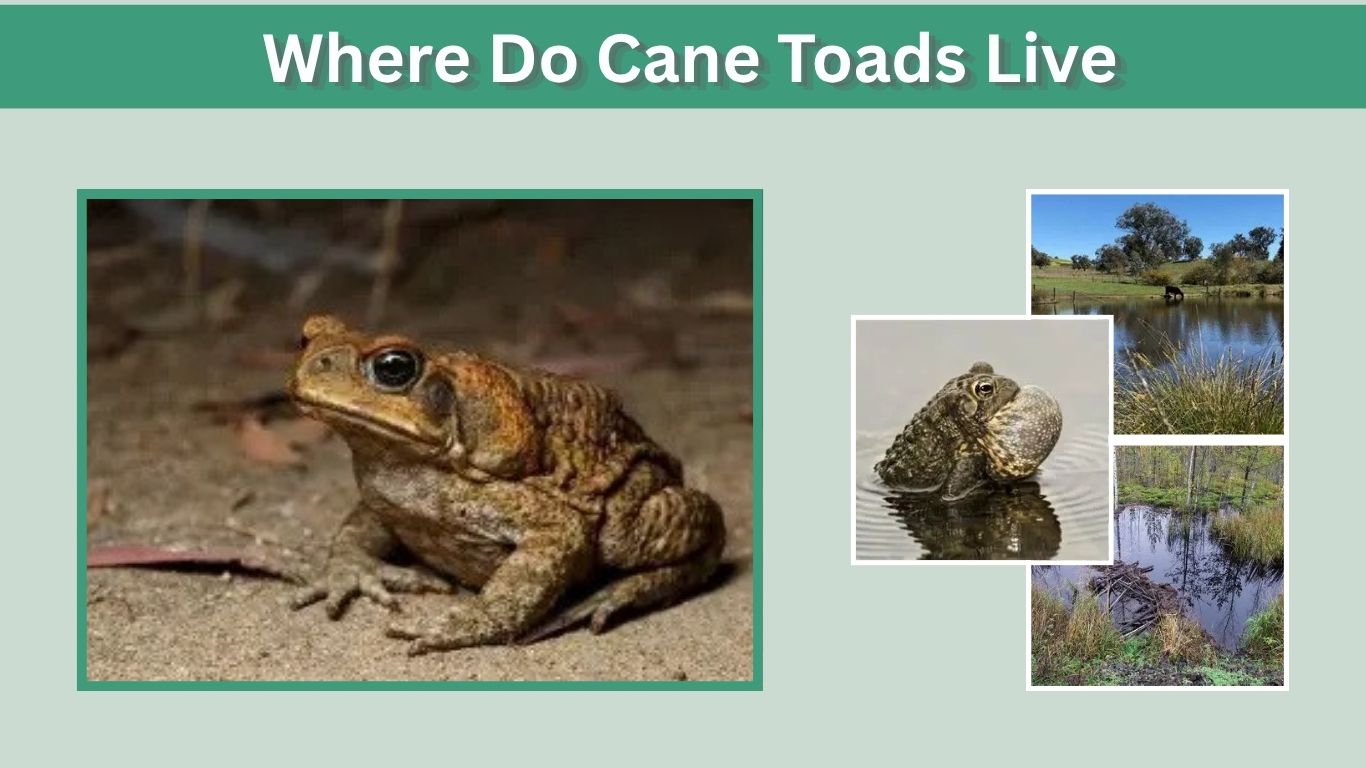
Cane toads live in warm regions with access to moisture, food, and breeding water. They are native to parts of the Americas but have been introduced to places such as Australia, Florida, Caribbean islands, and Pacific islands. They are mostly land-dwelling toads, not fully aquatic animals. They use water for breeding and hydration, but adults usually live on the ground.
Cane Toad Natural Range
Cane toads are native to tropical and subtropical parts of the Americas. Their original range includes areas from southern Texas through Central America and into tropical South America. In this native range, they are part of the natural ecosystem and live with predators, parasites, and competitors that help keep their numbers more balanced.
Native Habitat
In their native range, cane toads use many warm habitats. They can live in open forests, grasslands, wetlands, agricultural edges, riverbanks, and disturbed ground. They are adaptable, which is one reason they became successful after being introduced outside their native range.
They do not need untouched wilderness to survive. Cane toads can live near people, farms, roads, drains, gardens, and lights. They often do well in places where insects are easy to find.
Why Warm Climates Matter
Cane toads are amphibians, so they need warmth and moisture. They are most successful in tropical and subtropical climates. Cold weather limits where they can survive long-term.
They may hide during dry or hot periods and become active after rain. Warm nights with humidity are ideal for feeding and movement. In very dry areas, they need access to water, damp shelter, or wet ground.
Where They Hide During the Day
Cane toads are mostly active at night. During the day, they hide in cool, damp, protected places. This keeps them from drying out and helps them avoid extreme heat.
Common daytime shelters include:
- Under logs
- Under rocks
- In leaf litter
- In burrows
- Under garden pots
- Around drains
- Under sheds
- Near water tanks
- In damp soil
- Around thick vegetation
At night, they leave shelter to hunt insects and search for breeding sites.
Where Cane Toads Live Around the World
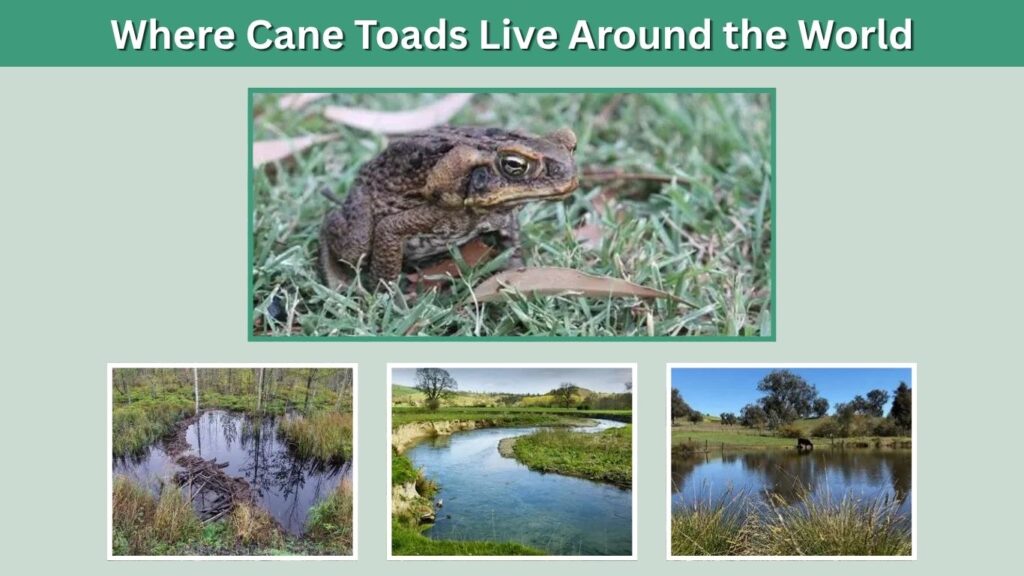
Cane toads became globally known because they were introduced to many places for pest control. In several regions, they became invasive. They spread easily because they eat many small animals, breed heavily, and tolerate disturbed habitats.
They are now found far beyond their natural range.
Cane Toads in Australia
Cane toads were introduced to Australia in 1935 to control agricultural pests in sugar cane fields. The plan failed, and the toads spread widely. Today, they are found in large parts of northern and eastern Australia.
In Australia, cane toads live in:
- Queensland
- New South Wales
- Northern Territory
- Western Australia
- Tropical savannas
- Wetlands
- River edges
- Farm dams
- Gardens
- Towns
- Cane fields
- Roadsides
They often gather near outdoor lights because lights attract insects. They also use ponds, ditches, dams, and slow waterways for breeding.
Cane Toads in Florida
Cane toads also live in Florida, where they are considered nonnative and invasive. They are especially known in southern and central parts of the state. They can be found around suburbs, canals, gardens, golf courses, retention ponds, and wet neighborhoods.
Florida cane toads are a concern because they are toxic to pets. Dogs may bite or lick them and become seriously sick. Homeowners in cane toad areas should remove pet food, reduce insect-attracting lights, and keep dogs supervised at night.
Cane Toad Habitat Table
| Region | Habitat Type | Common Shelter |
| Native Americas | Tropical forests, grasslands, wetlands, farms | Logs, burrows, leaf litter |
| Australia | Savannas, wetlands, towns, cane fields, river edges | Drains, soil, rocks, garden objects |
| Florida | Suburbs, canals, ponds, gardens, golf courses | Plants, patios, drains, sheds |
| Pacific islands | Farms, villages, coastal lowlands, disturbed habitats | Ground cover, debris, water edges |
| Caribbean islands | Warm lowlands, farms, gardens, wet areas | Leaf litter, rocks, damp shelter |
What Habitat Do Cane Toads Prefer?
Cane toads prefer warm, moist places with enough food and nearby breeding water. They are not limited to wild forests. They often do well in human-changed habitats, which makes them difficult to control.
Their ideal habitat has three things: shelter, insects, and water.
Wetlands and Water Edges
Wetlands, ponds, ditches, dams, canals, and slow-moving waterways are important for cane toads. Adults use these places for breeding. Females lay eggs in water, and the tadpoles develop there.
However, adult cane toads do not live underwater. They spend much of their adult life on land. They return to water mainly for breeding, soaking, and hydration.
Farms, Gardens, and Towns
Cane toads are very common in disturbed areas. Farms and towns can provide food, water, shelter, and warmth. Outdoor lights attract insects, which attract toads. Irrigation and garden watering also create moist spaces.
In towns, cane toads may live near:
- Porch lights
- Swimming pools
- Pet bowls
- Drains
- Garden beds
- Compost areas
- Retaining walls
- Water tanks
- Roadside gutters
- Retention ponds
This is why people often see cane toads at night near houses.
Dry Areas and Survival
Cane toads can survive in some dry areas if they find water or damp shelter. They may hide during the day and become active after rain. Their ability to use artificial water sources helps them move through places that might otherwise be too dry.
Still, they cannot live permanently without moisture. Like other amphibians, they can dry out if they cannot access water or humid shelter.
Do Cane Toads Live in Water?
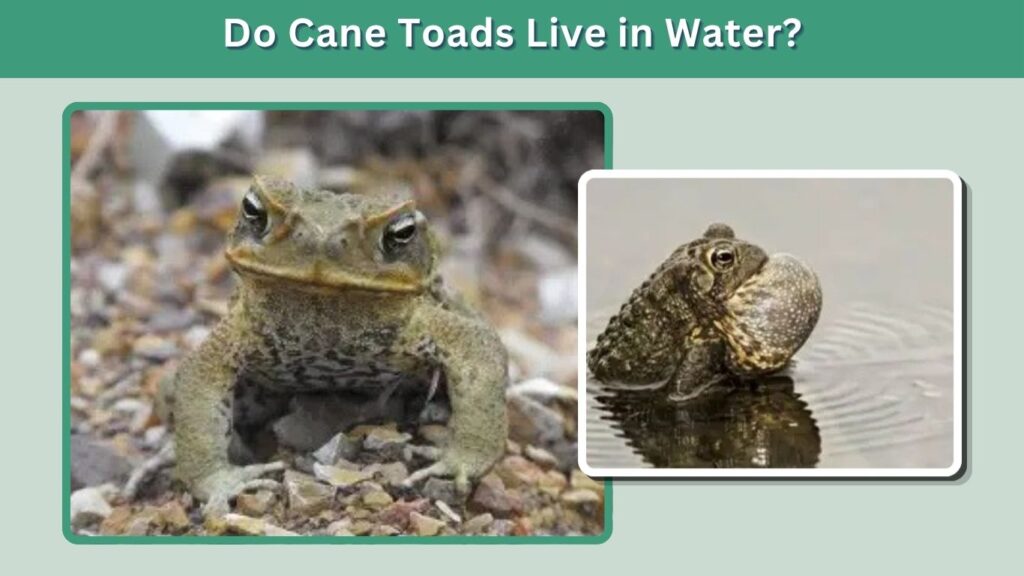
Cane toads need water, but they are not fully aquatic. Adults are mostly terrestrial. This means they live mainly on land. They use water for breeding and sometimes soaking, but they do not stay underwater like fish or fully aquatic frogs.
Understanding this helps answer many related questions about toads and water.
Can Toads Live in Water?
Most toads cannot live in water all the time. They need moisture, but adults usually need land, air, and hiding places. If kept in deep water with no land, a toad can drown or become stressed.
Cane toads lay eggs in water, and their tadpoles live in water. After metamorphosis, young toads leave the water and begin living mostly on land.
Can Cane Toads Live Underwater?
No, adult cane toads cannot live underwater. They breathe air through lungs and need access to land. They may sit in shallow water, but they cannot remain submerged forever.
A safe water area for a toad is shallow and easy to leave. Deep, smooth-sided pools can trap amphibians, especially small toads or tired animals.
Can Cane Toads Live in Saltwater?
Cane toads are not true saltwater animals. They may tolerate some coastal conditions better than many amphibians, but they are not adapted to live in seawater. They need freshwater or low-salt moisture for normal survival and breeding.
Saltwater can dehydrate amphibians. Cane toads may occur near coastal areas, but they still depend on freshwater or damp land habitats.
Where Do Cane Toads Live During the Day?
Cane toads usually avoid heat and dryness during the day. They hide in shaded, damp places and become active after sunset. This behavior helps them conserve moisture and avoid daytime predators.
You may not see many cane toads during the day, even in places where they are common.
Daytime Hiding Spots
Cane toads may shelter under almost anything that provides shade and moisture. In yards, they often use human-made objects.
Common hiding places include:
- Under outdoor furniture
- Under wood piles
- Under rocks
- In garden mulch
- In irrigation boxes
- Around drains
- Under steps
- Under sheds
- In thick grass
- Beneath plant pots
If you live in a cane toad area, be careful when moving garden items. A toad may be hiding underneath.
Nighttime Movement
At night, cane toads become active. They search for insects, mates, and water. After rain, they may appear in large numbers. Roads, lawns, and paths may attract them because insects and moisture are easier to find there.
They often sit still and wait for prey. When an insect moves close enough, the toad snaps it up quickly.
Why They Come Near Houses
Cane toads come near houses because houses create useful habitat. Outdoor lights attract insects. Gardens provide moisture. Pet bowls provide water. Drains and clutter provide shelter.
To reduce cane toads around a home, remove standing water where possible, bring pet food indoors, reduce outdoor lights, and keep yards tidy. In areas where cane toads are invasive, follow local control advice.
How Long Do Cane Toads Live?
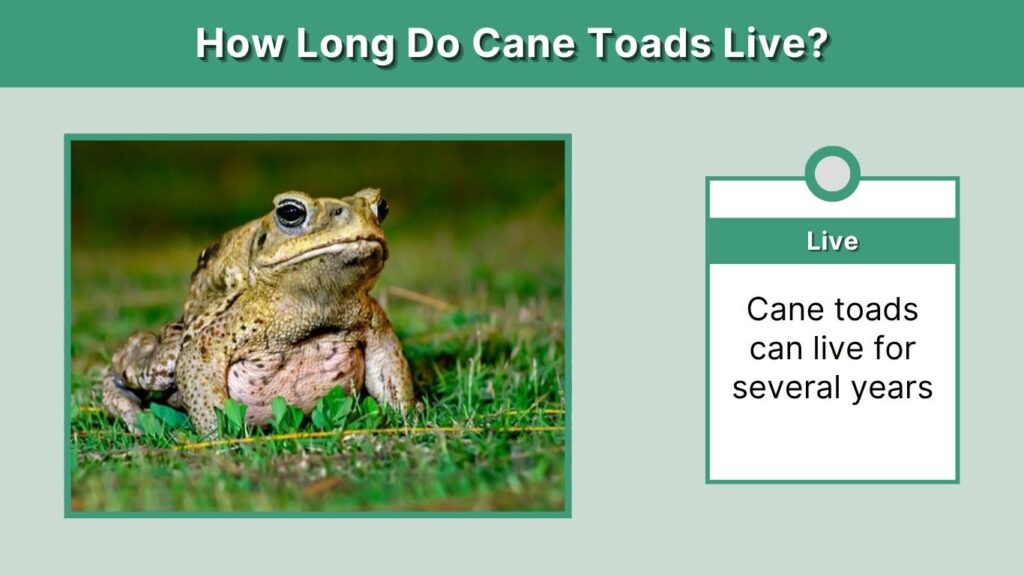
Cane toads can live for several years in the wild. Their lifespan depends on predators, climate, food, disease, and habitat. In captivity, they may live longer if cared for correctly.
Lifespan is different from survival without food or water. A toad may survive short hard periods, but long-term health depends on steady moisture and food.
Lifespan in the Wild
Cane toads commonly live for several years in the wild. Many die young because eggs, tadpoles, and toadlets face many risks. Adults that survive early stages may live much longer.
Wild risks include predators, drought, road deaths, parasites, disease, and control programs. In invasive areas, their toxic defense protects them from many predators, but not all threats.
Lifespan in Captivity
In captivity, cane toads may live longer because they are protected from predators and extreme weather. However, they still need correct housing, clean water, safe food, and enough space.
A captive cane toad kept in poor conditions may die early. Clean water, suitable substrate, proper temperature, and a varied insect diet are important.
How Long Can a Toad Live Without Food or Water?
A healthy adult toad may survive a short time without food, especially during cooler or inactive periods. However, it should not be forced to go without food for long. Young toads need food more often.
Water is more urgent. Toads can dehydrate quickly in hot, dry conditions. A toad without water or damp shelter may become weak or die. Amphibians should always have access to moisture.
Can Frogs and Toads Live Together?
Frogs and toads may share wild habitats, but that does not mean they should live together in captivity. In the wild, animals can move away from each other. In a tank, they are trapped together.
Mixed amphibian setups often cause stress, disease transfer, feeding problems, and injuries.
In the Wild
Frogs and toads can live in the same pond, wetland, or garden. They may use the same water for breeding or hunt insects in the same area. However, they still choose their own shelters and can avoid each other.
A cane toad may share habitat with other amphibians, but it can also compete with them. In introduced areas, cane toads may harm native ecosystems.
In Captivity
It is usually not recommended to keep frogs and toads together in the same tank. Different species need different temperatures, humidity, water depth, food sizes, and hiding spaces. Some may also produce skin toxins.
Do not keep cane toads with tree frogs, fire-bellied toads, salamanders, newts, lizards, turtles, fish, or small frogs. A cane toad may try to eat smaller animals, and its toxins may create additional risk.
Can Toads Live Together?
Some toads of the same species and similar size may live together if the enclosure is large enough. However, they still need enough hides, feeding space, and clean conditions.
Do not mix large and small toads. Large toads may eat smaller ones. If one animal becomes thin, stressed, or bullied, separate them.
FAQs
Where do cane toads live?
Cane toads live in warm places with moisture, shelter, insects, and breeding water. They are native to parts of the Americas but now also live in introduced areas such as Australia, Florida, Caribbean islands, and Pacific islands. They use wetlands, gardens, farms, towns, and water edges.
Do cane toads live in water?
Adult cane toads do not live in water full-time. They are mostly land-dwelling amphibians. They use water for breeding, soaking, and hydration. Their eggs and tadpoles develop in water, but adults need land and air to survive.
Where do cane toads live during the day?
During the day, cane toads hide in cool, damp, shaded places. They may shelter under logs, rocks, garden pots, sheds, leaf litter, drains, or thick vegetation. At night, they come out to hunt insects and search for water or mates.
How long do cane toads live?
Cane toads can live for several years in the wild and often longer in captivity with proper care. Their lifespan depends on food, climate, predators, water, disease, and habitat quality. Many eggs and young toads die early, but adults can be long-lived.
Can frogs and toads live together?
Frogs and toads may share wild habitats, but they should usually not live together in captivity. Different species may need different care, and some can spread disease or toxins. A cane toad may also eat smaller animals, so mixed tanks are not recommended.
