
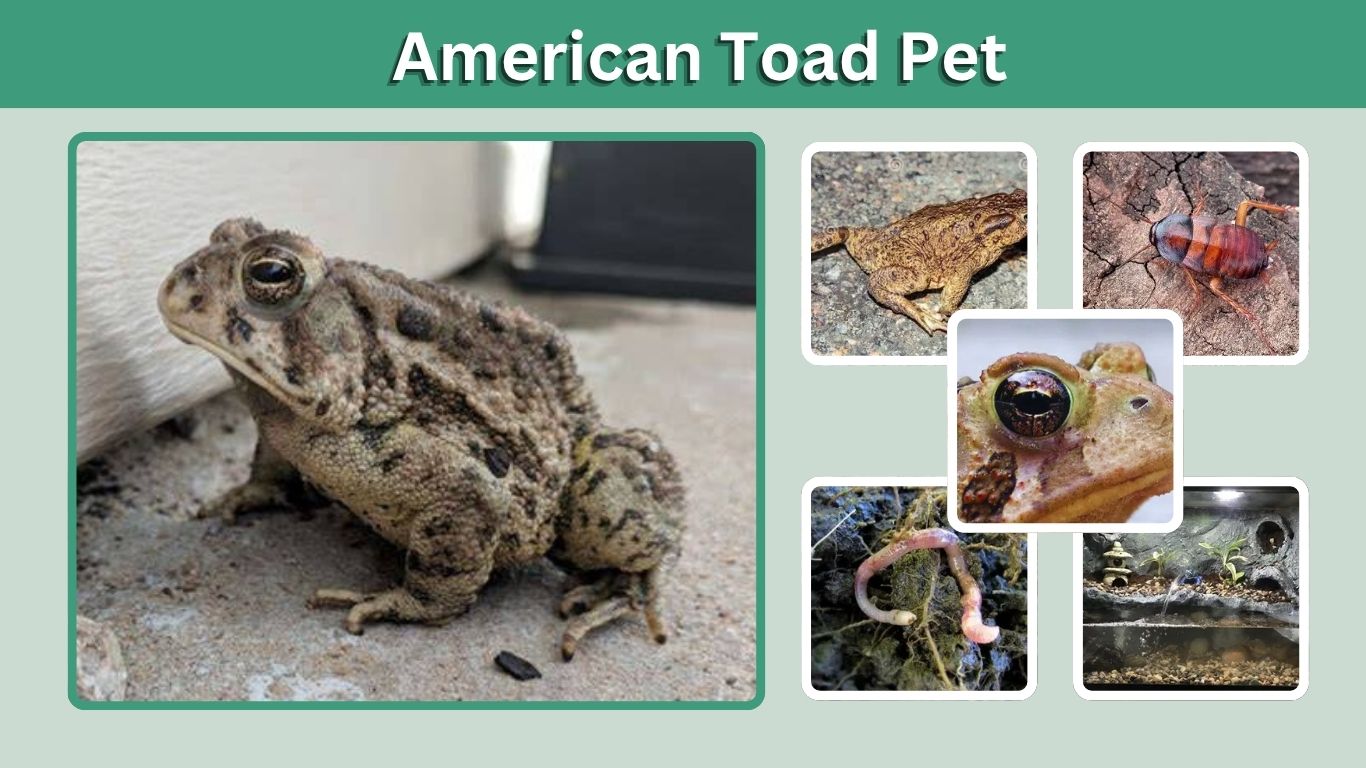
An American toad can be an interesting pet for amphibian keepers who prefer a quiet, low-handling animal. It is hardy, calm, and fun to watch at night. However, it is not a cuddly pet and should not be collected without checking local laws. A healthy pet American toad needs a safe enclosure, moist substrate, live insects, clean water, hiding places, and careful handling.
Are American Toads Good Pets?
American toads can make good pets for people who enjoy observing natural behavior. They do not need affection like dogs or cats. Instead, they spend much of their time hiding, burrowing, sitting still, and hunting insects. This makes them better for patient keepers than for people who want a pet to hold often.
Why People Keep American Toads
American toads are popular because they are common, hardy, and easy to recognize. They have dry-looking warty skin, short legs, golden or brown eyes, and a calm feeding style. Many owners enjoy watching them snap up crickets, dig into soil, or sit in a shallow water dish.
They also do not need a very large enclosure compared with many reptiles. A single adult can live in a modest tank if it has enough floor space, safe substrate, hides, and water. Their care is simple, but it still must be done correctly.
Important Things to Know First
American toads are amphibians, so their skin is sensitive. Chemicals, soap, lotion, chlorine, and rough handling can harm them. They should be treated as display pets, not handling pets.
Before keeping one, remember:
- Check local wildlife laws first.
- Captive-bred or legally obtained animals are better.
- Wild toads may carry parasites.
- They need live insects.
- They need clean, dechlorinated water.
- They need moist but not flooded substrate.
- They should not be handled often.
- They can release mild skin toxins.
- They should not live with reptiles or fish.
- They may live for many years with care.
An American toad is best for someone who enjoys building a natural terrarium and watching behavior from outside the glass.
Can You Keep an American Toad as a Pet?
In some places, keeping an American toad may be allowed, but in other places it may be restricted. Rules can vary by state, province, park, or local wildlife agency. Never collect from protected land, nature reserves, or parks without permission.
Even where it is legal, taking wild animals should be done responsibly. A captive-bred toad or rescue animal is usually a better choice. If you find an injured wild toad, contact a local wildlife rehabilitator instead of keeping it without guidance.
American Toad Pet Care Basics
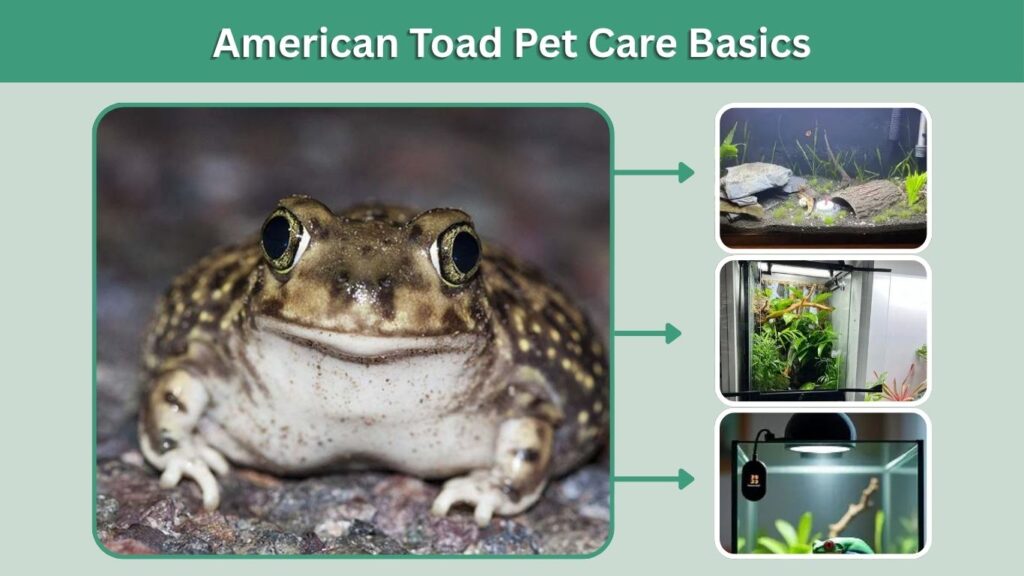
Good care means copying the toad’s natural needs. American toads are terrestrial amphibians. They need land space, hiding areas, moisture, clean water, and safe live prey. They do not need a deep aquarium like aquatic frogs.
Their enclosure should feel like a damp woodland floor, not a dry reptile cage or a wet fish tank.
Basic Care Checklist
A pet American toad setup should include:
- Secure glass or plastic enclosure
- Ventilated lid
- Moist, safe substrate
- Two or more hiding spots
- Shallow water dish
- Dechlorinated water
- Live insects
- Calcium and vitamin supplements
- Thermometer
- Humidity gauge
- Leaf litter or moss
- Low-stress lighting
- Regular cleaning routine
The enclosure should stay humid enough for healthy skin, but it should not be swampy. Poor ventilation and dirty wet substrate can cause skin problems.
American Toad Care Table
| Care Area | Best Practice |
| Tank type | Secure terrestrial enclosure |
| Substrate | Moist coconut fiber, soil mix, moss, leaf litter |
| Temperature | Cool to mild room temperatures |
| Water | Shallow, dechlorinated water dish |
| Diet | Live insects and other safe invertebrates |
| Handling | Very limited, with clean wet hands or gloves |
| Lighting | Natural day-night cycle, low UVB optional |
| Personality | Calm, secretive, mostly active at night |
Daily Care Routine
Daily care is not complicated, but it must be consistent. Check water, moisture, temperature, and the toad’s general behavior. Remove old food, dead insects, and waste when seen.
A simple daily routine includes misting lightly if needed, replacing water, checking hides, and watching for appetite. Most American toads become active in the evening, so feeding at dusk often works well.
American Toad Tank Setup
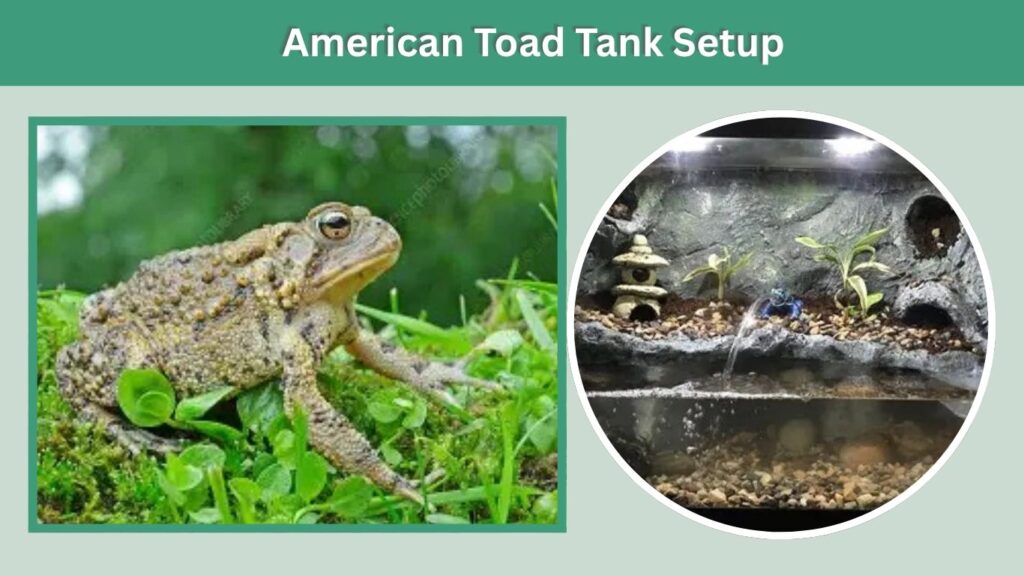
The tank should provide safety, moisture, and hiding space. American toads are not strong climbers like tree frogs, but they can still escape through loose lids. A secure top is important.
The best enclosure has more floor space than height. Toads walk, sit, burrow, and hunt on the ground.
Tank Size and Layout
A 10-gallon tank can work for one small adult, but a larger enclosure is better. A 20-gallon long tank gives more space for movement, hides, and natural decoration. If keeping more than one toad, more space is needed.
The layout should include a moist side, a slightly drier side, and several hiding spots. Add cork bark, leaf litter, smooth rocks, live or fake plants, and a shallow water dish. Avoid sharp decorations that can scrape the skin.
Substrate and Moisture
Substrates should hold moisture without becoming dirty or waterlogged. Good choices include coconut fiber, organic topsoil without chemicals, sphagnum moss, and leaf litter. A mixed natural substrate can help the toad burrow and stay comfortable.
Keep the substrate damp, not soaked. If the tank smells bad, grows mold, or stays wet all the time, cleaning and ventilation need improvement.
Avoid cedar, pine, gravel, sand-only substrate, fertilizer soil, and chemical-treated mulch. These can irritate or harm amphibians.
Water Dish and Humidity
American toads absorb water through their skin. They need a shallow dish with clean, dechlorinated water. The dish should be easy to enter and exit. The water should not be deep enough to trap or drown the toad.
Change the water daily or whenever it becomes dirty. Tap water should be treated with an amphibian-safe dechlorinator. Do not use distilled water as the only water source for long-term care unless advised by an amphibian vet.
American Toad Diet
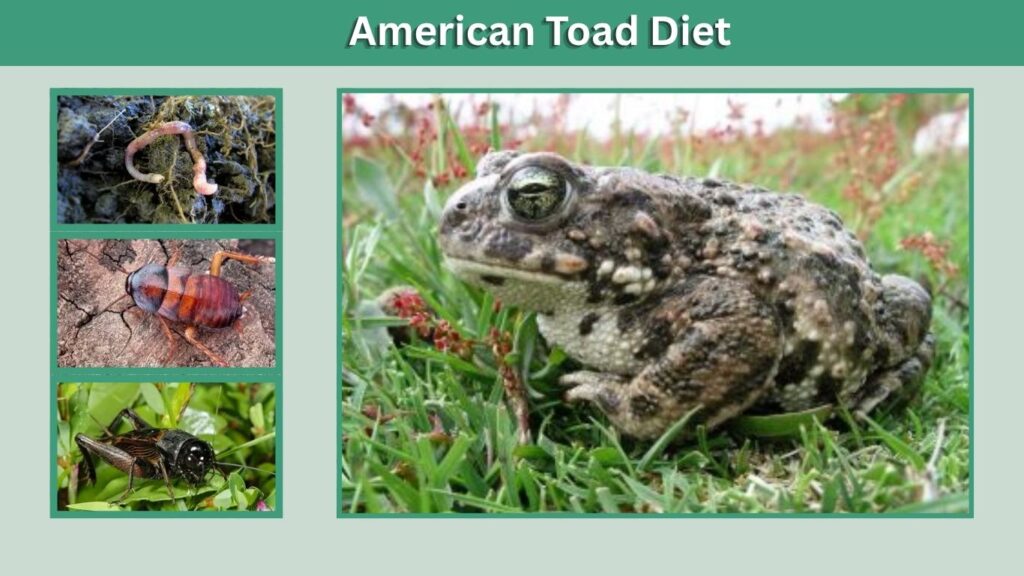
American toads are insectivores. They eat live prey, not pellets, fruit, or vegetables. In the wild, their diet includes many invertebrates, such as insects, spiders, worms, slugs, and similar small animals.
In captivity, variety is important. Feeding only one insect all the time can lead to nutritional problems.
Best Foods for Pet American Toads
Good feeder insects include crickets, dubia roaches, earthworms, nightcrawler pieces, black soldier fly larvae, small hornworms, and occasional waxworms. The prey should be smaller than the space between the toad’s eyes, especially for juveniles.
Good feeder options include:
- Crickets
- Dubia roaches
- Earthworms
- Small nightcrawler pieces
- Black soldier fly larvae
- Small hornworms
- Silkworms
- Mealworms in small amounts
- Waxworms as rare treats
- Small moths from safe sources
Do not feed wild-caught insects from sprayed lawns, roadsides, or polluted areas. They may carry pesticides or parasites.
Feeding Schedule
Young American toads usually eat more often than adults. Juveniles may eat daily or almost daily. Adults often do well with feeding every two or three days, depending on body condition, temperature, and activity.
Do not leave too many crickets in the tank overnight. Hungry crickets may bite amphibians. Remove uneaten prey after feeding.
A good feeding routine:
- Feed in the evening.
- Offer live prey of safe size.
- Dust insects with supplements.
- Remove uneaten insects.
- Watch body condition.
- Avoid overfeeding fatty insects.
Obesity can happen in captive toads, especially if they eat too many waxworms or large prey.
Supplements
Captive insects are often lower in nutrients than wild prey. Calcium and vitamin supplements help prevent deficiencies. Dust feeder insects lightly before feeding.
Use calcium powder and a reptile/amphibian multivitamin on a schedule. Do not coat insects heavily every meal. Too much supplementation can also cause problems. Follow product instructions or ask an exotic vet for a schedule based on age and diet.
American Toad Lighting and Temperature
American toads do not need intense desert-style heat. They are cool-climate amphibians and can become stressed if kept too warm. Stable, mild temperatures are usually better than high heat.
Lighting should support a natural day-night cycle without drying the enclosure.
Best Temperature Range
American toads generally do well at normal cool room temperatures. Avoid hot tanks, heat rocks, and strong basking bulbs. Overheating can be dangerous because amphibians lose moisture quickly.
Keep the enclosure away from direct sunlight. A glass tank in a sunny window can heat up fast and become deadly. If the room becomes too hot in summer, move the tank to a cooler area.
Do American Toads Need UVB?
American toads may not need strong UVB like many reptiles, but low-level UVB can be helpful when used safely. It should not overheat or dry the enclosure. Provide hiding areas so the toad can move away from light.
Many keepers use a simple day-night light cycle with low-intensity lighting. If using UVB, choose a gentle amphibian-safe level and replace bulbs as recommended.
Nighttime Activity
American toads are mostly nocturnal or crepuscular. They often hide during the day and become active in the evening. This is normal. A toad that sits hidden all day is not always sick.
Feed during evening hours for better hunting behavior. Keep nights dark and quiet. Constant bright light can stress them.
American Toad Handling and Safety
American toads should be handled as little as possible. Their skin absorbs moisture and chemicals easily. Human hands can carry soap, oil, lotion, salt, and cleaning products that may harm them.
Handling should only happen when needed for cleaning, health checks, or moving.
How to Handle an American Toad
Before handling, wash your hands well and rinse all soap completely. Wet your hands with dechlorinated water or wear powder-free gloves. Hold the toad low over a soft surface so it cannot fall far.
Safe handling tips:
- Handle only when necessary.
- Use clean wet hands or gloves.
- Keep the toad close to the ground.
- Never squeeze the body.
- Do not touch the eyes.
- Avoid long handling sessions.
- Wash hands afterward.
- Keep children supervised.
If the toad struggles, place it back in the enclosure. Stress can weaken amphibians over time.
Are American Toads Poisonous?
American toads have parotoid glands behind the eyes that can release a mild toxin. This helps protect them from predators. The toxin is not meant for human contact and should not be touched, tasted, or allowed near eyes or mouth.
Wash your hands after any contact. Keep toads away from dogs, cats, and small children. Pets may drool, vomit, or become ill if they bite or mouth a toad.
Do American Toads Like Being Pet?
No, American toads do not like being petted in the way mammals do. Some may tolerate brief contact, but handling is usually stressful. They are best enjoyed by watching them hunt, burrow, and explore.
A calm, hands-off approach keeps the toad safer and healthier.
Health and Common Problems
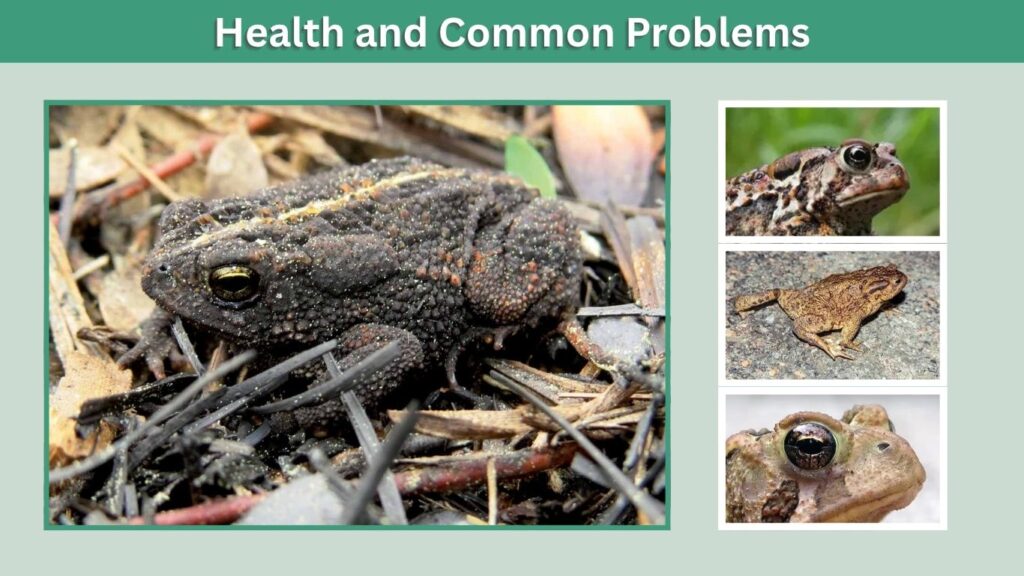
A healthy American toad should have clear eyes, smooth movement, normal posture, regular appetite, and healthy skin. It may hide often, but it should respond to prey and move normally when active.
Health problems often come from poor water quality, dirty substrate, wrong temperature, stress, or poor diet.
Signs of a Healthy Toad
Healthy signs include:
- Clear, open eyes
- Normal body weight
- Smooth hopping or walking
- Strong feeding response
- Moist healthy skin
- Normal shedding
- No wounds or swelling
- No strange bloating
- Regular hiding and evening activity
Toads may shed their skin and eat it. This is normal. However, stuck shed or skin sores are not normal.
Warning Signs
Contact an exotic vet if you notice:
- Refusing food for a long time
- Severe weight loss
- Swollen body
- Red or irritated skin
- Open wounds
- Cloudy eyes
- Trouble moving
- Floating or balance issues
- Strange posture
- Constant soaking
- Weakness
Do not try random home treatments. Amphibians are sensitive, and incorrect medicine can be dangerous.
Cleaning the Enclosure
Spot-clean waste often. Replace dirty water daily. Remove dead insects and moldy areas quickly. Deep-clean the enclosure when needed, but avoid strong chemicals.
Use amphibian-safe cleaning methods. If disinfecting, rinse thoroughly and let everything dry before the toad returns. Chemical residue can harm amphibian skin.
Keeping American Toads Together
Some keepers house more than one American toad, but it must be done carefully. Size differences can cause problems. Larger toads may try to eat smaller animals.
Never mix American toads with reptiles, fish, salamanders, tree frogs, or different toad species unless guided by an expert.
Can Multiple American Toads Live Together?
Two similar-sized American toads may live together in a larger enclosure, but they still need enough hides, space, and feeding control. Watch for bullying, food competition, and stress.
If one toad becomes thin or hides constantly, separate them. Feeding in a separate container can help ensure each toad eats enough.
Pet Combinations to Avoid
Avoid mixing American toads with other pets. A mixed tank may look interesting, but it often causes stress, injury, disease transfer, or feeding problems.
Do not house American toads with:
- Fire-bellied toads
- Tree frogs
- Salamanders
- Newts
- Lizards
- Turtles
- Fish
- Small snakes
- Large insects
- Different-sized toads
A single-species setup is safer and easier to maintain.
Wild-Caught Toad Concerns
Many American toads in captivity are wild-caught. Wild animals may carry parasites and may struggle with captivity. Removing too many animals from an area can also affect local ecosystems.
If you keep a wild-caught toad where legal, quarantine it, check for illness, and consider a vet exam. Do not release a captive-kept toad back into the wild after long captivity, especially if it has been exposed to captive insects or other animals.
FAQs
Are American toads good pets?
American toads can be good pets for people who enjoy watching amphibians rather than handling them. They are calm, hardy, and interesting to feed. However, they need live insects, clean dechlorinated water, moist substrate, and limited handling to stay healthy.
Can I keep an American toad as a pet?
You may be able to keep an American toad as a pet, but you must check local wildlife laws first. Some areas restrict collecting native amphibians. Captive-bred or legally obtained animals are better than taking wild toads from parks or protected land.
What do pet American toads eat?
Pet American toads eat live insects and other invertebrates. Good foods include crickets, dubia roaches, earthworms, small nightcrawler pieces, black soldier fly larvae, and occasional waxworms. Their food should be properly sized, gut-loaded, and lightly dusted with supplements.
Do American toads like to be handled?
American toads do not enjoy frequent handling. Their skin is sensitive and can absorb chemicals from human hands. Handle only when necessary, using clean wet hands or powder-free gloves. Keep the toad low to the ground to prevent injury from falls.
What tank does an American toad need?
An American toad needs a secure terrestrial tank with moist substrate, hiding places, a shallow water dish, and good ventilation. A 10-gallon tank may work for one small adult, but a 20-gallon long enclosure gives better space and a more natural layout.
