
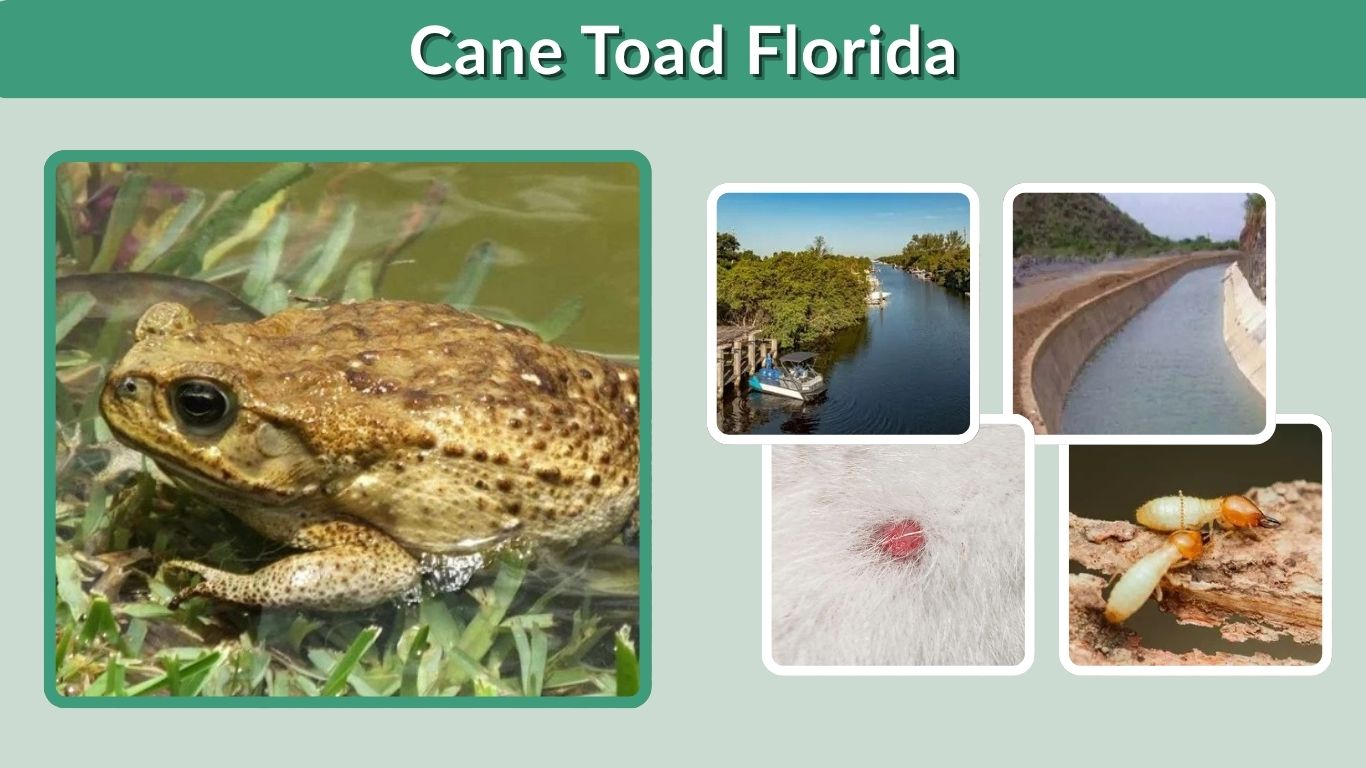
Cane toads in Florida are large, toxic, nonnative amphibians that can be dangerous to pets and harmful to native wildlife. They are also called bufo toads, marine toads, or giant toads. These invasive toads are most common in central and southern Florida, especially around yards, ponds, canals, gardens, and buildings. Correct identification matters because Florida also has harmless native toads.
What Are Cane Toads in Florida?
Cane toads are large toads known for their poison glands and strong ability to survive near people. They are not native to Florida, but they are now established in many warm parts of the state. They can breed in standing water and often appear after rain, especially at night.
Florida Cane Toad Overview
The cane toad’s scientific name is Rhinella marina. It was formerly known as Bufo marinus, which is why many people still call it the “bufo toad.” In Florida, this name is common among pet owners, pest control workers, and wildlife guides.
Cane toads are usually seen on the ground. They sit near lights, patios, ponds, roads, and drains where insects gather. They are not aggressive toward people, but their toxin can harm dogs, cats, and some wildlife.
Are Cane Toads Native to Florida?
No, cane toads are not native to Florida. They are native to parts of southern Texas, Central America, and tropical South America. They were introduced to Florida for pest control and later became established through releases and escapes.
Because they are nonnative, they do not fit naturally into Florida ecosystems. They can eat native animals and may compete with native frogs and toads for food and space.
Where Are Cane Toads Found in Florida?
Cane toads are mainly found in central and southern Florida. They are common in many urban and suburban areas where water, lights, and insects are available.
They may live around:
- Backyards
- Canals
- Retention ponds
- Golf courses
- Gardens
- Building foundations
- Roadside ditches
- Parks
- Farms
- Pet bowls
- Swimming pools
- Outdoor lights
They are especially noticeable during warm, wet weather.
Cane Toad Identification in Florida
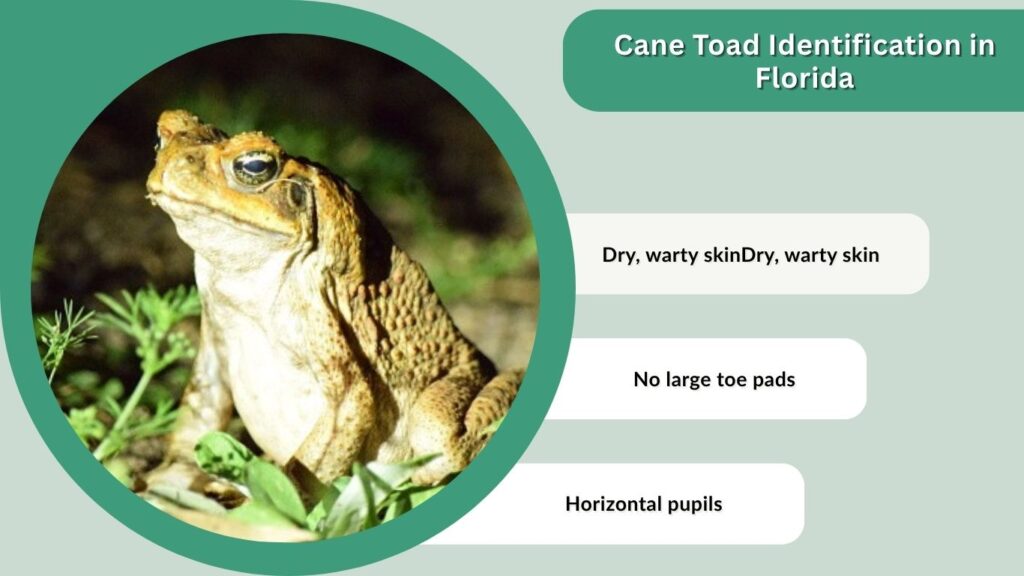
Correct identification is very important. Florida has native toads that should not be harmed. The cane toad is usually larger than most native Florida toads and has obvious poison glands behind the eyes.
If you are not sure, compare several features before taking action.
How to Identify a Cane Toad
Adult cane toads are large and heavy-bodied. Their skin is dry and warty, and their color can range from tan and brown to gray, reddish-brown, or olive. They often have a broad head and a strong, squat body.
Common identification signs include:
- Large size, often bigger than native toads
- Dry, warty skin
- Large triangular poison glands behind the eyes
- Bony ridges above the eyes
- No large toe pads
- Short, strong legs
- Horizontal pupils
- Often sits upright on the ground
- Common around lights and water
- May appear after heavy rain
The poison glands are one of the most useful signs. They sit behind the eyes and may look swollen or raised.
Cane Toad vs Florida Toad
Many people search for cane toad vs Florida toad because native southern toads and other Florida toads can look similar. The southern toad is native and should not be killed by mistake.
| Feature | Cane Toad | Native Southern Toad |
| Status in Florida | Nonnative invasive | Native |
| Adult size | Often very large and bulky | Usually smaller |
| Poison glands | Large, triangular glands behind eyes | Smaller oval glands |
| Head ridges | Less like raised knobs | Has prominent cranial knobs |
| Pet danger | High risk to dogs and cats | Lower risk, but still avoid handling |
| Control | May be removed humanely | Should be left alone |
A cane toad is usually larger and has bigger poison glands. A southern toad often has noticeable knobs or crests on top of the head.
Baby Cane Toads in Florida
Baby cane toads can be harder to identify because they are small and do not yet show the same obvious size difference as adults. They may appear in large numbers near water after breeding.
Young cane toads are still toxic, so pets should not be allowed to mouth them. If you see many small toads around a pond, canal, or ditch, use caution and try to identify them carefully before removal.
Why Cane Toads Are Dangerous in Florida
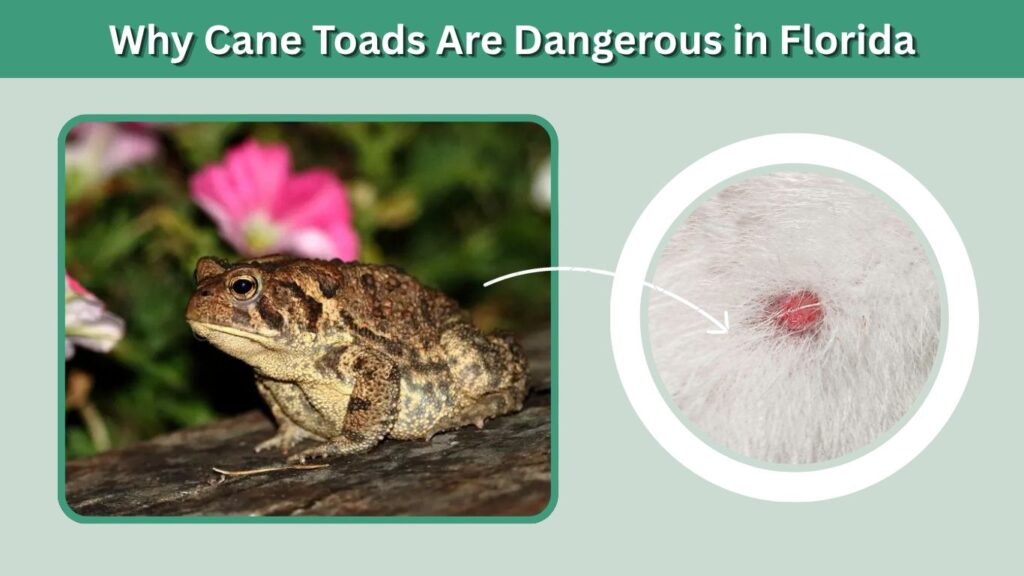
Cane toads are most famous in Florida because of their danger to pets. Dogs are especially at risk because they may bite, lick, or pick up a toad. The toxin can act quickly and may be life-threatening.
Their poison also affects wildlife and can reduce native biodiversity.
Cane Toad Poison
Cane toads have large parotoid glands behind the eyes. These glands release a milky toxin when the toad is stressed or attacked. The toxin can irritate the mouth, eyes, and skin. It is especially dangerous if swallowed or absorbed through the mouth.
Cane toad toxin can affect the heart and nervous system. This is why pet exposure should be treated as an emergency.
Cane Toads and Dogs
Dogs are the animals most often harmed by cane toads in Florida. A dog may sniff, lick, bite, or carry a toad. The poison can enter through the gums and mouth.
Warning signs in dogs may include:
- Heavy drooling
- Pawing at the mouth
- Red or irritated gums
- Foaming at the mouth
- Vomiting
- Weakness
- Stumbling
- Tremors
- Seizures
- Fast heart rate
- Collapse
If a dog mouths a cane toad, rinse the mouth carefully and contact a veterinarian immediately. Do not wait to see if symptoms improve.
Are Cane Toads Dangerous to People?
Cane toads are not usually dangerous if left alone, but their toxin should not be touched, tasted, or rubbed into the eyes. Children should not handle them. Adults should wear gloves if removing one.
Wash hands after any contact with toads, water bowls, traps, or surfaces where a toad was handled. Keep cane toads away from pets and small children.
How Did Cane Toads Get to Florida?
Cane toads were introduced to Florida in the 20th century. They were linked to attempts to control agricultural pests, especially around sugar cane. However, the original pest-control effort did not solve the problem.
Later releases and escapes helped establish the current population.
Florida Introduction History
Cane toads were first brought to Florida as a biological control idea. They were supposed to eat beetles and other pests that affected agriculture. This idea was also used in other parts of the world, including Australia.
The early introduction did not become the simple solution people expected. Instead, cane toads eventually became a pest themselves.
Escapes and Releases
Florida’s current cane toad population is believed to have grown from later accidental or intentional releases. Toads may have escaped importers, animal dealers, or facilities. Once enough animals survived and bred, the population became established.
Florida’s warm climate helped them survive. Urban water sources, canals, and human-modified habitats gave them places to breed and feed.
Why They Spread
Cane toads spread because they are adaptable. They eat many kinds of prey, breed in standing water, and use human environments well. They can live in suburbs, yards, farms, and drainage areas.
They are also active at night, when many insects are available. Outdoor lights attract insects, and the toads follow the food.
Cane Toad Habitat and Season in Florida
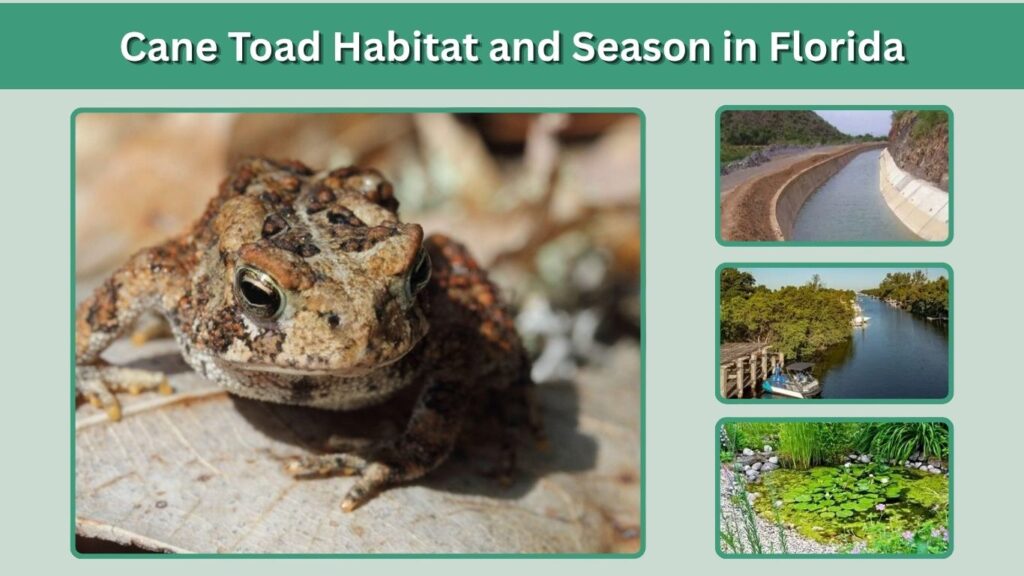
Cane toads can live in many parts of Florida where the climate stays warm enough. They are most active during warm and wet periods, especially after rain.
They are usually found close to moisture.
Common Florida Habitats
Cane toads in Florida often live near people. They use artificial water sources and hiding places created by landscaping and buildings.
Common habitats include:
- Canals
- Ponds
- Lakeshores
- Retention basins
- Drainage ditches
- Wet lawns
- Mulch beds
- Gardens
- Patios
- Golf courses
- Farms
- Road edges
They hide during the day and come out at night to feed.
Cane Toad Season in Florida
Cane toads may be active much of the year in warm parts of Florida. Activity increases during rainy periods because moisture helps them move and breed. They are often seen at night after storms.
Breeding can happen in standing water. Eggs, tadpoles, and young toads may appear after wet weather. Pet owners should be extra careful during rainy season and warm nights.
Cane Toad Sound in Florida
Cane toads can make a low, rough call. The sound is not as musical as many frog calls. It may be heard near breeding water at night.
However, sound alone is not the best way to identify a cane toad. Many frogs and toads call at night in Florida. Use size, body shape, poison glands, and location for better identification.
How to Get Rid of Cane Toads in Florida
Cane toads can be removed in Florida, but humane methods and correct identification are important. Never harm native toads by mistake. If you are unsure, contact a local extension office, wildlife professional, or experienced remover.
The goal is to reduce danger to pets and prevent breeding near homes.
Safe Yard Prevention
The best control method is to make your yard less attractive to cane toads. Remove food, shelter, and breeding opportunities where possible.
Helpful steps include:
- Bring pet food indoors.
- Keep pet water bowls inside at night.
- Reduce outdoor lighting when possible.
- Use motion lights instead of constant lights.
- Remove clutter near walls and patios.
- Keep grass trimmed.
- Fill or drain unnecessary standing water.
- Cover swimming pools when not used.
- Seal gaps under fences and sheds.
- Supervise dogs at night.
- Check yards after rain.
These steps will not remove every cane toad, but they can reduce visits around your home.
Humane Removal
If you capture a cane toad, wear gloves and avoid touching your face. Confirm the identification before euthanasia. Native toads should be released where found.
Humane euthanasia guidance commonly recommends applying benzocaine or lidocaine to the toad’s belly before freezing. Do not use bleach, salt, Dettol, ammonia, or other painful chemicals.
If you are uncomfortable handling toads, call a professional wildlife remover.
Cane Toad Traps
Cane toad traps may help in some situations, especially near problem areas. Traps should be checked often to avoid harming native animals. Any captured animal must be identified carefully.
Trapping works best with other steps, such as reducing outdoor lights, removing pet food, and managing standing water.
Cane Toad Predators and Wildlife Impact
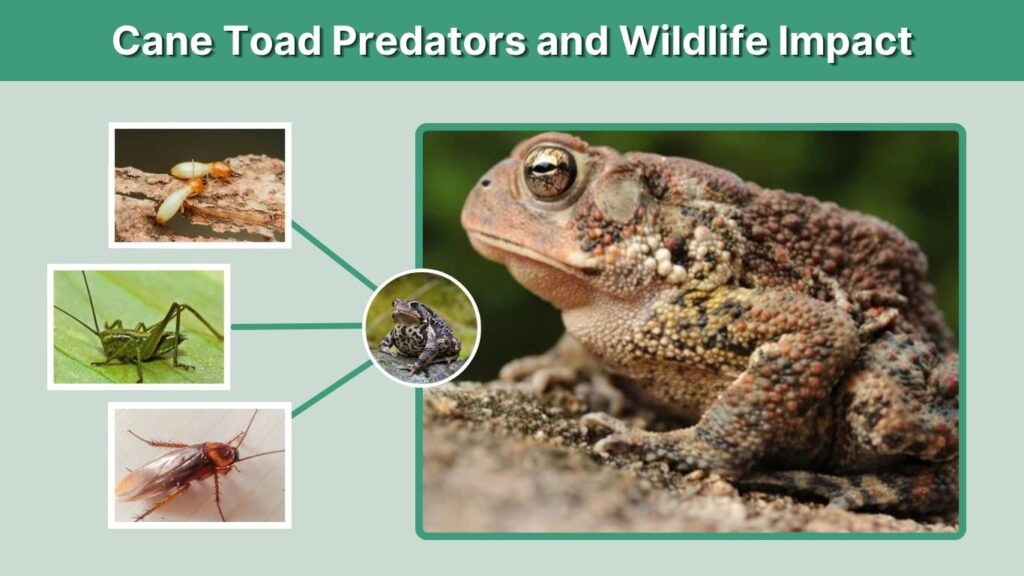
Cane toads affect Florida ecosystems because they eat many small animals and can poison predators. Their exact impact may vary by location, but they are still considered a harmful invasive species.
They are especially concerning in areas where native wildlife has no good defense against their toxin.
What Eats Cane Toads in Florida?
Some predators may attack cane toads, but many are at risk from the toxin. Snakes, birds, mammals, and other animals may try to eat them. Some may learn to avoid them. Others may die.
Certain predators may eat parts of a toad carefully or target smaller individuals, but this does not control the population enough. People should not rely on predators to solve a cane toad problem.
What Cane Toads Eat
Cane toads eat many small animals. They are opportunistic feeders and will eat almost anything that fits in their mouth.
Their diet may include:
- Beetles
- Ants
- Termites
- Crickets
- Roaches
- Spiders
- Small frogs
- Small lizards
- Small snakes
- Small mammals
- Pet food scraps
- Other invertebrates
Because they eat native animals and compete with native species, they can disrupt local food webs.
Cane Toads and Native Frogs
Cane toads can compete with native frogs and toads for food and breeding space. They may also prey on smaller native amphibians. This is one reason correct control is important.
However, people should not kill every toad they see. Florida has many native species. Always identify the animal before removal.
FAQs
Are cane toads in Florida?
Yes, cane toads are established in Florida, especially in central and southern parts of the state. They are often found around yards, canals, ponds, gardens, buildings, and wet areas. They are nonnative and considered invasive.
Are cane toads poisonous to dogs in Florida?
Yes, cane toads are highly dangerous to dogs. Their poison can enter through a dog’s mouth if the dog bites, licks, or carries the toad. Signs may include drooling, red gums, vomiting, tremors, seizures, weakness, and collapse. Veterinary help is urgent.
How do you identify a cane toad in Florida?
Look for a large, bulky toad with dry warty skin and large triangular poison glands behind the eyes. Cane toads are often bigger than native toads. Compare them carefully with the native southern toad before removal.
How do you get rid of cane toads in Florida?
First, reduce attractants by removing pet food, standing water, clutter, and constant outdoor lights. If capturing cane toads, wear gloves and confirm identification. Use humane euthanasia methods recommended by local authorities or contact a professional remover.
Are cane toads native to Florida?
No, cane toads are not native to Florida. They are native to parts of the Americas farther south and were introduced to Florida. Their current population became established through past introductions, releases, and escapes.
