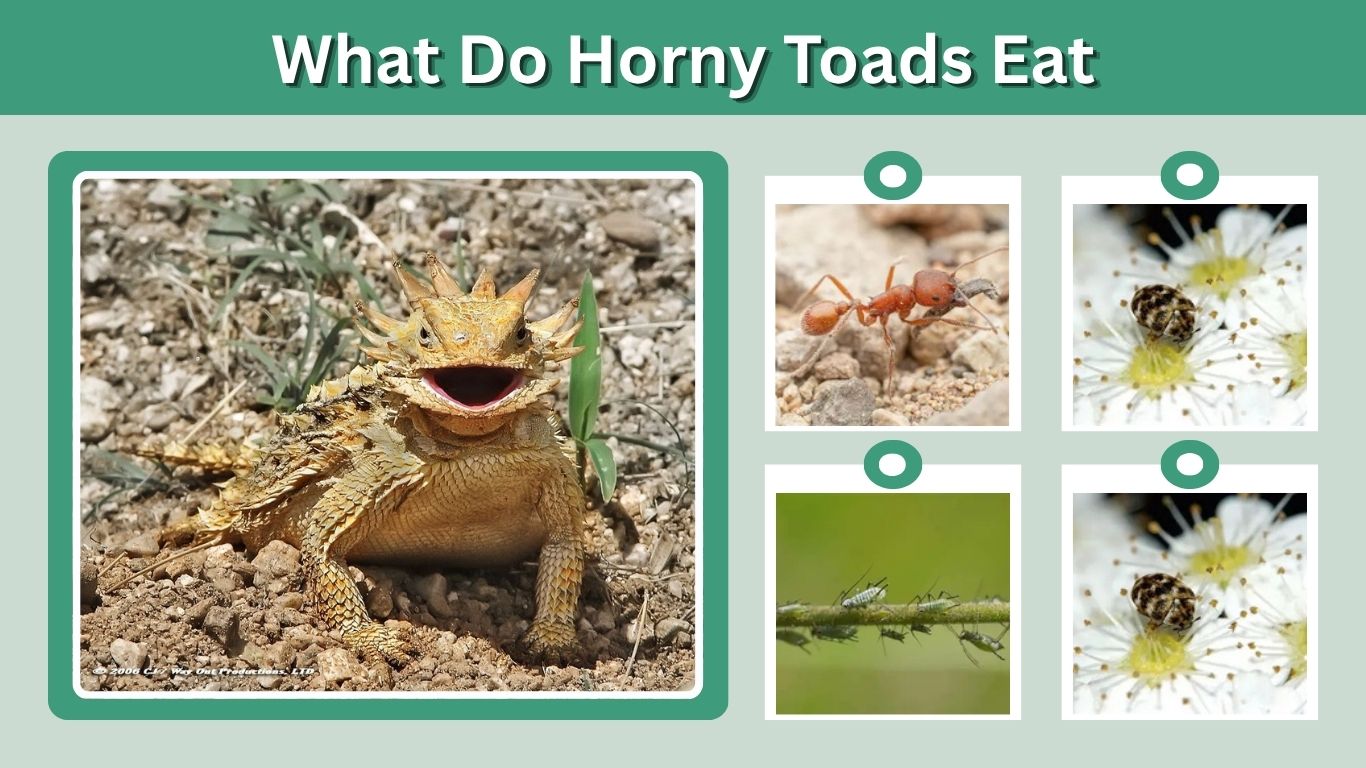
Horny toads mainly eat ants, especially native harvester ants, but they may also eat small beetles, termites, grasshoppers, spiders, and other tiny insects. Despite the name, a horny toad is not a real toad. It is a horned lizard, a flat-bodied reptile found in dry parts of North America. Their diet is one reason they are difficult to keep as pets and why habitat loss, pesticides, and disappearing native ants can hurt wild populations.
Are Horny Toads Really Toads?
Horny toads are actually horned lizards. The nickname “horny toad” comes from their rounded, squat body shape and bumpy skin, which can make them look a little like toads. But they are reptiles, not amphibians.
Real toads have moist skin and usually need water for reproduction. Horny toads have dry scales, live on land, and belong to the lizard genus Phrynosoma. Their “horns” are pointed scales or bony projections around the head.
This matters because their diet is not like a frog or toad’s diet. A frog may eat flies, worms, and many moving insects. A horny toad is much more specialized. Many species are strongly adapted for eating ants.
| Animal | What It Is | Main Food |
|---|---|---|
| Horny toad | Horned lizard/reptile | Ants and small insects |
| True toad | Amphibian | Insects, worms, small prey |
| Bearded dragon | Lizard/reptile | Insects, greens, vegetables |
| Gecko | Lizard/reptile | Small insects |
What Do Horny Toads Eat in the Wild?
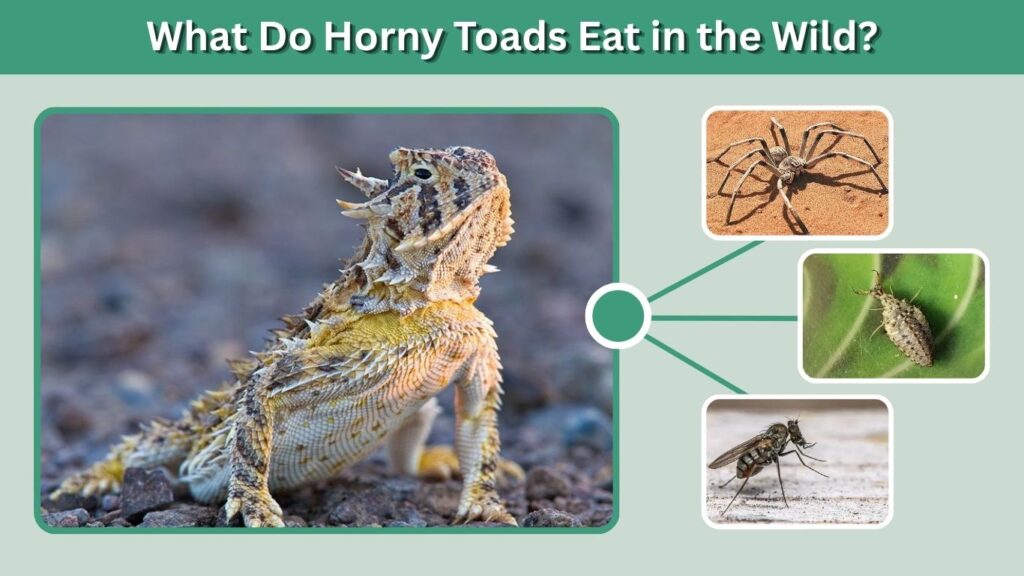
In the wild, horny toads eat mostly ants. For many species, harvester ants are the most important food. Texas Parks and Wildlife says Texas horned lizards depend on harvester ants for most of their diet.
Horny toads are sit-and-wait predators. They often stay still near ant trails, then quickly flick their tongue to grab passing ants. They do not chase prey over long distances like some faster lizards. Their flat body, camouflage, and slow movement help them stay hidden while they wait.
They may eat:
- Harvester ants
- Other native ants
- Small beetles
- Termites
- Grasshoppers
- Spiders
- Small flies
- Tiny larvae
- Other soft-bodied insects
Ants are the biggest part of the diet for many horned lizards because these reptiles have special adaptations for handling them. Harvester ants can bite and sting, but horned lizards have feeding adaptations that help them capture, swallow, and process this dangerous prey. Research on horned lizards describes them as specialized predators of seed-harvester ants and notes adaptations against harvester ant bites and venom.
Why Do Horny Toads Eat So Many Ants?
Horny toads eat many ants because ants are small and low in calories compared with larger insects. One ant does not provide much energy, so a horned lizard may need to eat a lot of them.
The Nevada Department of Wildlife explains that desert horned lizards eat mostly ants, which are nutrient-poor, and that these lizards have evolved large stomachs so they can consume more ants.
This is one reason horny toads have round, wide bodies. Their body shape is not just for looks. It helps them store and digest a large number of tiny prey items.
Why Harvester Ants Are Important
Harvester ants are especially important because they are native ants that live in dry, open habitats where horned lizards also live. These ants collect seeds and often create visible ant mounds or trails.
For the Texas horned lizard, harvester ants are especially important. Texas Parks and Wildlife data show a positive relationship between Texas horned lizard presence and harvester ant presence.
When harvester ants disappear, horny toads can struggle to find enough food. This is one reason pesticides and invasive ants can be a problem.
Do Horny Toads Only Eat Ants?
No, horny toads do not only eat ants. Ants are usually the main food, but they may also eat other insects and small arthropods when available.
Some species are more ant-specialized than others. For example, Texas horned lizards are strongly associated with harvester ants. Other horned lizards may be more flexible depending on what insects are available in their habitat. A study of introduced horned lizard populations notes that desert horned lizards can be opportunistic feeders and may consume ants based on availability and size rather than only preferring harvester ants.
Still, ants remain the most important food group for many horny toads. A diet made mostly of crickets, mealworms, or random pet-store insects is usually not natural for them.
| Food Item | Do Horny Toads Eat It? | Notes |
|---|---|---|
| Harvester ants | Yes | One of the most important foods |
| Fire ants | Usually not preferred | Often harmful to habitat |
| Termites | Sometimes | More common for young lizards |
| Beetles | Sometimes | Depends on size and species |
| Grasshoppers | Sometimes | Usually small ones |
| Spiders | Sometimes | Occasional prey |
| Mealworms | Not ideal | Poor replacement for natural diet |
| Rocks | No | They may swallow grit accidentally, but rocks are not food |
Do Horny Toads Eat Fire Ants?
Horny toads generally do not rely on imported fire ants as a healthy main food. Fire ants can actually be a threat to horned lizard habitat because they may compete with native ants and affect the insects horny toads need.
Texas Parks and Wildlife’s Texas Horned Lizard Watch report found a negative relationship between red imported fire ants and Texas horned lizards, and it notes that recovery efforts may need to address fire ant management.
Fire ants can also reduce native ant populations, including harvester ants. A scientific review on introduced Texas horned lizard populations states that loss of Pogonomyrmex harvester ants associated with fire ant invasion and pesticide use is considered one possible driver of Texas horned lizard declines.
So, while a horny toad might occasionally eat different ants, imported fire ants are not the ideal answer to “what do horny toads eat?” Native harvester ants are far more important.
What Do Baby Horny Toads Eat?
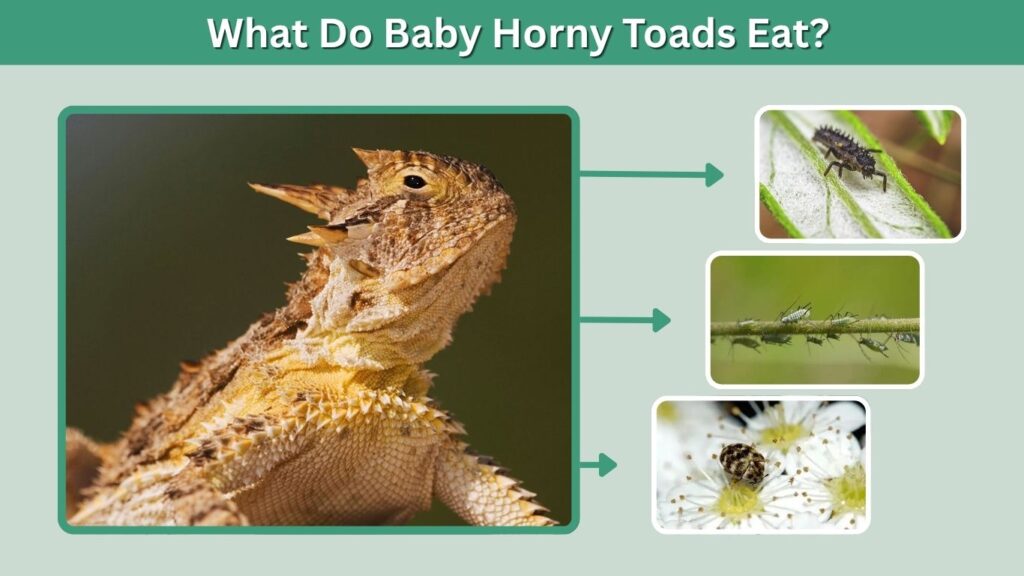
Baby horny toads eat very small insects. They may eat tiny ants, termites, small beetles, and other tiny invertebrates that are small enough to swallow.
Newly hatched horned lizards are much smaller than adults, so they cannot handle the same prey size. They need very small, soft, manageable insects. Some baby horned lizards may not eat large harvester ants immediately because those ants can be too big, aggressive, or difficult to handle.
Baby horny toads need:
- Tiny native ants
- Small termites
- Very small beetles
- Tiny soft-bodied insects
- Safe, natural foraging areas
- Warm temperatures for activity and digestion
A baby horny toad found in the wild should not be taken home. Hatchlings are delicate, and removing them from their habitat can reduce local populations. In places like Texas, the Texas horned lizard is protected as a threatened species, so collecting or keeping one may be illegal.
What Does a Texas Horny Toad Eat?
The Texas horny toad, more accurately called the Texas horned lizard, eats mostly harvester ants. This species is strongly tied to native ant populations, especially red harvester ants in many parts of its range.
It may also eat other insects, but harvester ants are the core of its diet. That is why Texas horned lizard conservation often focuses on habitat that supports native ants, loose soil, native plants, and reduced pesticide use.
The Texas horned lizard has declined in many areas because of several pressures, including habitat loss, pesticide use, invasive fire ants, and reduced food supply. Texas Parks and Wildlife notes that Texas horned lizards depend on harvester ants for most of their diet.
What Does a California Horny Toad Eat?
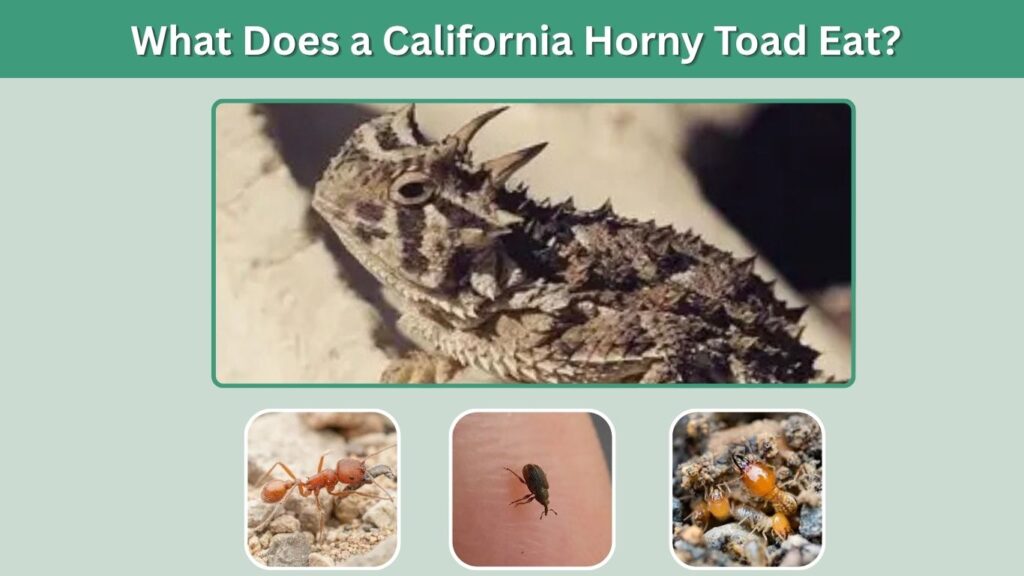
The “California horny toad” usually refers to the coast horned lizard or related horned lizards found in California and nearby regions. These lizards also eat ants, including native ants, but their exact diet can vary by location.
Like other horned lizards, they may eat:
- Native ants
- Small beetles
- Termites
- Tiny grasshoppers
- Spiders
- Other small insects
California horned lizards are also affected by habitat changes, invasive ants, and development. When native insects decline, their food supply becomes less reliable.
How Do Horny Toads Catch Their Food?
Horny toads usually catch food with a quick tongue flick. They sit still, watch prey movement, and strike when an ant or small insect comes close enough.
Their hunting style includes:
- Waiting near ant trails
- Staying motionless to avoid detection
- Flicking the tongue quickly
- Swallowing many small prey items
- Moving to new feeding spots as ants shift activity
They are not built for long chases. Their bodies are wide and flat, and their legs are short. This body shape helps with camouflage and defense, but it does not make them fast runners.
Horny toads are most active when temperatures are warm enough for movement and digestion. If it is too cold, too hot, or too dry, they may hide instead of feeding.
Do Horny Toads Eat Plants?
Horny toads are mostly insectivores. They do not normally eat leaves, fruit, vegetables, or flowers as a major part of their diet. Their bodies are adapted for small animal prey, especially ants.
This is another reason they are not like bearded dragons. A bearded dragon can eat insects and plant matter. A horny toad needs a much more specialized insect diet.
If someone tries to feed a horny toad lettuce, fruit, or vegetables, it will not meet the animal’s nutritional needs.
Do Horny Toads Eat Rocks?
No, horny toads do not eat rocks as food. This keyword likely comes from people seeing a horny toad pick at the ground or swallow tiny particles while feeding.
A horned lizard may accidentally swallow small bits of sand or grit while catching ants. Some reptiles also use small particles in digestion, but rocks are not a food source. If a horny toad appears to be eating rocks, it is probably catching tiny insects on or near the ground.
Can You Feed a Horny Toad at Home?
In most cases, you should not try to feed or keep a horny toad at home. Many horned lizards are difficult to care for in captivity because they need specific native insects, correct heat, UVB light, low stress, and natural habitat conditions.
Pet-store foods like crickets and mealworms are usually not enough. Horned lizards are adapted to ant-heavy diets, and some species need harvester ants or similar native prey. Captive diets that do not match their natural needs can lead to poor health.
There is also a legal issue. In some states, certain horned lizards are protected. The Texas horned lizard is listed as threatened in Texas, so people should not collect, sell, or keep them without proper permission.
A better choice for someone who wants a pet lizard is a captive-bred species such as a bearded dragon, leopard gecko, or other legal reptile from a responsible breeder.
Why Is My Horny Toad Not Eating or Moving Around?
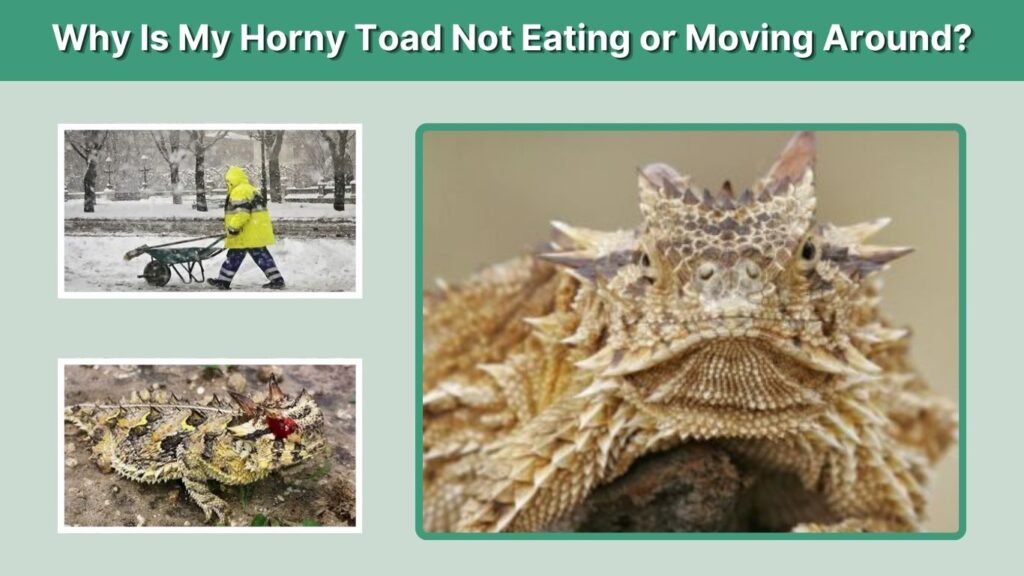
A horny toad that is not eating or moving may be stressed, cold, sick, dehydrated, injured, or simply inactive because of temperature or season. Wild horned lizards often freeze when frightened, so not moving does not always mean the animal is tame or safe to handle.
Possible reasons include:
- Temperature is too cold
- Animal is overheated
- Stress from handling
- Wrong food offered
- Lack of native ants
- Illness or injury
- Dehydration
- Seasonal inactivity
- Recent capture from the wild
If you found a horny toad outside, the best action is usually to leave it where it is, away from roads, pets, or foot traffic. Do not take it home to “save” it unless a licensed wildlife rehabilitator or local wildlife agency tells you to.
If it is in immediate danger, such as on a road, move it only a short distance in the direction it was already heading, if local rules allow. Avoid unnecessary handling.
How Food Supply Affects Horny Toad Survival
Food supply is one of the biggest parts of horny toad survival. A landscape can look dry and natural but still be poor habitat if native ants and insects are missing.
Horny toads need more than open ground. They need a living food web. Native plants support native insects, and native insects support lizards, birds, and other wildlife. Broad pesticide use can reduce the insects that horned lizards depend on.
Good horny toad habitat usually includes:
- Native ants
- Native grasses and wildflowers
- Loose soil
- Open sunny spaces
- Low pesticide use
- Hiding places
- Fewer invasive ants
- Protection from outdoor cats and dogs
Helping horny toads often means protecting the insects they eat.
FAQs
What do horny toads eat most?
Horny toads eat mostly ants. Harvester ants are especially important for many species, including the Texas horned lizard.
Do horny toads eat fire ants?
Fire ants are not the preferred main food for horny toads. Imported fire ants can actually harm horned lizard habitat by competing with native ants and affecting food supply.
Do horny toads only eat ants?
No. Horny toads eat mostly ants, but they may also eat termites, small beetles, grasshoppers, spiders, and other tiny insects.
What do baby horny toads eat?
Baby horny toads eat very small prey, including tiny ants, termites, small beetles, and other tiny soft-bodied insects.
Can horny toads eat crickets?
They may eat small crickets sometimes, but crickets are not the natural main food for most horny toads. Many horned lizards need an ant-heavy diet.
Do horny toads eat plants?
No, horny toads are mainly insect eaters. They do not normally eat leaves, fruits, or vegetables as a major food source.
Why is my horny toad not eating?
A horny toad may stop eating because of stress, wrong temperature, illness, dehydration, seasonal inactivity, or the wrong food. Wild horned lizards should not be kept as pets.
What ants do horny toads eat?
Many horny toads eat native harvester ants. Texas horned lizards are especially associated with harvester ants as a major food source.
