
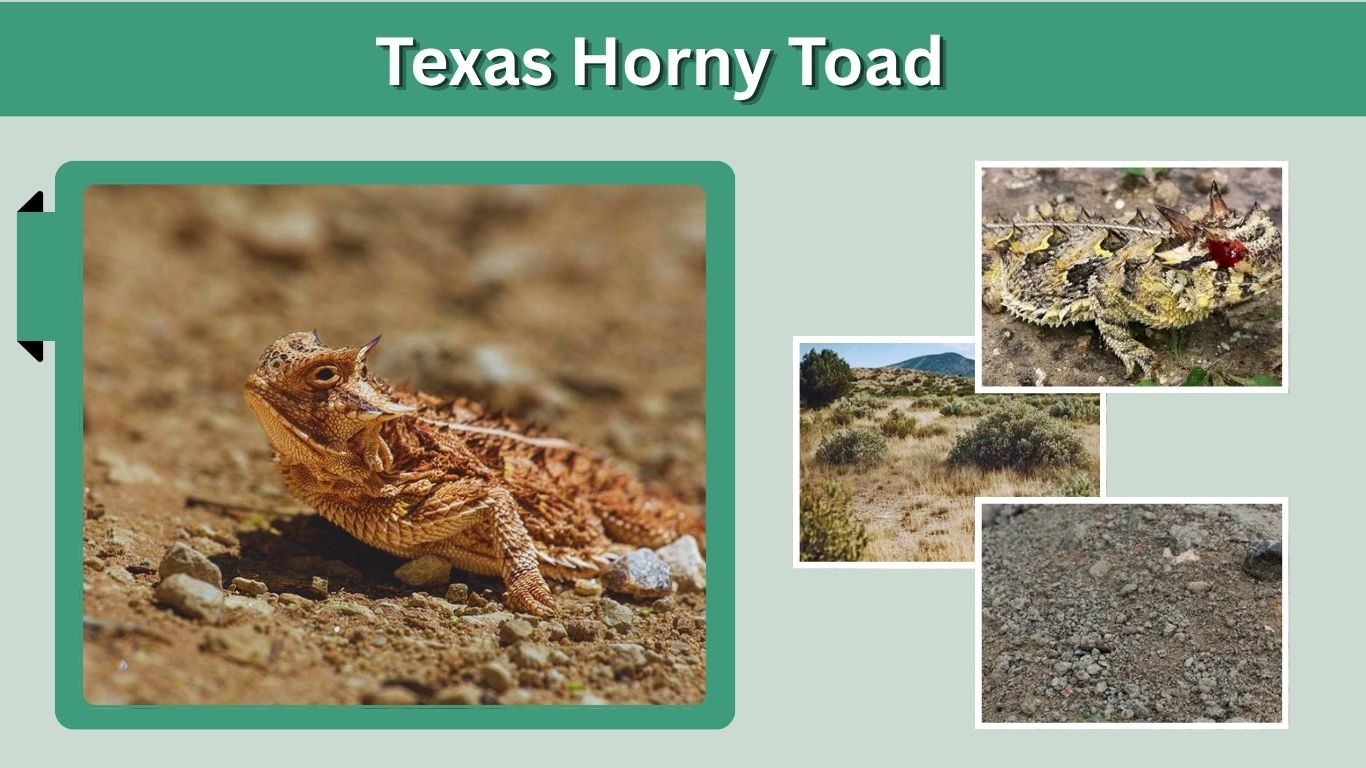
The Texas horny toad is one of the most iconic reptiles in the American Southwest. Despite its nickname, it is not a toad at all. It is a lizard officially known as the Texas horned lizard, a spiny, flat-bodied reptile famous for its camouflage, ant-heavy diet, and unusual defense behavior. Once common across Texas, this memorable animal is now much harder to find in many areas.
What Is a Texas Horny Toad?
The Texas horny toad is the common nickname for the Texas horned lizard. Its scientific, or Latin, name is Phrynosoma cornutum. The name “horny toad” comes from the animal’s short, rounded body and the horn-like spines on its head. Even though people often call it a “horned frog” or “horny toad,” it is a reptile, not an amphibian.
The Texas horned lizard is also the official state reptile of Texas, and it remains an important symbol of Texas wildlife. Texas Parks and Wildlife lists the species as threatened in Texas.
| Common Name | Correct Identification |
| Texas horny toad | Texas horned lizard |
| Texas horned frog | Not a frog |
| Horny toad lizard | A reptile, not a toad |
| Latin name | Phrynosoma cornutum |
| Texas status | Threatened in Texas |
How to Identify a Texas Horny Toad
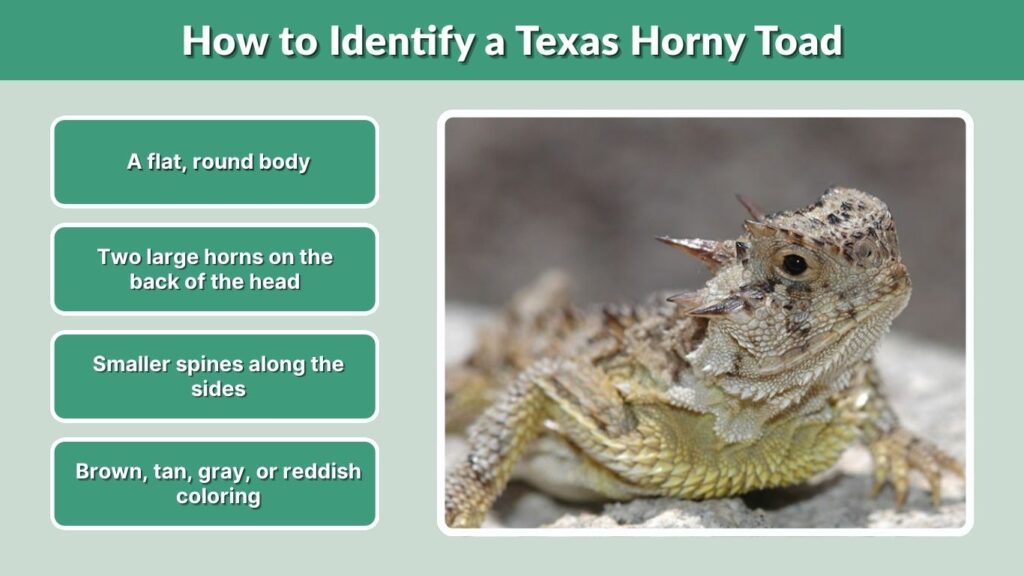
A Texas horny toad has a body shape that makes it easy to recognize. It is wide, low to the ground, and covered with sharp-looking scales. Its colors usually match dry soil, sand, gravel, or short grass, which helps it hide from predators.
Look for these features:
- A flat, round body
- Two large horns on the back of the head
- Smaller spines along the sides
- Brown, tan, gray, or reddish coloring
- Dark spots or blotches on the back
- A short tail compared with many other lizards
Because of its camouflage, a Texas horned lizard can be surprisingly difficult to spot. Many people notice one only when it moves.
Texas Horny Toad vs Toad, Frog, and Lizard
Many searchers use terms like “Texas horned frog,” “horny toad,” or “horned lizard” for the same animal. The confusion is understandable, but scientifically, the animal is a lizard.
| Feature | Texas Horny Toad | True Toad | Frog |
| Animal group | Reptile | Amphibian | Amphibian |
| Skin | Dry, scaly | Warty, moist | Smooth or moist |
| Eggs | Laid on land or in soil | Usually in water | Usually in water |
| Body temperature | Cold-blooded | Cold-blooded | Cold-blooded |
| Correct name | Texas horned lizard | Toad | Frog |
Where Do Texas Horny Toads Live?
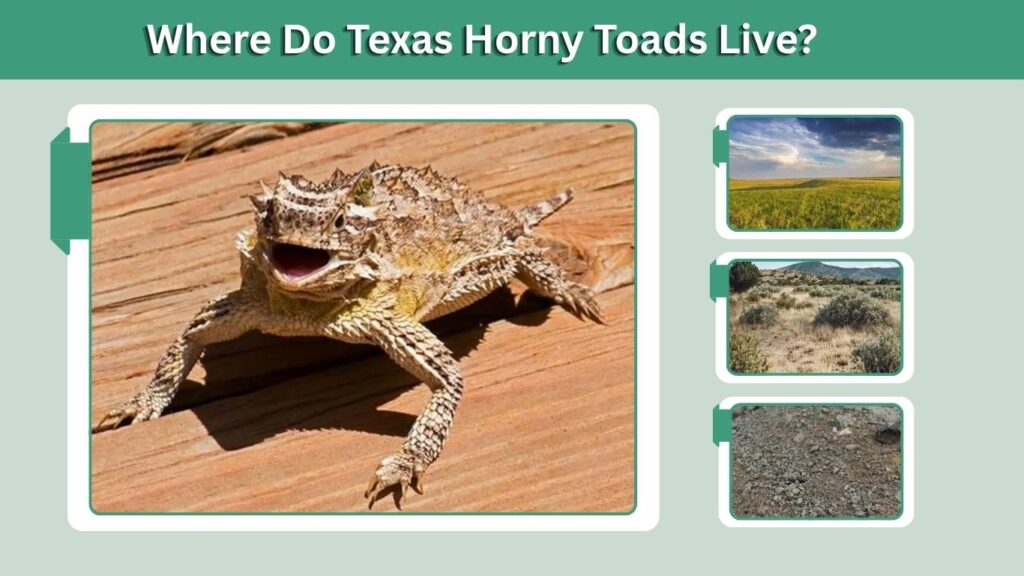
The range of the Texas horny toad lizard includes much of Texas and parts of the surrounding southern and western United States. It prefers open, dry habitats where it can find loose soil, sunny basking areas, and ants.
Common habitats include:
- Shortgrass prairies
- Open scrubland
- Sandy or rocky soil
- Dry fields and ranchland
- Edges of roads, trails, and clearings
- Areas with native harvester ants
The Texas horned lizard is strongly connected to habitat quality. It needs open ground for movement, loose soil for burrowing, and a healthy supply of native ants for food.
What Do Texas Horny Toads Eat?
The Texas horny toad is best known for eating ants. Harvester ants make up most of its diet, although it may also eat beetles, spiders, and other small insects. Oklahoma Department of Wildlife Conservation notes that most of the Texas horned lizard’s diet consists of harvester ants, and individuals may eat many ants in a day.
This diet makes the species sensitive to changes in insect populations. When harvester ants decline because of pesticides, habitat loss, or competition from invasive fire ants, Texas horned lizards may also decline.
Why Harvester Ants Matter
Harvester ants are more than just food for the Texas horny toad. They are a key part of the animal’s survival. Texas Parks and Wildlife also notes that Texas horned lizards depend on harvester ants for most of their diet.
A yard or pasture with native ants, open soil, and low chemical use is more likely to support horned lizards than a heavily treated lawn with few insects.
Why Is the Texas Horny Toad Threatened?
The Texas horny toad was once a familiar sight across much of Texas. Today, many Texans say they rarely see them. Several problems have contributed to the decline.
| Threat | How It Affects Texas Horny Toads |
| Habitat loss | Removes open ground, native plants, and shelter |
| Pesticides | Reduces ants and other insect food |
| Fire ants | Compete with native ants and may harm young lizards |
| Road traffic | Kills lizards crossing roads |
| Collection | Historically reduced wild populations |
| Urban growth | Breaks habitat into smaller patches |
TPWD reports that concern about declining numbers and over-collection led the agency to list the species as threatened in 1977.
Can a Texas Horny Toad Shoot Blood?
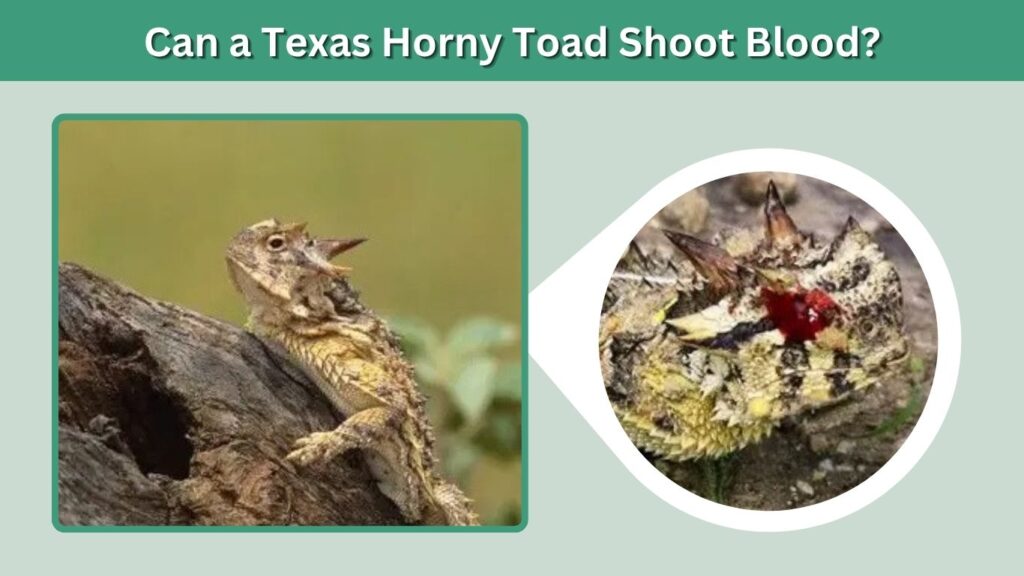
Yes, the Texas horny toad is famous for an unusual defense behavior: it can squirt blood from the area around its eyes when threatened. This behavior is usually used against predators such as canids. It is one reason the animal has such a strong place in Texas folklore and wildlife stories.
The blood defense is not the lizard’s first option. Most of the time, it relies on camouflage, staying still, puffing up, or using its spiny body to discourage predators.
Can You Keep a Texas Horny Toad as a Pet?
In Texas, the Texas horned lizard is a threatened species, so people should not collect it from the wild or keep it as a pet. Wild horned lizards also have specialized needs, especially their dependence on native harvester ants, which makes them difficult to care for properly.
The better choice is to enjoy them in nature, report sightings through conservation programs when available, and protect habitat on private land.
How to Help Texas Horny Toads in Texas
People who live in areas where Texas horny toads may occur can support them by making land more wildlife-friendly. Small changes can help, especially in rural, ranch, or edge-of-town areas.
Helpful steps include:
- Avoid unnecessary pesticide use
- Protect native harvester ant colonies
- Keep some open, sunny ground
- Plant native grasses and shrubs
- Drive carefully on rural roads
- Keep cats indoors or supervised
- Do not collect wild horned lizards
Habitat restoration and captive-raised release programs are also being used in Texas. TPWD reported a release of 204 captive-raised hatchlings in 2021 as part of ongoing conservation work.
Texas Horny Toad in Culture
The Texas horny toad is more than a reptile. It is a cultural symbol. Many Texans remember seeing them as children, and the animal appears in stories, school mascots, art, souvenirs, and conservation campaigns. Its strange appearance, tough survival style, and connection to dry Texas landscapes make it one of the state’s most recognizable native animals.
Searches like “the most famous Texas horny toad was Old Rip” show how deeply this reptile is tied to Texas history and folklore. The animal’s popularity also helps conservation groups teach people about native species, habitat loss, and responsible land care.
FAQs
Is a Texas horny toad poisonous?
No, the Texas horny toad is not considered poisonous to people. It may defend itself with spines, camouflage, puffing up, or blood-squirting behavior, but it is not a dangerous animal for humans.
What is the Latin name of the Texas horny toad?
The Latin name of the Texas horny toad is Phrynosoma cornutum. Its correct common name is the Texas horned lizard.
Are Texas horny toads endangered?
The Texas horned lizard is listed as threatened in Texas, according to Texas Parks and Wildlife.
What do Texas horny toads eat?
Texas horny toads mainly eat harvester ants. They may also eat other insects and small arthropods, including beetles and spiders.
Why don’t people see Texas horny toads as often anymore?
Many areas have lost suitable habitat, native ant populations, and open ground. Pesticides, fire ants, roads, urban development, and past collection have also contributed to fewer sightings.
