
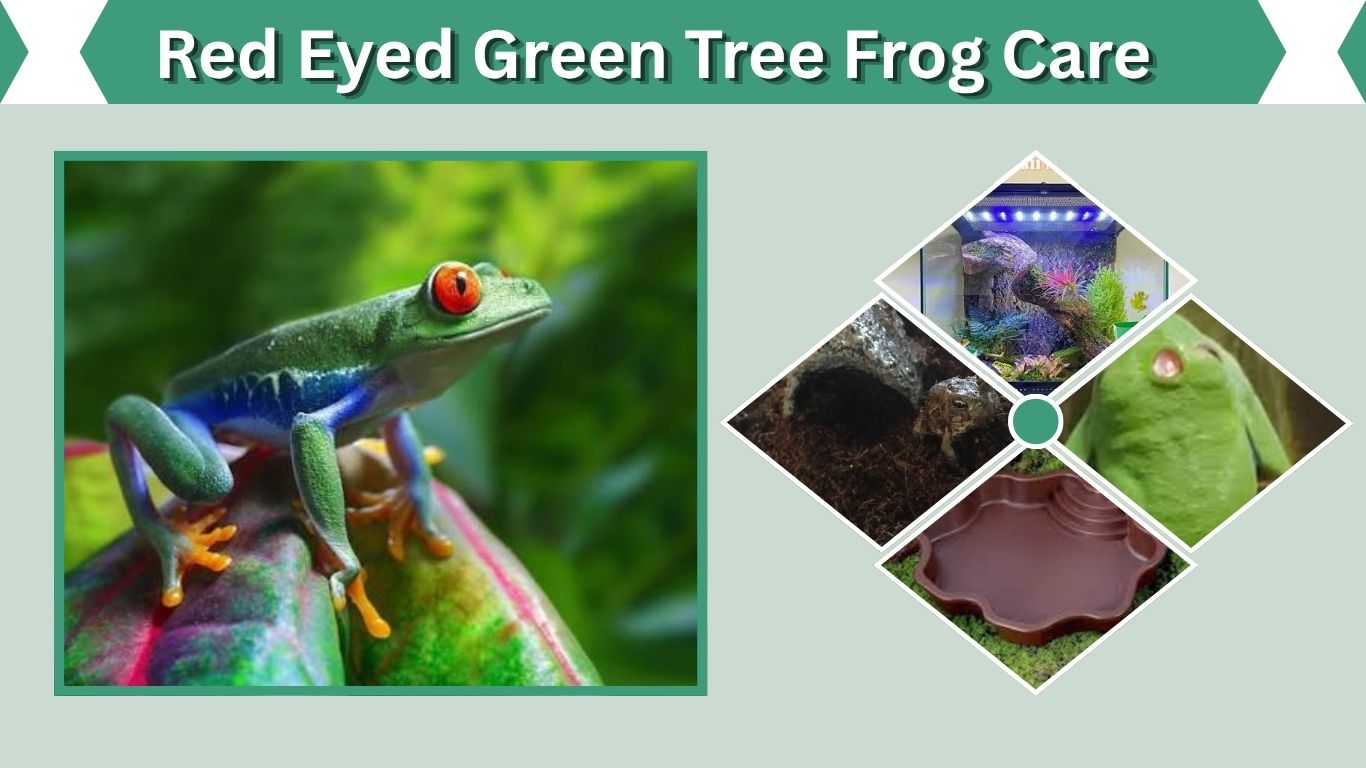
Red eyed green tree frog care needs a tall, humid, well-planted enclosure that copies a tropical forest environment. The common pet species is usually the red-eyed tree frog, Agalychnis callidryas, a colorful arboreal frog from Central America. It needs stable temperature, high humidity, clean water, climbing space, and a diet of live insects. These frogs are beautiful display pets, but they are sensitive to rough handling and poor enclosure conditions.
What Is a Red Eyed Green Tree Frog?
The name “red eyed green tree frog” usually refers to the red-eyed tree frog, Agalychnis callidryas. It is famous for its bright green body, red eyes, orange toes, and blue-yellow side markings. AmphibiaWeb describes it as a slender, medium-sized frog, with females growing larger than males.
| Care Need | Best Range / Setup |
| Enclosure type | Tall arboreal terrarium |
| Temperature | Usually around 70–85°F, depending on setup |
| Humidity | Moderate-high, often 60–90% |
| Diet | Live insects |
| Handling | Very limited |
| Activity | Mostly nocturnal |
| Best for | Intermediate keepers |
Red-eyed tree frogs are mainly display animals. They should not be handled often because amphibian skin is delicate and absorbs chemicals easily.
Red Eyed Green Tree Frog Enclosure Setup
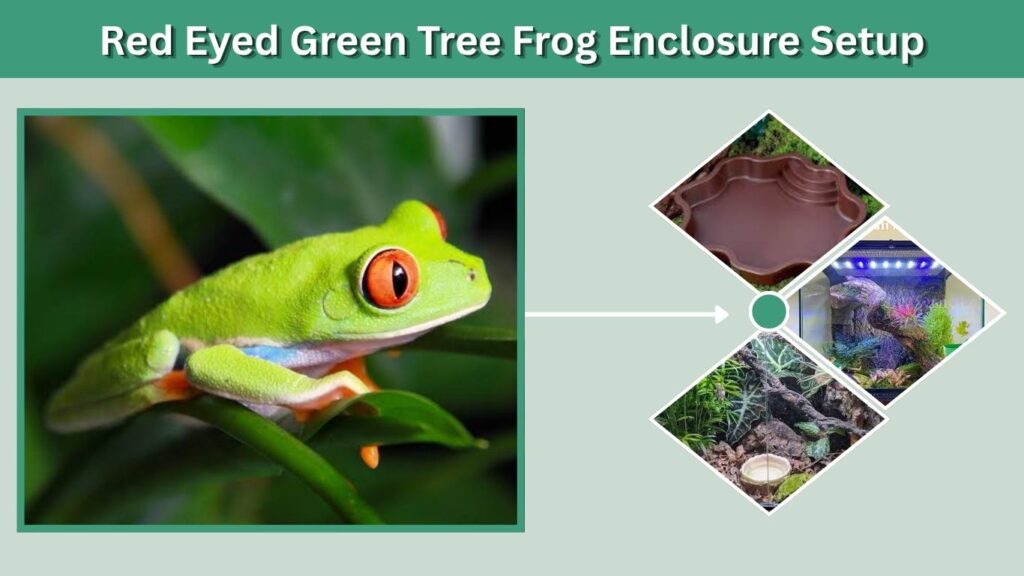
A red-eyed tree frog needs height more than floor space. These frogs climb, sleep on leaves, and move around mostly at night. Smithsonian notes that red-eyed tree frogs have adhesive toe pads that help them climb surfaces.
Tank Size
For one or two adults, a tall terrarium is best. Bigger is always better, especially if you want a planted or bioactive setup.
Good enclosure features include:
- Tall glass terrarium
- Screen or ventilated top
- Branches and vines
- Broad-leaf plants
- Cork bark or climbing wood
- Shallow water dish
- Drainage layer for planted setups
Avoid a short, dry tank. A red-eyed tree frog needs vertical climbing space and stable humidity.
Plants and Decor
Use large leaves and sturdy climbing surfaces. Live plants help hold humidity and create hiding spaces. Pothos, philodendron, bromeliads, and snake plants are common choices, but all plants should be pesticide-free and safe for amphibian enclosures.
Temperature for Red Eyed Tree Frogs
Temperature is one of the most important parts of red-eyed green tree frog care. These frogs do not like extreme heat. Smithsonian says their red-eyed tree frog habitats are kept around 70–75°F, and even tropical frogs do not like extreme heat.
Exo Terra gives a warmer care range, recommending a daytime gradient of 75–85°F and a nighttime drop to 68–75°F.
A safe target for many home setups is:
- Daytime: about 75–80°F
- Warm area: up to about 82–85°F
- Night: about 68–75°F
- Avoid overheating above the mid-80s
Use a digital thermometer. Do not guess by room temperature alone.
Humidity and Water
Red-eyed tree frogs need a humid but well-ventilated habitat. Too dry can cause shedding and hydration problems, but a soaked, stagnant enclosure can encourage mold and bacteria.
Humidity Range
Many keepers aim for about 60–80% humidity, with higher spikes after misting. Some care sources recommend 70–90% humidity, but the enclosure should still have airflow and should not stay dripping wet all day.
Humidity tips:
- Mist once or twice daily as needed
- Use dechlorinated water
- Add live plants
- Provide a shallow water dish
- Use a digital hygrometer
- Allow partial drying between misting
Never use untreated tap water if it contains chlorine or chloramine. Amphibians absorb water through their skin, so water quality matters.
Lighting and UVB
Red-eyed tree frogs are nocturnal, but they still benefit from a regular day-night cycle. A low-level UVB light may also help support natural behavior and vitamin D3 production, especially in planted enclosures.
Use:
- 10–12 hours of light per day
- Low-strength UVB if used
- No bright light at night
- No colored night bulbs shining directly on frogs
At night, they should have darkness so they can move, hunt, and behave normally.
Substrate for Red Eyed Green Tree Frogs
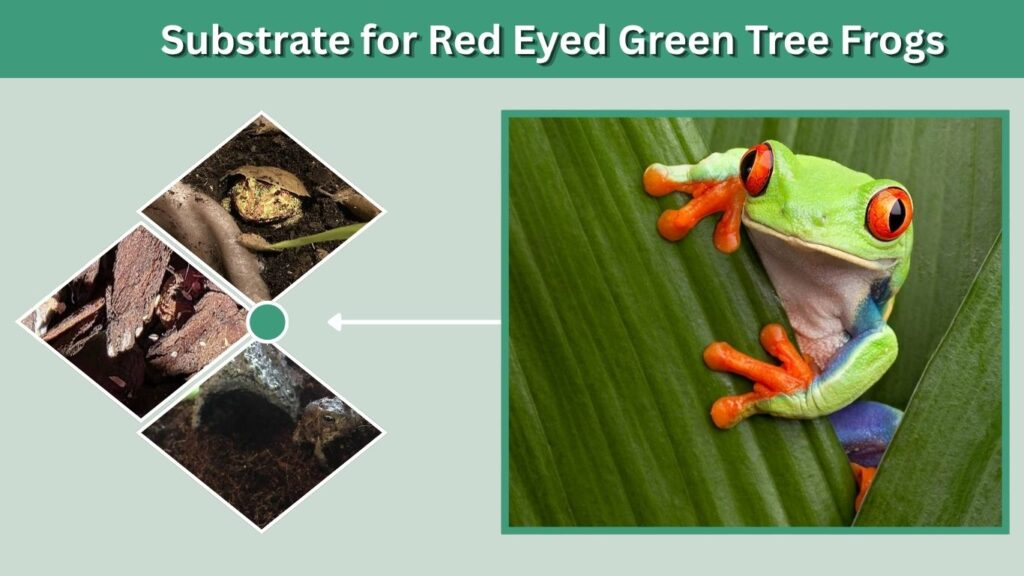
Substrate should help humidity without becoming dirty or waterlogged. Reptile Centre recommends a slightly moist substrate, such as coarse orchid bark, and adding moss if humidity is too low.
Good substrate options include:
- Coco fiber
- Organic soil mix
- Orchid bark
- Sphagnum moss in limited areas
- Bioactive substrate with drainage
Avoid gravel, sharp bark, cedar, pine, dry sand, or any chemical-treated material.
Red Eyed Green Tree Frog Diet
Red-eyed tree frogs are insectivores. National Geographic lists them as carnivores, and in captivity they are usually fed live insects.
Good feeder insects include:
- Crickets
- Dubia roach nymphs
- Small locusts
- Black soldier fly larvae
- Occasional waxworms as treats
Feed insects that are smaller than the frog’s head width. Dust feeders with calcium and vitamins on a schedule. Young frogs eat more often than adults, while adults may eat every two or three days.
Handling and Cleaning
Red-eyed tree frogs should be handled only when necessary. Their skin is sensitive, and oils, soap, lotion, sanitizer, or chemicals on human hands can harm them.
Safe handling rules:
- Avoid handling unless needed
- Wash hands before and after
- Use wet, clean hands
- Do not squeeze the frog
- Move the frog with a small container when possible
Clean waste, old food, and dirty water regularly. Deep-clean non-bioactive enclosures as needed, but avoid harsh chemicals.
Australian Red Eyed Green Tree Frog Care
“Australian red eyed green tree frog” may refer to a different frog, often the Australian red-eyed tree frog, Litoria chloris. It is not the same species as the Central American red-eyed tree frog, Agalychnis callidryas.
Australian tree frogs are also arboreal and need climbing space. Australian exotic pet vet sources recommend vertical enclosure levels using plants, bamboo, branches, or PVC pipes, with warm and humid conditions for many Australian tree frogs.
Before buying any Australian frog, check your local laws. In Australia, keeping native frogs often requires following state rules or permits.
Common Health Problems
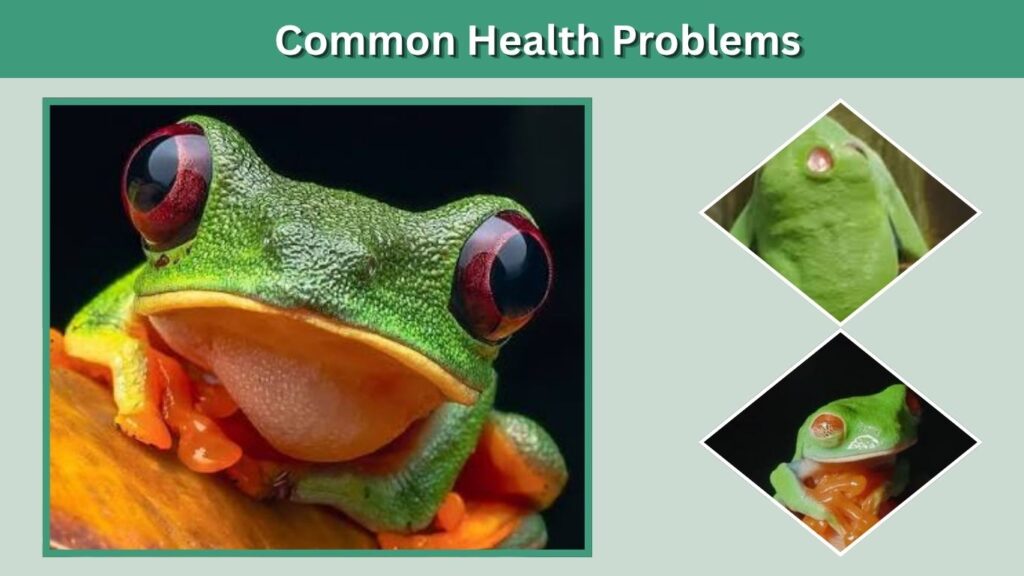
Poor care can quickly lead to health issues. Red-eyed tree frogs need clean water, correct humidity, stable temperatures, and a stress-free enclosure.
Warning signs include:
- Not eating
- Weight loss
- Cloudy eyes
- Red or irritated skin
- Weak jumping
- Sitting on the ground all day
- Trouble shedding
- Swollen body
- Constant dark coloration
If a frog looks sick, contact an exotic or amphibian veterinarian. Do not try random medications without a vet.
FAQs
Are red eyed green tree frogs good pets?
Red eyed green tree frogs can be good display pets for keepers who can manage humidity, temperature, live insects, and careful cleaning. They are not good pets for frequent handling because their skin is delicate and they can become stressed.
What size tank does a red eyed tree frog need?
A tall terrarium is best because red-eyed tree frogs are arboreal. One or two adults can live in a medium vertical enclosure, but larger is better. The setup should include branches, vines, broad leaves, water, ventilation, and hiding spots.
What temperature do red eyed tree frogs need?
Most red-eyed tree frogs do well with daytime temperatures around 75–80°F, with a slightly warmer area if needed. Night temperatures can drop into the low 70s. Avoid overheating because these frogs can become stressed in extreme heat.
What do red eyed green tree frogs eat?
They eat live insects such as crickets, small roaches, small locusts, and occasional soft-bodied treats. Feeder insects should be gut-loaded and dusted with calcium or vitamins. Young frogs usually eat more often than adult frogs.
Can you handle a red eyed tree frog?
You should avoid handling red-eyed tree frogs unless necessary. Their skin absorbs chemicals easily, and rough handling can injure or stress them. When moving one, use wet, clean hands or a small container and keep handling very brief.
