
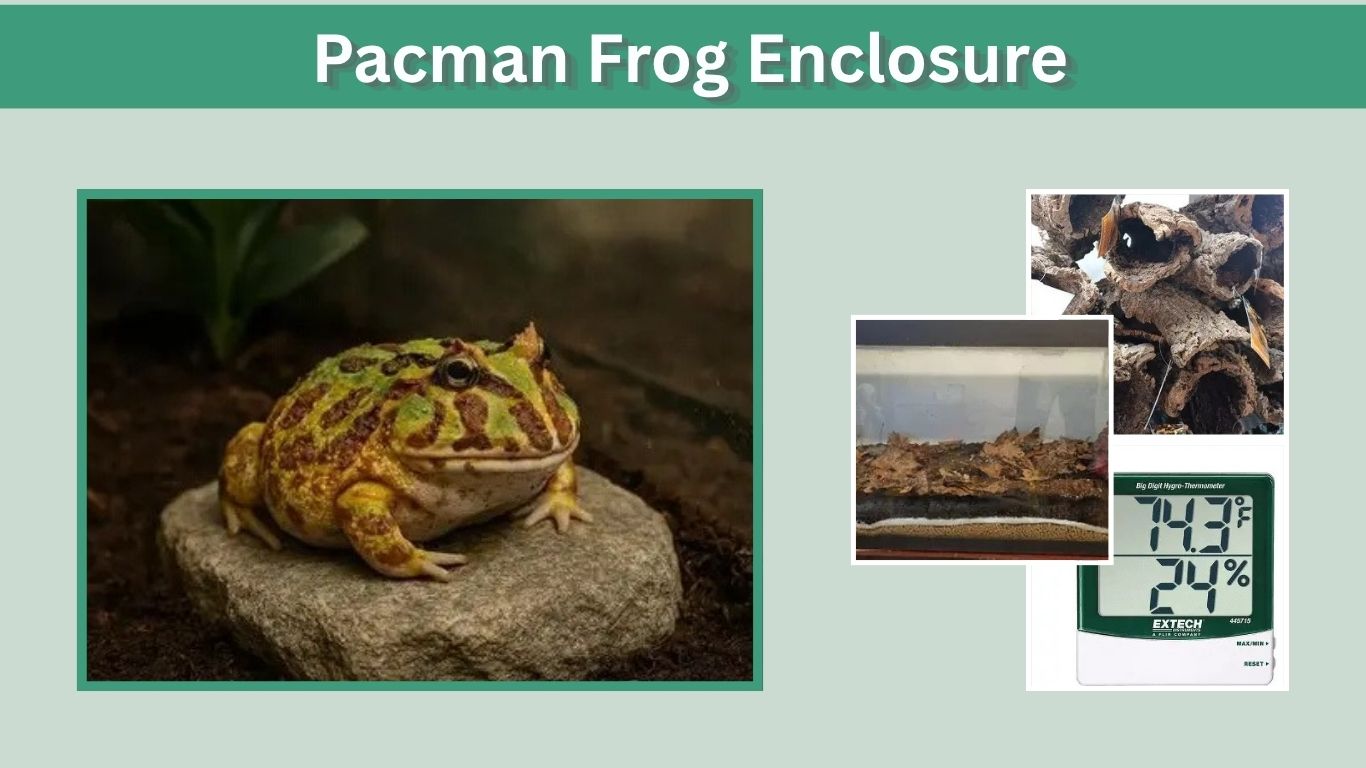
A Pacman frog enclosure should be simple, humid, warm, and designed for burrowing. Pacman frogs, also called horned frogs, are terrestrial amphibians that spend much of their time sitting partly buried in damp substrate. They do not need tall climbing space like tree frogs, but they do need a secure tank, deep substrate, clean water, correct humidity, and stable temperature. This guide explains Pacman frog enclosure size, setup, kits, baby housing, bioactive ideas, and mold control.
Pacman Frog Enclosure Overview
A good Pacman frog enclosure should copy a warm, damp forest-floor habitat. These frogs are ambush predators, so they often wait in one spot and strike when prey comes close. Because of this, floor space, substrate depth, humidity, and cleanliness matter more than branches or height.
| Enclosure Need | Recommended Setup |
| Tank type | Glass or PVC terrarium with secure lid |
| Adult size | 10–20 gallons for most adults |
| Substrate | Damp coconut fiber or soil mix |
| Humidity | Around 60–80% |
| Temperature | Around 75–85°F |
| Water | Shallow dechlorinated water dish |
| Decor | Hides, plants, leaf litter, cork bark |
| Best layout | Simple ground-level setup |
PetMD recommends keeping Pacman frog humidity around 70–80%, while Swiftail Vet lists a warm enclosure range of 75–85°F with humidity around 60–80%.
Pacman Frog Enclosure Size
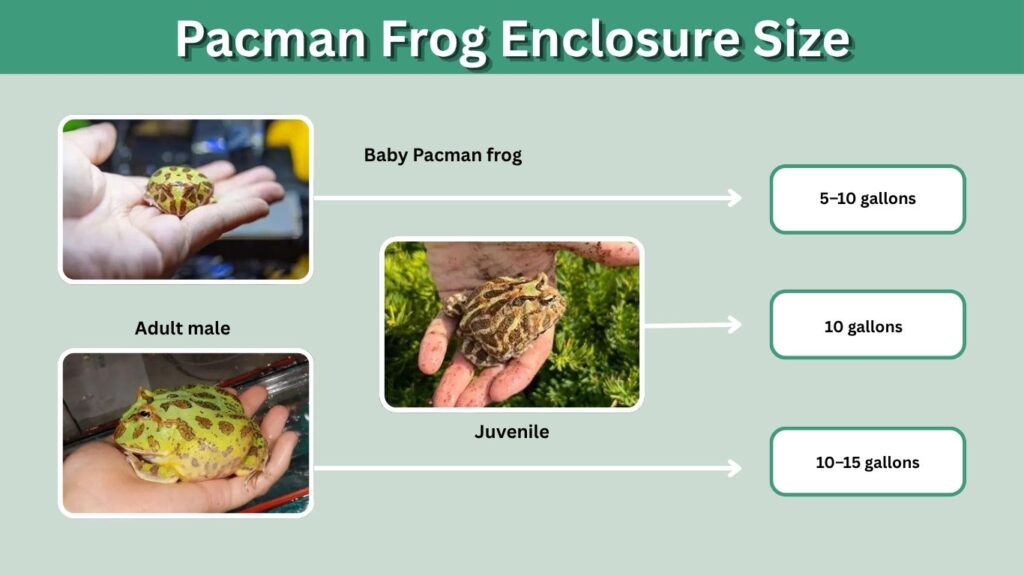
Pacman frogs are not very active compared with many reptiles and amphibians, but they still need enough space for a warm side, cooler side, water dish, and burrowing area. A tank that is too large for a baby may make feeding harder, while a tank that is too small for an adult may become dirty quickly.
Adult Pacman Frog Enclosure Size
Most adult Pacman frogs do well in a 10-gallon to 20-gallon enclosure. Females often grow larger than males, so a large female may benefit from a 20-gallon tank. The Spruce Pets notes that a 20-gallon tank can provide a suitable habitat with correct humidity, temperature, and a shallow water dish.
Baby Pacman Frog Enclosure Size
A baby Pacman frog enclosure should be smaller and easier to monitor. A small plastic tub or 5–10 gallon tank can work for a young frog until it grows. The setup should still include damp substrate, a shallow water dish, a hide, and stable warmth.
Pacman Frog Enclosure Size Chart
| Frog Stage | Suggested Enclosure Size |
| Baby Pacman frog | 5–10 gallons |
| Juvenile | 10 gallons |
| Adult male | 10–15 gallons |
| Adult female | 15–20 gallons |
| Large adult female | 20 gallons or larger |
Pacman Frog Enclosure Setup
A Pacman frog enclosure setup should be easy to clean and easy for the frog to use. These frogs do not need complex climbing branches or deep water areas. They need a soft, moist ground layer where they can bury themselves safely.
Basic Setup Checklist
A good enclosure for Pacman frog care includes:
- Secure terrarium or tub
- Ventilated lid
- Deep damp substrate
- Shallow water dish
- Dechlorinated water
- One or two hides
- Fake or live plants
- Thermometer
- Hygrometer
- Heat source with thermostat
- Low-level lighting or day-night cycle
The water dish should be shallow because Pacman frogs are not strong swimmers. They absorb water through their skin, so clean dechlorinated water is important.
Best Substrate for Pacman Frog Enclosure
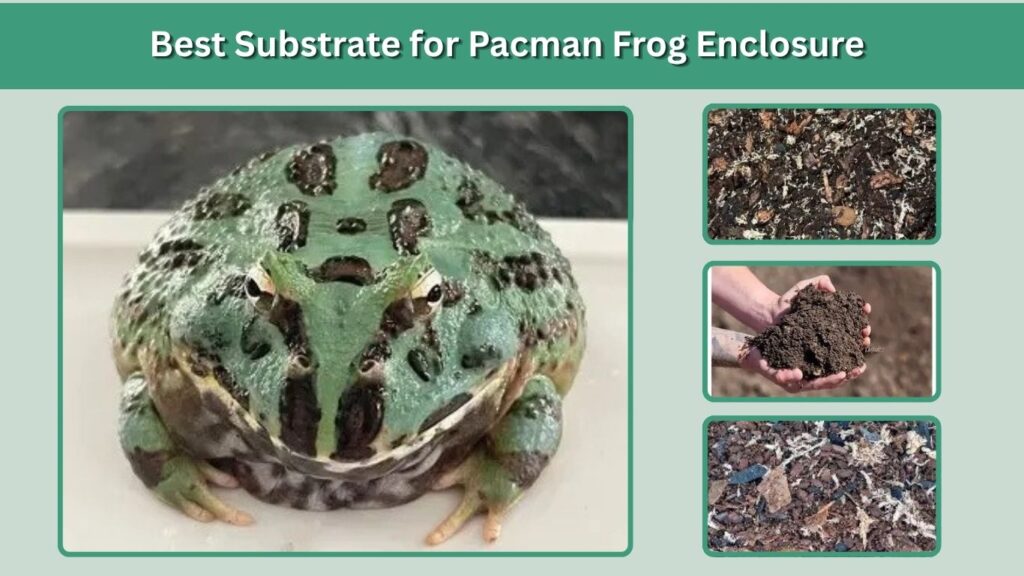
Substrate is one of the most important parts of a Pacman frog enclosure. Pacman frogs like to burrow, so the substrate should be soft, loose, and moist but not soaking wet.
Good substrate choices include:
- Coconut fiber
- Organic topsoil without fertilizer
- Amphibian-safe soil mix
- Bioactive soil mix
- Leaf litter over soil
- Sphagnum moss only in limited areas
Avoid gravel, sand, bark chips, cedar, pine, reptile carpet, and small loose materials that can be swallowed easily. The substrate should be deep enough for the frog to bury itself, usually around 3–4 inches for adults.
Pacman Frog Enclosure Temperature
Pacman frogs need warm conditions, but they should not overheat. The enclosure should have a warm side and a cooler side so the frog can move if needed.
| Area | Recommended Temperature |
| Warm side | 80–85°F |
| Cool side | 75–78°F |
| Night temperature | 70–75°F |
| Dangerous range | Too hot above mid/high 80s |
Swiftail Vet recommends 75–85°F during the day with a slight nighttime drop to 70–75°F. Use a thermostat with any heat mat, heat cable, or overhead heat source. Never guess the temperature by hand.
Pacman Frog Enclosure Humidity
Humidity should stay high enough to keep the frog’s skin moist but not so wet that mold and bacteria grow quickly. PetMD recommends 70–80% humidity and daily misting with dechlorinated water when needed.
Humidity Tips
To maintain humidity:
- Mist with dechlorinated water.
- Keep substrate damp, not soaked.
- Use a hygrometer.
- Cover part of the screen lid if humidity drops.
- Add leaf litter to hold moisture.
- Avoid standing water in the substrate.
- Improve ventilation if mold appears.
A Pacman frog sitting in dry substrate may become stressed or dehydrated. A frog sitting in soggy substrate may develop skin problems.
Bioactive Pacman Frog Enclosure

A bioactive Pacman frog enclosure uses live plants, soil, leaf litter, and cleanup insects such as springtails and isopods. This setup can look natural and help break down waste, but it still needs maintenance. BioDude’s Pacman frog bioactive care guidance lists a moderate humidity environment around 60–80%, with higher levels at night.
Bioactive Setup Ideas
A bioactive enclosure can include:
- Drainage layer
- Barrier mesh
- Amphibian-safe soil mix
- Leaf litter
- Cork bark hide
- Live plants
- Springtails
- Dwarf isopods
- Shallow water dish
Live plants should be sturdy because Pacman frogs are heavy-bodied and may crush delicate plants. Pothos, philodendron, snake plant, and some ferns can work well when grown pesticide-free.
Pacman Frog Enclosure Kit
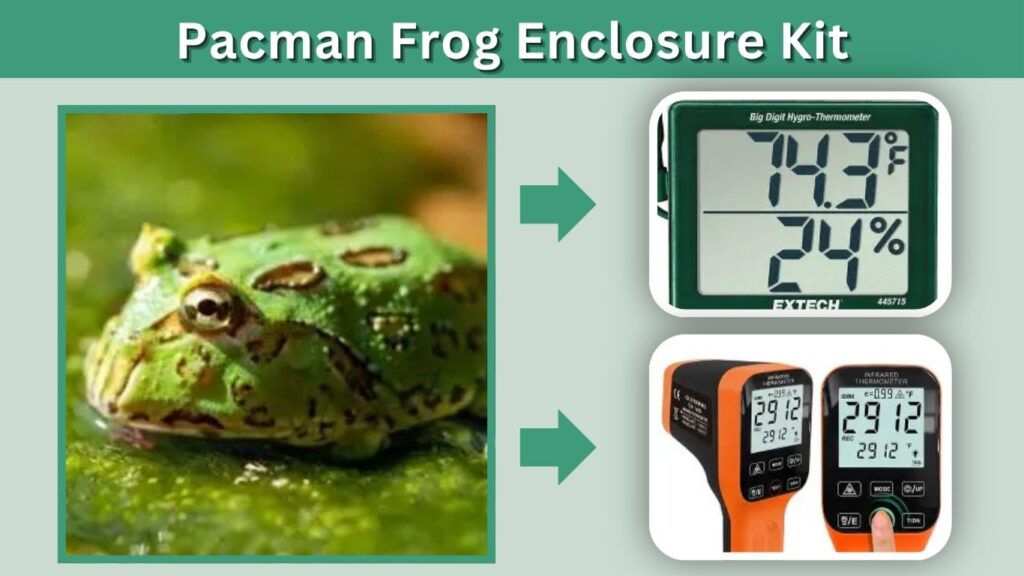
A Pacman frog enclosure kit can be useful for beginners, but not every kit includes everything needed. Some kits are designed for general reptiles and may have unsuitable substrate, poor heating tools, or decor that does not fit a burrowing frog.
What a Good Kit Should Include
A useful Pacman frog enclosure kit should include:
- Proper-size terrarium
- Secure lid
- Safe substrate
- Hygrometer
- Thermometer
- Shallow water dish
- Hide
- Safe plants or cover
- Heating equipment
- Thermostat
Even with a kit, you may need to buy better substrate, a digital thermometer, a thermostat, or extra hides separately.
Pacman Frog Enclosure Ideas
Pacman frog enclosure ideas should focus on comfort, safety, and easy maintenance. These frogs do not need a tall rainforest display. A low, planted, ground-level terrarium is usually better.
Good enclosure ideas include a natural forest-floor setup with dark soil, leaf litter, cork bark, pothos, and a shallow water bowl. A simple beginner setup can use coconut fiber, one hide, fake plants, and a water dish. A bioactive setup can add live plants and cleanup crews.
Avoid deep ponds, sharp rocks, tall climbing branches, and heavy decor that could fall on the frog.
Mold in Pacman Frog Enclosure
Mold in a Pacman frog enclosure usually appears when the substrate is too wet, ventilation is poor, or leftover food stays inside. A small amount of white mold may appear in new bioactive setups, but heavy mold growth is a sign that conditions need fixing.
To reduce mold:
- Remove uneaten insects quickly.
- Spot-clean waste.
- Replace dirty substrate.
- Improve airflow.
- Avoid over-misting.
- Keep substrate damp, not waterlogged.
- Add springtails in bioactive setups.
- Clean the water dish daily.
If the enclosure smells sour, rotten, or swampy, it is too dirty or too wet.
Common Pacman Frog Enclosure Mistakes
Many Pacman frog problems come from simple enclosure mistakes. These frogs are hardy when conditions are correct, but poor setup can lead to stress, skin issues, poor appetite, and infection.
Common mistakes include:
- Using dry substrate
- Using soaking wet substrate
- No hygrometer
- No thermostat
- Deep water bowl
- Sharp decor
- Gravel or bark chips
- Enclosure too cold
- Enclosure too hot
- Feeding on loose substrate without care
- Keeping two Pacman frogs together
Pacman frogs should usually be housed alone because they may bite or try to eat other frogs.
FAQs
What size enclosure does a Pacman frog need?
A baby Pacman frog can start in a 5–10 gallon enclosure, while most adults do well in 10–20 gallons. Large females often benefit from more space. The enclosure should provide deep substrate, a water dish, hiding cover, and a warm-to-cool temperature gradient.
How do you set up a Pacman frog enclosure?
Set up a Pacman frog enclosure with a secure tank, damp coconut fiber or soil substrate, shallow dechlorinated water dish, hide, plants, thermometer, hygrometer, and safe heat source. Keep humidity around 60–80% and temperature around 75–85°F.
Is a bioactive enclosure good for a Pacman frog?
Yes, a bioactive enclosure can work well for a Pacman frog if it has deep soil, leaf litter, live plants, springtails, isopods, and proper humidity. It still needs cleaning, moisture control, and monitoring because bioactive does not mean maintenance-free.
What is the best enclosure for a Pacman frog?
The best enclosure for a Pacman frog is a secure ground-level terrarium with deep moist substrate, stable warmth, high humidity, clean shallow water, and hiding cover. A simple setup is often better than a tall or overdecorated enclosure.
Why is there mold in my Pacman frog enclosure?
Mold usually appears because the enclosure is too wet, poorly ventilated, or not cleaned often enough. Remove leftover food, spot-clean waste, improve airflow, reduce over-misting, and replace dirty substrate. In bioactive tanks, springtails can help control small mold growth.
