
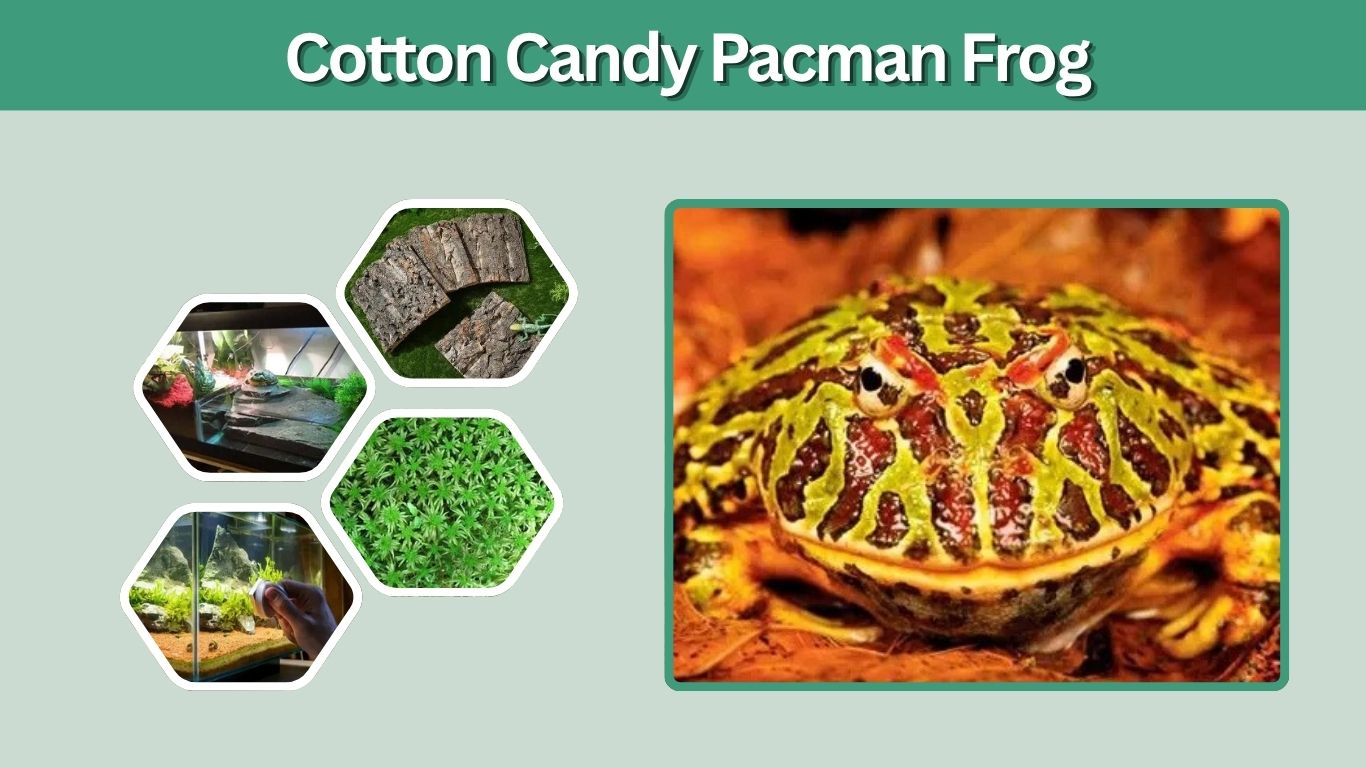
A cotton candy pacman frog is a colorful pacman frog morph known for soft pastel shades that may include pink, cream, peach, yellow, or light orange. Like other pacman frogs, it is not a separate species but a captive-bred color variety. These frogs are popular because of their round body, huge mouth, and bright candy-like appearance. However, their care needs are the same as other pacman frogs: warm temperatures, high humidity, soft substrate, and a simple tank setup.
What Is a Cotton Candy Pacman Frog?
The cotton candy pacman frog is best understood as a color morph. “Morph” means a captive-bred color or pattern variation. Pacman frogs in the pet trade are often sold under many color names, including albino, high red, apricot, pastel, and other designer names.
Is It a Separate Species?
No, the cotton candy pacman frog is not a separate species. Most pet pacman frogs belong to the horned frog group, commonly linked with Ceratophrys species. They are terrestrial frogs from South America and are known for sitting partly buried while waiting for prey.
Why Is It Called “Cotton Candy”?
The name comes from its soft, sweet-looking colors. A cotton candy pacman frog may show pale pink, creamy white, peach, yellow, or light orange tones. Exact colors can vary depending on the breeder, genetics, age, lighting, and whether the frog is fired up or relaxed.
Cotton Candy Pacman Frog Appearance
A cotton candy pacman frog usually has the same body shape as other pacman frogs. It has a round body, short legs, wide mouth, raised eyes, and bumpy skin. The special feature is its pastel coloration.
| Feature | Description |
| Body shape | Round, wide, and heavy-bodied |
| Mouth | Very large, giving the “Pacman” look |
| Eyes | Raised above the head |
| Colors | Pink, peach, cream, yellow, orange, or pastel mix |
| Pattern | May be blotched, striped, or lightly marked |
| Adult size | Often around 4–7 inches depending on sex and species line |
Female pacman frogs are usually larger than males. Many adults reach around 4–6 inches, though large females can be bigger.
Strawberry Cotton Candy Pacman Frog
A strawberry cotton candy pacman frog is usually a brighter variation with more pink, red, or strawberry-colored tones. This name is often used to describe frogs with a stronger pink or reddish pastel look.
Cotton Candy vs Strawberry Cotton Candy
The difference is mainly color intensity. A regular cotton candy morph may look softer and lighter, while a strawberry cotton candy pacman frog may show stronger pink or reddish tones. Care is the same for both.
Cotton Candy Pacman Frog Care
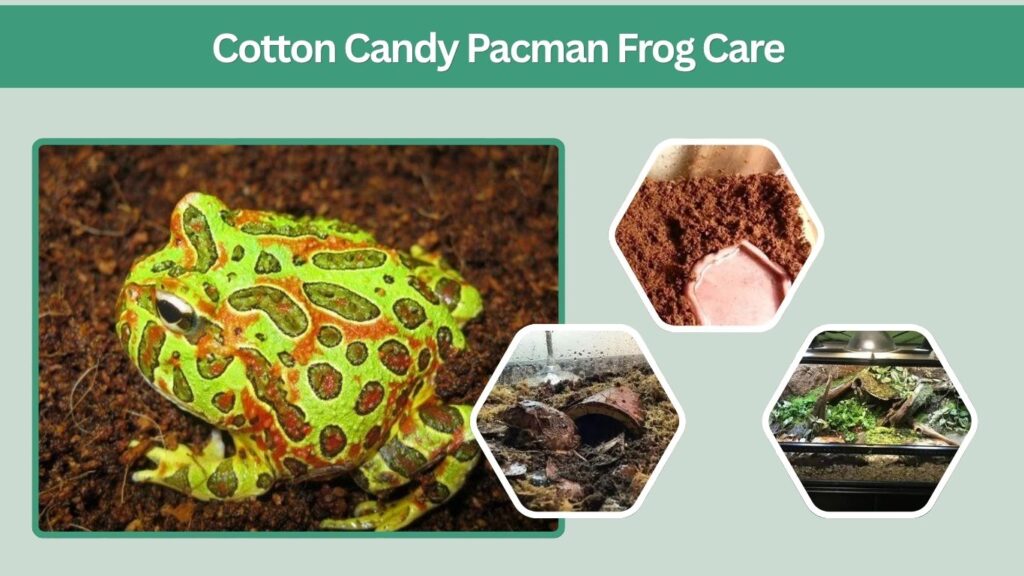
Cotton candy pacman frog care is not different from regular pacman frog care. The color morph does not need a special diet, special lighting, or different humidity. Good care depends on a stable tank environment.
Basic Care Needs
- Warm tank temperature
- High humidity
- Soft, damp substrate
- Shallow water dish
- Secure hiding area
- Clean enclosure
- Live insects as food
- No tank mates
Pacman frogs are not active climbing frogs. They spend much of their time buried in substrate, so the enclosure should focus on ground space and moisture rather than height.
Cotton Candy Pacman Frog Tank Setup
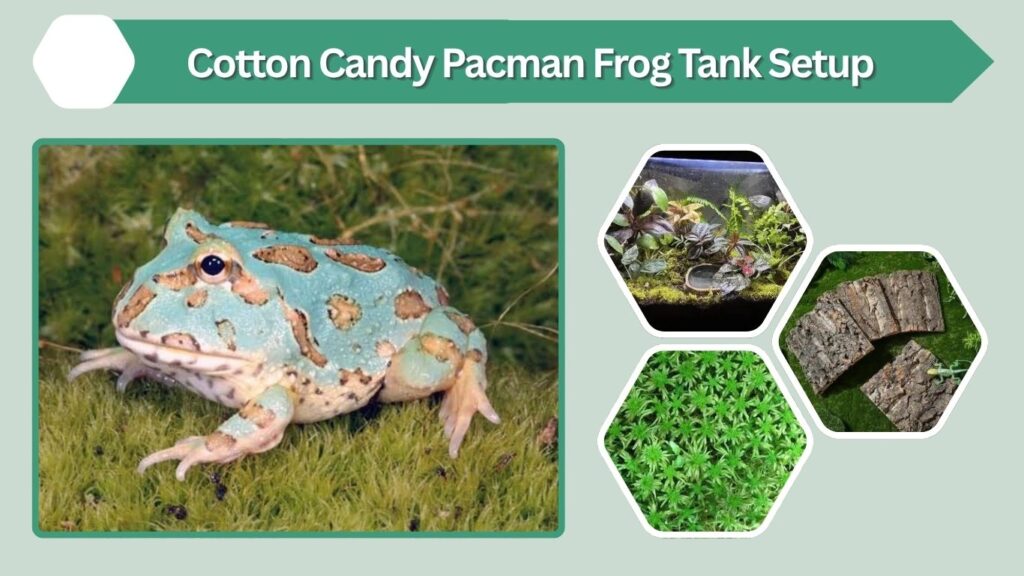
A 10-gallon tank can work for a young or average pacman frog, but a 20-gallon long tank is better for an adult, especially a large female. A wider tank gives more room for burrowing, water, hides, and a warm-to-cool temperature gradient.
| Tank Item | Best Choice |
| Tank size | 10-gallon minimum, 20-gallon preferred for adults |
| Substrate | Coconut fiber, soil mix, or sphagnum moss |
| Water dish | Shallow, dechlorinated water |
| Temperature | Around 75–83°F daytime |
| Night temperature | Around 70–75°F |
| Humidity | Around 60–80% |
| Decor | Hide, plants, cork bark, leaf litter |
PetMD recommends keeping pacman frog substrate damp but not wet, because excess moisture can encourage mold and bacteria, while low humidity can cause dehydration.
Temperature and Humidity
Cotton candy pacman frogs need warm, humid conditions. A daytime range around 75–83°F and nighttime range around 70–75°F are commonly recommended for pacman frogs. Humidity should usually stay around 60–80%.
Heating Tips
Use a thermostat with any heat source. A low-watt heat lamp, ceramic heat emitter, or side-mounted heat mat can work. Avoid hot rocks because they can burn amphibians. Keep one side warmer and one side slightly cooler so the frog can choose where it feels comfortable.
Substrate for a Cotton Candy Pacman Frog
Substrate is very important because pacman frogs love to burrow. Coconut fiber, reptile-safe soil, and damp sphagnum moss are common choices. The substrate should be deep enough for the frog to sit partly buried.
Avoid gravel, cedar, pine, dry sand, and sharp materials. These can irritate the frog’s skin or become dangerous if swallowed.
Feeding a Cotton Candy Pacman Frog
A cotton candy pacman frog eats the same diet as other pacman frogs. Good foods include crickets, dubia roaches, nightcrawlers, hornworms, and occasional appropriately sized feeder insects. Prey should be smaller than the frog’s mouth width to reduce choking risk.
Use calcium and vitamin supplements as part of a proper feeding routine. Young frogs usually eat more often than adults, while adults may eat larger meals less frequently.
Can Cotton Candy Pacman Frogs Live Together?
No, cotton candy pacman frogs should live alone. Pacman frogs have a strong feeding response and may try to eat anything that moves near them, including another frog. Housing them alone is the safest option.
Common Problems to Avoid
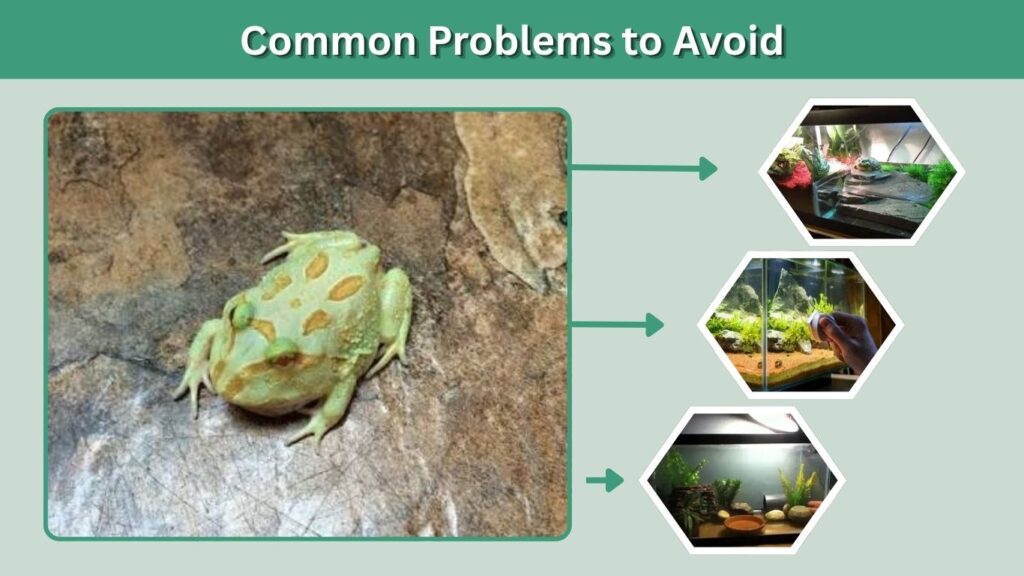
- Keeping the tank too dry
- Making the substrate soaking wet
- Using a deep water bowl
- Housing two pacman frogs together
- Feeding prey that is too large
- Using unsafe heat rocks
- Cleaning with strong chemicals
- Handling too often
Pacman frogs have sensitive skin, so they should not be handled unless necessary. When handling is needed, use clean, wet hands or powder-free gloves.
FAQs
Is a cotton candy pacman frog rare?
A cotton candy pacman frog is less common than normal green or albino pacman frogs, but availability depends on breeders and season. It is a designer color morph, so exact appearance can vary from one frog to another.
How big does a cotton candy pacman frog get?
Most cotton candy pacman frogs grow about 4–7 inches, depending on sex and species line. Females are usually larger than males. A small baby can grow quickly with proper feeding, heat, humidity, and clean housing.
Does a cotton candy pacman frog need special care?
No, it does not need special care because of its color. It needs the same care as other pacman frogs: warm temperature, high humidity, damp substrate, a shallow water dish, and a secure tank with no tank mates.
What is the best tank size for a cotton candy pacman frog?
A 10-gallon tank can work for a young or smaller frog, but a 20-gallon long tank is better for most adults. Larger tanks make it easier to create a warm side, cool side, water area, and deep substrate zone.
What is a strawberry cotton candy pacman frog?
A strawberry cotton candy pacman frog is usually a brighter version of the cotton candy look, often showing more pink or reddish tones. It is still a pacman frog morph, not a separate species, and its care needs are the same.
