
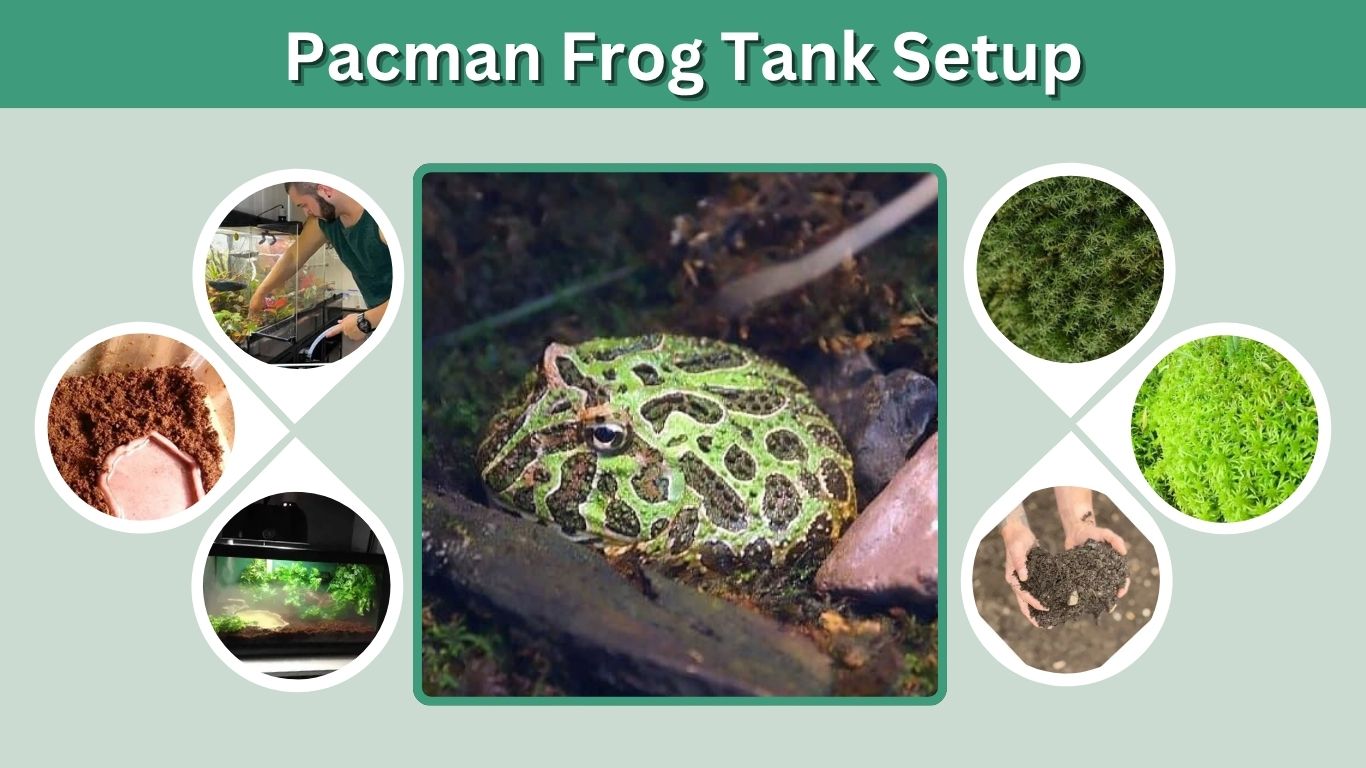
A pacman frog tank should be simple, humid, warm, and built for burrowing. Pacman frogs are terrestrial amphibians from South America, and they spend much of their time sitting partly buried in damp substrate, waiting for food to pass by. Because they are not active climbers or swimmers, the best tank focuses on floor space, deep substrate, safe heat, shallow water, and easy cleaning rather than tall branches or deep ponds.
Pacman Frog Tank Size
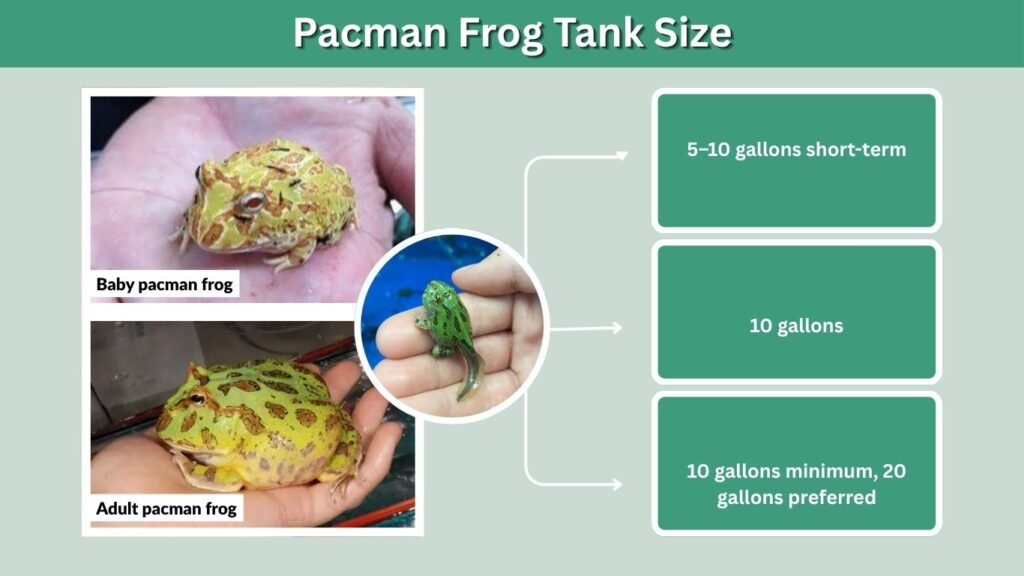
Pacman frogs do not need a huge enclosure, but they still need enough room to burrow, turn around, soak, and move between warmer and cooler areas. A tank that is too small becomes harder to heat, clean, and decorate safely.
| Frog Stage | Recommended Tank Size |
| Baby pacman frog | 5–10 gallons short-term |
| Juvenile pacman frog | 10 gallons |
| Adult pacman frog | 10 gallons minimum, 20 gallons preferred |
| Large female pacman frog | 20 gallons or larger |
Some care guides list a 10-gallon terrarium as the minimum for a single adult, while others recommend a 20-gallon tank for better space and stability. A 20-gallon long tank is usually the better choice for most adult pacman frogs.
Can a Pacman Frog Live in a 10 Gallon Tank?
Yes, a pacman frog can live in a 10-gallon tank, especially if it is small or average-sized. However, a larger adult female may do better in a 20-gallon long tank. Bigger tanks also make it easier to create a warm side, cool side, water area, and hiding space.
Can a Pacman Frog Live in a 5 Gallon Tank?
A 5-gallon tank is only suitable for a very small baby pacman frog for a short time. It is not ideal for an adult. Small tanks dry out quickly, heat unevenly, and leave little room for proper substrate and decor.
Pacman Frog Tank Setup
A good pacman frog tank setup should copy the frog’s natural lifestyle: damp ground, soft cover, warm air, and hiding places. Avoid making the enclosure too wet, too dry, or too bright.
What Do Pacman Frogs Need in Their Tank?
- Deep moisture-holding substrate
- Shallow dechlorinated water dish
- Thermometer and hygrometer
- Safe heat source with thermostat
- Hide or covered area
- Live or artificial plants
- Leaf litter or moss
- Secure lid
- Low-level lighting or UVB option
Pacman frogs are ambush predators, so they do not need climbing branches or open swimming areas. They need a comfortable place to sit, dig, and wait.
Pacman Frog Tank Substrate
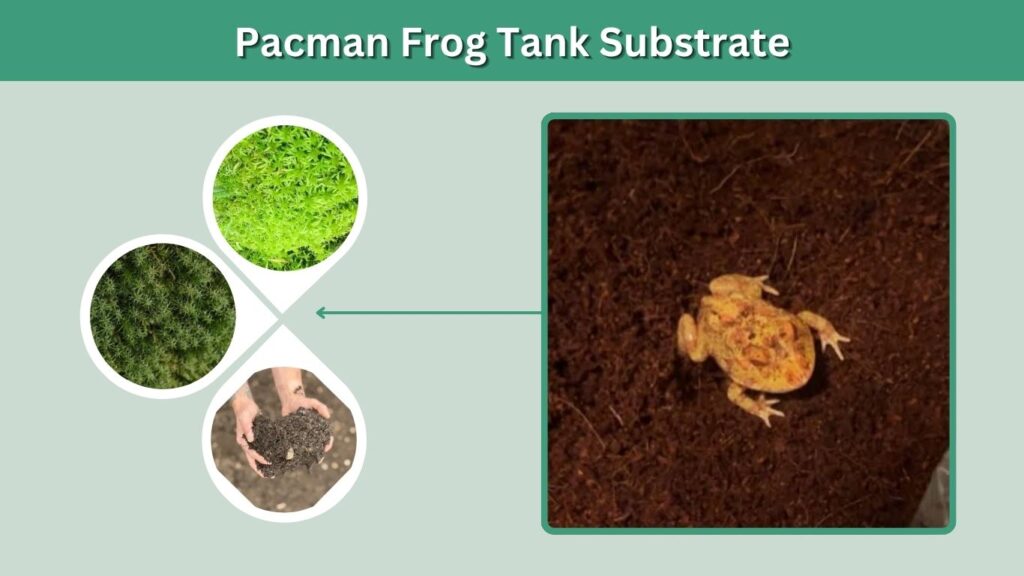
Substrate is one of the most important parts of a pacman frog tank. Adult frogs need about 3–4 inches of substrate so they can burrow. Coconut fiber and sphagnum moss are commonly used because they hold moisture and are soft enough for digging.
Best Substrate Options
- Coconut fiber
- Sphagnum moss
- Organic topsoil mix
- Reptile-safe soil
- Cypress mulch mixed with soil
- Leaf litter on top
Avoid gravel, sharp rocks, reptile carpet, cedar, pine, dry sand, and any substrate treated with chemicals. Gravel and rocks can injure the skin or cause impaction if swallowed.
Pacman Frog Tank Temperature
Pacman frogs need a warm but not overheated tank. PetMD recommends 75–83°F during the day and 70–75°F at night. Swiftail Vet gives a similar range of 75–85°F with a slight nighttime drop.
| Tank Area | Ideal Range |
| Day temperature | 75–83°F |
| Warm side | Around 80–83°F |
| Night temperature | 70–75°F |
| Humidity | 60–80% or about 70–80% |
How to Heat a Pacman Frog Tank
Use a low-watt heat lamp, ceramic heat emitter, or side-mounted heat mat. Any heat source should be controlled by a thermostat. If using an under-tank heater, attach it to one side rather than heating the whole tank, and never use hot rocks because they can burn amphibians.
Pacman Frog Tank Humidity
Humidity should usually stay around 60–80%, with many keepers aiming near 70–80%. A hygrometer is needed because guessing humidity is unreliable. The substrate should feel damp, not soaked. Too much moisture can encourage mold and bacteria, while low humidity can cause dehydration and poor shedding.
Humidity Tips
- Mist with dechlorinated water daily.
- Use coconut fiber or moss.
- Cover part of the screen lid if humidity drops.
- Add live plants or leaf litter.
- Keep the water dish clean and shallow.
Pacman Frog Tank Decor
Pacman frog tank decor should provide cover and security. These frogs often feel safer when they can sit under plants, moss, or leaf litter.
Good decor ideas include cork bark, half logs, smooth hides, fake plants, pothos, moss patches, seed pods, and leaf litter. Always leave open floor space so the frog can burrow and turn around comfortably.
Bioactive Pacman Frog Tank
A bioactive pacman frog tank uses live plants, soil, leaf litter, and cleanup crews such as springtails and isopods. This setup can look natural and help break down waste, but it still needs monitoring.
A bioactive tank is not “no cleaning.” You still need to remove uneaten food, check humidity, clean the water dish, and watch for mold. For beginners, a simple non-bioactive setup is often easier to control.
How Often to Clean a Pacman Frog Tank
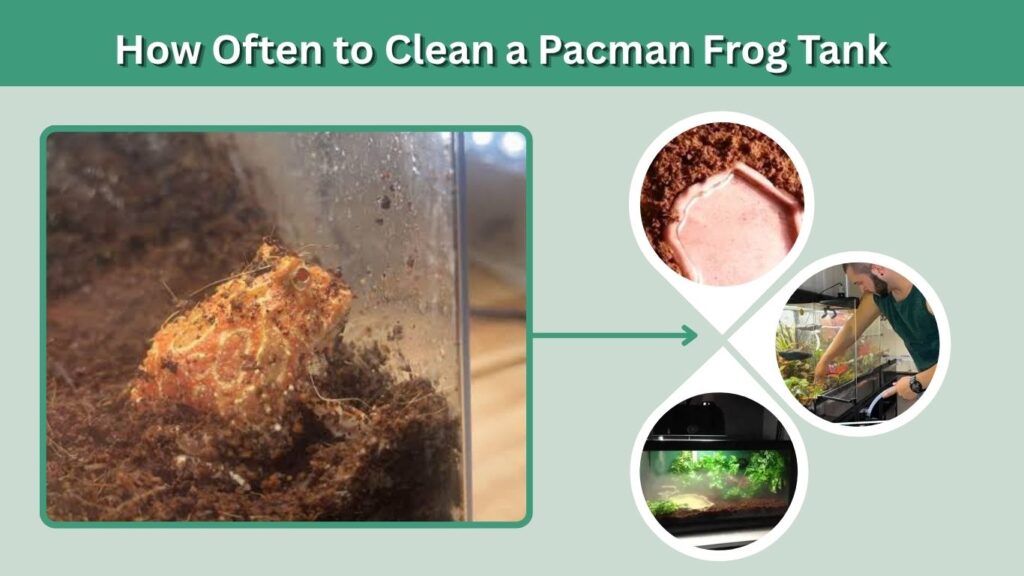
Spot-clean the tank daily by removing waste, old food, and dirty substrate. Food and water dishes should also be cleaned daily. PetMD recommends a full habitat cleaning at least once a month, using amphibian-safe cleaner or a properly diluted disinfecting method, then rinsing thoroughly with dechlorinated water.
Cleaning Checklist
- Remove feces daily.
- Replace dirty substrate patches.
- Wash the water bowl daily.
- Remove uneaten insects quickly.
- Deep clean non-bioactive tanks monthly.
- Replace substrate as needed.
Pacman Frog Tank Mates
Pacman frogs should live alone. They have huge mouths, strong feeding responses, and may try to eat anything that moves near them. Other frogs, lizards, small snakes, and even another pacman frog can become prey or cause stress. The safest tank mate rule is simple: one pacman frog per tank.
Pacman Frog Tank Mistakes to Avoid
- Using a tank that is too small
- Keeping substrate dry
- Making the tank swampy or waterlogged
- Using deep water bowls
- Adding tank mates
- Using hot rocks
- Forgetting a thermostat
- Cleaning with unsafe chemicals
- Handling the frog too often
Pacman frogs have sensitive skin, so tank safety matters. Keep the setup simple, stable, and clean.
FAQs
What size tank does a pacman frog need?
A baby pacman frog can start in a 5–10 gallon tank, but an adult usually does better in a 10–20 gallon tank. A 20-gallon long tank is often the better choice because it gives more floor space and makes temperature control easier.
Is a 10 gallon tank enough for a pacman frog?
A 10-gallon tank can work for a small or average adult pacman frog, but it is not always ideal for a large female. If you want more room for substrate, plants, water, and a temperature gradient, choose a 20-gallon long tank.
What should I put in a pacman frog tank?
Put deep damp substrate, a shallow water dish, a hide, plants, leaf litter, thermometer, hygrometer, and safe heating equipment. The tank should be warm, humid, and simple. Avoid sharp decor, deep water, gravel, and anything treated with chemicals.
How do you clean a pacman frog tank?
Remove waste and uneaten food daily. Clean and refill the water bowl every day. For a basic non-bioactive tank, do a deeper clean about once a month by replacing substrate and disinfecting the enclosure with amphibian-safe products.
Can pacman frogs live with lizards or other frogs?
No, pacman frogs should not live with lizards, fish, other frogs, or another pacman frog. They are aggressive ambush feeders and may try to eat tank mates. Keeping one frog per tank is the safest option.
