
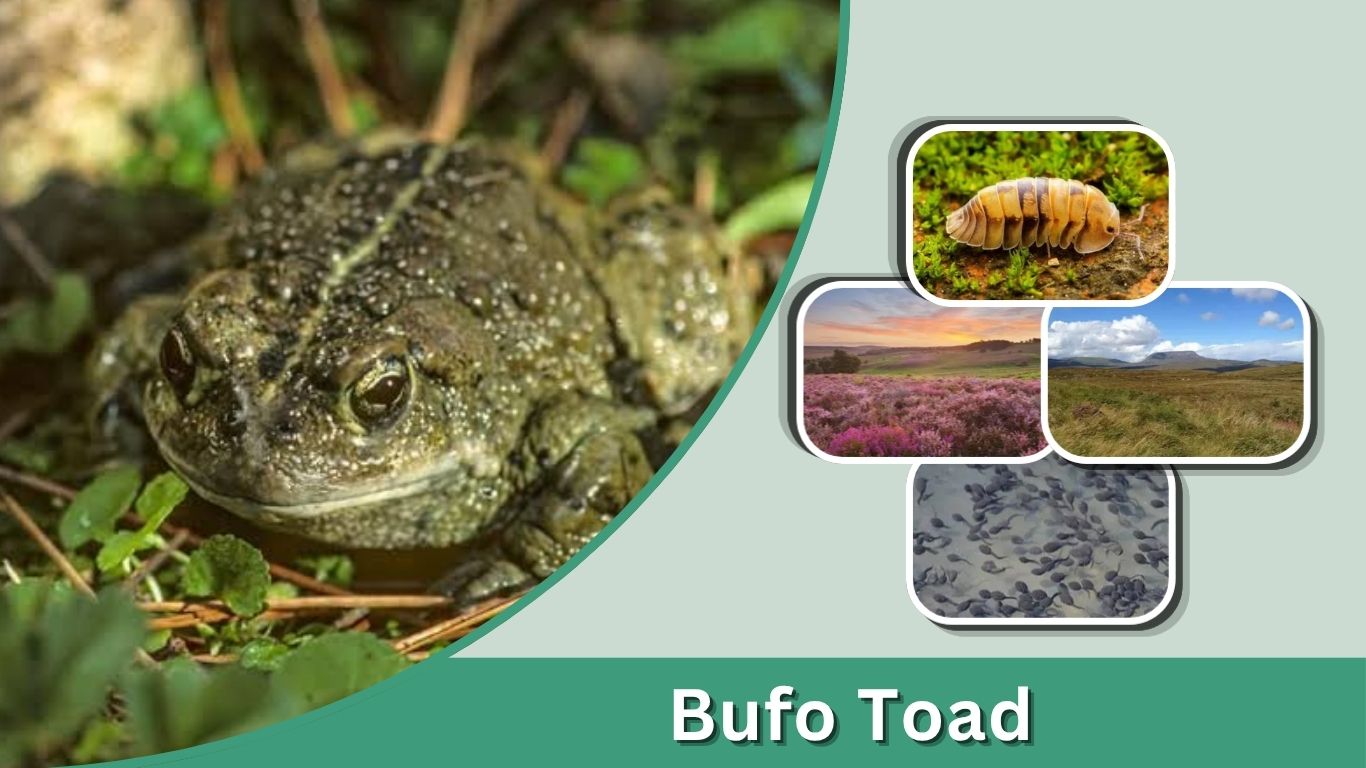
The Bufo toad is a sturdy, ground-dwelling amphibian recognized by its dry-looking, warty skin, broad body, and prominent poison glands behind its eyes. In modern taxonomy, Bufo is a genus of true toads mainly found across Europe, northern Africa, and parts of Asia. The common toad, scientifically named Bufo bufo, is its most familiar representative. Although it spends much of its life on land, it returns to freshwater ponds during the breeding season.
What Is a Bufo Toad?
A Bufo toad belongs to the family Bufonidae, commonly known as the true toads. Historically, scientists placed many unrelated toad species from around the world in the genus Bufo. Later taxonomic studies moved many of those species into separate genera, including Anaxyrus, Rhinella, and Bufotes.
Today, the name “Bufo toad” most accurately describes Old World species that remain within the genus Bufo. These animals share several typical toad characteristics:
- Broad, heavy bodies
- Short hind legs
- Dry, bumpy-looking skin
- Horizontal pupils
- Large parotoid glands behind the eyes
- A preference for walking or making short hops
Unlike smooth-skinned frogs, Bufo toads are primarily adapted to terrestrial life. However, they still require water for egg laying and tadpole development.
Bufo Toad Size
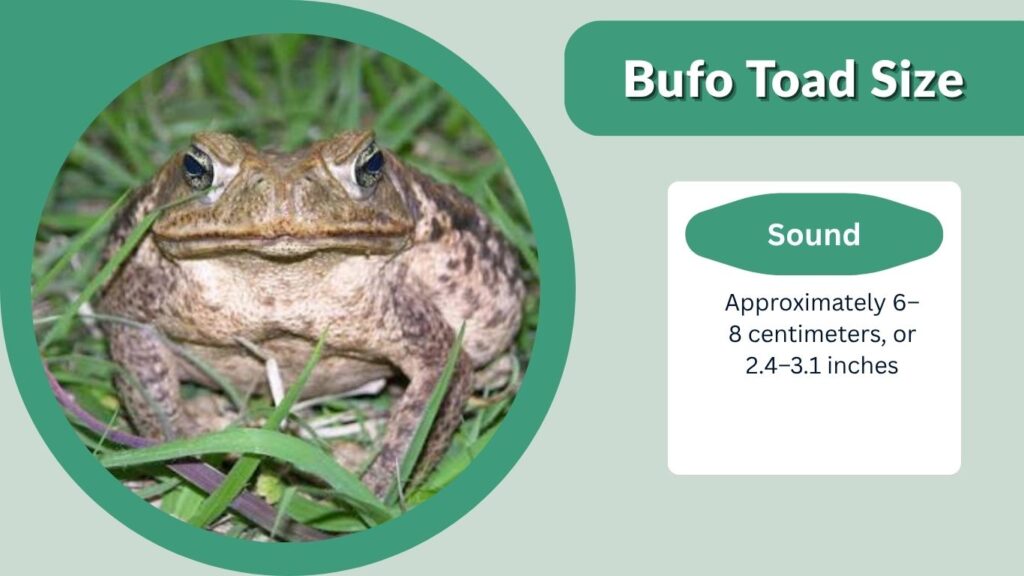
The size of a Bufo toad depends on its species, sex, age, and access to food. The common toad is considered a medium-sized to relatively large amphibian.
Average Adult Size
Adult male common toads usually grow to approximately 6–8 centimeters, or 2.4–3.1 inches, in body length. Females are noticeably larger and may reach 8–13 centimeters, or approximately 3.1–5.1 inches. Females need larger bodies because they carry thousands of developing eggs during the breeding season.
| Bufo Toad | Typical Body Length |
|---|---|
| Adult male | 6–8 cm or 2.4–3.1 in |
| Adult female | 8–13 cm or 3.1–5.1 in |
| Newly transformed toadlet | Around 1 cm or less |
Some other species historically called Bufo toads can become considerably larger. For example, the cane toad was once classified as Bufo marinus but is now known as Rhinella marina. It commonly reaches 10–15 centimeters and may weigh more than one kilogram. It is therefore important to identify the exact species before estimating its mature size.
Bufo Toad Color and Appearance
Bufo toads usually have muted colors that help them blend into soil, leaves, rocks, and tree bark. Their camouflage is particularly valuable because they spend much of the day resting beneath natural cover.
Common Body Colors
The upper body may be:
- Olive-brown
- Grayish brown
- Dark brown
- Reddish brown
- Yellowish brown
- Nearly black
The belly is generally lighter, appearing cream, dirty white, pale gray, or yellowish. Dark speckles or irregular markings may cover the underside. Common toads frequently have copper, bronze, or golden-colored eyes with horizontal pupils.
Their skin is covered with rounded bumps commonly described as warts. These bumps are normal skin structures and cannot give humans warts. Behind each eye is a raised parotoid gland that produces a bitter, irritating defensive secretion.
The body is broad and compact, while the legs are shorter than those of many frogs. As a result, Bufo toads usually crawl or walk instead of making long jumps.
Bufo Toad Habitat
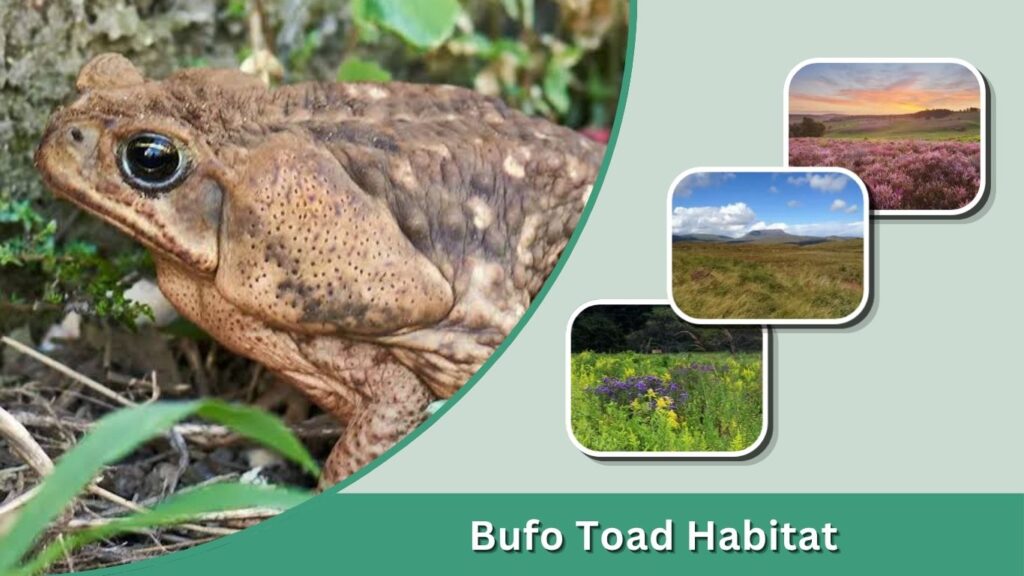
Bufo toads are highly adaptable and can survive in many environments as long as they have food, shelter, adequate moisture, and access to breeding water.
Terrestrial Habitats
Common toads occupy a variety of landscapes, including:
- Deciduous and mixed woodlands
- Meadows and grasslands
- Heathlands
- Farmland
- Gardens and parks
- Wetlands
- Vineyards
- Hedgerows
- Scrubland
They generally avoid extremely dry, exposed areas with little shade or shelter. In warmer or drier locations, they remain hidden during the day to reduce water loss.
Daytime Shelters
During daylight hours, Bufo toads may hide beneath logs, rocks, leaf litter, garden boards, roots, compost piles, dense vegetation, or abandoned animal burrows. Their resting location must remain cool and reasonably humid.
They usually emerge after sunset or during damp weather. Rainy evenings are especially favorable because moist ground makes movement easier and brings worms, slugs, and other prey to the surface.
Breeding Habitat
Although adults spend most of their lives on land, they breed in water. Suitable breeding locations include ponds, lakeshores, flooded depressions, slow-moving water, and other relatively calm freshwater habitats.
Many adults return to the same traditional breeding pond each year. During seasonal migration, large numbers may cross roads, gardens, and agricultural land, exposing them to vehicles and habitat barriers.
What Do Bufo Toads Eat?
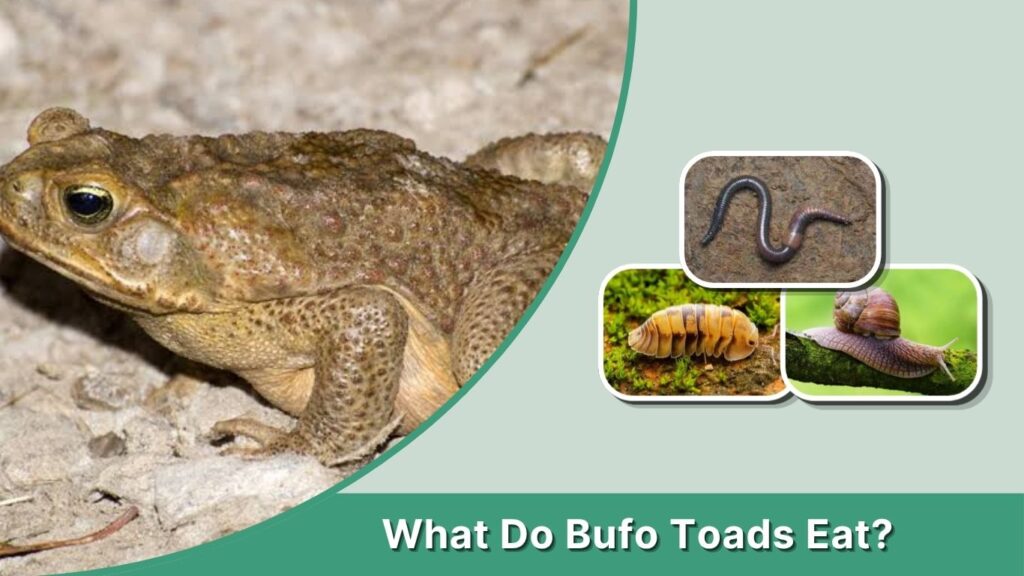
Adult Bufo toads are opportunistic carnivores. They eat almost any small animal they can overpower and swallow, although most of their diet consists of terrestrial invertebrates.
Common Foods
Their prey may include:
- Beetles
- Ants
- Crickets
- Caterpillars
- Earwigs
- Flies
- Earthworms
- Slugs
- Snails
- Spiders
- Woodlice
- Millipedes
Common toads are beneficial garden visitors because they consume many insects, slugs, and other organisms that may damage plants. Woodland Trust describes them as feeders on worms, slugs, and insects in moist, shaded habitats.
How Bufo Toads Hunt
Bufo toads usually hunt at night. Rather than chasing prey over long distances, they often sit quietly and wait for movement. When a small animal comes close, the toad rapidly extends its sticky tongue or lunges forward and captures it with its mouth.
They generally swallow food whole because toads do not have teeth designed for chewing. Larger individuals can consume larger prey, while young toadlets concentrate on tiny insects and other small invertebrates.
Tadpoles have a different diet. They usually graze on algae, microorganisms, decomposing vegetation, and organic material in the water.
Bufo Toad Lifecycle
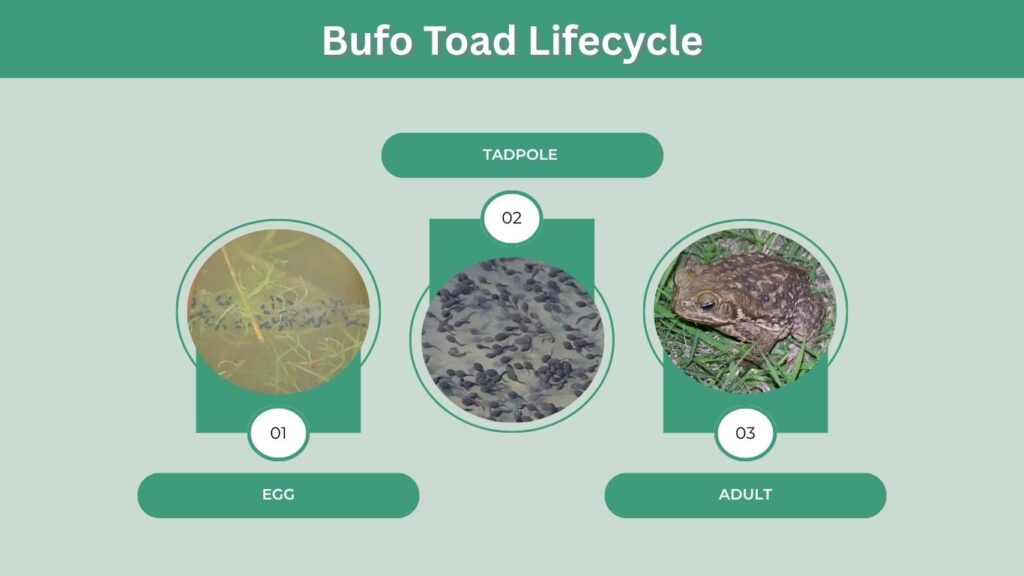
The Bufo toad has a complex lifecycle involving both aquatic and terrestrial stages. Its development begins in water before the young toads transform into land-dwelling animals.
1. Breeding Migration
Breeding generally begins in late winter or spring, depending on local temperature and rainfall. Adult toads leave their overwintering shelters and travel toward ponds.
Males usually arrive before females. They gather in shallow water and produce repeated calls to attract mates. Competition can be intense when several males attempt to grasp the same female.
2. Mating and Egg Laying
During mating, the male holds the female from behind in a position called amplexus. As the female releases her eggs, the male fertilizes them externally.
Unlike many frogs that produce floating clusters, common toads lay their eggs in long, jelly-like strings. These strands are commonly wrapped around aquatic plants and submerged branches.
A female may produce several thousand small, dark eggs during one breeding event. Egg production varies according to her age, health, body size, and environmental conditions.
3. Egg Development
The eggs absorb water and are protected by a gelatinous coating. Development speed depends greatly on water temperature. Warmer conditions generally accelerate hatching, while cold weather slows the process.
Fish, aquatic insects, birds, and other amphibians may eat the eggs. Pollution, sudden pond drainage, and extreme temperature changes can also reduce survival.
4. Tadpole Stage
After hatching, the young emerge as small, dark tadpoles. They initially remain near vegetation and feed on algae, microorganisms, and decomposing organic matter.
As they develop, tadpoles grow stronger tails and gradually form their hind legs. Their front legs appear later. Internal changes also prepare them to breathe air and digest a more carnivorous terrestrial diet.
5. Metamorphosis
During metamorphosis, the tadpole’s legs become fully developed, its lungs begin functioning, and its tail is absorbed into the body. The young animal then leaves the water as a tiny toadlet.
Newly transformed toadlets often appear in large numbers around the breeding pond. At this stage, they are extremely vulnerable to dehydration and predation.
6. Juvenile and Adult Life
Juveniles spend the following years feeding and growing on land. They do not normally breed immediately. Sexual maturity is reached only after they have developed sufficiently, with timing influenced by climate, sex, food availability, and population conditions.
Mature adults eventually join the annual migration back to breeding water, beginning the cycle again.
Bufo Toad Defense Mechanisms
Bufo toads are slow-moving animals, so they depend on camouflage, posture, and chemical defenses rather than speed.
When threatened, a toad may lower its head, inflate its body, raise itself on its legs, or turn its parotoid glands toward the attacker. The glands produce a bitter, irritating substance that discourages many predators.
The secretion should not be deliberately handled or exposed to the eyes, mouth, or damaged skin. A person who touches a toad should wash their hands afterward. Pets should also be prevented from biting or licking unfamiliar toads because defensive toxins can cause excessive drooling, vomiting, irritation, or more serious reactions depending on the toad species.
Interesting Bufo Toad Facts
- Females are larger than males. Their larger bodies allow them to carry substantial numbers of eggs.
- They do not cause warts. The bumps on their skin are natural glands and structures, not contagious human warts.
- They usually walk rather than leap. Their short hind legs are better suited to crawling and making small hops.
- Their eyes may look metallic. Common toads often have striking copper or golden irises surrounding horizontal pupils.
- They help control garden pests. A single toad may consume numerous slugs, beetles, caterpillars, and other invertebrates.
- They remember breeding locations. Adults frequently return to traditional ponds, sometimes traveling considerable distances.
- They spend most of their lives away from water. Water is essential for reproduction, but adults are predominantly terrestrial.
- They are mainly nocturnal. Most feeding and surface activity occur after sunset or during wet, cloudy conditions.
- Their coloration provides camouflage. Brown, gray, and olive shades help conceal them among leaves, soil, and stones.
- Taxonomy has changed significantly. Several famous animals once called Bufo toads, including cane toads and American toads, are now assigned to other genera.
FAQs
Are Bufo toads poisonous?
Bufo toads possess parotoid glands that produce defensive secretions. These chemicals are mainly intended to deter predators. They are not normally dangerous when simply observed, but their secretions should not enter the eyes or mouth. Wash your hands after direct contact and keep pets from biting toads.
How big does a Bufo toad get?
Male common toads generally reach about 6–8 centimeters long, while females may grow to approximately 8–13 centimeters. Size varies among species, and some animals historically classified under Bufo grow much larger than the common toad.
Where do Bufo toads live?
They inhabit woodlands, meadows, farmland, parks, gardens, heathlands, and wetlands across portions of Europe, northern Africa, and Asia. They usually need shaded terrestrial shelters for daily survival and freshwater ponds or similar aquatic habitats for breeding.
What does a Bufo toad eat?
Adult Bufo toads eat beetles, ants, caterpillars, worms, slugs, snails, spiders, woodlice, and other small animals. Tadpoles mostly consume algae, microorganisms, and decomposing organic matter until metamorphosis changes their anatomy and feeding behavior.
Can you keep a Bufo toad as a pet?
Keeping native wildlife may be restricted by local law, and wild toads should generally be left in their natural habitat. Captive care also requires suitable humidity, temperature, shelter, live food, clean water, and careful hygiene. Captive-bred animals are preferable wherever legal and responsibly available.
