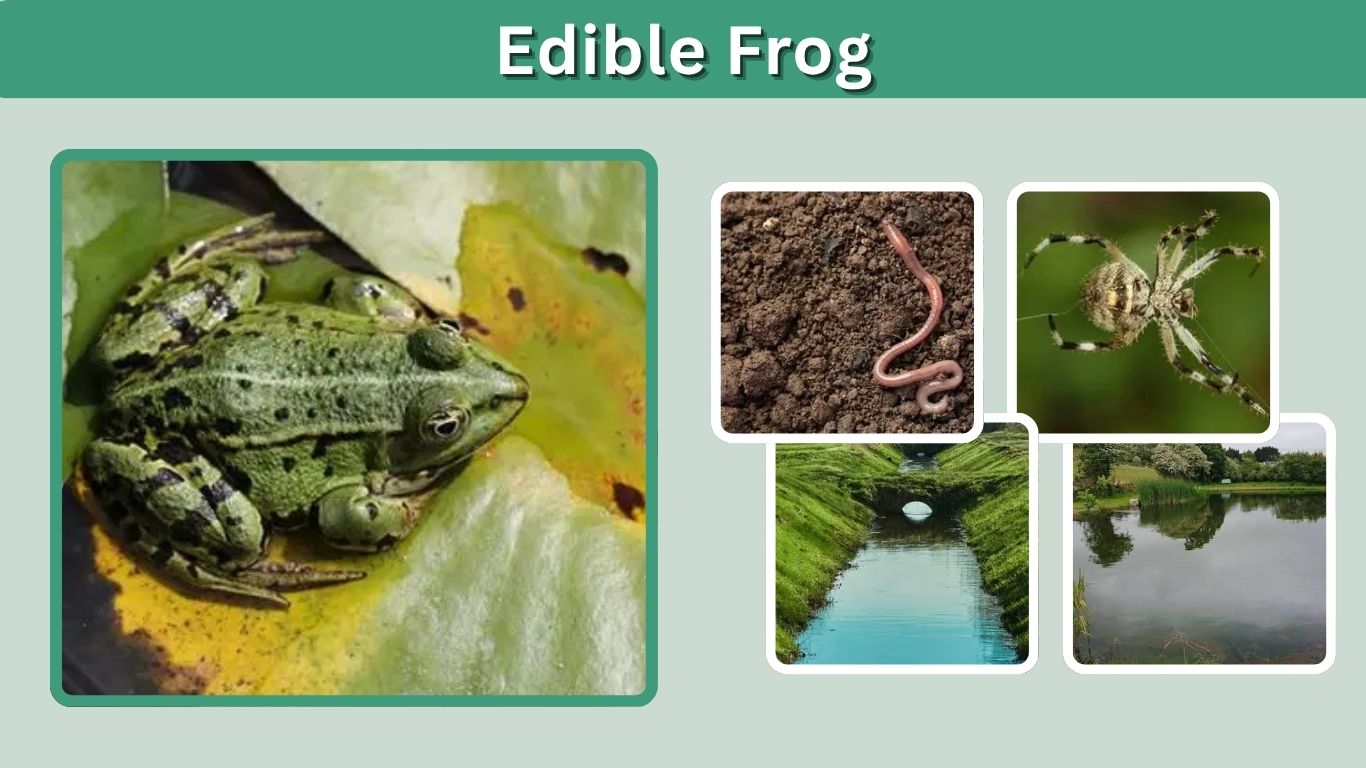
The edible frog is a medium-sized European water frog known for its green or brown body, dark markings, loud call, and unusual genetic origin. Its scientific name is Pelophylax kl. esculentus. Unlike most frog species, the edible frog developed through hybridization between the pool frog and the marsh frog. It spends much of its life in and around freshwater ponds, lakes, canals, and marshes. Despite its common name, the frog is mainly important as part of wetland ecosystems, where it controls insects and provides food for birds, snakes, fish, and mammals.
What Is an Edible Frog?
The edible frog belongs to the true frog family, Ranidae. It is part of the European water frog group, which also includes the pool frog and marsh frog.
Its scientific name is often written as Pelophylax kl. esculentus. The abbreviation “kl.” means klepton and refers to the frog’s unusual reproductive system. Edible frogs are hybrids produced from pool frogs, Pelophylax lessonae, and marsh frogs, Pelophylax ridibundus.
Although edible frogs can reproduce, their genetics do not follow the same simple pattern seen in most species. During reproduction, one parental genome may be removed from the reproductive cells, while the other is passed to the offspring. The frog often needs to breed with one of its parent species to maintain local populations.
Why Is It Called the Edible Frog?
The name comes from the historical use of its hind legs as food in parts of Europe. Frog legs have been eaten in several European countries, and edible frogs were among the water frogs collected for that purpose.
The name does not mean that people should catch wild frogs for food. Amphibian collection may be regulated or prohibited, and wild frogs may carry parasites, diseases, pesticides, or other contaminants. Removing them can also harm local wetland populations.
Edible Frog Identification
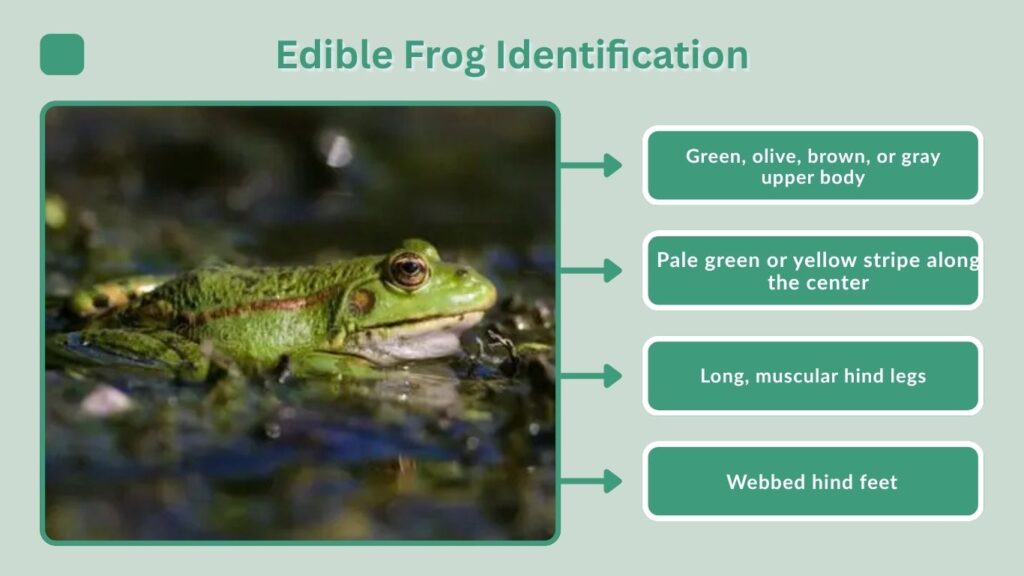
Edible frogs vary considerably because of their hybrid ancestry. Some resemble pool frogs, while others look more like marsh frogs.
Common identification features include:
- Green, olive, brown, or gray upper body
- Dark spots across the back and legs
- Pale green or yellow stripe along the center of the back
- Pointed snout
- Prominent eyes positioned high on the head
- Raised folds running along both sides of the back
- Long, muscular hind legs
- Webbed hind feet
- Pale underside
Males usually develop paired vocal sacs near the corners of their mouths. These sacs may appear white, gray, or dark when inflated.
The central stripe is common but not present on every individual. Color alone cannot reliably separate an edible frog from a pool frog or marsh frog.
How Big Do Edible Frogs Get?
Adult edible frogs commonly measure around 6–10 centimeters from the snout to the rear of the body. Large females may exceed 10 centimeters, while males are usually smaller and slimmer.
Their long hind legs give them a much greater total length when stretched. These legs are adapted for powerful jumping and fast swimming.
Females tend to be larger because their bodies must hold hundreds or thousands of eggs during the breeding season.
Edible Frog Habitat
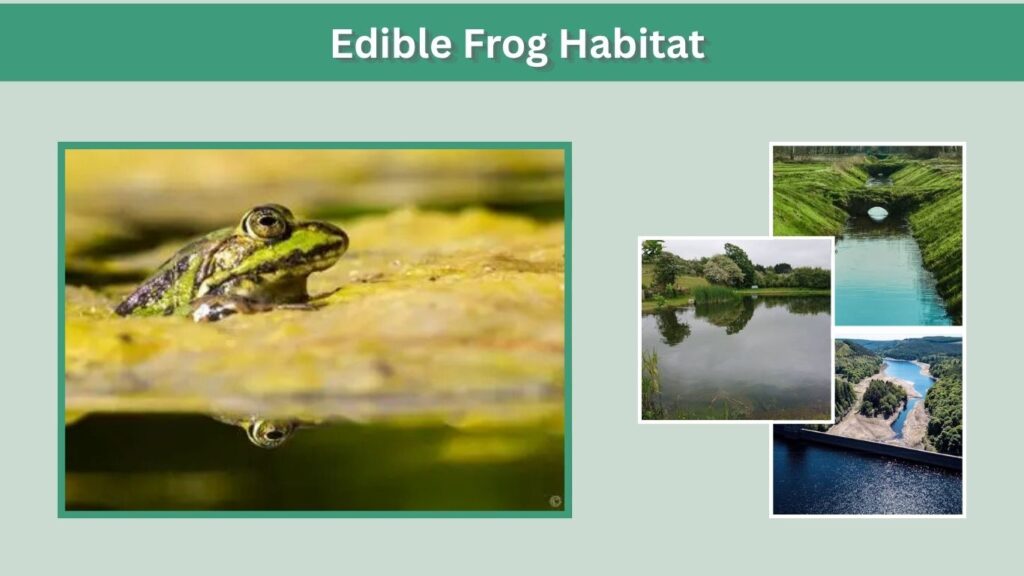
Edible frogs are strongly associated with freshwater and usually remain close to water throughout the active season.
Typical habitats include:
- Ponds
- Lakes
- Marshes
- Swamps
- Canals
- Slow-moving rivers
- Drainage ditches
- Flooded meadows
- Gravel pits
- Garden ponds
They prefer water bodies with sunny edges, abundant vegetation, and areas of shallow water. Aquatic plants provide cover from predators, support egg masses, and create hunting areas for adults and tadpoles.
Edible frogs can tolerate habitats affected by people, including farm ponds, urban wetlands, and artificial canals. However, they still need suitable water quality and safe places to breed and overwinter.
Do Edible Frogs Live Away from Water?
They may travel through damp grass, woodland edges, and nearby fields, especially during wet weather. However, they are more aquatic than common frogs and normally remain close to ponds or other freshwater habitats.
When threatened, an edible frog usually jumps directly into the water and hides among plants or mud. Its eyes and nostrils are positioned so it can remain mostly submerged while watching its surroundings.
Edible Frog Behavior
Edible frogs are active during warm days and evenings. They often sit on pond banks, lily pads, floating vegetation, or partially submerged objects.
They regularly bask in sunshine to raise their body temperature. A warm frog can move faster, digest food more efficiently, and call more strongly.
When approached, the frog quickly jumps into the water. It may remain underwater for several minutes before returning quietly to the surface.
Edible Frog Call
Male edible frogs are vocal during the breeding season. Their calls can sound like rapid croaks, rattles, chuckles, or short laughing notes.
The paired vocal sacs inflate beside the mouth and help amplify the sound. Large groups of males can create a loud chorus around a pond.
Calls help females locate potential mates. They also communicate with competing males and may help establish spacing within the breeding area.
Calling is most intense during warm late-spring and summer weather. Males may call during the day, at dusk, or throughout mild nights.
What Do Edible Frogs Eat?
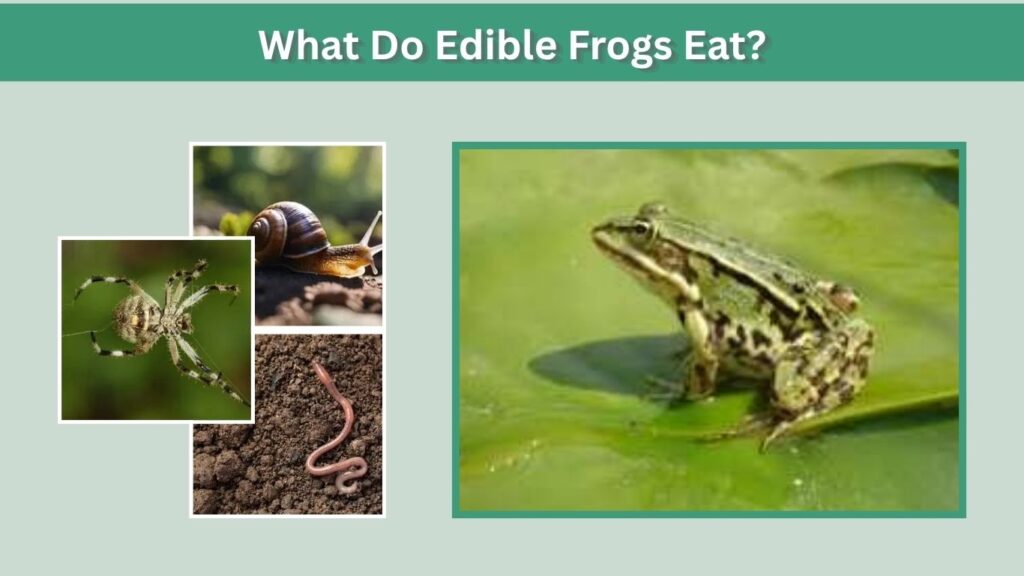
Adult edible frogs are opportunistic carnivores. They catch animals that are small enough to overpower and swallow.
Their diet commonly includes:
- Flies
- Mosquitoes
- Beetles
- Moths
- Caterpillars
- Grasshoppers
- Crickets
- Spiders
- Worms
- Snails
- Aquatic insects
Large individuals may occasionally consume tadpoles, small frogs, tiny fish, or other small vertebrates.
The frog usually waits motionlessly until prey moves within range. It then lunges forward and catches the animal with its sticky tongue or jaws.
Edible frogs can benefit gardens and wetlands by consuming many insects, including mosquitoes and crop pests.
What Do Edible Frog Tadpoles Eat?
Tadpoles feed mainly on algae, microorganisms, decaying vegetation, and organic material found on underwater surfaces.
They scrape food from rocks, leaves, stems, and pond sediment. As they grow, they may also eat tiny aquatic animals, dead organisms, or other protein-rich material.
Their feeding contributes to nutrient cycling and helps remove algae and decomposing matter from the pond.
Edible Frog Breeding
Breeding usually takes place during late spring and early summer when air and water temperatures rise. Males gather in shallow water and call to attract females.
A male grips a female behind her front legs in a position known as amplexus. The female releases eggs into the water, and the male fertilizes them externally.
Edible Frog Eggs
Eggs are laid in soft clusters among underwater vegetation. A female may produce several thousand eggs, although the total depends on her size, age, and health.
Each egg contains a dark embryo surrounded by transparent jelly. This jelly protects the developing embryo and helps keep the eggs together.
Eggs may be eaten by:
- Fish
- Newts
- Aquatic insects
- Birds
- Other frogs
- Snails
Dense vegetation gives the spawn some protection. Warm, shallow water also speeds development, although excessive heat or drying can kill the embryos.
Edible Frog Tadpoles
The eggs hatch into aquatic tadpoles. Newly hatched tadpoles have rounded bodies, long tails, and gills for breathing underwater.
Their development includes several stages:
- Egg
- Newly hatched tadpole
- Growing tadpole
- Tadpole with hind legs
- Tadpole with front and hind legs
- Froglet with a shrinking tail
- Adult frog
Water temperature, food supply, pond depth, and crowding affect how quickly tadpoles develop.
Most complete metamorphosis during the same summer. However, some may remain as tadpoles through winter and transform the following year, especially in cooler areas.
The Unusual Genetics of Edible Frogs
The edible frog is especially interesting because it reproduces through a process called hybridogenesis.
An edible frog carries genetic material from both the pool frog and marsh frog. However, when it produces eggs or sperm, it may discard one parental set of chromosomes and pass the other set to its offspring.
For example, an edible frog may eliminate the pool frog genome and pass only the marsh frog genome. It then needs to mate with a pool frog to produce new edible frog offspring carrying both sets again.
Different population systems exist across Europe. Some edible frogs live mainly with pool frogs, while others may reproduce in more complicated combinations involving edible frogs and marsh frogs.
This reproductive system makes the species difficult to classify and explains why the “kl.” abbreviation is sometimes used in its scientific name.
Edible Frog Lifespan
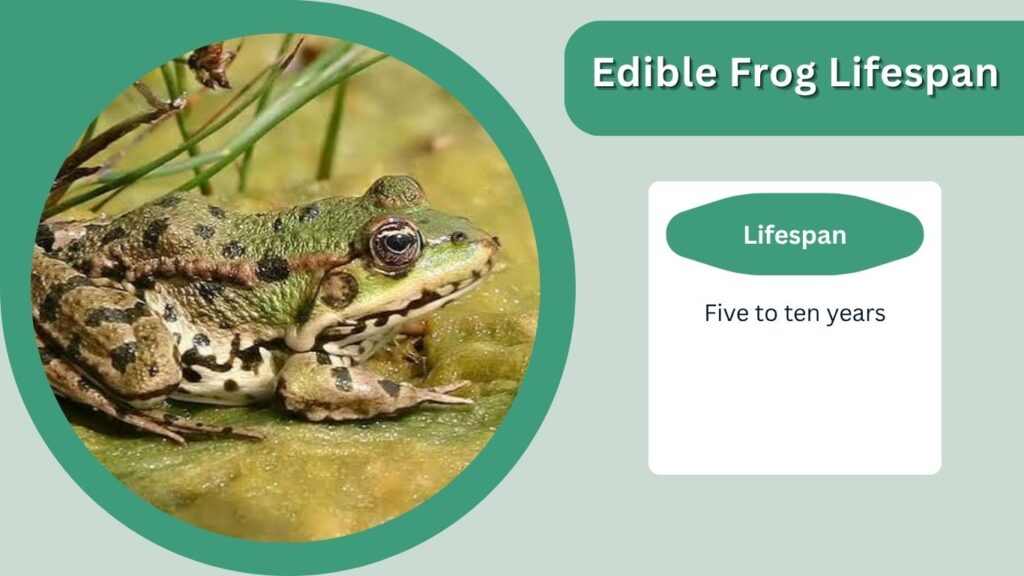
Edible frogs may live approximately five to ten years in suitable natural conditions. Some individuals may survive longer, although many die during earlier stages of life.
Eggs and tadpoles have especially high mortality. They may be eaten, exposed to pollution, trapped in drying ponds, or killed by sudden weather changes.
Adult survival depends on:
- Reliable water sources
- Abundant food
- Safe winter shelter
- Good water quality
- Limited disease
- Low predator pressure
- Suitable breeding habitat
Road traffic and wetland destruction can also reduce local populations.
What Happens During Winter?
Edible frogs become inactive when temperatures fall. They may overwinter underwater in mud, beneath submerged vegetation, or inside sheltered spaces near the pond.
Their metabolism slows significantly, reducing their need for food and oxygen. They can absorb oxygen through their skin while remaining underwater.
Some frogs may overwinter on land in damp soil, burrows, or protected vegetation. The location depends on climate, water depth, oxygen levels, and available shelter.
They become active again in spring when temperatures rise.
Edible Frog Predators
Edible frogs are important prey for many wetland animals.
Common predators include:
- Herons
- Storks
- Kingfishers
- Grass snakes
- Otters
- Foxes
- Large fish
- Turtles
- Birds of prey
- Larger frogs
Eggs and tadpoles are also eaten by newts, dragonfly larvae, diving beetles, water bugs, and fish.
Adult frogs rely on camouflage, powerful jumps, fast swimming, and dense vegetation. They may also produce distress calls when captured.
Are Edible Frogs Poisonous?
Edible frogs are not considered dangerously poisonous to humans, dogs, or cats. They do not have venom and cannot inject toxins through a bite.
Their skin produces mucus that helps prevent drying and may contain mild defensive substances. This mucus could irritate sensitive eyes, mouths, or damaged skin.
Wild amphibians may also carry bacteria, parasites, or environmental contaminants. Avoid unnecessary handling and wash your hands after contact.
Dogs and cats should not be allowed to bite or swallow wild frogs. Even a nonpoisonous frog can cause stomach irritation, choking, or exposure to parasites.
Edible Frog vs. Pool Frog
Edible frogs often resemble pool frogs because the pool frog is one of their parent species.
| Feature | Edible frog | Pool frog |
|---|---|---|
| Scientific name | Pelophylax kl. esculentus | Pelophylax lessonae |
| Origin | Hybrid | True species |
| Typical size | Medium to large | Usually smaller |
| Color | Green, brown, or olive | Often bright green or brown |
| Call | Variable rattling croak | Faster rattling call |
| Genetics | Hybridogenetic | Normal sexual reproduction |
Pool frogs are generally smaller and may have shorter hind legs. However, separating them reliably can require genetic testing or expert examination.
Edible Frog vs. Marsh Frog
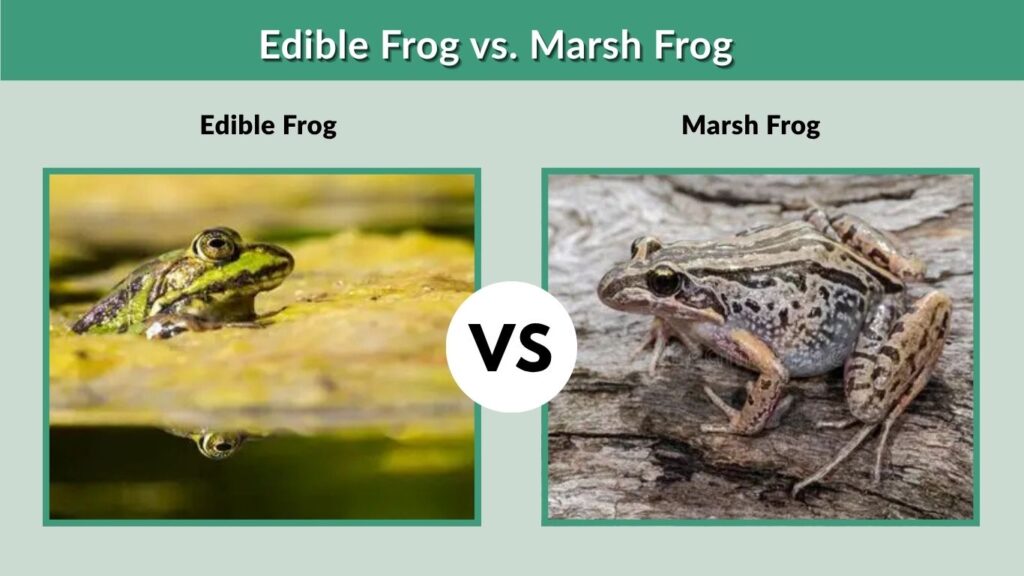
Marsh frogs are usually larger and more robust than edible frogs. They often have longer legs and a deeper, louder laughing call.
| Feature | Edible frog | Marsh frog |
|---|---|---|
| Scientific name | Pelophylax kl. esculentus | Pelophylax ridibundus |
| Typical size | 6–10 cm | Often 6–12 cm or larger |
| Body | Intermediate build | Large and robust |
| Call | Mixed croaking or rattling | Loud laughing or cackling |
| Genetic role | Hybrid | Parent species |
Because edible frogs can show characteristics of both parent species, visual identification is not always certain.
Are Edible Frogs Endangered?
The edible frog remains widespread in many parts of Europe and is not generally considered globally endangered. However, populations can decline locally.
Major threats include:
- Wetland drainage
- Water pollution
- Pesticide use
- Road deaths
- Invasive fish
- Amphibian diseases
- Drought
- Habitat fragmentation
- Collection for food or trade
Protecting connected networks of ponds, marshes, ditches, and damp terrestrial habitat is more effective than protecting a single breeding pool.
Wild frogs should never be moved between ponds because relocation can spread diseases and disturb local genetics.
Interesting Edible Frog Facts
- It originated through hybridization between pool frogs and marsh frogs.
- Its scientific name may include “kl.” to indicate its klepton status.
- It uses an unusual reproductive process called hybridogenesis.
- Not every edible frog passes both parental genomes to its young.
- It spends most of its active life near freshwater.
- Males have two external vocal sacs.
- Large females can produce thousands of eggs.
- Tadpoles mainly eat algae and decomposing material.
- Adults help control insect populations.
- The name refers to its historical use as food in Europe.
FAQs
Why is the edible frog called edible?
The name comes from the historical collection of its hind legs for human consumption in parts of Europe. It does not mean wild frogs should be caught or eaten.
Is the edible frog a true species?
It is a fertile hybrid between the pool frog and marsh frog. Because of its unusual reproductive system, it is sometimes classified as a klepton rather than a conventional species.
How big does an edible frog get?
Most adults measure around 6–10 centimeters. Females are generally larger than males and may exceed 10 centimeters under favorable conditions.
What does an edible frog eat?
Adults mainly eat insects, spiders, worms, snails, and other invertebrates. Large individuals may occasionally capture tadpoles, small fish, or tiny frogs.
Can edible frogs live in garden ponds?
They may use suitable garden ponds within their natural range. The pond should contain clean water, aquatic vegetation, shallow areas, and safe access. Wild frogs should never be captured and introduced artificially.
