
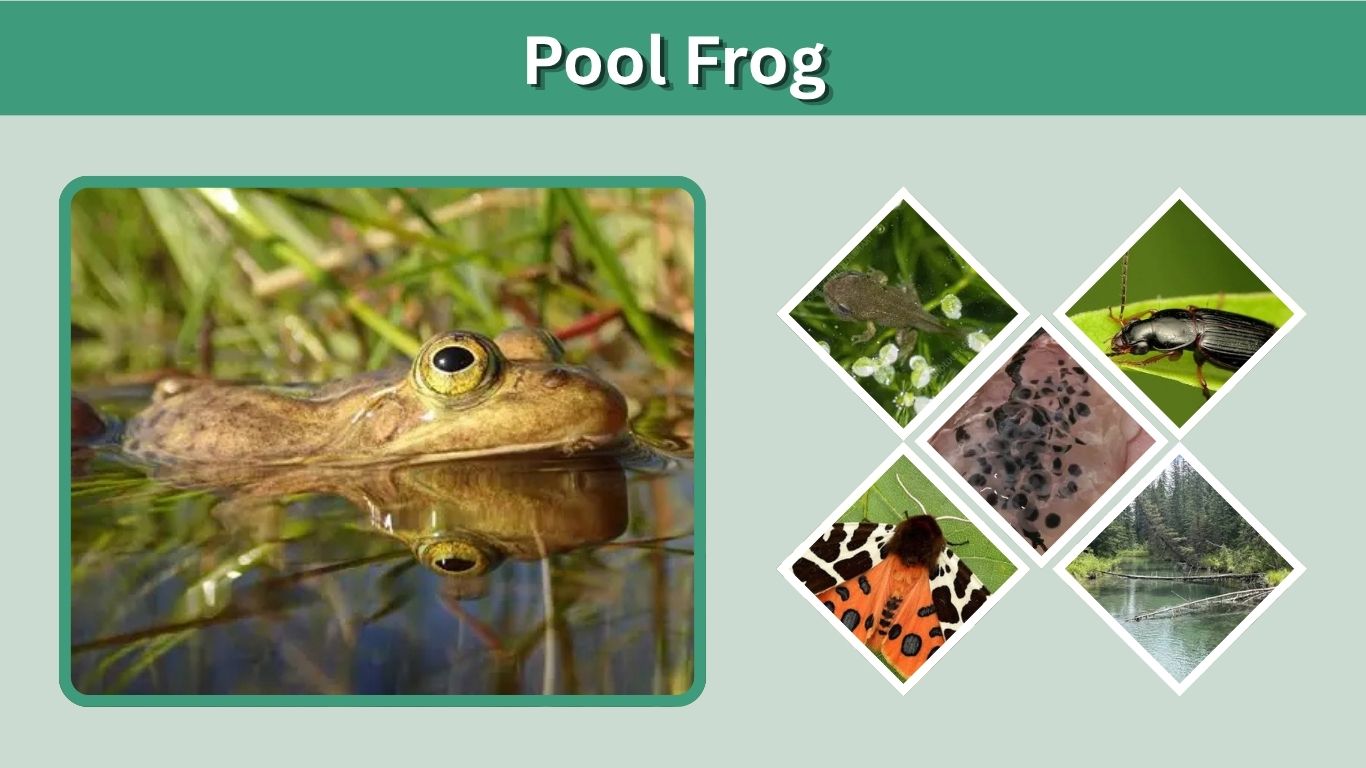
The pool frog is a medium-sized European amphibian known for its green or brown coloration, pointed face, and loud breeding call. Its scientific name is Pelophylax lessonae, although older sources may call it Rana lessonae. Pool frogs spend much of their active season in or close to freshwater, where they bask, hunt insects, and reproduce. They are widely distributed across continental Europe, but some populations have declined because of wetland loss, pollution, disease, invasive species, and habitat fragmentation. In England, the northern pool frog disappeared during the 1990s before being restored through a carefully managed reintroduction program.
What Is a Pool Frog?
The pool frog is a member of the true frog family, Ranidae. It belongs to a group often called the European water frogs, which also includes the marsh frog and edible frog.
Unlike common frogs, which may spend long periods away from water after breeding, pool frogs are strongly aquatic. They usually remain around ponds, marshes, ditches, flooded meadows, and other wet habitats throughout much of the year.
Pool Frog Identification
- Green, olive, tan, or brown upper body
- Pale yellow or green stripe along the middle of the back
- Dark spots across the back and legs
- Pointed face with prominent eyes
- Long, powerful hind legs
- Pale underside
- Raised folds running down each side of the back
- Body length commonly around 5–9 centimeters
Color varies considerably among individuals. Some are bright green, while others are mostly brown with green areas around the head and back. Males can develop brighter yellow or green coloring during the breeding season.
Pool frogs closely resemble marsh frogs and edible frogs. Specialists may examine body proportions, calls, coloration, heel tubercles, and genetic characteristics to separate them accurately. A relatively large metatarsal tubercle on the hind foot is one feature used when identifying pool frogs.
How Big Do Pool Frogs Get?
Adult pool frogs generally measure approximately 5–9 centimeters from the nose to the rear of the body. Females are usually larger and more heavily built than males.
Their strong hind legs add considerably to their total stretched length. These legs allow them to leap from the bank into the water when threatened and swim quickly through vegetation.
Young frogs, known as froglets, are much smaller when they leave the water. They grow gradually by eating insects and other small invertebrates.
Where Do Pool Frogs Live?
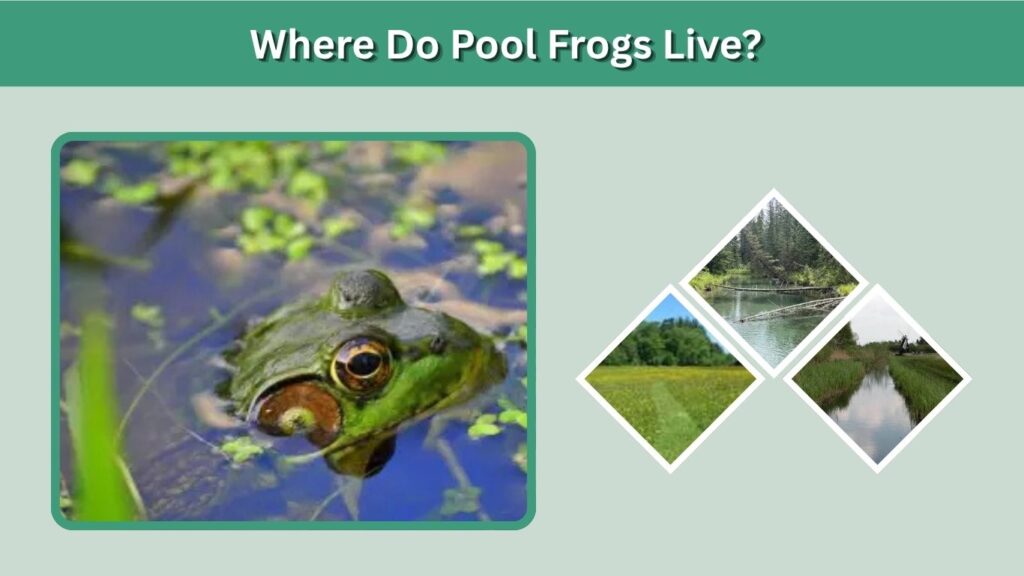
The pool frog occurs across much of central, eastern, and northern continental Europe, with its broader range extending eastward into western Asia. Its distribution is uneven because it depends on suitable wetlands and varies among regional populations.
Suitable surrounding landscapes may include:
- Deciduous and mixed woodland
- Woodland clearings
- Meadows and grassland
- Fenland
- Marshes
- Farmland with ponds
- Shrubby wetland edges
- Flooded fields
Pool frogs need both aquatic and terrestrial habitat. They breed and escape danger in water but also use sunny pond edges, dense plants, damp grass, and nearby woodland for feeding and shelter.
Preferred Pool Frog Habitat
Pool frogs usually favor shallow, still or slow-moving freshwater containing dense vegetation. Suitable sites include ponds, small lakes, swamps, ditches, flooded gravel pits, clay pits, and large temporary pools.
Warm, sunny ponds are particularly important in cooler parts of their range. Sunlight warms the water, supports tadpole development, and provides basking places for adults.
Many suitable pools contain few or no fish. Fish can consume frog eggs and tadpoles, reducing breeding success. Dense emergent and floating vegetation provides hiding places and surfaces for attaching spawn.
Pool Frog Behavior
Pool frogs are active primarily during warm daylight and evening conditions. They frequently sit at the water’s edge or float among vegetation with their eyes and nose above the surface.
When disturbed, they leap into the pond and hide beneath the water. Their green-brown coloring helps them blend with mud, algae, leaves, and aquatic plants.
Basking Behavior
Pool frogs regularly bask in sunshine, sometimes remaining exposed even during hot weather. Basking raises their body temperature and helps them become more active.
A warm frog can digest food, escape predators, and call more effectively than one that is cold. This dependence on warmth partly explains why pool frogs prefer open ponds that receive plenty of sunlight.
Pool Frog Call
Male pool frogs call during the breeding season to attract females and communicate with other males. They possess paired vocal sacs near the corners of the mouth, which inflate as they call.
Their sound is often described as a rapid rattling, chuckling, or repeated croaking noise. Groups of calling males can produce a loud chorus on warm evenings.
Calling usually becomes strongest during late spring and early summer when nighttime temperatures rise. The calls help females locate suitable mates and allow males to maintain space within the breeding pond.
What Do Pool Frogs Eat?
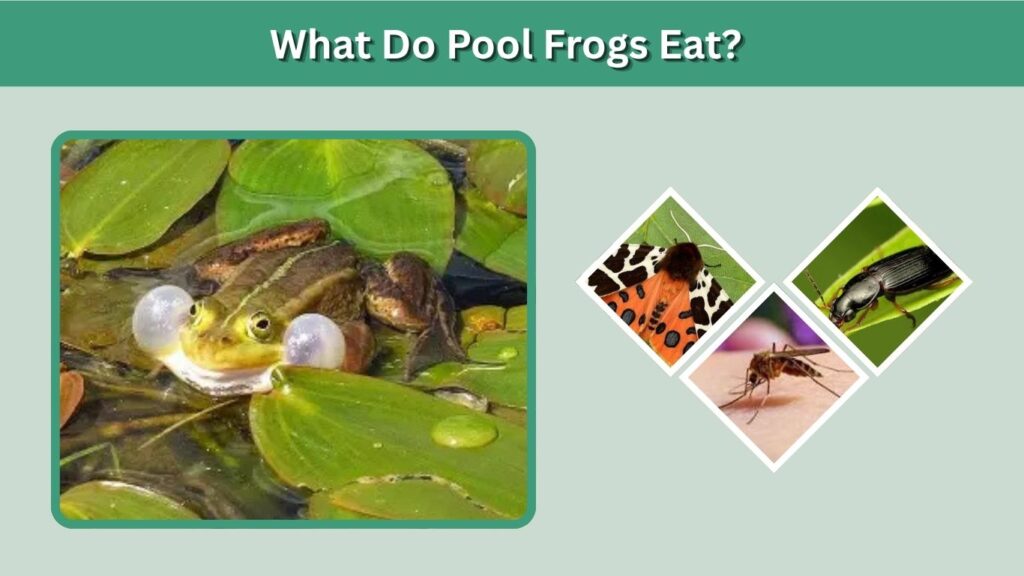
Adult pool frogs are carnivorous and feed mainly on invertebrates. They hunt both at the pond’s edge and within nearby vegetation.
Their diet may include:
- Flies
- Mosquitoes
- Beetles
- Moths
- Caterpillars
- Spiders
- Grasshoppers
- Crickets
- Small snails
- Worms
- Aquatic insects
They usually remain still until prey comes within range. The frog then lunges forward and captures the animal with its sticky tongue or jaws.
Larger individuals may occasionally eat very small vertebrates, but insects and other invertebrates make up most of their diet.
What Do Pool Frog Tadpoles Eat?
Pool frog tadpoles have a different diet from adults. They mainly graze on algae, microorganisms, soft plant material, and decomposing organic matter.
As they grow, they may also consume small aquatic organisms and animal material. Their feeding helps transfer nutrients through the pond ecosystem.
Pool Frog Breeding
Pool frogs breed later than common frogs. Reproduction generally occurs during late spring or early summer, often in May and June, when water and nighttime temperatures become warm enough.
Males gather in suitable ponds and call from the surface or among plants. A male grips a female behind her front legs in a mating position called amplexus.
As the female releases her eggs, the male fertilizes them externally. The eggs are deposited in soft clumps among submerged or floating vegetation.
Pool Frog Eggs
Pool frog spawn is arranged in clumps that are usually smaller than those produced by common frogs. Individual eggs are brown on the upper surface and yellowish or pale underneath.
A female may lay many hundreds of eggs, although the number varies with her age, size, health, and environmental conditions.
Eggs face several dangers, including:
- Fish
- Newts
- Aquatic insects
- Birds
- Drying water
- Sudden temperature changes
- Fungal infection
Placing the spawn among plants gives it some protection and keeps it within warmer, shallow water.
Tadpole Development
The eggs hatch into small tadpoles that live entirely in water. At first, a tadpole has a rounded body, external gills, and a long swimming tail.
As development continues, the hind legs appear first, followed by the front legs. The lungs develop, the tail is absorbed, and the young frog begins breathing air.
The time required for metamorphosis depends on water temperature, food, population density, and pond conditions. Warmer water generally speeds development, provided the pond does not dry out.
After leaving the water, the froglets remain close to damp vegetation and feed on tiny invertebrates.
Pool Frog Life Cycle and Lifespan
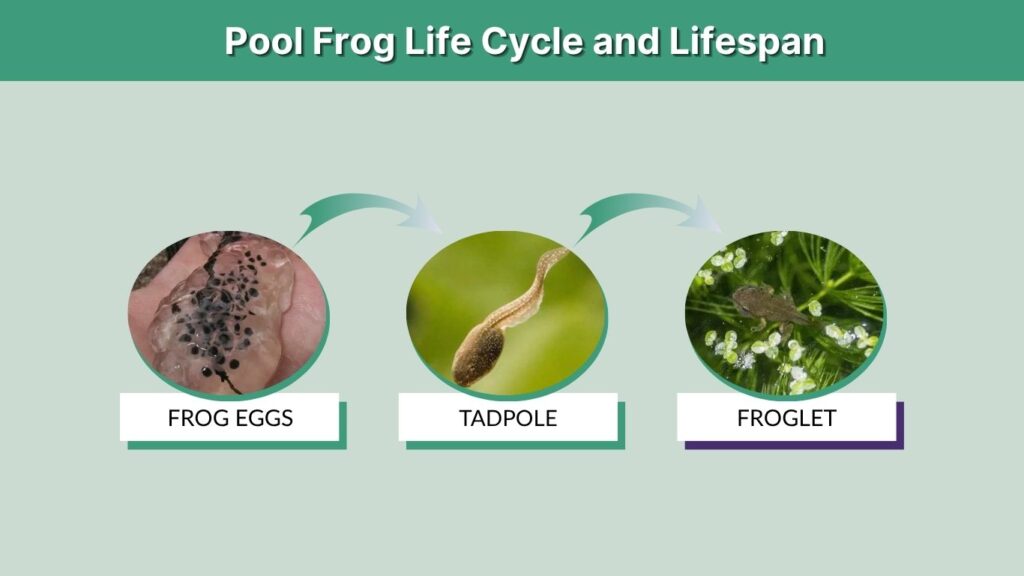
A pool frog passes through four main stages:
- Egg
- Tadpole
- Froglet
- Adult frog
Young frogs normally take more than one year to reach sexual maturity. Growth is influenced by climate and food availability, so individuals in colder regions may mature more slowly.
Adults commonly live for several years. Information associated with the English reintroduction project indicates that adults often live for approximately three to six years, although some may survive longer under favorable conditions.
What Happens to Pool Frogs in Winter?
Pool frogs become inactive during cold weather. They may overwinter in pond sediment, underwater vegetation, damp soil, animal burrows, or sheltered areas close to the breeding pond.
Their metabolism slows substantially, allowing them to survive without regular feeding. They become active again when temperatures rise in spring.
A healthy habitat must therefore provide more than a summer breeding pond. Frogs also need protected areas where they can survive frost, flooding, and winter disturbance.
Pool Frog Predators
Pool frogs and their tadpoles are important prey for many wetland animals.
Potential predators include:
- Herons and other waterbirds
- Grass snakes
- Otters
- Foxes
- Large fish
- Newts
- Dragonfly larvae
- Diving beetles
- Larger frogs
Adults escape by jumping into water, swimming into dense vegetation, or remaining still while relying on camouflage.
Tadpoles have fewer defenses and may form groups or hide in shallow plants. Producing large numbers of eggs helps ensure that at least some offspring survive.
Pool Frog vs. Common Frog
Pool frogs and common frogs may occupy the same general landscape, but they have several noticeable differences.
| Feature | Pool frog | Common frog |
|---|---|---|
| Scientific name | Pelophylax lessonae | Rana temporaria |
| Typical color | Green, olive, or brown | Brown, tan, reddish, or yellowish |
| Back stripe | Often present | Usually absent |
| Lifestyle | Strongly aquatic | Frequently travels away from water |
| Breeding season | Late spring to early summer | Usually early spring |
| Call | Loud rattling or chuckling | Low, quiet croaking |
| Face | More pointed | More rounded |
Common frogs often have a dark patch behind each eye. Pool frogs lack the same strong mask and have a more pointed, streamlined appearance.
Pool Frog vs. Marsh Frog
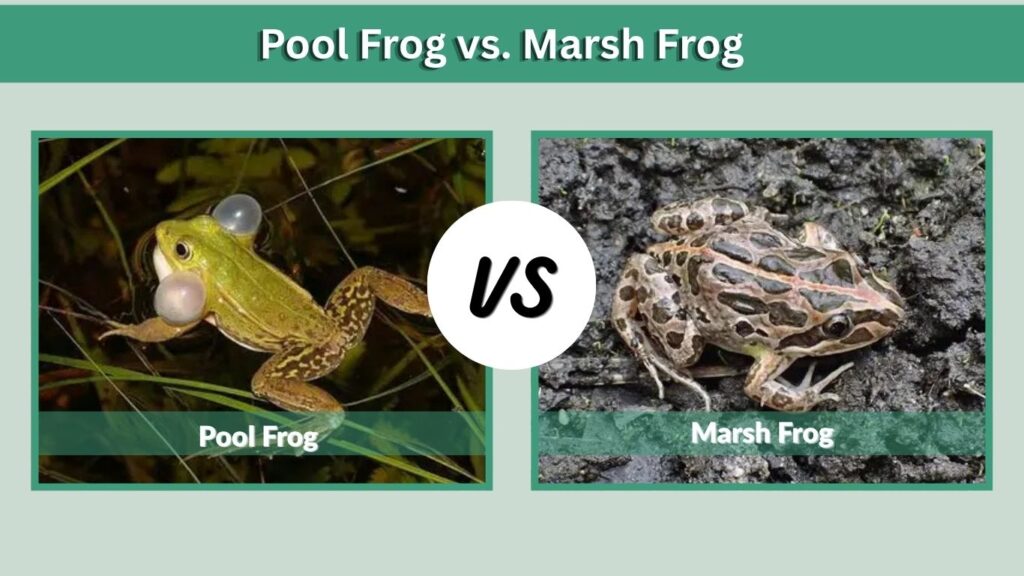
Marsh frogs are usually larger and more robust than pool frogs. They may also produce a louder, laughing call.
Pool frogs commonly have shorter hind legs, a larger heel tubercle, and more yellow coloring around the thighs. However, appearance alone is not always reliable because European water frogs can vary greatly and sometimes hybridize.
The edible frog is especially important in identification because it originated through hybridization between pool frogs and marsh frogs. This unusual relationship can make populations genetically complex.
Are Pool Frogs Poisonous?
Pool frogs are not considered poisonous or dangerous to people. They do not have venom, fangs, or a harmful bite.
Like other amphibians, their skin can carry microorganisms from pond water. People should avoid unnecessary handling and wash their hands afterward.
Human skin may also carry soap, lotion, insect repellent, and other chemicals that can harm a frog’s delicate skin. Observing the animal without touching it is best.
Are Pool Frogs Endangered?
Globally, the pool frog is classified as Least Concern because it remains widely distributed. However, this global category does not mean every local population is secure. Habitat destruction, pollution, invasive fish, disease, wetland drainage, and fragmentation have caused serious regional declines.
Pool Frogs in England
The northern pool frog was once native to eastern England but disappeared from the wild during the 1990s. Conservation research showed that the lost British frogs were closely related to populations in Scandinavia.
A reintroduction program began in 2005 using suitable frogs from Sweden. The project established a breeding population in Norfolk, and later work returned pool frogs to Thompson Common, where the species had formerly occurred.
The species receives strong legal protection in the United Kingdom. Killing, capturing, injuring, disturbing, selling, or damaging its breeding and resting sites can be an offence.
FAQs
Do pool frogs live in swimming pools?
Despite their name, pool frogs are associated with natural freshwater pools and ponds rather than treated swimming pools. Chlorine, steep sides, and a lack of vegetation make most swimming pools unsuitable.
How can you identify a pool frog?
Look for a medium-sized green or brown frog with dark spots, a pale stripe down its back, a pointed face, and raised folds along its sides. Accurate identification can require examination of its call and hind feet.
Can pool frogs live away from water?
They can move through surrounding grassland and woodland, but they are strongly aquatic and normally remain close to freshwater throughout their active season.
What time of year do pool frogs breed?
They usually breed during late spring and early summer. Calling and spawning commonly begin when warm evenings arrive in May or June.
Are pool frogs good for a garden pond?
Within their native range, pool frogs help control insects and support wetland biodiversity. They should never be captured or transported to a pond because moving amphibians can spread disease and may violate wildlife laws.
