
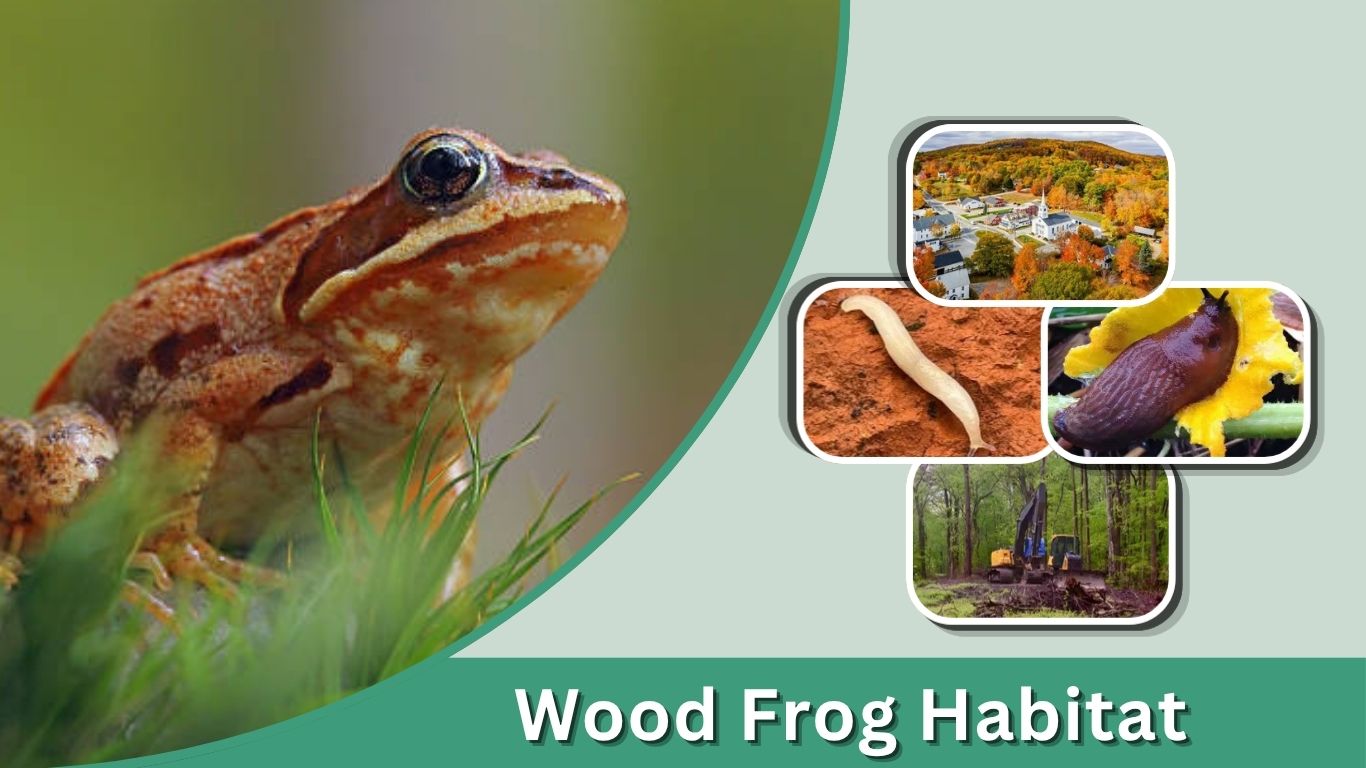
The wood frog is a small, cold-tolerant amphibian best known for surviving partly frozen during winter. Often listed scientifically as Lithobates sylvaticus or Rana sylvatica, it inhabits forests, wetlands, bogs, and tundra environments across a large portion of North America. Unlike frogs that remain close to permanent water, adult wood frogs spend much of the year on land. They return to shallow woodland pools for a brief breeding season in early spring. Their dependence on both forests and temporary wetlands makes habitat protection especially important.
Wood Frog Quick Facts
| Feature | Description |
| Scientific name | Lithobates sylvaticus or Rana sylvatica |
| Average size | Approximately 1.4–3 inches |
| Color | Brown, tan, reddish brown, gray, or occasionally greenish |
| Main habitat | Moist forests, bogs, wooded wetlands, and tundra |
| Breeding habitat | Temporary ponds and vernal pools |
| Diet | Insects, spiders, worms, slugs, and other invertebrates |
| Range | Alaska, Canada, northeastern United States, and parts of the Appalachians |
| Lifespan | Commonly around four to five years in the wild |
| Special adaptation | Can survive partial freezing during winter |
What Is the Wood Frog’s Habitat?
Wood frogs need several connected habitats to complete their life cycle. They generally require moist terrestrial areas for feeding, shallow wetlands for reproduction, and protected ground cover for winter hibernation.
Forest Habitat
Most adult wood frogs live on the ground in deciduous, mixed, coniferous, and boreal forests. They prefer cool areas with abundant fallen leaves, rotting wood, moss, low vegetation, and moist soil.
Leaf litter is especially important because it provides camouflage, retains moisture, supports insect prey, and creates hiding places. Wood frogs may also occupy forested swamps, cool ravines, willow thickets, peat bogs, and woodland edges near streams or ponds.
Although they are called wood frogs, they do not normally climb trees. They are primarily terrestrial and spend most of their active period moving across the forest floor.
Breeding Habitat
Wood frogs usually reproduce in shallow, fish-free wetlands known as vernal pools. These temporary pools form from melting snow, spring rain, or rising groundwater. Many dry partially or completely later in the year.
The absence of fish is beneficial because fish would consume large numbers of eggs and tadpoles. Suitable breeding pools usually contain submerged branches, grasses, or other vegetation where females can attach their eggs.
Small permanent ponds, flooded meadows, roadside pools, bogs, and woodland potholes may also be used when conditions are suitable.
Winter Habitat
During winter, wood frogs shelter beneath leaves, fallen logs, rocks, moss, or the upper organic layer of the soil. Unlike many frogs, they do not need to bury themselves deeply below the frost line.
Their winter shelters must provide insulation while allowing them to respond quickly to warming temperatures. Overwintering close to breeding pools also reduces the distance adults must travel when spring arrives.
Where Do Wood Frogs Live?
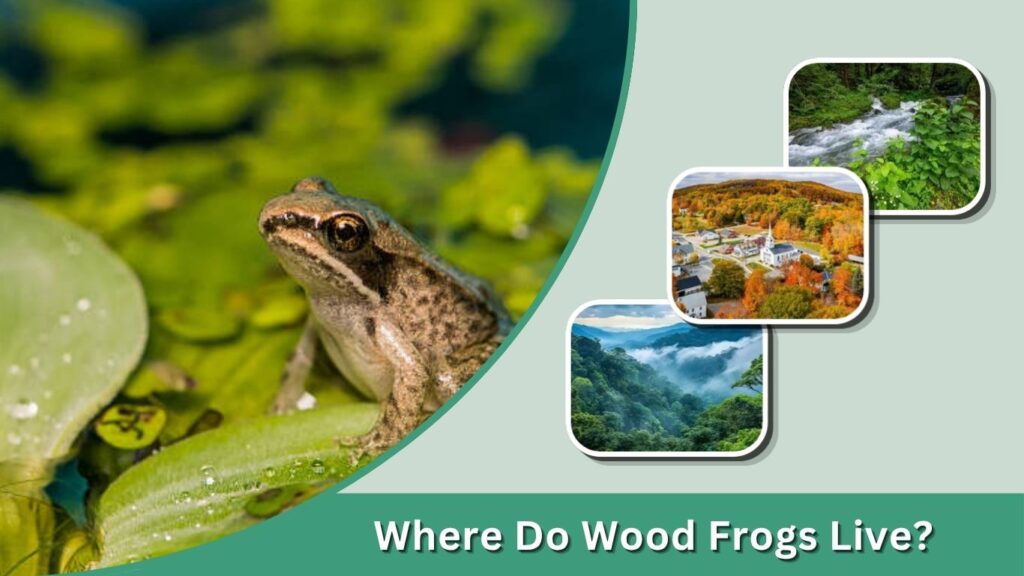
The wood frog has one of the broadest geographic ranges of any North American amphibian. It occurs across much of Alaska and Canada, throughout the northeastern United States, around the Great Lakes and in portions of the Appalachian Mountains.
Its range extends north beyond the Arctic Circle, making it the only North American frog known to inhabit such extremely northern environments. In the United States, the species is especially widespread in Alaska, New England, New York, Pennsylvania, Michigan, Wisconsin, and Minnesota. Smaller or more isolated populations occur farther south and west.
At the southern edge of its range, wood frogs may occur in cooler mountain forests from the Appalachians toward northern Georgia and Alabama. Western populations are found in parts of Idaho, Wyoming, Montana, Colorado, and the Pacific Northwest, although they can be uncommon or geographically isolated in some areas.
How to Identify a Wood Frog
Wood frogs are relatively easy to identify once their dark facial marking is recognized.
Identification Features
- Size: Adults are normally about 1.4–3 inches long.
- Facial mask: A dark brown or black patch extends from the snout through the eye toward the front leg.
- Upper lip: A pale or white stripe usually runs along the upper jaw.
- Body color: Brown, tan, copper, reddish brown, gray, or occasionally greenish.
- Back: Two raised folds extend along the sides of the back.
- Body shape: Slender body with long, powerful hind legs.
- Underside: Usually white or cream, sometimes with darker mottling.
Females are generally larger than males. Their earthy coloration resembles dead leaves, making resting frogs difficult to notice on the forest floor.
What Do Wood Frogs Eat?
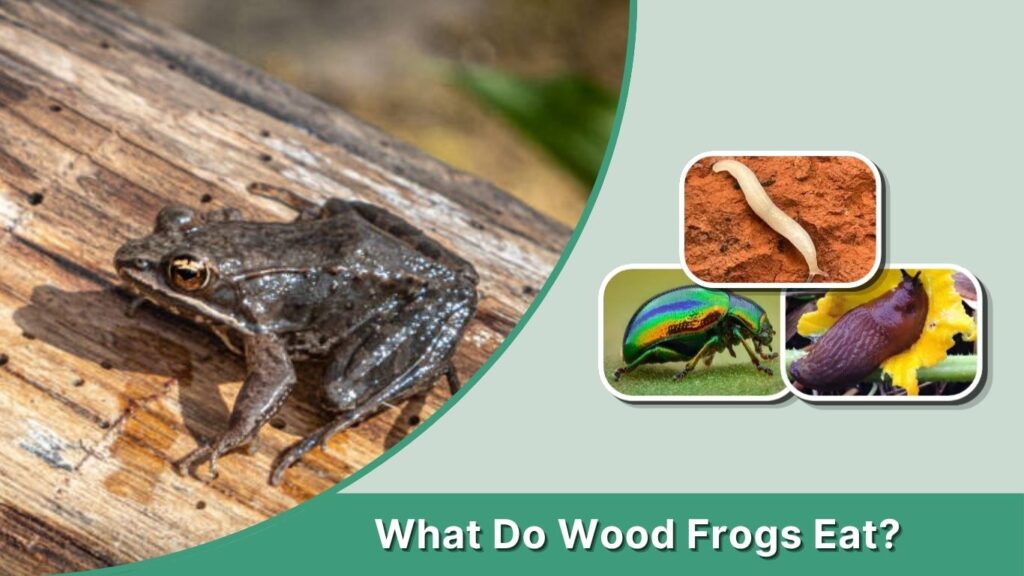
Adult wood frogs are opportunistic predators that eat small animals found in leaf litter and low vegetation. Their diet commonly includes beetles, flies, ants, moth larvae, spiders, worms, slugs, snails, and other invertebrates.
They capture prey with a quick movement of their sticky tongue. Because food availability changes through the seasons, wood frogs consume whatever suitably sized prey is abundant in their habitat.
Tadpoles have a different diet. They mainly feed on algae, microscopic organisms, decaying plants, organic material, and occasionally animal matter within their breeding pools.
Wood Frog Predators
Wood frogs occupy an important position in forest and wetland food webs. Adult frogs may be eaten by:
- Snakes
- Raccoons
- Skunks
- Foxes
- Coyotes
- Turtles
- Herons and other birds
- Larger frogs
Wood frog eggs and tadpoles are consumed by aquatic insects, salamander larvae, turtles, birds, and other amphibians. Their brown coloration helps adults remain hidden, while breeding in fish-free pools improves the survival chances of eggs and tadpoles.
Breeding and Life Cycle
Wood frogs are among the first amphibians to become active in spring. Adults may begin moving toward breeding pools while patches of snow and ice remain on the ground.
Males gather in shallow water and produce short, duck-like calls to attract females. Breeding is intense but brief, commonly lasting only several days or weeks.
A female may deposit hundreds or more than a thousand eggs in a rounded mass attached to vegetation or floating near other egg masses. Grouping eggs together helps them absorb sunlight and remain warmer than the surrounding water.
Depending on temperature, the eggs usually hatch within a few weeks. Tadpoles grow rapidly because temporary pools can dry before development is complete. Metamorphosis commonly occurs during late spring or summer, after which the young frogs leave the water and move into surrounding forests.
How Wood Frogs Survive Freezing
The wood frog’s most remarkable adaptation is its ability to survive when a substantial portion of its body water freezes.
As temperatures fall, the frog produces and distributes large amounts of glucose through its tissues. This glucose acts as a natural cryoprotectant, limiting damaging ice formation inside cells. The frog’s heartbeat and breathing may temporarily stop, while ice develops in parts of its body.
When temperatures rise, the frog gradually thaws, its heart begins beating again, and normal movement returns. This adaptation allows wood frogs to overwinter close to the soil surface and inhabit areas with extremely cold winters.
Habitat Threats and Conservation
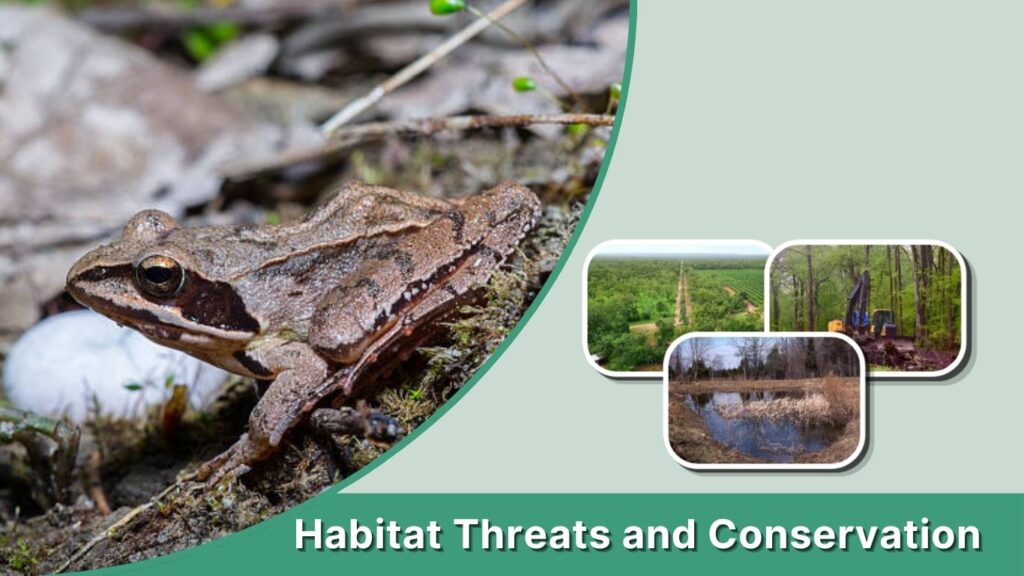
Wood frogs remain widespread and are considered secure across much of their overall range. However, some isolated western and southern populations may be vulnerable.
Important threats include:
- Destruction or drainage of vernal pools
- Forest clearing near breeding wetlands
- Roads separating forests from breeding sites
- Vehicle deaths during spring migration
- Water pollution and pesticide exposure
- Longer droughts that cause pools to dry prematurely
- Disease and introduced predators
Protecting only the breeding pond is not enough. Wood frogs also need surrounding forest, winter shelter, feeding areas, and safe movement routes between habitats.
FAQs
Do wood frogs live in water?
Adult wood frogs live mainly on land in moist forests. They enter shallow ponds and vernal pools primarily to breed. Their eggs and tadpoles are aquatic, but newly transformed frogs leave the water and spend most of their lives on the forest floor.
How far do wood frogs travel from ponds?
Wood frogs may move hundreds of feet or farther between breeding pools, summer feeding areas, and winter shelters. Because they use several habitats, conserving a wide forested area around breeding wetlands is more effective than protecting the pond alone.
Can wood frogs survive being completely frozen?
They can survive substantial partial freezing, but not unlimited freezing. Protective glucose helps prevent serious cellular damage while much of the water outside their cells turns to ice. Extremely severe or prolonged conditions can still be fatal.
Are wood frogs poisonous?
Wood frogs are not considered poisonous or dangerous to people. They normally attempt to escape when approached. Handling should be limited because oils, chemicals, and residues on human skin can damage a frog’s sensitive, absorbent skin.
Can wood frogs live in backyard ponds?
They may visit naturalistic backyard ponds located near suitable woodland habitat. Shallow water, native plants, leaf litter, limited chemicals, and the absence of predatory fish can make a pond more suitable for breeding and tadpole development.
