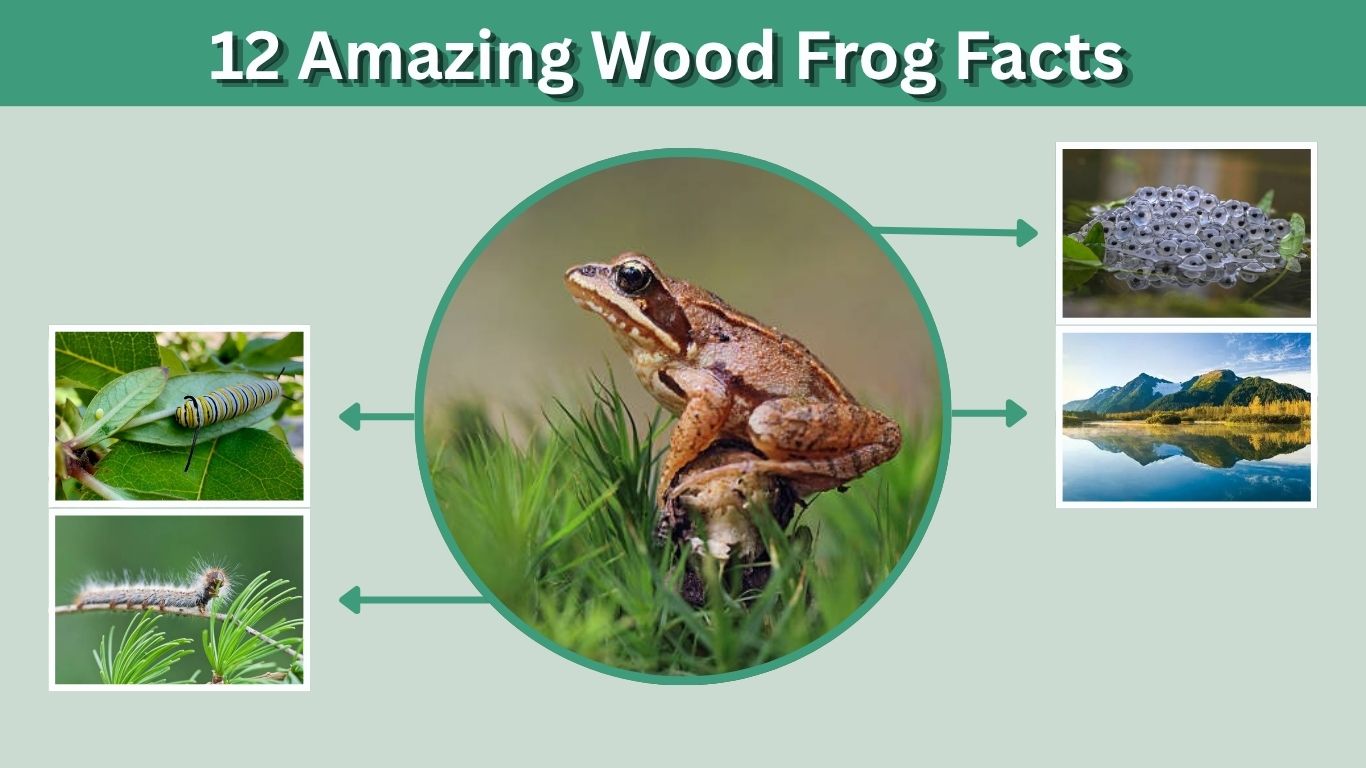
Wood frogs are small woodland amphibians with one of the most unusual survival abilities in the animal kingdom. These frogs can endure freezing winter conditions, stop breathing temporarily, and become active again after thawing. They are also recognized by their dark facial masks, duck-like calls, and dependence on temporary forest pools for reproduction. Here are 12 interesting wood frog facts covering their appearance, habitat, range, diet, breeding behavior, lifespan, and remarkable cold-weather adaptations.
1. Wood Frogs Can Survive Being Partly Frozen
The wood frog’s best-known adaptation is its ability to survive when much of the water in its body turns to ice. As winter approaches, the frog hides beneath fallen leaves and other debris on the forest floor.
When freezing begins, its liver converts stored glycogen into large amounts of glucose. This sugar circulates through the body and helps protect cells from dehydration and ice damage. Ice forms mainly around the cells rather than inside them, allowing the frog to survive conditions that would kill most amphibians.
2. Their Hearts Stop Beating During Hibernation
A frozen wood frog may appear completely dead. Its heart stops beating, breathing ceases, and normal movement and brain activity become extremely limited.
Important organs such as the heart and liver generally freeze last and begin thawing first. Once temperatures rise, the frog gradually thaws, its heart starts beating again, and normal breathing and movement return. Northern populations can remain frozen for months, although their cold tolerance varies according to location and winter conditions.
3. Wood Frogs Live Farther North Than Other Frogs
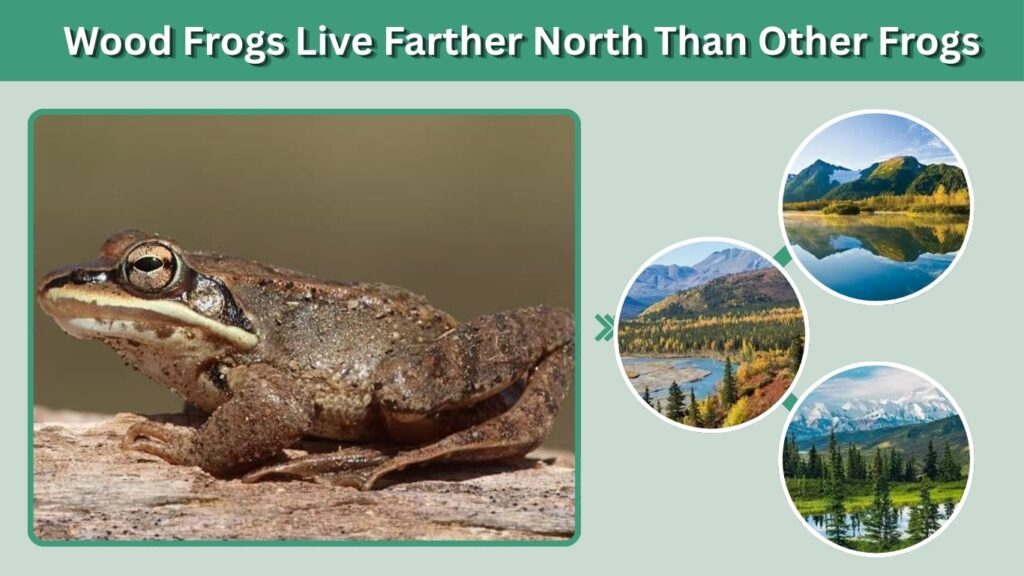
Wood frogs have the most northerly range of any North American amphibian. They occur throughout much of Alaska and Canada, including regions north of the Arctic Circle.
Their range also extends across the northeastern United States, the Great Lakes region and sections of the Appalachian Mountains. Southern populations may occur in cool, moist mountain forests as far south as northern Georgia.
Their extraordinary cold tolerance allows them to inhabit boreal forests, tundra edges and other environments where most frogs cannot survive.
4. They Spend Most of Their Lives on Land
Although frogs are often associated with ponds, adult wood frogs are mainly terrestrial. They spend much of the year moving through deciduous, mixed and coniferous forests.
Moist leaf litter protects their sensitive skin and provides camouflage, shelter and feeding opportunities. Wood frogs may also hide beneath logs, moss, stones and low vegetation.
They generally enter water during the brief spring breeding season. After breeding ends, adults leave the pools and return to surrounding forests, where they feed and prepare for the next winter.
5. A Dark Facial Mask Makes Them Easy to Identify
The most noticeable wood frog identification feature is a dark brown or black marking that extends from the snout, through the eye and toward the front leg. It resembles a small robber’s mask.
A pale line usually runs along the upper lip beneath this dark marking. Body color may be tan, copper, brown, reddish brown, gray or occasionally greenish.
Wood frogs also have two raised dorsolateral folds running along their backs. Their earthy coloration helps them disappear among dead leaves and damp soil.
6. Wood Frogs Are Relatively Small
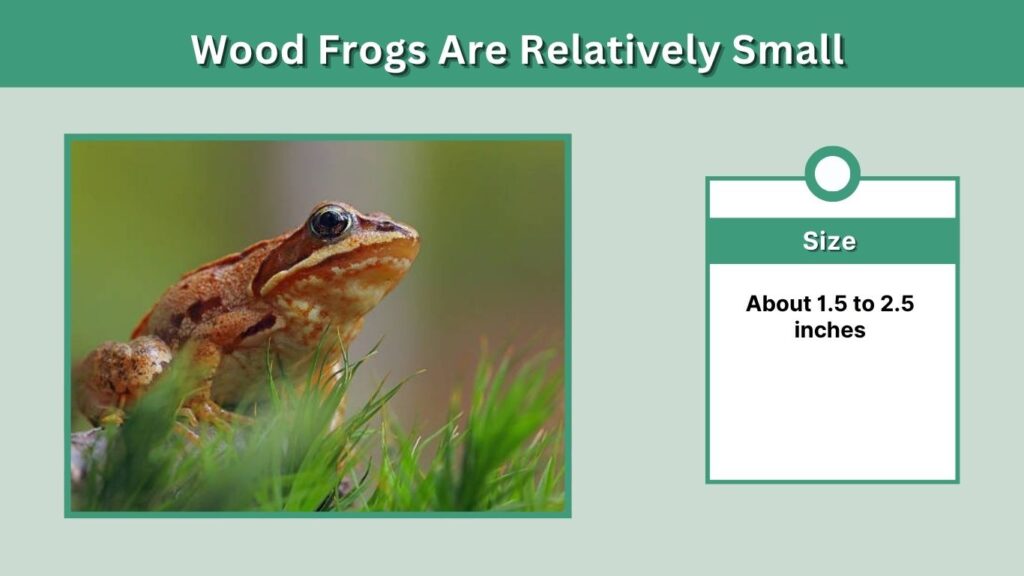
Adult wood frogs commonly measure about 1.5 to 2.5 inches from the snout to the rear of the body. Some individuals may approach approximately three inches.
Females are usually larger and may appear lighter in color than males. Their compact bodies and powerful hind legs allow them to make quick jumps across the forest floor.
Despite their small size, wood frogs may travel considerable distances between breeding pools, summer feeding areas and winter hibernation sites. This makes the surrounding forest as important as the breeding pond itself.
7. They Breed in Temporary Vernal Pools
Wood frogs commonly reproduce in vernal pools—shallow woodland wetlands created by melting snow and seasonal rainfall. These pools often dry during summer.
Temporary pools usually contain few or no fish, reducing the risk that fish will eat the eggs and tadpoles. Females attach rounded egg masses to submerged branches, grasses or other vegetation.
Protecting vernal pools is essential, but the nearby forest must also remain intact. Adults and young frogs depend on terrestrial habitat after leaving the water.
8. They Are Among the First Frogs to Breed in Spring
Wood frogs often begin breeding before snow and ice have completely disappeared. Adults emerge from hibernation and migrate toward woodland pools during cool, rainy nights.
The breeding period is usually brief and may last only a few days or weeks. Large numbers of frogs can gather in one pool during this time.
Early breeding gives the tadpoles more time to develop before their temporary pools dry. Once breeding finishes, the adult frogs quickly disperse back into the forest.
9. Their Call Sounds Like a Duck Quacking
Male wood frogs produce short, low calls that are frequently compared to quacking ducks. A group of calling males can sound like several ducks gathered in a woodland pond.
Males call from the water to attract females, and the chorus may be heard during the day or at night. The sound does not resemble the long croak associated with many larger frog species.
Because breeding happens early and briefly, hearing the quacking chorus is often one of the easiest ways to locate a wood frog breeding pool.
10. A Female Can Lay Around 1,000 Eggs
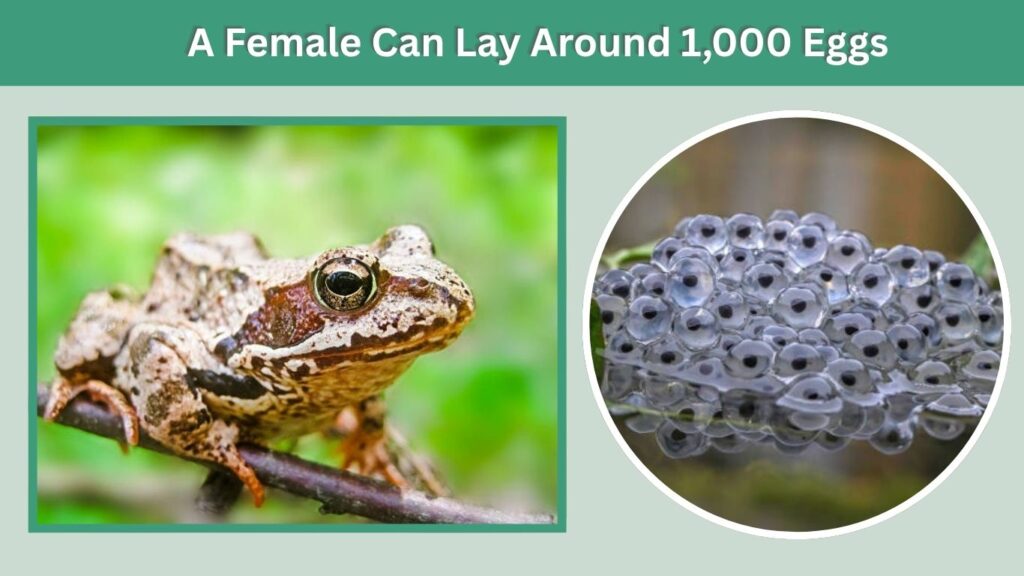
A female wood frog generally produces approximately 1,000 eggs, although some egg masses may contain considerably more. Multiple females often place their egg masses close together in a communal cluster.
The dark embryos and jelly surrounding the eggs absorb warmth from sunlight, helping development in cold spring water. Depending on water temperature and local conditions, the eggs may hatch in approximately 10 to 30 days.
The tadpoles must grow quickly because their shallow breeding pool may begin drying before summer.
11. Adults and Tadpoles Eat Different Foods
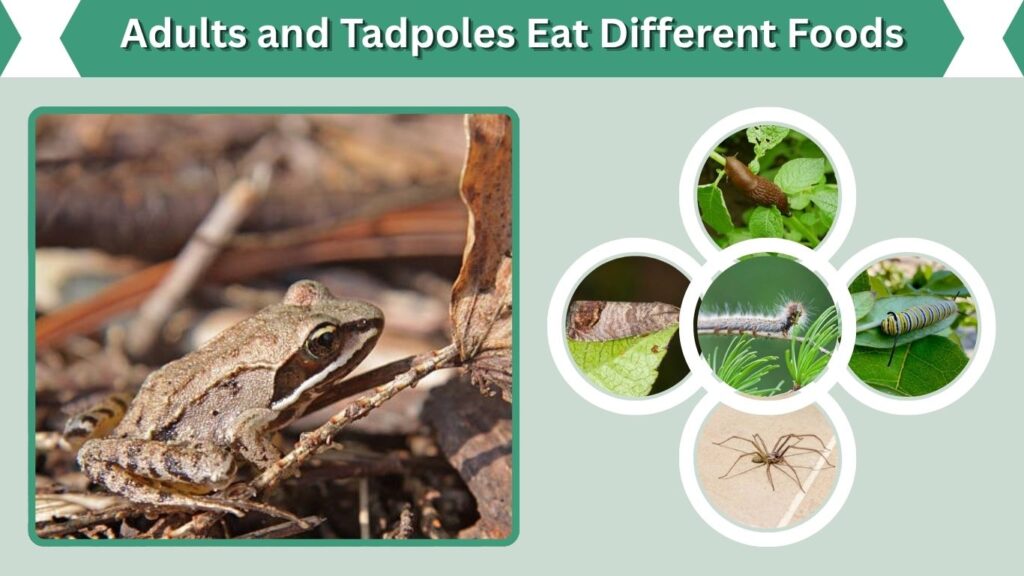
Adult wood frogs are carnivorous and feed primarily on small invertebrates. Their diet may include:
- Beetles and other insects
- Spiders
- Moth larvae
- Worms
- Slugs and snails
- Small grasshoppers and crickets
They capture prey using a fast, sticky tongue. Wood frog tadpoles mainly consume algae, decaying organic matter and plant material. When these foods become scarce, they may also eat amphibian eggs or larvae.
12. Wood Frogs Usually Have Short Lives
Wood frogs generally have a relatively short lifespan in the wild. Estimates vary among populations, but many live for approximately three to five years. Females may survive slightly longer than males in some areas.
During that time, they face predators such as snakes, turtles, raccoons, skunks, foxes, birds and larger frogs. Eggs and tadpoles are also eaten by aquatic insects, salamander larvae and other wetland animals.
Habitat destruction, road mortality, pollution and premature drying of breeding pools can further reduce survival.
FAQs
Are wood frogs poisonous?
Wood frogs are not poisonous and are generally harmless to people. They do not produce dangerous toxins or have venom. However, their skin is sensitive and absorbs oils, soap, sunscreen, and chemicals, so they should not be handled unless necessary.
Where do wood frogs live?
Wood frogs live in moist forests, woodland edges, bogs, wetlands, and tundra regions across Alaska, Canada, and parts of the United States. Adults spend most of their lives on land but return to temporary ponds and vernal pools for breeding.
How do wood frogs survive winter?
Wood frogs survive winter by hiding beneath leaves, moss, logs, or shallow soil. Their bodies produce large amounts of glucose, which protects their cells as ice forms. Their breathing and heartbeat may stop temporarily until warmer temperatures allow them to thaw.
What do wood frogs eat?
Adult wood frogs eat insects, spiders, worms, slugs, snails, and other small invertebrates found on the forest floor. Their tadpoles mainly feed on algae, decaying plants, microorganisms, and organic material in shallow breeding pools.
Can wood frogs be kept as pets?
Wood frogs are not ideal pets because they need cool temperatures, seasonal changes, moist forest conditions, and access to suitable breeding habitat. In some areas, collecting wild frogs may also be restricted, so they are best observed in their natural environment.
