
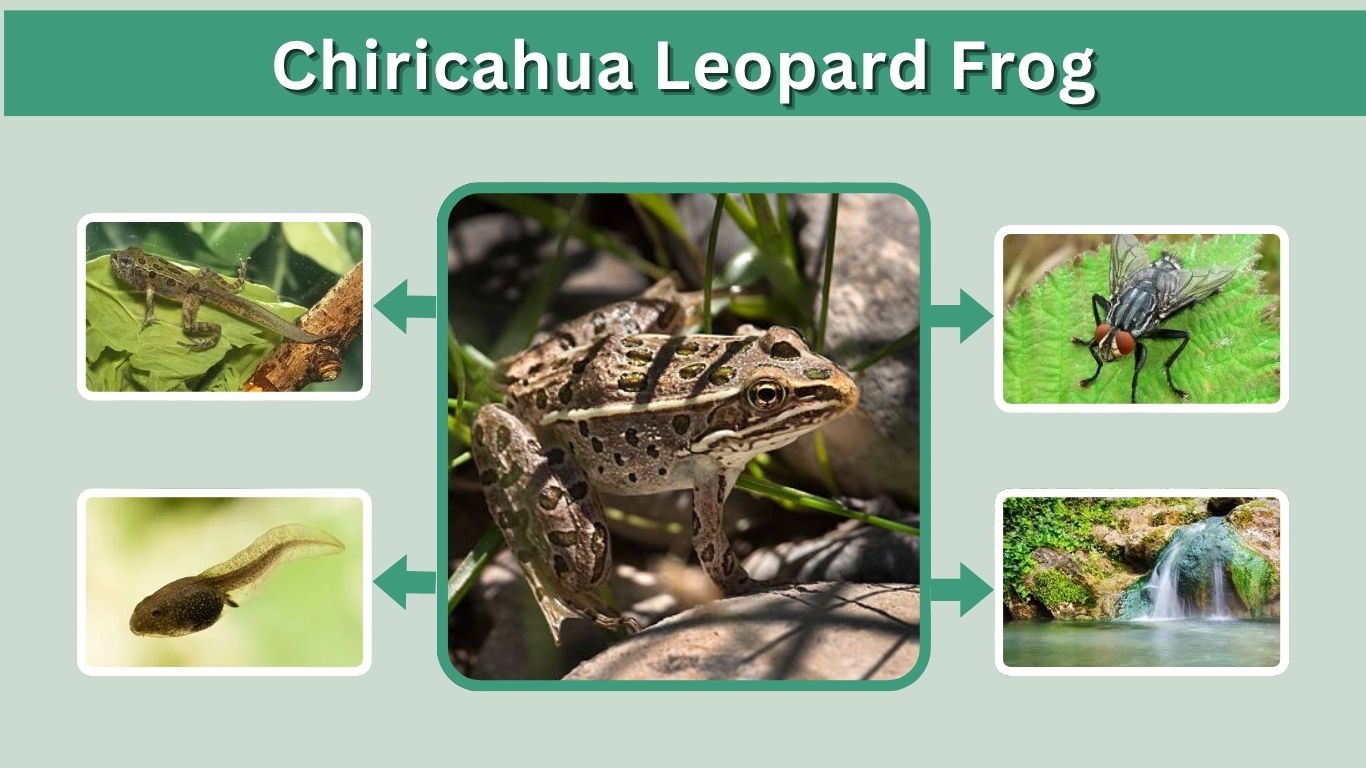
The Chiricahua leopard frog is a large, spotted amphibian native to the southwestern United States and northern Mexico. Known for its green coloration, rough skin, powerful legs, and snore-like call, this frog depends heavily on permanent or semi-permanent water. Although people often describe it as endangered, its official federal classification in the United States is threatened. Disease, invasive predators, drought, and wetland loss have caused serious population declines across its historic range.
Chiricahua Leopard Frog Quick Facts
| Feature | Description |
| Scientific name | Rana chiricahuensis; also called Lithobates chiricahuensis |
| Family | Ranidae |
| Size | Up to slightly more than 4 inches |
| Color | Green, olive, brown, or mixed |
| Range | Arizona, New Mexico, Sonora, and Chihuahua |
| Habitat | Springs, streams, ponds, wetlands, and cattle tanks |
| Diet | Insects and other small animals |
| Federal status | Threatened |
| Main threats | Disease, invasive species, drought, and habitat loss |
| Call | A low snore lasting about one to two seconds |
The U.S. Fish and Wildlife Service currently uses Rana chiricahuensis on its main species profile, while Lithobates chiricahuensis remains widely used in conservation documents and scientific literature.
Chiricahua Leopard Frog Identification
The Chiricahua leopard frog has the spotted appearance typical of leopard frogs, but several details help distinguish it from similar species.
Physical Characteristics
- A stocky body with strong hind legs
- Green, olive, tan, or brown upper coloration
- Dark leopard-like spots across the back
- Small, pale spots on the rear thighs against a darker background
- Relatively rough skin on the back and sides
- Raised dorsolateral folds that are broken and curve inward
- A pale belly, sometimes with mottling near the legs
- Large eyes positioned high on the head
Adults can grow to just over four inches long, although many individuals are smaller. Their coloration varies with age, surroundings, temperature, and lighting. Some frogs appear bright green, while others look brown or olive.
Chiricahua Leopard Frog Call
The male’s call sounds like a low, drawn-out snore lasting approximately one to two seconds. The sound is different from the chuckles, croaks, and rattles produced by some other leopard frogs.
Males may call during various parts of the year when water and temperature conditions are suitable. Calling and egg-laying activity usually increase during warmer months.
Chiricahua Leopard Frog Habitat
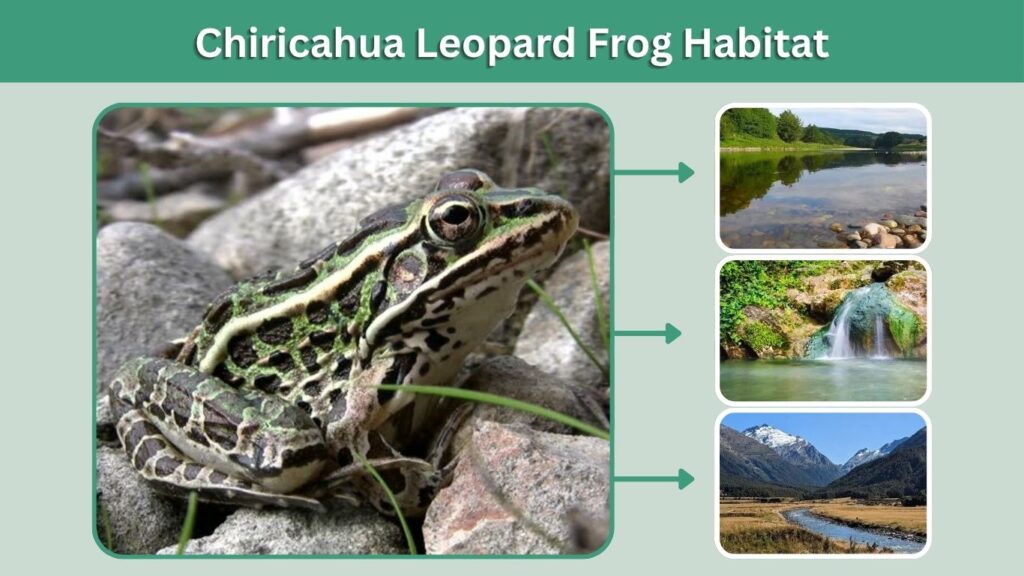
Chiricahua leopard frogs are closely associated with water. Unlike amphibians that can spend long periods far from wetlands, every stage of this frog’s life cycle depends on aquatic habitat.
Where Do Chiricahua Leopard Frogs Live?
They may occupy:
- Mountain and river-valley cienegas
- Natural springs
- Slow-moving streams and rivers
- Permanent or semi-permanent ponds
- Lakes and reservoirs
- Marshes and other wetlands
- Livestock ponds and cattle tanks
Suitable locations normally contain clean or moderately clean water, limited contamination, appropriate water chemistry, places to hide, and enough water for tadpoles to complete development. Vegetation, rocks, undercut banks, and muddy margins provide shelter from predators and extreme temperatures.
Cattle tanks can serve as important substitute habitats where natural wetlands have disappeared. However, these sites must be managed carefully so that they retain water and do not become dominated by invasive predators.
Chiricahua Leopard Frog Range
The historic range of the Chiricahua leopard frog includes central and southeastern Arizona, west-central and southwestern New Mexico, and mountainous regions of northeastern Sonora and northwestern Chihuahua in Mexico. Its distribution includes isolated desert wetlands, mountain valleys, Sky Island ranges, and parts of the Sierra Madre Occidental.
Populations are often separated from one another because suitable water sources are scattered across an otherwise dry landscape. This isolation makes local populations vulnerable. When one pond dries or becomes unsuitable, frogs may have difficulty reaching another occupied site.
In the United States, approximately 10,346 acres have been designated as critical habitat across several counties in Arizona and New Mexico. These protected areas include aquatic breeding sites and surrounding environments needed to support surviving populations.
Chiricahua Leopard Frog Diet and Feeding Behavior
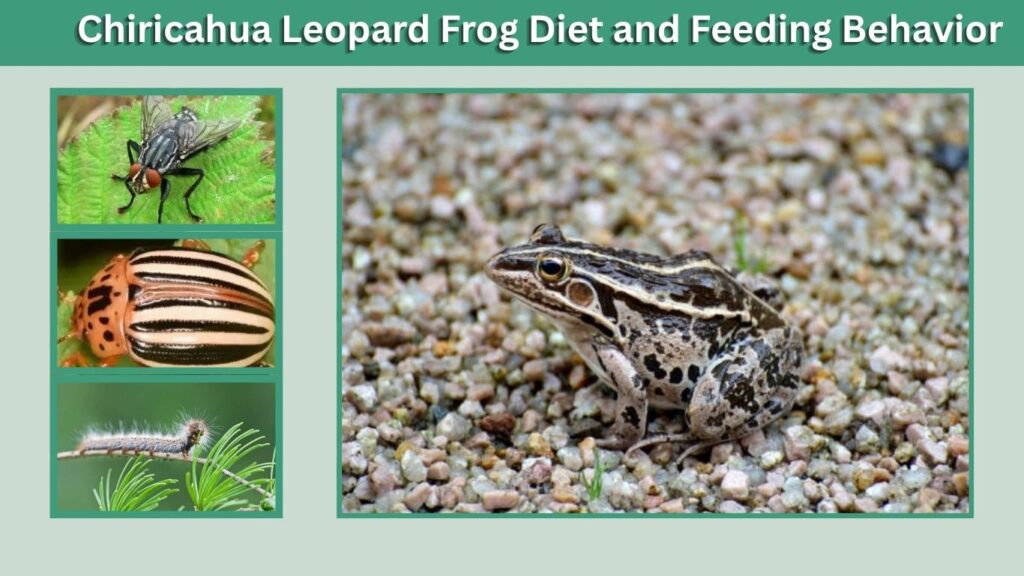
Adult Chiricahua leopard frogs are opportunistic predators. They mainly eat invertebrates, but they may consume other small animals that can be captured and swallowed.
What Do Chiricahua Leopard Frogs Eat?
Their diet may include:
- Beetles
- Flies
- True bugs
- Moths and larvae
- Grasshoppers
- Spiders
- Aquatic insects
- Snails
- Small fish
- Other suitably sized animal prey
They typically wait near the water’s edge and strike quickly when prey comes within reach. Their large mouths allow adults to consume relatively substantial prey compared with smaller frog species.
Tadpoles feed differently from adults. They graze on algae, microorganisms, plant material, and decaying organic matter in the water. This feeding activity helps move energy through wetland food webs.
Reproduction and Life Cycle
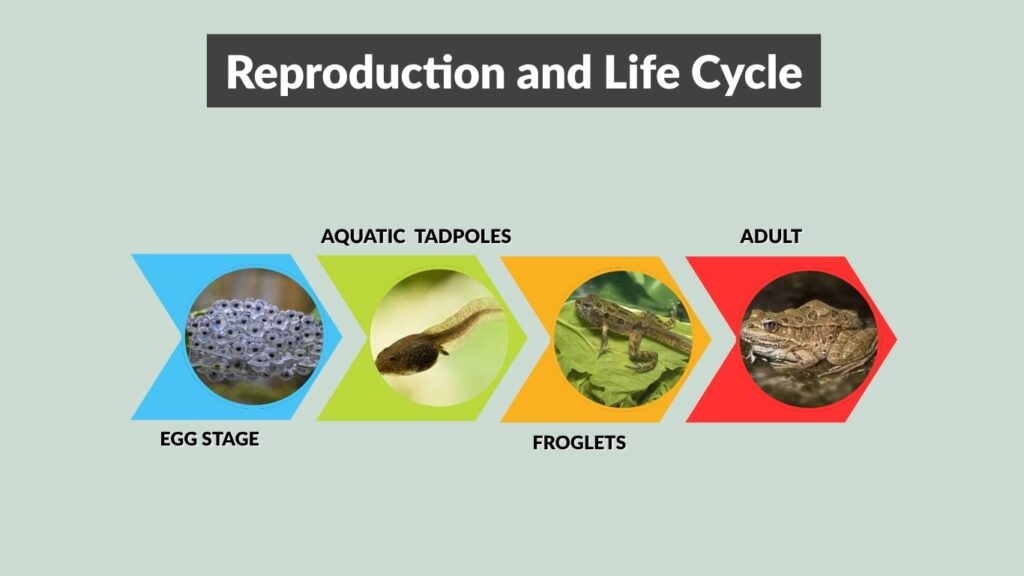
The Chiricahua leopard frog has a complex life cycle consisting of eggs, aquatic tadpoles, newly transformed froglets, and adults. Water is required throughout every developmental stage.
Breeding and Eggs
Males call to attract females, and breeding can occur through an extended portion of the year. Egg-laying has been recorded mainly from February through October, with warmer periods generally producing greater reproductive activity.
Females deposit large clusters of eggs in water, often attaching them to vegetation. Producing many eggs increases the possibility that at least some young will survive. Predators and environmental conditions can eliminate a high proportion of eggs and tadpoles before they become adults.
Chiricahua Leopard Frog Tadpoles
After hatching, tadpoles remain in the water while developing legs, lungs, and the body shape of an adult frog. Their development may take longer than that of species breeding in temporary rain pools because Chiricahua leopard frogs frequently use permanent or semi-permanent water.
Young frogs face predation from fish, aquatic insects, snakes, birds, bullfrogs, and other animals. The U.S. Fish and Wildlife Service notes that predation may eliminate up to 90 percent of eggs and tadpoles in some circumstances.
Adaptations
Chiricahua leopard frogs have several adaptations suited to aquatic environments in the American Southwest.
Their long hind legs provide powerful swimming and jumping ability, allowing them to escape into deep water when threatened. Eyes positioned high on the head enable a frog to watch its surroundings while most of its body remains submerged.
The frog can also darken the skin on its back under low-light or cool conditions. This color change may improve camouflage and make the animal less visible to predators. Its green and brown spotted pattern blends with vegetation, algae, mud, and shadows around wetland edges.
Is the Chiricahua Leopard Frog Endangered?
The Chiricahua leopard frog is not federally classified as endangered. It has been listed as threatened under the U.S. Endangered Species Act since 2002, and its currently recognized taxonomic form was reaffirmed as threatened when critical habitat was designated in 2012. A threatened species is likely to become endangered if the factors causing its decline are not controlled.
Why Is It Threatened?
Major conservation problems include:
- Chytrid fungal disease
- Predation by invasive American bullfrogs
- Introduced fish and crayfish
- Loss or alteration of wetlands
- Long-term drought
- Drying springs, ponds, and cattle tanks
- Water contamination
- Isolated populations
- Climate-related changes in water availability
Disease and invasive predators are considered especially important threats. Bullfrogs may eat native frogs, compete with them for food, and occupy the same aquatic habitats. Drought can make the problem worse by concentrating animals in fewer remaining water sources.
Conservation and Recovery
The federal recovery plan focuses on protecting existing populations, restoring aquatic habitats, controlling invasive predators, establishing additional populations, and monitoring disease. Recovery work occurs through partnerships involving wildlife agencies, universities, zoos, conservation groups, landowners, and federal land managers.
Conservation programs raise frogs or tadpoles in managed facilities and release them into restored habitats. Other projects improve ponds, maintain reliable water, remove bullfrogs, survey populations, and study genetics and disease. Private landowners can also participate by protecting or creating suitable aquatic habitats on their property.
FAQs
Are Chiricahua leopard frogs poisonous?
Chiricahua leopard frogs are not considered dangerously poisonous to humans. They depend mainly on camouflage, strong swimming, and rapid jumping to escape danger. Wild frogs should not be collected or handled because they are federally protected and can be harmed by chemicals carried on human skin.
How big does a Chiricahua leopard frog get?
An adult can grow to slightly more than four inches in body length. Females are generally larger than males. Size varies with age, sex, food availability, habitat quality, and local environmental conditions.
Where are Chiricahua leopard frogs found in Arizona?
They occur mainly in central and southeastern Arizona, particularly around suitable mountain wetlands, springs, streams, cienegas, ponds, and livestock tanks. Their distribution is fragmented, and many historic populations have disappeared.
What is the difference between a threatened and endangered frog?
A threatened species is considered likely to become endangered in the foreseeable future, while an endangered species already faces a more immediate danger of extinction across all or a significant portion of its range. The Chiricahua leopard frog is federally listed as threatened.
Can Chiricahua leopard frogs live with bullfrogs?
They may occur in the same general region, but invasive American bullfrogs create serious problems. Bullfrogs can prey on native frogs and compete for resources. Removing bullfrogs from important wetlands is therefore a major part of Chiricahua leopard frog recovery work.
