
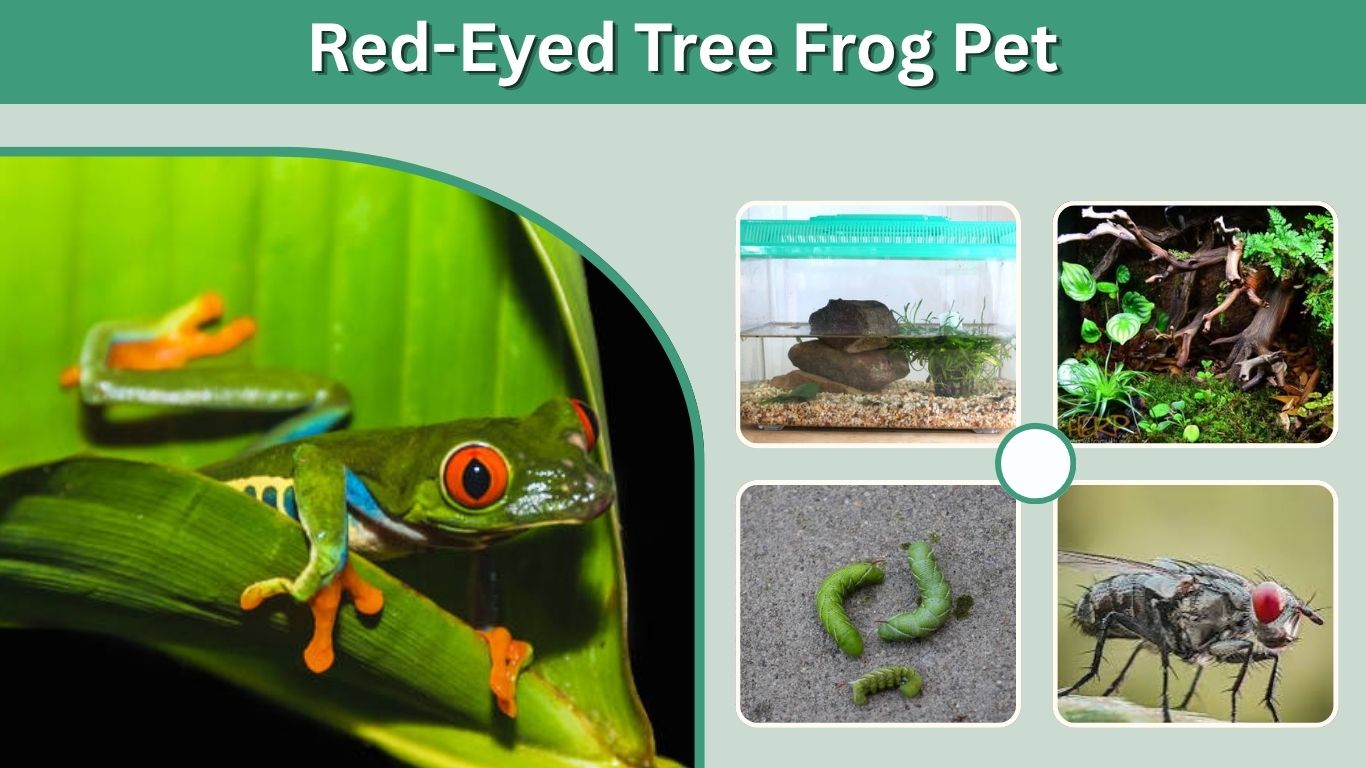
A red-eyed tree frog can be a fascinating pet for amphibian enthusiasts. Its bright green body, vivid red eyes, orange feet, and calm daytime behavior make it one of the most recognizable tree frogs. However, these frogs are delicate display animals rather than pets that enjoy frequent handling. Keeping one successfully requires a tall enclosure, stable humidity, suitable temperatures, clean water, and nutritious live insects. This guide explains whether red-eyed tree frogs make good pets and how to care for them properly.
Can Red-Eyed Tree Frogs Be Pets?
Yes, red-eyed tree frogs can be kept as pets. Captive-bred individuals usually adapt well to terrarium life when their environmental needs are met.
They are nocturnal, meaning they spend most of the day resting on leaves, branches, or enclosure walls. They become more active after dark, when they climb, explore, call, and hunt insects.
Red-eyed tree frogs are best considered observation pets. They do not normally enjoy being touched or carried, and unnecessary handling can cause stress or damage their sensitive skin.
Are Red-Eyed Tree Frogs Good Pets?
Red-eyed tree frogs can make good pets for patient owners who enjoy watching natural amphibian behavior. They are quiet during the day, do not require walks, and can live in an attractive planted terrarium.
However, they are not ideal for everyone.
Advantages of Keeping One
A pet red-eyed tree frog offers several advantages:
- Attractive colors and markings
- Interesting nighttime behavior
- Relatively small space requirements
- No need for daily physical interaction
- Can live alone or in a suitable group
- Works well in a naturalistic display enclosure
Possible Challenges
Owners must also consider the challenges:
- Requires live feeder insects
- Needs carefully controlled humidity
- Sensitive to chemicals and dirty water
- Should rarely be handled
- May hide throughout the day
- Requires regular enclosure cleaning
- Needs access to an exotic-animal veterinarian
A red-eyed tree frog may not be suitable for someone wanting an affectionate or frequently handled pet.
Red-Eyed Tree Frog Pet Habitat
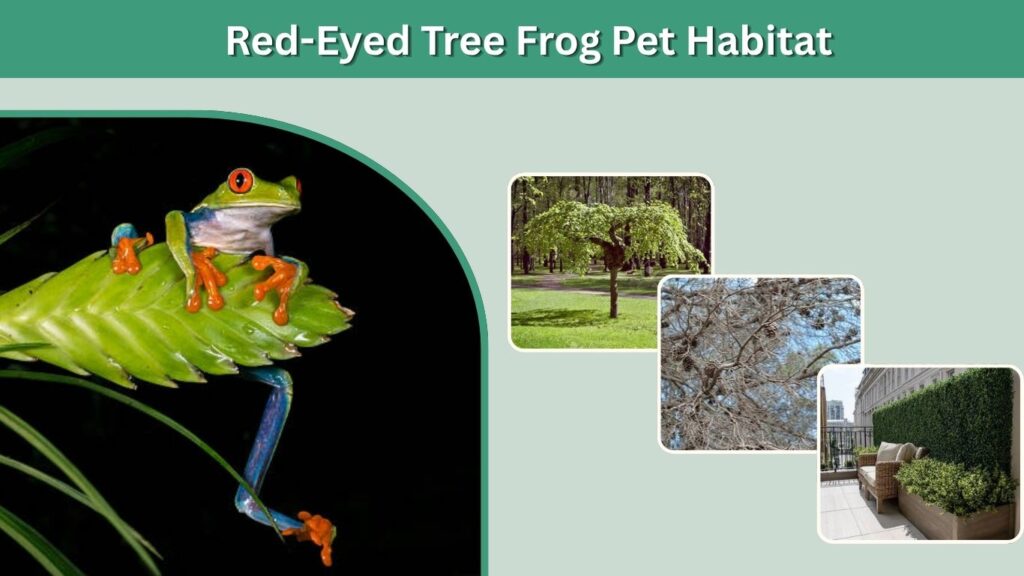
A red-eyed tree frog needs a tall, secure, and well-ventilated terrarium. These frogs are arboreal, so vertical climbing space is more important than a large floor area.
An enclosure measuring approximately 18 × 18 × 24 inches can work for one or two adults. A larger enclosure is preferable when keeping several frogs together.
Essential Habitat Features
The terrarium should contain:
- Horizontal and diagonal branches
- Natural or artificial vines
- Broad leaves for sleeping
- Several elevated hiding places
- A shallow water dish
- Moisture-retaining substrate
- A secure screen or ventilated lid
- Thermometer and hygrometer
Branches should be strong enough to support the frog but free from sharp edges. Plants such as pothos, bromeliads, philodendrons, and other amphibian-safe tropical plants can provide cover and climbing opportunities.
Suitable Substrate
Common substrate options include coconut fiber, organic topsoil, sphagnum moss, orchid bark, or a bioactive mixture.
Loose moss and bark pieces may be accidentally swallowed during feeding. Many owners reduce this risk by feeding from a smooth container or using broad leaf litter over the substrate.
Paper towels can be used temporarily for quarantine because they make waste and abnormal droppings easier to observe.
Temperature and Humidity Requirements
Red-eyed tree frogs come from warm, humid tropical environments. Their enclosure should remain warm without becoming dangerously hot.
| Requirement | General Range |
| Daytime temperature | Approximately 75–82°F |
| Nighttime temperature | Approximately 68–75°F |
| Humidity | Commonly around 60–80% |
| Lighting cycle | About 12 hours light and 12 hours dark |
Humidity may rise after misting and gradually decrease as the enclosure dries. Constantly wet conditions combined with poor ventilation may encourage bacterial and fungal growth.
Provide airflow while preventing the enclosure from becoming excessively dry.
Heating and Lighting
A low-wattage heat source may be necessary in a cool room. It should be controlled by a thermostat and positioned so the frog cannot touch a dangerously hot surface.
A consistent day-and-night cycle supports natural behavior. Low-level UVB lighting may also be beneficial when used correctly, although the frog should always have shaded areas where it can retreat.
Avoid leaving bright red, blue, or white viewing lights on throughout the night.
What Do Pet Red-Eyed Tree Frogs Eat?
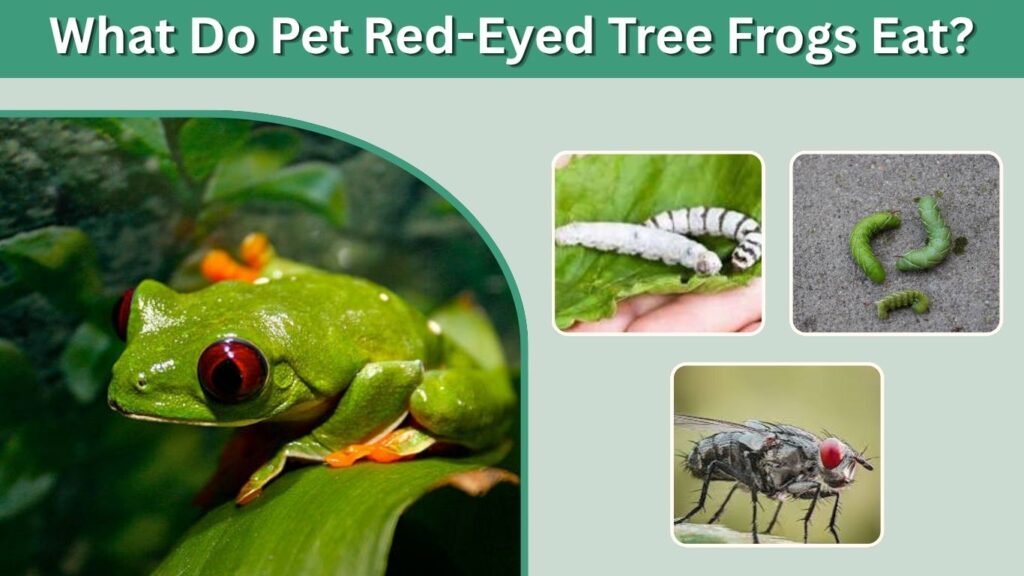
Red-eyed tree frogs are insectivores. Their diet should consist mainly of appropriately sized live insects.
Suitable foods include:
- Crickets
- Small Dubia roaches
- Black soldier fly larvae
- Silkworms
- Houseflies
- Small hornworms
- Occasional waxworms
- Occasional mealworms
Crickets and small roaches can form the foundation of the diet, but offering different insects provides nutritional variety and encourages natural hunting behavior.
Feeding Schedule
Juvenile frogs generally need food more frequently than adults. Young frogs may be offered small meals daily, while adults are commonly fed every two or three days.
Feeders should not be wider than the space between the frog’s eyes. Oversized prey may be difficult to swallow and could cause injury.
Remove uneaten insects, especially crickets, because they may disturb or bite a resting frog.
Supplements
Feeder insects should be gut-loaded with nutritious food before being offered. Calcium powder and an amphibian-appropriate multivitamin should be used according to the product directions and the frog’s age.
Poor supplementation can contribute to nutritional deficiencies and abnormal bone development.
Water and Hydration
Red-eyed tree frogs absorb much of their water through their skin. They need access to clean, dechlorinated water at all times.
Provide a shallow water dish that allows the frog to enter and leave easily. Replace the water daily or immediately when contaminated.
Do not use untreated tap water because chlorine, chloramine, and other substances may irritate amphibian skin. Bottled water is not always ideal because its mineral content varies. Properly treated tap water is usually a practical option.
Deep water areas are unnecessary. Although red-eyed tree frogs can swim when needed, they are primarily climbing frogs and may struggle to escape steep-sided containers.
Can You Handle a Pet Red-Eyed Tree Frog?
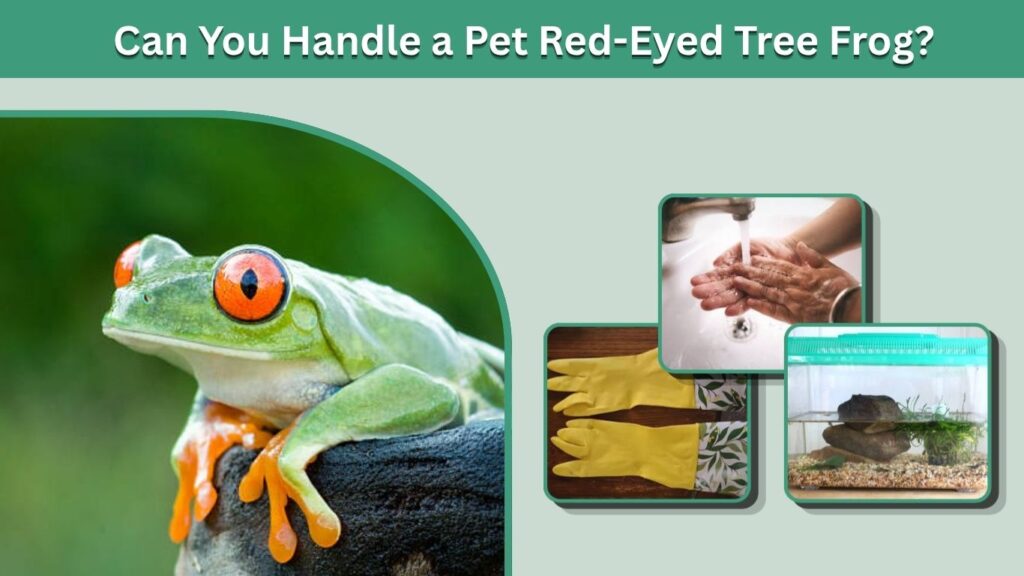
Handling should be limited to necessary situations, such as moving the frog during enclosure maintenance or a veterinary examination.
Amphibian skin is highly absorbent. Soap, lotion, perfume, cleaning chemicals, nicotine, salt, and natural oils on human hands may harm the frog.
When handling is unavoidable:
- Wash and rinse your hands thoroughly.
- Moisten your hands with dechlorinated water.
- Use clean, powder-free gloves when possible.
- Support the frog without squeezing it.
- Keep handling brief and close to a safe surface.
- Return it to the enclosure promptly.
Never allow children to handle the frog without close supervision.
Can Red-Eyed Tree Frogs Live Together?
Red-eyed tree frogs can live alone and do not require a companion. They may also be housed with other healthy red-eyed tree frogs of similar size when sufficient space is available.
Two males can generally live together, although they may call frequently. Groups should have multiple sleeping areas, climbing routes, and feeding locations.
Watch for signs of competition, including:
- One frog becoming noticeably thinner
- Repeated food stealing
- Constant hiding
- Unusual inactivity
- Injuries or skin damage
New frogs should be quarantined before being introduced to an established enclosure.
Can They Live With Other Species?
Mixing red-eyed tree frogs with other frogs, reptiles, or amphibians is generally not recommended.
Avoid housing them with:
- White’s tree frogs
- Green tree frogs
- Dart frogs
- Fire-bellied toads
- Crested geckos
- Day geckos
- Chameleons
Different species may compete for food, require different conditions, carry different microorganisms, or injure one another. A species-only enclosure is the safest choice.
How Long Do Pet Red-Eyed Tree Frogs Live?
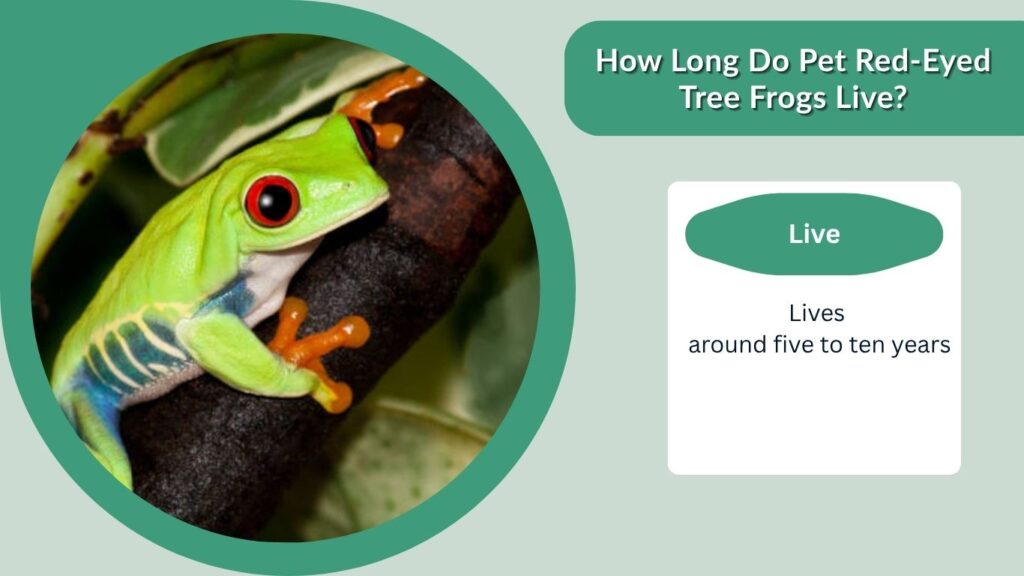
A pet red-eyed tree frog commonly lives around five to ten years when provided with suitable care. Some individuals may live longer, but lifespan depends on genetics, diet, enclosure hygiene, stress levels, and access to veterinary treatment.
Ways to support a longer lifespan include:
- Maintaining stable temperatures
- Providing correct humidity and ventilation
- Feeding varied, gut-loaded insects
- Using supplements appropriately
- Changing the water regularly
- Limiting handling
- Quarantining new animals
- Treating illness promptly
Sudden weight loss, prolonged refusal of food, swelling, skin discoloration, unusual posture, weakness, or difficulty climbing should be evaluated by an experienced exotic veterinarian.
Buying a Red-Eyed Tree Frog
Red-eyed tree frogs may be available from amphibian breeders, specialist reptile shops, exotic-pet expos, and online sellers.
Choose a captive-bred frog whenever possible. Captive-bred animals are generally better adapted to terrarium conditions and are less likely to have the heavy parasite burdens sometimes associated with wild-caught frogs.
Before purchasing, ask about:
- The frog’s age and sex
- Whether it is captive-bred
- Its current food
- Its feeding frequency
- Previous health problems
- Any available health guarantee
- The seller’s shipping policy
The price of a red-eyed tree frog varies according to location, age, availability, coloration, breeder reputation, and shipping costs. The enclosure and ongoing care supplies may cost considerably more than the frog itself.
Prepare the complete habitat before bringing the animal home.
Essential Pet Supplies
A basic red-eyed tree frog setup normally requires:
- Tall glass terrarium
- Secure ventilated lid
- Digital thermometer
- Digital hygrometer
- Thermostat-controlled heat source
- Appropriate lighting
- Dechlorinated water treatment
- Shallow water dish
- Branches and vines
- Amphibian-safe plants
- Suitable substrate
- Live feeder insects
- Calcium and vitamin supplements
- Spray bottle or misting system
Buying the necessary equipment in advance allows the temperature and humidity to be tested before the frog arrives.
FAQs
Do red-eyed tree frogs make good beginner pets?
They can be suitable for careful beginners who research amphibian husbandry and prepare the enclosure correctly. However, their sensitivity to temperature, humidity, water quality, nutrition, and handling makes them more demanding than some commonly kept reptiles.
Can a red-eyed tree frog live alone?
Yes. A red-eyed tree frog can live alone without becoming lonely. A single frog may also be easier to monitor because the owner can track its feeding, droppings, activity, weight, and overall health more accurately.
Do pet red-eyed tree frogs like being held?
No. They generally tolerate handling rather than enjoy it. Frequent handling may cause stress and expose their absorbent skin to harmful oils or chemicals. They are best kept as display animals and handled only when necessary.
What size tank does a red-eyed tree frog need?
A tall enclosure around 18 × 18 × 24 inches is commonly used for one or two adults. Larger habitats provide more climbing space, better planting opportunities, and additional resting areas, especially when several frogs are kept together.
Where can I buy a pet red-eyed tree frog?
Look for established captive breeders, specialist amphibian or reptile stores, reputable exotic-pet expos, and responsible online sellers. Check customer feedback, health policies, shipping conditions, and local ownership regulations before purchasing.
