Frogs are fascinating amphibians that can survive in different environments, from tropical rainforests to freshwater ponds. But how long can a frog live? The answer depends on its species, habitat, diet, and environmental conditions.
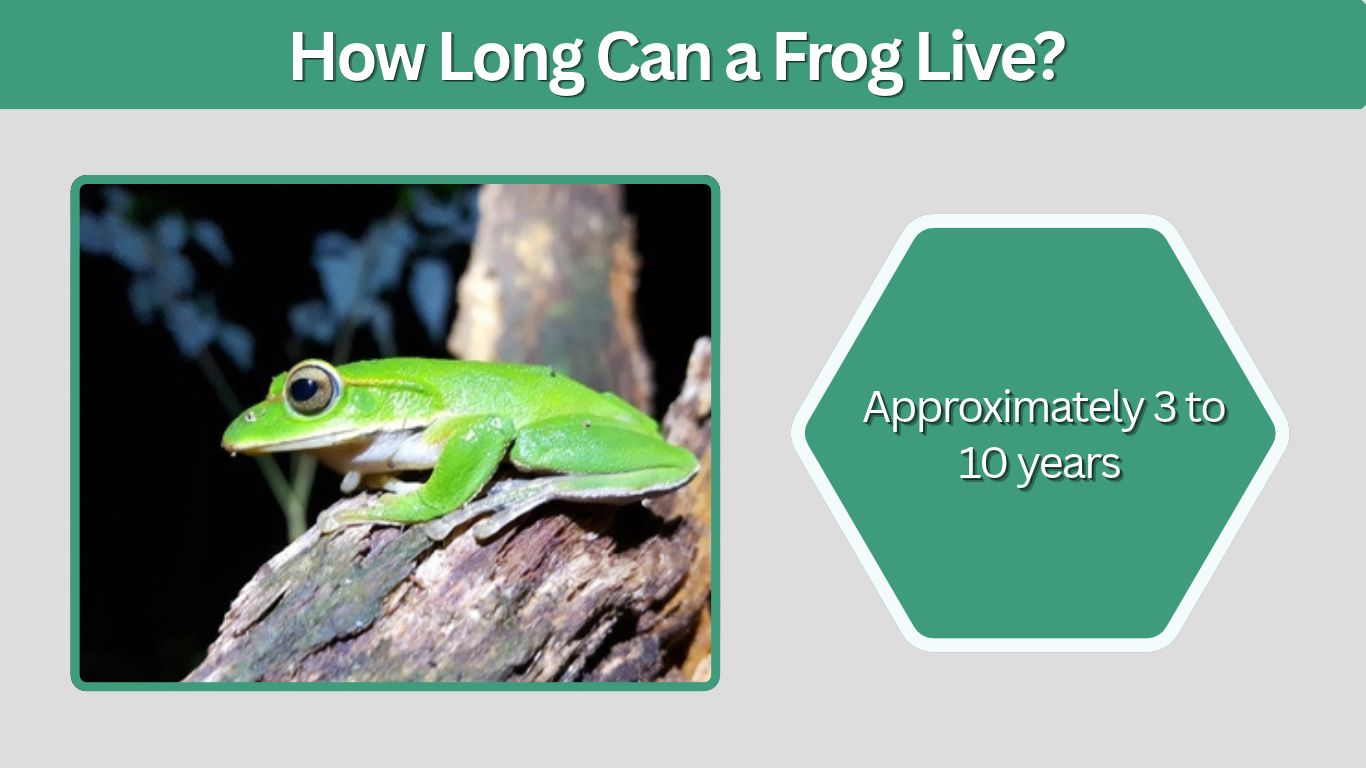
Many frogs live for approximately 3 to 10 years, although some species can survive for 15 to 20 years or longer. Frogs living in captivity sometimes live longer than wild frogs because they receive regular food, protection from predators, and suitable environmental conditions.
Understanding a frog’s lifespan also means knowing how long it can survive without food, water, or access to its natural habitat.
How Long Can a Frog Live on Average?
The average lifespan of a frog varies considerably between species. Some small frogs survive only a few years, while larger or longer-lived species may reach more than a decade.
Wild frogs face numerous challenges, including predators, extreme temperatures, habitat destruction, and disease. Pet frogs may avoid some of these threats when provided with proper care.
Average Lifespan of Different Frog Species
| Frog Species | Approximate Lifespan | Environment |
| Common Frog | Up to 14 years | Wild, recorded maximum |
| American Bullfrog | 7–9 years | Wild, typical |
| Gray Tree Frog | 5–9 years | Species-dependent |
| White’s Tree Frog | 15+ years | Captivity |
| Red-Eyed Tree Frog | Around 5 years | Wild, estimated average |
| Poison Dart Frog | 12–20 years | Captivity, varies by species |
| African Dwarf Frog | 5–7 years | Captivity |
These figures are examples rather than guaranteed lifespans. Individual frogs may live shorter or longer lives depending on their health and surroundings.
How Long Can a Tree Frog Live?
Tree frogs are known for their climbing abilities, sticky toe pads, and preference for vegetation. Their lifespan depends on the species and the conditions in which they live.
Green Tree Frog Lifespan
The term green tree frog can refer to several different species.
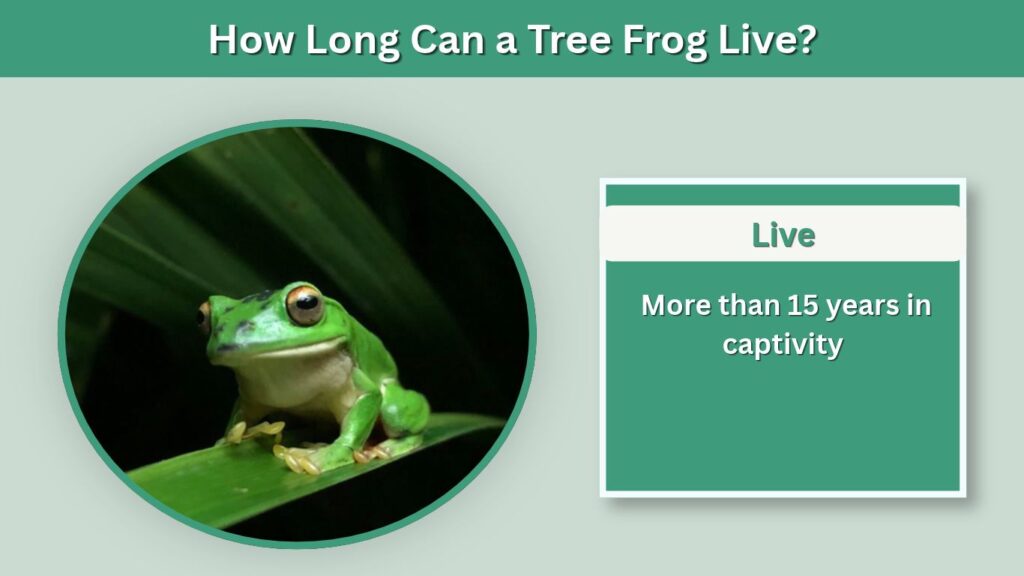
Australian green tree frogs, also called White’s tree frogs, are particularly long-lived. With suitable care, they can survive for more than 15 years in captivity.
American green tree frogs generally have shorter lifespans. Their survival depends on access to insects, moisture, shelter, and appropriate temperatures.
Red-Eyed Tree Frog Lifespan
Red-eyed tree frogs are native to tropical regions of Central America.
Their estimated average lifespan in the wild is approximately five years. Captive lifespan records vary, with some individuals surviving beyond eight years.
These frogs need suitable humidity, climbing branches, clean water, and a consistent supply of appropriately sized insects.
Gray Tree Frog Lifespan
Gray tree frogs commonly live approximately 5 to 9 years.
They inhabit wooded areas, gardens, and places with trees or shrubs. Their natural camouflage helps protect them against predators.
However, habitat destruction, disease, and extreme environmental conditions can shorten their lives.
How Long Can Frogs Live in the Wild vs. Captivity?
Frogs often experience different survival conditions depending on whether they live in natural habitats or captivity.
Lifespan of Wild Frogs
Wild frogs must find food, avoid predators, locate suitable shelter, and survive changing weather conditions.
Common predators include:
- Snakes
- Birds
- Fish
- Larger amphibians
- Small mammals
Frogs also face diseases, parasites, drought, and pollution.
Many frogs die before reaching adulthood, especially during the egg and tadpole stages.
Lifespan of Pet Frogs
Captive frogs can live longer when their environment meets their biological needs.
They benefit from consistent feeding, appropriate moisture, controlled temperatures, and protection from predators.
However, captivity does not automatically guarantee a longer life. Poor water quality, incorrect temperatures, nutritional deficiencies, and improper handling can cause serious health problems.
How Long Can a Frog Live Without Food?
A healthy adult frog may survive several days without eating, and some species can tolerate longer periods under particular environmental conditions.
However, there is no universal survival time.
A frog’s ability to tolerate food shortages depends on several factors:
- Age: Baby frogs generally have smaller energy reserves than adults.
- Body condition: Healthy frogs may tolerate temporary food shortages better.
- Temperature: Cooler conditions can reduce metabolic activity.
- Species: Different frogs have different energy requirements.
- Season: Some frogs naturally eat less during dormancy.
During winter dormancy or periods of reduced activity, certain frogs can go extended periods without feeding.
Nevertheless, a pet frog refusing food repeatedly may be experiencing stress, illness, or unsuitable enclosure conditions. Prolonged fasting should not be considered normal without understanding the species.
How Long Can a Frog Live Without Water?
Water is essential for frog survival because frogs absorb much of their moisture directly through their skin.
Unlike humans, most frogs do not depend primarily on drinking water through their mouths.
Instead, they absorb moisture from wet surfaces and their surroundings.
Can Frogs Survive Without Drinking Water?
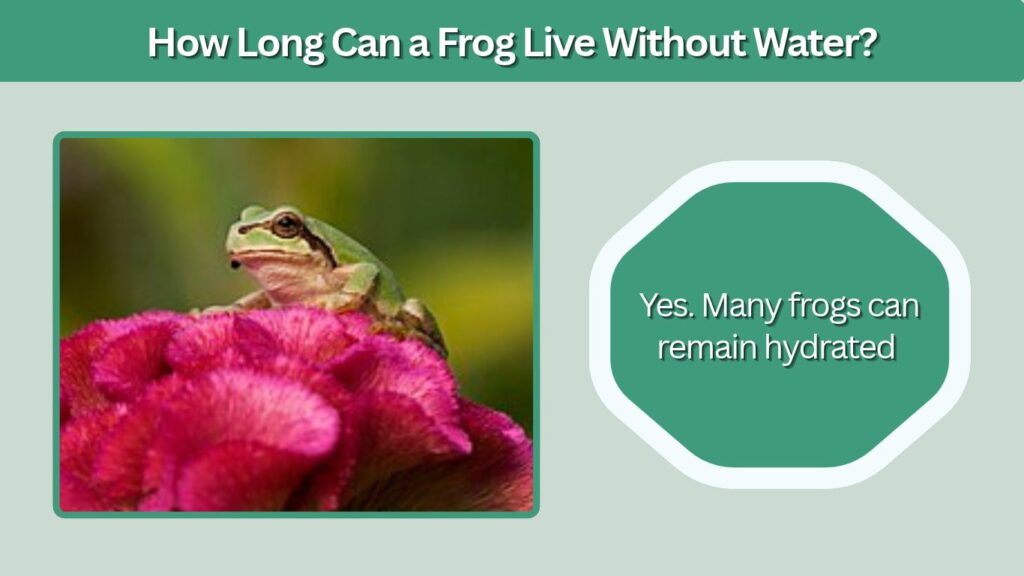
Yes. Many frogs can remain hydrated without drinking in the conventional sense.
They absorb moisture through specialized areas of their skin.
A terrestrial frog may survive away from standing water when its environment remains sufficiently moist.
However, dry air, direct sunlight, and high temperatures can cause dangerous dehydration.
How Long Can a Tree Frog Live Without Water?
Tree frogs can spend considerable time away from ponds and streams.
However, they still require appropriate humidity and access to moisture.
A tree frog living in a humid rainforest can remain hydrated through its surroundings, while the same frog trapped in a hot, dry room may quickly become dehydrated.
There is no reliable fixed number of hours or days that applies to every tree frog.
How Long Can a Frog Live Out of Water?
Many adult frogs can live on land throughout much of their lives.
Tree frogs, terrestrial frogs, and toads regularly spend time outside water.
However, they generally need moisture to maintain healthy skin and normal biological functions.
Aquatic species have very different requirements.
For example, African dwarf frogs spend almost their entire lives underwater. They cannot survive prolonged exposure to dry conditions.
Therefore, a frog’s ability to live outside water depends mainly on its species and habitat requirements.
How Long Can a Frog Live Underwater?
Most adult frogs breathe using lungs and through their moist skin.
Their skin allows oxygen to enter their bodies from the surrounding air or water.
However, many frogs must return to the surface to breathe.
African dwarf frogs, despite being fully aquatic, regularly swim to the surface for air.
Some species can remain submerged for extended periods, particularly during cold-weather dormancy when their oxygen requirements decrease.
The amount of time a frog can survive underwater depends on water temperature, dissolved oxygen, species, and activity level.
How Long Can a Frog Live in a House, Car, or Swimming Pool?
Frogs occasionally enter human environments while searching for insects, shelter, or moisture.
However, these places are not always suitable for their survival.
How Long Can a Frog Live Inside a House?
A frog may survive temporarily inside a house if the environment remains cool and moist.
However, most homes lack the humidity, suitable food sources, and sheltered habitats that frogs need.
Air conditioning, heating, and dry indoor air can increase dehydration risks.
If a native wild frog enters your home, carefully guide it outside to a nearby shaded, moist location.
How Long Can a Frog Live in a Car?
A frog trapped inside a vehicle can face serious dangers.
Cars can become extremely hot, particularly when parked under direct sunlight.
High temperatures and low humidity can rapidly cause dehydration and heat stress.
A frog should never be intentionally left inside a parked vehicle.
How Long Can a Frog Live in a Swimming Pool?
A frog may enter a swimming pool while searching for water.
However, swimming pools can be dangerous because of chemical treatments and steep sides that prevent animals from escaping.
A trapped frog may become exhausted or suffer chemical exposure.
Installing a wildlife escape ramp can help frogs and other small animals leave the pool safely.
What Factors Affect a Frog’s Lifespan?
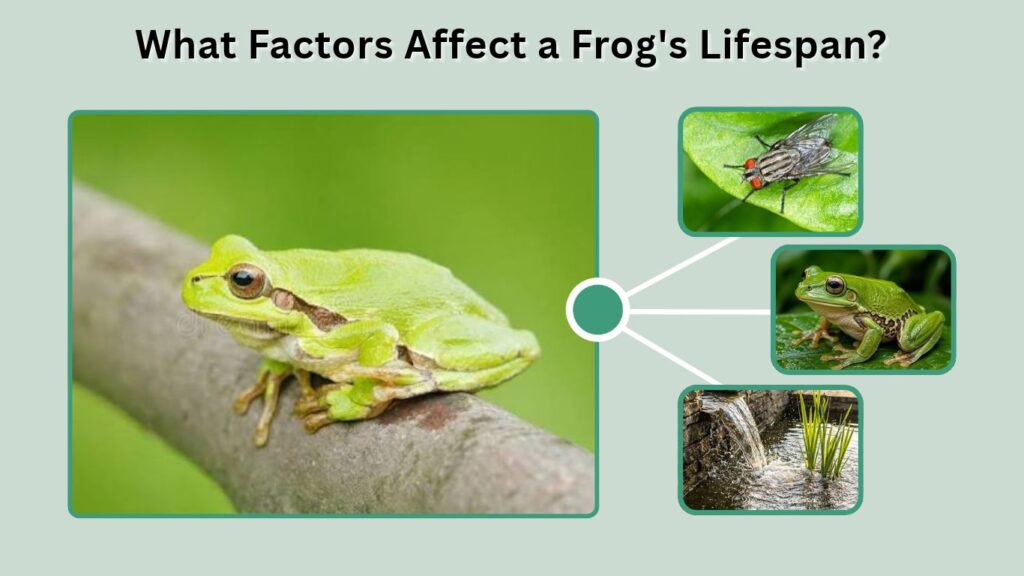
Several biological and environmental factors determine how long frogs survive.
1. Species and Genetics
Different frog species have different natural lifespans. Some are relatively short-lived, while others can survive for decades under favorable conditions.
2. Food Availability
Frogs need suitable nutrition to maintain energy, grow, and reproduce. Inadequate feeding can weaken their health.
3. Water and Humidity
Proper moisture levels are essential for hydration and healthy skin function.
4. Predators and Diseases
Wild frogs encounter natural predators, parasites, and infectious diseases that may shorten their lifespan.
5. Temperature and Habitat
Extreme temperatures, polluted water, and habitat loss can negatively affect frog survival.
How to Help a Pet Frog Live Longer
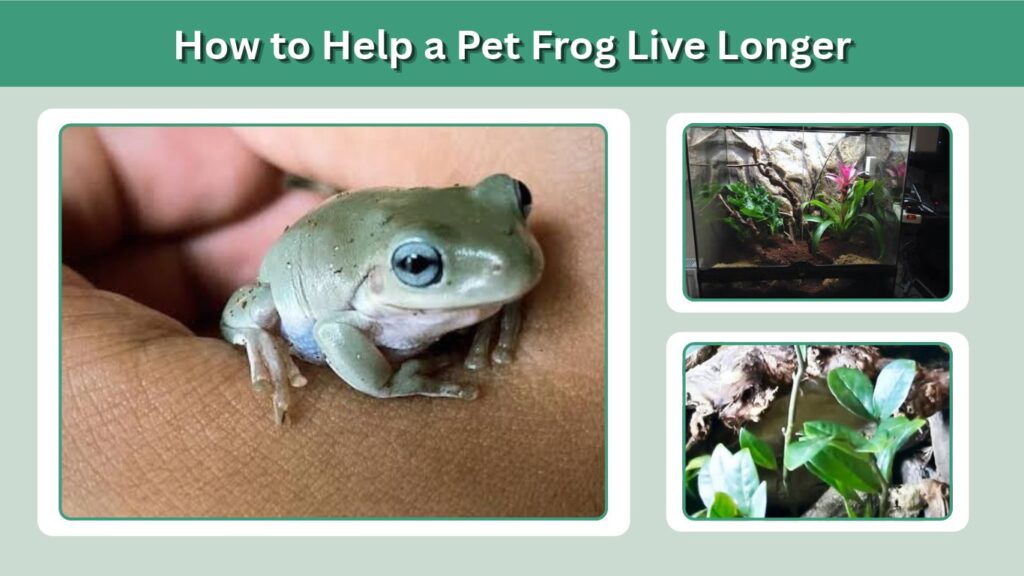
Proper care can improve a pet frog’s health and increase its chances of reaching its natural lifespan.
Important practices include:
- Provide a suitable enclosure: Choose the appropriate habitat size and arrangement for the species.
- Maintain proper humidity: Prevent excessive dryness while avoiding constantly waterlogged conditions where unsuitable.
- Offer a balanced diet: Feed species-appropriate insects or other recommended foods.
- Maintain clean water: Use appropriately treated water and keep aquatic enclosures properly filtered.
- Control temperature: Maintain a suitable temperature range without sudden fluctuations.
- Limit handling: Frequent handling can stress frogs and damage their delicate skin.
- Monitor health: Watch for unusual behavior, poor appetite, skin changes, or unexplained weight loss.
Frog care requirements vary greatly between species. A setup suitable for an African dwarf frog may be completely inappropriate for a tree frog.
FAQs
1. Can a Frog Live for 20 Years?
Yes. Some frog species can live for 20 years under suitable conditions. Certain poison dart frogs and White’s tree frogs are known for their relatively long captive lifespans.
2. How Long Can a Baby Frog Live Without Food?
Baby frogs usually have smaller energy reserves than adults. Their survival without food depends on their developmental stage, species, temperature, and body condition. Recently transformed froglets often require frequent access to appropriate food.
3. Can a Frog Survive Being Frozen?
Some species, particularly wood frogs, can survive partial freezing during winter. They produce substances that help protect their cells. However, most frog species cannot safely tolerate freezing, and this ability should not be tested on pet frogs.
4. How Long Can a Pacman Frog Live?
Pacman frogs commonly live around 6 to 10 years in captivity, although some individuals survive longer with proper care. Their lifespan depends on suitable temperatures, humidity, nutrition, and overall health.
5. Do Frogs Live Longer in Water or on Land?
Neither environment universally provides a longer lifespan. Aquatic frogs need suitable water conditions, while terrestrial and tree frogs require appropriate land habitats and moisture. Frogs generally survive best in environments that match their species’ natural requirements.
