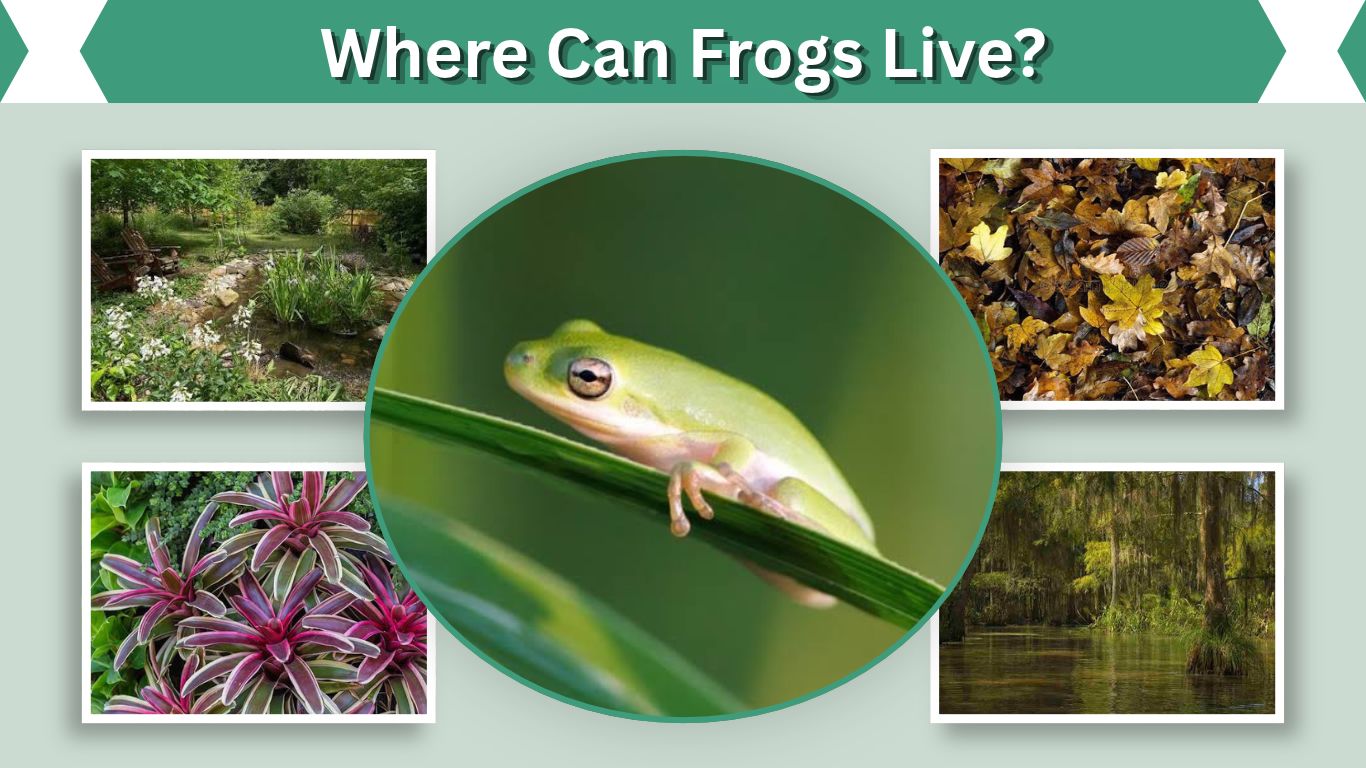
Frogs can live in many different environments, including ponds, lakes, rivers, forests, grasslands, wetlands, trees, and even deserts. These amphibians are found on every continent except Antarctica, although their habitats vary greatly depending on the species. Some frogs spend most of their lives underwater, while others prefer moist land, tropical rainforests, or vegetation above the ground. Despite these differences, most frogs depend on moisture and suitable temperatures to survive. Their unique adaptations allow them to occupy a remarkable variety of ecosystems. Understanding where frogs can live helps explain their habitat preferences, breeding behavior, and ability to survive in different climates.
Where Can Frogs Live?
Frogs are adaptable amphibians that inhabit freshwater and terrestrial environments around the world.
Their preferred habitats depend on moisture availability, temperature, vegetation, food sources, and suitable breeding conditions.
Some species remain close to permanent water, while others spend most of their adult lives on land.
| Habitat | Frog Examples | Typical Conditions |
| Ponds and lakes | Bullfrogs, green frogs | Freshwater and aquatic vegetation |
| Rivers and streams | Stream frogs, tailed frogs | Flowing freshwater |
| Wetlands and marshes | Leopard frogs, tree frogs | Moist vegetation and shallow water |
| Tropical rainforests | Poison dart frogs | Warm, humid forest environments |
| Trees and shrubs | American green tree frogs | Vegetation near moisture |
| Grasslands | Grass frogs and several toads | Vegetation with seasonal moisture |
| Deserts | Spadefoot toads | Underground shelter and seasonal rainfall |
| Forest floors | Wood frogs | Moist soil, leaves, and shaded areas |
| Gardens | Various local frog species | Shelter, insects, and moisture |
Although frogs occupy many different environments, individual species are usually adapted to particular habitats.
Can Frogs Live in Water and on Land?
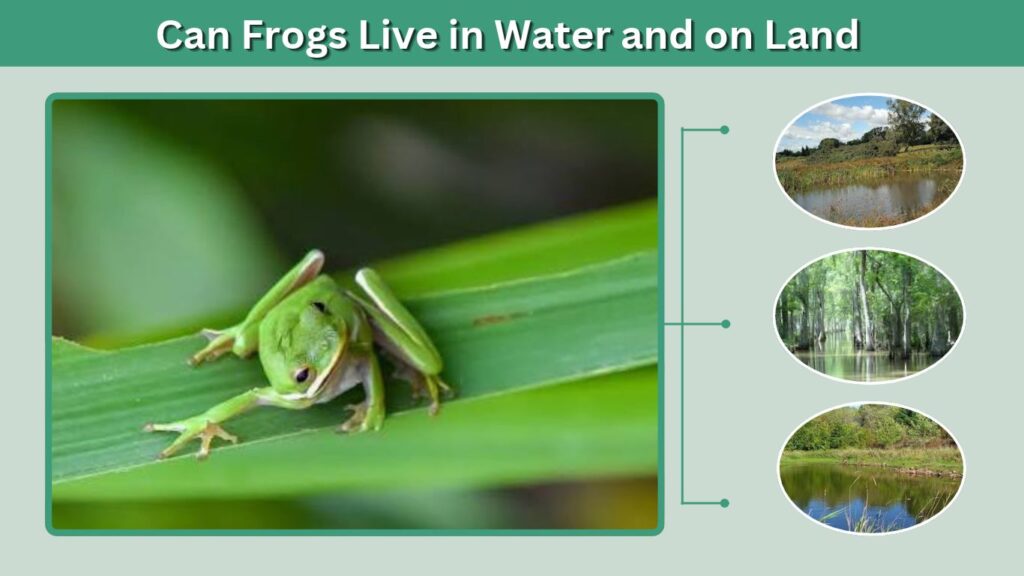
Yes. Frogs are amphibians, meaning many species use aquatic and terrestrial environments during different stages of life.
However, not every frog divides its time equally between water and land.
Some are highly aquatic, while others are primarily terrestrial.
Frogs That Live in Water
Aquatic frogs spend most or nearly all of their lives in freshwater environments.
Common examples include American bullfrogs and African clawed frogs.
These species may inhabit:
- Lakes
- Ponds
- Slow-moving rivers
- Marshes
- Freshwater canals
- Permanent pools
Aquatic frogs have adaptations that make swimming and underwater movement easier.
Some species also spend considerable time resting among aquatic vegetation.
Frogs That Live on Land
Terrestrial frogs spend much of their adult lives outside water.
They frequently inhabit forests, grasslands, gardens, and other environments with suitable moisture.
Many shelter beneath leaves, rocks, fallen logs, or vegetation during hot or dry conditions.
Although they may live on land, most still require moisture to prevent excessive water loss through their skin.
Where Can Frogs Live in Forests?
Forests provide excellent habitats for many frog species because they offer shade, moisture, shelter, and abundant food.
Frogs commonly inhabit tropical rainforests, temperate woodlands, and forested wetlands.
Tropical Rainforest Habitats
Tropical rainforests support a remarkable diversity of frogs.
Warm temperatures, frequent rainfall, and dense vegetation create suitable conditions for amphibians.
Rainforest frogs may live among:
- Moist leaf litter
- Fallen logs
- Tree roots
- Moss-covered rocks
- Forest streams
- Tree holes
- Water-holding plants
Some rainforest species spend most of their time on the forest floor, while others climb vegetation.
Temperate Forest Habitats
Frogs such as wood frogs inhabit temperate and northern forests.
These environments experience distinct seasons, including cold winters.
Wood frogs often spend warmer months in forested areas and return to temporary pools for breeding.
They have specialized adaptations that allow them to survive freezing winter conditions.
Can Frogs Live in Trees?
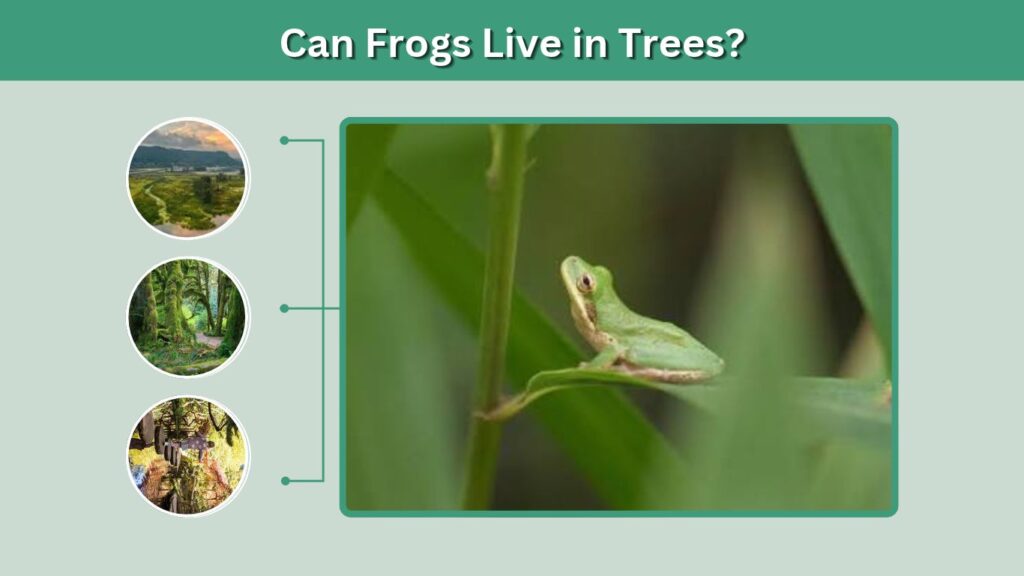
Yes. Tree frogs are adapted to living on vegetation above the ground.
Many have specialized toe pads that help them grip leaves, branches, and other surfaces.
Tree frogs frequently inhabit forests, wetlands, gardens, and wooded areas near freshwater.
Their preferred locations provide protection from predators and access to insects.
Although they spend considerable time above ground, many tree frogs descend to ponds or temporary pools for reproduction.
Some tropical species use water collected inside tree holes or plants for breeding.
Can Frogs Live in Deserts?
Surprisingly, some frogs and toads can survive in deserts and other relatively dry environments.
However, they require special adaptations to avoid dehydration.
Desert amphibians often remain underground during extremely hot or dry periods.
How Desert Frogs Survive
Certain species, including spadefoot toads, dig burrows that provide shelter from heat and dry air.
They may remain inactive underground for extended periods.
After heavy rainfall, they emerge to feed and reproduce in temporary pools.
Their breeding cycles can be rapid because desert pools may disappear quickly.
These adaptations allow some amphibians to survive in places where permanent surface water is limited.
However, not all frogs can tolerate desert environments.
Where Can American Green Tree Frogs Live?
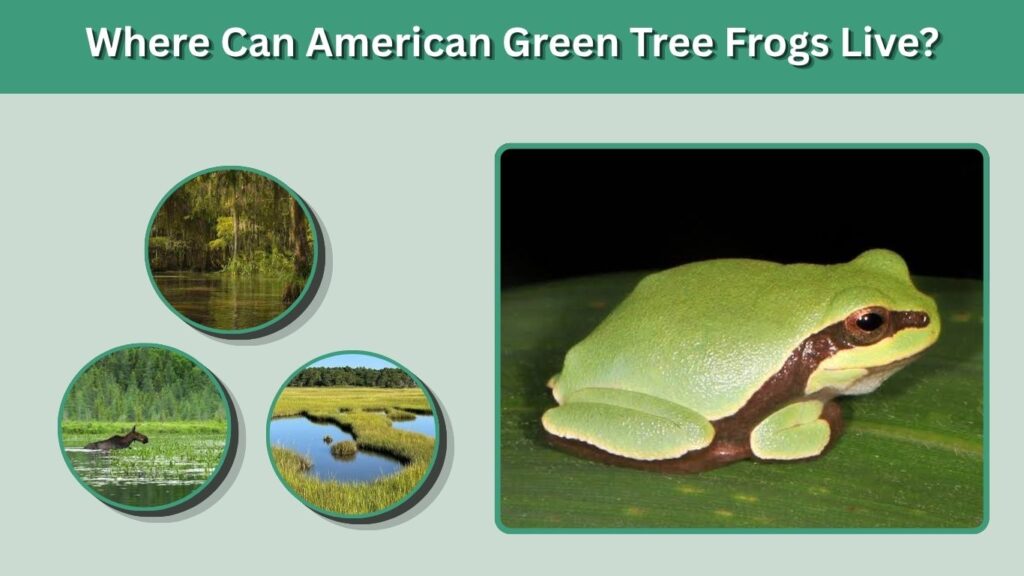
American green tree frogs (Dryophytes cinereus) are native to the southeastern United States.
They commonly inhabit warm, humid areas containing freshwater and abundant vegetation.
Their preferred environments include:
- Marshes
- Swamps
- Wetlands
- Pond edges
- Lake shorelines
- Vegetated riverbanks
- Shrubs and trees near water
American green tree frogs frequently rest on leaves, stems, and branches.
Their green coloration provides camouflage among vegetation.
They may also appear around homes and gardens, particularly where outdoor lighting attracts insects.
Although these frogs climb trees and shrubs, they depend on suitable freshwater habitats for reproduction.
Where Can Poison Dart Frogs Live?
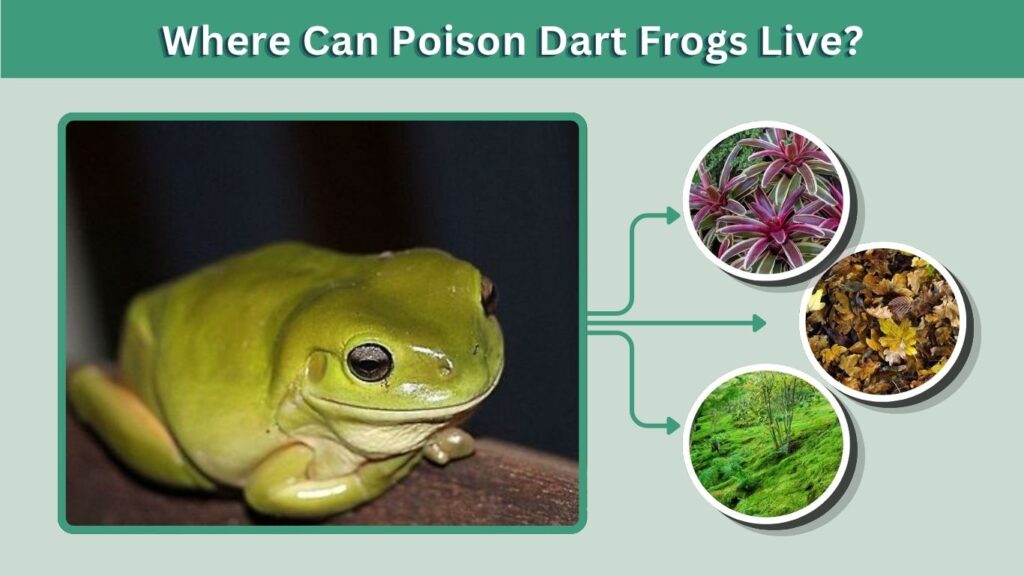
Poison dart frogs primarily inhabit tropical regions of Central and South America.
They are especially associated with warm, humid rainforest environments.
Poison Dart Frog Natural Habitat
Many species inhabit moist tropical forest floors, where fallen leaves and vegetation provide shelter.
Others climb into low vegetation or use water-holding plants.
Their habitats commonly include:
- Tropical rainforests
- Humid forest floors
- Moist leaf litter
- Dense vegetation
- Areas near forest streams
- Tree holes and bromeliads
Poison dart frogs require stable environmental conditions and are generally sensitive to habitat disturbance.
Some species lay eggs in moist terrestrial locations and later transport their tadpoles to small water collections.
These breeding adaptations allow them to use rainforest environments in unusual ways.
Can Frogs Live Completely Underwater?
Some frog species are almost entirely aquatic.
The African clawed frog (Xenopus laevis) is a well-known example.
It spends nearly all its life in water and typically leaves aquatic habitats only when moving between water bodies.
These frogs have strong swimming adaptations and depend heavily on aquatic environments.
However, even fully aquatic frogs generally breathe atmospheric oxygen using lungs.
Therefore, living underwater does not necessarily mean they can remain submerged indefinitely without surfacing.
Can Frogs Live in Cold Climates?
Yes. Several frog species inhabit regions with cold winters, including northern forests and mountain environments.
Wood frogs are particularly well known for surviving freezing conditions.
During winter, many frogs enter periods of reduced activity.
Some shelter in mud beneath water, while others remain under leaves or in protected soil.
The survival strategy depends on the species.
Frogs living in cold climates typically become more active when temperatures rise in spring.
Where Do Frogs Live During Different Life Stages?
The habitat requirements of frogs often change throughout their development.
Most familiar frog species begin life in water as eggs and tadpoles before developing into adults.
| Life Stage | Typical Habitat | Main Requirement |
| Eggs | Freshwater or moist breeding sites | Protection from drying |
| Tadpoles | Ponds, pools, streams, or plant-held water | Suitable aquatic conditions |
| Froglets | Shallow water and nearby vegetation | Shelter and moisture |
| Adults | Water, land, trees, or underground | Food, suitable temperature, and moisture |
However, exceptions exist.
Some frogs lay eggs on land, and certain species develop directly into small froglets without a free-swimming tadpole stage.
These reproductive adaptations allow frogs to occupy environments beyond traditional ponds and lakes.
Can Frogs Live in Gardens and Backyards?
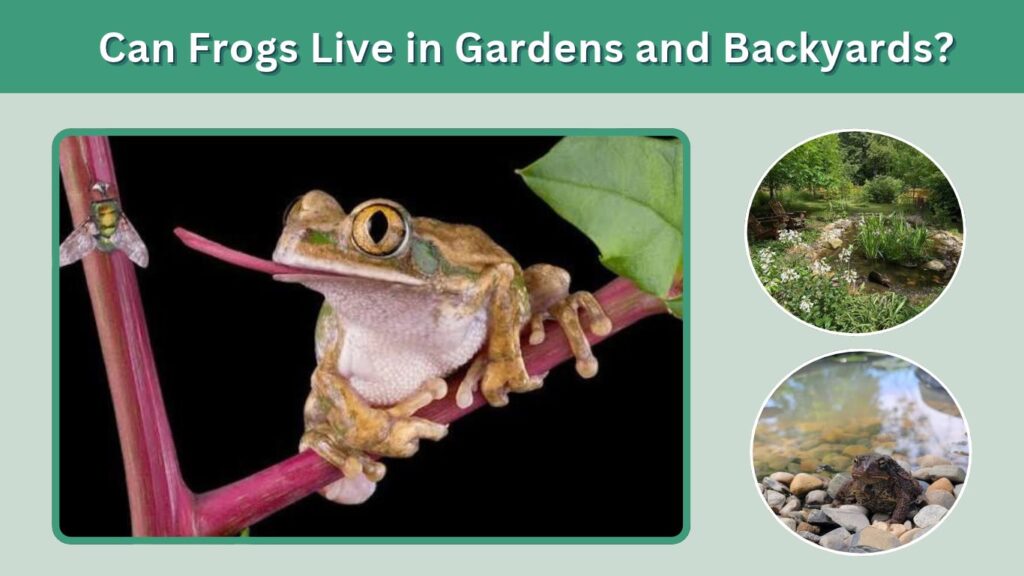
Yes. Many frog species can survive in gardens and residential landscapes when suitable habitat is available.
Gardens with vegetation, moisture, and insect populations may attract local frogs.
Common backyard frog habitats include:
- Garden ponds
- Flower beds
- Shaded vegetation
- Areas beneath rocks
- Fallen leaves
- Moist soil
- Natural drainage areas
Frogs can benefit gardens by consuming insects and other small invertebrates.
However, pesticides, habitat destruction, and contaminated water can negatively affect frog populations.
Maintaining natural vegetation and avoiding unnecessary chemical applications can help support local amphibians.
Where Are Frogs Found Around the World?
Frogs occur on every continent except Antarctica.
They inhabit tropical, subtropical, temperate, and some cold-climate environments.
Their distribution is influenced by temperature, rainfall, habitat availability, and evolutionary adaptations.
Tropical regions generally support especially high frog diversity because warm, humid conditions favor many amphibians.
However, frogs are also found in North American forests, Australian deserts, European wetlands, African grasslands, and Asian mountains.
Not every species can survive in every region.
Each has a particular geographical range and environmental requirements.
What Do Frogs Need to Survive in Their Habitat?
Although frog species have different ecological requirements, several environmental factors influence their survival.
1. Moisture
Most frogs require moisture to maintain healthy skin and prevent dehydration.
Their skin is permeable, allowing water and certain dissolved substances to pass through it.
2. Suitable Temperature
Frogs are ectothermic animals, meaning their body temperature is strongly influenced by surrounding conditions.
Extreme heat or cold can limit their activity and survival.
3. Food Availability
Adult frogs commonly consume insects, spiders, worms, and other small animals.
Their food preferences depend on body size, species, and habitat.
4. Shelter
Vegetation, rocks, burrows, and fallen logs provide protection from predators and extreme weather.
5. Breeding Habitat
Many species require suitable freshwater habitats for laying eggs and supporting tadpole development.
Other species have specialized breeding requirements involving moist terrestrial sites or small water-filled plant structures.
Why Are Frog Habitats Important?
Healthy frog habitats support reproduction, feeding, shelter, and seasonal survival.
Wetlands are particularly important because they provide breeding grounds for many amphibians.
Forests and grasslands also support adult frogs and help connect different breeding habitats.
Habitat destruction, water pollution, drought, invasive species, and disease can threaten frog populations.
Because frogs have permeable skin and often depend on both aquatic and terrestrial environments, changes in environmental quality can affect them significantly.
Protecting freshwater habitats and surrounding vegetation is important for maintaining healthy frog populations.
FAQs
1. Can Frogs Live Without Water?
Some frogs spend most of their adult lives on land, but they generally still require moisture to survive. Certain species obtain sufficient moisture from damp environments, while others periodically return to water. Their requirements depend on their specific adaptations.
2. Can Frogs Live in Saltwater?
Most frogs cannot survive in ordinary seawater because high salt concentrations interfere with their water balance. However, some species tolerate mildly brackish environments. Frogs are primarily associated with freshwater and terrestrial habitats rather than marine ecosystems.
3. Can Frogs Live Underground?
Yes. Some frogs and toads use underground burrows to escape heat, cold, and dry conditions. Desert-dwelling species may remain underground for extended periods and emerge when rainfall creates suitable feeding and breeding opportunities.
4. Can Frogs Live Anywhere They Want?
No. Frogs cannot survive in every environment. Each species requires particular temperature, moisture, food, and breeding conditions. A frog adapted to a tropical rainforest may not survive in a cold mountain environment or dry desert.
5. Can Frogs Live in Ponds Without Fish?
Yes. Fish-free ponds can provide excellent breeding habitats for many frog species. Without predatory fish, eggs and tadpoles may experience reduced predation. However, suitable water quality, vegetation, temperature, and seasonal water availability are still important.
