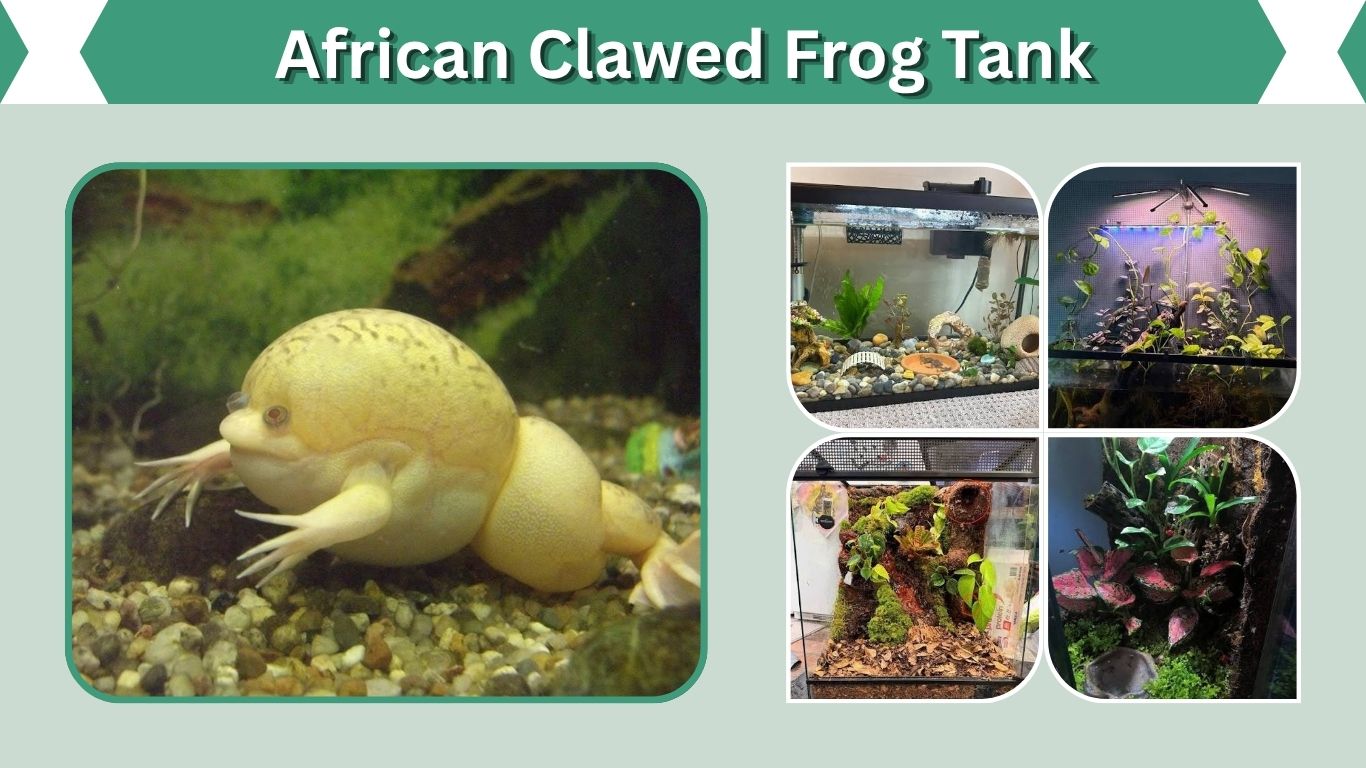
An African clawed frog tank should provide plenty of swimming space, clean conditioned water, gentle filtration, hiding areas, and a secure lid. These fully aquatic frogs spend virtually their entire lives underwater but regularly swim to the surface to breathe. Because adults are considerably larger and more predatory than African dwarf frogs, choosing the correct aquarium size and compatible inhabitants is especially important. A well-cycled, easy-to-clean tank with stable water conditions can provide a comfortable long-term home for an African clawed frog.
African Clawed Frog Tank Size
Tank size is one of the most important parts of African clawed frog care. Although relatively compact containers are sometimes used in laboratory husbandry, a larger home aquarium provides more swimming room and makes water quality easier to maintain. Research husbandry guidance notes that Xenopus require adequate conditioned water and space while remaining completely aquatic.
Minimum Tank Size
For a pet African clawed frog, a 20-gallon-long aquarium is a practical long-term choice for one adult. A 10-gallon tank may accommodate a juvenile temporarily, but adults—especially females—can become surprisingly large and produce substantial waste.
For multiple frogs, increase the aquarium size rather than simply adding more animals to the same space.
- One adult: around 20 gallons is preferable
- Two adults: approximately 30 gallons or larger
- Juveniles: smaller grow-out tanks may be used temporarily
- Large females: benefit especially from additional floor space
A long aquarium is usually more useful than a very tall one because these frogs regularly travel between the bottom and surface.
10-Gallon vs. 20-Gallon Tank
A 10-gallon African clawed frog tank is easier to fit into a home, but water conditions can deteriorate more quickly. A 20-gallon tank provides additional swimming space and more water volume, which helps dilute waste between maintenance sessions.
If your frog is outgrowing its tank, upgrading before it becomes cramped is better than waiting until swimming space becomes obviously restricted.
African Clawed Frog Tank Setup
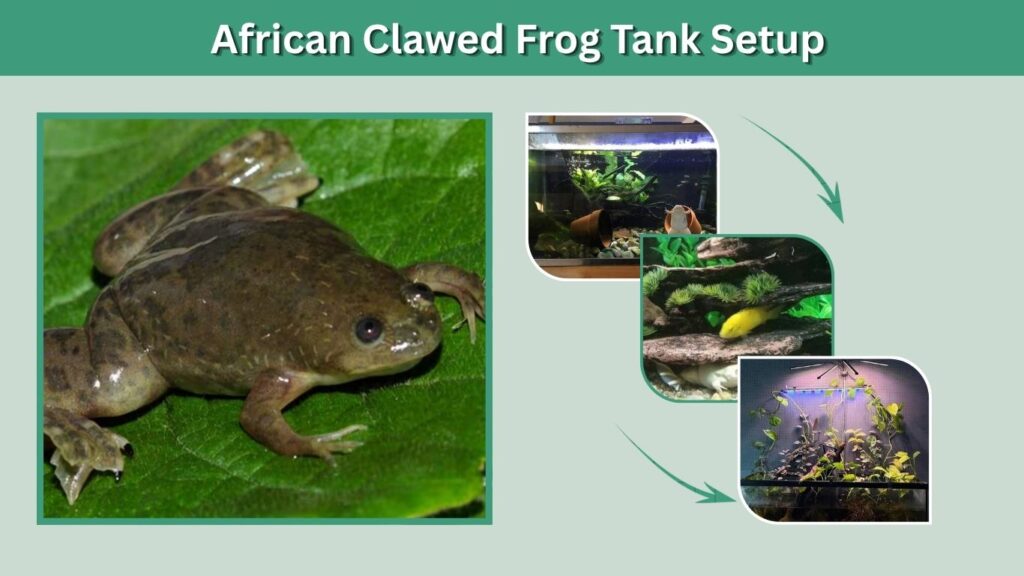
A good setup does not need to be complicated. African clawed frogs are powerful swimmers and may rearrange lightweight decorations, so simplicity often makes maintenance easier.
Basic Tank Requirements
A suitable African clawed frog tank setup should include:
- Secure aquarium with a tight-fitting lid
- Dechlorinated freshwater
- Gentle aquarium filter
- Thermometer
- Smooth substrate or bare bottom
- Several secure hiding places
- Smooth rocks, caves, or aquarium-safe décor
- Optional hardy aquatic plants
- Water-testing equipment
These frogs can escape when given an opening, so the lid should cover gaps around filters, cables, and tubing. Husbandry guidance specifically recommends maintaining the water level or using a secure ventilated cover to prevent escape.
Water Temperature
African clawed frogs generally do well at approximately 68–75°F (20–23°C). They depend on environmental temperature to regulate their body temperature, so large or sudden temperature fluctuations should be avoided.
A heater may not be necessary in a consistently warm room. However, a protected aquarium heater can help maintain stability if temperatures regularly fall below the preferred range.
Water Quality
Use freshwater treated to remove chlorine and chloramine. Amphibians have sensitive, permeable skin, making water quality especially important.
The aquarium should be biologically cycled before the frog is introduced. Regularly monitor ammonia, nitrite, nitrate, pH, and temperature. A stable environment is generally more important than constantly attempting to adjust water chemistry.
Filter, Substrate, and Decorations
African clawed frogs can create considerable waste, so filtration and regular maintenance work together to keep their environment healthy.
Best Tank Filter
Choose a filter capable of handling the aquarium’s biological load without creating an excessively strong current. Sponge filters, properly sized internal filters, and gentle hang-on-back systems can work depending on the aquarium.
Protect exposed filter intakes when necessary so the frog cannot become trapped or injured.
Filtration does not replace maintenance. Uneaten food should be removed because decomposing food can quickly reduce water quality. Husbandry recommendations also emphasize cleaning leftover food from the tank after feeding.
Best Tank Substrate
African clawed frogs grab food quickly and may accidentally swallow loose material. For this reason, substrate should be selected carefully.
Good possibilities include a bare-bottom tank or smooth stones too large for the frog to swallow. Bare-bottom aquariums are particularly easy to siphon and clean.
Avoid sharp rocks or small gravel that can be swallowed while the frog searches for food.
Tank Ideas and Hiding Places
African clawed frog tank ideas can remain simple while still offering enrichment. Smooth caves, PVC shelters, driftwood, and broad hiding structures provide places to retreat.
PVC half-pipes are even used as enrichment for captive Xenopus because they provide a sheltered area without complicated décor. Any cut or rough edges should be smoothed to prevent injuries.
African Clawed Frog Planted Tank
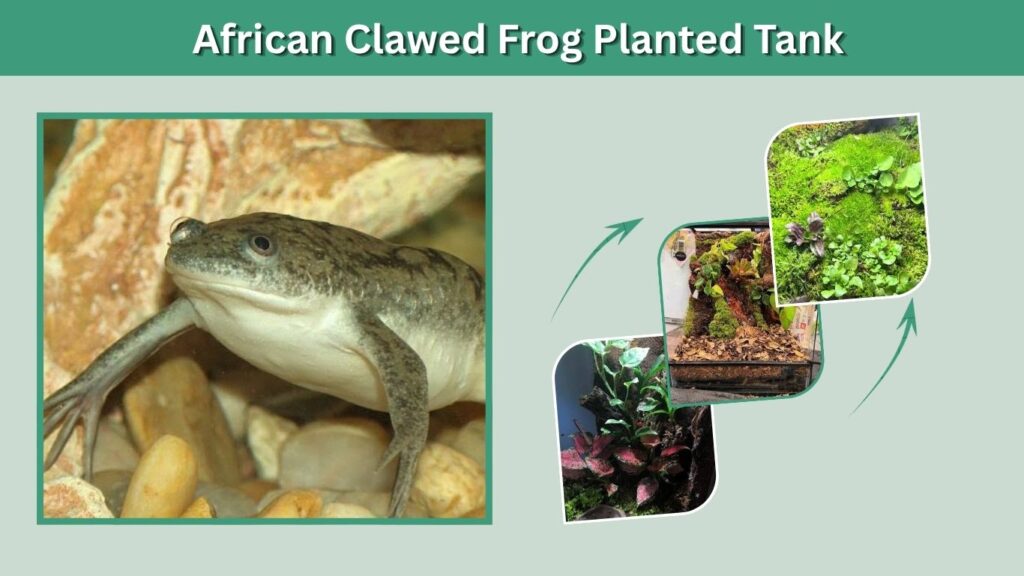
A planted tank is possible, although these strong frogs may dig around, push decorations, or uproot delicate plants. The easiest design combines open swimming areas with a few durable plants around the edges.
Best Plants
Hardy aquarium plants are generally more practical than delicate rooted species. Plants attached to rocks or wood are less likely to be disturbed.
Good tank design principles include:
- Keep the center relatively open for swimming
- Position plants around the back and sides
- Avoid sharp artificial plants
- Secure rooted plants well
- Leave unobstructed access to the water surface
Artificial silk plants can also provide cover without requiring specialized lighting or fertilizer.
Do They Need Land?
No. African clawed frogs are fully aquatic and do not require a terrestrial platform. Their tank should remain aquatic, although they must always be able to reach the surface easily to breathe air.
This is another reason to avoid filling an aquarium completely to the rim. Leaving space beneath a secure lid reduces the chance of escape while maintaining easy surface access.
African Clawed Frog Tank Mates
Tank mates require considerably more caution with African clawed frogs than with African dwarf frogs. Xenopus laevis are opportunistic predators that naturally consume aquatic invertebrates and small vertebrates.
Are Community Tanks Recommended?
A species-only tank is usually the simplest and safest option.
Fish that fit into the frog’s mouth can become food. Shrimp, small fish, snails, and other small aquatic animals may therefore disappear even when they initially appear compatible.
Large fish can create the opposite problem by harassing, biting, or competing with the frog.
Even when a particular combination appears successful, compatibility cannot be guaranteed. PetMD similarly notes that African clawed frogs may eat tank mates because of their size and predatory behavior.
Can African Clawed Frogs Live Together?
African clawed frogs can sometimes be housed with others of their species when adequate space is provided. Frogs should be reasonably similar in size because very small individuals may be vulnerable around much larger ones.
Provide multiple hiding areas and monitor feeding so each frog receives enough food.
Cleaning an African Clawed Frog Tank
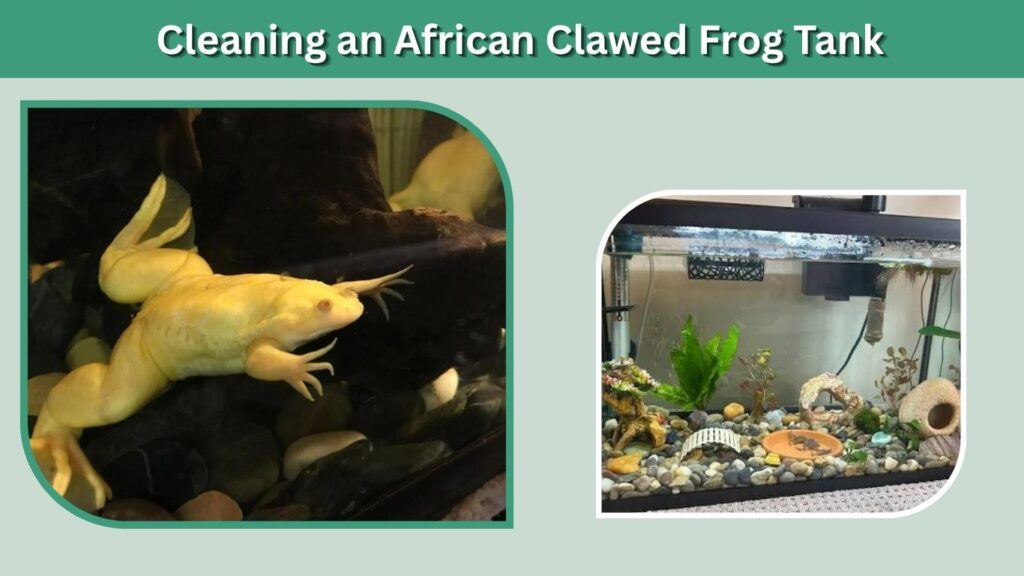
Regular cleaning prevents excess food, waste, algae, and organic debris from accumulating.
Routine Tank Maintenance
A simple maintenance routine includes:
- Test water parameters regularly.
- Siphon visible waste and uneaten food.
- Perform partial water changes as needed.
- Treat replacement tap water with conditioner.
- Clean filter media using removed aquarium water when appropriate.
- Check the lid, filter, heater, and decorations.
- Remove excessive algae from viewing surfaces.
Never clean the aquarium with household soap or detergents. Amphibians can be particularly sensitive to chemical residues because of their permeable skin.
Why Is My Frog Tank Turning Green?
Green tank water is usually associated with excessive algae growth. Too much light, direct sunlight, excess nutrients, overfeeding, and insufficient maintenance can all contribute.
Reduce the lighting period, keep the tank away from direct sunlight, remove uneaten food promptly, perform appropriate water changes, and test water quality rather than relying only on how clear the aquarium looks.
Cloudy water in a newly established tank may also occur while the biological system stabilizes.
Albino African Clawed Frog Tank Setup
Albino African clawed frogs are color forms of the same species and require essentially the same tank conditions as normally colored African clawed frogs.
An albino African clawed frog tank should therefore provide adequate swimming space, conditioned freshwater, stable temperature, gentle filtration, safe substrate, hiding places, and a tight lid.
Their pale appearance does not make them African dwarf frogs. Juvenile clawed frogs are sometimes confused with dwarf frogs, which can lead to inappropriate tank sizing and community-tank choices.
FAQs
What Size Tank Does an African Clawed Frog Need?
A 20-gallon-long aquarium is a good practical choice for one adult African clawed frog because it provides useful swimming space and greater water volume. Juveniles may temporarily live in smaller tanks, but they should be upgraded as they grow.
Can an African Clawed Frog Live in a 10-Gallon Tank?
A juvenile may live in a 10-gallon aquarium temporarily, but a larger tank is preferable for long-term adult housing. Larger aquariums provide more swimming room and typically make temperature and water quality easier to keep stable.
What Temperature Should an African Clawed Frog Tank Be?
African clawed frogs are commonly maintained at approximately 68–75°F (20–23°C). Avoid rapid temperature changes. Depending on the room temperature, a heater may not always be necessary, but a thermometer should be used to monitor the aquarium.
Can African Clawed Frogs Live With Fish?
Keeping them with fish can be risky. Small fish may be eaten, while larger or aggressive fish may injure the frog. Because African clawed frogs are opportunistic predators, a species-only aquarium is generally easier to manage safely.
Why Is My African Clawed Frog Staying at the Top?
African clawed frogs naturally surface to breathe, so occasional trips upward are normal. Constantly remaining at the surface, abnormal floating, reduced appetite, skin changes, or unusual behavior can indicate a husbandry or health problem. Check temperature and water quality first, and seek an experienced exotic veterinarian if abnormal behavior persists.
