
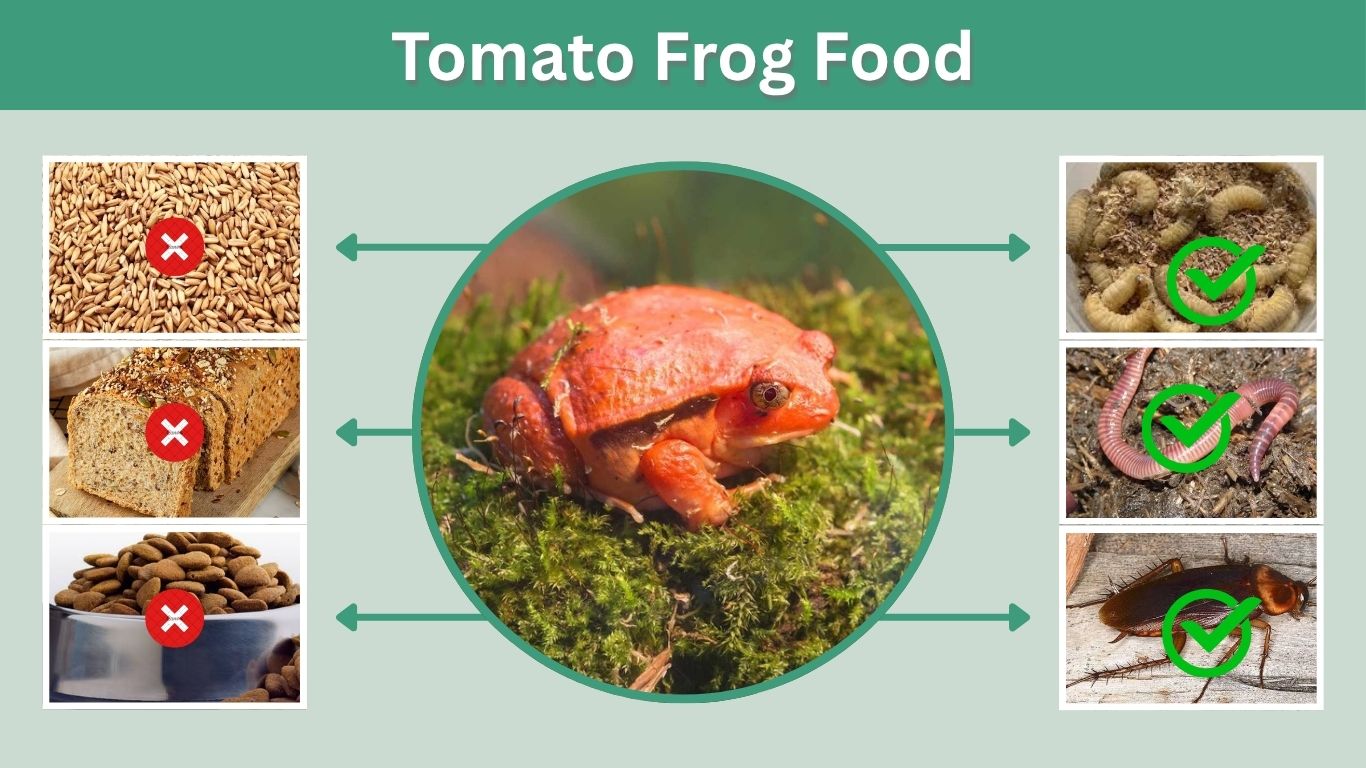
Tomato frogs are insect-eating amphibians that thrive on a varied diet of appropriately sized live prey. In the wild, they mainly consume insects, insect larvae, worms, and other small invertebrates. In captivity, crickets, roaches, earthworms, and several other feeder insects can form a nutritious diet when properly gut-loaded and supplemented. Feeding frequency should also change as the frog grows because juveniles generally need meals more often than adults.
What Do Tomato Frogs Eat?
Tomato frogs are carnivorous insectivores. Their natural diet is made up primarily of small invertebrates rather than fruits, vegetables, or plant material. Smithsonian’s National Zoo specifically lists insects, insect larvae, and worms among their foods, while other zoological information describes small arthropods and invertebrates as their primary prey.
Best Foods for a Tomato Frog
A captive tomato frog should receive several different feeder insects instead of relying on only one food throughout its life. Suitable options include:
- Crickets
- Dubia or other suitable feeder roaches
- Earthworms
- Black soldier fly larvae
- Silkworms
- Hornworms
- Appropriately sized grasshoppers or locusts
- Mealworms occasionally
- Waxworms occasionally
Crickets, roaches, and earthworms make particularly useful staple foods because they can be rotated to provide dietary variety. Waxworms are better used occasionally rather than as the main diet because feeder insects differ considerably in their nutritional composition.
How Large Should the Food Be?
Choose prey that your frog can swallow comfortably. Care guidance commonly recommends feeder insects that are roughly no larger than the width of the frog’s head.
Juvenile frogs therefore need much smaller crickets, roaches, and worms than full-grown adults. Oversized prey can be difficult to swallow and should be avoided.
Tomato Frog Feeding Schedule
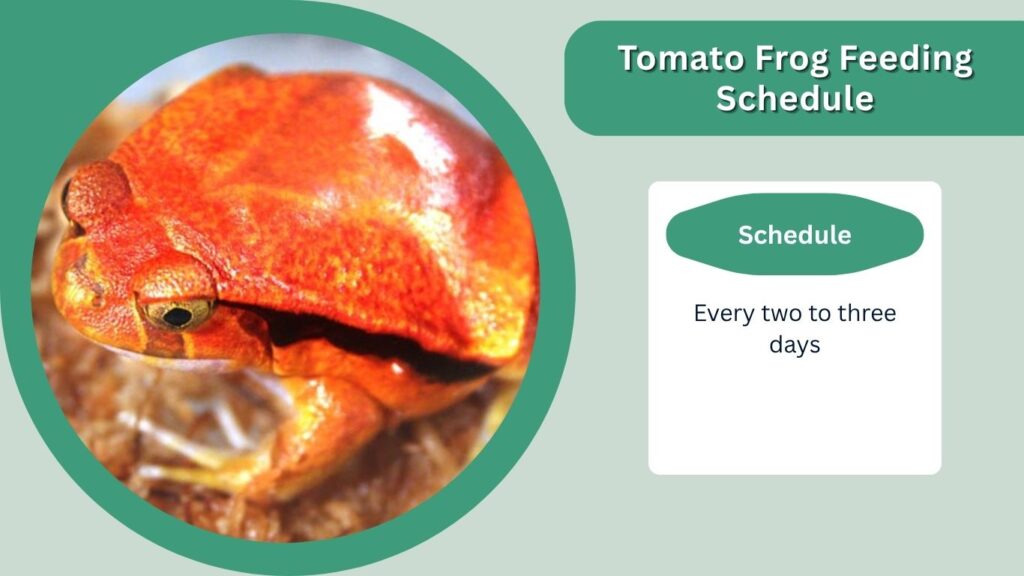
A tomato frog’s age, body condition, activity level, and prey size all affect how frequently it should eat. Younger animals need more frequent nutrition for growth, whereas healthy adults can normally be maintained on meals several times per week.
How Often Should You Feed an Adult Tomato Frog?
Most adults can be offered food approximately every two to three days, or roughly three times per week. One veterinary care guide recommends feeding adults every two to three days, while another care guide suggests three to four feeding sessions per week.
The exact amount should be adjusted according to the frog’s body condition. Tomato frogs naturally have rounded bodies, so their appearance alone can make overfeeding difficult to recognize.
Avoid continually offering large quantities of calorie-rich insects simply because the frog accepts them.
How Often Should Juvenile Tomato Frogs Eat?
Juvenile tomato frogs generally require food more frequently than adults. Daily feeding with small, appropriately sized insects is commonly recommended for growing animals.
As the frog matures, meals can gradually become less frequent while the size of individual prey increases.
A simple schedule can look like:
- Young froglets: small meals daily
- Growing juveniles: daily or nearly daily
- Adults: approximately every 2–3 days
Body condition should ultimately guide adjustments rather than following a rigid number of insects indefinitely.
Calcium, Vitamins, and Gut-Loading
Simply feeding insects does not always provide an ideal nutritional balance. Research into captive amphibian nutrition identifies calcium and vitamins such as A, D, and E as nutrients that may become problematic in insect-based captive diets.
Gut-Load Feeder Insects
Gut-loading means feeding nutritious food to feeder insects before giving them to your frog. This improves the nutritional value of the prey rather than offering poorly nourished insects straight from a container.
Crickets and roaches are particularly suitable for gut-loading. Feeder insects should be healthy and properly hydrated before they are offered.
Calcium and Vitamin Supplements
Many captive-care programs lightly coat feeder insects with an appropriate calcium supplement and periodically provide a multivitamin. One veterinary husbandry guide recommends calcium supplementation several times weekly and a multivitamin less frequently.
The exact schedule can vary according to the supplement formulation, frog age, diet, and enclosure conditions, so follow the manufacturer’s directions and veterinary guidance rather than heavily coating every meal.
How Does a Tomato Frog Get Its Food?
Tomato frogs are ground-dwelling predators that spend considerable periods hidden or burrowed. They become more active after dark and wait for suitable prey to approach. Smithsonian notes that tomato frogs spend much of their time under leaves and mud and move across the forest floor at night.
Ambush Hunting
Instead of constantly chasing prey, tomato frogs typically use an ambush strategy. They remain relatively still until an insect or other small invertebrate comes within striking distance.
They then rapidly capture the prey with their mouth and tongue. This feeding behavior makes moving live insects particularly effective at stimulating feeding in captive frogs.
Best Time to Offer Food
Because tomato frogs are mainly active during the evening and night, offering food later in the day often matches their natural behavior better than feeding during bright daytime conditions. Veterinary husbandry information also notes that they may emerge at night to feed.
Remove uneaten prey rather than leaving large numbers of insects wandering around the enclosure.
Foods Tomato Frogs Should Avoid
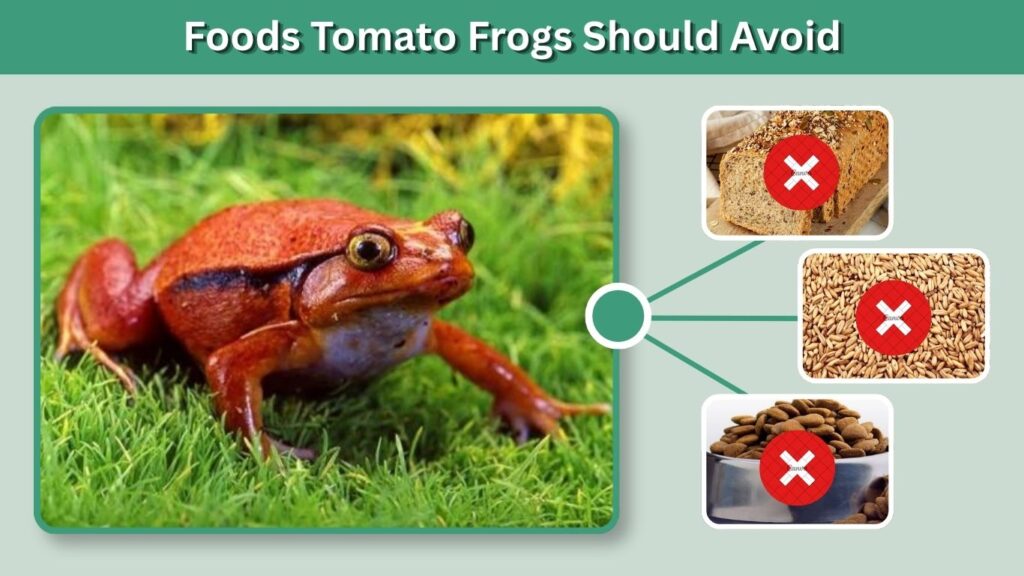
Tomato frogs do not need the wide assortment of human foods that omnivorous pets may eat. Their digestive system and feeding behavior are adapted primarily for animal prey.
Avoid routinely feeding:
- Fruit
- Vegetables
- Bread or grains
- Processed meat
- Dog or cat food
- Large prey that cannot be swallowed comfortably
- Insects collected from pesticide-treated locations
A varied selection of appropriately sized captive-bred feeder invertebrates is a safer foundation for their diet.
Large vertebrate prey is also unnecessary for normal tomato frog nutrition. Some care sheets note that large adults may accept newborn mice, but they recommend offering them sparingly, if at all, because excessive high-energy feeding can contribute to obesity.
False Tomato Frog Food
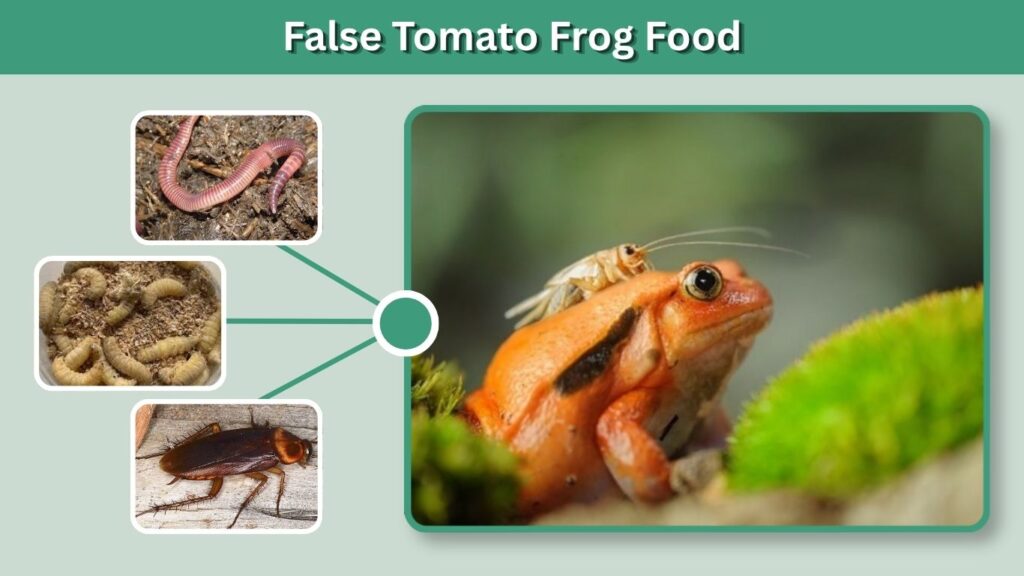
The false tomato frog (Dyscophus guineti) is closely related to the Madagascar tomato frog (Dyscophus antongilii). Both belong to the Madagascar genus Dyscophus, and captive false tomato frogs are also maintained primarily on appropriately sized invertebrate prey.
What Do False Tomato Frogs Eat?
False tomato frogs can be offered a similar selection of live foods:
- Crickets
- Roaches
- Earthworms
- Black soldier fly larvae
- Silkworms
- Other appropriately sized feeder insects
Research involving captive Dyscophus guineti has specifically examined nutrition and dietary supplementation, reinforcing the importance of providing nutritionally balanced captive diets rather than depending exclusively on a single feeder species.
How Long Can Tomato Frogs Go Without Food?
A healthy adult may occasionally skip several scheduled meals, and a short period without eating does not automatically indicate an emergency. One experienced amphibian-care source suggests that healthy adults can sometimes tolerate roughly a week without food, although intentionally withholding food for long periods is not recommended.
Young frogs should not routinely go this long because they require more regular nutrition for growth.
When a Tomato Frog Stops Eating
Loss of appetite can result from environmental or medical problems rather than simply a lack of hunger. Check the enclosure whenever feeding behavior suddenly changes.
Pay particular attention to:
- Temperature
- Humidity
- Substrate moisture
- Stress or excessive handling
- Recent enclosure changes
- Prey size
- Food variety
- Overall activity
- Weight or body condition
A frog that refuses food for several days and becomes lethargic, loses weight, develops abnormal skin, or shows other unusual symptoms should be assessed by an experienced exotic-animal veterinarian. Veterinary guidance recommends professional evaluation when appetite loss becomes prolonged, particularly when other clinical signs occur.
FAQs
Do Tomato Frogs Eat Crickets?
Yes. Crickets are one of the most commonly used foods for captive tomato frogs. They should be appropriately sized and preferably gut-loaded before feeding. Rotating crickets with foods such as roaches and earthworms creates a more varied diet.
Can Tomato Frogs Eat Mealworms?
Tomato frogs can eat suitably sized mealworms, but they are better used as part of a varied diet instead of becoming the only feeder insect. Crickets, roaches, worms, and other invertebrates can be rotated to provide greater nutritional variety.
Do Tomato Frogs Eat Vegetables?
No. Adult tomato frogs are primarily insectivorous predators. Their natural foods include insects, insect larvae, worms, and other small invertebrates, so vegetables and fruit are not appropriate staple foods.
Should I Feed My Tomato Frog Every Day?
Juveniles are commonly fed daily because they are actively growing. Adults generally require meals less frequently, with approximately every two to three days being a common schedule. Adjust feeding according to the frog’s size and body condition.
What Is the Best Food for a Tomato Frog?
There is no single perfect feeder. A varied diet containing gut-loaded crickets, roaches, earthworms, and other appropriately sized invertebrates is preferable to feeding only one prey species. Appropriate calcium and vitamin supplementation can further support a balanced captive diet.
